
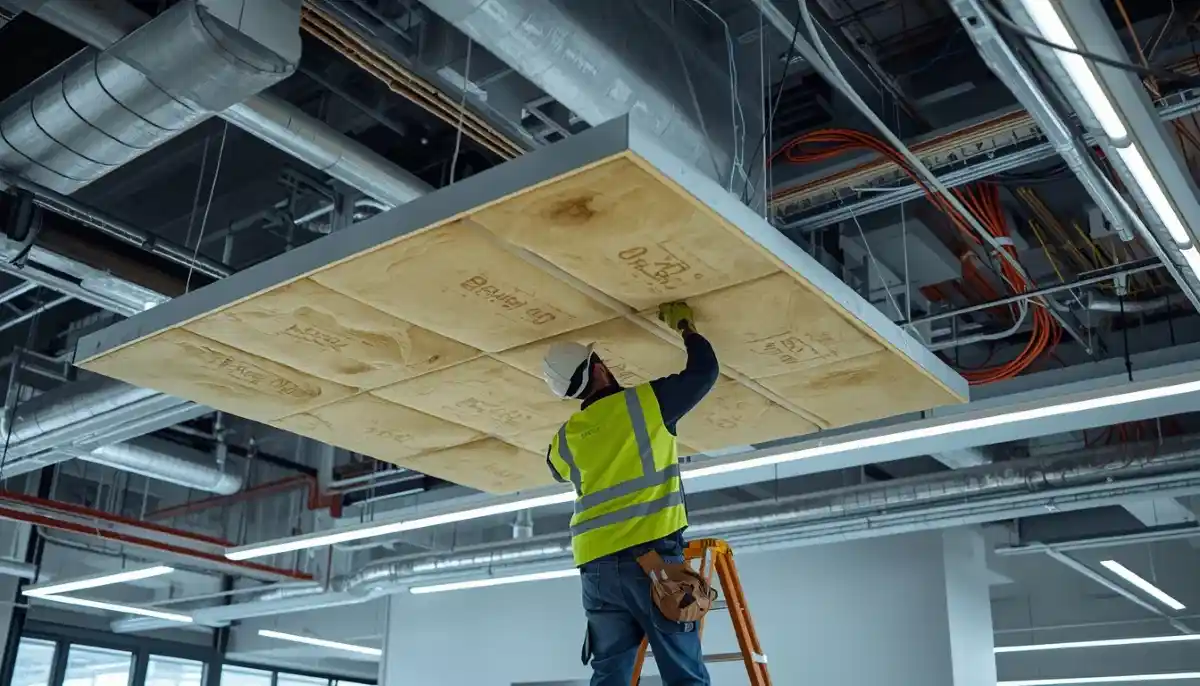
Acoustic & Insulated Ceilings South Africa – Cost, Benefits & Installation Guide
🔊 R350 to R550+ per m² – What you’ll pay for acoustic ceilings, plus soundproofing benefits, insulation options, and installation tips.
Tired of hearing your neighbours’ footsteps? Want to create the ultimate home theatre experience? Looking to keep your home cooler in summer and warmer in winter? Acoustic and insulated ceilings are the answer. Whether you’re building a home in Sandton, renovating an apartment in Cape Town, or converting a garage in Durban, acoustic ceilings transform your space – reducing noise, improving comfort, and even saving on energy bills. This comprehensive guide covers everything you need to know: costs per square metre, acoustic performance ratings, insulation options, installation methods, and whether the investment is worth it for your specific situation.
📋 Considering an Acoustic Ceiling?
Get free, no-obligation quotes from experienced acoustic ceiling specialists in your area. They’ll advise on the right system for your noise and insulation needs.
Servicing Johannesburg, Pretoria, Cape Town, Durban, and all major areas
📖 Table of Contents – Acoustic & Insulated Ceilings
🔊 What Are Acoustic & Insulated Ceilings?
Acoustic ceilings are specifically designed to control sound – either by absorbing sound within a room (reducing echo) or by blocking sound transmission between rooms or floors. Insulated ceilings incorporate thermal insulation to improve energy efficiency.
Types of Acoustic Ceilings
- Suspended acoustic ceilings: Grid system with acoustic tiles (mineral fibre, fibreglass, perforated metal).
- Acoustic plasterboard: Special gypsum boards with sound-damping properties.
- Stretched fabric systems: Fabric stretched over acoustic insulation.
- Timber acoustic panels: Perforated timber with acoustic backing.
Insulated Ceilings
Standard ceilings with insulation material (fibreglass, cellulose, polyester) placed in the ceiling cavity. This improves thermal performance and can also provide acoustic benefits.
For more on ceiling materials, see our types of ceiling materials guide.
✅ Benefits of Acoustic & Insulated Ceilings
🔊 Acoustic Benefits
- Reduced echo: Absorbs sound, making rooms quieter and speech clearer.
- Sound insulation: Blocks noise transfer between rooms and floors.
- Privacy: Conversations in one room stay in that room.
- Home theatre: Critical for immersive audio experience.
- Open-plan offices: Reduces distracting noise, improves productivity.
- Compliance: Meets building regulations for multi-unit dwellings.
🌡️ Thermal Benefits
- Energy savings: Reduces heating and cooling costs by up to 30%.
- Comfort: Keeps rooms warmer in winter, cooler in summer.
- Condensation control: Reduces moisture buildup in ceilings.
- Loadshedding resilience: Well-insulated homes stay comfortable longer without power.
- Environmental: Reduces carbon footprint.
- Compliance: Meets SANS 10400-XA energy efficiency requirements.
Key Insight: Acoustic and insulated ceilings are not just “nice to have” – in many cases, they’re required by building regulations. Flats, townhouses, and new homes all have specific requirements for sound and thermal performance.
💰 Acoustic Ceiling Cost Summary – Per Square Metre
Here’s what you can expect to pay for acoustic and insulated ceilings in South Africa. Prices include materials and installation.
| Ceiling Type | Material Cost (per m²) | Installed Cost (per m²) | Typical Application |
|---|---|---|---|
| Suspended ceiling + standard mineral fibre tiles | R150 – R200 | R300 – R400 | Offices, basic acoustic improvement |
| Suspended ceiling + acoustic mineral fibre tiles | R200 – R300 | R350 – R500 | Home theatres, recording studios |
| Acoustic plasterboard (12.5mm sound-rated) | R150 – R200 | R300 – R450 | Between floors, multi-unit dwellings |
| Perforated metal ceiling with acoustic backing | R350 – R500 | R550 – R800+ | Modern commercial, high-end homes |
| Timber acoustic panels | R400 – R700 | R650 – R1,000+ | Premium residential, restaurants |
| Stretched fabric acoustic system | R500 – R800 | R800 – R1,200+ | High-end home theatres, boardrooms |
| Insulation only (add to existing ceiling) | R80 – R150 | R150 – R250 | Retrofit insulation in roof space |
Cost-Saving Tip: For the best value, consider a suspended ceiling with acoustic mineral fibre tiles. They offer excellent acoustic performance at a fraction of the cost of premium systems.
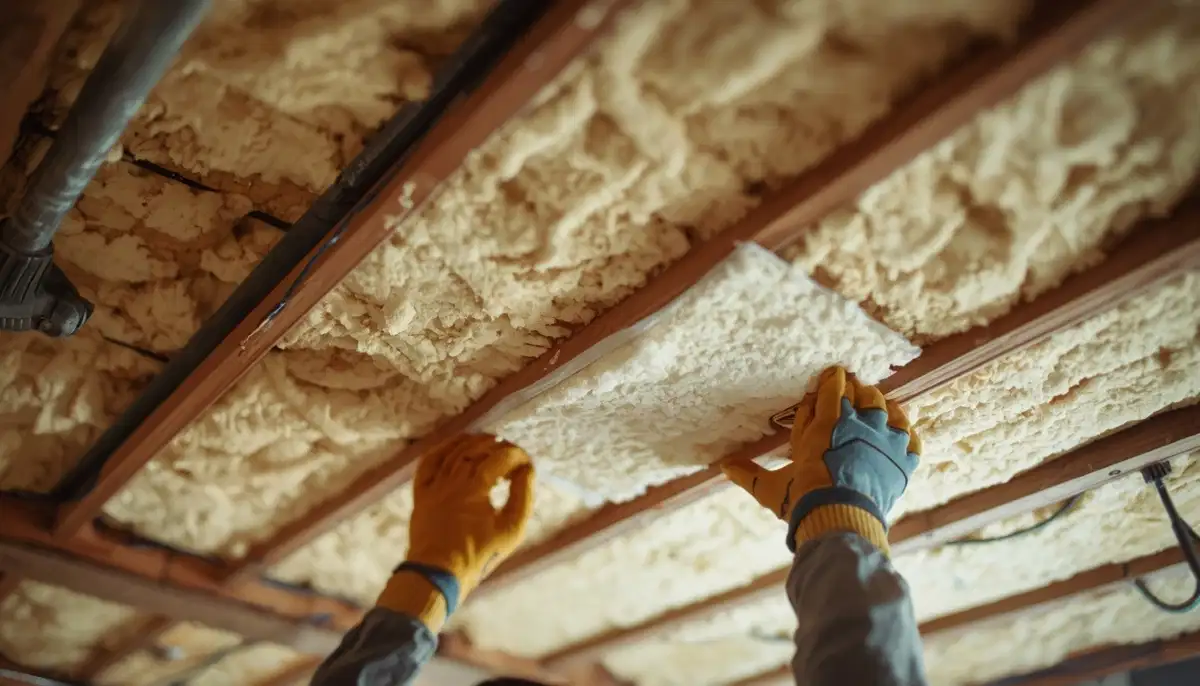
🧩 Acoustic Ceiling Tiles & Materials
Mineral Fibre Tiles
The most common acoustic tile. Made from mineral wool or fibreglass, they offer excellent sound absorption at moderate cost.
- Pros: Good NRC ratings, affordable, fire-resistant.
- Cons: Can sag in high humidity, limited design options.
- NRC rating: 0.50 – 0.85
- Cost: R70 – R150 per m² (tiles only)
Acoustic Gypsum / Plasterboard
Special gypsum boards with sound-damping cores. Used in fixed ceilings, often with insulation above.
- Pros: Seamless finish, good sound isolation between rooms.
- Cons: Less sound absorption within room (reflects sound).
- STC rating: 35-50 (depending on construction)
- Cost: R150 – R200 per m² (boards only)
Perforated Metal Tiles
Aluminium or steel panels with perforations, backed with acoustic fleece or insulation.
- Pros: Modern look, durable, excellent acoustics.
- Cons: Expensive, can dent.
- NRC rating: 0.70 – 0.95
- Cost: R300 – R500 per m²
Timber Acoustic Panels
Wood wool panels or perforated timber with acoustic backing. Natural look with excellent performance.
- Pros: Beautiful natural appearance, warm aesthetic.
- Cons: Expensive, requires maintenance.
- NRC rating: 0.60 – 0.85
- Cost: R400 – R700 per m²
PVC / Vinyl Acoustic Tiles
Moisture-resistant tiles with acoustic backing – ideal for bathrooms and coastal areas.
- Pros: Waterproof, easy clean.
- Cons: Lower acoustic performance than mineral fibre.
- Cost: R200 – R350 per m²
For more on materials, see our ceiling materials guide.
🧶 Insulation Types for Ceilings
Fibreglass Insulation
Most common, available in batts or rolls. Good thermal and acoustic performance.
- R-value: 2.0 – 3.7 depending on thickness
- Pros: Affordable, widely available, non-combustible.
- Cons: Itchy to handle, can sag if not supported.
- Cost: R80 – R120 per m² installed
Cellulose Insulation
Made from recycled paper, treated for fire resistance. Blown-in application.
- R-value: 2.5 – 3.5
- Pros: Eco-friendly, good for irregular spaces.
- Cons: Can settle over time, requires specialist installation.
- Cost: R100 – R150 per m² installed
Polyester Insulation
Synthetic fibre, often made from recycled PET. Non-itch, moisture-resistant.
- R-value: 2.0 – 3.0
- Pros: Non-itch, moisture-resistant, easy to handle.
- Cons: More expensive than fibreglass.
- Cost: R120 – R180 per m² installed
Reflective Foil
Radiant barrier, reflects heat rather than absorbing. Best in hot climates.
- Pros: Thin, easy to install, good for hot climates.
- Cons: Minimal acoustic benefit, requires air gap.
- Cost: R50 – R80 per m² installed
Spray Foam
Closed-cell or open-cell polyurethane foam. Excellent insulation but expensive.
- R-value: 5.0 – 6.5 per inch
- Pros: Air-sealing, very high R-value.
- Cons: Expensive, requires professional installation.
- Cost: R250 – R400 per m²
🔇 Soundproofing vs Acoustic Treatment – What’s the Difference?
Many people confuse these terms. Understanding the difference is crucial for choosing the right solution.
| Feature | Soundproofing (Sound Isolation) | Acoustic Treatment |
|---|---|---|
| Goal | Stop sound moving between spaces | Improve sound quality within a space |
| What it does | Blocks sound transmission | Absorbs sound, reduces echo |
| Application | Between flats, home theatre to outside, bedrooms | Home theatres, recording studios, offices |
| Ceiling solutions | Mass-loaded vinyl, double plasterboard, resilient channels, insulation | Acoustic tiles, fabric panels, diffusers |
| Key metric | STC (Sound Transmission Class) | NRC (Noise Reduction Coefficient) |
Which Do You Need?
- Home theatre: Both – you want sound to stay in (acoustic treatment) and not disturb neighbours (soundproofing).
- Flat / Townhouse: Soundproofing to meet regulations and keep peace with neighbours.
- Office: Acoustic treatment to reduce echo and improve speech clarity.
- Bedroom below living area: Soundproofing to block footstep noise.
For professional advice in your area, check our Johannesburg or Cape Town pages.
🎬 Home Theatre Ceilings – Creating the Ultimate Experience
For home theatres, the ceiling is critical to audio performance. Here’s what works best.
Recommended Solutions
- Suspended ceiling with acoustic tiles: Best value. Use high-NRC mineral fibre tiles (0.80+) for excellent sound absorption.
- Acoustic plasterboard with insulation: For seamless look, use sound-rated plasterboard and dense insulation above.
- Stretched fabric system: Premium option – fabric stretched over acoustic insulation, completely seamless.
- Timber acoustic panels: Beautiful aesthetic with excellent acoustics – perfect for high-end theatres.
Key Considerations
- NRC rating: Aim for 0.80 or higher for ceiling tiles.
- Room dimensions: Acoustic treatment should address ceiling height and room modes.
- Lighting integration: Plan recessed lighting before installation.
- Soundproofing: If theatre is near bedrooms, add soundproofing to prevent noise escape.
Real-World Example
A 25m² home theatre in Fourways with suspended acoustic ceiling cost R12,500 – transformed the audio experience, with crystal-clear dialogue and immersive surround sound.
🎬 Planning a Home Theatre or Quiet Office?
Get expert advice from acoustic ceiling specialists. They’ll recommend the perfect system for your space and budget.
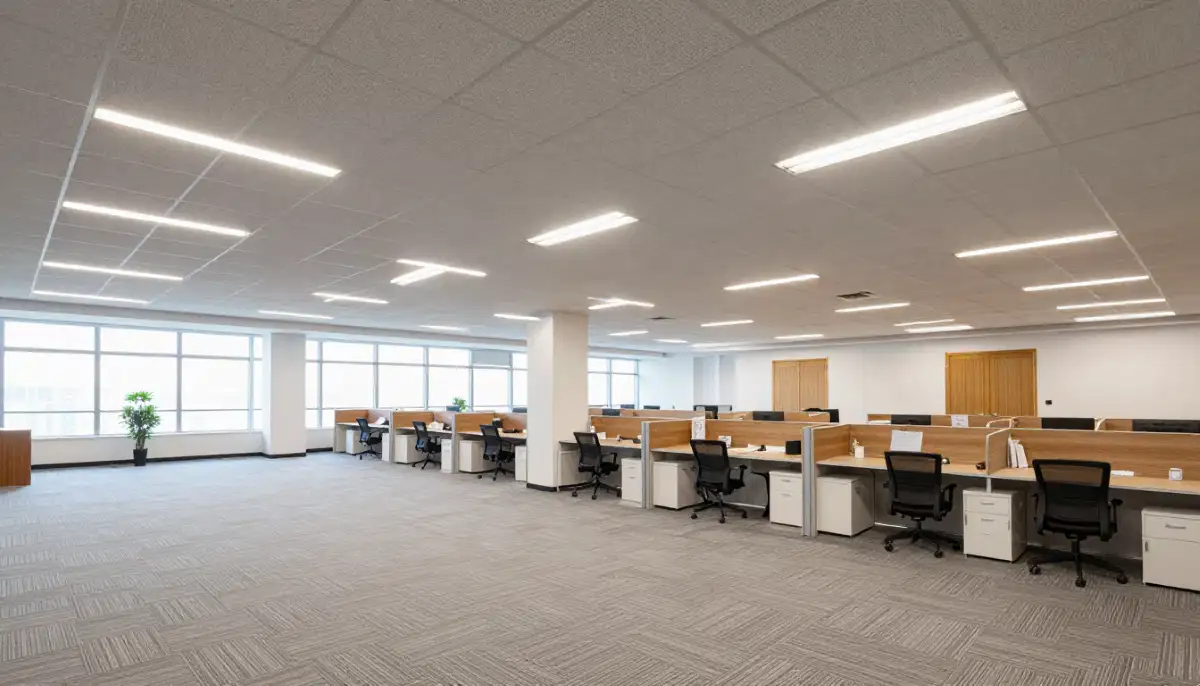
🏢 Office & Commercial Acoustic Ceilings
In commercial spaces, acoustics directly impact productivity and wellbeing.
Why Offices Need Acoustic Ceilings
- Speech privacy: Confidential conversations stay confidential.
- Reduced distraction: Open-plan offices with poor acoustics reduce productivity by up to 30%.
- Meeting rooms: Clear communication without echo.
- Compliance: SANS 10182 sets acoustic requirements for workplaces.
Best Commercial Solutions
- Suspended ceiling with high-NRC acoustic tiles: Standard for offices – 600x600mm or 1200x600mm grid.
- Metal ceiling with acoustic backing: Modern look for reception areas, boardrooms.
- Acoustic baffles or clouds: Suspended sound-absorbing elements, often used in open-plan spaces.
Real-World Example
A 200m² office in Midrand installed a suspended acoustic ceiling with high-NRC tiles for R65,000. Staff reported significantly reduced noise levels and improved concentration.
🏘️ Multi-Unit Dwellings – Flats & Townhouses
If you live in a flat, townhouse, or complex, acoustic ceilings may be required by regulations – and are certainly appreciated by neighbours.
Regulatory Requirements
SANS 10400 and local bylaws require minimum sound insulation between dwellings. Ceilings play a key role in achieving this.
- Impact sound: Footsteps, moving furniture – requires resilient construction.
- Airborne sound: Voices, TV, music – requires mass and insulation.
Effective Ceiling Solutions
- Double-layer plasterboard: Two layers of sound-rated board with staggered joints.
- Resilient channels: Decouple ceiling from structure above.
- Acoustic insulation: Dense insulation in ceiling cavity (fibreglass, mineral wool).
- Suspended acoustic ceiling: With high-mass tiles and insulation above.
Real-World Example
A townhouse complex in Umhlanga retrofitted acoustic ceilings between units at R8,000 per unit – complaints about noise dropped by 90%.
🛠️ Installation Methods – Suspended vs Fixed
Suspended Acoustic Ceilings
Grid system hung from structure, with acoustic tiles laid in. Best for:
- Spaces needing frequent access to services.
- Retrofit applications.
- Where acoustic tiles need to be replaced easily.
- Commercial and home theatre applications.
Fixed Acoustic Ceilings (Plasterboard)
Sound-rated plasterboard fixed to battens or resilient channels. Best for:
- Seamless aesthetic.
- High soundproofing requirements (between floors).
- Where access to services isn’t needed.
- Residential applications.
See our suspended vs flush plastered guide for detailed comparison.
📊 Understanding Acoustic Ratings – STC & NRC
When shopping for acoustic ceilings, you’ll encounter these ratings. Here’s what they mean.
STC – Sound Transmission Class
Measures how well a building element (wall, floor, ceiling) blocks sound between spaces.
- STC 25-30: Normal speech can be understood.
- STC 30-35: Loud speech audible but not understood.
- STC 40-45: Loud speech barely audible.
- STC 50+: Loud speech not audible – good soundproofing.
Target for between dwellings: STC 50 or higher.
NRC – Noise Reduction Coefficient
Measures how much sound a material absorbs (vs reflects). Ranges from 0 (perfect reflection) to 1 (perfect absorption).
- NRC 0.00-0.20: Reflective (glass, smooth plaster).
- NRC 0.20-0.50: Some absorption.
- NRC 0.50-0.70: Good absorption.
- NRC 0.70-1.00: Excellent absorption – ideal for home theatres, offices.
Target for acoustic tiles: NRC 0.70 or higher.
CAC – Ceiling Attenuation Class
Specific to suspended ceilings – measures sound blocking through the ceiling plenum.
📋 Building Regulations & Acoustic Requirements
Several regulations affect acoustic ceilings in South Africa.
SANS 10400-T (Fire)
Acoustic ceilings must also meet fire safety requirements. Many acoustic tiles are fire-rated – check specifications.
SANS 10182 (Acoustics)
Sets standards for acoustic performance in buildings. Requirements include:
- Minimum sound insulation between dwellings.
- Reverberation times for different space types.
- Noise control in workplaces.
SANS 10400-XA (Energy Efficiency)
Requires thermal insulation in ceilings for new homes. This can be combined with acoustic insulation.
NHBRC Requirements
For new homes, NHBRC technical requirements include acoustic separation between units in complex developments.
See our ceiling regulations guide for detailed compliance information.
🏠 Real-Life Acoustic Ceiling Examples
Example 1: Home Theatre, Fourways
25m² dedicated home theatre.
Suspended acoustic ceiling: R12,500
High-NRC mineral fibre tiles (0.85), integrated LED lighting, 10-year warranty.
Example 2: Open-Plan Office, Midrand
200m² office space with 30 workstations.
Suspended acoustic ceiling: R65,000
600x600mm acoustic tiles (NRC 0.75), grid system, 5-year warranty.
Example 3: Townhouse Complex, Umhlanga
12 units, retrofitted acoustic ceilings between floors.
R8,000 per unit
Double-layer plasterboard, resilient channels, insulation – STC 52 achieved.
Example 4: Coastal Home, Ballito
Open-plan living area with high humidity.
PVC acoustic tiles: R18,000 (45m²)
Moisture-resistant acoustic tiles, suspended grid, excellent sound absorption.
❌ 7 Common Mistakes When Installing Acoustic Ceilings
Learn from others’ errors: These mistakes waste money and compromise acoustic performance.
Mistake #1: Confusing Soundproofing with Acoustic Treatment
Installing acoustic tiles to block noise between flats – they won’t work. For soundproofing, you need mass and decoupling, not just absorption.
Mistake #2: Ignoring Flanking Paths
Sound travels around ceilings – through walls, ducts, light fittings. Without sealing these paths, your acoustic ceiling is much less effective.
Mistake #3: Insufficient Insulation Depth
Thin insulation won’t achieve rated performance. Install specified thickness for target R-value or acoustic performance.
Mistake #4: Poor Installation of Resilient Channels
Resilient channels must be installed correctly – screws too long can bridge the channel, ruining the decoupling.
Mistake #5: Not Sealing Penetrations
Light fittings, vents, and pipes create holes in your acoustic barrier. Use acoustic sealant around all penetrations.
Mistake #6: Choosing Tiles by Looks Only
Beautiful tiles with poor NRC ratings won’t improve acoustics. Check the ratings, not just the appearance.
Mistake #7: DIY Installation of Complex Systems
Acoustic ceilings require precise installation to achieve rated performance. For critical applications, professional installation is essential. See our contractor selection guide.
❓ Frequently Asked Questions – Acoustic & Insulated Ceilings
How much does an acoustic ceiling cost in South Africa?
Costs range from R300 – R550 per m² for suspended acoustic ceilings with mineral fibre tiles. Premium systems (metal, timber, stretched fabric) cost R550 – R1,200+ per m². Insulation only adds R150 – R250 per m².
What’s the best ceiling for soundproofing between floors?
Double-layer sound-rated plasterboard on resilient channels, with dense insulation in the cavity. This combination achieves STC 50+ and effectively blocks footstep noise and voices.
Do acoustic ceilings really make a difference?
Yes, dramatically. In home theatres, they’re essential for clear dialogue and immersive sound. In offices, they reduce noise distractions by up to 50%. In flats, they can eliminate neighbour noise complaints.
What is a good NRC rating for ceiling tiles?
For effective sound absorption, look for NRC 0.70 or higher. Premium acoustic tiles achieve NRC 0.85-0.95. Standard mineral fibre tiles are often 0.50-0.70.
Can I add acoustic insulation to my existing ceiling?
Yes, if you have access to the ceiling cavity. Insulation can be blown in or laid between joists. This improves both thermal and acoustic performance. Cost: R150 – R250 per m² installed.
What’s the difference between STC and NRC?
STC measures sound blocking (between rooms). NRC measures sound absorption (within a room). For soundproofing, focus on STC. For echo reduction, focus on NRC.
Are acoustic ceilings required by law?
For multi-unit dwellings (flats, townhouses), SANS 10182 sets minimum acoustic requirements. For homes, not mandatory unless in complex developments. Check with your local municipality.
How long do acoustic ceilings last?
Quality acoustic ceilings last 20-30+ years. Tiles may need replacement if stained or damaged, but the grid system is very durable. Insulation lasts the lifetime of the building.
Can I install acoustic ceiling tiles myself?
Suspended ceilings are DIY-friendly for basic installations if you’re handy. However, achieving rated acoustic performance requires proper installation – gaps, penetrations, and details matter. For critical applications, professional installation is recommended.
What insulation is best for ceilings?
Fibreglass batts offer best value (R80 – R120/m²). Polyester is non-itch and moisture-resistant (R120 – R180/m²). Cellulose is eco-friendly but requires specialist installation. Choose based on budget and application.
✅ Final Thoughts – Is an Acoustic Ceiling Worth the Investment?
For most applications, yes – absolutely. Whether you’re building a home theatre, designing an office, or living in a complex, acoustic ceilings transform the experience of a space.
Acoustic ceilings are worth it if:
- You value peace and quiet in your home.
- You’re building a home theatre or recording space.
- You live in a flat or townhouse with neighbour noise.
- You run an office where productivity matters.
- You want to reduce energy bills with insulation.
Your 4-Step Action Plan:
- Identify your need: Soundproofing? Acoustic treatment? Thermal insulation?
- Understand the ratings: STC for blocking, NRC for absorption.
- Choose the right system: Suspended acoustic tiles, sound-rated plasterboard, or insulation.
- Get professional quotes: Use our quote service to connect with specialists.
🔑 The Bottom Line:
For R3,500 – R5,500, you can transform a home theatre’s acoustics.
For R150 – R250 per m², insulation pays for itself in energy savings.
The peace and quiet? Priceless.
🔊 Ready for a Quieter, More Comfortable Space?
Get free, no-obligation quotes from experienced acoustic ceiling specialists in your area. They’ll design the perfect solution for your needs.
📞 Call our acoustic advisory line: 073 138 4726
📚 Official Resources & Standards:
- Isover – Acoustic insulation standards and product specifications.
- SABS – SANS 10182 – Acoustics in buildings.
- Knauf – Acoustic ceiling systems and installation guides.
This guide is for informational purposes. Always consult with a qualified professional for your specific acoustic requirements.
Written by: Innocent T Hanyani
21+ years construction and digital industry experience, ServiceLink SA
Innocent has designed and overseen hundreds of acoustic ceiling installations across South Africa – from home theatres in Johannesburg to soundproofing in Durban complexes. His practical experience with acoustic materials and installation techniques ensures this guide reflects real-world performance.