
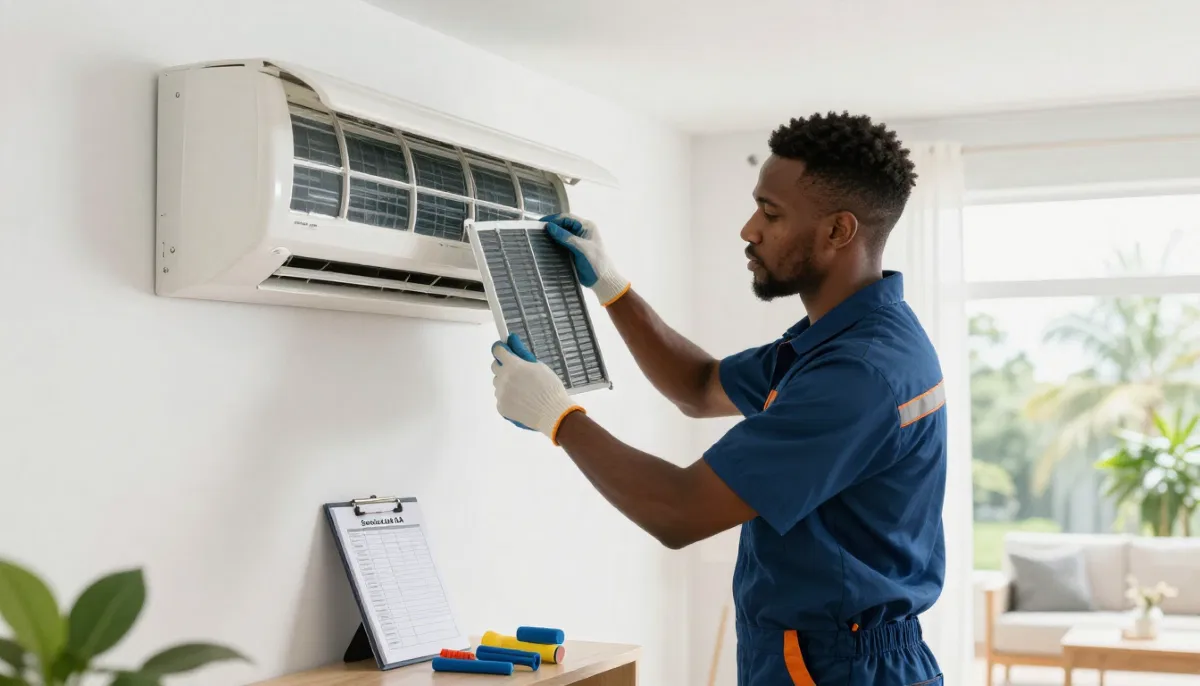
Want to Slash Your Aircon Electricity Bill?
Start with coil cleaning. Get free quotes from verified local specialists for professional coil cleaning services.
Find Aircon Cleaning Specialists Near Me
Servicing Johannesburg, Pretoria, Cape Town, Durban, and across South Africa
Aircon Coil Cleaning Guide: Slash Your Electricity Bill by 20%
🧼❄️ The complete step-by-step guide to cleaning evaporator and condenser coils—save money, improve cooling, prevent breakdowns
Your air conditioner has two sets of coils: the evaporator coil (inside) and the condenser coil (outside). When these coils get dirty, your electricity bill goes up, cooling performance drops, and your compressor works harder—leading to early failure.
I’ve seen this hundreds of times. A homeowner complains about high electricity bills and poor cooling. I inspect the unit and find coils caked with dust, grease, and debris. After a proper coil cleaning, their electricity bill drops 20-40%, cooling is restored, and the unit runs quieter.
The best part? Aircon coil cleaning is something you can DIY with basic tools and R150-R300 worth of cleaner. Or you can hire a professional for R500-R1,000. Either way, the return on investment is enormous.
In this guide, I’ll explain the difference between evaporator and condenser coils, show you exactly how to clean aircon condenser coils (outdoor unit) and evaporator coils (indoor unit), and tell you when to call a professional.
For more maintenance guidance, check our complete maintenance checklist and filter cleaning guide. Ready to slash your electricity bill? Let’s go.
📋 Table of Contents – Aircon Coil Cleaning Guide
📊 Why Coil Cleaning Matters (The Efficiency Impact)
Your air conditioner’s coils are where the magic happens. The evaporator coil absorbs heat from your room. The condenser coil releases that heat outside. When either coil is dirty, efficiency plummets.
| Coil Type | Location | What It Does | Dirty Coil Effect |
|---|---|---|---|
| Evaporator coil | Indoor unit (behind filter) | Absorbs heat from room air | Poor cooling, ice build-up, higher electricity |
| Condenser coil | Outdoor unit (visible through grille) | Releases heat to outside air | Overheating, compressor failure, 20-40% higher electricity |
The dirty coil domino effect:
- Dust and debris coat the coils
- The dirt acts as insulation—heat can’t transfer efficiently
- The compressor runs longer to achieve the same cooling
- Electricity consumption increases 20-40%
- The compressor overheats and fails prematurely
⚠️ The Hidden Cost of Dirty Coils:
A 1mm layer of dust on your condenser coils increases electricity consumption by 20%. A 2mm layer increases it by 40%. Most South African outdoor units have 3-5mm of dust after just one year. Cleaning your coils annually restores efficiency and saves hundreds on electricity.
Read our energy-saving guide and maintenance checklist.
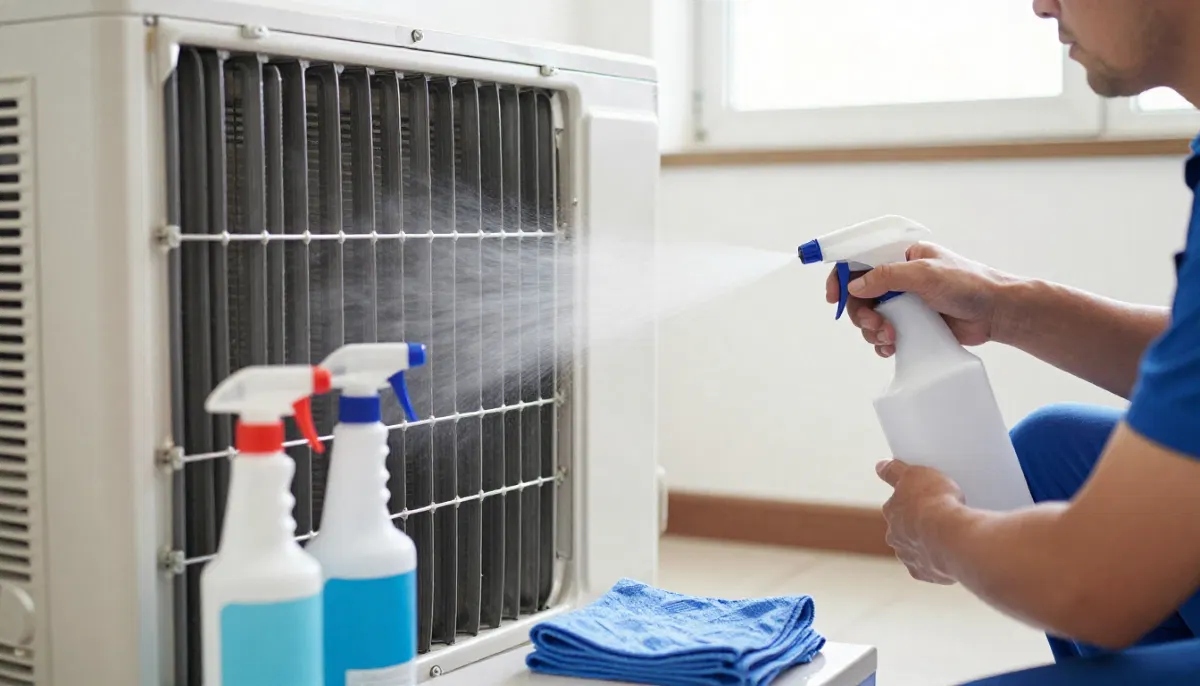
🔄 Evaporator Coils vs Condenser Coils (Key Differences)
Understanding the difference between evaporator coil and condenser coil is essential for proper cleaning.
❄️ Evaporator Coil (Indoor Unit)
- Location: Inside the indoor wall unit, behind the filter
- Temperature: Cold (4-10°C during operation)
- What dirties it: Dust that bypasses the filter
- Cleaning difficulty: Moderate (requires opening panels)
- DIY possible? Yes, with caution (coil cleaner spray)
- Signs of dirt: Weak cooling, ice build-up, musty smell
☀️ Condenser Coil (Outdoor Unit)
- Location: Outdoor compressor unit (visible through grille)
- Temperature: Hot (40-60°C during operation)
- What dirties it: Leaves, grass, dust, pollen, cottonwood
- Cleaning difficulty: Easy (accessible from outside)
- DIY possible? Yes (gentle water spray + coil cleaner)
- Signs of dirt: High electricity bills, compressor overheating, poor cooling
Which coil is more important to clean? Both are critical, but dirty condenser coils are more common and cause more damage (compressor failure). Start with the outdoor unit, then clean the indoor coils.
🚩 Signs Your Coils Are Dirty
Don’t wait for your scheduled cleaning if you notice these warning signs:
- Higher electricity bills: A 20-40% increase without increased usage is a classic sign of dirty coils.
- Poor cooling: The aircon runs constantly but the room never reaches the set temperature.
- Ice on the indoor unit or pipes: Dirty evaporator coils (or dirty filter) cause ice build-up.
- Compressor runs constantly: The outdoor unit never cycles off, even on mild days.
- Visible dirt on outdoor coils: Look through the grille—if you can’t see light through the coils, they’re clogged.
- Unusually hot outdoor unit: The compressor feels extremely hot to the touch (more than usual).
- Unit is more than 2 years old and never been cleaned: Even with clean filters, coils accumulate dust over time.
If you see any of these, clean your coils immediately—even if it hasn’t been the scheduled time yet.
Not Confident Cleaning Coils Yourself?
Professional coil cleaning restores efficiency and prevents compressor damage. Get free quotes from verified local specialists.
Get Free Quotes From Local Specialists
Professional coil cleaning from R500-R1,000. Same-day service available.
🛠️ What You’ll Need (Tools & Cleaners)
For DIY aircon coil cleaning, gather these items:
Essential items:
- Coil cleaner spray: Specialised foaming cleaner (R150-R300 at hardware stores). Do NOT use bleach, acid, or household cleaners—they destroy coils.
- Garden hose with spray nozzle: For rinsing outdoor coils. Use gentle spray, not pressure washer.
- Soft-bristle brush: For loosening debris (old toothbrush works).
- Vacuum with brush attachment: For dry debris removal.
- Screwdriver: To open access panels (some units).
- Safety glasses and gloves: Coil cleaner can irritate eyes and skin.
- Drop cloth or plastic sheeting: To protect indoor areas (for evaporator coil cleaning).
- Spray bottle with water: For rinsing evaporator coils (no hose indoors).
What NOT to use:
- ❌ Pressure washer (bends delicate fins)
- ❌ Bleach or ammonia (damages coils)
- ❌ Wire brush (scratches and bends fins)
- ❌ Acid-based cleaners (corrodes aluminium)
- ❌ Sharp objects (screwdrivers, knives—punctures coils)
⚠️ Safety First (Critical Warnings)
🚨 BEFORE YOU START – READ THIS:
- Turn off power: Turn off the aircon at the isolator switch AND at the circuit breaker. Wait 10 minutes for capacitors to discharge.
- Coils are delicate: The aluminium fins bend easily. Never use pressure washers, wire brushes, or sharp objects.
- Wear protection: Coil cleaner can irritate eyes and skin. Wear safety glasses and gloves.
- Never mix chemicals: Use only dedicated coil cleaner. Never mix with bleach or other cleaners (toxic fumes).
- If unsure, call a professional: Bent fins or punctured coils are expensive to repair. DIY is not worth the risk if you’re not confident.

🌳 How to Clean Condenser Coils (Outdoor Unit)
The outdoor condenser coil is exposed to leaves, grass, dust, and pollen. Cleaning it is straightforward.
Step-by-step guide (30-45 minutes):
Step 1: Turn off power
Turn off the aircon at the isolator switch (near the outdoor unit) AND at the circuit breaker. Safety first.
Step 2: Remove debris
Remove large debris (leaves, twigs, grass) by hand. Use a vacuum with brush attachment to remove loose dust from the coil surface.
Step 3: Apply coil cleaner
Spray dedicated coil cleaner onto the coils. The foam will expand and lift dirt. Follow product instructions (usually wait 5-10 minutes).
Step 4: Gently brush (if needed)
For stubborn dirt, use a soft-bristle brush to gently loosen debris. Brush in the direction of the fins (usually vertical). Do NOT brush across the fins.
Step 5: Rinse with water
Use a garden hose with a gentle spray nozzle. Spray from the inside out (if accessible) or at a downward angle. NEVER use a pressure washer—it will bend the fins.
Step 6: Let dry
Wait 15-30 minutes for the unit to dry before restoring power.
Step 7: Restore power and test
Turn the breaker and isolator switch back on. Run the aircon in Cool mode. You should notice improved cooling and lower electricity consumption within days.
✅ Pro Tip:
Clean your outdoor coils annually before summer. If you live in a dusty area or have cottonwood trees nearby, clean every 6 months. A clean condenser coil can reduce your electricity bill by 20-30%.
🏠 How to Clean Evaporator Coils (Indoor Unit)
Cleaning the evaporator coil is more delicate because it’s inside your home and has sensitive electronics nearby.
Step-by-step guide (30-60 minutes):
Step 1: Turn off power
Turn off the aircon at the isolator switch AND at the circuit breaker. Wait 10 minutes.
Step 2: Remove front panel and filters
Open the front panel and remove the filters (clean them separately). Set aside.
Step 3: Protect the area
Lay drop cloths or plastic sheeting below the unit. Coil cleaner and dirty water will drip down.
Step 4: Apply coil cleaner
Spray dedicated evaporator coil cleaner onto the coils. Avoid spraying electronics or the fan motor. Follow product instructions (usually wait 5-10 minutes).
Step 5: Gently brush (if needed)
Use a soft-bristle brush to gently loosen debris. Be extremely gentle—evaporator fins are very delicate.
Step 6: Rinse with spray bottle
Use a spray bottle with clean water to rinse the coils. Do NOT use a hose indoors. Rinse until water runs clear.
Step 7: Clean the drain pan
Wipe out the drain pan with a cloth soaked in vinegar/water solution. Remove any standing water.
Step 8: Dry everything
Wait 30-60 minutes for everything to dry. You can run the fan only (no cooling) to speed drying.
Step 9: Reassemble and test
Reinstall filters, close the panel, restore power, and run in Cool mode.
⚠️ Caution:
Evaporator coils are extremely delicate. The fins bend if you look at them wrong. If you’re not confident, hire a professional. A professional evaporator coil cleaning costs R500-R1,000 and is worth every rand to avoid damaging your unit.
📞 When to Call a Professional (Don’t DIY These)
While DIY coil cleaning is possible, there are times when calling a professional is the better choice:
- You’re not comfortable working with electrical components: Safety first. Professionals know how to safely disconnect and reconnect power.
- The coils are heavily contaminated (years of neglect): Professional-grade cleaners and tools may be needed.
- The unit is hard to access: Second-floor installations or tight spaces may require ladders and safety equipment.
- You’ve tried DIY and cooling hasn’t improved: There may be another problem (low refrigerant, fan issue).
- The unit is under warranty: Some warranties require professional maintenance records.
- You have a multi-split or ducted system: These are more complex and easier to damage.
Professional coil cleaning cost: R500-R1,000 for a standard split system. This includes both evaporator and condenser coils, drain line check, and performance test.
Read our professional service guide and service cost guide.
💰 Electricity Savings Calculator: Clean vs Dirty Coils
Here’s what dirty coils cost you in real rands based on typical South African electricity tariffs (R2.50-R3.50/kWh):
| Aircon Size | Monthly Elec (Clean Coils) | Monthly Elec (Dirty Coils) | Extra Cost Per Month | Extra Cost Per Summer |
|---|---|---|---|---|
| 7,000 BTU (small bedroom) | R150 | R195 – R225 | R45 – R75 | R180 – R300 |
| 9,000 BTU (standard bedroom) | R220 | R285 – R330 | R65 – R110 | R260 – R440 |
| 12,000 BTU (living room) | R300 | R390 – R450 | R90 – R150 | R360 – R600 |
| 18,000 BTU (large living area) | R450 | R585 – R675 | R135 – R225 | R540 – R900 |
| 24,000 BTU (open plan) | R600 | R780 – R900 | R180 – R300 | R720 – R1,200 |
Return on investment: A professional coil cleaning costs R500-R1,000. For a 12,000 BTU unit, the electricity savings alone (R360-R600 per summer) pay for the cleaning within one season. For DIY cleaning (R150-R300 for cleaner), payback is immediate.
Read our energy-saving guide and efficiency tips.
Read Department of Energy coil cleaning savings guidelines.
❌ 5 Common Coil Cleaning Mistakes to Avoid
⚠️ Avoid These Costly Errors:
Mistake #1: Using a pressure washer. Pressure washers bend the delicate aluminium fins, permanently reducing airflow and efficiency. A garden hose with gentle spray is all you need.
Mistake #2: Using bleach or household cleaners. Bleach and ammonia corrode aluminium coils. Use only dedicated coil cleaner (R150-R300 at hardware stores).
Mistake #3: Scrubbing across the fins. Always brush in the direction of the fins (usually vertical). Scrubbing across bends the fins, restricting airflow.
Mistake #4: Forgetting to turn off power. Capacitors can hold lethal charge even when the unit is off. Always turn off at the breaker AND isolator switch. Wait 10 minutes.
Mistake #5: Cleaning only one set of coils. Dirty evaporator coils (indoor) cause ice and poor cooling. Dirty condenser coils (outdoor) cause high electricity bills and compressor failure. Clean both annually.
Read our maintenance checklist to avoid these mistakes.
🛡️ Prevention: Keep Coils Clean Longer
Here’s how to extend the time between coil cleanings:
- Clean filters monthly: Dirty filters let dust bypass onto evaporator coils. Read our filter cleaning guide.
- Keep outdoor unit clear: Trim bushes and trees at least 300mm from the unit. Remove leaves and grass clippings weekly.
- Consider a protective cover: Use a breathable cover during winter if the unit is idle (not for heating).
- Schedule annual professional service: Professionals deep-clean coils as part of annual service.
- For coastal areas: Salt air corrodes coils faster. Clean every 6 months and consider a protective coating.
Read our service frequency guide and seasonal maintenance guide.
❓ Frequently Asked Questions About Aircon Coil Cleaning
How often should I clean my aircon coils?
Aircon coil cleaning should be done annually as part of your professional service. However, if you live in a dusty area, have pets, or notice higher electricity bills, clean every 6 months. Outdoor condenser coils need more frequent cleaning than indoor evaporator coils because they’re exposed to leaves, grass, and pollen.
Can I clean my aircon coils myself?
Yes, you can DIY how to clean aircon condenser coils (outdoor unit) with a garden hose and coil cleaner spray. Evaporator coils (indoor unit) are more delicate but still DIY-able with caution. However, if you’re not comfortable working with electrical components or accessing tight spaces, hire a professional. Cost is R500-R1,000.
What happens if I don’t clean my aircon coils?
Dirty coils increase electricity consumption by 20-40%, reduce cooling capacity, cause the compressor to overheat and fail (R5,000-R12,000 repair), and shorten the unit’s lifespan. For outdoor coils, dirt acts as insulation—heat can’t escape. For indoor coils, dirt causes ice build-up and poor cooling.
Can I use bleach to clean aircon coils?
NO. Never use bleach, ammonia, or household cleaners on aircon coils. These chemicals corrode the aluminium fins and copper pipes, causing leaks and permanent damage. Use only dedicated coil cleaner (available at hardware stores, R150-R300). These are formulated to be safe for aluminium and copper.
How do I know if my condenser coils are dirty?
Signs of dirty condenser coil include: higher electricity bills (20-40% increase), poor cooling, compressor runs constantly, outdoor unit feels extremely hot, and visible dirt when you look through the grille. If you can’t see light through the coils, they’re clogged and need cleaning.
Can dirty coils cause compressor failure?
Yes, absolutely. Dirty condenser coils prevent heat from escaping the system. The compressor works harder and runs hotter. Eventually, the compressor overheats and trips its thermal overload. Repeated overheating damages the compressor’s internal components, leading to complete failure (R5,000-R12,000 repair). Regular coil cleaning prevents this.
How much does professional coil cleaning cost in South Africa?
Professional coil cleaning costs R500-R1,000 for a standard split system. This includes cleaning both evaporator and condenser coils, drain line check, and performance test. Multi-split or ducted systems cost more (R800-R1,500). Read our service cost guide for detailed pricing.
What’s the difference between evaporator and condenser coils?
The evaporator coil is inside your indoor unit. It absorbs heat from room air. When dirty, it causes ice build-up and poor cooling. The condenser coil is in the outdoor unit. It releases heat to the outside air. When dirty, it causes high electricity bills and compressor failure. Both need annual cleaning.
Can I use a pressure washer to clean my outdoor coils?
NO. Never use a pressure washer on aircon coils. The high pressure bends the delicate aluminium fins, permanently reducing airflow and efficiency. Use only a garden hose with a gentle spray nozzle. If the coils are heavily contaminated, use coil cleaner first, then rinse with gentle water pressure.
How much electricity can I save by cleaning my coils?
Dirty coils increase electricity consumption by 20-40%. For a typical 12,000 BTU unit used 8 hours daily, that’s R90-R150 extra per month—R360-R600 per summer. A professional coil cleaning costs R500-R1,000 (or DIY for R150-R300 in cleaner). The savings pay for the cleaning within one season. Read our energy-saving guide.
✅ Final Thoughts: Clean Coils = Lower Bills + Better Cooling
Aircon coil cleaning is one of the most cost-effective maintenance tasks you can perform. A few hundred rands (or an hour of your time) can slash your electricity bill by 20-40% and prevent expensive compressor failure.
Key takeaways for coil cleaning:
- Clean both sets of coils annually: Outdoor condenser coils (for efficiency) and indoor evaporator coils (for cooling).
- Dirty coils cost you money: A 1mm layer of dust increases electricity consumption by 20%. Clean coils pay for themselves within months.
- DIY is possible but careful: Use dedicated coil cleaner, a gentle water spray, and soft brushes. Never use pressure washers or bleach.
- Safety first: Turn off power at the breaker AND isolator switch. Wait 10 minutes for capacitors to discharge.
- Professional cleaning is worth it: If you’re not confident, R500-R1,000 for professional cleaning is money well spent.
- Prevention extends time between cleanings: Clean filters monthly, keep outdoor unit clear of debris, and schedule annual professional service.
- The ROI is enormous: A R500-R1,000 professional cleaning saves R360-R1,200 per year on electricity—payback within one season.
Your action plan: First, check your outdoor unit—can you see light through the coils? If not, clean them. Second, if you’re comfortable, follow the DIY guide above. Third, if you’re not confident or the unit hasn’t been serviced in years, request quotes from local specialists for professional coil cleaning. Fourth, set a calendar reminder for annual coil cleaning before summer.
Ready to Slash Your Aircon Electricity Bill?
Get free quotes from verified local specialists for professional coil cleaning. Restore efficiency and save hundreds per year.
📞 Call us: 073 138 4726 for immediate help finding aircon cleaning specialists near you.
Free site inspections •
Maintenance contracts •
Our guarantees
📚 Official resources & standards referenced:
- Department of Energy – Coil cleaning energy savings and efficiency guidelines
- ASHRAE – HVAC coil maintenance standards and best practices
- SABS – Air conditioning maintenance and safety standards
Information provided for general guidance based on South African market conditions and common air conditioning systems. Always consult your unit’s manual for model-specific instructions. If unsure, hire a certified professional.
Written by: Innocent T Hanyani
Construction & Home Services Industry Specialist | 21+ Years Experience
Innocent T Hanyani has over two decades of experience working across South Africa’s construction, maintenance, and home services sectors. Throughout his career, he has worked closely with contractors, service providers, and property owners, gaining practical insight into how projects are quoted, managed, and completed. His work focuses on helping homeowners understand how to find reliable contractors, compare quotes, and avoid common industry pitfalls when hiring service professionals. His insights are based on practical industry experience as well as ongoing research into contractor platforms, service marketplaces, and hiring trends across South Africa.