
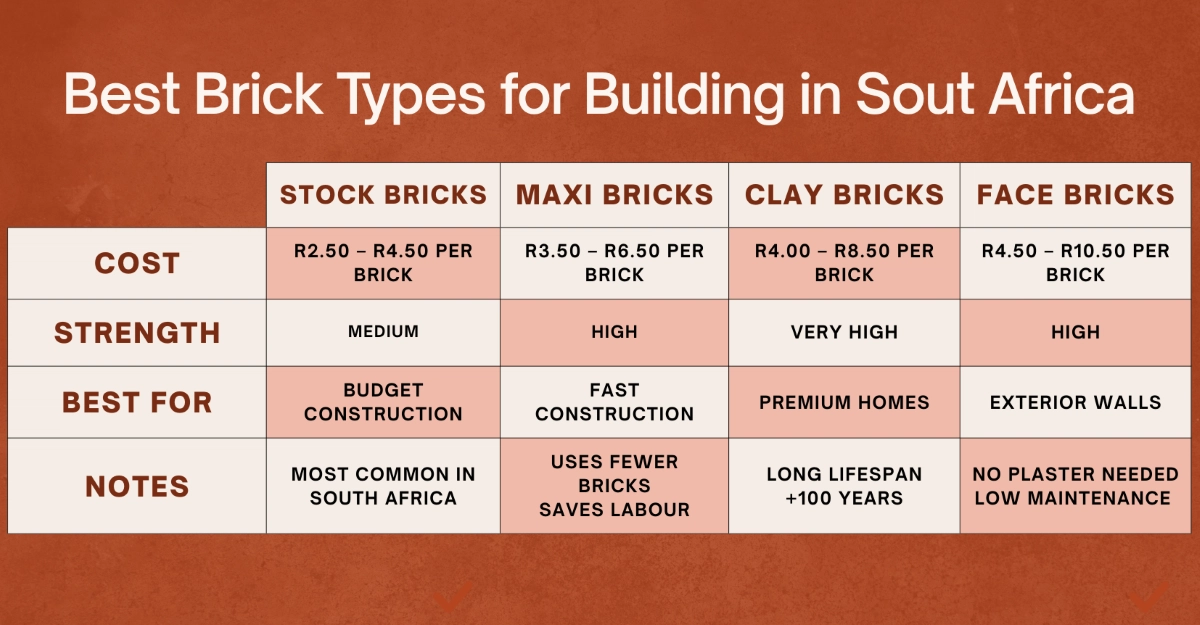
Best Brick Types for Building in South Africa
🧱 Get Expert Advice from Local Building Specialists
Connect with vetted builders who know the best bricks for your area and project.
🧱 Get Expert Advice from Local Building Specialists
Connect with vetted builders who know the best bricks for your area and project.
One of the most critical decisions in any build:
What are the best brick types for building in South Africa?
This comprehensive 4,500+ word guide compares clay bricks, cement bricks, maxi bricks, and facebricks to help you choose the right material for your project. Whether you’re building in Johannesburg, renovating in Cape Town, or constructing a coastal home in Durban, brick selection affects strength, insulation, maintenance, and cost.
In this complete guide, you’ll discover:
- Clay vs cement bricks – complete comparison
- Facebrick vs plaster brick – which to choose
- Maxi brick vs standard brick – size and cost differences
- Brick strength classes explained (MPa ratings)
- Thermal efficiency of bricks for energy-saving homes
- Which brick is best for building in Gauteng
- Cost comparison clay vs cement bricks
- Waterproof bricks for coastal homes
- Fire rating of clay bricks
- Compressive strength, water absorption, and efflorescence explained
📌 Industry Standards: All brick types discussed comply with SANS 227: Masonry units requirements. Data sourced from Clay Brick Association and leading manufacturers like Corobrik.
📖 Table of Contents: Brick Selection Guide
🏺 Clay vs Cement Bricks: Complete Comparison
The fundamental choice in South African construction is between clay bricks (fired clay) and cement bricks (concrete masonry units). Each has distinct advantages:
| Property | Clay Bricks | Cement Bricks |
|---|---|---|
| Material | Fired clay (natural) | Cement, sand, aggregate |
| Compressive strength | 7-28 MPa (typically 14 MPa) | 4-15 MPa (typically 7 MPa) |
| Water absorption | 12-18% (moderate) | 8-12% (lower) |
| Thermal insulation | Excellent (thermal mass) | Moderate |
| Fire resistance | Excellent (4+ hours) | Good (2-4 hours) |
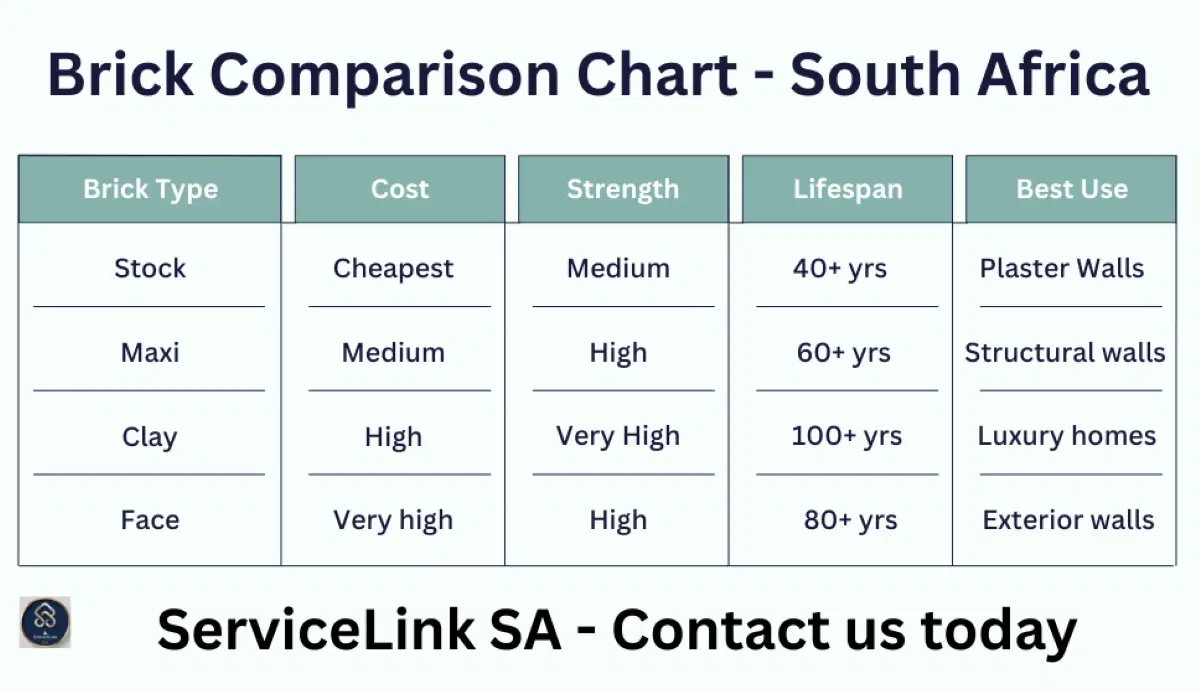
| Durability | Excellent (100+ years) | Good (50+ years) |
| Aesthetics | Natural colours, facebrick option | Usually plastered |
| Cost per brick | R3.50 – R6.50 | R2.80 – R4.50 |
| Cost per m² (wall) | R350 – R650 | R280 – R450 |
Clay Bricks: Advantages
- Superior strength: Higher compressive strength for load-bearing walls
- Better thermal performance: Natural thermal mass regulates indoor temperature
- Fire resistant: Excellent fire rating, non-combustible
- Aesthetic appeal: Available in facebrick finishes (no plaster needed)
- Longevity: Proven 100+ year lifespan in older buildings
- Acoustic insulation: Denser material blocks sound better
Cement Bricks: Advantages
- Lower cost: 20-30% cheaper than clay
- Consistent sizing: Uniform dimensions reduce mortar usage
- Lower water absorption: Better for damp areas with proper treatment
- Faster manufacturing: Readily available locally
- Good for plastering: Excellent key for plaster adhesion
Pro Tip: For structural walls and homes you’ll keep long-term, clay bricks are worth the premium. For budget projects, internal walls, or when plastering everything, cement bricks offer good value. Many builders use clay for external walls and cement for internal partitions.
🏛️ Facebrick vs Plaster Brick: Aesthetic & Cost Considerations
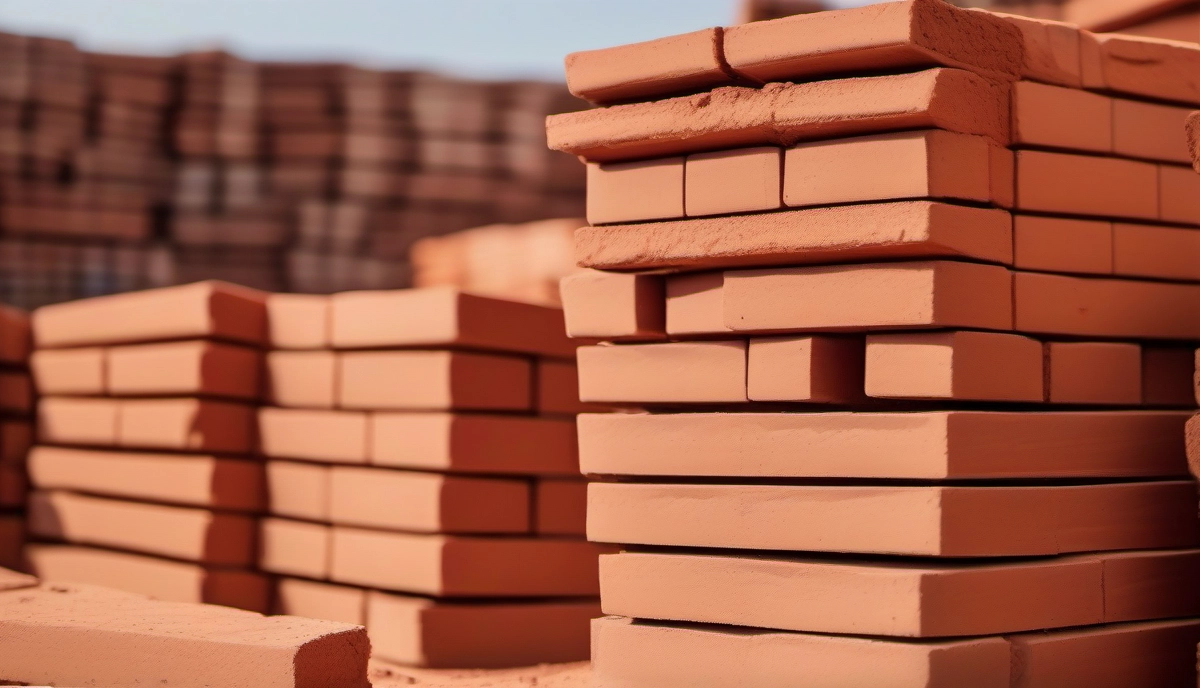
The choice between facebrick (exposed) and plaster brick affects both budget and maintenance:
| Factor | Facebrick | Plaster Brick |
|---|---|---|
| Brick cost | Higher (R5 – R8 per brick) | Lower (R3 – R5 per brick) |
| Additional finishes | None – exposed brick | Plaster + paint (R120 – R250/m²) |
| Labour cost | Higher bricklaying skill required | Standard bricklaying |
| Maintenance | Minimal – occasional cleaning | Repaint every 7-10 years |
| Aesthetic | Natural, textured, timeless | Smooth, any colour |
| Total wall cost | R500 – R800/m² | R450 – R700/m² |
Facebrick advantages: Zero maintenance costs over time, natural aesthetic, no painting, excellent durability. Popular in Pretoria and Johannesburg estates.
Plaster brick advantages: Lower initial cost, flexibility to change colours, can hide minor imperfections, uniform appearance.
📏 Maxi Brick vs Standard Brick: Size & Efficiency
Maxi bricks (also called maxi clay or maxi cement bricks) are larger format bricks gaining popularity:
| Property | Standard Brick | Maxi Brick |
|---|---|---|
| Dimensions | 222 x 106 x 73mm | 290 x 140 x 90mm (typical) |
| Bricks per m² | 45-50 bricks | 25-30 bricks |
| Mortar required | More joints (more mortar) | Fewer joints (less mortar) |
| Laying speed | Standard | 30-40% faster |
| Labour cost | Baseline | Lower per m² |
| Wall cost per m² | R350 – R600 | R380 – R650 |
Maxi brick advantages: Faster construction, reduced labour costs, fewer mortar joints (better insulation), modern aesthetic with larger format.
Standard brick advantages: Classic proportion, easier to handle, more widely available, traditional appearance.
💪 Brick Strength Classes (MPa) Explained
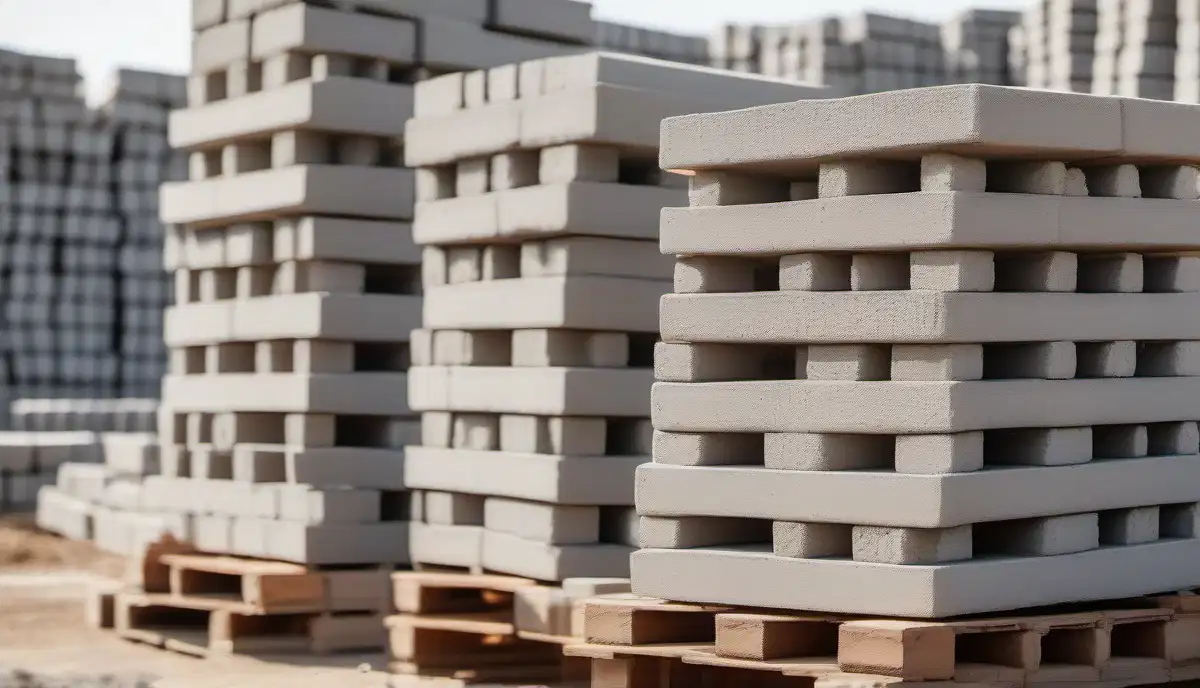
Brick strength is measured in Megapascals (MPa) – compressive strength. Higher MPa = stronger brick:
| Strength Class | MPa Range | Typical Use | Brick Type |
|---|---|---|---|
| Class 1 (Low) | 3.5 – 7 MPa | Non-load bearing internal walls | Some cement bricks |
| Class 2 (Medium) | 7 – 14 MPa | Single storey load-bearing | Standard cement, some clay |
| Class 3 (High) | 14 – 20 MPa | Double storey load-bearing | Most clay bricks |
| Class 4 (Premium) | 20 – 28+ MPa | High-load applications, commercial | Engineering clay bricks |
SANS 227 requirements: For structural walls, minimum 7 MPa is required. For multi-storey, 14 MPa+ is recommended.
🌡️ Thermal Efficiency of Bricks for Energy-Saving Homes
With energy-efficient homes gaining importance, brick thermal performance matters:
| Brick Type | Thermal Conductivity (W/mK) | Thermal Mass | R-Value (220mm wall) |
|---|---|---|---|
| Clay brick | 0.6 – 0.8 | High (excellent) | 0.3 – 0.4 |
| Cement brick | 0.8 – 1.2 | Moderate | 0.2 – 0.3 |
| Maxi clay | 0.6 – 0.8 | High | 0.4 – 0.5 |
Thermal mass benefit: Clay bricks absorb heat during the day and release it at night, stabilising indoor temperatures. This reduces heating/cooling costs by 20-30%.
💰 Cost Comparison: Clay vs Cement Bricks
For a typical 150m² house:
| Cost Element | Clay Bricks | Cement Bricks | Difference |
|---|---|---|---|
| Brick quantity (12,000 bricks) | R48,000 – R72,000 | R36,000 – R54,000 | +R12,000 – R18,000 |
| Mortar | Similar | Similar | Negligible |
| Labour (bricklaying) | R45,000 – R65,000 | R40,000 – R58,000 | +R5,000 – R7,000 |
| Plaster (if needed) | R0 (facebrick) or R25,000 | R25,000 – R35,000 | Varies |
| Paint (if plastered) | R0 (facebrick) or R15,000 | R12,000 – R18,000 | Varies |
| Total wall cost | R93,000 – R162,000 | R113,000 – R165,000 | Similar overall |
Key insight: While clay bricks cost more upfront, facebrick eliminates plaster and paint costs, making total wall cost similar over the project lifecycle.
🌊 Waterproof Bricks for Coastal Homes
Coastal areas like Cape Town, Durban, and Umhlanga need bricks resistant to salt spray and moisture:
- Clay bricks: Naturally resistant to salt attack, proven in coastal heritage buildings
- High-density cement bricks: Good if properly cured and sealed
- Water absorption rating: Look for bricks with <12% absorption for coastal use
- Facebrick advantage: No plaster to trap salt and moisture
⚠️ Coastal warning: Avoid poor-quality cement bricks with high absorption – they can deteriorate within years from salt crystallisation. Always specify marine-grade bricks within 5km of the ocean.
🔥 Fire Rating of Clay Bricks
Clay bricks offer exceptional fire resistance:
- Fire rating: 4+ hours for standard clay brick walls
- Non-combustible: Clay bricks contain no organic materials
- Structural integrity: Maintain strength even in high temperatures
- SANS 10400 requirements: Fire walls between units must meet specific ratings – clay bricks excel here
🔬 Technical Brick Terms Explained
Compressive strength
Maximum load brick can withstand before crushing. Measured in MPa. Higher = stronger.
Water absorption
Percentage of water brick absorbs. Lower is better for durability, especially in wet areas.
Efflorescence
White salt deposits on brick surface. Indicates moisture movement – can be minimised with proper bricks.
Dimensional tolerance
Variation in brick size. Low tolerance = consistent sizing, less mortar, better finish.
Frog mark
Indentation in brick for better mortar key. Should face upward during laying.
Cavity wall
Two brick leaves with gap for insulation and moisture control. Common in modern construction.
📍 Best Bricks by Region
Gauteng
Climate: Highveld, temperature extremes, frost
Best bricks: Clay bricks (14MPa+), good quality cement bricks
Why: Freeze-thaw resistance, thermal mass for temperature swings
Coastal (WC, KZN)
Climate: Humid, salt spray, high rainfall
Best bricks: Clay facebricks, high-density cement bricks
Why: Salt resistance, lower absorption, facebrick avoids plaster issues
Inland/Northern
Climate: Hot summers, mild winters
Best bricks: Clay bricks for thermal performance
Why: Thermal mass keeps interiors cooler in summer
📐 Standard Brick Dimensions South Africa
| Brick Type | Length (mm) | Width (mm) | Height (mm) | Bricks/m² |
|---|---|---|---|---|
| Standard clay/cement | 222 | 106 | 73 | 46-50 |
| Maxi clay | 290 | 140 | 90 | 25-30 |
| Maxi cement | 390 | 140 | 90 | 18-22 |
🧰 Mortar Mix Ratios for Different Bricks
- Clay bricks: 1:6 (cement:sand) with plasticiser – allows movement, prevents cracking
- Cement bricks: 1:5 (cement:sand) – stronger mix for denser units
- Facebrick: Coloured mortar often specified – 1:4 with colour pigment
- Maxi bricks: Similar to standard, but fewer joints reduce mortar quantity by 30-40%
❌ 10 Common Brick Selection Mistakes
- Choosing based only on price: Cheaper bricks may cost more long-term
- Ignoring regional climate: Coastal bricks need different specs
- Not checking strength class: 7MPa bricks for single storey, 14MPa+ for double
- Poor quality control: Check for cracks, chips, consistent sizing
- Wrong mortar mix: Too strong can crack soft bricks; too weak fails
- Facebrick without samples: Colour varies between batches – view first
- No damp proof course: Essential with all brick types
- Ignoring water absorption: High absorption bricks need protective coatings
- Not verifying SANS compliance: Always check certification
- Assuming all cement bricks equal: Quality varies dramatically by manufacturer
🌱 Sustainable Brick Options
- Clay bricks: Made from natural materials, 100% recyclable, long lifespan reduces replacement
- Fly-ash bricks: Use industrial waste, lower carbon footprint
- Local manufacturing: Reduces transport emissions – support local brickworks
- Thermal performance: Reduces ongoing energy consumption for heating/cooling
Read our sustainable building guide for more eco-friendly construction tips.
❓ Frequently Asked Questions
Which brick is best for building in South Africa?
For most homes, clay bricks (14MPa+) offer the best combination of strength, thermal performance, and durability. For budget-conscious projects, quality cement bricks (7-10MPa) work well, especially for internal walls. Facebrick clay is excellent for low-maintenance exteriors. Choose based on your climate, budget, and aesthetic preferences.
What is the difference between clay and cement bricks?
Clay bricks are fired from natural clay – stronger (14-28MPa), better thermal mass, excellent durability, natural colours. Cement bricks are made from cement and aggregate – cheaper (R2.80-R4.50 vs R3.50-R6.50), consistent sizing, lower strength (4-15MPa), good for plastering. Both are SANS approved when quality manufactured.
How much do bricks cost in South Africa?
Clay bricks: R3.50 – R6.50 each • Cement bricks: R2.80 – R4.50 each • Maxi bricks: R6.50 – R10.00 each • Facebricks: R5.00 – R8.00 each. Prices vary by region, quality, and quantity. Get quotes from local suppliers.
How many bricks per square metre?
Standard bricks (222x106x73mm): 46-50 bricks/m² including mortar joints • Maxi bricks (290x140x90mm): 25-30 bricks/m² • Maxi cement (390x140x90mm): 18-22 bricks/m². Exact count depends on joint thickness (typically 10mm).
Are clay bricks better than cement bricks?
For structural walls, exterior walls, and facebrick applications, clay bricks are superior – higher strength, better thermal performance, proven longevity. For internal walls, budget projects, and when plastering everything, cement bricks offer good value at lower cost. Both have their place in construction.
What is the best brick for coastal areas?
Clay facebricks are ideal for coastal homes – naturally salt-resistant, no plaster to trap moisture, low maintenance. If using cement bricks, specify high-density (>14MPa), low absorption (<10%) units from reputable manufacturers. Always include damp proof courses and cavity walls where appropriate.
What does MPa mean in bricks?
MPa (Megapascals) measures compressive strength – how much load the brick can withstand. Higher MPa = stronger brick. Single storey homes need minimum 7MPa, double storey requires 14MPa+, commercial applications need 20MPa+. Always check manufacturer specifications.
What is efflorescence in bricks?
Efflorescence appears as white salt deposits on brick surfaces. It occurs when water moves through bricks, dissolving salts that crystallise on the surface. It’s usually harmless but indicates moisture movement. Quality bricks have low soluble salt content, minimising efflorescence.
Can I use cement bricks for facebrick?
Generally not recommended. Cement bricks are designed for plastering – they lack the aesthetic appeal of clay facebricks, may have inconsistent colour, and can deteriorate when exposed. Some manufacturers produce specialised cement facebricks – verify suitability before specifying.
What is the fire rating of clay bricks?
Clay bricks offer 4+ hours fire resistance for standard walls. They’re non-combustible, maintain structural integrity in high temperatures, and meet SANS 10400 fire requirements. This makes them excellent for party walls, garages, and fire-rated applications.
✅ Action Plan: Choosing Your Bricks
- Determine structural requirements – single or double storey? Load-bearing walls?
- Consider climate – coastal, highveld, or inland? Choose accordingly
- Decide on finish – facebrick (clay) or plastered (cement or clay)
- Set budget – compare clay vs cement lifecycle costs
- Get samples – view actual bricks, check colour and quality
- Verify SANS compliance – ask for test certificates
- Order from reputable manufacturer – Corobrik, BMI, local trusted brands
- Check delivery – inspect for damage, consistent quality
Ready to Build with the Right Bricks?
Connect with experienced builders who know the best materials for your area and project.
Official brick industry resources:
- Clay Brick Association of South Africa – Technical guides and member directory
- Corobrik – Leading brick manufacturer, product specifications
- SABS – SANS 227: Masonry units – Official standards for bricks
Information accurate as of February 2025. Always verify current specifications with manufacturers and suppliers.
Written by: ServiceLink SA Research Team
Verified by Innocent T Hanyani (21+ years construction and digital industry experience)
Our team has worked with leading brick manufacturers and thousands of construction projects across South Africa. This guide draws on technical specifications from the Clay Brick Association and real-world performance data from completed homes.