
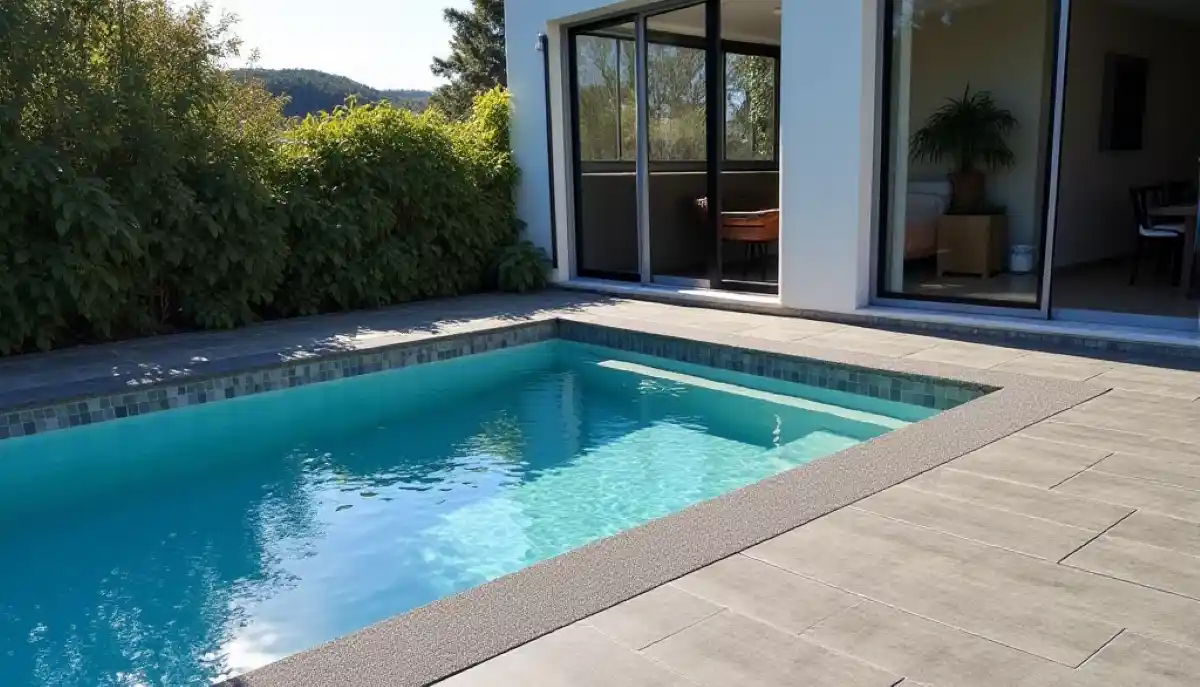
Best Materials for Outdoor Tiling – Patios, Pools & Driveways South Africa
🏊 Slip-resistant, frost-proof, durable – the ultimate guide to choosing outdoor tiles for your South African home.
Outdoor tiling is fundamentally different from indoor tiling. Your patio, pool surround, and driveway face sun, rain, temperature extremes, and heavy traffic – while needing to look beautiful and stay safe when wet. Choose the wrong material, and you’ll be dealing with cracked tiles, slippery surfaces, and costly replacements. Whether you’re designing an entertainment area in Sandton, a pool deck in Ballito, or a driveway in Cape Town, this comprehensive guide covers everything you need to know about outdoor tiling materials. Drawing on expertise from TAL, SABS standards, and industry experts, we’ll help you select the perfect material for your outdoor space.
🏠 Planning an Outdoor Tiling Project?
Get free, no-obligation quotes from experienced outdoor tiling specialists in your area. They’ll advise on the best materials for your specific climate and application.
Servicing Johannesburg, Pretoria, Cape Town, Durban, and all major areas
📖 Table of Contents – Outdoor Tiling Guide
✅ Key Requirements for Outdoor Tiles
Before choosing materials, understand what outdoor tiles must withstand.
🌧️ Weather Resistance
- Frost resistance: Tiles must not absorb water that could freeze and crack
- UV stability: Colours must not fade in harsh sun
- Thermal expansion: Must accommodate temperature swings
- Rain/ moisture: Low water absorption essential
👣 Safety
- Slip resistance: R11+ for pool surrounds, R10+ for patios
- Textured surface: Essential when wet
- Non-slip even when wet: Critical for safety
🏋️ Durability
- Load bearing: Driveways need heavy-duty tiles
- Abrasion resistance: PEI 4-5 for high traffic
- Impact resistance: Withstand dropped objects
🧼 Maintenance
- Stain resistance: Resist algae, moss, dirt
- Easy cleaning: Smooth enough to clean, textured enough for safety
- Low porosity: Prevents moisture absorption
Key Insight: According to SANS 10400, outdoor tiling must meet specific safety and durability standards. Always check compliance before purchasing.
📊 Outdoor Tiling – Material Comparison
Here’s how different materials perform for outdoor applications.
| Material | Patio | Pool Deck | Driveway | Slip Resistance | Durability | Cost/m² |
|---|---|---|---|---|---|---|
| Porcelain (through-body) | ✅ Excellent | ✅ Excellent | ✅ Good (20mm+) | R10-R13 | Excellent | R300-600 |
| Slate | ✅ Excellent | ✅ Good | ⚠️ Moderate | R11-R13 | Good | R400-800 |
| Travertine | ✅ Good | ✅ Good (filled) | ❌ No | R10-R11 | Moderate | R500-900 |
| Granite | ✅ Excellent | ✅ Good | ✅ Excellent | R11-R13 | Excellent | R600-1,200 |
| Quarry tiles | ✅ Good | ⚠️ Moderate | ❌ No | R9-R10 | Good | R250-450 |
| Ceramic | ❌ NOT recommended | ❌ No | ❌ No | Poor | Poor | R80-250 |
Warning: Standard ceramic tiles are NOT suitable for outdoor use. They absorb moisture, crack in frost, and become dangerously slippery when wet.
🏺 Porcelain – The Outdoor Champion
Porcelain is the most versatile and reliable outdoor tiling material. According to CTM’s guide, porcelain’s low water absorption makes it ideal for exterior use.
Why Porcelain Excels Outdoors
- Water absorption <0.5%: Impervious to rain and moisture – no frost damage
- Through-body colour: Colour runs through entire tile – chips don’t show
- Textured finishes: Available with R11-R13 slip ratings
- UV stable: Colours won’t fade in harsh sun
- Durable: PEI 4-5 ratings for heavy traffic
Types of Outdoor Porcelain
- Wood-look porcelain: Warmth of wood with durability of stone
- Stone-look porcelain: Natural appearance without maintenance
- Concrete-look porcelain: Modern, industrial aesthetic
- Textured/ grip porcelain: Enhanced slip resistance for wet areas
Specifications for Outdoor Use
- Thickness: Minimum 10mm for patios, 20mm for driveways
- Slip rating: R11+ for pool surrounds, R10+ for patios
- Finish: Matt or textured – never polished (slippery when wet)
For professional outdoor tiling and pool tiling, experienced tilers can recommend the right porcelain products.
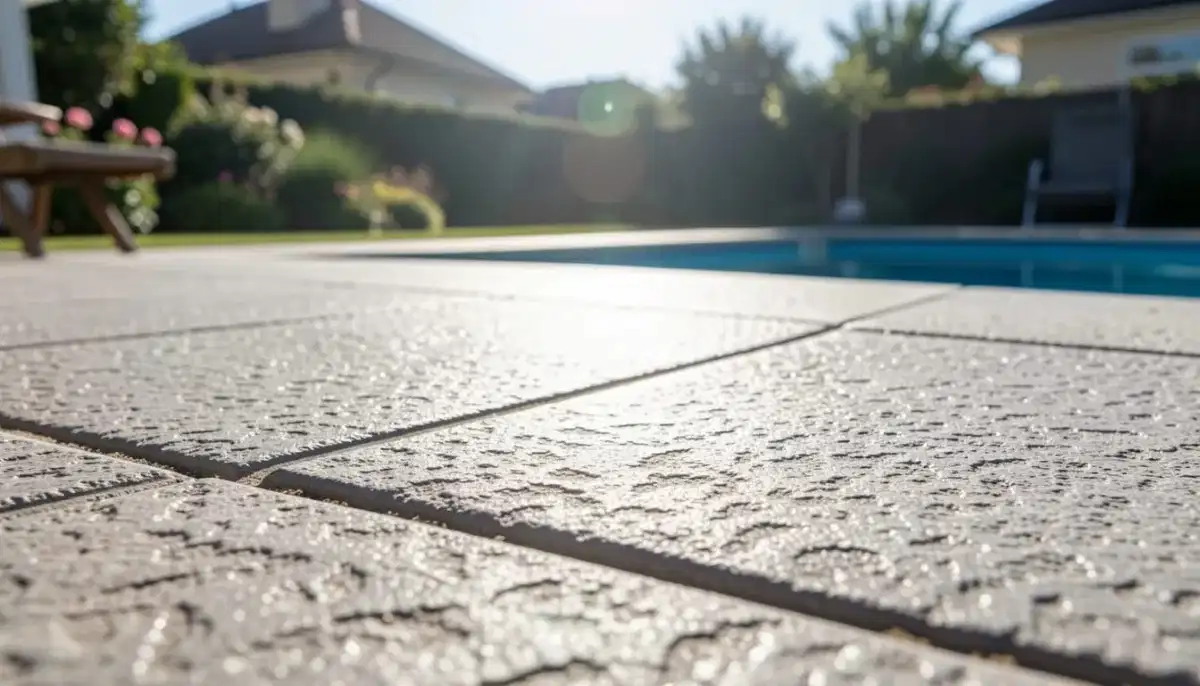
🪨 Natural Stone – Slate, Travertine & Granite
Natural stone brings timeless beauty to outdoor spaces but requires careful selection and maintenance.
Slate
Excellent choice for patios and pathways with natural slip resistance.
- Pros: Naturally slip-resistant, durable, unique appearance
- Cons: Can flake or delaminate, varies in thickness
- Slip rating: R11-R13 naturally
- Cost: R400 – R800/m²
- Best for: Patios, pathways, garden features
Travertine
Classic choice for pool coping and Mediterranean-style patios. Stays cool underfoot.
- Pros: Naturally cool, beautiful, traditional look
- Cons: Porous – requires filling and sealing, can etch
- Slip rating: R10-R11 when unfilled; R9 when polished
- Cost: R500 – R900/m²
- Best for: Pool coping, covered patios, entertainment areas
Granite
Extremely hard and durable – ideal for driveways and high-traffic areas.
- Pros: Extremely hard, durable, stain-resistant
- Cons: Heavy, expensive, can be slippery if polished
- Slip rating: R11-R13 (flamed or textured finish)
- Cost: R600 – R1,200/m²
- Best for: Driveways, entrances, commercial areas
WOMAG notes: “Stone cladding and large-format tiles tie patios to living rooms, perfectly suited to the South African lifestyle.”
🏺 Quarry Tiles & Terracotta
Traditional options with rustic appeal, but with limitations.
Quarry Tiles
- Pros: Durable, affordable, traditional look
- Cons: Porous – must be sealed, limited colours
- Slip rating: R9-R10
- Cost: R250 – R450/m²
- Best for: Covered patios, verandahs, farm-style homes
- Note: Not suitable for pool surrounds or areas with standing water
Terracotta
- Pros: Warm, rustic charm, traditional
- Cons: Very porous, soft, requires sealing, frost-sensitive
- Cost: R200 – R400/m²
- Best for: Covered patios only, dry climates
- Note: Avoid in Cape Town or Durban – moisture will cause deterioration
🌿 Patio Tiles – Best Options
For covered or uncovered patios, consider these factors.
Covered Patios
- Porcelain: Best all-rounder – durable, low maintenance
- Slate: Natural beauty, good slip resistance
- Quarry tiles: Traditional, affordable for covered areas
Uncovered Patios (Exposed to Rain)
- Porcelain (R11+): Only reliable choice – frost-proof, slip-resistant
- Slate: Works if well-sealed and not in frost zones
- Granite: Excellent but expensive
Cape Town Outdoor Requirements
“With Cape Town’s rainy winters, non-slip tiles are essential for outdoor patios, pool areas and even bathrooms to prevent accidents in damp conditions.” – Tiletoria
“Natural stone tiles like slate, travertine or granite or concrete look tiles work beautifully in Cape Town’s coastal style homes, offering a textured, organic look that fits the natural surroundings.”
For Cape Town patios and Durban entertainment areas, porcelain with R11+ rating is recommended.
🏊 Pool Tiling – Coping & Decking
Pool areas have the most demanding requirements – constant water, chemicals, and bare feet.
| Area | Material | Specification |
|---|---|---|
| Pool interior | Glass mosaic, ceramic mosaic | Acid-resistant; non-slip; low water absorption; specialist installation |
| Pool coping (edge) | Travertine, granite, porcelain | Bullnose edge; slip resistant; thermal stability; cool underfoot |
| Pool deck | Textured porcelain, slate | R11+ slip rating; frost resistant; easy clean; non-porous |
Pool Coping Considerations
- Travertine: Traditional choice – stays cool, beautiful, but needs sealing
- Porcelain: Modern option – durable, low maintenance, available with bullnose edges
- Granite: Extremely durable, but can get hot in summer
- Finish: Honed or textured – never polished (too slippery)
Pool Deck Requirements
- Slip rating: R11 minimum, R12 recommended
- Water absorption: <0.5% (porcelain only)
- Texture: Sufficient grip for wet bare feet
- Heat reflection: Lighter colours stay cooler
Our pool tiling specialists have experience with all pool applications.
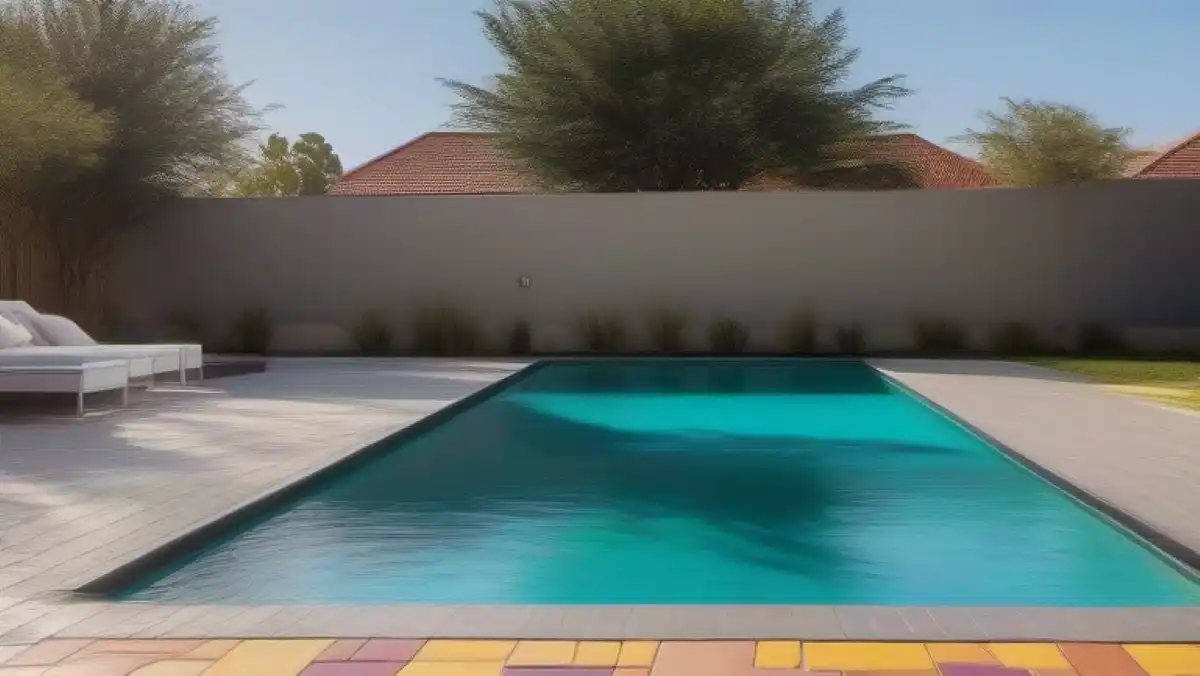
🏊 Planning a Pool or Patio Project?
Pool tiling requires specialist knowledge. Get free quotes from experienced outdoor tiling contractors in your area.
🚗 Driveway Tiling – Load Requirements
Tiling a driveway is possible but requires careful specification. Most driveways use paving, but tiled driveways offer a seamless, premium look.
Load Requirements
- Porcelain: Minimum 20mm thickness for vehicular traffic
- Granite setts / cobbles: Traditional; high load capacity (30-50mm thick)
- Natural stone: Requires minimum 30-40mm thickness
- Substrate: Reinforced concrete base essential (minimum 100mm)
Advantages of Tiled Driveways
- Seamless appearance matching house
- Easy to clean – no weeds between pavers
- Durable – porcelain won’t crack under vehicles
- Modern, upscale aesthetic
Considerations
- Slip resistance: R11+ rating essential – wet vehicles can be slippery
- Drainage: Adequate fall (1:60 minimum) to prevent pooling
- Movement joints: 3m centres maximum for exterior slabs
- Edge restraints: Strong edging to prevent vehicles from damaging edges
For driveway tiling, professional installation is essential.
👣 Slip Resistance – R-Ratings for Outdoors
Understanding R-ratings is critical for outdoor safety.
| R-Rating | Application | Angle |
|---|---|---|
| R9 | Dry indoor areas only | 6-10° |
| R10 | General indoor/outdoor, covered patios | 10-19° |
| R11 | Wet areas, pool surrounds, uncovered patios | 19-27° |
| R12 | Commercial kitchens, slopes, very wet areas | 27-35° |
| R13 | Industrial, steep ramps | 35°+ |
Outdoor Recommendations
- Pool surrounds (Cape Town/Durban): R11 minimum, R12 recommended
- Uncovered patios: R10-R11 depending on exposure
- Driveways: R11 (wet vehicles and oil)
- Steps and ramps: R12-R13
As Tiletoria emphasises: “With Cape Town’s rainy winters, non-slip tiles are essential for outdoor patios, pool areas and even bathrooms to prevent accidents in damp conditions.”
🛠️ Installation Requirements – TAL Guidelines
Outdoor tiling requires specific installation methods. TAL’s technical guidelines specify:
Adhesive Requirements
“When tiling onto suspended slabs and for external installations mix the TAL Tile-To-Tile with TAL Bond, replacing the water in the mix. Alternatively, TAL Bond Powder can be added to the adhesive mixing water.”
Movement Joints – CRITICAL
“Movement joints should also be installed at maximum 3 metre centres for suspended slabs and exterior applications. These joints must be a minimum of 5mm wide, must extend through the tile and tile adhesive layers to the substrate, and must be filled with a good quality resilient joint sealant and suitable backing cord.”
Perimeter Joints
Joints around the perimeter of tiled areas allow for expansion. Minimum 5mm wide, filled with resilient sealant.
Substrate Requirements
- Concrete base must be properly cured (minimum 28 days)
- Adequate falls for drainage (1:60 minimum)
- Waterproofing membrane required under tiles in wet areas
Our commercial tiling and pool tiling experts follow these guidelines strictly.
🌊 Coastal Considerations – Cape Town & Durban
Coastal environments present unique challenges for outdoor tiling.
Cape Town
- Wet winters: R11+ slip rating essential
- Salt air: Porcelain or sealed natural stone only
- Temperature swings: Movement joints at 3m centres
- UV exposure: Choose UV-stable materials
Durban
- High humidity: Porcelain (<0.5% absorption) essential
- Salt air: Avoid porous materials
- Mould risk: Anti-mould grout or epoxy grout recommended
- Pool areas: R11+ slip rating, light colours to stay cool
For homes in Cape Town, Constantia, Durban, or Ballito, choose materials rated for coastal exposure.
☀️ Highveld Considerations – Gauteng
Gauteng’s climate – hot summers, cold winters, temperature swings – affects outdoor tiling.
Key Considerations
- Thermal expansion: Movement joints at 3m centres essential
- UV exposure: Intense Highveld sun – choose UV-stable materials
- Frost risk: Even occasional frost requires frost-proof materials
- Dust: Matt finishes hide dust better than polished
Recommended Materials
- Porcelain: Ideal – handles temperature swings, UV stable
- Slate: Works well, durable
- Granite: Excellent but expensive
For Johannesburg and Pretoria patios, porcelain is the safest choice.
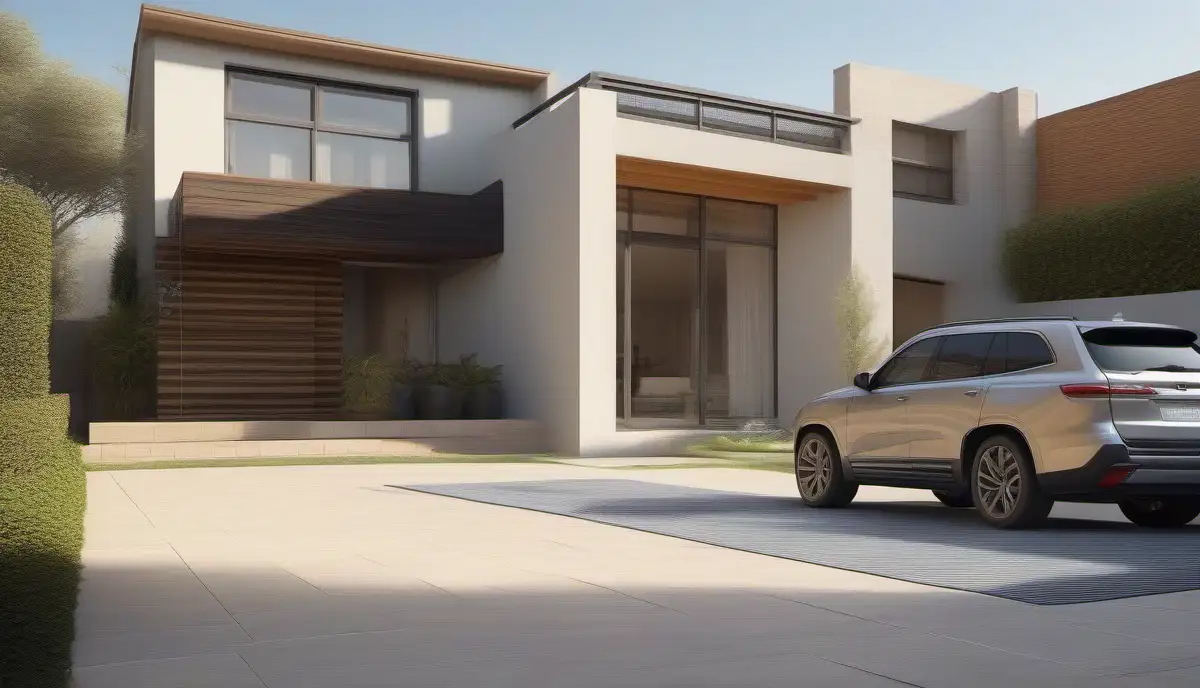
🏠 Real-Life Outdoor Tiling Examples
Example 1: Pool & Patio, Fourways
45m² pool surround and covered patio.
Choice: Textured porcelain (R11)
600x600mm matt porcelain, TAL Bond adhesive, movement joints at 3m. Cost: R28,000.
Example 2: Pool Deck, Ballito
30m² pool surround, coastal exposure.
Choice: R12-rated textured porcelain
600x600mm slip-resistant porcelain, epoxy grout, full waterproofing. Cost: R22,500.
Example 3: Driveway, Stellenbosch
60m² driveway, vehicle traffic.
Choice: 20mm thick porcelain
600x600x20mm porcelain, reinforced concrete base, movement joints. Cost: R42,000.
Example 4: Patio, Constantia
40m² uncovered patio, Cape Town winter rain.
Choice: Slate (natural)
Natural slate tiles, sealed, R11 slip rating. Cost: R34,000.
❌ 7 Common Outdoor Tiling Mistakes
Learn from others’ errors: These mistakes cause accidents and expensive failures.
Mistake #1: Using Indoor Tiles Outdoors
Standard ceramic tiles absorb moisture, crack in frost, and become dangerously slippery. Only use tiles rated for outdoor use.
Mistake #2: Ignoring Slip Ratings
Smooth, polished tiles around pools are accidents waiting to happen. Always check R-ratings – R11 minimum for wet areas.
Mistake #3: No Movement Joints
Outdoor tiles expand and contract with temperature. Without movement joints at 3m centres, tiles will tent and crack.
Mistake #4: Inadequate Fall
Water must drain away. Minimum 1:60 fall prevents pooling, which creates slip hazards and can damage tiles.
Mistake #5: Wrong Adhesive
Standard indoor adhesive won’t withstand outdoor conditions. Use flexible, outdoor-rated adhesive with additives like TAL Bond.
Mistake #6: No Edge Restraints
Driveway tiles need strong edge restraints to prevent vehicles from damaging edges. Concrete kerbs or metal edging essential.
Mistake #7: Ignoring Substrate Preparation
Outdoor substrates must be properly prepared – compacted, sloped, and cured. Skipping this leads to failure.
❓ Frequently Asked Questions – Outdoor Tiling
What are the best outdoor tiles for patios?
Porcelain with R10-R11 slip rating is best – durable, low maintenance, frost-proof. Slate works well for natural look. Avoid ceramic entirely.
Can I use ceramic tiles outdoors?
Not recommended. Ceramic absorbs moisture (3-7%+), cracks in frost, and becomes slippery. Only porcelain or outdoor-rated natural stone should be used.
What R-rating do I need for pool surrounds?
R11 minimum, R12 recommended. Pool areas are constantly wet and need maximum slip resistance. Test tiles when wet before purchasing.
What tiles stay cool underfoot in summer?
Light-coloured travertine and light porcelain stay coolest. Dark tiles absorb heat and can become too hot for bare feet. Avoid dark slate or granite in sunny areas.
Can I tile my driveway?
Yes, with 20mm+ thick porcelain and reinforced concrete base. Ensure R11+ slip rating and movement joints at 3m centres. Professional installation essential.
What’s the best material for pool coping?
Travertine is traditional – stays cool, beautiful. Porcelain is modern – durable, low maintenance. Both need bullnose edges and slip-resistant finish.
Do outdoor tiles need sealing?
Porcelain: No. Natural stone: Yes – all natural stone outdoors needs sealing to prevent staining and moisture absorption. Re-seal annually.
How often should I seal outdoor stone tiles?
Annually for outdoor stone tiles exposed to weather. Use penetrating sealer designed for the specific stone type. Test water absorption to check if resealing needed.
What movement joints are needed outdoors?
3m centres maximum for exterior installations, plus perimeter joints. Minimum 5mm wide, filled with resilient sealant. Critical for preventing tenting and cracking.
Can I tile over existing concrete patio?
Yes, if concrete is sound, clean, and has adequate fall. Use flexible outdoor adhesive with bonding agent. Check for cracks – repair before tiling. See our preparation guide.
✅ Final Thoughts – Choose Wisely for Lasting Beauty
Outdoor tiling is an investment in your home’s enjoyment and value. The right materials, properly installed, will provide decades of beauty and safety. The wrong choices lead to accidents, failures, and costly replacements.
Your 4-Step Outdoor Tiling Action Plan:
- Assess exposure: Full sun? Rain? Frost? Coastal salt?
- Choose material: Porcelain for most applications; natural stone for specific looks
- Check ratings: Slip resistance (R11+ for wet), water absorption (<0.5%), thickness
- Professional installation: Outdoor tiling is not DIY – movement joints, falls, and adhesives are critical
🔑 The Bottom Line:
Porcelain is the safest, most versatile choice.
Slip resistance saves lives.
Invest in quality – your family’s safety depends on it.
🏠 Ready to Transform Your Outdoor Space?
Get free, no-obligation quotes from experienced outdoor tiling specialists who understand coastal, Highveld, and pool requirements.
📞 Call our outdoor tiling helpline: 073 138 4726
📚 Official Resources & Technical Guidelines:
- TAL – External installation guidelines, movement joints, TAL Bond.
- SABS – SANS 10400 – Outdoor tiling requirements.
- CTM – Porcelain for outdoor use.
- Tiletoria – Outdoor slip resistance – Cape Town.
- WOMAG – Stone cladding, outdoor entertainment areas.
This guide is for informational purposes. Always consult with a qualified professional for your specific outdoor tiling project.
Written by: Innocent T Hanyani
21+ years construction and digital industry experience, ServiceLink SA
Innocent has designed and overseen hundreds of outdoor tiling projects across South Africa – from coastal pools in Durban to Highveld patios in Johannesburg. His practical experience with material performance in different climates ensures this guide reflects real-world results.