
Best Tiles for Kitchens & Bathrooms South Africa – Complete Selection Guide
🚿 Porcelain, ceramic, natural stone – which tile is RIGHT for your kitchen or bathroom? We break down slip resistance, water absorption, and design.
Kitchens and bathrooms are the most demanding spaces in any home. They face moisture, heat, stains, and heavy foot traffic – yet they also need to look beautiful. Choosing the wrong tile can lead to slippery floors, mouldy grout, cracked tiles, and expensive replacements. Whether you’re renovating a bathroom in Sandton, designing a coastal kitchen in Cape Town, or updating a family home in Durban, this comprehensive guide covers everything you need to know about selecting the perfect tiles for wet areas. We’ll explore porcelain vs ceramic, slip resistance ratings, waterproofing requirements, and the latest design trends – helping you make an informed decision that balances safety, durability, and style.
📋 Planning a Kitchen or Bathroom Renovation?
Get free, no-obligation quotes from experienced tiling specialists in your area. They’ll advise on the best tiles for your specific space and moisture conditions.
Servicing Johannesburg, Pretoria, Cape Town, Durban, and all major areas
📖 Table of Contents – Kitchen & Bathroom Tiles
✅ Key Requirements for Kitchen & Bathroom Tiles
Before diving into specific recommendations, understand the five critical factors that determine whether a tile is suitable for kitchens and bathrooms.
💧 Water Absorption
The most important factor for wet areas. Tiles with high water absorption will soak up moisture, leading to staining, mould, and tile failure.
- Porcelain: <0.5% – Excellent for wet areas
- Ceramic: 3-7%+ – Moderate; requires sealing
- Natural stone: Variable; requires sealing
👣 Slip Resistance
Essential for safety, especially on wet floors. Measured by R-rating or COF (Coefficient of Friction).
- Bathroom floors: R10+ recommended
- Shower floors: R11+ recommended
- Kitchen floors: R9-R10 minimum
🛡️ Durability (PEI Rating)
Measures abrasion resistance. Kitchens and bathrooms need durable tiles.
- Bathroom floors: PEI 3-4
- Kitchen floors: PEI 4-5
- Walls: PEI 1-2 sufficient
🧼 Stain Resistance
Kitchens face spills, oils, and food acids. Bathrooms face soap, shampoo, and hard water.
- Glazed tiles: Excellent stain resistance
- Unglazed/through-body: May require sealing
Key Insight: “High-traffic areas or spaces exposed to moisture, such as kitchens and bathrooms, benefit from the superior durability and water resistance of porcelain tiles.” – CTM Tile Selection Guide
🚽 Bathroom Tiles – Room-by-Room Selection Guide
Different areas of your bathroom have different requirements. Here’s what works best where.
| Area | Tile Recommendation | Key Specifications | Why |
|---|---|---|---|
| Bathroom Floor | Porcelain, textured ceramic | PEI 3-4, R10+ slip resistance, <0.5% water absorption | Constant moisture exposure requires low absorption; safety requires slip resistance |
| Shower Floor | Mosaic, small format tiles | R11+ slip resistance, maximum fall for drainage, anti-mould grout | Small tiles conform to slopes; more grout lines = better grip |
| Shower Walls | Porcelain, ceramic, marble | Floor-to-ceiling recommended; waterproofing membrane behind | Walls less demanding than floors; still need moisture resistance |
| Vanity Splashback | Glazed ceramic, glass mosaic | Easy clean, stain resistant, water-repellent | Protects wall from water splashes; easy wipe-down |
| Bathroom Walls (general) | Large format porcelain | Minimal grout lines, moisture resistant | Fewer grout lines = less cleaning, modern aesthetic |
WOMAG – Floor-to-Ceiling Marble Trend
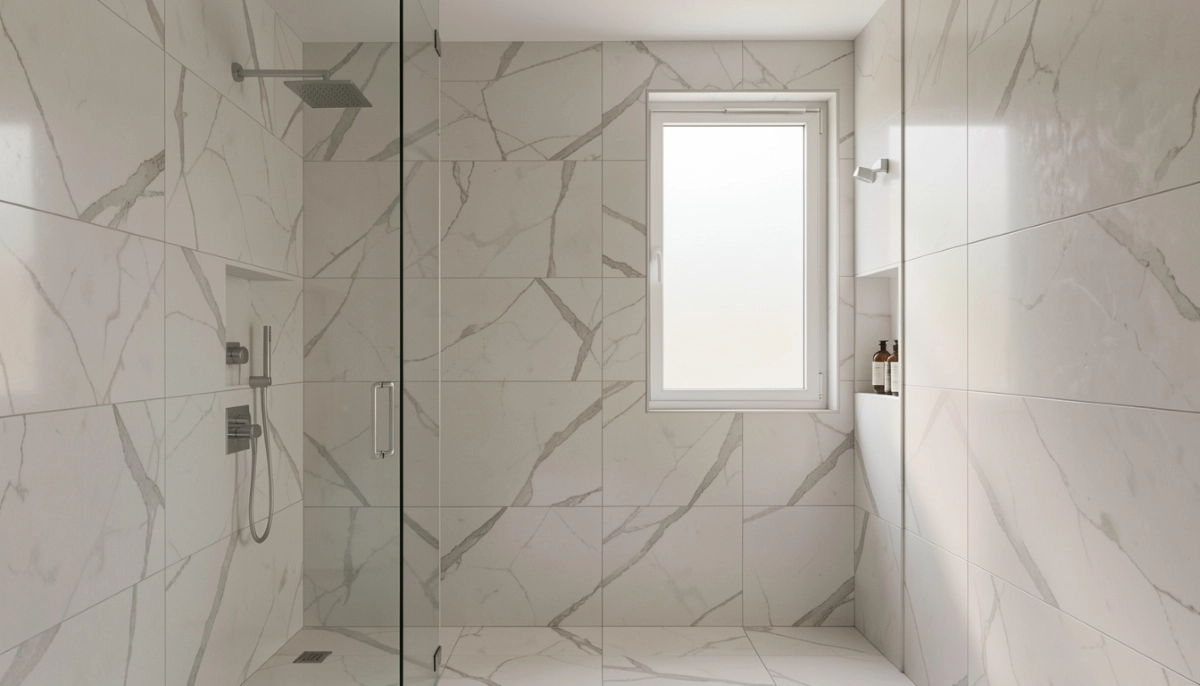
“Bathrooms wrapped entirely in marble or quartzite are replacing ‘feature walls’ with spa-like calm.” – WOMAG. This luxury trend creates a seamless, monolithic look but requires proper sealing and maintenance.
🍳 Kitchen Tiles – Performance & Aesthetics
Kitchens face unique challenges: food spills, oils, heat, and heavy foot traffic. Here’s what works.
| Area | Tile Recommendation | Key Specifications | Why |
|---|---|---|---|
| Kitchen Floor | Porcelain, textured ceramic | PEI 4-5, stain resistant, easy clean, R9-R10 slip resistance | High traffic, spills, dropped items need durable, stain-proof surface |
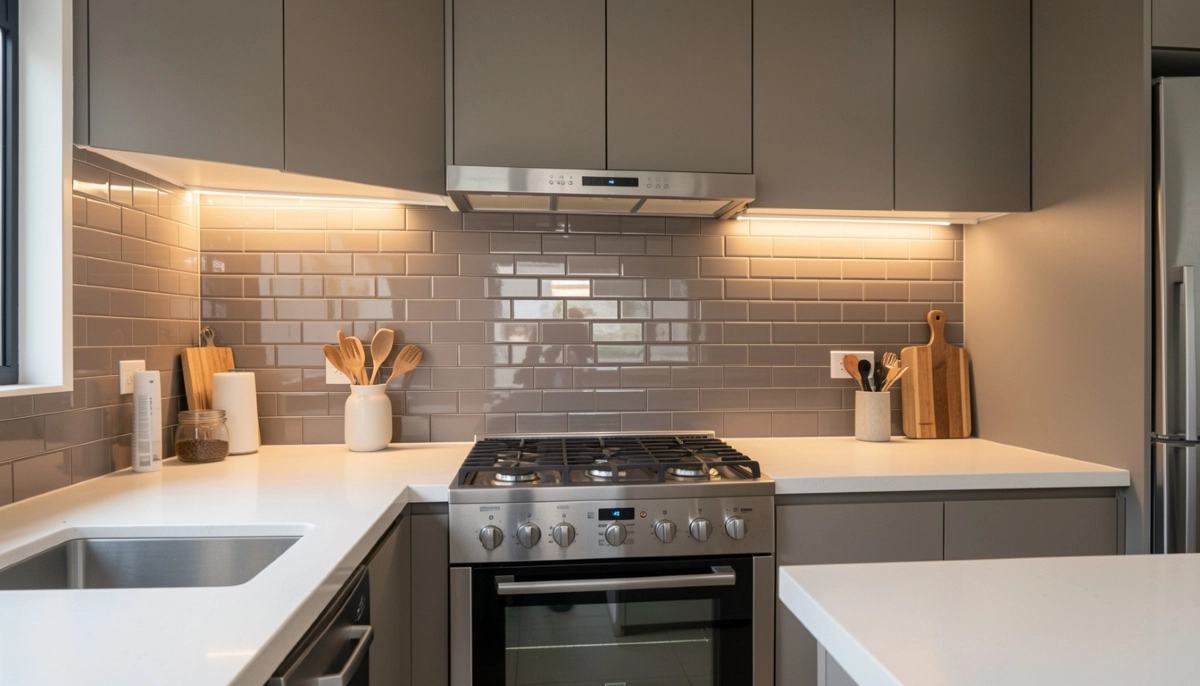
| Splashback | Glazed ceramic, glass, porcelain | Easy wipe, heat resistant, low maintenance, water-repellent | Protects wall from cooking splatters; easy cleaning essential |
| Kitchen Walls (full height) | Porcelain, large format | Minimal grout, modern aesthetic, easy clean | Trend in contemporary kitchens; fewer grout lines to clean |
LivingEtc – Kitchen Tile Design Tips
“Glossy finishes tend to accentuate watermarks and smudges, leading to the need for more frequent cleaning. Instead, opt for matt finish tiles to help keep tiles free from watermarks, making them particularly suitable for areas like the sink and behind the cooker.”
⚖️ Porcelain vs Ceramic – The Wet Area Verdict
This is the most common debate in tiling. Here’s how they compare specifically for kitchens and bathrooms.
| Criteria | Porcelain | Ceramic |
|---|---|---|
| Water resistance | ✅ Excellent (<0.5% absorption) | ⚠️ Moderate (3-7%+ absorption) |
| Durability | ✅ Superior – ideal for floors | ⚠️ Moderate – better for walls |
| Slip resistance | ✅ Textured options available (R10-R13) | ⚠️ Glossy ceramic = slippery; textured available |
| Stain resistance | ✅ Excellent – through-body colour | ✅ Good (glazed surface) |
| Cost (material) | R200 – R500/m² | R80 – R250/m² |
| Installation | Harder to cut (specialist) | Easier – DIY-friendly |
| Best for bathrooms | Floors, showers, wet areas | Walls, low-traffic areas |
| Best for kitchens | Floors, splashbacks | Splashbacks, walls |
Pro Tip: For kitchens and bathrooms, use porcelain on floors and ceramic on walls to balance performance and budget. Porcelain handles moisture and traffic; ceramic offers affordable style for vertical surfaces.
🏠 Not Sure Which Tile to Choose?
Get expert advice from local tiling specialists who understand your climate, moisture conditions, and design preferences.
👣 Slip Resistance – R-Ratings Explained
Slip resistance is critical in wet areas. South Africa uses the R-rating system (German standard).
| R-Rating | Application | Angle |
|---|---|---|
| R9 | Dry indoor areas | 6-10° |
| R10 | General indoor/outdoor, bathroom floors | 10-19° |
| R11 | Wet areas, shower floors, pool surrounds | 19-27° |
| R12 | Commercial kitchens, slopes | 27-35° |
| R13 | Industrial, steep ramps | 35°+ |
Daltile StepWise Technology
“StepWise is a special surface innovation that increases slip resistance, so you get serious grip underfoot without compromising on style.” – Daltile. Look for tiles with enhanced slip resistance for bathroom floors and showers.
Recommendations by Area
- Bathroom floors: R10 minimum, R11 recommended
- Shower floors: R11 minimum, small format tiles for better grip
- Kitchen floors: R9-R10 (water spills possible)
- Pool surrounds / outdoor wet areas: R11-R13
💧 Water Absorption & PEI Ratings
Water Absorption Classes
- Group Ia (Porcelain): <0.5% absorption – impervious, ideal for wet areas
- Group Ib: 0.5-3% – still good for bathrooms
- Group IIa/b: 3-10% – moderate, needs sealing in wet areas
- Group III: >10% – not suitable for wet areas
PEI Ratings (Abrasion Resistance)
- PEI 1: Walls only – no foot traffic
- PEI 2: Light traffic – bathrooms (walls), bedrooms
- PEI 3: Moderate traffic – all residential areas
- PEI 4: High traffic – kitchens, hallways, light commercial
- PEI 5: Heavy traffic – commercial, public spaces
Recommendation: Bathroom floors: PEI 3-4; Kitchen floors: PEI 4-5; Walls: PEI 1-2 sufficient.
🌊 Coastal Considerations – Cape Town & Durban
Living near the ocean presents unique challenges for tiling. Salt air, high humidity, and rainy winters affect tile performance.
Cape Town – Wet Winters & Humidity
- Slip resistance: “With Cape Town’s rainy winters, non-slip tiles are essential for outdoor patios, pool areas and even bathrooms to prevent accidents in damp conditions.” – Tiletoria
- Moisture resistance: Porcelain tiles (low absorption) are preferred over ceramic
- Natural stone: Works beautifully but requires sealing and maintenance
- Style: “Natural stone tiles like slate, travertine or granite or concrete look tiles work beautifully in Cape Town’s coastal style homes, offering a textured, organic look that fits the natural surroundings.”
Durban – High Humidity & Salt Air
- Water absorption: Porcelain (<0.5%) essential – ceramic absorbs moisture in humid conditions
- Mould resistance: Anti-mould grout or epoxy grout recommended
- Salt air: Glazed tiles protect against salt corrosion
- Ventilation: Essential to prevent mould growth on grout
Recommended Coastal Tile Choices
- Floors: Textured porcelain, R11+ slip rating
- Walls: Porcelain or glazed ceramic
- Grout: Epoxy or anti-mould additive (e.g., TAL Bond)
☀️ Highveld Considerations – Gauteng
Gauteng’s climate (temperature swings, dry winters, summer storms) affects tile selection.
Temperature Fluctuations
- Porcelain handles thermal stress better than ceramic
- Movement joints essential – “Maximum 5m centres interior; 3m centres exterior/suspended slabs” – TAL
Dust & Dry Conditions
- Matt finish tiles hide dust better than high-gloss
- Wood-look porcelain popular for modern homes
Recommended Highveld Tile Choices
- Floors: Porcelain, large format, wood-look or concrete-look
- Walls: Ceramic or porcelain
- Grout: Standard cementitious with sealer
✨ Design Trends for Kitchens & Bathrooms
Large Format Tiles
- 600x1200mm, 800x800mm, 1200x2400mm increasingly popular
- Fewer grout lines = cleaner look, easier maintenance
- Makes small bathrooms appear larger
- Requires perfectly level substrate and professional installation
Wood-Look Porcelain
- Warmth of wood with durability of porcelain
- Ideal for bathrooms where real wood would warp
- Popular in Gauteng and coastal areas
- Available in plank formats (150x900mm, 200x1200mm)
Marble & Stone Looks
- Large-format marble-look porcelain for luxury bathrooms
- WOMAG trend: “Bathrooms wrapped entirely in marble or quartzite”
- Less maintenance than real marble
Terrazzo & Patterned Tiles
- Retro revival – colourful terrazzo for floors and splashbacks
- Patterned cement-look tiles for feature walls
- Greenstone Shopping Centre food court refurbishment used TAL StoneFlow decorative terrazzo-look flooring
Zellige & Handmade Look
- Imperfect, artisanal look for feature walls
- Subtle variations in colour and texture
- Popular in bathrooms and kitchen splashbacks
🛡️ Waterproofing – Non-Negotiable in Wet Areas
No matter how good your tiles are, they’re only as good as the waterproofing behind them.
TAL – Complete Waterproofing System
“Complete the waterproofing system by replacing the water in the grout mix with TAL Bond, a latex additive, as this further increases the water resistance and flexibility of the installation.”
“Get the job right the first time and avoid future headaches from water seeping through and damaging the walls and floors of your home. The additional cost and effort of properly waterproofing your shower is an investment in your property and will ensure a beautiful and functional bathroom for years to come.”
Waterproofing Requirements (SANS 10400)
- Shower floors and walls: Full waterproofing membrane required
- Bathroom floors: Waterproofing required
- Wet areas: Waterproofing to extend up walls (minimum 1.8m in showers)
- TAL Bond in grout: Enhanced water resistance for wet areas
See our grouting and waterproofing guide for detailed information.
🧪 Grout Selection for Kitchens & Bathrooms
Grout is often overlooked but critical in wet areas.
Grout Types
- Cementitious grout: Standard, porous, requires sealing
- Epoxy grout: Waterproof, stain-proof, ideal for kitchens and bathrooms
- Furan grout: Chemical-resistant, commercial only
TAL – Grouting Guidelines for Wet Areas
“On suspended slabs and for external installations, replace the water in the grout mix with TAL Bond, or add TAL Bond Powder to the grout mixing water.”
Grout Colour Selection
- White grout: Classic but high maintenance – stains visible
- Grey/beige grout: Practical, hides dirt, matches most tiles
- Contrast grout: Defines pattern, modern look
- Matching grout: Seamless, monolithic appearance
“When aiming for a sophisticated kitchen design, grout lines can often detract from the overall look. For instance, coloured grouts like grey or beige are easier to maintain compared to bright white options.” – LivingEtc
🏠 Real-Life Kitchen & Bathroom Tiling Examples
Example 1: Family Bathroom, Sandton
18m² bathroom with floor and wall tiling.
Choice: Porcelain floors, ceramic walls
600x600mm matt porcelain floor (R10 slip), 300x600mm gloss ceramic walls. Cost: R14,500 installed.
Example 2: Main En-Suite, Umhlanga
12m² coastal bathroom, high humidity.
Choice: Full porcelain throughout
600x1200mm marble-look porcelain walls, 300x300mm textured porcelain floor (R11), epoxy grout. Cost: R22,000.
Example 3: Modern Kitchen, Stellenbosch
25m² open-plan kitchen.
Choice: Large format porcelain floor, subway tile splashback
800x800mm wood-look porcelain floor, white gloss subway splashback. Cost: R18,500.
Example 4: Pool Bathroom, Ballito
8m² pool changing room with shower.
Choice: Non-slip porcelain, anti-mould grout
300x300mm R11-rated textured porcelain, epoxy grout, full waterproofing. Cost: R8,800.
❌ 7 Common Tile Selection Mistakes
Learn from others’ errors: These mistakes cost homeowners time, money, and safety.
Mistake #1: Using Wall Tiles on Floors
Glossy wall tiles are slippery when wet and not durable enough for foot traffic. Always use floor-rated tiles (PEI 3+) on floors.
Mistake #2: Ignoring Slip Resistance
Smooth, polished tiles in a bathroom or kitchen create a slip hazard. Check R-ratings – R10 minimum for bathrooms, R11 for showers.
Mistake #3: Choosing Ceramic for Wet Areas
Ceramic’s higher water absorption (3-7%+) leads to moisture penetration, mould behind tiles, and eventual failure. Porcelain (<0.5%) is essential for wet areas.
Mistake #4: Forgetting About Grout
“Skipping this decision or defaulting to standard choices is a common mistake that can turn a stunning tile selection into a missed opportunity.” – LivingEtc. White grout in kitchens stains quickly; choose practical colours.
Mistake #5: No Waterproofing Behind Tiles
Tiles alone are not waterproof – water penetrates grout and reaches the substrate. Proper waterproofing membrane is essential in showers and wet areas.
Mistake #6: Not Ordering Enough Tiles
Not buying 10-15% extra means you may run short, and matching dye lots later is impossible. Always buy spare tiles for future repairs.
Mistake #7: Following Trends Blindly
“When investing in a new kitchen, longevity is key. A design that feels current yet classic ensures your space remains stylish for years to come without the need for constant updates.” – LivingEtc. Choose timeless over trendy.
❓ Frequently Asked Questions – Kitchen & Bathroom Tiles
What are the best tiles for bathroom floors?
Porcelain tiles with R10-R11 slip resistance are best. Look for PEI 3-4 rating and water absorption below 0.5%. Textured or matt finishes provide better grip than polished.
Can I use ceramic tiles in a shower?
On walls, yes – with proper waterproofing. For shower floors, porcelain is better as ceramic’s higher absorption can lead to moisture issues. Always use waterproofing membrane behind tiles.
What’s the difference between porcelain and ceramic tiles?
Porcelain is denser, fired at higher temperatures, with water absorption below 0.5% versus ceramic’s 3-7%+. Porcelain is more durable and suitable for wet areas and floors; ceramic is better for walls and low-traffic areas.
What tile size is best for small bathrooms?
Large format tiles (600x600mm or 600x1200mm) make small bathrooms appear larger with fewer grout lines. On floors, ensure slip resistance is adequate. Small mosaics work well in shower niches.
Do I need to seal tiles in bathrooms?
Glazed ceramic and porcelain don’t need sealing – the glaze is impervious. Natural stone and unglazed tiles require sealing. Grout always needs sealing unless using epoxy.
What is the most slip-resistant tile for bathrooms?
Textured porcelain with R11 rating offers excellent slip resistance. Small mosaic tiles on shower floors provide many grout lines for grip. Look for Daltile StepWise technology for style with safety.
What tiles are easiest to clean in kitchens?
Glazed ceramic or porcelain with smooth surfaces are easiest – spills wipe away without absorbing. Matt finishes hide watermarks better than gloss. Large format tiles mean fewer grout lines to clean.
Should kitchen and bathroom tiles match?
Not necessarily, but coordinating creates flow. Many designers use complementary colours or the same tile family. Open-plan homes often use consistent flooring throughout.
How much do bathroom tiles cost in South Africa?
Ceramic wall tiles: R80 – R250/m². Porcelain floor tiles: R200 – R500/m². Natural stone: R600 – R1,500+/m². Installed costs add R150 – R400/m² labour. See our tiling cost guide.
What grout is best for bathrooms and kitchens?
Epoxy grout is best – waterproof, stain-proof, and doesn’t need sealing. For cementitious grout, add TAL Bond to the mix for enhanced water resistance. Choose grey or beige grout to hide stains.
✅ Final Thoughts – Choosing the Perfect Tiles
Kitchens and bathrooms are the heart of your home – they deserve tiles that are beautiful, safe, and durable. By understanding the technical requirements (water absorption, slip resistance, PEI ratings) and considering your local climate, you can make an informed choice that will last for decades.
Your 4-Step Tile Selection Plan:
- Assess your space: Wet areas? Floor or wall? Traffic levels?
- Choose the right material: Porcelain for floors/wet areas, ceramic for walls (budget), natural stone for luxury.
- Check technical specs: Water absorption <0.5% for wet areas, R10+ slip rating, PEI 3-4 for floors.
- Consider your climate: Coastal = porcelain + epoxy grout; Highveld = porcelain + movement joints.
🔑 The Bottom Line:
Porcelain for wet areas, ceramic for walls,
slip resistance for safety, waterproofing for longevity.
Choose wisely, install properly, enjoy for decades.
🏠 Ready to Choose Your Kitchen or Bathroom Tiles?
Get expert advice from local tiling specialists who understand your climate, moisture conditions, and design preferences.
📞 Call our tiling advisory line: 073 138 4726
📚 Official Resources & Standards:
- TAL – Waterproofing systems, TAL Bond for wet areas.
- CTM – Tile selection guide – ceramic vs porcelain.
- Tiletoria – Regional tile recommendations – Gauteng vs Cape Town.
- Daltile – StepWise slip resistance technology.
- WOMAG – Luxury stone and tile, floor-to-ceiling marble.
- SABS – SANS 10107 – Tile standards for wet areas.
- IntelliBUILD – Tile performance comparison.
This guide is for informational purposes. Always consult with a qualified professional for your specific tiling project.
Written by: Innocent T Hanyani
21+ years construction and digital industry experience, ServiceLink SA
Innocent has overseen hundreds of kitchen and bathroom renovations across South Africa, from coastal homes in Durban to Highveld estates in Johannesburg. His practical experience with tile performance in different climates ensures this guide reflects real-world results.