
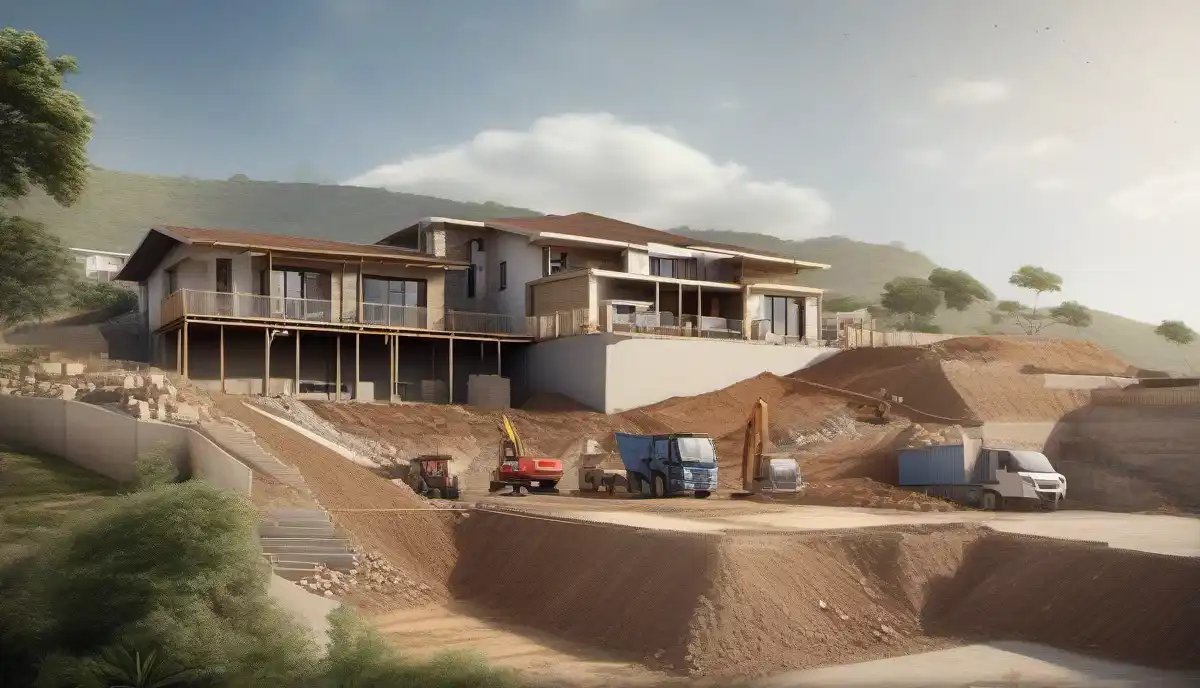
Building on a Sloped Site: Cost Considerations South Africa
⛰️ Get Expert Advice for Your Sloping Site Project
Connect with builders and engineers experienced in hillside construction.
Building on a hillside offers spectacular views but comes with unique challenges:
What are the cost considerations for building on a sloped site in South Africa?
This comprehensive guide covers everything you need to know about sloping site construction costs, engineering requirements, and design options. Whether you’re building in the hills of Pretoria, the slopes of Cape Town, or the coastal hills of Durban, understanding these factors will help you budget accurately.
In this complete guide, you’ll discover:
- Building on sloped site cost considerations South Africa
- Sloping site construction costs vs flat sites
- Split level home building cost
- Retaining wall costs – materials and installation
- Building on steep slope – engineering requirements
- Geotechnical report cost and importance
- Cost to build on sloped site Johannesburg
- Basement excavation on sloping site
- Piling foundation cost on hillside
- Cut and fill, gabion baskets, and soil nailing explained
📌 Engineering Critical: Building on slopes requires specialist input. Data sourced from Council for Geoscience, SANS 10400 geotechnical requirements, and SAICE slope stability guidelines.
📖 Table of Contents: Sloping Site Construction Guide
📊 Sloping Site Construction: The Premium Over Flat Land
Building on a slope typically costs 20-50% more than an equivalent flat site. Here’s why:
| Slope Category | Gradient | Cost Premium | Key Challenges |
|---|---|---|---|
| Gentle slope | 1:10 to 1:5 | 10-20% | Cut and fill, stepped foundations |
| Moderate slope | 1:5 to 1:3 | 20-35% | Retaining walls, split-level design |
| Steep slope | 1:3 or steeper | 35-50%+ | Piled foundations, major earthworks |
📊 Average additional cost for sloping sites:
R2,500 – R7,500 per m² extra
(over flat site base cost of R11,500-R16,500/m²)
Real-world examples:
- Flat site 200m² house: R2.6M – R3.2M
- Moderate slope same house: R3.3M – R4.3M
- Steep slope same house: R4.0M – R5.5M+
🔬 Geotechnical Report Cost & Importance
A geotechnical investigation is non-negotiable for sloping sites. It determines soil stability, bearing capacity, and foundation requirements.
| Investigation Type | Cost Range | What’s Included |
|---|---|---|
| Basic site classification | R8,000 – R15,000 | Visual assessment, trial pits, basic lab tests |
| Full geotechnical report | R20,000 – R40,000 | Boreholes, lab testing, foundation recommendations |
| Complex slope stability | R40,000 – R80,000+ | Multiple boreholes, slope analysis, stabilisation design |
⚠️ Never skip this step: Building without geotechnical assessment on a slope is extremely risky. Soil movement can crack foundations, damage structures, and in worst cases cause slope failure. The R20k-40k report is cheap insurance for your R3M+ investment.
🏗️ Foundation Types for Sloping Sites
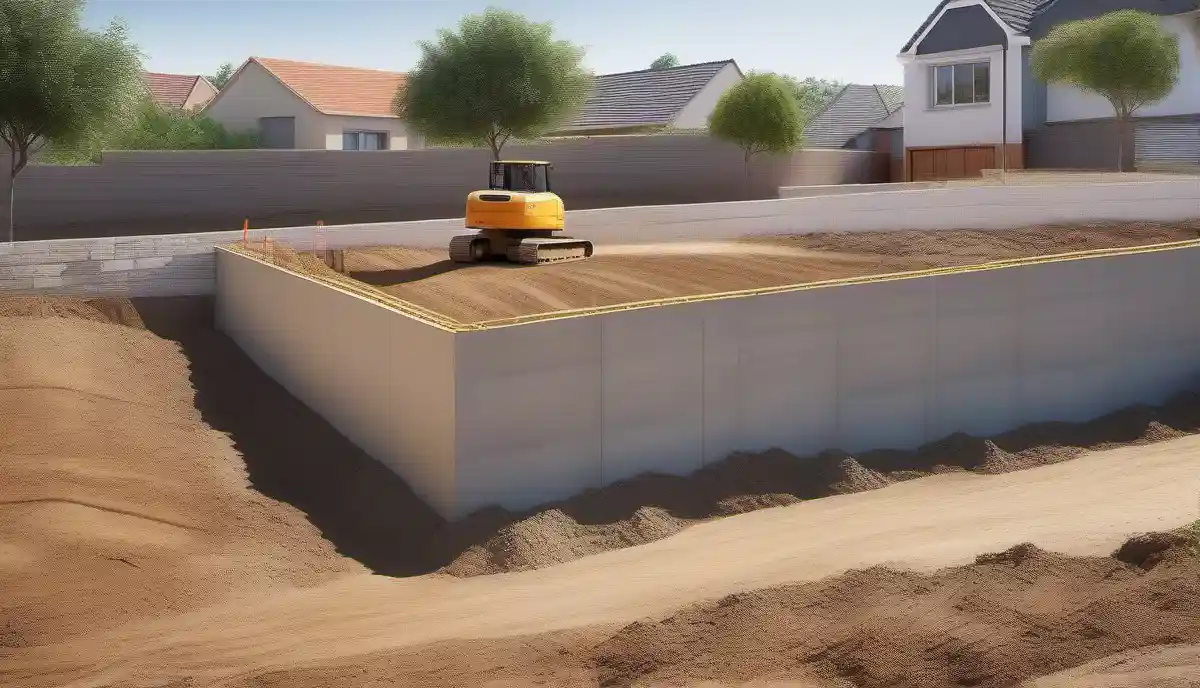
Foundation selection depends on slope gradient and soil conditions:
| Foundation Type | Best For | Cost Per m² (House Area) |
|---|---|---|
| Stepped strip foundations | Gentle slopes, stable soil | R850 – R1,200/m² |
| Raft foundation (stepped) | Moderate slopes, variable soil | R1,200 – R1,800/m² |
| Piled foundation | Steep slopes, unstable soil | R1,800 – R3,500/m² |
| Pole / stilt foundation | Very steep, minimal disturbance | R2,000 – R4,000/m² |
For a 200m² house, foundation costs range from R170,000 to R800,000+ depending on slope and type.
⛓️ Piling Foundation Costs on Hillside
Piled foundations are common on steep slopes where soil is unstable or to minimise site disturbance:
| Pile Type | Cost Per Metre | Typical Depth | Notes |
|---|---|---|---|
| Augered cast-in-situ piles | R1,200 – R2,000/m | 6-15m | Drilled, reinforced, concrete poured |
| Driven precast concrete piles | R1,500 – R2,500/m | 8-20m | Requires heavy equipment |
| Screw piles / helical piles | R2,000 – R3,500/m | 4-12m | Minimal vibration, good for sensitive sites |
Typical piling cost for 200m² house: R250,000 – R600,000
🧱 Retaining Wall Costs by Material
Retaining walls are often the single biggest additional cost on sloping sites:
| Wall Type | Cost Per m² (Wall Face) | Max Height | Pros & Cons |
|---|---|---|---|
| Reinforced concrete | R3,500 – R5,500/m² | 6m+ | Strong, durable, engineered, expensive |
| Concrete block (masonry) | R2,500 – R4,000/m² | 1.5-2m | Good for lower walls, needs reinforcement |
| Gabion baskets | R2,000 – R3,500/m² | 3-4m | Natural look, good drainage, labour intensive |
| Timber / sleepers | R1,500 – R2,500/m² | 1.2m | Cheaper, shorter lifespan, rustic look |
| Segmental blocks (keystone) | R3,000 – R4,500/m² | 4m+ | Modular, good appearance, engineered systems |
| Shotcrete / gunite | R2,800 – R4,200/m² | Varies | Sprayed concrete, often with soil nails |
Typical retaining wall costs for moderate slope: R80,000 – R250,000+
🚜 Cut and Fill Excavation Costs
Creating a level building platform requires cutting into the slope and using that material to fill lower areas:
| Earthworks Type | Cost Per m³ | Typical Volume (200m² house) |
|---|---|---|
| Bulk excavation (easy soil) | R150 – R250/m³ | 500-2,000m³ |
| Rock excavation | R400 – R800/m³ | Variable |
| Fill placement & compaction | R100 – R200/m³ | As required |
| Export excess material | R200 – R350/m³ | If cut exceeds fill |
Typical cut and fill costs: R75,000 – R300,000 depending on slope and rock presence.
🏠 Split Level Home Building Cost
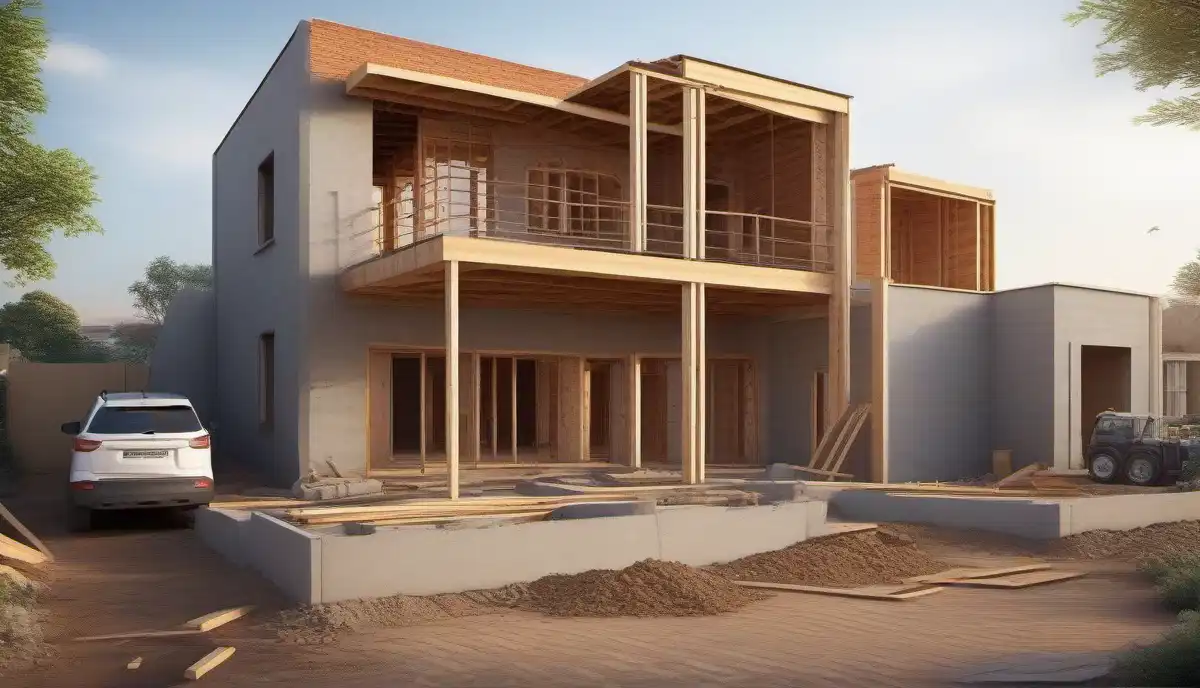
Split-level designs work with the slope rather than against it, often reducing earthworks costs:
| Design Approach | Cost vs Flat Site | Advantages |
|---|---|---|
| Split-level (following slope) | +15-25% | Minimal earthworks, unique interior spaces |
| Terrace with retaining walls | +25-40% | Level platforms, more usable outdoor space |
| Stilt / pole construction | +30-50% | Minimal site disturbance, spectacular views |
Split level home cost example (200m²): R3.2M – R4.5M (vs R2.6M-R3.2M flat)
🚧 Basement Excavation on Sloping Sites
Sloping sites often allow for walk-out basements, adding valuable floor space:
| Basement Type | Cost Per m² (Additional) | Typical Use |
|---|---|---|
| Walk-out basement (partial) | R8,000 – R12,000/m² | Garage, storage, entertainment |
| Full basement (excavated) | R12,000 – R18,000/m² | Living areas, bedrooms (with light wells) |
A 50m² walk-out basement adds R400,000 – R600,000 to project cost.
🔩 Soil Nailing & Slope Stabilisation Costs
For unstable slopes, soil nailing stabilises the cut face:
- Soil nails: R800 – R1,500 per metre installed
- Shotcrete facing: R2,800 – R4,200 per m²
- Drainage installation: R500 – R1,000 per linear metre
Typical slope stabilisation: R150,000 – R500,000+ depending on slope height and area.
🪨 Gabion Basket Walls: Cost and Application
Gabion walls are popular for South African slopes due to their natural look and good drainage:
- Gabion baskets (supply only): R800 – R1,200 per m³ of basket volume
- Filling stone: R400 – R800 per m³ (depending on source)
- Installation labour: R600 – R1,000 per m³
- Total installed cost: R1,800 – R3,000 per m³
For a 2m high, 20m long wall (40m² face, approx 40m³ volume): R72,000 – R120,000
💧 Drainage & Stormwater Management
Proper drainage is critical on slopes to prevent erosion and water damage:
| Drainage Element | Cost Range | Notes |
|---|---|---|
| French drains / weeping tiles | R350 – R600 per metre | Behind retaining walls |
| Stormwater pipes (110-160mm) | R250 – R450 per metre | Including trenches |
| Catch pits / sumps | R2,500 – R6,000 each | With grates |
| Drainage swales | R200 – R400 per metre | Earth channels |
Typical drainage package: R30,000 – R80,000
🚚 Site Access & Construction Logistics
Narrow or steep access roads add significant cost:
- Crane access for materials: R5,000 – R15,000 per day
- Concrete pumping: R150 – R250 per m³ surcharge
- Smaller plant requirements: Mini excavators, bobcats – 10-20% higher rates
- Material handling: Labour to move materials from drop-off point – R5,000 – R20,000
- Temporary access roads: R100 – R250 per metre
Access premium: R30,000 – R100,000+ depending on difficulty.
📍 Regional Sloping Site Construction Costs
Pretoria East
Areas: Waterkloof, Constantia Park
Typical slope premium: 20-35%
Challenges: Rocky dolomite areas, view sites
Cape Town
Areas: Constantia, Stellenbosch
Typical slope premium: 25-40%
Challenges: Table Mountain sandstone, heritage controls
Durban
Typical slope premium: 25-35%
Challenges: Shale slopes, drainage, access
⚠️ Hidden Sloping Site Costs
Rock excavation
Unexpected rock can add R50,000 – R200,000
Dewatering
If water table encountered – R20,000 – R80,000
Additional engineering
More complex calculations – R15,000 – R40,000 extra
Scaffolding
Extensive scaffolding for steep sites – R30,000 – R80,000
Material hoisting
Crane or hoist hire – R20,000 – R60,000
Longer construction time
3-6 months extra = additional holding costs
❌ 10 Common Sloping Site Construction Mistakes
- Skipping geotechnical investigation: The most expensive mistake possible
- Inadequate drainage design: Water causes slope failure
- Underestimating retaining wall costs: Walls are expensive – budget properly
- Poor compaction of fill: Leads to settlement and cracking
- Building too close to slope edge: Stability issues, erosion
- Ignoring neighbour’s water runoff: Can cause problems on your site
- Not planning for construction access: Delays and extra costs
- Cheap retaining wall solutions: Walls fail, cost more to fix
- No allowance for rock: Almost always some rock on slopes
- Using inexperienced contractors: Sloping sites need specialist expertise
✨ Design Opportunities on Sloping Sites
While costly, slopes offer unique advantages:
- Spectacular views: Elevated sites capture panoramas flat sites can’t
- Walk-out basements: Additional living space with natural light
- Split-level living: Distinct zones for different activities
- Natural ventilation: Slope often captures cooling breezes
- Architectural expression: Dramatic designs possible
- Privacy: Elevated sites offer seclusion
Read our sustainable building guide for energy-efficient design on slopes.
❓ Frequently Asked Questions
How much more does it cost to build on a sloped site?
Building on a slope typically costs 20-50% more than an equivalent flat site. Gentle slopes add 10-20%, moderate slopes 20-35%, steep slopes 35-50%+. For a R2.6M flat site house, expect R3.1M – R3.9M on a moderate slope. Get accurate quotes from sloping site specialists.
What is a geotechnical report and how much does it cost?
A geotechnical report assesses soil conditions, stability, and foundation requirements. Costs: basic R8k-15k, full report R20k-40k, complex slope analysis R40k-80k+. Essential for sloping sites – never build without it.
How much do retaining walls cost in South Africa?
Reinforced concrete: R3,500-5,500/m² • Concrete block: R2,500-4,000/m² • Gabion baskets: R2,000-3,500/m² • Timber: R1,500-2,500/m². For a typical 2m high, 20m long wall, budget R80,000 – R250,000 depending on material and height.
What are piling foundation costs on a hillside?
Piles cost R1,200 – R3,500 per metre depending on type. For a 200m² house, piling foundation totals R250,000 – R600,000. Augered cast-in-situ piles are most common; screw piles useful for sensitive sites.
Is split level cheaper than cut and fill?
Yes, split-level design that follows the slope often costs less than extensive cut and fill with tall retaining walls. Split level adds 15-25% over flat site, while terracing with retaining walls adds 25-40%. Work with an architect experienced in sloping sites.
How do I manage drainage on a sloping site?
Install French drains behind retaining walls, proper stormwater pipes, catch pits, and drainage swales. Never let water flow over cut faces. Budget R30,000 – R80,000 for comprehensive drainage. Read SANS 10400 for drainage requirements.
Can I build a basement on a sloping site?
Yes, sloping sites are ideal for walk-out basements. Costs R8,000-12,000/m² for partial basements, R12,000-18,000/m² for full basements. A 50m² walk-out basement adds R400,000-600,000 but provides valuable extra space.
What are gabion baskets and how much do they cost?
Gabion baskets are wire cages filled with stone, used for retaining walls. Installed cost R1,800 – R3,000 per m³ of wall. Good drainage, natural appearance, popular in South Africa. For a 40m³ wall, budget R72,000 – R120,000.
How do I find builders experienced with sloping sites?
Use ServiceLink SA to connect with builders who have completed hillside projects. Ask for specific references on sloping sites, visit completed projects, and ensure they work with experienced geotechnical engineers.
What is soil nailing and when is it needed?
Soil nailing stabilises cut slopes by inserting reinforced bars into the soil, then applying shotcrete. Used for unstable slopes. Costs R800-1,500 per nail metre plus shotcrete R2,800-4,200/m². Often required for steep cuts or unstable geology.
✅ Action Plan: Building on Your Sloping Site
- Engage professionals early: Architect and geotechnical engineer before design
- Complete geotechnical investigation: Understand soil, slope stability, foundation requirements
- Design with the slope: Split-level or stepped design saves earthworks
- Plan retaining walls strategically: Engineer-designed, proper drainage included
- Budget realistically: Add 20-50% over flat site costs plus contingency
- Get specialist quotes: From builders experienced in sloping sites
- Check access: Ensure construction equipment can reach site
- Plan drainage thoroughly: Critical for long-term stability
- Allow extra time: Sloping sites take longer to build
Planning to Build on a Slope?
Connect with builders and engineers who specialise in hillside construction.
Official sloping site resources:
- Council for Geoscience – Geotechnical surveys and maps
- SABS – SANS 10400: Geotechnical – Foundation requirements
- SAICE – Slope stability engineering – Industry guidelines
Information accurate as of publication date. Always verify current requirements with qualified engineers.
Written by: ServiceLink SA Research Team
Verified by Innocent T Hanyani (21+ years construction and digital industry experience)
Our team has managed numerous sloping site projects across South Africa, from the hills of Pretoria to the slopes of Constantia. We understand the unique engineering, cost, and design challenges these sites present.