
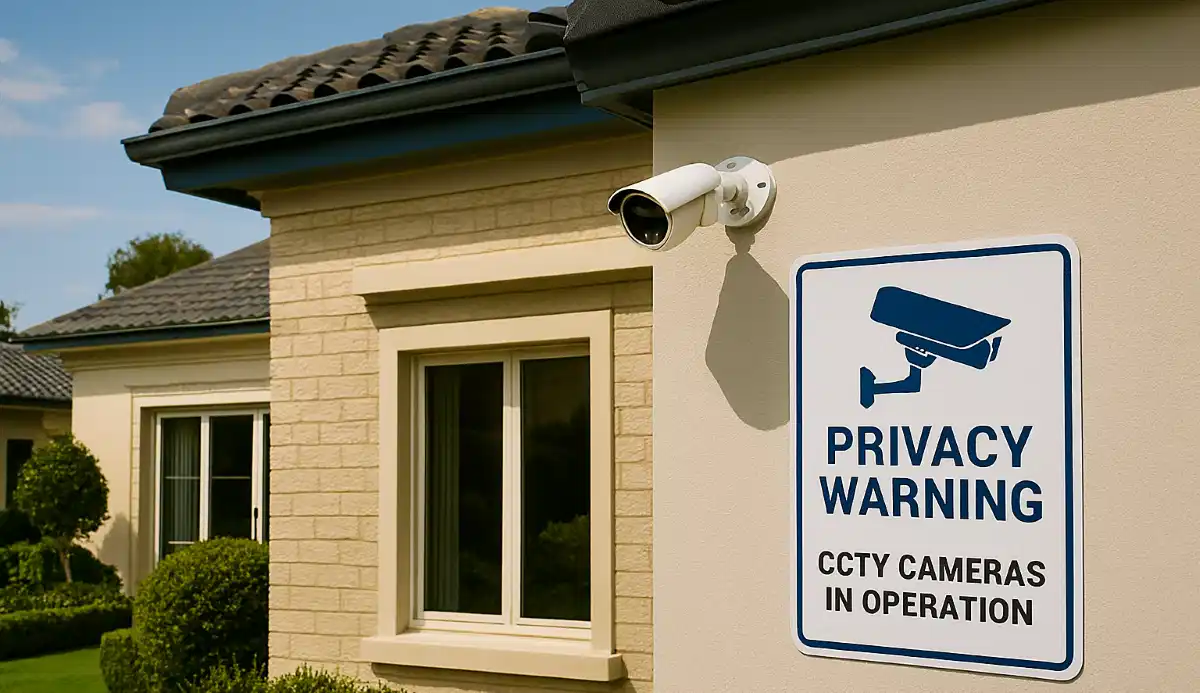
CCTV Laws, Privacy & Installation Regulations in South Africa: The Complete Legal Guide
⚖️ Can my neighbour point a camera at my house? Do I need signage? What does POPIA say? We answer all your legal questions about CCTV in South Africa.
You’ve decided to install a security system to protect your home in Johannesburg or your business in Cape Town. But before you drill that first hole, you need to understand the law. South Africa has strict regulations governing surveillance, privacy, and the installation of CCTV systems. From the Protection of Personal Information Act (POPIA) to PSIRA requirements for installers, ignoring these rules can land you in legal hot water. This comprehensive guide breaks down everything you need to know about CCTV laws privacy installation regulations South Africa has in place, so you can stay compliant and avoid disputes with neighbours or regulators.
⚖️ Need a Compliant, PSIRA-Registered Installer?
Don’t risk legal trouble. Get free quotes from vetted, PSIRA-registered security professionals who understand POPIA and all local regulations.
Servicing Johannesburg, Pretoria, Cape Town, Durban, and all major areas
📋 Table of Contents – CCTV Laws & Regulations
📜 POPIA: The Foundation of CCTV Law in South Africa
The Protection of Personal Information Act (POPIA) is the most important piece of legislation governing CCTV use. It treats video footage that identifies an individual as “personal information.”
POPIA Principle: If your camera captures footage of people outside your property boundary—like a sidewalk, street, or your neighbour’s garden—you are essentially “processing” their personal information and must comply with the Act.
Your POPIA Obligations as a CCTV Owner:
- Purpose Specification: You must have a clear, legitimate purpose for recording (e.g., security). You cannot use footage for other purposes like public shaming on social media.
- Minimality: Only record what is necessary for your purpose. If you can secure your home without pointing a camera directly into your neighbour’s bedroom, you must do so.
- Transparency: People must know they are being recorded. This is why signage is critical.
- Security Measures: You must protect the footage from being accessed by unauthorised people. This means securing your DVR/NVR with strong passwords and limiting access.
- Data Subject Participation: Individuals have the right to request access to footage of themselves (a subject access request).
For a deeper dive into your responsibilities, see our guide on POPIA compliance for homeowners.
🏡 My Neighbour’s Camera is Pointing at My House – Is This Legal?
This is one of the most common disputes we hear about from homeowners in Sandton, Pretoria, and Durban.
The Short Answer: It depends. If the camera is aimed directly into your private space—like your bedroom window, your pool area, or over a high fence into your garden—this is likely a violation of your constitutional right to privacy (Section 14 of the Constitution) and may contravene POPIA.
What You Can Do:
- Speak to Your Neighbour: They may not realise the camera’s field of view includes your property. A friendly conversation often resolves the issue.
- Suggest Repositioning: Ask if they can adjust the angle slightly to cover their own property while excluding yours.
- Formal Complaint: If they refuse, you can lodge a complaint with the Information Regulator (South Africa’s POPIA authority) or seek legal advice. See our dispute resolution procedure for guidance.
Pro Tip: Before installing your own cameras, walk your property line and check the field of view. Ensure you are only recording your own space. This simple step can prevent years of neighbour disputes. A professional installer can help with this.
⚠️ CCTV Signage: What the Law Requires
Under POPIA, you must notify people that they are being recorded. The most common way to do this is with clear, visible signage.
Signage Requirements:
- Placement: Signs must be placed at all entrances to the area under surveillance. For a home, this means at your front gate or driveway entrance. For a business, at the main entrance and any other customer entry points.
- Visibility: Signs must be clearly visible and legible before a person enters the monitored area.
- Wording: The sign should state that CCTV is in operation and ideally include the name of the responsible party (you or your company) and contact details. A simple “CCTV in Operation” sign is a good start, but more detailed signage is better for compliance.
Failing to display adequate signage can result in complaints to the Information Regulator and undermine the admissibility of your footage as evidence in court. You can find compliant signage options in our shop.
🎤 Audio Recording: A Legal Minefield
Recording video is one thing. Recording audio is another matter entirely.
The Law: South Africa has strict laws regarding the interception of communications, governed by RICA (Regulation of Interception of Communications and Provision of Communication-Related Information Act). Recording a private conversation without the consent of all parties involved is generally illegal.
What This Means for CCTV:
- If your camera has a built-in microphone and records audio of your neighbours’ private conversations in their garden or inside their home, you are likely breaking the law.
- Recording audio in a public place (like a street) is also a grey area and could be problematic.
- For businesses, recording audio of employees without their knowledge or consent is a serious labour law and POPIA violation.
⚠️ Strong Recommendation: For most residential applications, we recommend disabling audio recording on your cameras. It adds significant legal risk for very little security benefit. If you need audio for a specific reason, seek legal advice first.

🏛️ Public Space vs Private Property: What’s the Difference?
There is a common misconception that “anything goes” in public spaces. This is not entirely true.
- On Your Private Property: You have broad rights to record for security purposes, as long as you don’t intrude on your neighbours’ private spheres and you comply with POPIA (signage, purpose, etc.).
- Pointing onto Public Property (Street/Sidewalk): You are allowed to record the area immediately outside your property for security, but you must be mindful of the reasonable expectation of privacy. People on a public street have a lower expectation of privacy than in their own home, but they still have rights. Your signage should be visible from the street.
- Recording Public Spaces for General Surveillance: If you are a business or body corporate recording a large public area (like a town square), you have greater responsibilities, including detailed impact assessments and potentially registering with the Information Regulator.
🛡️ PSIRA: Why Your Installer Must Be Registered
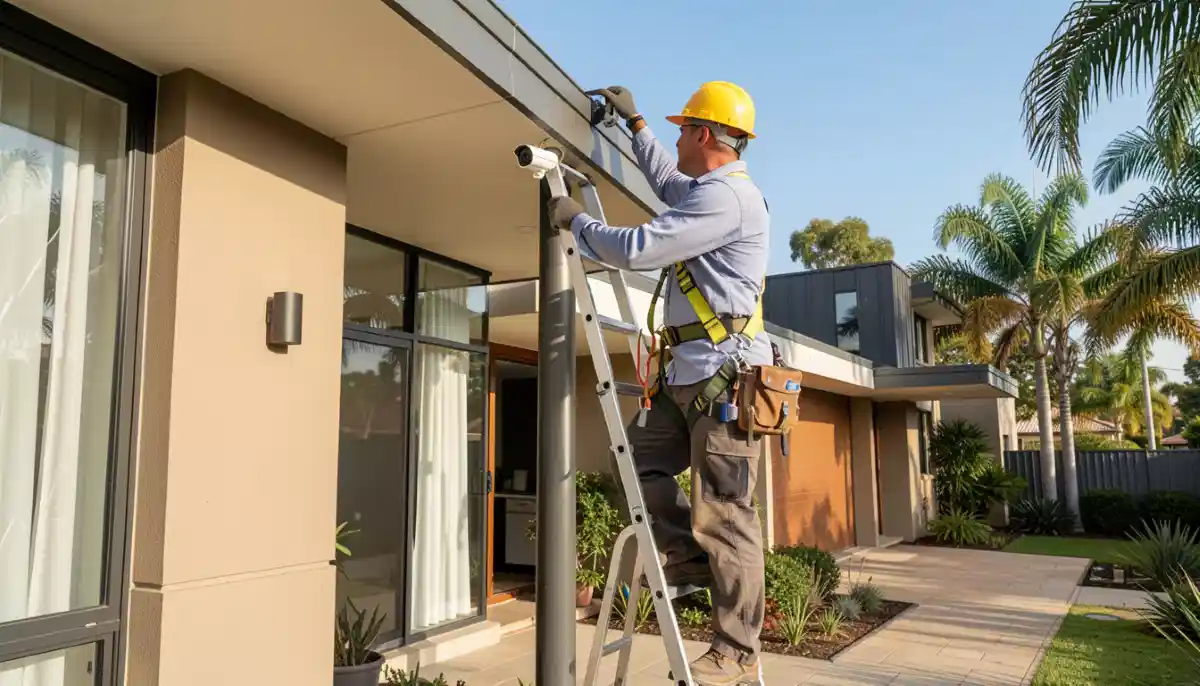
The Private Security Industry Regulatory Authority (PSIRA) governs all private security providers in South Africa. Anyone installing CCTV systems for reward must be PSIRA-registered.
Why This Matters to You:
- Legality: Hiring an unregistered person is illegal and could expose you to liability.
- Accountability: PSIRA provides a mechanism for complaints if something goes wrong.
- Training & Standards: Registered officers have undergone basic training and background checks.
- Insurance: A PSIRA-registered company is more likely to have proper liability insurance.
How to Verify: Always ask for their PSIRA number and verify it on the PSIRA website. Our guide on how to choose a CCTV installer has more details on this critical step.
📡 RICA: The Interception of Communications Act
As mentioned with audio recording, RICA strictly controls the interception of communications. While primarily aimed at phone tapping and email interception, it has implications for CCTV, particularly with audio and any camera system that could be considered “intercepting” a private conversation.
For standard video-only security systems on your own property, RICA is less of a concern than POPIA. However, if you are considering any form of covert surveillance or systems with advanced audio capabilities, you must consult the RICA legislation and seek legal advice. Covert surveillance is a highly regulated area.
Confused About Your Legal Obligations?
Don’t risk a dispute or a fine. Let our network of PSIRA-registered professionals ensure your installation is 100% compliant with all South African laws.
🔌 SABS Standards: SANS 10220:2016
While not always legally mandatory for homeowners, following SABS standards is a mark of a quality, safe installation. The relevant standard is SANS 10220:2016 – The installation of electronic security systems.
This standard covers:
- Cabling practices (segregation from mains power, support, etc.).
- Earthing and surge protection.
- Equipment placement and environmental considerations.
- System documentation and handover.
Insisting that your installer follows SANS standards ensures a safe, durable, and professional installation. It also helps with insurance claims and potential legal disputes. A reputable installer will be familiar with these standards and happy to discuss them.

🏢 Workplace Surveillance: What Employers Must Know
Installing CCTV in the workplace is common, but it’s a legal minefield governed by POPIA, the Labour Relations Act, and the Basic Conditions of Employment Act.
Key Rules for Employers:
- Notification: Employees must be clearly informed that they are being monitored. This is usually done through a CCTV policy in the employment contract or a specific notification.
- Legitimate Purpose: Surveillance must be for a legitimate purpose, such as security, health and safety, or investigating theft. Monitoring performance or behaviour without cause is problematic.
- No Hidden Cameras in Private Areas: Absolutely no cameras in bathrooms, change rooms, or private offices without an extremely compelling and legally vetted reason.
- Data Access: Access to footage should be restricted to specific, authorised personnel (like HR or security managers).
For a comprehensive workplace policy, it’s best to consult with a labour law expert. Our commercial CCTV page has more information on business systems.
💾 Data Retention & Subject Access Requests
Under POPIA, you cannot keep footage forever. You must have a policy on how long you retain recordings.
- Retention Period: Footage should only be kept for as long as necessary for your stated purpose. For most homeowners, this means overwriting after a few weeks or when the hard drive is full, unless footage is needed for an incident.
- Subject Access Requests (SARs): If someone requests footage of themselves (e.g., a neighbour who was recorded walking past your house), you are generally obliged to provide it, unless doing so would infringe on the privacy of others. You should have a process for handling these requests.
Failing to manage data retention properly can lead to POPIA complaints. See our sample data retention policy for guidance.
🕵️ Covert Surveillance: When Is It Legal?
Hidden cameras are a subject of much curiosity, but their use is severely restricted.
The General Rule: Covert surveillance is highly regulated and generally illegal for private individuals. Using a hidden camera to spy on neighbours, employees, or visitors is a serious criminal offence under RICA and a major POPIA violation.
Limited Exceptions: In very specific circumstances, such as a police investigation with a warrant, or potentially an employer investigating serious crime with legal advice, covert surveillance might be permitted. For the average homeowner or business, you should assume hidden cameras are illegal and stick to overt, visible cameras with proper signage.
⚖️ Section 14 of the Constitution: The Right to Privacy
All South African laws on CCTV and surveillance are ultimately grounded in Section 14 of the Constitution, which protects everyone’s right to privacy.
This means that even if a specific action isn’t detailed in POPIA or RICA, if it unreasonably infringes on someone’s privacy, it could be challenged in court. The concept of “reasonable expectation of privacy” is central. You have a high expectation of privacy in your home and garden, a lower expectation on a public street, but you still have some. Always consider: “Would a reasonable person expect to be private in this space?”
🏘️ Estate & Complex Rules
If you live in a security estate, complex, or sectional title scheme in areas like Midrand, Centurion, or Umhlanga, you have an additional layer of rules.
- Body Corporate / HOA Rules: Many estates have specific rules about where you can place cameras, especially on the exterior of your home. You may need approval before installation.
- Common Property: Cameras pointing onto common property (like communal gardens or parking areas) may need to be managed by the Body Corporate itself, as they are recording many people.
- Architectural Guidelines: Some estates have rules about the appearance of cameras to maintain aesthetic standards.
Always check your HOA or Body Corporate rules before proceeding. A professional installer familiar with your area will often know these rules. Our service areas page can help you find a local expert.
🤝 How to Resolve CCTV Disputes with Neighbours
Despite your best efforts, disputes can happen. Here’s a step-by-step approach:
- Friendly Conversation: Most disputes are misunderstandings. Calmly explain your concern about their camera, or if they are concerned about yours, listen and be open to adjustment.
- Mediation: If a direct conversation fails, suggest involving a neutral third party, like a community leader or a professional mediator.
- Formal Complaint to the Information Regulator: For POPIA-related issues, you can lodge a complaint with the Information Regulator. This is a formal legal process.
- Legal Action: As a last resort, you can seek legal advice and potentially approach the court for an interdict (court order) to stop the infringement of privacy.
We also have a dedicated dispute resolution procedure that may offer guidance.
❌ Common Legal Mistakes When Installing CCTV
Avoid these pitfalls to stay on the right side of the law.
- No Signage: This is the most common mistake. Failing to notify people they are being recorded is a direct violation of POPIA.
- Pointing Cameras at Neighbours’ Private Spaces: Always check your camera angles. A slight misalignment can cause years of conflict.
- Recording Audio Without Consent: As discussed, this is a major legal risk. Disable audio on your cameras.
- Hiring an Unregistered Installer: Using a non-PSIRA registered installer is illegal and puts you at risk. Always verify their credentials.
- Sharing Footage Publicly: Posting CCTV footage of someone on social media, even if they were committing a crime, can be a POPIA violation. Share only with the police.
- Ignoring HOA/Body Corporate Rules: This can lead to fines or being forced to remove your cameras.
- Keeping Footage Forever: Not having a data retention policy is a compliance gap.
❓ Frequently Asked Questions
Can my neighbour point a CCTV camera at my house?
If the camera is aimed directly into your private space (bedroom, garden, pool area), it is likely an invasion of your privacy and a violation of POPIA. You should first speak to your neighbour. If they refuse to adjust it, you can lodge a complaint with the Information Regulator.
Do I need a sign for my home CCTV system?
Yes, it is highly recommended and likely required under POPIA. If your camera captures any public space or area outside your property boundary, you must notify people they are being recorded. A visible sign at your entrance is the best way to do this.
Is it legal to record audio from my security cameras?
Generally, no. Recording private conversations without the consent of all parties is illegal under RICA. For residential use, we strongly recommend disabling audio recording on your cameras to avoid legal risk.
What is PSIRA registration and why does it matter?
PSIRA is the regulatory body for private security in South Africa. All CCTV installers working for reward must be PSIRA-registered. Hiring a registered installer ensures they are trained, accountable, and legal. Verify their number on the PSIRA website.
Can my employer install cameras in my office?
Yes, but with conditions. They must have a legitimate purpose (like security), notify you of the surveillance, and have a clear policy. They cannot install cameras in private areas like bathrooms. It’s best to check your employment contract or company policy.
How long can I keep CCTV footage?
Under POPIA, you should only keep footage for as long as necessary for your stated purpose (usually security). For most homes, this means automatically overwriting every few weeks. If you have an incident, you may keep relevant footage until the matter is resolved.
Can I post CCTV footage of a crime on social media?
This is risky and not recommended. Even if someone is committing a crime, posting their image publicly can violate POPIA. The safest approach is to provide the footage directly to the South African Police Service (SAPS) and let them handle it.
What should I do if my neighbour refuses to move their camera?
After a polite request fails, you can send a formal letter outlining your privacy concerns. If they still refuse, you can lodge a complaint with the Information Regulator or seek legal advice. Our dispute resolution procedure may offer further steps.
Does POPIA apply to home security cameras?
Yes, absolutely. If your camera records any area beyond your private property—like a street, sidewalk, or neighbour’s property—you are processing personal information and must comply with POPIA’s principles of purpose, minimality, and transparency.
✅ Final Thoughts: Your Legal Compliance Checklist
Navigating CCTV laws privacy installation regulations South Africa enforces might seem complex, but following this simple checklist will keep you compliant:
✅ Before Installation:
- ☐ Check camera angles to avoid neighbours’ private space.
- ☐ Verify your installer’s PSIRA registration.
- ☐ Ensure installer follows SABS standards.
- ☐ Check HOA/Body Corporate rules.
- ☐ Decide to disable audio recording.
✅ After Installation:
- ☐ Put up clear, visible CCTV signage.
- ☐ Secure your recorder with a strong password.
- ☐ Have a simple data retention policy (auto-overwrite).
- ☐ Only share footage with police, not on social media.
Install with Confidence, Stay Compliant
Don’t let legal worries stop you from securing your property. Connect with our network of PSIRA-registered, POPIA-aware CCTV installers today.
📞 Call our compliance helpline: 073 138 4726
📚 Official Legal Resources:
- POPIA – The full Protection of Personal Information Act.
- PSIRA – Verify installer registration and code of conduct.
- RICA – Information on the interception of communications.
- Department of Justice – Constitutional right to privacy (Section 14).
This guide is for informational purposes and does not constitute legal advice. Always consult with a qualified legal professional for advice specific to your situation.
Written by: Innocent T Hanyani
21+ years construction and digital industry experience, ServiceLink SA
Innocent has extensive experience navigating the regulatory landscape of South African home services. His expertise ensures that this guide provides accurate, practical advice for staying compliant while securing your property.