
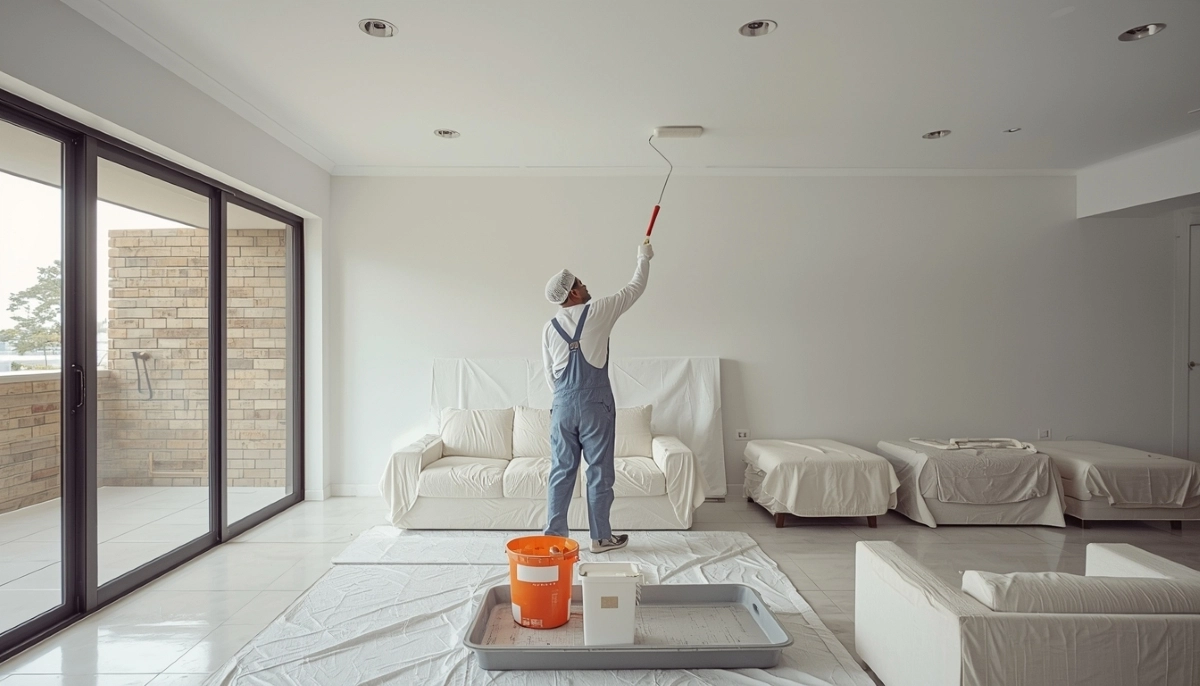
Ceiling Painting Cost & Best Paint South Africa
🎨 R40 to R110 per m² – What you’ll pay to paint your ceiling, plus which paint to use for bathrooms, kitchens, and living areas.
A fresh coat of paint on your ceiling can transform a room, making it feel brighter, cleaner, and more spacious. But ceiling painting comes with its own challenges – from choosing the right paint to dealing with stains, textures, and the physical difficulty of painting overhead. Whether you’re in Johannesburg, Cape Town, or Durban, this guide covers everything you need to know: costs per square metre, labour rates, the best paint for different rooms, and whether to DIY or hire a professional. We’ll also cover stain-blocking, moisture-resistant paints, and how to get a professional finish.
🎨 Planning to Paint Your Ceiling?
Get free, no-obligation quotes from experienced ceiling painters in your area. They’ll advise on the right paint and provide a fixed price.
Servicing Johannesburg, Pretoria, Cape Town, Durban, and all major areas
📖 Table of Contents – Ceiling Painting Guide
💰 Ceiling Painting Cost Summary – Per Square Metre
Here’s what you can expect to pay for ceiling painting across South Africa. Prices include paint and labour unless specified.
| Service | DIY Cost (materials only) | Professional Installed | Typical Application |
|---|---|---|---|
| Standard ceiling paint (white) | R20 – R40 per m² | R50 – R80 per m² | Living rooms, bedrooms |
| Moisture-resistant paint | R30 – R50 per m² | R70 – R100 per m² | Bathrooms, kitchens |
| Stain-blocking primer + paint | R35 – R60 per m² | R80 – R120 per m² | Water stains, smoke damage |
| Textured ceiling painting | R30 – R50 per m² | R70 – R110 per m² | Popcorn / artex ceilings |
| Cornice painting (per metre) | R10 – R20 per m | R30 – R60 per m | Decorative trim |
| Full room ceiling (20m²) | R400 – R800 | R1,000 – R1,600 | Standard bedroom |
| Full house ceiling (150m²) | R3,000 – R6,000 | R7,500 – R12,000 | 3-bedroom home |
Key Insight: Professional painting costs 2-3x more than DIY, but the finish is usually superior, and you avoid the physical strain of overhead work. For high ceilings or large areas, professional is often worth the cost.
👷 Labour Rates & Painting Fees
Understanding how painters charge helps you compare quotes accurately.
How Painters Charge
- Per square metre: Most common. R30 – R60 per m² for labour only, R50 – R110 per m² including paint.
- Daily rate: R800 – R1,500 per painter per day. A team of two might charge R2,000 – R3,000 per day.
- Fixed price per room: Based on room size and complexity. A standard bedroom (20m²) might be R1,000 – R1,600.
What Labour Includes
- Moving and covering furniture
- Preparing the surface (cleaning, sanding, filling small imperfections)
- Applying primer if needed
- Two coats of quality paint
- Clean-up after completion
What May Cost Extra
- Repairing cracks or holes (see our repair guide)
- Painting very high ceilings (extra ladder/ scaffolding required)
- Heavy stain blocking (multiple primer coats)
- Painting intricate cornices or detailed features
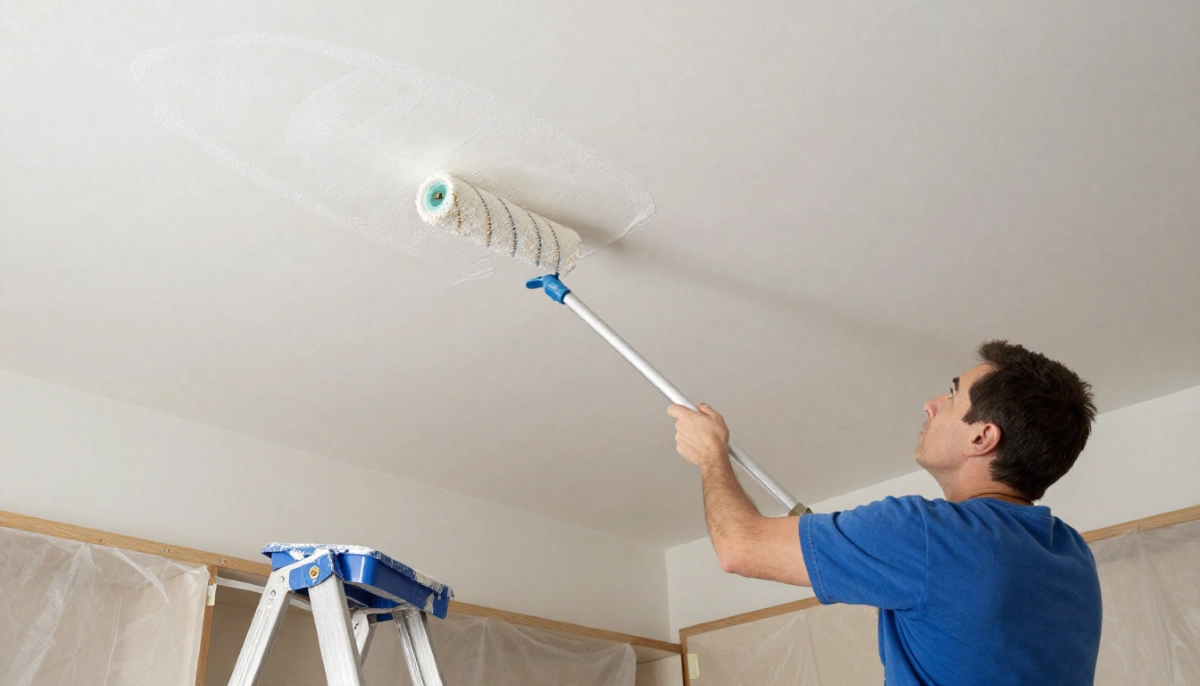
🎨 Types of Ceiling Paint
Not all paints are created equal. Ceiling paints are specially formulated for overhead application.
Flat / Matt White
The most common ceiling paint. Flat finish hides imperfections and doesn’t reflect light, reducing glare.
- Pros: Hides imperfections, non-reflective, affordable.
- Cons: Less washable, can mark easily.
- Best for: Living rooms, bedrooms, hallways.
- Price: R150 – R300 per 5L (covers ~35-40m²).
Moisture-Resistant / Anti-Mould
Contains additives that resist moisture and prevent mould growth. Essential for humid rooms.
- Pros: Resists mould, withstands humidity, washable.
- Cons: More expensive, slightly shinier finish.
- Best for: Bathrooms, kitchens, laundry rooms.
- Price: R250 – R450 per 5L.
Stain-Blocking Primer
Not a finish paint, but essential for covering water stains, smoke damage, or nicotine stains.
- Pros: Prevents stains bleeding through topcoat.
- Cons: Additional cost and labour.
- Best for: Previously stained ceilings.
- Price: R200 – R400 per 5L.
Low-Odour / Eco-Friendly
Low VOC (volatile organic compounds) paints are better for indoor air quality.
- Best for: Nurseries, homes with sensitive individuals.
- Price: R250 – R500 per 5L.
Spatter-Resistant / “Dry Fall”
Commercial paints that dry into powder, making overspray easier to clean. Used mostly by professionals with sprayers.
See our ceiling materials guide for information on painting different ceiling types.
✅ Best Ceiling Paint by Room Type
| Room Type | Recommended Paint | Why | Brand Examples |
|---|---|---|---|
| Living Room | Standard flat white | Non-reflective, hides imperfections, affordable | Dulux Ceiling White, Plascon Ceiling Fresh |
| Bedroom | Standard flat white | Same as living room – bright, clean | Dulux Ceiling White, Plascon Ceiling Fresh |
| Bathroom | Moisture-resistant / anti-mould | Prevents mould growth in humid conditions | Dulux Bathroom & Kitchen, Plascon Moisture Guard |
| Kitchen | Moisture-resistant / washable | Resists grease, steam, and can be cleaned | Dulux Kitchen & Bathroom, Plascon Easy Clean |
| Home Theatre | Flat black or dark colour | Reduces light reflection for better viewing | Specialty dark paints, any flat finish |
| Garage / Workshop | Standard white (economy) | Brightens space, cost-effective | Economy white paints |
| Coastal Home | Moisture-resistant + anti-mould | Salt air and humidity require extra protection | Dulux Weatherguard (exterior grade for ceilings?) |
Pro Tip: For bathrooms and kitchens, don’t skip the moisture-resistant paint. Standard paint will peel and mould within months in these humid environments.
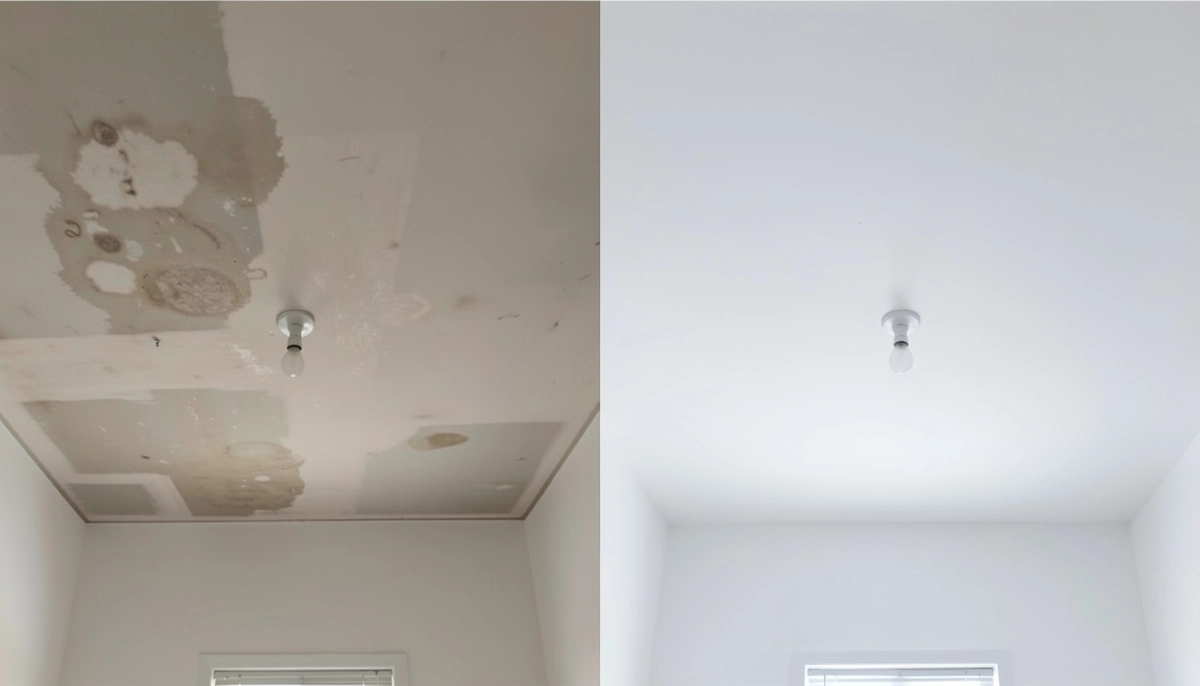
🧴 Stain-Blocking – Essential for Water Marks & Nicotine
If your ceiling has water stains, smoke damage, or nicotine discolouration, stain-blocking primer is non-negotiable.
Why Stain-Blocker Is Essential
- Water stains contain tannins that bleed through ordinary paint.
- Nicotine and smoke residues are water-soluble and will dissolve into new paint, causing yellowing.
- Stain-blockers seal these stains, preventing them from reappearing.
Types of Stain-Blockers
- Oil-based: Best for severe stains, but strong smell and slower drying.
- Shellac-based: Excellent stain-blocking, dries fast, but expensive.
- Water-based: Easier to use, less odour, but may need multiple coats for tough stains.
How to Apply
- Ensure ceiling is clean and dry.
- Apply stain-blocking primer directly to stained areas.
- Allow to dry completely.
- If stain still visible, apply second coat.
- Proceed with ceiling paint (usually two coats).
For water-damaged ceilings, ensure the leak is fixed first. See our water damage guide.
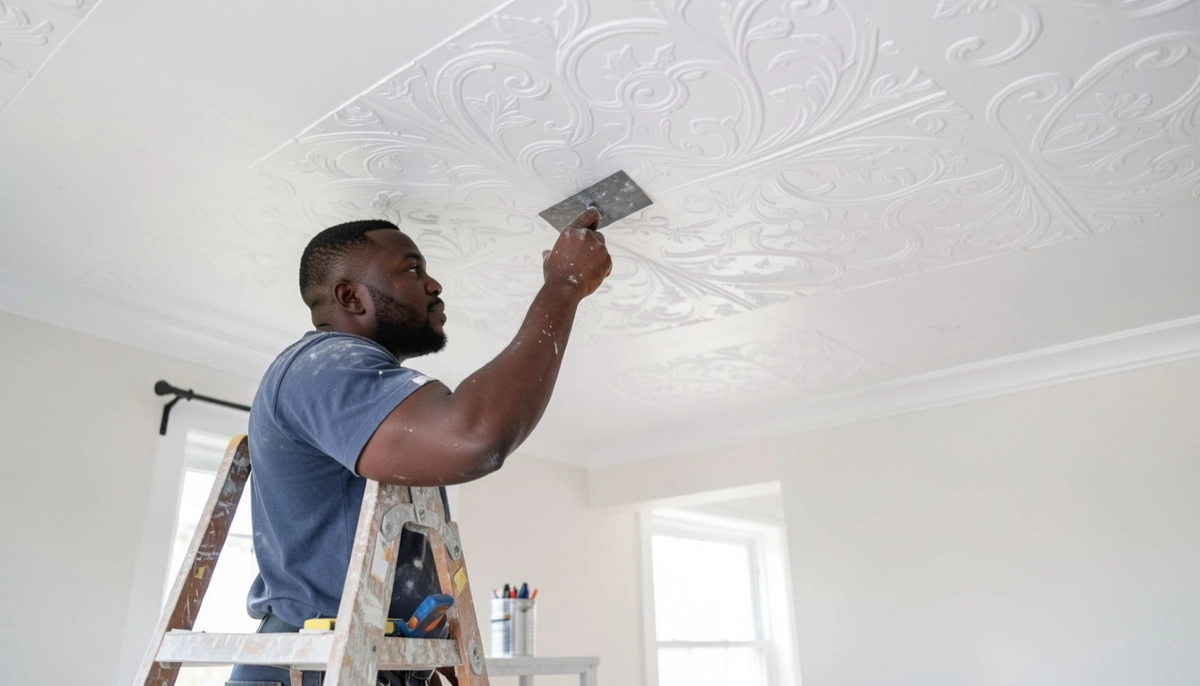
🆚 DIY vs Professional – Which Should You Choose?
Ceiling painting is physically demanding and requires skill to achieve a flawless finish. Here’s how to decide.
✅ DIY – When It Makes Sense
- Small rooms (under 15m²)
- Low ceilings (under 2.7m)
- You have experience with painting
- No significant stains or repairs needed
- You own proper equipment (roller, extension pole, drop cloths)
- Budget is tight – you save R30 – R60 per m²
❌ Professional – When to Hire
- Large rooms or whole house
- High ceilings (over 3m) – requires scaffolding
- Textured or popcorn ceilings
- Stubborn stains needing professional treatment
- You want a guaranteed flawless finish
- Physical limitations (neck/back problems)
DIY Cost Savings Example
For a 20m² bedroom:
- DIY materials: R400 – R800
- Professional: R1,000 – R1,600
- You save: R600 – R800
- Your time: 4-6 hours including prep and painting
For a 150m² whole house, professional costs R7,500 – R12,000 vs DIY materials R3,000 – R6,000. The physical effort is substantial – many homeowners find it worth paying for professional results.
🏠 Not Sure Whether to DIY or Hire?
Get free quotes from professional ceiling painters. Compare prices and decide if the convenience is worth the cost.
🧹 Preparation – The Key to a Flawless Finish
Whether DIY or professional, proper preparation is 80% of the job.
Step 1: Clear the Room
- Remove all furniture if possible.
- Cover remaining furniture with plastic dust sheets.
- Cover floors with drop cloths.
Step 2: Clean the Ceiling
- Use a vacuum with brush attachment to remove cobwebs and dust.
- For kitchens, wash with sugar soap to remove grease.
- Rinse and allow to dry completely.
Step 3: Repair Imperfections
- Fill small cracks and holes (see our repair guide).
- Sand repairs smooth.
- Wipe away dust.
Step 4: Protect Walls and Trim
- Use painter’s tape along the edges where ceiling meets walls.
- Cover light fittings with plastic bags.
- Remove ceiling fans if possible, or cover completely.
Step 5: Prime if Needed
- Apply stain-blocker to any stains.
- Apply primer to repaired areas.
- Allow to dry.
🖌️ Painting Techniques for a Professional Finish
Cutting In (Edges)
- Use a quality angled brush to paint the edges where ceiling meets walls.
- Paint a 50-75mm border around the entire room.
- Do this before rolling the main area.
Rolling
- Use a roller with an extension pole – 1.8m or 2.4m.
- Use a medium-pile roller sleeve (10-12mm) for smooth ceilings.
- Load roller evenly, not dripping.
- Apply paint in a “W” pattern, then fill in without lifting roller.
- Maintain a “wet edge” – don’t let paint dry between sections.
- Work in 1m² sections.
Number of Coats
- Always plan for two coats of ceiling paint.
- First coat may look patchy – that’s normal.
- Allow first coat to dry completely (usually 2-4 hours) before second.
- Second coat ensures even colour and coverage.
Lighting Check
After first coat, use a bright light angled at the ceiling to check for missed spots. Mark them with light pencil for second coat.
🍿 Painting Textured & Popcorn Ceilings
Textured ceilings (popcorn, artex, stippled) require special techniques.
Challenges
- Texture absorbs more paint – you’ll need up to 20% more.
- Roller can flatten texture if too much pressure applied.
- Matching texture after repair is extremely difficult.
- Asbestos risk in pre-1990 textured ceilings – TEST FIRST.
Painting Tips
- Use a thick-nap roller (15-20mm) to get paint into texture.
- Use less pressure – let the roller float over the texture.
- More paint needed – buy extra.
- Consider professional spraying for large areas.
Asbestos Warning: If your home was built before 1990 and has a textured ceiling, it may contain asbestos. DO NOT sand or disturb it. Have it tested before any work.
🗺️ Regional Price Variations – Gauteng, Cape Town, Durban
Painting costs vary by location. Here’s what to expect.
Gauteng (Johannesburg, Pretoria, Centurion, Midrand, Randburg)
- Average professional rate: R50 – R80 per m²
- Competitive market with many painters – good for getting quotes.
- Security estate access may add small surcharge.
Cape Town (Northern Suburbs, Southern Suburbs, Atlantic Seaboard)
- Average professional rate: R60 – R90 per m²
- Higher humidity means moisture-resistant paints more common (costs R10 – R20 per m² extra).
Durban (Umhlanga, Westville, Ballito)
- Average professional rate: R60 – R90 per m²
- Coastal conditions require anti-mould and moisture-resistant paints – factor this into quotes.
🏠 Realistic Painting Examples – What Real Homeowners Paid
Example 1: Bedroom Ceiling, Randburg
20m² bedroom ceiling, standard white.
Professional: R1,350
Includes: 2 coats Dulux Ceiling White, light preparation, moved furniture.
Example 2: Bathroom Ceiling, Umhlanga
8m² bathroom, moisture-resistant paint.
Professional: R750
Includes: Anti-mould paint, stain-blocker on small water mark.
Example 3: Whole House, Fourways
180m² ceiling area, all rooms.
Professional: R14,500
Includes: 2 coats standard white, 3 days work, team of 2 painters.
Example 4: Textured Ceiling, Stellenbosch
25m² popcorn ceiling.
Professional: R2,200
Includes: Specialist spraying, 2 coats, textured surface.
❌ 7 Common Ceiling Painting Mistakes
Learn from others’ errors: These mistakes ruin ceilings and waste time and money.
Mistake #1: Skipping Stain-Blocking Primer
Painting directly over water stains or nicotine. Within weeks, the stain bleeds through. Always use stain-blocker first.
Mistake #2: Using Wall Paint on Ceilings
Wall paint is formulated differently – it may drip more, have different sheen, and not cover as well. Use dedicated ceiling paint.
Mistake #3: Not Protecting Walls and Floors
Ceiling painting is messy. Drips and splatter are inevitable. Cover everything thoroughly.
Mistake #4: Poor Lighting During Painting
If you can’t see what you’re painting, you’ll miss spots. Use work lights angled at the ceiling.
Mistake #5: One Coat Only
One coat almost never provides full coverage, especially over fresh plaster or previous colour. Always plan for two coats.
Mistake #6: Painting Over Dirty Ceilings
Grease, dust, and cobwebs prevent paint from adhering properly. Clean thoroughly first.
Mistake #7: Rushing Between Coats
Second coat applied before first is fully dry can lift the first coat, causing streaks and peeling. Follow drying times.
❓ Frequently Asked Questions – Ceiling Painting
How much does it cost to paint a ceiling per square metre in South Africa?
Professional painting costs R50 – R110 per m² including paint. Labour-only is R30 – R60 per m². DIY materials cost R20 – R50 per m² depending on paint quality.
What’s the best paint for ceilings?
For most rooms, flat white ceiling paint is best – it hides imperfections and doesn’t glare. For bathrooms and kitchens, use moisture-resistant/anti-mould paint. Brands like Dulux Ceiling White and Plascon Ceiling Fresh are popular.
Can I use wall paint on ceilings?
Not recommended. Wall paint is formulated differently – it may drip more, have a different sheen, and not cover as well. Use dedicated ceiling paint for best results.
How do I cover water stains on my ceiling?
First, ensure the leak is fixed. Then apply stain-blocking primer (oil-based or shellac-based). Once dry, paint with two coats of ceiling paint. Regular paint alone won’t stop stains bleeding through.
How long does ceiling painting take?
A standard bedroom (20m²) takes 4-6 hours including prep for DIY. Professional painters work faster – typically 2-3 hours for the same room. Drying time between coats is the biggest factor.
Should I paint my ceiling the same colour as walls?
Most ceilings are white for a good reason – white reflects light and makes rooms feel larger. Coloured ceilings can work in some designs but make rooms feel smaller. If unsure, stick with white.
How do I paint a textured popcorn ceiling?
Use a thick-nap roller (15-20mm) and light pressure to avoid flattening texture. Expect to use 20% more paint. Test for asbestos first if home is pre-1990. Consider professional spraying for best results.
Do I need to prime a new plasterboard ceiling?
Yes. New plasterboard is porous and needs a primer/sealer before painting. This ensures even absorption and prevents “flashing” (patchy appearance). Some paints have built-in primer, but dedicated primer is better.
How much paint do I need for my ceiling?
Most ceiling paints cover 8-10m² per litre for one coat. For two coats on a 20m² ceiling, you’ll need 4-5 litres. Textured ceilings need more – calculate 6-7 litres for the same area.
Can I paint over wallpaper on the ceiling?
Not recommended. Paint can cause wallpaper to bubble and peel. It’s better to remove wallpaper first, then prepare and paint the ceiling surface properly.
✅ Final Thoughts – Getting the Perfect Ceiling Finish
A freshly painted ceiling is one of the most satisfying home improvements – it instantly brightens a room and makes everything feel cleaner. Whether you DIY or hire a professional, success comes down to three things: proper preparation, quality paint, and correct technique.
Your 4-Step Painting Action Plan:
- Choose the right paint: Standard white for living areas, moisture-resistant for wet rooms.
- Prepare thoroughly: Clean, repair, prime stains, protect walls and floors.
- Decide DIY or pro: Be honest about your skill and the physical effort required.
- Get multiple quotes: If hiring, compare at least 3 quotes using our quote service.
🔑 The Bottom Line:
For R1,000 – R1,600, a professional can transform a bedroom ceiling.
For R400 – R800, you can DIY – but only if you have the time, tools, and patience for overhead work.
🎨 Ready to Paint Your Ceiling?
Get free quotes from experienced ceiling painters in your area. Compare prices and choose the professional that’s right for you.
📞 Call our painting helpline: 073 138 4726
📚 Official Resources & Paint Brands:
- Dulux – Ceiling paint specifications and colour advice.
- Plascon – Moisture-resistant ceiling paint for bathrooms.
- SABS – SANS 620 paint quality standards.
This guide is for informational purposes. Always follow manufacturer instructions for paint application and safety.
Written by: Innocent T Hanyani
21+ years construction and digital industry experience, ServiceLink SA
Innocent has overseen countless painting projects across South Africa, from residential repaints to large commercial developments. His practical knowledge of paint performance in different climates ensures this guide reflects real-world results.