
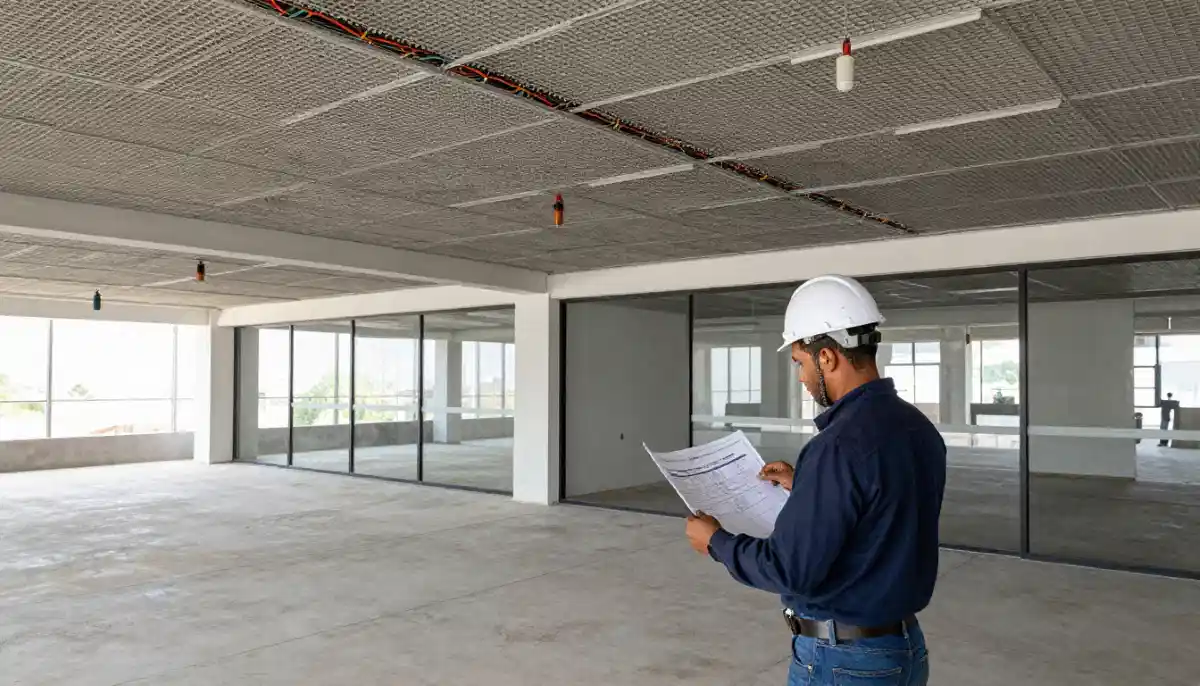
Ceiling Regulations & SANS Standards South Africa – Complete Compliance Guide
📋 SANS 10400, fire ratings, ceiling heights, NHBRC requirements – everything you need to know for legal, safe ceiling installations.
When installing or replacing a ceiling in South Africa, you can’t just focus on aesthetics and cost. Building regulations set strict requirements for ceiling installations – from minimum heights to fire resistance and electrical clearances. Whether you’re building a new home in Sandton, renovating a property in Cape Town, or doing alterations in Durban, compliance with SANS 10400 and other regulations is non-negotiable. This comprehensive guide covers all the legal requirements for ceiling installations in South Africa – helping you avoid costly mistakes, ensure safety, and pass building inspections.
📋 Need a Compliant Ceiling Installation?
Get free quotes from experienced ceiling contractors who know and follow all SANS regulations. Ensure your installation meets all legal requirements.
Find Certified Ceiling Installers
Servicing Johannesburg, Pretoria, Cape Town, Durban, and all major areas
📖 Table of Contents – Ceiling Regulations & Standards
📜 SANS 10400 – The National Building Regulations
SANS 10400 is the overarching standard for building regulations in South Africa. It’s divided into parts, each covering different aspects of construction. For ceilings, several parts are relevant.
What Is SANS 10400?
The South African National Standard 10400 gives the requirements for compliance with the National Building Regulations. It’s a legal requirement – all new buildings and alterations must comply.
Key Parts Affecting Ceilings
- SANS 10400-A: General principles and requirements.
- SANS 10400-L: Roofs – includes ceiling construction requirements.
- SANS 10400-T: Fire protection – fire resistance of ceilings.
- SANS 10400-N: Glazing – if ceiling includes glass elements.
- SANS 10400-O: Lighting and ventilation – affects ceiling design.
Who Enforces These Regulations?
- Local municipalities (building control officers)
- NHBRC for new homes (warranty requirements)
- Private building inspectors
Key Insight: Compliance isn’t optional – it’s the law. Non-compliant ceilings can result in failed building inspections, insurance claims denied, and even legal liability if someone is injured.
📏 Minimum Ceiling Height Requirements
One of the most basic but critical regulations is minimum ceiling height. This affects room feel, safety, and compliance.
SANS 10400 Requirements
- General rooms (living, bedrooms): Minimum 2.4m clear height.
- Bathrooms, kitchens, laundries: Minimum 2.1m clear height.
- Corridors: Minimum 2.1m clear height.
- Garages: Minimum 2.1m clear height (2.3m for carports).
- Under beams or bulkheads: Can be lower if limited to small areas.
What “Clear Height” Means
Clear height is measured from finished floor level to the underside of the ceiling. Light fittings, beams, or other projections cannot intrude into this space.
Existing Buildings
For renovations in older homes, existing lower ceilings may be “grandfathered” if not being altered. But if you’re replacing the ceiling, you may need to bring it up to current standards.
Suspended Ceilings
Suspended ceilings reduce room height. Ensure final clear height still meets minimums after installation.
Important: Always check with your local municipality – some areas may have stricter requirements than the national standard.
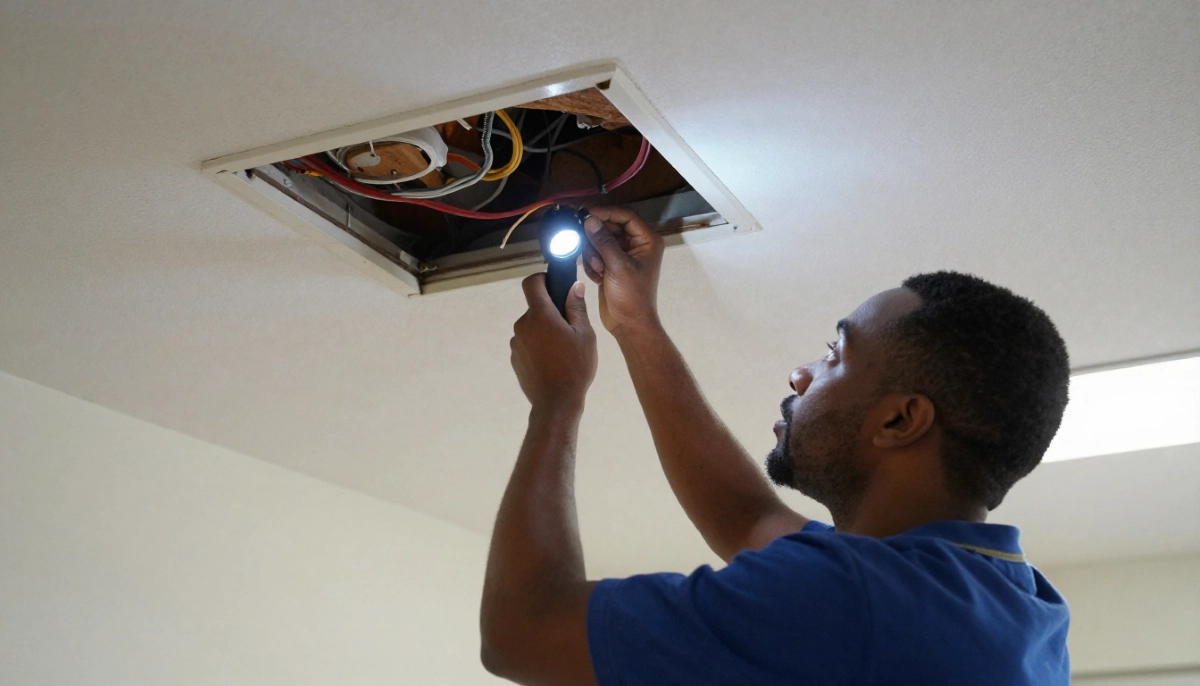
🔥 Fire Safety & Fire-Rated Ceilings
Fire safety is a critical aspect of ceiling regulations, covered under SANS 10400-T.
When Are Fire-Rated Ceilings Required?
- Attached dwellings: Flats, townhouses, and apartments require fire separation between units – ceilings may need fire-rating.
- Garages: Ceilings below habitable rooms (e.g., bedroom above garage) must have fire resistance.
- Commercial buildings: Fire-rated ceilings are often required for compartmentation.
- Escape routes: Corridors and stairwells may need fire-rated ceilings.
Fire Resistance Levels (FRL)
- 30/30/30: 30 minutes structural adequacy, integrity, insulation.
- 60/60/60: 60 minutes – common for garage ceilings.
- 120/120/120: 120 minutes – for high-risk applications.
Fire-Rated Ceiling Materials
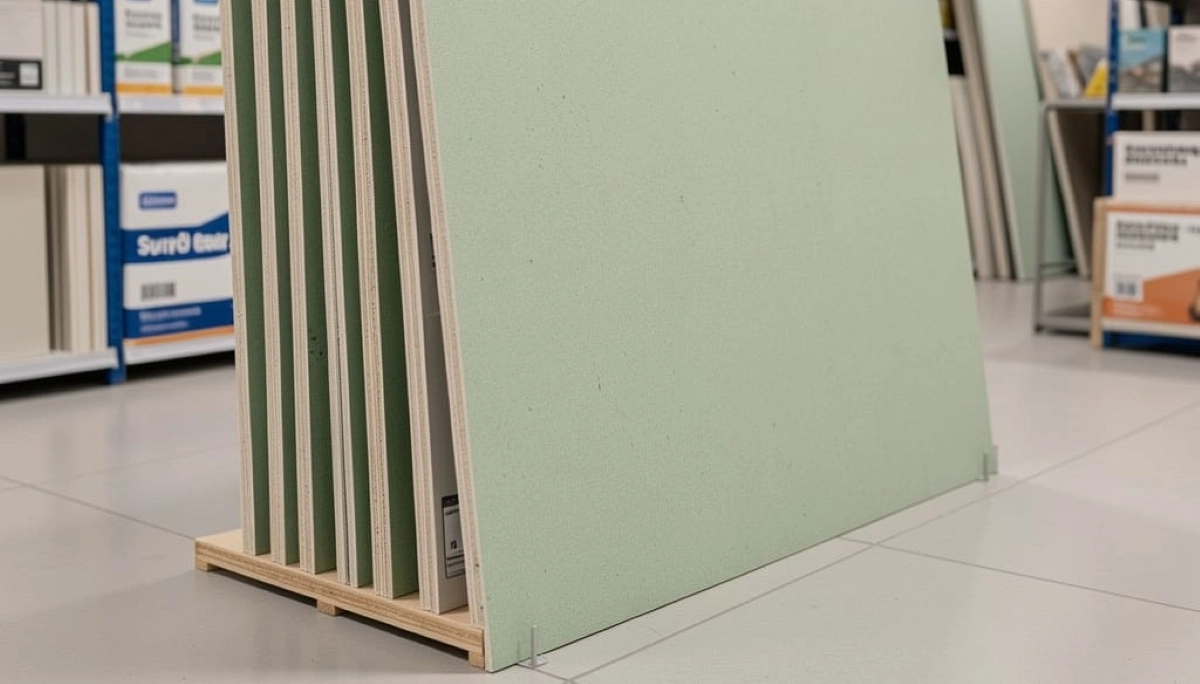
- Fire-rated gypsum boards: Pink boards with glass fibres – typically 12.5mm or 15mm.
- Fibre cement: Inherently fire-resistant.
- Mineral fibre tiles: For suspended ceilings.
- Intumescent coatings: Can be applied to timber to improve fire resistance.
Penetrations and Seals
Any penetrations through fire-rated ceilings (lights, vents, pipes) must be sealed with fire-stopping materials to maintain the fire rating.
See our ceiling materials guide for fire-rated options.
⚡ Electrical Clearances & SANS 10142-1
SANS 10142-1 (the wiring code) specifies requirements for electrical installations, including clearances above ceilings.
Clearance Above Ceilings
- Electrical cables in ceiling voids must be mechanically protected if within 50mm of the ceiling surface.
- Cables must be secured and not lying on ceiling boards.
- Junction boxes must be accessible – not buried above inaccessible ceilings.
Downlight Clearances
Recessed downlights generate heat and require specific clearances:
- Insulation clearance: Most downlights require 50-100mm clearance from insulation – check manufacturer specs.
- Fire-rated downlights: Required if penetrating fire-rated ceilings.
- Transformer access: Transformers for low-voltage lights must be accessible.
Extractor Fans and Vents
Bathroom extractor fans must vent to outside – not just into ceiling void. This prevents moisture buildup and mould.
💨 Ventilation Requirements
SANS 10400-O covers ventilation – and ceilings play a role.
Roof Space Ventilation
- Roof spaces (above ceilings) must be ventilated to prevent condensation and heat buildup.
- Ventilation openings required at opposite sides of roof.
- Ceiling insulation should not block ventilation pathways.
Bathroom & Kitchen Ventilation
As mentioned, extractor fans must vent externally – not into ceiling void. This is a common non-compliance that leads to mould and rot.
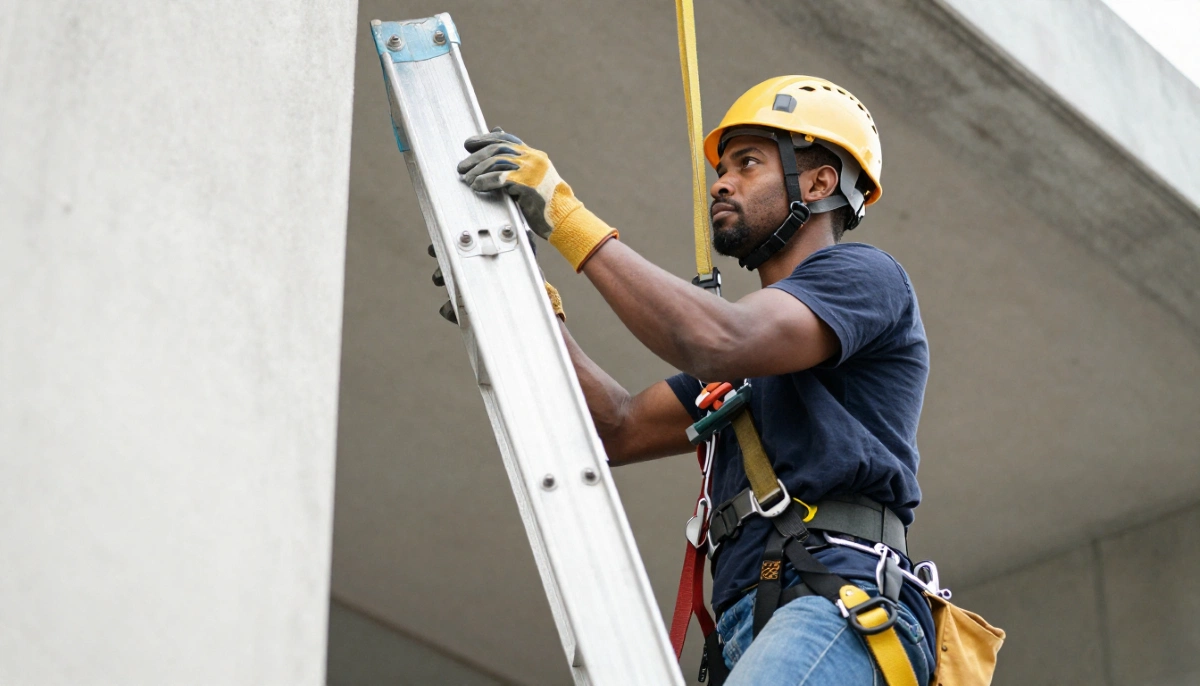
🪜 Access Hatches – Legal Requirements
Ceiling voids containing services must be accessible for inspection and maintenance.
When Are Access Hatches Required?
- Any ceiling with electrical junction boxes, transformers, or mechanical equipment above.
- Roof spaces that require access for maintenance.
- Areas where plumbing or ductwork is located.
Access Hatch Specifications
- Minimum size: Typically 600mm x 600mm (may vary by local authority).
- Location: Must be easily accessible – not above bulky furniture.
- Fire rating: If in fire-rated ceiling, hatch must maintain fire rating.
- Labelling: Should be clearly marked as access point.
🌡️ Thermal Insulation Regulations
SANS 10400-XA sets energy efficiency requirements for buildings, including ceiling insulation.
Insulation Requirements
- New homes must have ceiling insulation achieving minimum R-value (thermal resistance).
- R-value required depends on climate zone (South Africa has 6 climate zones).
- Typical requirement: R-2.0 to R-3.7 for ceilings.
Types of Approved Insulation
- Fibreglass batts
- Cellulose fibre
- Polystyrene boards
- Reflective foil laminates
Installation Requirements
- Insulation must be installed according to manufacturer specifications.
- Must not block ventilation pathways.
- Must maintain clearances around downlights and heat-producing devices.
See our insulated ceilings guide for more details.
🔊 Acoustic Requirements – SANS 10182
SANS 10182 sets standards for acoustics in buildings. While not always mandatory for homes, certain situations require acoustic performance.
When Acoustic Requirements Apply
- Flats and townhouses: Sound transmission between units must meet minimum standards.
- Home theatres: May need acoustic treatment.
- Commercial buildings: Offices, schools, hospitals have acoustic requirements.
Acoustic Ceiling Solutions
- Acoustic ceiling tiles (mineral fibre, perforated metal)
- Suspended ceilings with acoustic insulation above
- Double-layer plasterboard with acoustic sealant
- Resilient channels to decouple ceiling from structure
🏠 Need a Compliant Ceiling Installation?
Regulations are complex. Don’t risk non-compliance. Get free quotes from experienced ceiling contractors who know all the requirements.
🏗️ NHBRC Requirements for New Homes
The National Home Builders Registration Council (NHBRC) sets technical requirements for new homes, including ceilings.
NHBRC Technical Requirements
- Ceilings must be designed and installed according to SANS 10400.
- Materials must be SABS approved or certified.
- Installation must be by registered builders.
- Defects during warranty period (first year, five-year major defects) are covered – but only if installed correctly.
Common NHBRC Ceiling Defects
- Cracking due to structural movement (may be covered).
- Sagging from inadequate support (not covered if installation fault).
- Water damage from roof leaks (covered if roof defect).
Verifying NHBRC Registration
Always verify your builder is NHBRC registered before construction. Use the NHBRC website to check.
🏛️ Municipal Approval & Building Plans
Do you need approval for ceiling work? It depends on the scope.
When Approval Is Required
- New homes: Full building plan approval required – ceiling details must be on plans.
- Ceiling replacements: Like-for-like replacement usually doesn’t need approval, but check with local municipality.
- Structural changes: Adding bulkheads, changing ceiling heights, or altering structure requires approval.
- Commercial buildings: Almost always require approval.
What Plans Must Show
- Ceiling heights
- Ceiling materials
- Fire ratings (if applicable)
- Access hatch locations
- Insulation specifications
Consequences of Non-Approval
- Building inspector can stop work.
- May be forced to remove non-compliant work.
- Insurance claims may be denied.
- Problems when selling property.
✅ Material Standards – SABS Approved
Ceiling materials used in South Africa should meet SABS standards.
SABS Standards for Ceiling Materials
- SANS 2001-CG1: Gypsum plasterboard specifications.
- SANS 803: Fibre-cement sheets.
- SANS 613: Mineral fibre tiles.
- SANS 1000: Timber grading.
Why SABS Approval Matters
- Ensures material meets minimum quality and safety standards.
- Required for NHBRC enrolment.
- Builders and inspectors expect SABS-approved materials.
- Performance (fire rating, strength) is verified.
Checking for SABS Mark
Look for the SABS mark on materials or ask suppliers for certification.
☣️ Asbestos Ceiling Regulations
ASBESTOS IS HIGHLY DANGEROUS. Strict regulations govern asbestos ceilings. Only licensed contractors may remove or work with asbestos-containing materials.
Asbestos Regulations (Asbestos Abatement Regulations, 2020)
- All asbestos-containing materials must be identified and managed.
- Only licensed asbestos contractors may remove asbestos.
- Strict procedures for removal, transport, and disposal.
- Homeowners can be liable for illegal asbestos removal.
If You Have an Asbestos Ceiling
- Do NOT disturb it (drill, sand, cut).
- Have it tested by certified laboratory.
- If in good condition, it can be left in place and painted (with care).
- If damaged or for removal, use only licensed contractors.
Cost of Licensed Removal
R200 – R500 per m² depending on location and complexity. Expensive, but non-negotiable for safety and legality.
📄 Certificate of Compliance
Do you need a compliance certificate for ceilings? Sometimes.
When Certificates Are Required
- New buildings: Part of overall occupancy certificate.
- Major alterations: May need certificate from builder.
- Insurance purposes: Not usually a specific ceiling certificate, but overall building compliance matters.
- Selling property: Not typically required separately, but electrical certificate (COC) may require ceiling access.
Who Can Issue
- Registered builders (for workmanship).
- Architects or engineers (for design compliance).
- Building inspectors (for plan approval).
🏠 Real-Life Compliance Examples
Example 1: New Home, Centurion
Builder installed standard gypsum in garage ceiling below bedroom.
Issue: Non-compliant – fire-rated ceiling required.
Fixed: Replaced with 15mm fire-rated boards – R3,500 extra.
Example 2: Renovation, Durban
Extractor fan venting into ceiling void, not outside.
Issue: Moisture buildup, mould, non-compliant.
Fixed: Installed ducting to external vent – R1,500.
Example 3: Office, Johannesburg
Downlights installed with no clearance from insulation.
Issue: Fire risk, non-compliant with SANS 10142-1.
Fixed: Installed fire-rated downlight covers – R2,800.
Example 4: Old Home, Pretoria
1950s home with asbestos ceiling, homeowner wanted to replace.
Correct approach: Licensed asbestos removal contractor.
Cost: R18,000 for removal, R25,000 for new ceiling.
❌ 7 Common Compliance Mistakes
Learn from others’ errors: These mistakes cause failed inspections and costly rework.
Mistake #1: Ignoring Fire Rating Requirements
Standard gypsum in a garage ceiling below a bedroom – fire-rated boards are required. This is one of the most common non-compliances.
Mistake #2: Blocking Ventilation
Installing insulation that blocks roof ventilation, or extractor fans venting into ceiling voids, causes moisture problems.
Mistake #3: No Access Hatches
Sealing electrical junction boxes above ceilings with no access – illegal and dangerous. Inspectors will fail this.
Mistake #4: Insufficient Ceiling Height
Suspended ceilings installed too low, reducing room height below minimum standards.
Mistake #5: DIY Asbestos Handling
Disturbing or attempting to remove asbestos ceilings illegally – extremely dangerous and against the law.
Mistake #6: Electrical Clearances Ignored
Downlights too close to insulation, cables not protected, junction boxes inaccessible.
Mistake #7: Using Non-Approved Materials
Materials without SABS approval or不符合 manufacturer specifications may not perform as required.
❓ Frequently Asked Questions – Ceiling Regulations
What is the minimum ceiling height in South Africa?
According to SANS 10400, minimum height is 2.4m for living areas and bedrooms, and 2.1m for bathrooms, kitchens, corridors, and garages. Always check local bylaws which may be stricter.
Do I need a fire-rated ceiling in my garage?
Yes, if there’s a habitable room above. The garage ceiling must provide 30-60 minutes fire resistance. Use fire-rated gypsum boards (pink) or fibre cement. Standard gypsum is not sufficient.
Do I need building plans approval to replace a ceiling?
For like-for-like replacement, usually no. But if changing materials, height, or structure, approval may be needed. Check with your local municipality to be safe.
What are the requirements for ceiling access hatches?
Access hatches are required where electrical junction boxes, transformers, or mechanical equipment are above ceilings. Minimum size is typically 600mm x 600mm, and they must be easily accessible.
Can I install downlights in a fire-rated ceiling?
Yes, but you must use fire-rated downlight covers that maintain the fire rating. Standard downlights without covers breach the fire resistance.
Is ceiling insulation compulsory?
Yes for new homes under SANS 10400-XA energy efficiency requirements. Minimum R-values vary by climate zone. For renovations, it’s highly recommended but not always compulsory.
What happens if my ceiling doesn’t meet regulations?
Building inspectors can stop work, require removal, or refuse occupancy. Insurance claims may be denied. When selling, problems may be discovered during inspections.
How do I know if my ceiling contains asbestos?
If your home was built before 1990, there’s a risk. Textured coatings and old fibre cement sheets may contain asbestos. Have samples tested by a certified laboratory.
Who can remove an asbestos ceiling?
Only licensed asbestos removal contractors. It’s illegal and extremely dangerous for anyone else to handle asbestos. Check their license and certification.
What is SANS 10400 and why does it matter?
SANS 10400 is the South African National Standard for building regulations. It’s the legal standard all buildings must meet. Compliance ensures safety, structural integrity, and legal approval.
✅ Final Thoughts – Compliance Is Safety
Ceiling regulations might seem like red tape, but they exist for good reason – to keep you and your family safe. Fire resistance prevents tragedy. Proper heights ensure comfortable living. Electrical clearances prevent fires. Ventilation stops mould.
Your 4-Step Compliance Action Plan:
- Know the requirements: Understand what applies to your project.
- Use approved materials: SABS-marked products only.
- Hire qualified professionals: Registered contractors who know the regulations.
- Get inspections done: Don’t skip building control approval.
🔑 The Bottom Line:
Compliance costs a little – non-compliance costs a lot.
Do it right, do it legally, do it safely.
🏠 Need a Compliant Ceiling Installation?
Don’t risk non-compliance. Get free quotes from experienced, registered ceiling contractors who know all the regulations.
📞 Call our compliance helpline: 073 138 4726
📚 Official Resources & Standards:
- SABS – SANS 10400-T fire performance standards.
- NHBRC – Technical requirements for ceilings in new homes.
- SACAPS – Municipal building plan approval processes.
- Government Website – National Building Regulations.
This guide is for informational purposes. Always consult with your local municipality and qualified professionals for specific compliance requirements.
Written by: ServiceLink SA Research Team
Industry analysis and regulatory research for South African homeowners
Our team has decades of combined experience in construction compliance, building inspections, and regulatory affairs. We’ve compiled this guide based on SANS standards, NHBRC requirements, and municipal building regulations.