

How to Choose a Reliable Garage Door & Gate Installer in South Africa
🔑 CIDB grading? PSIRA registration? Insurance? Warranty? We show you exactly how to vet installers and avoid costly mistakes.
You’ve done your research, chosen the perfect garage door or gate, and you’re ready to install. But the most critical decision is still ahead: who will install it? In South Africa, the difference between a professional installation and a cowboy job can be tens of thousands of rands in repairs, safety hazards, and legal liability. Whether you’re in Johannesburg, Cape Town, Durban, or anywhere in between, this guide walks you through every step of vetting a potential installer. We cover credentials, red flags, questions to ask, and how to protect yourself – so you can have confidence that your investment is in safe hands.
📋 Looking for a Trusted Installer?
Stop guessing. Get free, no-obligation quotes from pre-vetted, registered garage door and gate installers in your area. We verify credentials so you don’t have to.
Find Verified Installers Near You
Servicing Johannesburg, Pretoria, Cape Town, Durban, and all major areas
📖 Table of Contents – Choosing a Reliable Installer
🎯 Why Your Choice of Installer Matters More Than You Think
A garage door or gate isn’t like buying a TV. You’re not just buying a product – you’re buying a safety-critical installation that involves:
- Extreme tension springs that can kill if mishandled.
- Electrical wiring that must comply with SANS standards.
- Heavy moving parts that can cause injury if not properly secured.
- Security integration that affects your home’s safety.
- Structural attachments to your home that must be sound.
A poor installation can result in:
- Premature failure of door or motor.
- Safety hazards (door falling, springs breaking).
- Voided warranties.
- Insurance claims denied.
- Injury to family or visitors.
- You being liable if installer is injured on your property (no insurance).
The Bottom Line: Saving R2,000 on a cheaper installer can cost you R20,000+ in repairs, legal fees, or medical bills. Vet your installer thoroughly.
✅ Credentials Checklist – 7 Things to Verify
Before you even ask for a quote, know what credentials to look for. Here’s your complete checklist.
📋 Must-Have Credentials
- ☐ CIDB grading (1-9) – proves construction competency.
- ☐ PSIRA registration (if handling security gates/automation).
- ☐ Public liability insurance (R1 million+).
- ☐ COIDA registration (Workman’s Compensation).
- ☐ Manufacturer accreditation (Centurion, ET, etc.).
- ☐ Valid VAT registration (for larger projects).
- ☐ Physical business address (not just a cellphone).
🔍 How to Verify
- CIDB: Search on cidb.org.za.
- PSIRA: Verify on psira.co.za.
- Insurance: Ask for certificate of insurance.
- COIDA: Request letter of good standing.
- Accreditation: Check manufacturer’s website.
- VAT: Ask for VAT number and verify.
- Address: Google Maps street view – does it exist?
Pro Tip: Don’t just take their word for it. Ask for their registration numbers and verify them yourself online. Legitimate companies expect this.
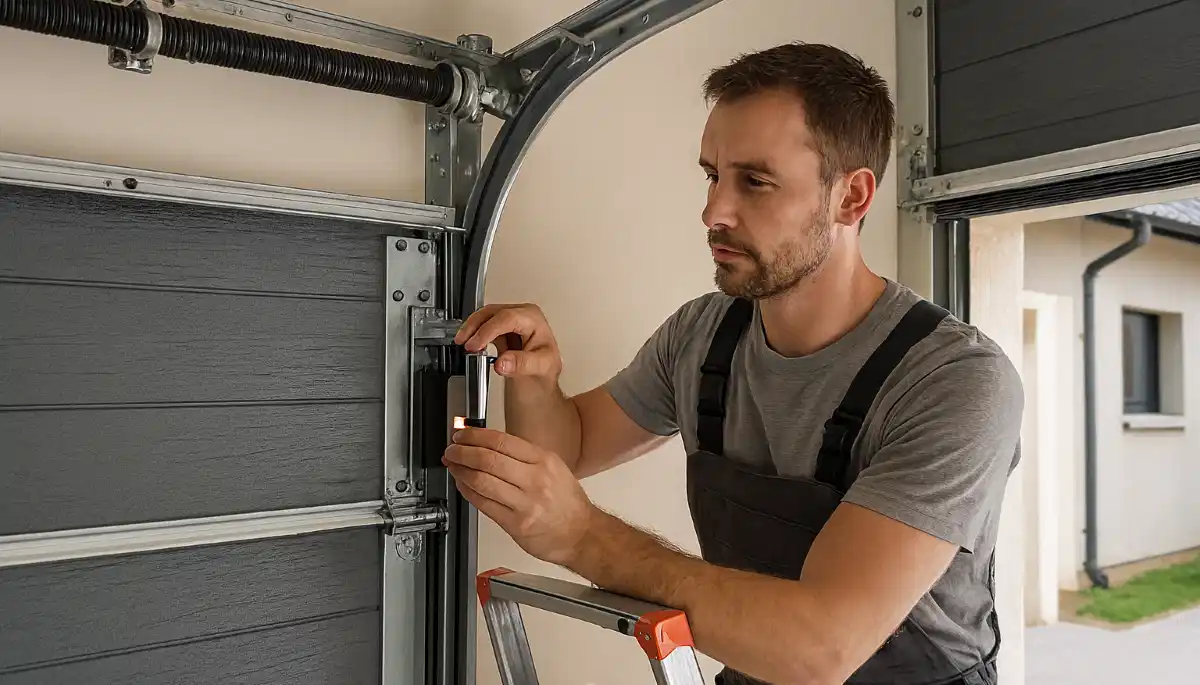
🏗️ CIDB Grading – What It Means
The Construction Industry Development Board (CIDB) grades contractors based on their capability and financial standing.
CIDB Grades Explained
- Grade 1: Maximum tender value R1 million. Suitable for small residential work.
- Grade 2: Up to R2.5 million.
- Grade 3: Up to R5 million.
- Grade 4-9: Larger contractors for commercial/industrial work.
What to Look For
- For a standard residential garage door or gate installation (under R50,000), Grade 1 is sufficient.
- What matters is that they HAVE a grading – any legitimate contractor will be registered.
- Check their status – should be “Registered” not “Expired” or “Suspended”.
How to Verify
- Go to cidb.org.za.
- Click on “Register of Contractors”.
- Enter the company name or registration number.
- Verify status and grade.
🛡️ PSIRA Registration – Essential for Security Work
If your installation involves any security element (automated gates, access control, intercoms), the installer MUST be registered with PSIRA.
Why PSIRA Matters
- Legal requirement: It’s illegal to perform security work without PSIRA registration.
- Background checks: PSIRA-registered individuals have undergone criminal background checks.
- Code of conduct: They’re bound by PSIRA’s code of conduct.
- Consumer protection: You have recourse if something goes wrong.
How to Verify
- Go to psira.co.za.
- Click on “Verify a Service”.
- Enter the company name or registration number.
- Check that status is “Active”.
Red Flag: If an installer claims they don’t need PSIRA because it’s “just a gate”, walk away. Automated gates are security devices – PSIRA registration is mandatory.
💰 Insurance – Protecting YOU from Liability
This is often overlooked but critically important. If an installer is injured on your property and they don’t have insurance, YOU could be liable.
Public Liability Insurance
- Covers damage to your property during installation.
- Covers injury to you or your family caused by their work.
- Minimum cover should be R1 million – ask to see the certificate.
COIDA (Workman’s Compensation)
- Covers their employees if injured on your property.
- If they don’t have COIDA, you pay for medical costs and lost wages.
- Request a Letter of Good Standing from the Compensation Fund.
Questions to Ask
- “Can you provide a certificate of public liability insurance?”
- “Are you registered with COIDA? Can I see your letter of good standing?”
🏭 Manufacturer Accreditation
Top brands like Centurion and ET Systems have accredited installer programmes. This matters because:
- Accredited installers are trained by the manufacturer.
- They have access to genuine parts.
- They’re kept up-to-date on new products and techniques.
- Manufacturer warranties may require accredited installation.
How to Verify
- Check the manufacturer’s website for a list of accredited installers.
- Ask the installer for their accreditation certificate.
- Call the manufacturer to confirm.
Centurion accredited installers: Check here
ET Systems accredited installers: Check here
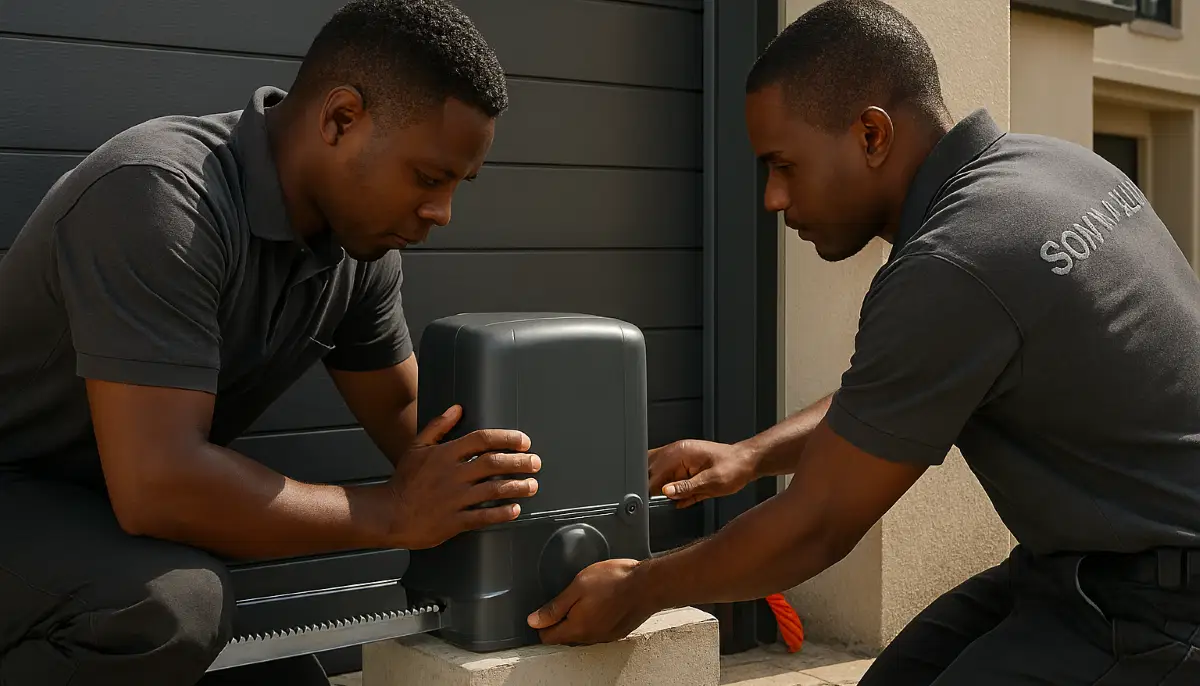
📝 Warranty – What Should Be Covered
A reliable installer stands behind their work with a solid warranty.
Minimum Warranty Requirements
- Labour/workmanship: Minimum 1 year.
- Door materials: 1-5 years depending on manufacturer.
- Motor: 1-2 years (manufacturer warranty).
- Battery: Usually 6-12 months (consumable item).
What the Warranty Should Cover
- Faulty installation.
- Premature failure of components.
- Labour to repair or replace.
- Call-out fees for warranty work.
Get It in Writing
The warranty should be clearly stated in your quotation or contract. It should specify:
- Duration of coverage.
- What’s covered (parts, labour, both).
- Any exclusions (misuse, lack of maintenance, etc.).
- Process for claiming.
🔍 Want Us to Vet Installers for You?
We only connect you with installers who meet our strict criteria: CIDB registered, PSIRA registered (where applicable), insured, and accredited. Save time and get peace of mind.
❓ 10 Questions to Ask Every Potential Installer
Use these questions when interviewing installers. Take notes on their responses.
- “What is your CIDB grading and number?” – Verify it online.
- “Are you PSIRA registered? What is your registration number?” – Essential for security work.
- “Can you provide a certificate of public liability insurance?” – Minimum R1 million cover.
- “Are you registered with COIDA? Can I see your letter of good standing?” – Protects you from liability.
- “Are you an accredited installer for Centurion/ET/Gemini?” – Check with manufacturer.
- “What warranty do you offer on labour and materials?” – Minimum 1 year.
- “Can you provide three recent references from similar projects?” – Call them.
- “Will you do a site visit before providing a quote?” – If no, red flag.
- “What is your payment structure?” – Deposit should be reasonable (10-30% max).
- “Do you offer after-hours or emergency support?” – Important for security gates.
🚩 10 Red Flags – When to Walk Away
Trust your instincts. If something feels off, it probably is. These red flags should send you running.
⚠️ Major Red Flags
- ✗ Refuses to provide CIDB or PSIRA number.
- ✗ No physical business address (only cellphone).
- ✗ Requests full payment upfront.
- ✗ Cannot provide manufacturer warranty documents.
- ✗ No portfolio or examples of completed work.
- ✗ Pressures you to decide immediately.
⚠️ Caution Signs
- ⚠️ Quote provided without site visit.
- ⚠️ Vague about insurance or “we’re covered”.
- ⚠️ No written contract or quote.
- ⚠️ Negative online reviews with no response.
- ⚠️ Cash-only payment requests.
- ⚠️ Unwilling to provide references.
🏠 Why a Site Visit Is Non-Negotiable
A quote provided without a site visit is a guess, not a quote. Here’s why a site visit matters:
- Accurate measurements: Door/gate must fit perfectly.
- Assess condition: Is your current door suitable for automation?
- Check power supply: Where will motor be plugged in? Need new wiring?
- Identify obstacles: Trees, slopes, walls that affect operation.
- Discuss options: In-person advice on materials and styles.
- Build trust: You meet the person who’ll do the work.
Pro Tip: Be present during the site visit. Walk through your requirements. Ask questions. This is your opportunity to assess their knowledge and professionalism.
📄 Written Quotes – What Must Be Included
Never accept a verbal quote. A proper written quote protects both parties.
A Professional Quote Should Include:
- ✅ Company name, address, contact details, VAT number.
- ✅ Your name and project address.
- ✅ Detailed description of work: door type, material, size, colour, motor brand/model.
- ✅ Itemised pricing: door, motor, labour, electrical work, disposal, VAT.
- ✅ Warranty terms.
- ✅ Payment terms (deposit amount, balance on completion).
- ✅ Estimated timeline (start and completion dates).
- ✅ Valid until date (prices subject to change).
- ✅ Terms and conditions.
What to Watch For
- Vague descriptions like “supply and fit garage door” – not detailed enough.
- No breakdown of costs – how do you know what you’re paying for?
- Small print with unfair terms.
⭐ Checking References & Online Reviews
A company’s reputation is one of your best guides.
How to Check References
- Ask for 3 recent references from similar projects.
- Call them. Ask:
- Was the work completed on time and on budget?
- Were there any unexpected costs?
- How was the cleanliness and professionalism?
- Would you hire them again?
- Any issues since installation? How were they handled?
Online Reviews
- Check Google Reviews, HelloPeter, Facebook.
- Look for patterns – one bad review among many good is normal.
- Look at how the company responds to negative reviews – professionally or defensively?
- Beware of fake reviews (too many 5-star, same wording).
💰 Payment Terms – What’s Reasonable
Understanding normal payment practices protects you from scams.
Typical Payment Structure
- Deposit: 10-30% to secure materials and booking. Should be reasonable.
- Progress payment: Sometimes for large projects (e.g., 50% mid-way).
- Final payment: On completion, after you’ve inspected and are satisfied.
What’s NOT Normal
- ❌ 50%+ deposit for a small residential job.
- ❌ Full payment upfront.
- ❌ Cash-only requests (to avoid VAT).
- ❌ Payment to a personal bank account (not company account).
Scam Alert: If an installer demands a large deposit and then becomes unreachable, you’ve been scammed. Stick to reputable companies with verifiable credentials.
🆘 After-Hours & Emergency Support
Gates and garage doors don’t break only during business hours. When you’re stuck outside (or inside) at night, you need help.
Questions to Ask
- Do you offer after-hours support?
- What’s the response time for emergencies?
- Is there an after-hours call-out fee? (usually 1.5x – 2x standard).
- Do you have a 24/7 emergency number?
Why It Matters
- Security risk if gate won’t close at night.
- Safety risk if garage door stuck open.
- Convenience – you don’t want to wait until Monday.
📊 Installer Comparison Worksheet
Use this table to compare up to 3 installers objectively.
| Criteria | Installer 1 | Installer 2 | Installer 3 |
|---|---|---|---|
| CIDB registered (Grade) | |||
| PSIRA registered | |||
| Public liability insurance | |||
| COIDA registered | |||
| Manufacturer accredited | |||
| Warranty (labour) | |||
| Site visit conducted | |||
| Detailed written quote | |||
| References provided (called?) | |||
| Online reviews (positive) | |||
| After-hours support | |||
| Total price (incl VAT) | |||
| Payment terms | |||
| Estimated timeline |
😱 Real-Life Horror Stories – Learn from Others
Story 1: The Uninsured Installer
Homeowner hired a “handyman” to install a gate motor. Installer injured his back on site – no COIDA. Homeowner sued for R250,000 medical costs and lost wages.
Lesson: Always verify insurance and COIDA.
Story 2: The Vanished Deposits
Company demanded 50% deposit for “materials”. Never showed up, phone disconnected. 5 homeowners lost R15,000+ each.
Lesson: Never pay large deposits. 10-30% max.
Story 3: The Unqualified “Expert”
Installer with no CIDB grading fitted door incorrectly. Spring broke, door crashed down, damaged car. Installer disappeared.
Lesson: Verify CIDB and manufacturer accreditation.
Story 4: The Verbal Quote Trap
Verbal quote of R12,000. Final bill R22,000 with “extras”. No written quote to dispute.
Lesson: Always get detailed written quotes.
❌ 7 Common Mistakes When Hiring Installers
Learn from others’ errors: These mistakes cost homeowners time, money, and peace of mind.
Mistake #1: Hiring Based on Price Alone
The cheapest quote is cheap for a reason – no insurance, no credentials, no warranty. Paying a fair price for a qualified installer is always cheaper in the long run.
Mistake #2: Not Verifying Credentials
Taking their word for it that they’re “registered” or “insured”. Always verify online or ask for certificates.
Mistake #3: Skipping the Site Visit
Allowing a quote without a site visit. This guarantees hidden costs later.
Mistake #4: No Written Contract
Relying on verbal agreements. When disputes happen, you have no proof.
Mistake #5: Paying Too Much Upfront
Large deposits put you at risk. Stick to 10-30% maximum.
Mistake #6: Not Checking References
Skipping reference checks. Those 10 minutes could save you thousands.
Mistake #7: Ignoring Red Flags
Seeing red flags but hiring anyway because “they seemed nice”. Trust your instincts.

❓ Frequently Asked Questions – Hiring Installers
How do I verify if an installer is CIDB registered?
Go to cidb.org.za, click on “Register of Contractors”, and enter their company name or registration number. Check that status is “Registered” and note their grade.
Do gate installers need PSIRA registration?
Yes, for automated gates and security devices. PSIRA registration is mandatory for anyone installing security equipment. Verify on psira.co.za.
What insurance should a gate installer have?
Public liability insurance (minimum R1 million) and COIDA registration (Workman’s Compensation). Ask for certificates and verify.
How much deposit should I pay?
10-30% is normal for residential work. Never pay 50% or more upfront. Final payment should be on completion after you’ve inspected the work.
What warranty should I expect?
Minimum 1 year on labour. Door materials: 1-5 years. Motor: 1-2 years. Battery: 6-12 months. Get warranty terms in writing.
Should I get multiple quotes?
Absolutely. Get at least 3 written quotes from different installers. Compare not just price, but credentials, warranty, and what’s included. Our quote service makes this easy.
What if an installer refuses to do a site visit?
Walk away. A quote without a site visit is a guess. They will find “extras” once work starts. Always insist on a site visit.
How do I check an installer’s reputation?
Check Google Reviews, HelloPeter, and Facebook. Ask for references and call them. Look for patterns in reviews – consistent complaints are a red flag.
What should be in a written quote?
Company details, your details, detailed description of work, itemised pricing, warranty terms, payment terms, timeline, and validity period. Vague quotes are dangerous.
Can I trust online reviews?
Mostly, but be aware of fake reviews. Look for verified reviews (Google) and patterns. A company with 50+ reviews and 4.5+ stars is generally reliable. Check how they respond to negative reviews.
✅ Final Thoughts – Your Installer Selection Action Plan
Choosing the right installer isn’t complicated, but it requires diligence. Follow this action plan to ensure you hire a professional who will do the job safely, correctly, and with accountability.
Your 5-Step Installer Selection Action Plan:
- Shortlist 3-5 candidates: Use our quote service or local recommendations.
- Verify credentials: Check CIDB, PSIRA, insurance, COIDA, manufacturer accreditation.
- Insist on site visits: Only accept quotes after they’ve seen your property.
- Compare detailed quotes: Use our comparison worksheet. Don’t just compare price.
- Check references and reviews: Call past clients. Read online reviews.
🔑 The Bottom Line:
An hour of vetting saves years of headaches.
Pay for quality, verify everything, and never ignore red flags.
🔍 Ready to Find a Verified Installer?
Don’t risk your safety and investment. Get free quotes from pre-vetted, registered garage door and gate installers in your area.
📞 Call our installer verification helpline: 073 138 4726
📚 Official Verification Resources:
- CIDB – Verify contractor grading.
- PSIRA – Verify security service provider registration.
- Master Builders South Africa – Accredited installer network.
- Centurion Systems – Authorised installer network.
This guide is for informational purposes. Always verify credentials yourself before hiring.
Written by: Innocent T Hanyani
21+ years construction and digital industry experience, ServiceLink SA
Innocent has spent decades in the South African construction and security industry, vetting contractors and managing installations. He’s seen every scam, every mistake, and every horror story – and compiled this guide to help you avoid them.