

How to Choose a Reliable Painting Contractor in South Africa – Complete Vetting Guide
🎨 Handyman vs registered painter? CIDB grading? B-BBEE? Here’s how to avoid being scammed.
Finding a reliable painting contractor in South Africa can feel like a gamble. Stories abound of homeowners in Johannesburg who hired a “cheap painter” only to discover the work was substandard, the paint was watered down, and their warranty was worthless. In Cape Town, Pretoria, and Durban, the same story plays out – unqualified handymen posing as professional painters, poor workmanship, and homeowners left with the bill.
This comprehensive guide gives you a step-by-step system to vet any painting contractor before you hire. We’ll show you exactly what credentials to check, what questions to ask, and how to protect yourself from cowboy operators. Whether you need commercial painters or residential specialists, this guide ensures you hire a professional who delivers quality work.
⚠️ CRITICAL: In South Africa, reputable painting contractors should have CIDB registration, public liability insurance, and be able to provide references. Hiring an unregistered person could cost you far more in the long run.
Need a verified, registered painting contractor?
Skip the guesswork – get free quotes from pre-vetted, registered painting contractors in your area. All contractors are verified for CIDB registration and insurance.
Servicing Johannesburg, Pretoria, Cape Town, Durban, and nationwide
📋 Table of Contents – Painting Contractor Vetting Guide
🔧 Professional Painter vs Handyman – Critical Difference
This is the most important distinction you’ll make. Here’s the truth :
✅ Professional Painting Contractor
- ✓ CIDB registered (graded for project size)
- ✓ Public liability insurance (protects you)
- ✓ B-BBEE certificate (for commercial work)
- ✓ Manufacturer accreditations (Dulux, Plascon)
- ✓ Written contracts with warranties
- ✓ Qualified staff with safety training
- ✓ Can provide references and portfolios
- ✓ Work complies with SANS standards
❌ Handyman / Unregistered
- ✗ No formal qualifications
- ✗ No CIDB registration
- ✗ Usually no insurance – you’re liable
- ✗ No manufacturer accreditations
- ✗ Verbal agreements only
- ✗ No safety training
- ✗ No warranty if problems arise
- ✗ Work unlikely to meet standards
🚨 NEVER let a handyman do large painting projects. They lack the skills, equipment, and insurance for professional results. If they’re injured on your property, you could be liable. Always hire registered contractors.

📊 CIDB Grading – What It Tells You
The Construction Industry Development Board (CIDB) grades contractors based on capability and track record. For painting work, look for :
| CIDB Grade | Maximum Project Value | Suitable For |
|---|---|---|
| Grade 1 | R200,000 | Small residential projects, single rooms, flats |
| Grade 2 | R650,000 | Medium residential, full houses, small commercial |
| Grade 3 | R2,000,000 | Large residential, medium commercial |
| Grade 4 | R4,000,000 | Large commercial, multiple units |
| Grade 5+ | R6,500,000+ | Industrial, high-rise, major complexes |
Specialisation: Look for “Painting” or “General Building” classification. For commercial work, ensure their grade matches your project value .
🔍 How to Verify CIDB Registration
Verifying a contractor’s CIDB status is free and easy. Here’s how :
- Ask for their CIDB number – every registered contractor has one
- Visit www.cidb.org.za
- Click on “Verify Contractor” or similar
- Enter the CIDB number or company name
- Check:
- Registration is active (not expired)
- Grade matches your project value
- Specialisation includes painting
- No adverse findings or suspensions
Pro tip: Take a screenshot of the verification. If anything goes wrong, you have proof of their registered status. Legitimate contractors expect this check.
🛡️ Public Liability Insurance – Never Skip This
If an uninsured painter causes damage to your property or gets injured on site, you could be liable for damages and medical costs .
What to Ask
- “Do you have public liability insurance?”
- “Can I see your certificate of insurance?”
- “What is your coverage amount?” (R1 million – R5 million is typical)
- “Is your insurance current?” (check the expiry date)
- “Does it cover damage to my property and injury to workers?”
Legitimate painting contractors will provide proof of insurance without hesitation. If they make excuses, walk away .
⚠️ Critical: If a painter is injured on your property without insurance, you’re liable for medical bills and potentially legal claims. Insurance is non-negotiable.
📋 B-BBEE – What You Need to Know
For corporate and government projects, B-BBEE credentials are often mandatory. For residential work, it’s less critical but can be relevant if :
- You’re a corporate client with procurement requirements
- The contractor works on commercial projects (they should have a certificate)
- You’re tendering through a company
What to Ask
- “Do you have a current B-BBEE certificate?”
- “What is your level?” (Level 1-8)
- “Is it verified by a SANAS-accredited agency?”
Legitimate commercial contractors will have current certificates. Expired certificates (older than 12 months) are not valid .
🏭 Manufacturer Accreditations
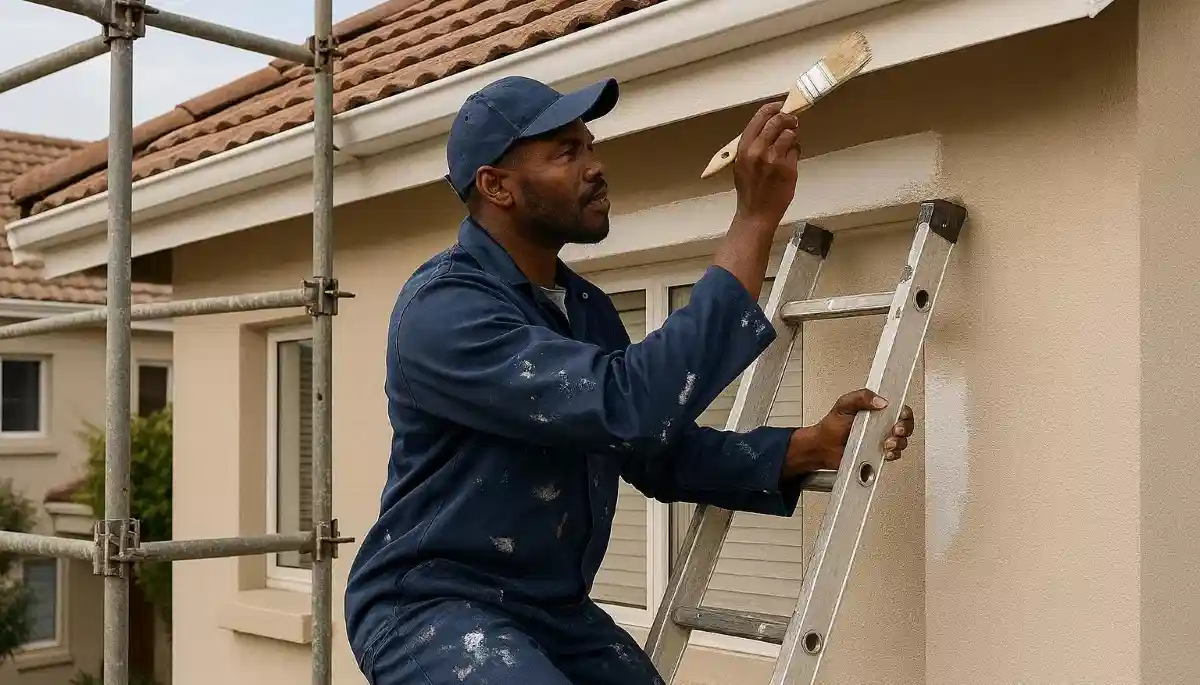
Top paint brands like Dulux and Plascon offer accreditation programmes for contractors. Accredited painters :
- Have been trained by the manufacturer
- Use genuine products correctly
- Can offer manufacturer-backed warranties (7-10 years)
- Are vetted by the brand
Why This Matters
A manufacturer-backed warranty means if the paint fails due to manufacturing defects, the brand covers it. If your contractor isn’t accredited, you only have their word – and they might not be in business in 5 years .
Ask: “Are you an accredited applicator for Dulux/Plascon? Can I get a manufacturer-backed warranty?”
❓ 10 Questions to Ask Before Hiring a Painting Contractor
1. “Are you CIDB registered?”
Ask for their CIDB number and verify online. If they hesitate, be suspicious.
2. “What is your CIDB grade?”
Ensure it matches your project size. Grade 1 for small jobs, higher for larger.
3. “Do you have public liability insurance?”
Ask for proof – a certificate of insurance with current dates.
4. “Can you provide a written quote?”
Verbal quotes lead to disputes. Always get it in writing, itemised.
5. “Are you accredited by paint manufacturers?”
Dulux or Plascon accreditation adds credibility and warranty options.
6. “Can I see your B-BBEE certificate?”
For commercial work, often mandatory. For residential, optional but good.
7. “What warranty do you offer on workmanship?”
1-3 years is standard. Get it in writing.
8. “Can you provide references from recent jobs?”
Call them and ask about their experience.
9. “What is your payment schedule?”
30-50% deposit maximum; balance on completion.
10. “Do you have a portfolio of similar work?”
Photos of completed projects show their capabilities.
🚩 15 Red Flags – Immediately Walk Away
🚨 THESE ARE DEAL-BREAKERS:
- Cannot provide CIDB number – absolute deal-breaker for any significant project
- No physical address or only a cellphone number – fly-by-night operator
- Pressure to pay cash only – avoiding tax and leaving you with no paper trail
- Demands 100% payment upfront – may disappear before finishing
- Quote is 30-50% lower than others – too good to be true; corners will be cut
- No written quote – verbal agreements are unenforceable
- Cannot provide proof of insurance – you’re liable if something goes wrong
- Says “you don’t need a contract” – protects them, not you
- Uses unmarked vehicle with no branding – unprofessional
- No physical business address – can’t be found if problems arise
- Negative online reviews with no response – pattern of poor service
- Refuses to put warranty in writing – verbal promises mean nothing
- Vague about paint brands – may use cheap, unbranded paint
- No safety equipment on site – indicates lack of professionalism
- Cannot provide references – likely has something to hide
📋 How to Compare Painting Quotes – Like-for-Like
Getting multiple quotes is essential, but only if you compare them correctly :
| What to Compare | Why It Matters | Red Flag |
|---|---|---|
| Paint brands specified | Quality varies hugely between brands | “Quality paint” – too vague |
| Number of coats | 2 coats minimum; 3 for colour changes | “One coat” – insufficient |
| Preparation included | 70% of job is prep – should be itemised | No mention of prep work |
| Primer included? | Primer is essential for new/dark surfaces | “No primer needed” – false economy |
| Labour breakdown | Hours × rate should be clear | Lump sum with no detail |
| VAT included? | 15% can be a nasty surprise | “Excluding VAT” in small print |
| Warranty terms | 1-3 years is standard | No warranty mentioned |
| Payment schedule | Deposit vs completion payment | 100% upfront demanded |
Always get at least 3 quotes for any significant painting project. Prices can vary by 30-50% for the same work .
👥 Checking References – What to Ask
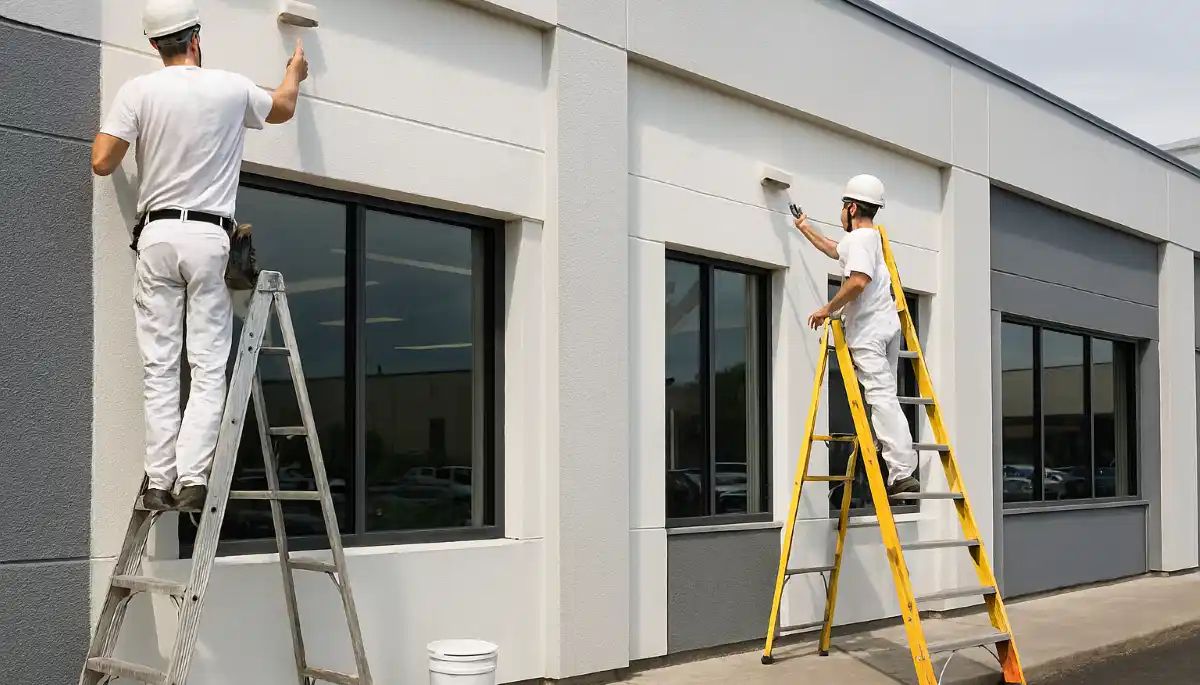
A good painting contractor will happily provide references. Here’s how to use them :
- Ask for recent jobs: Preferably in the last 3-6 months, similar to your project
- Ask for specific types: If you need exterior work, ask for exterior references
- Call them: Don’t just email – a quick call reveals more
- Ask specific questions:
- Was the work completed on time?
- Were there any unexpected costs?
- Did they clean up properly each day?
- How was their communication?
- Would you hire them again?
- Ask to see photos: Many contractors keep portfolios of completed work
- Visit if possible: If a local reference allows, seeing the work in person is ideal
⭐ Using Online Reviews – How to Spot Fake Ones
Online reviews can be helpful, but they’re also easily faked. Here’s how to evaluate them :
What to Look For
- Pattern of reviews: Many 5-star reviews in a short period may indicate fakes
- Review content: Genuine reviews mention specific details (the job, the painter’s name, challenges, etc.)
- Negative reviews with responses: How the company handles complaints tells you a lot
- Check multiple platforms: Google, HelloPeter, Facebook – consistency across platforms is a good sign
- Look for photos: Reviews with photos of actual work are more credible
Red Flags in Reviews
- Vague, generic praise (“Great service, highly recommended”) with no details
- All reviews from accounts with only one review
- No negative reviews at all (nobody’s perfect)
- Company responds defensively or aggressively to criticism
- Reviews mentioning “they disappeared” or “didn’t finish”
📝 Written Contracts – Get Everything in Writing
Never rely on verbal agreements. A proper contract protects both you and the contractor. It should include :
| Contract Element | What Should Be Specified |
|---|---|
| Scope of work | Exactly what will be painted – which rooms, walls, ceilings, trim, exterior surfaces |
| Paint specifications | Brand names, product names, colours, sheen levels, number of coats |
| Preparation included | Cleaning, sanding, filling, priming – be explicit |
| Timeline | Start date, expected completion date, working hours |
| Payment terms | Deposit amount, progress payments, final payment on completion |
| Warranty | Duration of workmanship warranty, what’s covered |
| Insurance | Confirmation of public liability insurance |
| Clean-up | Daily clean-up, final clean-up, waste disposal |
| Variations | Process for agreeing to extra work or changes |
💰 Payment Terms – What’s Normal in South Africa
✅ Normal Payment Terms:
- 30-50% deposit for materials (especially for larger jobs)
- Progress payments for long projects (weekly or milestone-based)
- Balance on completion, before handover
- Payment by EFT or credit card (traceable)
- Invoice provided with payment request
❌ Suspicious Payment Terms:
- 100% payment upfront
- Cash only (no receipt)
- Payment to a personal bank account, not company account
- Pressure to pay before work is finished
- No invoice provided
- Requests payment before you’ve seen the work
📝 Warranties on Workmanship – Get It in Writing
Reputable painting contractors offer warranties on their work. Typical terms :
- 1-3 years on workmanship (longer for major projects)
- Manufacturer warranties on paint (5-10 years for premium paints) – only valid if applied by accredited applicators
- Exclusions: Damage from impact, water leaks, structural movement, or neglect
Always get the warranty in writing – verbal promises are worthless. Ask: “What happens if the paint peels in 18 months? Will you come back and fix it?”
🔍 How to Check for Complaints
Before hiring, do a quick check for complaints :
- CIDB website: Check for any adverse findings or suspensions
- HelloPeter: Popular South African review platform
- Google Reviews: Check the company’s Google My Business listing
- Facebook: Check their page and local community groups
- Master Builders SA: If they’re members, check with the association
- Community groups: Local Facebook groups often discuss recommended tradespeople
🏗️ Specialist Contractors – When You Need Them
Some painting projects require specialist contractors. Here’s when to look beyond general painters :
| Project Type | Specialist Required | Why |
|---|---|---|
| Heritage homes | Heritage restoration specialists | Breathable paints, traditional techniques, approvals |
| Industrial facilities | Industrial coating contractors | Epoxy, chemical-resistant coatings, safety protocols |
| High-rise buildings | Specialist access contractors | Scaffolding, cherry pickers, safety regulations |
| Thatched roofs | Thatching specialists | Fire retardants, preservation treatments |
| Eco-friendly/natural paints | Painters experienced with natural paints | Application differs from conventional paints |
📍 Regional Tips – Finding Painters in Your Area
⚡ Johannesburg & Sandton
- Many painting contractors operate in Sandton and Fourways – verify they cover your specific suburb
- Traffic can affect start times – discuss scheduling
- Estate living in Midrand and Bryanston may require estate access coordination
- Check for experience with Highveld UV conditions
⚡ Pretoria & Centurion
- Pretoria East and Centurion have many residential painters
- Check if they service your specific area – some only work in certain suburbs
- Government buildings may require specific credentials
⚡ Cape Town
- Coastal areas like Atlantic Seaboard need painters familiar with marine-grade paints
- Stellenbosch and winelands may have travel fees for out-of-town contractors
- Heritage properties require specialist knowledge
- Check experience with mould treatment and damp proofing
⚡ Durban
- Humid coastal areas – ask about mould-resistant paint experience
- Coastal corrosion – ensure contractor uses marine-grade materials where needed
- Umhlanga and Ballito have many estate properties – check estate access policies
Other Regions
- George & Garden Route: Coastal and inland mix – versatile contractors needed
- Mbombela (Nelspruit): Hot, humid – mould-resistant paint experience
- Polokwane: Hot summers, UV concerns
Skip the Risk – Get Verified Painters
We pre-vet all painting contractors for CIDB registration, insurance, and credentials. Get free quotes from trusted professionals in your area.
Servicing Johannesburg, Pretoria, Cape Town, Durban, and nationwide
❌ 10 Common Mistakes When Hiring a Painting Contractor
- Hiring based solely on lowest price: The cheapest quote often means no insurance, substandard materials, and poor workmanship. You’ll pay twice to fix it .
- Not checking CIDB registration: Anyone can call themselves a painter. Always verify CIDB status online before hiring .
- Skipping the written quote: Verbal agreements lead to disputes over scope, colour, and cost. Always get an itemised written quote .
- Ignoring insurance verification: If an uninsured painter is injured on your property, you’re liable. Ask for proof of insurance .
- Not asking about warranties: Reputable contractors offer 1-3 year warranties. If they don’t mention it, ask why .
- Paying 100% upfront: Never pay the full amount before work is completed and inspected. 30-50% deposit maximum .
- Not checking references: References reveal how a contractor actually works. Always call at least two .
- Vague specifications: “Paint the house” means nothing. Specify brands, colours, number of coats, prep work .
- Ignoring red flags: That gut feeling when something seems off? Trust it. Walk away .
- Not getting multiple quotes: Prices vary by 30-50% between contractors. Always get at least 3 quotes .
❓ Frequently Asked Questions
How do I verify a painting contractor is registered?
Ask for their CIDB number and verify on www.cidb.org.za. Check that their registration is active and their grade matches your project size. This is free and takes 2 minutes .
What’s the difference between a registered painter and a handyman?
A registered painter has CIDB grading, insurance, formal training, and can provide warranties. A handyman has no formal credentials – using one for significant painting work is risky and may void your insurance .
How much should I pay as a deposit?
30-50% deposit for materials is normal for larger jobs. For small jobs (under R5,000), many contractors don’t require a deposit. Never pay 100% upfront .
What should be included in a painting quote?
A proper quote includes: detailed scope of work, paint brands and colours, number of coats, preparation included, labour cost, materials cost, timeline, warranty, payment terms, and VAT indication .
How long should a painting contractor’s warranty be?
1-3 years on workmanship is standard. Some offer longer for major projects. Manufacturer warranties on paint (5-10 years) require accredited applicators .
Do I need a written contract for painting work?
Yes – absolutely. Verbal agreements lead to disputes. A written contract protects both parties and ensures everyone is clear on scope, cost, and timeline. Never proceed without one .
What insurance should a painting contractor have?
Public liability insurance (R1 million – R5 million) is essential. This covers damage to your property or injury to workers. Ask to see their certificate .
How many quotes should I get?
Always get at least 3 quotes for any significant painting project. Prices can vary by 30-50%, and comparing quotes helps you understand what’s included .
What questions should I ask references?
Ask: Was the work completed on time? Were there unexpected costs? Did they clean up properly? How was communication? Would you hire them again? Visit the site if possible .
✅ Final Thoughts – Your Contractor Vetting Checklist
Choosing a reliable painting contractor doesn’t have to be a gamble. Follow this checklist every time:
✅ Before Hiring:
- ☐ Verify CIDB registration online
- ☐ Check CIDB grade matches project
- ☐ Confirm public liability insurance
- ☐ Ask about manufacturer accreditations
- ☐ Get 3 written quotes
- ☐ Check online reviews and complaints
- ☐ Ask for and call references
- ☐ Request portfolio of similar work
📝 In the Quote:
- ☐ Detailed scope of work
- ☐ Paint brands and colours specified
- ☐ Number of coats stated
- ☐ Preparation work included
- ☐ Labour cost breakdown
- ☐ VAT indicated
- ☐ Warranty terms
- ☐ Payment schedule
🚩 Red Flags:
- ☐ No CIDB number
- ☐ Cash only / 100% upfront
- ☐ Quote 30%+ cheaper than others
- ☐ No physical address
- ☐ No written contract offered
- ☐ Can’t provide references
- ☐ Negative online patterns
📄 After Work:
- ☐ Final inspection with contractor
- ☐ Touch-ups completed
- ☐ Warranty document received
- ☐ Final invoice with VAT
- ☐ Payment on completion
- ☐ Keep all documents
🎨 The Bottom Line:
A few minutes of verification
can save you thousands and ensure a beautiful, long-lasting paint job
Skip the Vetting – We’ve Already Done It
All painting contractors on our platform are pre-vetted for CIDB registration, insurance, and credentials. Get free quotes from trusted professionals in your area.
📞 Call us: 073 138 4726 for expert advice
📚 Official resources for verification:
- CIDB – Contractor grading verification
- Master Builders South Africa – Accredited contractors
- HelloPeter – South African review platform
- Dulux – Accredited applicator programme
- Plascon – Contractor accreditation
This guide is for informational purposes only. Always verify credentials directly with official sources before hiring.
Written by: Innocent T Hanyani
21+ years construction and digital industry experience, ServiceLink SA
Innocent has spent over two decades vetting contractors and ensuring compliance with South African regulations. His expertise helps homeowners avoid scams and hire qualified professionals safely.