
How to Choose a Reliable Roofing Contractor in South Africa: Your Complete Vetting Guide
Your roof is one of the most critical and expensive components of your home. Whether you need a simple repair after a storm in Johannesburg, a complete new roof for a home in Pretoria, or emergency leak repair in Cape Town, finding a trustworthy, skilled contractor is essential. Unfortunately, the roofing industry has its share of unregistered operators who can leave you with poor workmanship, invalid warranties, and even legal liability.
This comprehensive 2026 guide provides a step-by-step system for vetting and selecting a reliable roofing contractor in South Africa. We cover exactly what credentials to check, which questions to ask, and the red flags that should send you running.
In this complete guide, you’ll discover:
- The essential credentials: CIDB, NHBRC, and why they matter
- Questions to ask a roofer before hiring
- Roofing company reviews: where to find honest feedback
- CIDB registered roofers vs. unregistered operators
- NHBRC registration for new home roof warranties
- A complete roofer qualifications checklist
- How to verify roofer credentials in your city
- Red flags when hiring a roofing contractor
- Roof installation warranty requirements in South Africa
- Roofer insurance requirements (and why you must check)
📅 2026 Update: This guide reflects the latest CIDB grading requirements, NHBRC enrolment rules, and manufacturer accreditation standards from Marley Roofing and Safintel.
Don’t Risk Your Roof with an Unvetted Contractor
Use ServiceLink SA to connect with pre-vetted, CIDB-registered roofing professionals in your area.
Table of Contents
🔍 Why Vetting Your Roofer is Essential
Roofing is not a low-skill trade. It requires specialised knowledge of roof geometry, waterproofing principles, material-specific installation techniques, and strict safety protocols. A general builder or handyman is not qualified to work on your roof.
Hiring an unvetted contractor can lead to:
- Poor workmanship: Incorrectly installed tiles, poorly sealed flashings, and inadequate fixings lead to leaks and premature failure.
- Invalid warranties: Manufacturer warranties (like Marley’s 50-year guarantee) require installation by an approved contractor. An unaccredited installer voids your warranty.
- Safety and liability: If an uninsured worker falls from your roof, you could be held liable for medical costs and damages.
- Financial loss: Paying a deposit to a fly-by-night operator who disappears is a common story on HelloPeter.
✅ Roofing Contractor Selection Checklist
Use this checklist when evaluating any potential roofing contractor.
| Criteria | What to Check | Why It Matters |
|---|---|---|
| Registration | CIDB grading (2-9 for roofing); NHBRC (new homes) | Legal requirement; verified competency; consumer protection. |
| Accreditation | Marley approved installer; Safintel accredited contractor | Manufacturer-trained; genuine parts; product warranty valid. |
| Insurance | Public liability; workmans compensation; roofing specific | You are not liable if worker falls; roofers are HIGH risk. |
| Warranty | Minimum 5 years workmanship; manufacturer warranties (10-50 years) | Protection against premature failure; latent defects. |
| References | 3 recent clients with similar roof type; photo portfolio | Proven track record; quality verification. |
| Online Reviews | Google, Facebook, HelloPeter | 4+ star rating; read comments on after-service. |
| Written Quote | Itemised: labour, materials, prep, waterproofing, waste removal, VAT | Prevents hidden charges; clear scope. |
| Site Visit | Contractor measures BEFORE quoting; roof inspection included | Accurate pricing; identifies unknown issues. |
| Contract | Payment schedule; start/completion dates; materials specification | Legal protection; project timeline. |
| Safety | Proof of fall arrest equipment; working at heights training | OHSA compliance; reduces site risk. |
📋 CIDB Grading: What It Means for You
The Construction Industry Development Board (CIDB) is the official regulator of construction contractors in South Africa. A CIDB registration is a mark of a legitimate, registered business. It is a legal requirement for contracts over R150,000.
Roofing Work Categories & CIDB Grading:
| Work Value | Minimum CIDB Grade Required |
|---|---|
| R0 – R150,000 | Not mandatory (but highly recommended) |
| R150,000 – R750,000 | Grade 2 |
| R750,000 – R2.5 million | Grade 3 |
| R2.5 million – R6.5 million | Grade 4 |
| R6.5 million – R13 million | Grade 5 |
How to verify: Go to the CIDB website, search the Register of Contractors, and confirm their grading and status. A valid registration means they have been vetted for capability and have no outstanding legal issues.
🏠 NHBRC Registration for New Homes
If you are building a new home, your contractor must be registered with the National Home Builders Registration Council (NHBRC). This is a legal requirement.
- What it covers: The NHBRC provides a 5-year defect warranty on new homes, covering major structural defects, including the roof structure.
- Why it matters: If your roof fails due to poor workmanship within the first five years, the NHBRC can compel the builder to fix it. If the builder is untraceable, the NHBRC may provide limited cover from its fund.
- How to verify: Ask for their NHBRC registration number and verify it online. Never hire a builder for a new home who cannot provide this.
🏅 Manufacturer Accreditation Benefits
Top roofing material manufacturers run accredited installer programmes. Hiring an accredited contractor ensures your warranty is valid and the installation meets technical standards.
| Accreditation | Benefits |
|---|---|
| Marley Approved Installer | 50-year tile warranty valid; technical support; verified training. |
| Safintel Accredited Contractor | Product warranty valid; correct installation methods; ongoing support. |
| IZI Roofing Certified | System warranty; quality assurance; technical backup. |
🛡️ Insurance: Non-Negotiable for Roofing Work
Roofing is classified as high-risk work. Your contractor must carry specific insurance to protect you from liability.
- Public Liability Insurance: Covers damage to your property caused by the contractor’s work. For example, if a worker drops a tool through your window, this insurance pays for the repair.
- Workman’s Compensation (COIDA): Covers medical expenses and lost wages if a worker is injured on your property. Without it, you could be personally liable.
- Proof: Ask for a valid certificate of insurance before work begins. If they hesitate or say it’s “not needed,” walk away. Read our detailed guide on contractor liability insurance.
📜 Warranty Requirements in South Africa
A reliable contractor stands by their work. Here’s what to look for in a warranty.
- Workmanship Warranty: Minimum 5 years is the industry standard. This covers defects arising from poor installation, such as leaks due to incorrectly fixed tiles.
- Manufacturer’s Warranty: Materials like concrete tiles (Marley) often carry 50-year guarantees. Metal roofs (Safintel) may have 10-25 year warranties depending on the coating. These are only valid if installed by an accredited contractor.
- Latent Defects: Be aware of latent defects—problems that only appear years later. A good workmanship warranty covers these for its duration.
🚩 Critical Red Flags – Roofing Specific
- ❌ “We can start tomorrow”: Quality roofers are booked weeks or months in advance. Immediate availability often signals a lack of work for a reason.
- ❌ “No deposit required” OR “100% upfront”: Both are red flags. No deposit may mean no booking system. 100% upfront is a major risk—you have no leverage if they disappear. Industry standard is 30-50% deposit, balance on completion.
- ❌ “No written quote”: Verbal agreements only. This guarantees scope creep and disputes. Always get a detailed, itemised written quote.
- ❌ “All roofs are the same”: Tile, metal, flat, and thatch roofs require completely different expertise. A specialist in one may not be qualified for another.
- ❌ “Insurance not needed”: Roofing is HIGH RISK. An uninsured contractor means you pay for injuries or damages.
- ❌ “Cash price – no invoice”: No invoice means no warranty, no traceability, and the contractor is likely unregistered. It also implies they aren’t paying VAT, which is tax evasion.
- ❌ “No CIDB number”: For any work over R150,000, this is a legal requirement. For smaller jobs, it’s still a sign of an unvetted, potentially unregistered operator.
❓ Questions to Ask a Roofer Before Hiring
Prepare this list of questions when interviewing potential contractors.
- What is your CIDB grading and registration number? (Verify it online.)
- Are you registered with the NHBRC? (For new builds.)
- Are you an approved installer for Marley, Safintel, or IZI? Can you provide proof?
- Can you provide a valid certificate of public liability and workman’s compensation insurance?
- What warranty do you offer on your workmanship? Can you put that in writing?
- Can you provide references from three recent clients with similar roof types?
- Will you provide a detailed, itemised written quote that includes all materials, labour, prep work, and VAT?
- Will you conduct a site visit and roof inspection before providing the final quote?
- What is your payment schedule?
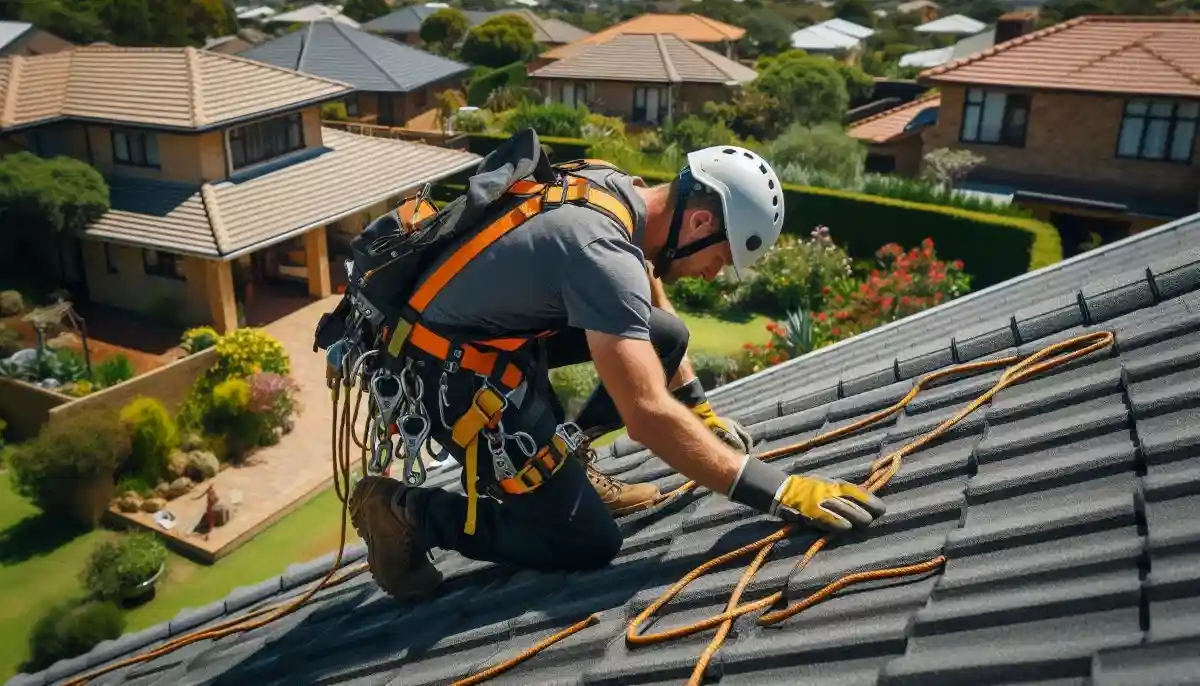
- Do your workers use safety harnesses and fall arrest equipment?
📊 Tender Process for Major Roof Work
For significant projects like a full new roof construction or a complete roof replacement, follow this structured tender process.
- Identify 3-5 CIDB-registered, manufacturer-accredited contractors. Use our platform to find vetted professionals in Gauteng, Cape Town, or Durban.
- Request itemised written quotes based on the same scope of work. This allows for an apples-to-apples comparison.
- Verify credentials – CIDB, NHBRC, accreditation, insurance – online and via documents.
- Check references – call recent clients and ask about their experience, timelines, and any issues.
- Compare – not just price, but also the warranty offered, proposed timeline, and methodology.
- Arrange a site visit – meet the contractor on-site to discuss access, expectations, and ask final questions.
- Sign a detailed contract before any work or deposit is paid.
- Hold a pre-start meeting – confirm the schedule, safety protocols, and communication plan for the duration of the project.
💰 The Cost of Hiring an Unvetted Contractor
HelloPeter reviews are littered with roofing horror stories. Here are just a few examples of what can go wrong:
- Contractors who took a 50% deposit and disappeared, leaving homeowners thousands of rands out of pocket.
- Installers who used incorrect tile profiles, causing a permanent, unsightly colour mismatch across the roof.
- Roofer who installed insufficient fasteners on a metal roof, leading to sheets lifting and causing major wind uplift damage during the next storm.
- Companies who provided no written warranty for leak repairs that failed within months, refusing to answer calls.
In each case, the homeowner’s “savings” from choosing a cheap, unvetted quote were dwarfed by the cost of fixing the shoddy work or chasing lost deposits.
🔎 How to Verify Roofer Credentials Online
Verifying a contractor’s claims takes only a few minutes online.
- CIDB: Visit cidb.org.za and search the Register of Contractors. Enter their name or registration number to confirm their grading and status.
- NHBRC: Visit nhbrc.org.za and use the “Verify a Home Builder” tool.
- Master Builders: Check if they are a member of their local Master Builders Association. Membership indicates a commitment to industry standards.
- Manufacturer Accreditation: Check the manufacturer’s website (Marley, Safintel) for lists of approved installers, or ask the contractor for their certificate of accreditation.
- Reviews: Search for their company name on Google, Facebook, and HelloPeter. Look for patterns in reviews, not just the star rating.
📸 Checking References and Portfolios
A reputable contractor will be proud to show you their work.
- Ask for photos: Request a portfolio of completed projects, especially those similar to yours (e.g., tile, metal, new build, re-roof).
- Ask for references: Request contact details for three recent clients. When you call them, ask:
- Was the project completed on time and on budget?
- Did the team communicate well and keep the site clean?
- Were there any unexpected issues, and how were they handled?
- Would you hire them again?
- Visit a completed site (if possible): If a local reference is willing, ask if you can drive by to see the finished work in person.
🏗️ The Importance of a Site Visit
Never accept a quote from a contractor who hasn’t visited your property. A proper site visit and roof inspection are essential for an accurate quote.
During the site visit, the contractor should:
- Access the roof (safely) to inspect its condition.
- Check the attic for signs of leaks, rot, or poor ventilation.
- Measure the roof accurately.
- Discuss your requirements and any potential challenges (access, scaffolding needs, etc.).
- Answer your questions on the spot.
If a contractor provides a quote based only on photos or a quick look from the ground, it’s a major red flag. They are likely to find “extras” once work begins, driving up the cost. Use our free inspection service to connect with contractors who will do the job properly.
📝 Contract Essentials
A detailed, written contract protects both you and the contractor. Ensure it includes:
- Full company details and contact information.
- A detailed scope of work, including materials (brands, models, colours), preparation, and finishes.
- Project start and estimated completion dates.
- Payment schedule (e.g., 30% deposit, 30% on completion of trusses, final 40% on final inspection and sign-off).
- Warranty details for both workmanship and materials.
- A clause for handling variations or unexpected issues.
- Site cleanup and waste removal responsibilities.
- A dispute resolution procedure. Read our guide to dispute resolution.
💸 Payment Schedule: Do’s and Don’ts
- DO: Stick to the industry standard of a 30-50% deposit, with the balance tied to completed milestones and a final payment upon satisfactory completion.
- DO: Make payments by bank transfer or cheque for a clear paper trail.
- DON’T: Pay 100% upfront, no matter how good the reason.
- DON’T: Pay large sums in cash. It leaves no trace.
- DON’T: Make the final payment until you have inspected the work, tested everything (if applicable), and received all warranties and compliance certificates.
If you need flexible payment options, ask if the contractor offers pay-later options.
✅ Recommended 7-Step Approach
- Obtain 3 written quotes from CIDB-registered, manufacturer-accredited roofers in your area. Use ServiceLink SA to find them.
- Verify credentials online – CIDB, NHBRC, Master Builders, and HelloPeter.
- Check manufacturer accreditation – Marley, Safintel, IZI, etc.
- Request proof of insurance – public liability and workman’s compensation.
- Visit a completed project if possible, or at least scrutinise their portfolio and call references.
- Never pay 100% upfront. Industry standard is 30-50% deposit, balance on completion.
- Get the warranty in writing – backed by the manufacturer where applicable.
❓ Frequently Asked Questions
What is the most important credential to check for a roofing contractor?
For any work over R150,000, CIDB registration is a legal requirement and a primary indicator of a legitimate, competent contractor. For smaller jobs, it’s still a very strong recommendation. Also, always verify they have valid insurance.
What questions should I ask a roofer before hiring?
Ask for their CIDB number, proof of insurance, manufacturer accreditations, and references. Ask if they provide a detailed written quote and a workmanship warranty. A professional will have all this information ready.
How can I verify a roofer’s credentials in Johannesburg?
Use the CIDB online register to verify their grading. Check if they are listed on the Master Builders Association website for your region. Search for their company name on HelloPeter and Google Reviews for client feedback.
What are the red flags when hiring a roofing contractor?
Major red flags include: demanding 100% upfront, refusing to provide a written quote, having no CIDB registration, not being able to provide proof of insurance, and using high-pressure sales tactics like “sign today for a discount.”
What warranty should I expect on a new roof installation?
You should expect a minimum 5-year workmanship warranty from the installer, plus the manufacturer’s material warranty (e.g., 50 years from Marley for concrete tiles). Ensure both are provided in writing.
Why is it important that a roofer is a Marley Approved Installer?
Marley’s 50-year guarantee on their concrete tiles is only valid if the roof is installed by a Marley Approved Installer. Hiring a non-approved installer voids your material warranty, leaving you unprotected if the tiles fail prematurely.
What insurance should a roofing contractor have?
They must have public liability insurance to cover damage to your property, and workman’s compensation insurance (COIDA) to cover their workers if injured on your site. Ask for certificates of both.
How much deposit should I pay a roofing contractor?
The industry standard is a deposit of 30-50% to secure the booking and cover material costs. The balance should be paid upon successful completion of the work, never before. Never pay 100% upfront.
Can a general builder do my roofing work?
Roofing requires specialised skills. A general builder may not have the specific expertise for roof geometry, waterproofing, or material-specific installation. It’s always safer to hire a specialist roofing contractor.
What is the cheapest quote, is it always the best?
Absolutely not. A very low quote often means corners will be cut on materials, preparation, or safety. It could also be from an unregistered operator who will disappear. Compare quotes based on value, scope, and credentials, not just price.

Ready to Find a Roofer You Can Trust?
Let ServiceLink SA connect you with pre-vetted, CIDB-registered, and manufacturer-accredited roofing contractors in your area. Compare quotes and choose with confidence.
🎯 Final Advice: Your Action Plan
Choosing a roofing contractor is not a decision to be made lightly or quickly. A small amount of due diligence upfront can save you from a world of financial and emotional pain down the line.
Your 3-Step Action Plan:
- Prepare: Use the checklist in this guide to know exactly what to look for and ask.
- Vet: Get multiple quotes and methodically verify each contractor’s credentials, insurance, and references.
- Choose: Select the contractor who offers the best combination of value, expertise, and peace of mind—not necessarily the lowest price.
For more information, read our guides on the benefits of choosing a vetted contractor and our guarantees. You can also see what other homeowners are saying in our reviews.

Written by: ServiceLink SA Research Team
This guide was compiled using data from trusted resources, construction industry affiliation bodies and leading manufacturers. Our aim is to provide South African homeowners with the tools they need to make safe, informed decisions when hiring roofing professionals.
External references and industry standards:
- CIDB – Verify contractor grading and registration.
- NHBRC – Check home builder registration and warranty information.
- Master Builders South Africa – Find accredited and ethical contractors.
- Safintel – Find Safintel Accredited Contractors.
- HelloPeter – Read authentic South African customer reviews.
Information accurate as of February 2026. Always verify current credentials with the issuing body.