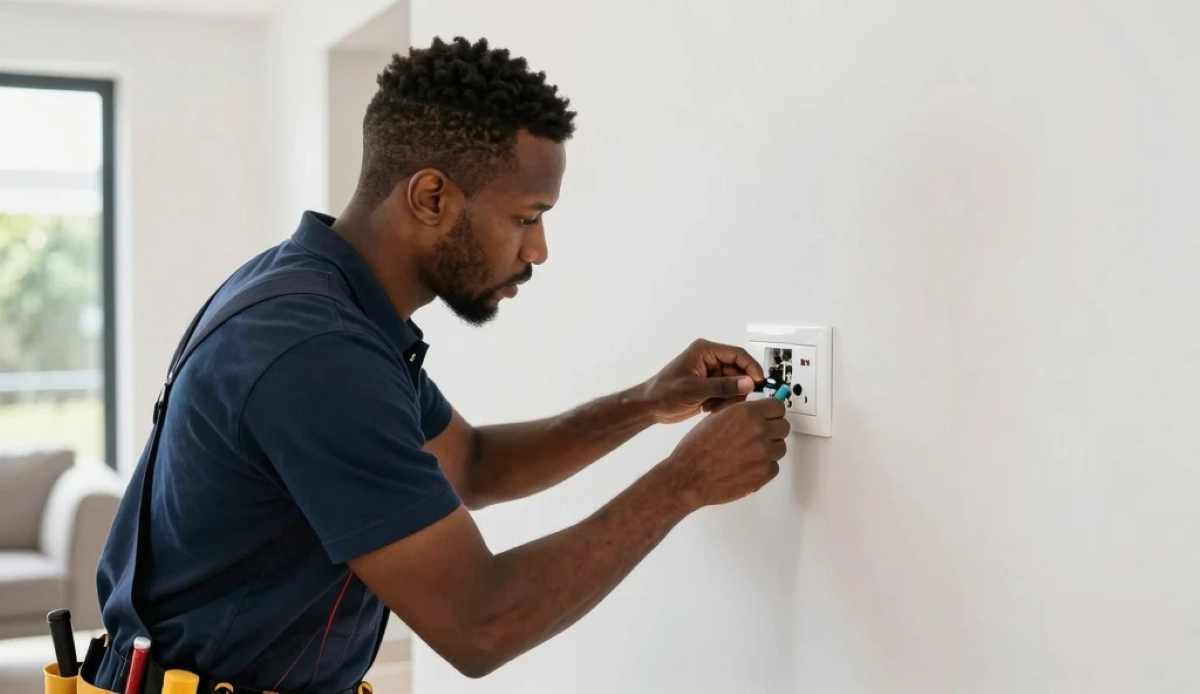
Common Electrical Problems in Homes – How to Fix Them Safely
⚡ Tripping breakers? Flickering lights? Shocking outlets? Here’s what to do.
Every South African homeowner eventually faces common electrical problems – from circuit breakers that trip constantly in your Johannesburg home to lights that flicker during loadshedding in Cape Town, or power outlets that stop working in your Durban flat. Knowing what’s dangerous and what can wait saves you money – and could save your life.
This comprehensive guide covers the 10 most common electrical problems in South African homes, with practical fixes, when to call a registered electrician near you, and what each repair typically costs in 2025. We’ve gathered insights from electricians servicing Pretoria, Cape Town, Durban, Sandton, and Gauteng to bring you real-world solutions.
⚠️ SAFETY FIRST: This guide is for informational purposes only. Electrical work is dangerous and must be performed by registered electricians with Wireman’s Licenses. Never attempt DIY repairs on live electrical systems – it’s illegal and could be fatal.
Need an electrician to diagnose your electrical problem?
Get free quotes from registered, verified electricians in your area – compare prices and get expert help fast.
Available in Johannesburg, Pretoria, Cape Town, Durban, and across South Africa
📋 Table of Contents – Common Electrical Problems
🔌 Problem #1: Circuit Breaker Tripping Constantly
Symptoms: Your lights go off suddenly, or you hear a “click” and lose power to部分 of your home. You reset the breaker, but it trips again within minutes – sometimes immediately.
What’s Causing It?
⚡ Overloaded Circuit
Too many appliances running on one circuit (common in older homes with limited sockets).
🔧 Short Circuit
Live wire touching neutral wire – creates sudden current surge, trips breaker instantly.
🌊 Earth Fault
Current leaking to earth – could indicate damaged insulation or moisture in outlets.
🔨 Faulty Breaker
The breaker itself may be worn out and tripping unnecessarily (common in homes 15+ years old).
Quick Troubleshooting (Before Calling an Electrician)
- Unplug everything on that circuit (all appliances, chargers, devices)
- Reset the breaker – if it stays on, plug items back ONE BY ONE to identify the culprit
- If it trips immediately with nothing plugged in – you likely have a wiring fault or short circuit
- Note when it trips – only when specific appliances run? During loadshedding? At night?
⚠️ DANGER: Never keep resetting a breaker that keeps tripping. Each trip stresses the system, and the underlying fault could cause a fire. If your breaker trips more than twice, call a registered electrician immediately.
Fix & Typical Cost (2025)
- Overload fix: Redistribute appliances or add new circuit – R1,500 – R4,500
- Short circuit repair: Locate and repair damaged wiring – R800 – R2,500
- Breaker replacement: R600 – R1,200 including part and labour
- Full DB board upgrade if old: R4,500 – R15,000 depending on size
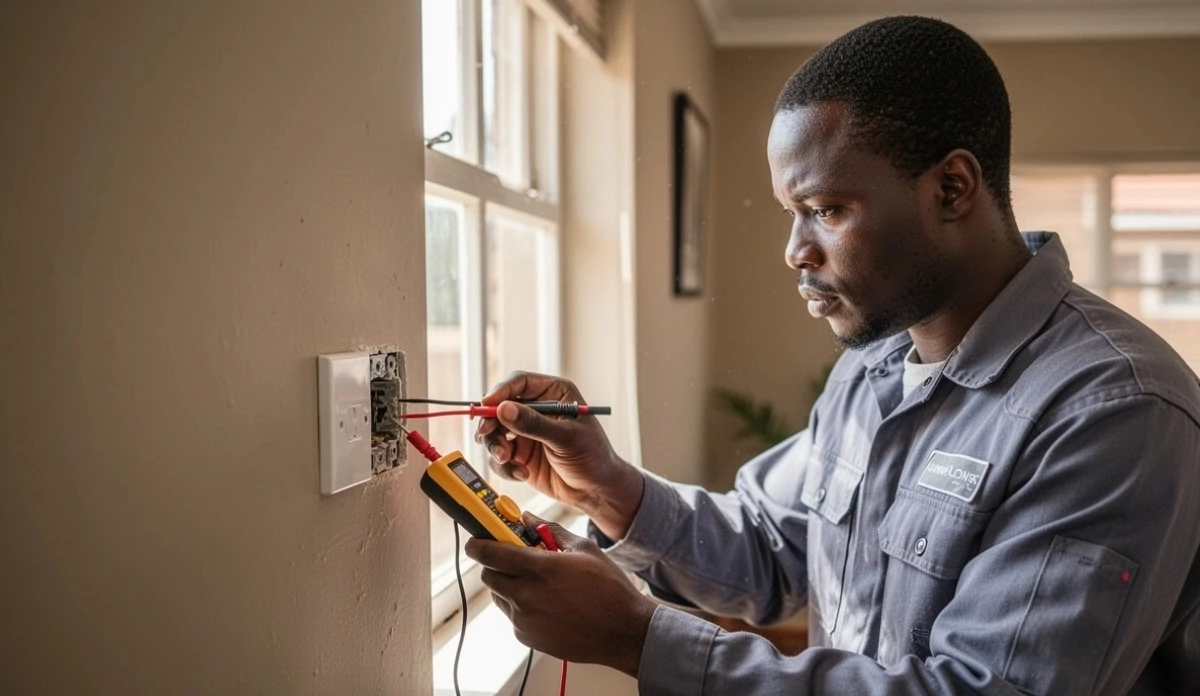
💡 Problem #2: Lights Flickering or Dimming
Symptoms: Lights flicker randomly, dim briefly, or pulse – sometimes just one light, sometimes throughout the house.
Common Causes by Situation
| Flickering Pattern | Likely Cause | Urgency |
|---|---|---|
| Single light flickers | Loose bulb, faulty lamp, or loose connection in that fitting | Low (fix bulb first) |
| Multiple lights flicker together | Loose connection in main supply, or utility supply issues | HIGH – call electrician |
| Flicker when appliance starts | Normal for high-draw appliances (geyser, kettle) – brief dimming is expected | Low (normal) |
| Flicker during loadshedding | Voltage fluctuations when power returns, or generator/inverter issues | Monitor, check with neighbours |
| LED lights flicker constantly | Incompatible dimmer switch or faulty LED driver | Medium |
Quick Checks You Can Do
- Tighten the bulb – sometimes simple looseness causes flickering
- Test different bulbs – swap with a known working bulb
- Check with neighbours – if everyone’s lights flicker, it’s an Eskom supply issue
- Note timing – flickering only at certain times suggests external factors
LED Flickering Fix: If you’ve recently switched to LED bulbs and they flicker, you may need to replace your dimmer switch with an LED-compatible dimmer (R200-500 plus installation). Standard dimmers aren’t designed for LED loads.
When to Call an Electrician
Call a registered electrician if:
- Multiple lights flicker simultaneously
- Flickering is accompanied by buzzing or crackling sounds
- Lights dim significantly when appliances start
- The problem persists after bulb replacement
Typical cost: Diagnostic fee R450 – R900, plus repairs R300 – R1,500 depending on cause
🔌 Problem #3: Power Outlet Not Working
Symptoms: You plug something in, and nothing happens. The outlet is dead – no power at all.
Most Common Causes
1. Tripped Breaker
Check your DB board – a tripped breaker cuts power to that outlet circuit.
2. GFCI/AFCI Tripped
Some outlets have built-in safety devices – press RESET button.
3. Loose Wiring
Connection behind outlet has come loose – common in older homes.
4. Failed Outlet
The outlet itself has worn out (especially if 10+ years old).
5. Damaged Cable
Rodent damage, wall movement, or previous DIY mistakes.
Troubleshooting Steps
- Check your DB board – look for a breaker in the OFF or middle position, reset firmly
- Test other outlets – if multiple are dead, it’s a circuit issue
- Look for reset buttons – some outlets have TEST/RESET buttons between sockets
- Plug in a known working device – lamp or phone charger to confirm no power
⚠️ Never ignore a dead outlet that has visible damage: Burn marks, melting, or cracking mean an immediate fire risk. Turn off the breaker and call an electrician immediately.
Fix & Cost
- Reset breaker: Free if you do it – but if it trips again, call an electrician
- Outlet replacement: R350 – R650 including labour
- Wiring repair: R600 – R1,500 depending on access
- Full circuit tracing: R800 – R2,000 for complex fault finding
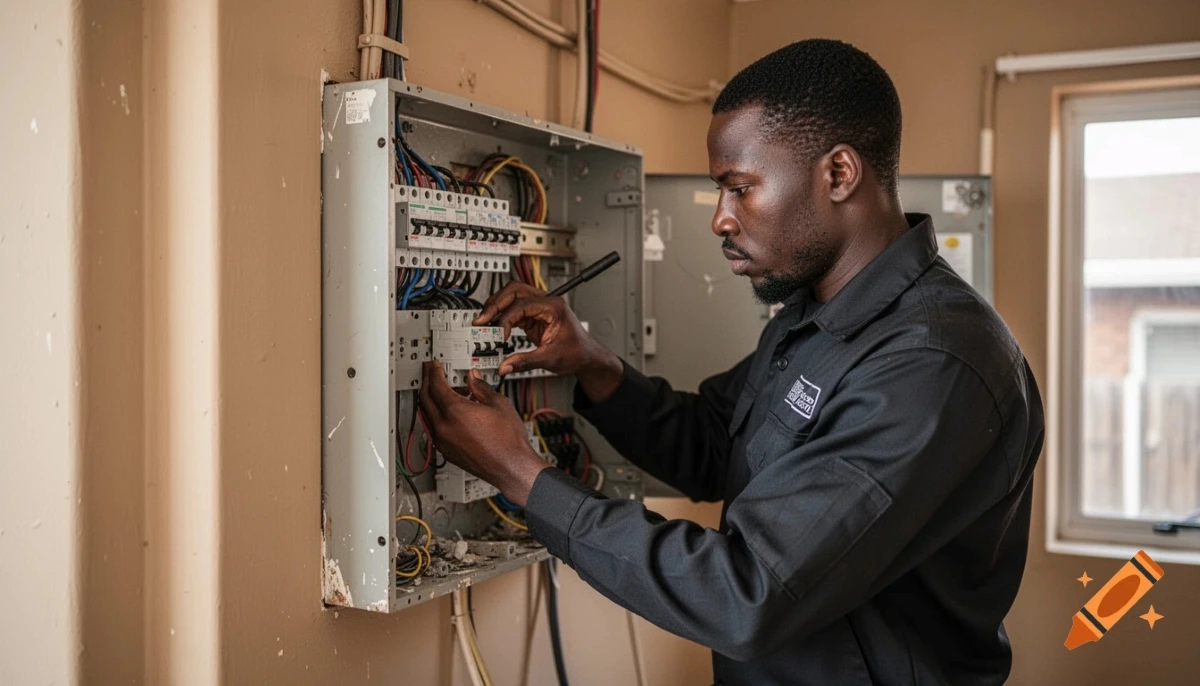
⚡ Problem #4: Switch Sparking or Crackling
Symptoms: When you flip a light switch, you see a small spark, hear a crackling sound, or the switch feels warm/hot to touch.
🚨 THIS IS A SERIOUS FIRE HAZARD
Sparkling, crackling, or hot switches indicate arcing – electricity jumping across gaps. This generates intense heat and is a leading cause of house fires. Turn off that circuit immediately and call a registered emergency electrician.
What Causes Sparking Switches?
- Worn-out switch mechanism: Internal contacts degraded from years of use
- Loose wiring connections: Wires behind switch have come loose
- Moisture ingress: Damp walls or condensation affecting switch internals
- Overloaded switch: Switch rated for lower amperage than the circuit
- Age: Switches older than 15-20 years often need replacement
Immediate Actions
- Turn off that circuit at the DB board
- Do not use that switch again until inspected
- Call an electrician immediately – this is not a DIY fix
- If you see smoke or flames, evacuate and call emergency services
Fix & Cost
- Switch replacement: R300 – R550 including part and labour
- Wiring repair: R400 – R1,200 depending on access
- Emergency call-out: R800 – R1,500 plus repairs
🛡️ Problem #5: Earth Leakage Tripping Repeatedly
Symptoms: Your main earth leakage switch (usually a large switch at the top or side of your DB board) keeps tripping, cutting power to multiple circuits or your entire house.
What Earth Leakage Does
Earth leakage protection detects tiny current leaks to earth (as small as 30 milliamps) and cuts power in milliseconds – potentially saving lives. When it trips, it’s telling you electricity is leaking somewhere it shouldn’t.
Common Causes
- Faulty appliance: Old geyser element, washing machine, or kettle with earth fault
- Moisture in outlets: Damp bathrooms, kitchens, or outdoor outlets
- Damaged wiring: Rodent damage or insulation breakdown
- Faulty earth leakage unit: The unit itself may be defective
- Nuisance tripping: Sensitive units combined with older appliances
How to Identify the Culprit
- Unplug all appliances – everything from every outlet
- Reset the earth leakage – if it stays on, plug appliances back ONE BY ONE
- When it trips, you’ve found the faulty appliance – don’t use it again
- If it trips with everything unplugged – you have a wiring fault, call an electrician
Geyser element failure is the #1 cause of earth leakage tripping in South African homes. If your geyser is 5+ years old and trips overnight, suspect the element. Geyser element replacement costs R1,200 – R2,500.
Fix & Cost
- Faulty appliance identified: Repair or replace appliance (varies widely)
- Earth leakage unit replacement: R850 – R1,600
- Wiring fault repair: R800 – R3,000 depending on location
- Full electrical safety inspection: R1,200 – R2,500 for average home
📊 Problem #6: Overloaded Circuit Symptoms
Symptoms: Breaker trips when you use certain appliances together. Lights dim when high-power devices start. Outlets feel warm.
Signs You’re Overloading a Circuit
- Breaker trips only when multiple appliances run simultaneously
- Lights dim noticeably when kettle, geyser, or heater turns on
- Warm outlets or switch plates (not hot – just warm)
- Buzzing sound from outlets or switches
- Frequent tripping during loadshedding when everything comes back on at once
What’s Overloading a Typical Circuit?
A standard 20-amp circuit can handle about 4,600 watts total. Consider this:
- Kettle: 2,200W
- Toaster: 1,200W
- Microwave: 1,000W
- Fridge: 300W
- TV: 150W
Running kettle + toaster + microwave simultaneously = 4,400W – dangerously close to the limit!
Solutions
- Redistribute loads: Move high-wattage appliances to different circuits
- Stagger usage: Don’t run kettle, geyser, and oven at the same time
- Add new circuits: Electrician can run dedicated circuits for heavy appliances – R2,500 – R5,000
- DB board upgrade: For older homes with insufficient circuits – R4,500 – R15,000
🔥 Problem #7: Warm or Discoloured Outlets
Symptoms: Outlet faceplate feels warm to touch, shows brown/yellow discolouration, or has melted areas around plug holes.
🚨 IMMEDIATE FIRE RISK
Discoloured or warm outlets indicate overheating due to loose connections or overloading. This is a pre-fire condition. Turn off that circuit and call an electrician immediately.
Causes
- Loose wiring: Behind the outlet, loose connections create resistance → heat → fire risk
- Overloaded circuit: Too many high-wattage devices on one outlet
- Poor quality outlet: Cheap outlets with thin internal components overheat under normal load
- Loose plug fit: Worn outlet doesn’t grip plugs tightly, creating arcing
Fix & Cost
Do not use that outlet. Call an electrician to:
- Inspect and replace outlet: R350 – R650
- Check and tighten connections: R400 – R800
- Upgrade wiring if damaged: R600 – R2,000+
💨 Problem #8: Burning Smell from Electrical System
Symptoms: You smell something like burning plastic, fishy odour, or electrical burning – coming from an outlet, switch, or your DB board.
🚨 THIS IS A LIFE-THREATENING EMERGENCY
EVACUATE IMMEDIATELY if you smell burning from your electrical system. Turn off the main switch ONLY if safe to do so. Call emergency services (10177) and then an emergency electrician. Electrical fires spread fast and are often hidden inside walls.
What Burning Smell Indicates
- Melting insulation: Wires overheating, insulation breaking down
- Arcing: Electricity jumping across gaps, creating intense heat
- Component failure: Breaker, switch, or outlet internally burning
- Rodent damage: Animals chewing wires, creating shorts
Cost of Repair
Costs vary dramatically based on damage – from R500 for a single burnt outlet to R20,000+ for wall rewiring. Always get a full inspection after any burning smell incident.
⚡ Problem #9: Mild Shocks from Appliances
Symptoms: You feel a tingle or mild shock when touching appliances – washing machine, fridge, kettle, or even taps.
What’s Happening?
- Earthing fault: Appliance not properly earthed, stray voltage present
- Faulty appliance: Internal short causing live voltage to reach casing
- Missing earth wire: Older homes may lack proper earthing
- Static buildup: Sometimes harmless, but can’t be sure without testing
⚠️ ANY shock is cause for concern. Even mild tingles can be fatal under the right conditions (wet hands, standing on wet floor, heart conditions). Unplug the appliance and call an electrician.
Fix & Cost
- Test and diagnose: R450 – R900
- Earth leakage check: Included in diagnostic
- Rewire appliance or outlet: R500 – R2,000
- Full COC inspection: R1,200 – R2,500
📉 Problem #10: Lights Dimming When Appliances Start
Symptoms: When your kettle, geyser, or air conditioner kicks in, lights briefly dim, then return to normal.
Normal vs Problematic
| Type of Dimming | Likely Cause | Action |
|---|---|---|
| Brief dim (1-2 seconds) | Normal voltage drop, especially with high-draw appliances | Monitor, usually fine |
| Significant dimming (lights go very low) | Undersized supply cables, loose main connections | Call electrician |
| Lights stay dim while appliance runs | Voltage drop issue, possibly utility supply problem | Check with neighbours, call electrician |
Possible Causes
- Normal operation: Motors draw high startup current, causing temporary voltage drop
- Loose connections: At meter, DB board, or main supply – dangerous if severe
- Undersized wiring: Old homes may have cables too small for modern loads
- Utility issues: Low voltage from Eskom or municipal supply
🚨 When to Call an Electrician Immediately – Emergency Guide
CALL AN EMERGENCY ELECTRICIAN RIGHT NOW IF:
- You smell burning from any electrical component
- You see smoke coming from outlets, switches, or your DB board
- Switches or outlets are hot to touch or visibly melting
- You see sparks when using switches or plugs
- You receive any electric shock (even mild)
- Your earth leakage won’t reset and you can’t identify a faulty appliance
- There’s been water damage near electrical points (flood, burst pipe)
- Power is partially out and you can’t identify a tripped breaker
Find emergency electricians in your area – available 24/7 in Johannesburg, Pretoria, Cape Town, Durban, and major centres.
💰 Diagnostic & Repair Costs by Problem (2025)
| Electrical Problem | Diagnostic Fee | Typical Repair Cost | Timeframe |
|---|---|---|---|
| Tripping circuit breaker | R450 – R750 | R600 – R2,500 | 1-3 hours |
| Flickering lights | R450 – R750 | R300 – R1,500 | 30 min – 2 hours |
| Dead outlet | R450 – R650 | R350 – R1,200 | 30 min – 1.5 hours |
| Sparking switch | R450 – R750 | R300 – R1,000 | 30 min – 1 hour |
| Earth leakage tripping | R600 – R900 | R850 – R3,000 | 1-3 hours |
| Overloaded circuit | R600 – R900 | R1,500 – R5,000+ | 2-5 hours |
| Warm/discoloured outlet | R450 – R750 | R350 – R1,500 | 30 min – 2 hours |
| Burning smell investigation | R600 – R1,000 | R500 – R5,000+ | 1-4 hours |
| Shocks from appliances | R600 – R900 | R500 – R2,500 | 1-3 hours |
📍 Common Problems by Region – Local Factors
⚡ Johannesburg
Common issues: Voltage fluctuations during loadshedding, overloaded circuits in older suburbs (Parktown, Houghton), earth leakage tripping from geyser elements.
⚡ Pretoria
Common issues: Flickering lights in older homes (eastern suburbs), breaker tripping in extreme heat, swimming pool pump electrical faults.
⚡ Cape Town
Common issues: Moisture in outdoor outlets (winter rains), corrosion in coastal areas (Sea Point, Camps Bay), generator changeover switch problems.
⚡ Durban
Common issues: Lightning damage (Durban North is lightning-prone), corrosion in outlets, earth leakage tripping from humidity, pool pump electrical faults.
⚡ Sandton
Common issues: Complex home automation electrical faults, generator integration problems, high-end appliance electrical requirements.
⚡ Hartbeespoort
Common issues: Estate access complications for emergency calls, borehole pump electrical faults, thatch roof electrical safety requirements.
🛡️ How to Prevent Common Electrical Problems
Annual Inspections
Have a registered electrician inspect your home every 2-3 years – catches issues before they become emergencies.
Don’t Overload
Avoid multi-plug adapters daisy-chained. Use one high-quality power strip per outlet only.
Weatherproof Outdoors
Ensure outdoor outlets have weatherproof covers, especially in Cape Town and Durban.
Surge Protection
Install whole-home surge protection – especially important in lightning-prone areas like Durban North.
Watch for Warmth
Regularly check outlets and switches for warmth – early warning of loose connections.
Maintain Appliances
Service geysers every 3-5 years – faulty elements cause 40% of earth leakage trips.
❌ 7 Common DIY Electrical Mistakes (That Kill People)
NEVER attempt these – they’re illegal and deadly:
- Working on live circuits – even with gloves, even “just for a second”. Turn off the MAIN switch.
- Using incorrect wire sizes – too thin wire overheats and causes fires.
- Faulty connections without junction boxes – hidden connections inside walls are fire hazards.
- Overloading circuits with DIY additions – adding outlets without calculating load.
- Ignoring earth leakage – disabling earth leakage to stop tripping is DANGEROUS.
- Using non-SABS approved materials – cheap imports often fail safety standards.
- No COC after work – any electrical work affecting the installation requires a COC. Without it, you’re breaking the law and invalidating insurance.
Read our complete guide: Electrical Safety Tips for Homeowners
Facing an Electrical Problem Right Now?
Don’t risk DIY. Get quotes from registered, vetted electricians in your area – compare prices and get expert help today.
❓ Frequently Asked Questions
Why does my circuit breaker keep tripping?
Common causes: overloaded circuit (too many appliances), short circuit (faulty wiring), or earth leakage (current leaking to ground). If resetting doesn’t help, call a registered electrician to diagnose – repeated tripping indicates a potentially dangerous fault.
Is flickering lights dangerous?
Sometimes. If one light flickers, it’s often just a loose bulb. If multiple lights flicker together, it could indicate loose main connections – which is dangerous and needs immediate attention. If accompanied by burning smell or sparking, call an emergency electrician.
Why does my earth leakage trip at night?
Classic sign of a geyser element fault. Geysers cycle on at night to maintain temperature. A failing heating element can leak current to earth, tripping the earth leakage. Geyser element replacement costs R1,200 – R2,500.
Can I replace a faulty outlet myself?
Legally, no. In South Africa, any electrical work must be done by a registered electrician who can issue a COC. DIY electrical work is illegal, dangerous, and voids your home insurance. A simple outlet replacement costs R350 – R650 professionally – not worth risking your life.
Why are my lights dimming when the kettle boils?
Kettles draw high current (2,000W+). Brief dimming when they switch on is normal as motors and elements draw startup current. If dimming is severe or lights stay dim, you may have loose connections or undersized wiring – get it checked.
What causes a burning smell from an outlet?
Overheating from loose connections, overloading, or internal arcing. This is a serious fire risk. Turn off that circuit immediately and call an emergency electrician. Do not use that outlet again until inspected.
How often should I get my electrical wiring inspected?
Every 3-5 years for most homes. Older homes (pre-1990) should be inspected every 2-3 years. If you’re buying or selling, a COC inspection is mandatory.
Why do I get a shock when touching my washing machine?
Likely an earthing fault – the machine isn’t properly earthed, and stray voltage is present on the casing. Unplug it immediately and call an electrician. This can be fatal, especially on wet concrete floors.
Are power surges from loadshedding damaging my appliances?
Yes. When power returns, voltage spikes can damage sensitive electronics. Install whole-home surge protection (R2,500 – R4,500 installed) to protect your appliances during loadshedding cycles.
How do I find a registered electrician near me?
Use ServiceLink SA to get quotes from verified, registered electricians in your area. Always check their Wireman’s License and ECASA registration before hiring.
✅ Final Thoughts – Know When to DIY vs Call a Pro
Most common electrical problems in South African homes fall into two categories: simple (loose bulb, tripped breaker you can reset) and serious (everything else).
⚡ The Golden Rule:
If you’re not 100% sure, call an electrician.
Electrical work kills an average of 10 South Africans annually. Don’t be a statistic.
Your Action Plan
- Identify the problem using this guide
- Attempt safe troubleshooting (check breakers, unplug appliances)
- If problem persists or seems dangerous – call a registered electrician
- Get multiple quotes for any significant work
- Always get a COC for any work affecting the installation
Need Help With an Electrical Problem?
Connect with registered, verified electricians in your area – compare quotes and get expert help fast.
📞 24/7 Emergency: 073 138 4726
📚 Industry standards and resources:
- ECASA (Electrical Contractors Association) – Find registered electricians, electrical fault diagnosis guides
- Eskom – Voltage stability guidelines, loadshedding information
- SABS (SANS 10142) – Wiring regulations and fault protection standards
This guide is for informational purposes only. Always consult a registered electrician for any electrical work.
Written by: ServiceLink SA Research Team
In partnership with registered electricians across South Africa
Our team works directly with ECASA-registered electricians in Johannesburg, Pretoria, Cape Town, and Durban to bring you accurate, practical information based on real-world experience and current industry standards.