

Electrical Compliance Certificates South Africa – Complete COC Guide
⚡ Selling your house? Buying a property? Need a COC? Here’s everything you must know.
If you’re selling your home in Johannesburg, buying a property in Cape Town, or simply want to ensure your family’s safety in Pretoria, one document matters above all others: the Electrical Certificate of Compliance (COC).
Yet confusion about COCs costs homeowners time, money, and stress. What does it cover? How long is it valid? Who can issue one? What happens if your property fails? This complete guide answers every question, based on SANS 10142 regulations and input from registered electricians across South Africa.
📋 LEGAL REQUIREMENT: An electrical COC is mandatory when selling a property, transferring ownership, or after any significant electrical work. Without it, the sale cannot proceed and your insurance may be invalid.
Need a COC for your property?
Get free, no-obligation quotes from registered electricians in your area – compare prices for COC inspections and electrical repairs.
Servicing Johannesburg, Pretoria, Cape Town, Durban, and nationwide
📋 Table of Contents – Electrical COC Guide
📄 What is an Electrical Certificate of Compliance (COC)?
An Electrical Certificate of Compliance (COC) is a legal document issued by a registered electrician confirming that the electrical installation on a property complies with the requirements of SANS 10142 (The Wiring of Premises) – the South African national standard for electrical installations.
✅ What a COC Confirms
- ✓ Wiring is safe and compliant with regulations
- ✓ Earth leakage protection functions correctly
- ✓ Earthing system is adequate
- ✓ Circuit breakers are correctly rated
- ✓ No dangerous DIY modifications
- ✓ Installation is safe for continued use
❌ What a COC is NOT
- ✗ Not a warranty against future faults
- ✗ Not an insurance policy for appliances
- ✗ Not a guarantee of workmanship quality
- ✗ Not a certification of movable appliances
- ✗ Not a lifetime guarantee of compliance
The COC is regulated by the Occupational Health and Safety Act and is enforced by the Department of Employment and Labour. Only registered electricians with a valid Wireman’s License can issue COCs .
📅 When Do You Need an Electrical COC?
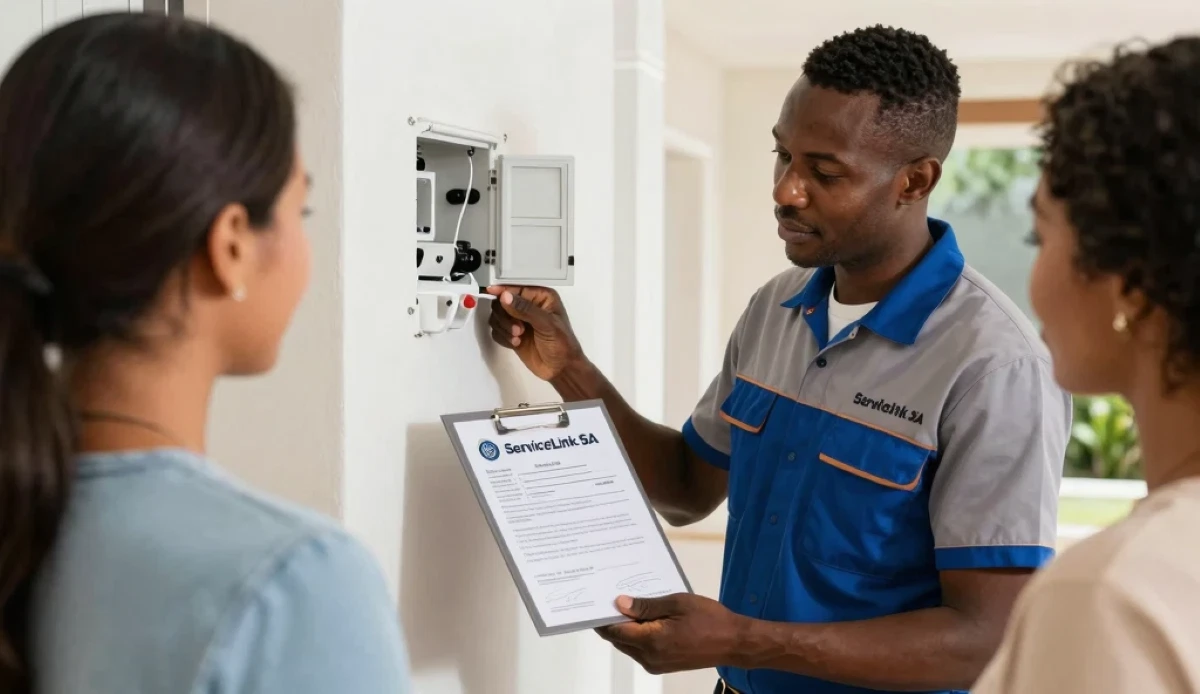
Understanding when a COC is required can save you from legal trouble and costly surprises. Here are all the situations where a COC is mandatory :
Selling a Property
The seller must provide a valid COC to the buyer before transfer. This is a non-negotiable legal requirement – the transfer cannot proceed without it .
Buying a Property
As a buyer, you should receive a valid COC from the seller. If the seller’s COC is older than 2 years, you may request a new one – but legally, any COC issued within 2 years is acceptable for transfer .
After Electrical Work
Any significant electrical work – new circuits, DB board upgrades, renovations affecting wiring – requires a new COC or an endorsement on the existing one .
New Builds
All new construction must have a COC issued before occupation. This is part of the municipal approval process .
After Major Damage
If your property has suffered fire, flood, or storm damage affecting electrical systems, a new COC is required after repairs .
Insurance Requirements
Many insurers now require a valid COC to approve or renew home insurance policies. Some may reject claims if damage is linked to non-compliant wiring .
Every 2 Years (Recommended)
While not legally required for homeowners, an electrical inspection every 2 years is strongly recommended for safety, especially in older homes .
Rental Properties
Some municipalities and rental agreements require landlords to provide valid COCs to tenants. This is becoming increasingly common .
💰 Electrical COC Costs – What You’ll Pay
The cost of a COC varies based on property size, location, and whether repairs are needed. Here’s a detailed breakdown :
COC Inspection-Only Costs (No Repairs)
| Property Type | Inspection Fee | COC Issuance | Total (if compliant) |
|---|---|---|---|
| 1-bedroom flat / apartment | R600 – R900 | R200 – R300 | R800 – R1,200 |
| 2-bedroom home / townhouse | R700 – R1,100 | R200 – R300 | R900 – R1,400 |
| 3-bedroom home | R900 – R1,400 | R200 – R300 | R1,100 – R1,700 |
| 4-bedroom / large home | R1,200 – R1,800 | R200 – R300 | R1,400 – R2,100 |
| Estate home / smallholding | R1,500 – R2,500 | R200 – R300 | R1,700 – R2,800 |
COC with Repairs – Total Cost Examples
Most properties need some repairs to pass COC. Here are realistic total costs including common repairs :
| Property Type | Typical Repairs Needed | Repair Cost | Total (inspection + repairs + COC) |
|---|---|---|---|
| Older flat (pre-1990) | Earth leakage test, 2-3 outlet replacements | R800 – R1,500 | R1,600 – R2,700 |
| 3-bedroom home (minor issues) | Earth leakage replacement, loose connections | R1,500 – R2,500 | R2,600 – R4,200 |
| 3-bedroom home (moderate issues) | DB board tidy-up, several outlets, switch replacements | R2,500 – R4,500 | R3,600 – R6,200 |
| Older home (pre-1980) | Partial rewiring, DB board upgrade, earth leakage | R5,000 – R15,000 | R6,200 – R17,000+ |
| Thatched roof /特殊 property | Special inspections,可能 required | R3,000 – R10,000+ | R4,500 – R13,000+ |
Common Repairs and Their Costs
- Earth leakage unit replacement: R850 – R1,600
- Circuit breaker replacement: R600 – R1,200 per unit
- Outlet replacement: R350 – R650 each
- Light switch replacement: R300 – R550 each
- Earth continuity repairs: R500 – R2,000 depending on access
- DB board tidy-up / rewiring: R1,500 – R4,500
- Partial rewiring (room): R3,000 – R8,000
- Full house rewiring: R25,000 – R80,000+ depending on size
Budgeting tip: For most 3-bedroom homes in Johannesburg or Cape Town, budget R2,500 – R4,500 total for a COC including minor repairs. Older homes may need R6,000 – R15,000 to become compliant .
🔍 What Does a COC Inspection Cover?
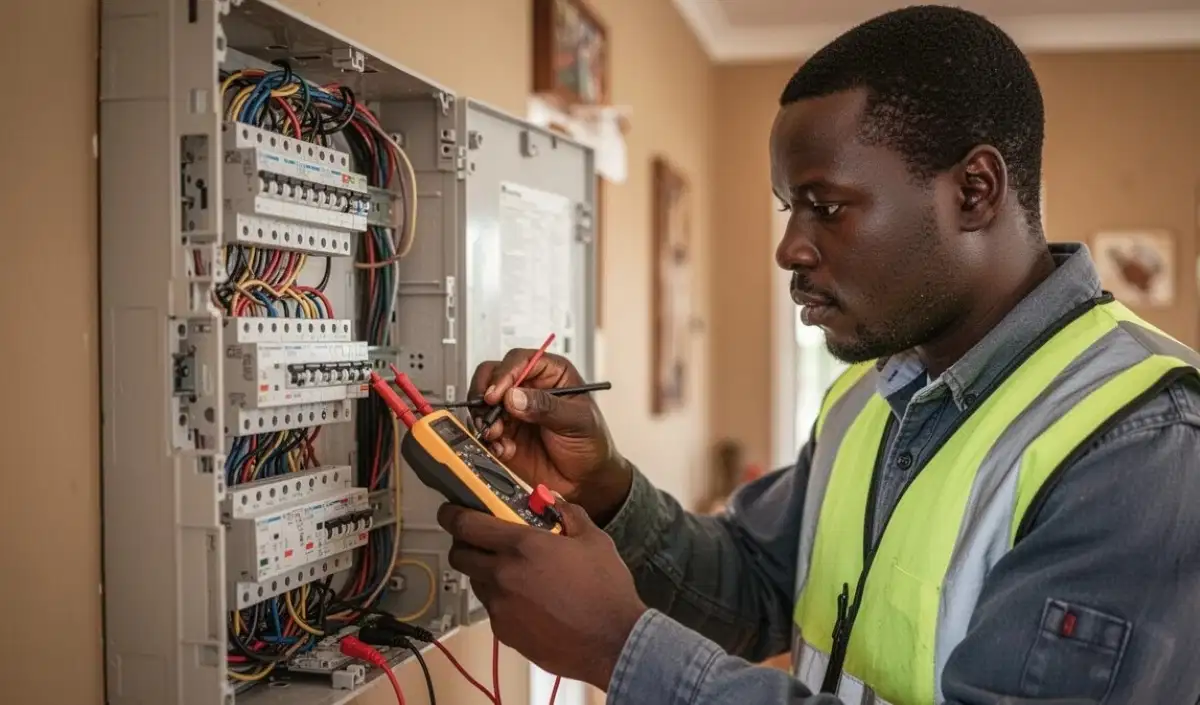
A registered electrician performing a COC inspection will check every aspect of your electrical installation against SANS 10142 requirements :
Areas Inspected
- DB Board (Distribution Board): Correct breaker ratings, earth leakage function, labelling, no illegal connections, proper busbar protection .
- Earth Leakage Unit: Tripping test, correct sensitivity (30mA), proper functioning .
- Earthing System: Earth continuity, earth resistance, connection to earth spike .
- Circuit Breakers: Correct sizing for cable ratings, no overheating signs, proper securing .
- Wiring: Insulation condition, no visible damage, correct cable sizes, no DIY joints outside junction boxes .
- Outlets and Switches: Secure mounting, no cracks/damage, correct wiring polarity, earth connection present .
- Light Fittings: Secure fixing, correct wiring, no exposed live parts .
- Bonding: Equipotential bonding of metal pipes, geysers, and other metalwork where required .
- Isolators: Geyser isolators, stove isolators – correct type and location .
- Outside Installations: Weatherproofing, correct IP ratings for outdoor outlets .
- Pool Electrical: Bonding, correct pump wiring, safe distances .
Testing Procedures
- Earth leakage trip time and current test
- Earth continuity test
- Insulation resistance test
- Polarity verification
- Earth loop impedance test
- Visual inspection of all accessible components
❌ 10 Common Reasons Properties Fail COC Inspection
These are the most common issues found during COC inspections:
- Earth leakage not functioning: Unit doesn’t trip during test, or has been bypassed. This is dangerous and an automatic fail .
- No earth continuity: Earth wire missing, broken, or high resistance. Often found in older homes with DIY modifications .
- Incorrect circuit breaker ratings: 20A breaker on 1.5mm² cable (should be 16A max). Creates fire risk .
- DIY wiring outside junction boxes: Connections made inside walls without accessible boxes – illegal and dangerous .
- Damaged outlets or switches: Cracked casings, loose mounting, burn marks – fire and shock hazards .
- Missing bonds on metal pipes: Geyser, metal plumbing, or pool equipment not properly earthed .
- Overloaded DB board: Too many circuits on one earth leakage, incorrect breaker configurations .
- Outdoor outlets not weatherproof: Standard outlets exposed to rain – immediate fail .
- Old wiring (VRI/VC): Vulcanised rubber insulation – brittle, dangerous, requires full rewiring .
- No isolators on appliances: Geyser or stove lacking proper isolation switches .
Pre-inspection tip: Before calling an electrician for a COC, walk through your home and check for obvious issues – cracked outlets, missing cover plates, DIY extensions, or outlets that don’t work. Fixing these yourself (or having them fixed) before inspection can save on call-out fees .
📋 COC vs Test Report – What’s the Difference?
Many homeowners confuse these documents. Here’s the distinction :
📄 Certificate of Compliance (COC)
- ✓ Official legal document
- ✓ Declares installation complies with SANS 10142
- ✓ Required for property transfer
- ✓ Issued after successful inspection
- ✓ Signed by registered electrician
- ✓ Valid for 2 years for property transfer
- ✓ One certificate covers entire installation
📊 Test Report
- ✓ Technical document with test results
- ✓ Shows actual measurements (earth resistance, trip times, etc.)
- ✓ May accompany a COC as backup
- ✓ Can be issued even if installation fails (showing why it failed)
- ✓ Not a legal compliance document on its own
- ✓ Useful for fault finding and records
When you receive a COC, the electrician should also provide test results. Keep both for your records .

⏱️ How Long is an Electrical COC Valid?
This is one of the most misunderstood aspects of COCs. Here’s the truth :
⚠️ IMPORTANT:
A COC does NOT have an official expiry date for the homeowner. However, for property transfer purposes, most conveyancers and municipalities require a COC issued within the last 2 years. This is a practical requirement, not a legal expiry .
Validity Guidelines
- For property transfer: COC should be less than 2 years old. Some conveyancers may accept older if no changes were made, but 2 years is the standard .
- For insurance: Check with your insurer – some require COCs every 2-5 years .
- For safety: Electrical installations degrade. An inspection every 2-3 years is recommended even with a valid COC .
- After work: Any new electrical work invalidates the old COC – you need a new one or an endorsement .
👨🔧 Who Can Issue a COC?
Only registered electricians with a valid Wireman’s License can legally issue COCs. Here’s how to verify :
- Wireman’s License: Issued by the Department of Employment and Labour. Electricians must have passed trade tests and be registered .
- ECASA Registration: Many reputable electricians are registered with the Electrical Contractors Association of South Africa .
- CIDB Grading: For larger contractors, CIDB registration indicates capability and grading .
- Certificate of Registration: Ask to see their Wireman’s License – it’s a legal document they must carry .
🚨 NEVER accept a COC from a handyman or unregistered person. COCs issued by unqualified individuals are invalid, illegal, and put lives at risk. Always verify registration before hiring .
📋 The COC Process – Step by Step
Step 1: Booking
Contact registered electrician, schedule inspection. Provide property access and inform occupants .
Step 2: Visual Inspection
Electrician checks DB board, outlets, switches, visible wiring for obvious issues .
Step 3: Testing
Earth leakage test, earth continuity, insulation resistance, polarity checks using specialised equipment .
Step 4: Findings Discussion
Electrician discusses any non-compliances found and provides quote for repairs if needed .
Step 5: Repairs (if needed)
If issues found, repairs are completed before COC can be issued .
Step 6: Re-testing
After repairs, electrician re-tests affected circuits .
Step 7: COC Issued
Certificate signed and provided, along with test report .
Step 8: Registration (if required)
Some municipalities require COC registration – your electrician will advise .
📝 Non-Compliance Register – What Is It?
If your property fails the COC inspection, the electrician may issue a Non-Compliance Register (sometimes called a “snag list”). This document :
- Lists all items that do not comply with SANS 10142
- Explains why each item is non-compliant
- Provides recommendations for corrective action
- Serves as a roadmap for required repairs
You can then decide to :
- Have the same electrician complete the repairs
- Get quotes from other electricians for the repairs
- Address issues yourself (if qualified – but repairs still need certified sign-off)
🏛️ Municipal Electrical Inspections
In some cases, the municipality may need to inspect electrical work – particularly for :
- New builds
- Major renovations
- Properties with history of illegal connections
- Certain municipalities with specific requirements
Your electrician will advise if municipal inspection is required. Municipal fees (if applicable) are additional – typically R500 – R1,500 .
📍 COC Costs by Region
⚡ Johannesburg COC Prices
Johannesburg has competitive pricing with many registered electricians .
- 3-bedroom home inspection only: R1,100 – R1,700
- 3-bedroom home with minor repairs: R2,500 – R4,500 total
- Popular suburbs: Sandton (premium), Fourways, Midrand, Bryanston
⚡ Pretoria COC Prices
- 3-bedroom home inspection only: R1,000 – R1,600
- 3-bedroom home with minor repairs: R2,300 – R4,200 total
- Popular suburbs: Pretoria East, Centurion, Waterkloof
⚡ Cape Town COC Prices
- 3-bedroom home inspection only: R1,200 – R1,800
- 3-bedroom home with minor repairs: R2,600 – R4,800 total
- Popular suburbs: Southern Suburbs, Atlantic Seaboard, Stellenbosch
⚡ Durban COC Prices
- 3-bedroom home inspection only: R1,100 – R1,700
- 3-bedroom home with minor repairs: R2,500 – R4,500 total
- Popular suburbs: Durban North, Umhlanga, Ballito
⚡ Estate Areas – Hartbeespoort, Fourways, Bryanston
- Hartbeespoort: Travel fees may apply (R200 – R500) due to distance from major centres
- Fourways: Competitive pricing, many electricians available
- Bryanston: Premium area, prices at higher end of ranges
🏠 COC and Home Insurance – Critical Connection
Many homeowners don’t realise that a valid COC can affect their insurance :
- Policy requirement: Some insurers now require a valid COC to issue or renew policies .
- Claim validity: If a fire is caused by faulty wiring and you don’t have a valid COC, your claim may be rejected .
- Due diligence: Insurers may ask when you last had electrical inspection .
- Recommendation: Keep your COC with your insurance documents and update every 2-3 years .
❌ 7 Common COC Mistakes Homeowners Make
- Waiting until the last minute: Sellers often wait until the buyer demands a COC, then face delays and expensive emergency repairs. Start 2-3 months before listing .
- Using the cheapest quote without checking credentials: Unregistered “electricians” issue invalid COCs. Always verify Wireman’s License and ECASA registration .
- Assuming a new COC means everything is perfect: A COC is a snapshot in time. Things can fail afterwards .
- Not keeping the COC safe: You need the original for property transfer. Keep multiple copies .
- Ignoring minor issues: That cracked outlet or non-functioning light might seem minor, but it’s a COC failure .
- DIY repairs before inspection: Amateur repairs often create more problems. Leave repairs to the professional .
- Not understanding what’s covered: COC covers fixed installation only – not appliances, plugs, or extension cords .
Need a COC for Your Property?
Get quotes from registered, verified electricians in your area – compare prices for COC inspections and any required repairs.
Serving Johannesburg, Pretoria, Cape Town, Durban, and nationwide
❓ Frequently Asked Questions
How much does an electrical COC cost in South Africa?
For a standard 3-bedroom home, expect R1,100 – R1,700 for inspection only. If repairs are needed, total cost typically ranges from R2,500 – R4,500. Older homes or those with significant issues may cost more .
How long is a COC valid for when selling a house?
For property transfer purposes, most conveyancers require a COC issued within the last 2 years. While there’s no official expiry date, a COC older than 2 years may be rejected by the buyer’s attorney .
Who is responsible for the COC when selling a house?
The seller is responsible for providing a valid COC to the buyer. The cost is typically borne by the seller, though this can be negotiated in the sale agreement. The COC must be delivered before transfer can occur .
Can I get a COC myself as a homeowner?
No. Only registered electricians with a valid Wireman’s License can issue COCs. The certificate must be based on actual testing and inspection, not just visual assessment. DIY COCs are illegal and invalid .
What happens if my property fails the COC inspection?
The electrician will provide a non-compliance register listing all issues. You can then have them (or another registered electrician) complete the necessary repairs. After repairs, the electrician re-inspects and issues the COC .
Does a COC cover electrical appliances like stoves and geysers?
The COC covers the fixed electrical installation – wiring, DB board, outlets, switches, and permanently connected appliances like geysers and stoves (the fixed part). It does not cover portable appliances or the internal wiring of appliances .
Can a new COC be issued without fixing old problems?
No. The electrician must verify that all non-compliances are rectified before issuing a COC. Issuing a COC for a non-compliant installation is illegal and could result in the electrician losing their license .
How do I verify an electrician is registered to issue COCs?
Ask for their Wireman’s License (registration certificate). You can also check with ECASA or verify their CIDB registration. A legitimate electrician will be happy to provide proof .
What’s the difference between a COC and an electrical inspection?
An inspection is the process of testing and examining the installation. The COC is the certificate issued if the installation passes inspection. You pay for the inspection; the COC is issued if compliant .
Do I need a COC for a granny flat or separate dwelling?
Yes. Each separate dwelling with its own electrical supply needs its own COC. If you’re selling a property with a granny flat, both the main house and the flat require valid COCs .
✅ Final Thoughts – Your COC Action Plan
An Electrical Certificate of Compliance is not just paperwork – it’s proof that your home’s electrical system is safe for your family and legally compliant. Key takeaways:
- Cost: R1,100 – R1,700 for inspection; R2,500 – R4,500 total with minor repairs
- Validity: 2 years for property transfer purposes
- Required: When selling, after major work, and increasingly for insurance
- Only registered electricians can issue valid COCs
- Common failures: Earth leakage, earthing, incorrect breakers – easily fixed
⚡ The Bottom Line:
R2,500 – R4,500
is what most homeowners pay for a COC including minor repairs – a small price for peace of mind and legal compliance
Your 5-Step Action Plan
- Don’t wait until the last minute – if selling, start 2-3 months before listing
- Get 2-3 quotes from registered electricians in your area
- Verify credentials – Wireman’s License, ECASA registration, insurance
- Address any issues promptly – minor repairs are cheaper than rushed emergency work
- Keep your COC safe – store with important property documents
Ready to Get Your COC?
Connect with registered, verified electricians in your area – compare quotes and ensure your property is compliant.
📞 Call us: 073 138 4726 for expert advice
Free site inspections •
How to choose a contractor •
Our guarantees
📚 Official resources & standards:
- ECASA (Electrical Contractors Association) – COC issuing authority and registered contractor database
- SABS (SANS 10142) – Wiring regulations and COC requirements
- NHBRC – New home electrical compliance requirements
- Department of Employment and Labour – Electrical installation regulations
Prices accurate as of current market rates. Always verify current rates with local electricians. This guide is for informational purposes and does not constitute a quote.
Written by: Innocent T Hanyani
21+ years construction and digital industry experience, ServiceLink SA
Innocent has overseen thousands of COC inspections and electrical compliance certifications across South Africa, working closely with registered electricians and industry bodies including ECASA. His expertise ensures this guide reflects current regulations and practical realities for homeowners.