

Electrical Safety Tips for Homeowners – Protect Your Family & Property
⚡ Most electrical accidents are preventable. Here’s what every South African homeowner must know.
Every year, South African homes experience avoidable tragedies – house fires caused by faulty wiring, children injured from sticking objects into outlets, and families displaced by electrical accidents. In Johannesburg, Cape Town, Durban, and across the country, the second most common cause of house fires is electrical problems [citation:9].
This comprehensive guide covers essential electrical safety tips for South African homeowners – from childproofing outlets to recognising warning signs, preventing fires, and knowing when to call a professional. These simple practices could save your family’s lives.
⚠️ SAFETY FIRST: Electricity is dangerous. While this guide provides preventive tips, any electrical work or repairs must be performed by registered electricians with Wireman’s Licenses. Never attempt DIY electrical repairs – it’s illegal and could be fatal.
Worried about your home’s electrical safety?
Get a professional electrical safety inspection from registered electricians in your area – peace of mind for your family.
Servicing Johannesburg, Pretoria, Cape Town, Durban, and nationwide
📋 Table of Contents – Electrical Safety Guide
⚠️ 7 Warning Signs Your Home Has Electrical Problems
Your home often gives warning signs before a serious electrical failure. Never ignore these danger signals [citation:4][citation:9]:
1. Frequent Circuit Breaker Tripping
If your breaker trips repeatedly, it’s not “just sensitive” – it indicates overloaded circuits, short circuits, or faulty wiring. Each trip stresses the system [citation:4][citation:9].
2. Flickering or Dimming Lights
Lights that flicker, dim, or pulse – especially when appliances start – suggest loose connections or voltage fluctuations. If multiple lights flicker together, call an electrician immediately [citation:4].
3. Burning Smell from Outlets or Switches
A persistent burning smell (like fish or plastic) near outlets, switches, or your DB board indicates overheating wiring. This is a serious fire risk [citation:4].
4. Warm or Discoloured Outlets
Outlets or switch plates that feel warm to touch, show brown/yellow discolouration, or have melted areas indicate loose connections or overloading. This is a pre-fire condition [citation:4][citation:9].
5. Sparks or Mild Shocks
Sparks when plugging in appliances, or mild tingles when touching appliances, indicate earthing faults or wiring problems. Never ignore any shock [citation:4].
6. Crackling or Buzzing Sounds
Hearing crackling, buzzing, or sizzling from outlets or switches means arcing – electricity jumping across gaps. This generates intense heat and causes fires [citation:4].
7. Unexplained High Electricity Bills
A sudden spike in usage without lifestyle changes could indicate faulty appliances or wiring leaks. Get an inspection to identify the cause.
If you notice ANY of these signs:
Turn off the affected circuit at your DB board and call a registered electrician immediately. Do not use that outlet or switch until inspected [citation:4].

👶 Childproofing Outlets – Protecting Little Fingers
Children are naturally curious, and electrical outlets are at their eye level. The National Fire Protection Agency notes that over 2,400 children are injured annually by inserting objects into outlets, resulting in 6-12 deaths [citation:10]. Here’s how to protect them [citation:3][citation:10]:
1. Install Tamper-Resistant Receptacles (TRR)
Since 2008, the National Electrical Code has required tamper-resistant receptacles in new and renovated homes [citation:10]. These outlets feature spring-loaded shutters that only open when equal pressure is applied to both slots simultaneously – meaning a child pushing a single object won’t access live parts. Look for “TR” or “tamper-resistant” stamped on the outlet face [citation:10]. If your home in Pretoria or Sandton was built before 2008, consider upgrading.
⚠️ Important warning about “childproof” claims:
Sockets advertised as “childproof” can be misleading. VDE certification of a socket with shutters is NOT proof of “child protection” – children can still insert objects. Never leave children unsupervised near sockets, even with safety devices installed [citation:3].
2. Outlet Covers & Safety Plugs
Inexpensive plastic outlet covers are common, but they have drawbacks [citation:10]:
- Pros: Cheap, widely available, easy to insert
- Cons: Easy to forget to replace; can be choking hazards if removed; toddlers can sometimes remove them
- Better option: Keyed outlet covers that require a key to remove
3. Sliding Plate Covers
These replace your existing outlet cover with a spring-loaded plate that automatically slides closed when plugs are removed. No loose parts, no forgetting – the cover is always there [citation:10]. Cost: R50 – R150 per outlet.
4. Additional Child Safety Tips [citation:3][citation:10]
- Block access with furniture: Position heavy furniture in front of outlets where possible
- Avoid extension cords: Children love to chew on cords – use them only when necessary and secure with tape
- Power strip covers: Use protective boxes for power strips and surge protectors
- Educate children: Teach even young children that electrical outlets are “no touch” zones
- Keep cords out of reach: Don’t leave charging cables dangling where children can pull on them
🔌 Extension Cord Safety – Don’t Create a Fire Hazard
Extension cords are temporary solutions, not permanent wiring. Misusing them is a leading cause of electrical fires [citation:5][citation:9]. Follow these critical rules [citation:5]:
✅ DO:
- ✓ Check the current rating before plugging in appliances
- ✓ Only use ready-assembled, SABS-approved cords
- ✓ Keep cords under 15 metres long
- ✓ Fully unwind cable drums to prevent overheating [citation:5]
- ✓ Inspect cords regularly for damage
- ✓ Position cords safely to prevent tripping
❌ DON’T:
- ✗ Never overload extension leads – check total wattage
- ✗ Don’t plug one extension lead into another (daisy-chaining) [citation:5]
- ✗ Never repair damaged cords with tape – replace immediately [citation:5]
- ✗ Don’t run cords under carpets or rugs – heat buildup causes fires [citation:3][citation:9]
- ✗ Never use 2-core extension leads for general use [citation:5]
Extension Cord Ampacity Guide
| Cable Size (mm²) | Max Current (Amps) | Suitable For | Max Length |
|---|---|---|---|
| 1.0 mm² | 10A | Lights, phone chargers, small electronics | 10 metres |
| 1.5 mm² | 15A | TV, computer, power tools | 15 metres |
| 2.5 mm² | 20A | Kettles, heaters, high-power appliances | 20 metres |
Pro tip: If you regularly need extension cords, consider having a registered electrician install additional outlets. It’s safer and more convenient than relying on temporary cords [citation:9].
📊 Overloaded Circuits – How to Spot & Prevent
Overloaded circuits are a major fire risk. Here’s how to identify and prevent them [citation:9]:
Signs of an Overloaded Circuit
- Circuit breaker trips frequently, especially when multiple appliances run
- Lights dim when appliances start
- Outlets or switch plates feel warm
- Buzzing sounds from outlets or switches
- Burning smell near outlets or DB board
Prevention Tips
- Know your limits: A standard 20-amp circuit handles about 4,600 watts total. Calculate what’s plugged in.
- One heat-producing appliance per outlet: Toasters, kettles, microwaves, and heaters draw high current. Don’t plug multiple into one outlet [citation:9].
- Distribute loads: Spread high-wattage appliances across different circuits.
- Avoid multi-plug adapters: These concentrate load and increase fire risk [citation:5].
- Consider additional circuits: If you regularly trip breakers, have an electrician install dedicated circuits for high-power areas [citation:9].

🛡️ Earth Leakage – Your Most Important Safety Device
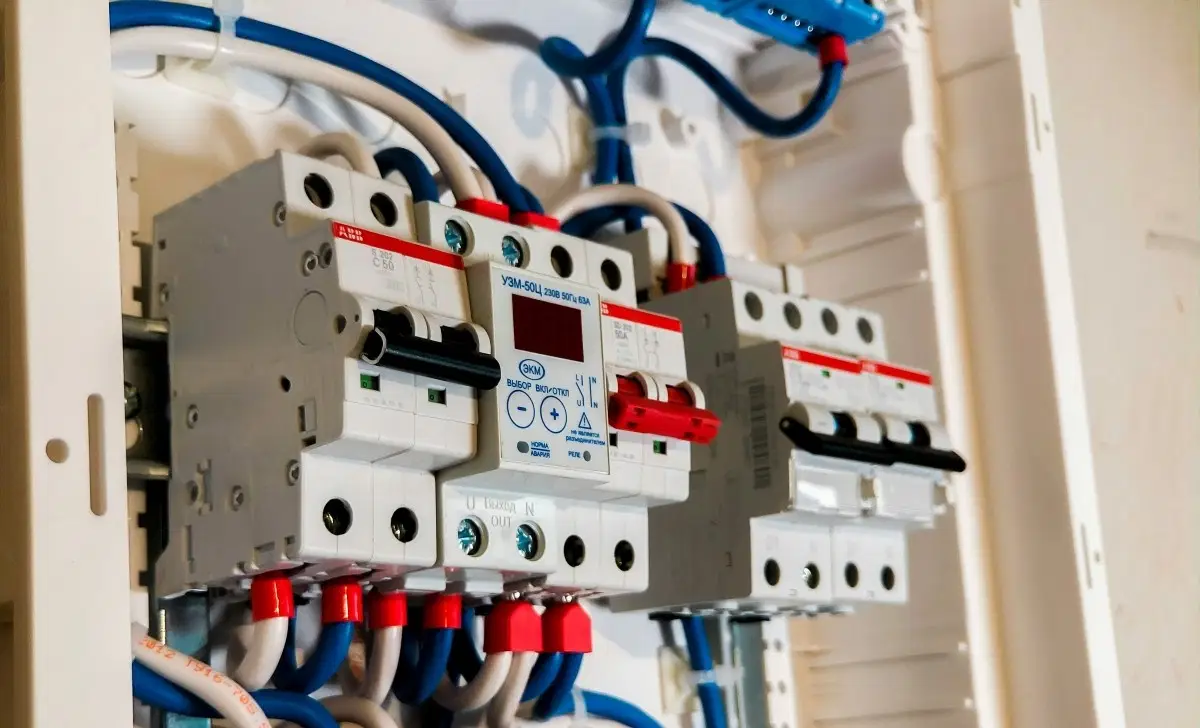
Your earth leakage unit (also called RCD or safety switch) is designed to save lives. It detects tiny current leaks to earth (as small as 30 milliamps) and cuts power in milliseconds – before you receive a fatal shock [citation:2][citation:3].
Monthly Testing Saves Lives
Test your earth leakage every 3 months [citation:2]:
- Locate the earth leakage unit in your DB board (usually the largest switch, marked “Test” or “T”)
- Press the “Test” button firmly
- The switch should immediately trip to the OFF position
- Reset by flipping it back ON
- If it doesn’t trip, or feels loose, call an electrician immediately [citation:2]
⚠️ Never ignore a tripping earth leakage: If your earth leakage trips repeatedly, it’s telling you there’s a fault. Don’t just reset it – investigate or call an electrician. Disabling or bypassing earth leakage is extremely dangerous and illegal [citation:3].
Additional Protection: Install Earth Leakage on All Circuits
For maximum safety, ensure earth leakage protection is installed on all power circuits. Older homes may only have protection on some circuits – consider upgrading [citation:2][citation:3].
🔌 Appliance Safety – Geysers, Heaters & Everyday Items
Geyser Safety
- Have your geyser and its electrical connection inspected every 3-5 years
- Ensure the geyser is properly earthed and bonded [citation:2]
- Listen for unusual sounds – they may indicate element failure
- A tripping earth leakage at night often signals a faulty geyser element
Kettle & High-Wattage Appliances
- Plug directly into wall sockets, not extension cords [citation:1]
- Unplug when not in use
- Check cords regularly for damage
- Never leave operating appliances unattended [citation:1]
Lighting Safety
- Always use the correct bulb wattage for light fittings [citation:2][citation:9]
- Check fixture labels for maximum wattage – exceeding this causes overheating [citation:9]
- Ensure bulbs are covered with shades or globes to prevent contact with flammable materials [citation:9]
- If you have halogen downlights, ensure insulation isn’t covering them – they can reach 370°C [citation:2]
❄️ Winter Electrical Safety – Heaters & Electric Blankets
Winter brings increased electrical fire risk. Following these tips from Eskom and emergency services can save lives [citation:1][citation:8]:
Heater Safety
- Keep heaters at least 1 metre from curtains, bedding, and furniture [citation:1][citation:8]
- Plug heaters directly into wall sockets – never into extension cords [citation:1]
- Never leave heaters on unattended or overnight [citation:1]
- Turn off and unplug when not in use [citation:1]
Electric Blanket Safety
- Inspect for damaged cords or scorch marks before use
- Never fold electric blankets when in use – folding damages internal wiring
- Turn off before getting into bed (unless blanket is designed for overnight use)
- Replace blankets older than 5-7 years
Brazier & Paraffin Heater Warning
The City of Tshwane Emergency Services warns: Never leave a brazier (imbawula), coal fire, or open flame burning overnight without supervision. Do not use water to extinguish paraffin fires – use sand or a dry chemical powder fire extinguisher [citation:8].
🌳 Outdoor Electrical Safety – Pools, Gardens & Tools
Pool Electrical Safety
- Pool pumps must be properly earthed and bonded [citation:2]
- Ensure all pool equipment is installed by registered electricians
- Keep electrical devices at least 2 metres from pool edge
- If you feel a tingle in the water – GET OUT immediately and call an electrician
Garden & Tool Safety [citation:3]
- Use weatherproof outlets for outdoor connections (IP rating appropriate for exposure)
- Keep extension cords away from water and wet grass
- Store garden equipment safely – don’t leave tools lying around where children can reach [citation:3]
- Never run extension cords across garden areas, especially near pools or paddling pools [citation:3]
- Know where underground power lines are before digging [citation:9]
Play Safety Near Electrical Installations [citation:3]
- Never let children play near electricity pylons, transformer boxes, or substations
- Avoid flying kites or helium balloons near overhead power lines
- Keep children away from electric fences – while not life-threatening, they deliver shocks
💧 Water & Electricity – A Deadly Combination
Water and electricity are lethal together. Follow these rules strictly [citation:3]:
- Bathroom safety: Never leave electrical appliances (hair dryers, shavers, phones) in bathrooms where they can fall into water. Unplug and store them away [citation:3].
- Keep appliances dry: Don’t use any electrical device with wet hands or while standing on wet floors.
- Pool rules: No electrical devices near pools. If you drop something in, don’t reach in – turn off the circuit first.
- Flooding: If your home floods, turn off the main switch immediately if safe to do so. Do not walk through flooded areas with power on.
- Solar panels: Note that solar panels continue generating power even when mains are off – inform emergency services if they attend your property [citation:2].
📋 Why a Valid COC Is Your Safety Guarantee
An Electrical Certificate of Compliance (COC) isn’t just paperwork for selling a house – it’s proof that your installation meets safety standards [citation:7].
- What a COC confirms: Proper earthing, functioning earth leakage, correct breaker ratings, safe wiring [citation:7]
- What testing involves: Continuity of bonding, earth resistance, insulation resistance, earth leakage operation, polarity checks [citation:7]
- Recommended: Get a COC inspection every 2-3 years, even if not selling [citation:9]
Read our complete guide: Electrical Compliance Certificates South Africa – Complete Guide
✅ Home Electrical Safety Checklist
Use this checklist monthly to ensure your home stays safe [citation:2][citation:9]:
DB Board
- ☐ Test earth leakage monthly [citation:2]
- ☐ Check for warm breakers
- ☐ Ensure all circuits are labelled
- ☐ No signs of burning or damage
Outlets & Switches
- ☐ No warm or discoloured outlets [citation:4]
- ☐ All faceplates present and secure [citation:9]
- ☐ No crackling sounds when using
- ☐ Childproofing in place where needed [citation:10]
Cords & Plugs
- ☐ No frayed or damaged cords [citation:9]
- ☐ Cords not under carpets or rugs [citation:3]
- ☐ No daisy-chained extension leads [citation:5]
- ☐ Correct wattage bulbs in all fittings [citation:2]
Appliances
- ☐ Heaters away from curtains [citation:1]
- ☐ Electric blankets in good condition
- ☐ No appliances near water [citation:3]
- ☐ Geyser inspected within 3-5 years
🚨 When to Call an Electrician Immediately
CALL AN EMERGENCY ELECTRICIAN RIGHT NOW IF:
- You smell burning from any electrical component [citation:4]
- You see smoke coming from outlets, switches, or your DB board [citation:4]
- Switches or outlets are hot to touch or visibly melting [citation:4]
- You see sparks when using switches or plugs [citation:4]
- You receive any electric shock (even mild) [citation:4]
- Your earth leakage won’t reset after testing [citation:2]
- There’s been water damage near electrical points (flood, burst pipe)
- Power is partially out and you can’t identify a tripped breaker
Find emergency electricians in your area – available 24/7 in Johannesburg, Pretoria, Cape Town, Durban, and major centres.
🔥 What to Do in an Electrical Fire
🚨 IF AN ELECTRICAL FIRE STARTS:
- DO NOT use water – water conducts electricity and can cause electrocution [citation:8]
- If safe, turn off the main switch at your DB board
- Use a Class C fire extinguisher (dry chemical powder) or fire blanket [citation:8]
- If the fire is small and contained, smother it with baking soda or a blanket
- If the fire grows or you’re unsure, EVACUATE immediately and call emergency services (10177)
- Never go back inside a burning building [citation:2]
❌ 10 Common Electrical Safety Mistakes Homeowners Make
- Using damaged cords: Frayed, cracked, or taped cords are fire hazards. Replace immediately [citation:5].
- Overloading outlets with multi-plug adapters: One socket, one plug – that’s the safe rule [citation:5][citation:9].
- Running cords under carpets: Heat buildup causes fires, and damage goes unnoticed [citation:3][citation:9].
- Ignoring warning signs: Flickering lights, warm outlets, tripping breakers – these are cries for help [citation:4].
- Never testing earth leakage: That test button exists for a reason – use it monthly [citation:2].
- Using incorrect wattage bulbs: Overheating leads to fires [citation:2][citation:9].
- DIY electrical repairs: Illegal, dangerous, and often creates more hazards [citation:9].
- Forgetting about children: Leaving outlets unprotected and cords accessible [citation:3][citation:10].
- Blocking access to DB board: In an emergency, you need quick access to switches.
- No smoke alarms or fire extinguisher: Every home needs working smoke alarms and a suitable fire extinguisher [citation:2].
Worried About Your Home’s Electrical Safety?
Get a professional electrical safety inspection from registered, verified electricians in your area – identify hazards before they become emergencies.
Serving Johannesburg, Pretoria, Cape Town, Durban, and nationwide
❓ Frequently Asked Questions
How often should I test my earth leakage?
Test your earth leakage unit every 3 months by pressing the “Test” button. It should trip immediately. If it doesn’t, or feels loose, call a registered electrician [citation:2].
Is it safe to use extension cords permanently?
No. Extension cords are temporary solutions, not permanent wiring. If you regularly need extension cords, have a registered electrician install additional outlets. Permanent use of extension cords increases fire risk [citation:5][citation:9].
What should I do if an outlet feels warm?
A warm outlet indicates loose connections or overloading – a pre-fire condition. Stop using that outlet immediately, turn off the circuit at your DB board, and call a registered electrician to inspect it [citation:4].
How can I childproof my electrical outlets?
Best options: Install tamper-resistant receptacles (look for “TR” stamped on the outlet), use sliding plate covers, or keyed outlet covers. Never rely on plastic plug covers alone – they can be choking hazards. Also, block access with furniture where possible [citation:3][citation:10].
Why do my lights flicker when the kettle turns on?
Brief dimming when high-wattage appliances start can be normal. However, if lights flicker significantly, stay dim, or flicker without appliance use, you may have loose connections or voltage issues. Have an electrician check it [citation:4].
What’s the safest way to use a space heater?
Plug directly into a wall socket (never an extension cord), keep at least 1 metre from curtains and furniture, turn off when leaving the room or sleeping, and inspect cords regularly for damage [citation:1][citation:8].
How do I know if my home’s wiring is safe?
Have a registered electrician perform a professional electrical safety inspection. They’ll test earth leakage, earthing, insulation resistance, and check for hidden hazards. Homes over 25 years old especially need regular inspections [citation:9].
Can I put insulation over ceiling lights?
No – especially with halogen downlights that can reach 370°C. Insulation over lights can cause overheating and fires. Ensure proper clearance around all light fittings and heat sources in your ceiling [citation:2].
What should I do if I smell gas?
If you smell gas: Put out cigarettes, don’t use matches or naked flames, don’t operate electrical switches (leave them on or off), open doors and windows, turn off the gas supply at the meter if safe, and call the gas service [citation:2].
How do I put out an electrical fire?
NEVER use water – it conducts electricity and can electrocute you. Use a Class C dry chemical fire extinguisher, baking soda, or a fire blanket. If safe, turn off the main switch first. If the fire grows, evacuate and call emergency services [citation:8].
✅ Final Thoughts – Make Safety a Habit
Electrical safety isn’t complicated – it’s about awareness and simple daily habits. Key takeaways:
- Know the warning signs: Flickering lights, warm outlets, tripping breakers – never ignore them [citation:4]
- Test earth leakage monthly: Two seconds could save a life [citation:2]
- Childproof properly: Tamper-resistant outlets are the gold standard [citation:10]
- Respect extension cords: Temporary use only, never under carpets [citation:5]
- Winter safety: Heaters need space – 1 metre from everything [citation:1]
- Water and electricity: Keep them far apart [citation:3]
- Professional inspections: Every 2-3 years, or immediately if concerned [citation:9]
⚡ The Bottom Line:
Most electrical accidents are preventable
A few minutes of vigilance each month can save your family’s lives
Your 5-Step Monthly Safety Routine
- Test earth leakage – press the button [citation:2]
- Check outlets – feel for warmth, look for discolouration [citation:4]
- Inspect cords – no fraying, no damage [citation:9]
- Review what’s plugged in – no overloaded outlets [citation:5]
- Walk through with children – reinforce safety rules [citation:3]
Want Complete Peace of Mind?
Book a professional electrical safety inspection with registered, verified electricians in your area.
📞 Emergency? Call: 073 138 4726
📚 Official resources & standards:
- Eskom – Home electrical safety campaigns and resources [citation:1]
- ECASA (Electrical Contractors Association) – Find registered electricians, safety information
- SABS (SANS 10142) – Wiring regulations and safety standards [citation:7]
- Childsafe South Africa – Childproofing and injury prevention
This guide is for informational purposes only. Always consult a registered electrician for electrical work or if you suspect safety issues.
Written by: ServiceLink SA Research Team
In partnership with registered electricians across South Africa
Our team works directly with ECASA-registered electricians and draws on safety guidelines from Eskom, SABS, and international electrical safety authorities. This guide reflects current best practices for South African homes.
📖 Related Guides: