
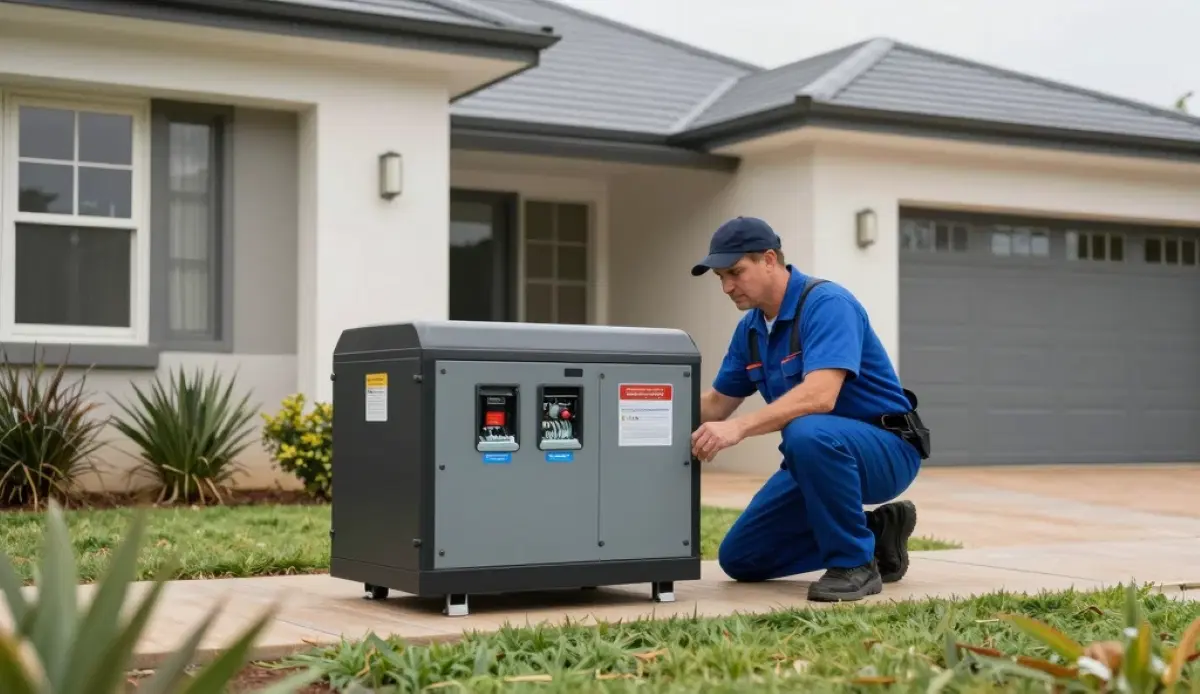
Generator Installation & Backup Power South Africa – Complete Guide
⚡ Loadshedding got you down? Here’s exactly what generator installation costs and why thousands are switching to backup power.
Let’s be honest – loadshedding isn’t going away anytime soon. Whether you’re in Johannesburg facing Stage 6, Pretoria with unpredictable schedules, Cape Town protecting solar investments, or Durban dealing with both loadshedding and storms, a professionally installed generator is the most reliable backup power solution for your home or business.
This comprehensive guide covers generator installation costs, changeover switch requirements, and everything you need to know about backup power. We’ve gathered pricing data from registered electricians across Gauteng, Western Cape, and KZN to give you accurate, current figures.
📅 UPDATE: All prices reflect current market rates based on verified quotes from registered electrical contractors. Generator installations must comply with SANS 10142-1 and local municipal regulations. Prices include VAT where indicated.
Need backup power before the next loadshedding?
Get free, no-obligation quotes from registered electricians in your area – compare generator installation prices and save.
Find Generator Installers Near Me
Emergency readiness across Johannesburg, Pretoria, Cape Town, Durban, and nationwide
📋 Table of Contents – Generator Installation Guide
🏆 Why Every South African Home Needs Generator Backup
With Eskom confirming loadshedding will remain part of our reality for the foreseeable future, generator installation has moved from “luxury” to “essential” for many households. Here’s why thousands of South Africans are investing in backup power :
Protect Your Home
Security systems, electric fences, and garage doors don’t work during outages. A generator keeps your home secure 24/7 .
Save Food & Appliances
Prevent fridges and freezers from thawing. Protect sensitive electronics from power surges when Eskom returns .
Work From Home
Keep WiFi, laptops, and office equipment running. No more rushing to coffee shops during loadshedding .
Medical Needs
For households with CPAP machines, oxygen concentrators, or other medical equipment, backup power is non-negotiable .
Keep Water Flowing
Borehole pumps and pressure pumps need power. A generator ensures you have water during extended outages .
Property Value
Homes with installed backup power systems sell faster and command higher prices in today’s market .
⚠️ CRITICAL: A generator is only safe and effective if professionally installed with a proper changeover switch. Never use “DIY” methods like double adapters or plugging into wall outlets – this backfeeds into the grid and can kill Eskom workers. It’s also illegal and will void your insurance .
💰 Generator Installation Costs South Africa 2025
The cost to install a generator depends on generator size, changeover switch type, and installation complexity. Here are the current market rates :
Installation-Only Costs (Labour + Changeover Switch)
| Installation Type | Changeover Switch | Labour | Total Installed |
|---|---|---|---|
| Manual changeover (basic) | R1,200 – R2,000 | R1,500 – R2,500 | R2,700 – R4,500 |
| Manual changeover (with interlock) | R1,800 – R2,800 | R1,800 – R3,000 | R3,600 – R5,800 |
| Automatic Transfer Switch (ATS) | R4,500 – R8,500 | R2,500 – R4,000 | R7,000 – R12,500 |
| Three-phase changeover | R6,000 – R12,000 | R3,500 – R6,000 | R9,500 – R18,000 |
Complete Installed Costs (Generator + Installation)
| Generator Size | Suitable For | Generator Cost | Installed Price (with changeover) |
|---|---|---|---|
| 3 – 5 kVA | Lights, TV, fridge, WiFi (essentials only) | R4,000 – R8,000 | R7,000 – R12,000 |
| 6 – 8 kVA | Small home – most lights, plugs, fridge, freezer | R8,000 – R15,000 | R11,000 – R20,000 |
| 9 – 12 kVA | Medium home – add pool pump, borehole, aircon | R15,000 – R25,000 | R19,000 – R32,000 |
| 15 – 20 kVA | Large home – full house including geysers, oven | R25,000 – R45,000 | R32,000 – R55,000 |
| 25 kVA+ | Estate homes, small business, farms | R45,000 – R100,000+ | R55,000 – R120,000+ |
Additional Costs to Consider
- Concrete plinth/base: For permanent standby generators – R1,500 – R4,000
- Weatherproof enclosure: If generator is outdoors – R2,000 – R8,000
- Extended cabling: If generator is far from DB board – R50 – R150 per metre
- Earth leakage modifications: May need neutral-earth bonding setup – R800 – R2,000
- COC certificate: Required after any electrical work – R800 – R1,800
- Fuel tank/installation: For diesel generators – R2,000 – R10,000+
Smart budgeting: For most 3-bedroom homes in Sandton or Fourways, budget R20,000 – R35,000 for a complete professionally installed generator system (8-12 kVA with ATS). This covers essentials and gives you true “set and forget” backup .
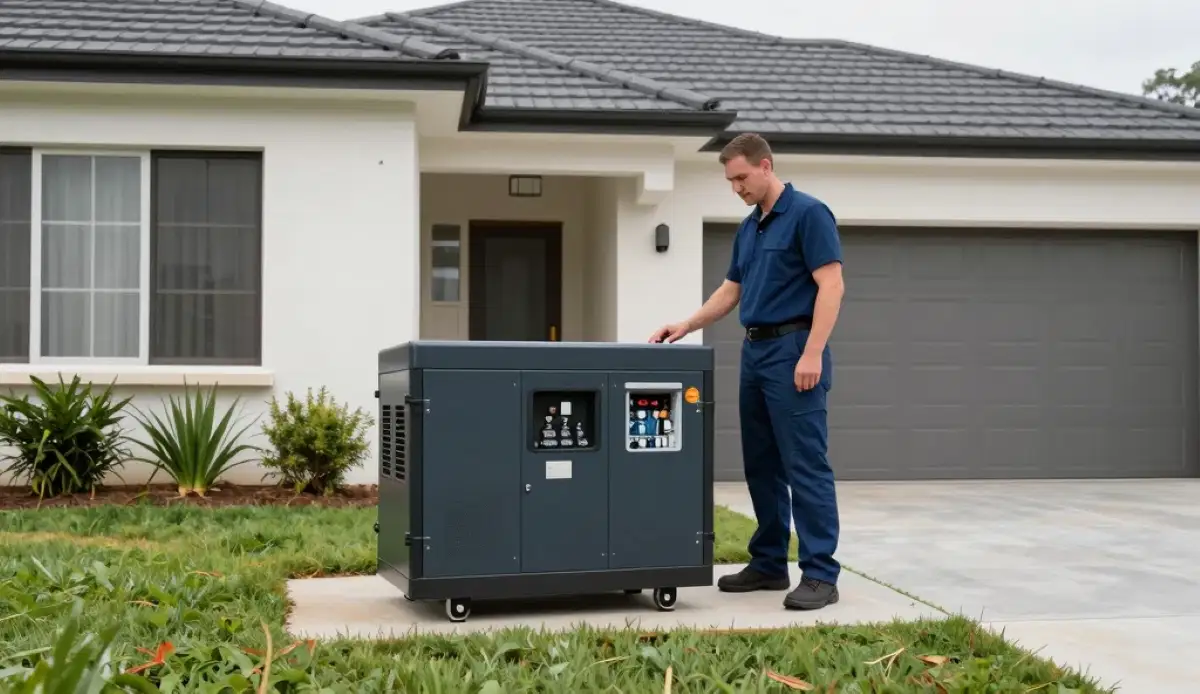
🔄 Generator Changeover Switch – The Most Critical Component
A changeover switch (also called transfer switch) is the device that safely disconnects your home from the grid and connects your generator. It’s not optional – it’s a legal requirement .
Why You MUST Have a Changeover Switch
- Safety for Eskom workers: Prevents backfeeding – electricity flowing from your generator into the grid, which can electrocute linesmen working to restore power .
- Protects your generator: When grid power returns, changeover prevents the two sources from clashing, which would destroy your generator .
- Legal compliance: SANS 10142-1 requires approved changeover devices for all generator installations .
- Insurance validity: Most home insurance policies are void if generators are illegally connected .
⚙️ Manual vs Automatic Changeover – Which is Right for You?
🔧 Manual Changeover Switch
🤖 Automatic Transfer Switch (ATS)
- ✓ Higher cost (R7,000 – R12,500 installed)
- ✓ Power restored in 10-30 seconds automatically
- ✓ Generator starts itself when loadshedding hits
- ✓ Works even when you’re not home
- ✓ Protects fridges, freezers, security systems automatically
- ✓ Best for: Frequent travellers, estates, peace of mind
- ✓ Popular in: Hartbeespoort, Sandton, Umhlanga
| Feature | Manual Changeover | Automatic (ATS) |
|---|---|---|
| Installed cost | R2,700 – R5,800 | R7,000 – R12,500 |
| Power restoration time | 2-5 minutes (manual) | 10-30 seconds (automatic) |
| Works when you’re away | No – someone must be home | Yes – fully automatic |
| Generator starts itself | No, you start manually | Yes, auto-start |
| Complexity | Simple, fewer failure points | More components, battery backup needed |
| Ideal for | Day users, budget-conscious | Peace of mind, frequent outages, estates |

🔋 Portable vs Standby Generators – What’s the Difference?
📦 Portable Generator
- ✓ Lower cost (R4,000 – R15,000)
- ✓ Can be moved and used elsewhere
- ✓ Requires manual starting and connection
- ✓ Must be stored when not in use
- ✓ Usually petrol-powered
- ✓ Needs outdoor placement during operation (exhaust risk)
- ✓ Louder operation
- ✓ Ideal for: Occasional use, smaller homes, budget
🏠 Standby Generator (Permanent)
- ✓ Higher cost (R25,000 – R100,000+)
- ✓ Permanently installed outside
- ✓ Automatic operation with ATS
- ✓ Weatherproof enclosure included
- ✓ Usually diesel or large petrol/LPG
- ✓ Quieter operation (enclosed)
- ✓ Integrated fuel systems
- ✓ Ideal for: Large homes, estates, frequent outages, peace of mind
Most homeowners in Fourways, Bryanston, and Hartbeespoort estates are opting for standby generators with ATS – the “set and forget” solution that protects homes even when owners are away .
📏 What Size Generator Do You Need? (Calculator Guide)
Choosing the right size generator is crucial – too small and it won’t power what you need, too large and you waste money and fuel. Here’s how to calculate :
Step 1: List What You MUST Power
| Appliance | Running Watts | Surge Watts (startup) |
|---|---|---|
| Fridge / freezer | 600 – 800W | 1,200 – 2,000W |
| Deep freezer | 400 – 600W | 800 – 1,200W |
| TV (LED) | 100 – 200W | 100 – 200W |
| WiFi router | 10 – 20W | 10 – 20W |
| Lights (LED per bulb) | 10 – 15W | 10 – 15W |
| Security system / electric fence | 100 – 300W | 200 – 500W |
| Gate motor | 300 – 500W | 800 – 1,200W |
| Pool pump (1hp) | 1,000 – 1,500W | 2,000 – 3,000W |
| Borehole pump | 1,000 – 2,000W | 2,000 – 4,000W |
| Air conditioner (small) | 1,200 – 1,800W | 2,400 – 3,600W |
| Geyser (element) | 2,000 – 3,000W | 2,000 – 3,000W |
| Kettle | 2,000 – 2,200W | 2,000 – 2,200W |
| Microwave | 800 – 1,200W | 800 – 1,200W |
Step 2: Calculate Total Running Watts
Add up the running watts of everything you want to power simultaneously. For most homes, essential loads are:
- Fridge + freezer + TV + lights + WiFi + security = 1,500 – 2,500W running
- Add pool pump (if needed during outage) = +1,500W = 3,000 – 4,000W
- Add geyser (if needed) = +2,500W = 5,500 – 6,500W
Step 3: Account for Surge Watts
Motors (fridge, pump, gate) need 2-3x running watts to start. Your generator must handle the largest surge + running watts of other appliances.
Quick sizing guide: 3-5 kVA = essentials only. 6-8 kVA = most of house except geysers and pool. 9-12 kVA = full house including pool, geyser if managed. 15+ kVA = everything, all at once .
🔌 Generator DB Board Connection Explained
Your generator must be connected to your Distribution Board (DB) through the changeover switch. Here’s how it works :
- Changeover switch installed between your main switch and the grid supply
- Generator inlet (weatherproof socket) installed outside near generator location
- Cabling runs from inlet to changeover switch
- When grid fails, you (or ATS) switch to generator power
- Generator power feeds selected circuits (or whole DB, depending on setup)
Generator Inlet Types
- 16A / 32A weatherproof socket: For portable generators, R300 – R800
- Fixed hardwired connection: For standby generators, direct wiring, included in installation
⚡ Earth Leakage & Neutral-Earth Bonding – Critical Safety
This is where many DIY installations go wrong – and why professional installation is essential :
⚠️ THE NEUTRAL-EARTH BONDING ISSUE:
In the Eskom grid, neutral and earth are bonded at the transformer. When you switch to generator, this bond is lost. Your earth leakage may not work correctly, creating shock hazards. A professional installation includes neutral-earth bonding switching as part of the changeover system, ensuring safety in both modes .
Registered electricians understand SANS 10142 requirements for generator installations, including:
- Proper neutral-earth bonding configuration
- Earth leakage compatibility with generator power
- Generator frame earthing requirements
- Surge protection recommendations
📜 Generator Installation Regulations South Africa
Generator installations in South Africa must comply with :
- SANS 10142-1 (Wiring of Premises): The bible for all electrical work, including generator connections
- SANS 10139 (Generator installations): Specific requirements for generator systems
- Municipal by-laws: Some areas have noise restrictions, placement rules, or permit requirements
- DEFF emissions guidelines: For larger diesel generators, environmental regulations apply
- COC required: Certificate of Compliance must be issued after installation
- Registered installer: Only registered electricians with Wireman’s License can legally install generator connections
Noise Regulations by Area
- Residential areas: Typically 55-60 dB limit during day, 45-50 dB at night
- Estates (Hartbeespoort, Fourways): Stricter noise rules – may require enclosures
- Generator placement: Must be minimum 1-3m from boundaries (check local rules)
📋 Generator Installation Process – Step by Step
Step 1: Site Assessment
Electrician visits to assess your DB board, power requirements, generator placement, and cable routing .
Step 2: Load Calculation
Calculate what you need to power, determine generator size, and select changeover type .
Step 3: Quotation
Detailed quote including generator (if supplied), changeover switch, labour, and COC .
Step 4: Preparation
Concrete base if needed, cable trenching, weatherproof enclosure installation .
Step 5: Electrical Installation
Mount changeover switch, run cabling, install inlet socket, connect to DB board .
Step 6: Generator Connection
Connect generator, test changeover operation, verify safety systems .
Step 7: Load Testing
Simulate loadshedding, test under load, verify earth leakage and bonding .
Step 8: COC Issued
Certificate of Compliance provided – your legal document .
📍 Generator Installation Costs by Region (2025)
⚡ Johannesburg Generator Installation
Johannesburg has the highest demand for generator installations, with competitive pricing and many installers .
- 8 kVA with manual changeover: R12,000 – R18,000 installed
- 12 kVA with ATS: R25,000 – R35,000 installed
- Popular suburbs: Sandton (premium), Fourways, Midrand, Bryanston
⚡ Pretoria Generator Installation
- 8 kVA with manual changeover: R11,000 – R17,000 installed
- 12 kVA with ATS: R24,000 – R33,000 installed
- Popular suburbs: Pretoria East, Centurion, Waterkloof
⚡ Cape Town Generator Installation
Cape Town’s unique climate requires weatherproofing and sometimes corrosion-resistant components .
- 8 kVA with manual changeover: R12,000 – R19,000 installed
- 12 kVA with ATS: R26,000 – R38,000 installed
- Popular suburbs: Southern Suburbs, Atlantic Seaboard, Stellenbosch
⚡ Durban Generator Installation
Durban’s humid coastal environment requires corrosion-resistant enclosures and marine-grade components .
- 8 kVA with manual changeover: R12,000 – R18,000 installed
- 12 kVA with ATS: R25,000 – R36,000 installed
- Popular suburbs: Durban North, Umhlanga, Ballito
⚡ Estate Living – Hartbeespoort, Fourways, Bryanston
Estate living comes with unique requirements – access coordination, noise restrictions, and aesthetic considerations .
- Hartbeespoort: Popular for large properties, estates – expect premium for travel and estate access fees (R500 – R1,500 extra)
- Fourways: High density, many estates – competitive pricing but strict noise rules
- Bryanston: Large properties, often require larger generators (12-20 kVA) – R30,000 – R55,000+
⛽ Generator Fuel Supply & Refilling Options
A generator is useless without fuel. Consider your fuel strategy before installing :
| Fuel Type | Pros | Cons | Typical for |
|---|---|---|---|
| Petrol | Widely available, lower upfront cost | Short shelf life (3-6 months), volatile, less efficient | Portable generators, occasional use |
| Diesel | Long shelf life, more efficient, safer storage | Higher upfront cost, heavier generators | Standby generators, larger homes, estates |
| LPG (Gas) | Clean burning, indefinite shelf life, quiet | Less energy dense, requires gas installation | Homes with existing gas, eco-conscious |
For regular loadshedding, consider :
- Bulk fuel delivery: Services like generator fuel supply and refilling can deliver diesel to your home
- Fuel storage: Proper containers (SABS-approved) and safe storage practices essential
- Rotation: Petrol should be used within 3 months – add stabiliser if storing longer
❌ 10 Common Generator Installation Mistakes (Deadly Errors)
🚨 THESE MISTAKES CAN KILL:
- Backfeeding through a wall outlet (suicide cord): Using a double-ended plug to connect generator to a wall socket. This energises your entire house AND the grid – linesmen can be electrocuted. It’s illegal and will void insurance .
- No changeover switch: Running generator while grid is connected – destroys generator when power returns .
- Incorrect neutral-earth bonding: Earth leakage won’t work properly, creating shock hazards .
- Undersized cabling: Cables overheat, cause fires, voltage drop damages appliances .
- Poor ventilation placement: Generator in garage or enclosed area – carbon monoxide poisoning kills .
- No COC issued: Installation not compliant, insurance invalid, illegal .
- DIY installation by unqualified person: Electrical work requires registered electrician by law .
- Incorrect generator sizing: Too small – overloads and damages generator. Too large – wastes fuel and money.
- Ignoring noise regulations: Neighbour complaints, body corporate fines, legal action .
- No maintenance plan: Generator fails when you need it most .
Ready to Beat Loadshedding?
Get quotes from registered, verified generator installers in your area – compare prices and get expert installation.
Emergency readiness across South Africa – 24/7 service available
❓ Frequently Asked Questions
How much does generator installation cost in South Africa?
Installation costs range from R2,700 – R5,800 for manual changeover and R7,000 – R12,500 for automatic (ATS). Complete installed systems (generator + installation) range from R7,000 for small portable to R55,000+ for large standby systems .
Can I install a generator myself?
No. In South Africa, only registered electricians with Wireman’s License can legally connect generators to your electrical system. DIY installation is illegal, dangerous, and voids insurance. The changeover switch must be professionally installed and a COC issued .
What size generator do I need for my house?
For essentials (lights, TV, fridge, WiFi): 3-5 kVA. For most of house including pool pump: 6-8 kVA. For full house including geysers: 9-12 kVA. For large homes with everything running: 15-20 kVA+ .
What’s the difference between manual and automatic changeover?
Manual changeover requires you to start the generator and flip a switch (2-5 minutes). Automatic Transfer Switch (ATS) detects power failure, starts the generator, and switches over automatically within 10-30 seconds – even when you’re not home .
Is it safe to run a generator in the rain?
No – water and electricity are deadly. Generators must be placed under cover but never indoors or in enclosed spaces. Use a weatherproof enclosure or canopy. Ensure proper ventilation – generators produce carbon monoxide which kills in enclosed spaces .
Do I need a COC for generator installation?
Yes – absolutely. Any electrical work that affects the installation requires a Certificate of Compliance. Your electrician must provide one after installation. Without it, your installation is illegal and your insurance is invalid .
How often should I service my generator?
After every 100-150 hours of use, or at least annually. Regular servicing includes oil changes, filter replacements, and load testing. Many installers offer maintenance contracts for peace of mind .
Can a generator damage my appliances?
Poor quality generators can produce “dirty power” (voltage fluctuations) that damage sensitive electronics. Always choose inverter generators or add surge protection. Professional installation ensures proper voltage regulation .
What fuel is best for a home generator?
For occasional use, petrol is fine. For frequent use and larger homes, diesel is better – longer shelf life, more efficient, safer storage. LPG is excellent but requires gas infrastructure .
How long does generator installation take?
Most residential installations take 4-8 hours for a standard setup. Complex installations (concrete bases, long cable runs, three-phase) may take 1-2 days .
✅ Final Thoughts – Your 2025 Backup Power Plan
With loadshedding here to stay, a professionally installed generator is the most reliable backup power solution for South African homes. Key takeaways:
- Installation costs: R2,700 – R12,500 (changeover + labour) depending on manual vs ATS
- Complete system: R7,000 – R55,000+ including generator
- Manual vs ATS: Manual is budget-friendly; ATS offers peace of mind and automation
- Safety non-negotiable: Professional installation, changeover switch, COC – no shortcuts
- Size matters: Calculate your needs carefully – too small fails, too large wastes money
⚡ The Bottom Line:
R20,000 – R35,000
buys a complete professionally installed generator system for most 3-bedroom homes – the ultimate loadshedding solution
Your 5-Step Action Plan
- Calculate your power needs – list essential appliances and their running watts
- Decide manual vs ATS – based on budget and convenience needs
- Get 3-4 quotes from registered electricians in your area
- Verify credentials – ECASA registration, Wireman’s License, insurance, references
- Schedule installation – ensure you receive COC and warranty documents
Ready to Install Your Generator?
Connect with registered, verified generator installers in your area – compare quotes and get backup power before the next loadshedding.
📞 24/7 Emergency: 073 138 4726
Emergency services •
Free site inspections •
Pay-later options
📚 Official resources & standards:
- ECASA (Electrical Contractors Association) – Generator changeover regulations
- Eskom – Backup power connection standards
- SABS (SANS 10142-1) – Generator installation requirements
- DEFF – Generator emissions guidelines for larger units
Prices accurate as of February 2025. Always verify current rates with local installers. This guide is for informational purposes and does not constitute a quote.
Written by: ServiceLink SA Research Team
In partnership with registered electricians across South Africa
Our team works directly with ECASA-registered electricians specializing in generator installations across Johannesburg, Pretoria, Cape Town, Durban, and estate areas like Hartbeespoort and Fourways. This guide reflects real-world 2025 pricing and current regulatory requirements.