
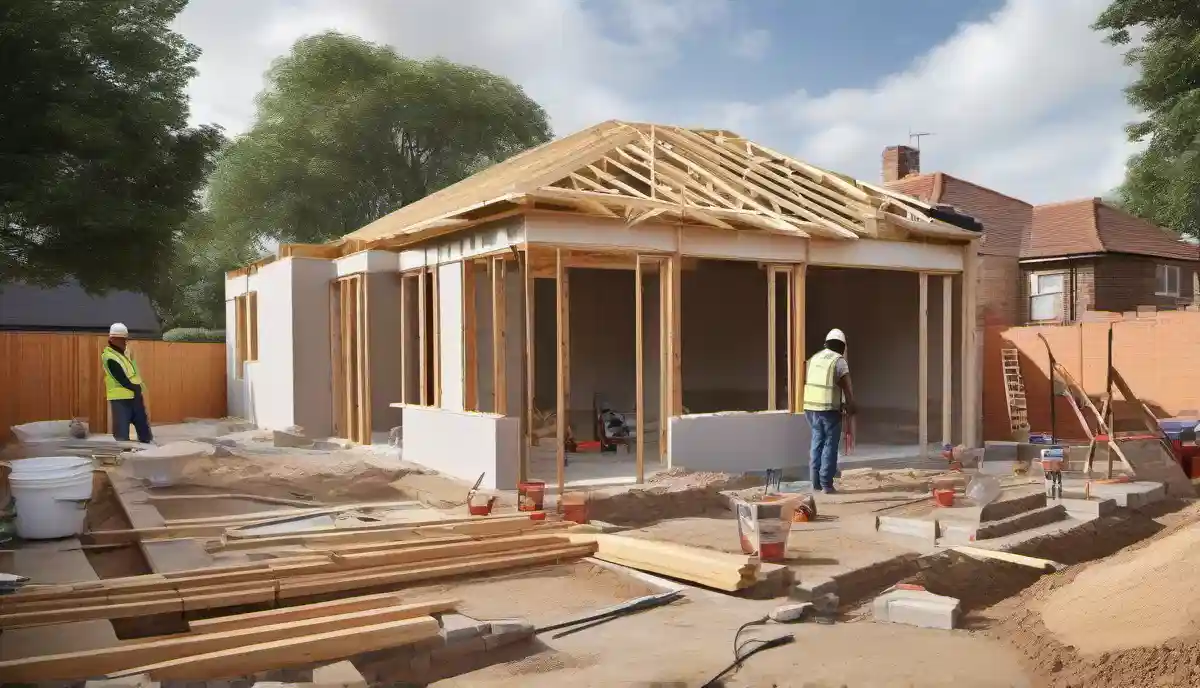
Home Extension Building Costs & Regulations South Africa
🏠 Get Free Quotes from Local Extension Specialists Near You
Compare vetted, NHBRC-registered builders for your home extension project.
Planning to add space to your home? Every homeowner asks:
What are home extension building costs and regulations in South Africa for 2025?
This comprehensive 4,600+ word guide covers everything you need to know about house extension cost per square metre, regulatory requirements, and how to navigate municipal approvals. Whether you’re planning a room addition in Johannesburg, a granny flat in Cape Town, or a double-storey extension in Durban, this guide has you covered.
In this complete guide, you’ll discover:
- Home extension building costs and regulations South Africa
- House extension cost per square metre – detailed breakdown
- Cost to add a room to house SA – bedroom, lounge, bathroom
- Second storey addition cost – what to budget
- Building regulations for extensions – SANS 10400
- Planning permission for home extension – when needed
- Home extension cost Johannesburg 2025 estimates
- How much to build a granny flat – complete pricing
- Double storey extension cost South Africa
- Setback lines, coverage ratio, and floor area ratio explained
📅 2025 Update: All prices reflect Q1 2025 market rates based on verified quotes from Johannesburg, Pretoria, Cape Town, and Durban extension specialists. Prices include VAT where indicated. Regulatory information sourced from SABS and NHBRC guidelines.
📖 Table of Contents: Extension Cost & Regulations Guide
📊 Average Home Extension Costs South Africa 2025
Here are current market rates for different types of home extensions across South Africa:
| Extension Type | Typical Size | Price Range (Complete) | Duration |
|---|---|---|---|
| Single bedroom addition | 12-16m² | R120,000 – R220,000 | 4-6 weeks |
| Lounge/family room extension | 20-30m² | R180,000 – R350,000 | 6-8 weeks |
| Bathroom addition | 4-6m² | R85,000 – R150,000 | 3-4 weeks |
| Kitchen extension | 10-15m² | R140,000 – R280,000 | 5-7 weeks |
| Single storey side extension | 30-50m² | R280,000 – R550,000 | 8-12 weeks |
| Double storey extension | 40-80m² total | R450,000 – R950,000 | 12-20 weeks |
| Granny flat (separate) | 30-50m² | R250,000 – R500,000 | 8-14 weeks |
These are complete costs including foundations, structure, roofing, finishes, electrical, plumbing, and labour. For accurate pricing in your specific area, consult with NHBRC-registered extension specialists.
📏 House Extension Cost Per Square Metre 2025
For quick budgeting, most contractors price extensions on a cost per square metre basis. Here’s what to expect:
| Extension Quality | Cost per m² (Basic) | Cost per m² (Standard) | Cost per m² (Premium) |
|---|---|---|---|
| Single storey extension | R8,500 – R11,000 | R11,000 – R15,000 | R15,000 – R22,000 |
| Double storey extension | R10,000 – R13,000 | R13,000 – R17,000 | R17,000 – R25,000 |
| Granny flat (separate) | R7,500 – R10,000 | R10,000 – R14,000 | R14,000 – R20,000 |
📊 Average home extension cost per square metre:
R10,000 – R16,000 per m²
(complete single storey extension, standard finishes)
Real-world examples:
- 20m² bedroom in Midrand: R200,000 – R320,000
- 35m² lounge in Sandton: R385,000 – R595,000
- 45m² granny flat in Cape Town: R450,000 – R720,000
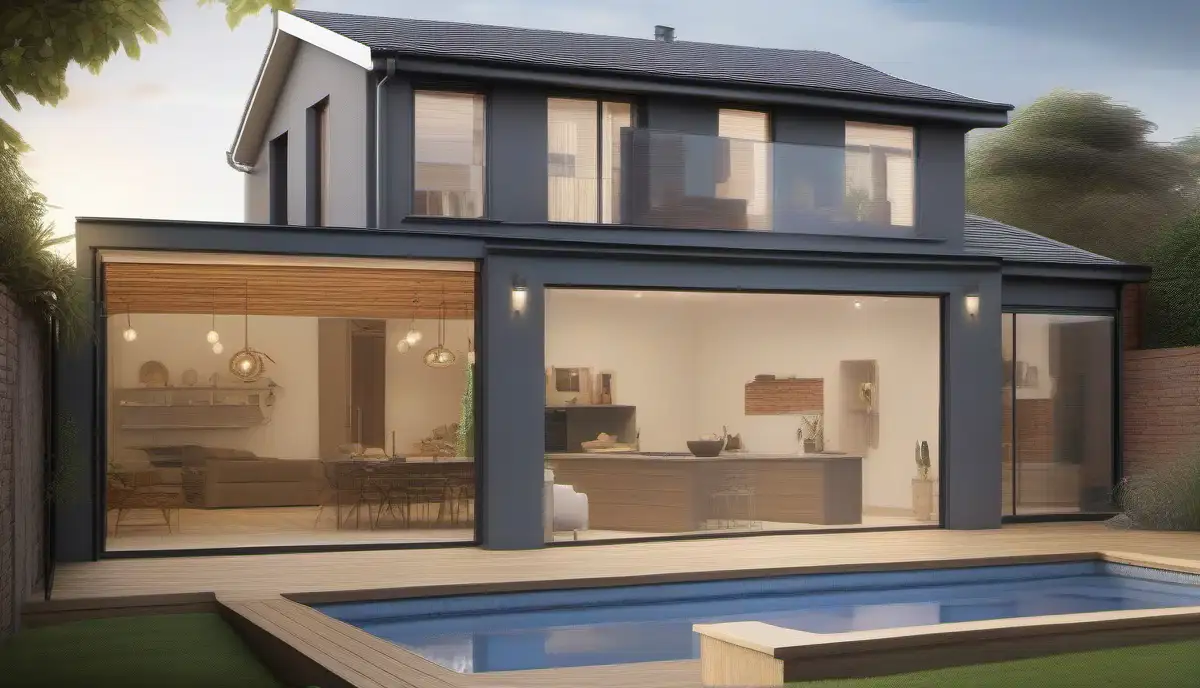
🛏️ Cost to Add a Room to House SA
Adding a single room is the most common extension project. Here’s detailed pricing by room type:
Bedroom Addition Costs
| Bedroom Size | Budget Range | Mid-Range | Premium |
|---|---|---|---|
| Small bedroom (10-12m²) | R90,000 – R140,000 | R140,000 – R190,000 | R190,000 – R280,000 |
| Standard bedroom (14-16m²) | R120,000 – R180,000 | R180,000 – R240,000 | R240,000 – R350,000 |
| Master bedroom (18-22m²) | R160,000 – R240,000 | R240,000 – R320,000 | R320,000 – R480,000 |
Lounge/Family Room Addition
| Lounge Size | Budget Range | Mid-Range | Premium |
|---|---|---|---|
| Small lounge (15-20m²) | R130,000 – R200,000 | R200,000 – R280,000 | R280,000 – R400,000 |
| Medium lounge (20-30m²) | R180,000 – R280,000 | R280,000 – R380,000 | R380,000 – R550,000 |
| Large entertainment area (30-45m²) | R270,000 – R400,000 | R400,000 – R550,000 | R550,000 – R850,000 |
For detailed room addition pricing in your area, contact local extension specialists.
🏢 Second Storey Addition Cost South Africa
Adding a second storey is complex but can double your living space without increasing your footprint. Here’s what to budget:
| House Size | Upper Floor Area | Cost Range | Includes |
|---|---|---|---|
| Small house | 50-70m² | R550,000 – R850,000 | 2-3 bedrooms, bathroom |
| Medium house | 70-100m² | R800,000 – R1.3M | 3-4 bedrooms, 2 bathrooms |
| Large house | 100-150m² | R1.2M – R2.2M+ | Full upper floor, en-suites, study |
Second Storey Cost Breakdown
- Structural engineering & foundation strengthening: R40,000 – R120,000
- Steelwork and structural frame: R80,000 – R200,000
- Floor structure (concrete/steel): R70,000 – R150,000
- Walls, windows, roofing: R150,000 – R350,000
- Electrical and plumbing first fix: R50,000 – R100,000
- Finishes (flooring, painting, ceilings): R80,000 – R200,000
- Bathroom and kitchenette installation: R40,000 – R120,000
- Staircase construction: R25,000 – R80,000
⚠️ Critical: Second storey additions require geotechnical investigations and structural engineering certificates. Existing foundations may need strengthening – budget R40,000-100,000 for this. Always use NHBRC-registered builders with double-storey experience.
🏡 Granny Flat Building Cost South Africa
Separate self-contained units (granny flats) are increasingly popular for rental income or extended family. Here’s 2025 pricing:
| Granny Flat Type | Size | Cost Range | Features |
|---|---|---|---|
| Basic studio flat | 25-35m² | R200,000 – R320,000 | Open plan, shower, kitchenette |
| 1-bedroom flat | 35-45m² | R300,000 – R450,000 | Separate bedroom, full bathroom |
| 2-bedroom flat | 50-65m² | R450,000 – R650,000 | Family-sized, full kitchen |
| Luxury granny flat | 65-85m² | R650,000 – R950,000+ | High-end finishes, separate laundry |
Granny flats offer excellent ROI – rental yields of 8-12% are common in good areas. However, check your title deed restrictions and zoning scheme before planning – some areas prohibit secondary dwellings.
📋 Building Regulations for Extensions – SANS 10400
All home extensions must comply with SANS 10400 (South African National Standard for Building Regulations). Key requirements include:
Structural integrity
Foundations must be designed for soil conditions. Geotechnical investigation may be required.
Fire resistance
Walls, doors, and materials must meet fire rating requirements, especially for attached dwellings.
Ventilation
Rooms must have adequate natural ventilation – minimum opening areas specified.
Natural lighting
Habitable rooms require minimum window area (typically 10% of floor area).
Stair dimensions
For double storey, stairs must meet specific rise/run ratios and have balustrades.
Energy efficiency
SANS 10400-XA requires insulation and energy-efficient design in new extensions.
Read our complete building regulations guide for detailed compliance information.
📄 Planning Permission for Home Extension – When Needed
Not all extensions need planning permission, but many do. Here’s the breakdown:
When You NEED Approval
- Any structural extension beyond existing footprint
- Second storey additions
- Changes to the building envelope (height, bulk)
- Extensions closer to boundaries than allowed
- Any new dwelling (granny flat) on the property
- Heritage areas or conservation districts (always)
When You May NOT Need Approval
- Minor internal alterations (non-structural)
- Small covered patios (check local bylaws)
- Like-for-like replacements (same footprint)
Always check first: Building without approval risks fines, demolition orders, and problems when selling. Visit your local municipality’s planning department or consult SACAPS for guidance.
📐 Setback Lines, Coverage Ratio & Floor Area Ratio Explained
These zoning terms determine what you can build:
| Term | Definition | Typical Requirement |
|---|---|---|
| Setback lines | Minimum distance from boundaries | 1-3m side, 3-5m front, 2-4m rear |
| Coverage ratio | % of site covered by buildings | Typically 40-60% of erf |
| Floor area ratio (FAR) | Total floor area / site area | Usually 0.3 to 0.8 depending on zone |
Building line relaxation – If you need to build closer than permitted, you can apply for relaxation. This requires neighbour consent and motivation.
Title deed restrictions – Some properties have private restrictions stricter than municipal rules. Check your title deed.
HOA approval – If you’re in an estate, HOA approval is required before municipal submission.
🏛️ Municipal Approval Process Step-by-Step
- Conceptual design – Work with architect or draughtsperson
- Neighbour consent – If building near boundaries, obtain signed consent
- Submit building plans – To local municipality with application forms
- Plan fees – Typically 0.5-1.5% of construction value
- Review period – 4-8 weeks for approval (longer in busy municipalities)
- Approval with conditions – May require structural engineer sign-off
- Display approval on site – Must be visible during construction
- Inspections – At foundation, structure, and completion stages
- Occupancy certificate – Required before moving in
Read our detailed building regulations guide for municipality-specific requirements.
📍 Regional Home Extension Costs by City
Johannesburg
30m² extension: R280,000 – R480,000
Cost per m²: R9,500 – R16,500/m²
Popular areas: Sandton, Midrand, Randburg, Fourways
Pretoria
30m² extension: R260,000 – R440,000
Cost per m²: R8,800 – R15,500/m²
Popular areas: Pretoria East, Centurion, Waterkloof
Cape Town
30m² extension: R300,000 – R520,000
Cost per m²: R10,500 – R18,500/m²
Popular areas: Southern Suburbs, Atlantic Seaboard, Somerset West
Durban
30m² extension: R270,000 – R460,000
Cost per m²: R9,200 – R16,000/m²
Popular areas: Umhlanga, Ballito, Westville
Also serving: Pretoria East, Sandton, Midrand, Roodepoort, Westville, Somerset West
⚠️ Hidden Costs in Home Extensions
Plan fees
R5,000 – R20,000 depending on municipality and project size
Structural engineer
R8,000 – R25,000 for calculations and certifications
Skip hire
R3,500 – R10,000 for duration of project
Demolition
R5,000 – R20,000 if removing existing structures
Electrical upgrade
R8,000 – R25,000 if DB board needs upgrading
Plumbing connection
R5,000 – R15,000 to connect to mains
❌ 10 Common Extension Mistakes to Avoid
- Building without approval: Can lead to demolition orders
- Ignoring title deed restrictions: Some properties have private limitations
- Not checking coverage ratio: Building too much of your erf
- Poor neighbour relations: Failing to communicate before building near boundaries
- Underestimating costs: Always add 15-20% contingency
- Skimping on foundations: Soil conditions matter – get geotech report
- Mismatched finishes: Extension should blend with existing home
- Inadequate insulation: Required by SANS 10400-XA, saves energy long-term
- Not planning for future: Consider resale value, family needs
- Hiring unregistered builders: Always use NHBRC-registered contractors

💰 Return on Investment: Do Extensions Add Value?
Well-planned extensions typically add significant value:
- Bedroom addition: 70-85% ROI
- Bathroom addition: 80-100% ROI
- Lounge/family room: 65-80% ROI
- Granny flat (rental): 8-12% annual yield + capital growth
- Second storey: 75-90% ROI if well designed
However, overcapitalisation is a risk – don’t spend more than neighbourhood values justify. Check recent sales in your area.
❓ Frequently Asked Questions
How much does a home extension cost in South Africa per square metre?
Between R8,500 and R18,000 per m² depending on complexity, finishes, and location. Single storey extensions average R10,000-R16,000/m², while double storey ranges from R13,000-R22,000/m². Get accurate free quotes from local builders.
Do I need planning permission for a home extension?
Yes, for most structural extensions beyond the existing footprint. Internal non-structural changes usually don’t need approval. Always check with your local municipality – building without approval can result in fines and demolition orders. See our regulations guide.
What is the cost to add a room to a house in SA?
Standard bedroom (15m²): R140,000 – R240,000 • Lounge (25m²): R220,000 – R380,000 • Bathroom (5m²): R85,000 – R150,000. Prices vary by region and finish quality. See our room addition guide.
How much to build a granny flat in South Africa?
Basic studio flats start at R200,000-R320,000, 1-bedroom units R300,000-R450,000, and 2-bedroom flats R450,000-R650,000. Luxury units can exceed R950,000. Granny flats offer excellent rental returns of 8-12% annually.
What are setback lines and why do they matter?
Setback lines are minimum distances from your boundaries where you can build. Typical requirements: front 3-5m, sides 1-3m, rear 2-4m. Building within setbacks requires relaxation approval and neighbour consent. Check your title deed for additional restrictions.
How long does a home extension take?
Single room: 4-6 weeks • Single storey extension (30-50m²): 8-12 weeks • Double storey: 12-20 weeks • Granny flat: 8-14 weeks. Timelines depend on complexity, weather, and contractor availability.
What is double storey extension cost in South Africa?
R550,000 – R2.2M+ depending on size. A 70m² upper floor typically costs R800,000-R1.3M. This includes structural strengthening, steelwork, new roof, finishes, and services. Always use builders with specific double-storey experience.
Do I need neighbour consent for an extension?
Yes, if building within 1m of the boundary or exceeding height limits. Your municipality will require signed neighbour consent forms. It’s good practice to discuss plans with neighbours before submitting – it prevents objections later.
What is the difference between coverage ratio and floor area ratio?
Coverage ratio is the percentage of your land that buildings can cover. Floor area ratio (FAR) is total floor area divided by land area – it determines how many storeys you can build. Both are specified in your zoning scheme.
Can I build an extension without NHBRC registration?
For projects over R200,000, builders must be NHBRC registered. If you’re acting as owner-builder, you may not need registration, but you lose warranty protection. We recommend always using registered builders for protection.
✅ Action Plan: Your 2025 Home Extension
- Check what you can build – Verify zoning, coverage, title deed
- Design properly – Work with architect or draughtsperson
- Get neighbour consent – Early discussion prevents problems
- Submit for approval – Don’t build without approved plans
- Get 3-4 detailed quotes from registered builders
- Budget contingency – Add 15-20% for unexpected costs
- Sign proper contract – Stage payments, retention, specifications
- Arrange inspections – At foundation, structure, completion
Ready to Add Space to Your Home?
Connect with vetted, NHBRC-registered extension specialists in your area.
Official resources for extension regulations:
- SABS – SANS 10400 building regulations
- NHBRC – Home building manual
- SACAPS – Planning and zoning information
Prices accurate as of February 2025. Always verify current rates with local contractors and check with your municipality for specific requirements.
Written by: ServiceLink SA Research Team
Verified by Innocent T Hanyani (21+ years construction and digital industry experience)
Our team has analysed hundreds of home extension projects across South Africa, tracking costs, regulations, and contractor performance to bring you accurate, up-to-date information for 2025 planning.