

How to Choose a Professional Tiler in South Africa – Complete Vetting Guide
🔑 CIDB grading, insurance, references, portfolio – everything you need to know before hiring a tiling contractor.
Your tiling project is only as good as the person installing it. The most beautiful, expensive tiles will look terrible if poorly installed – and may even fail completely. Yet many homeowners hire the first tiler who provides a quote, only to regret it later. Whether you’re renovating a bathroom in Sandton, tiling a kitchen in Pretoria, or updating a home in Cape Town, this comprehensive guide walks you through every step of vetting a tiling contractor. Drawing on expertise from TAL’s technical advisory service and Pudlo’s practical advice, we cover credentials, red flags, questions to ask, and how to protect yourself – so you can have confidence that your tiles are in safe hands.
📋 Looking for a Trusted Tiler?
Stop guessing. Get free, no-obligation quotes from pre-vetted, registered tilers in your area. We verify credentials so you don’t have to.
Servicing Johannesburg, Pretoria, Cape Town, Durban, and all major areas
📖 Table of Contents – Choosing a Professional Tiler
🎯 Why Your Choice of Tiler Matters
A professional tiler does more than just stick tiles to a surface. They understand substrate preparation, movement joints, adhesive systems, and the nuances of different tile materials. A poor installation can result in:
- Cracked tiles from substrate movement or incorrect adhesive
- Lippage – uneven edges where tiles don’t align
- Water damage from improper waterproofing in wet areas
- Grout failure – cracking, discolouration, or mould
- Hollow spots where tiles debond from the substrate
- Aesthetic disasters – poorly aligned patterns, awkward cuts
- Wasted money – replacing failed installations costs far more than doing it right first time
- Legal liability – if an uninsured tiler is injured on your property
As Pudlo notes: “If the substrate isn’t right, the tiles won’t stick, may pop off, could crack – any number of things. It is the job of the tiler to know what to do to make the substrate suitable if it isn’t.”
The Bottom Line: Saving R2,000 on a cheaper tiler can cost you R20,000+ in repairs, legal fees, or replacement. Vet your tiler thoroughly.
✅ Credentials Checklist – 8 Things to Verify
Before you even ask for a quote, know what credentials to look for. Here’s your complete checklist.
📋 Must-Have Credentials
- ☐ CIDB grading (1-9) – proves construction competency.
- ☐ NHBRC registration (for new home builders).
- ☐ Public liability insurance (R1 million+).
- ☐ COIDA registration (Workman’s Compensation).
- ☐ Manufacturer accreditation (TAL, etc.).
- ☐ Valid VAT registration (for larger projects).
- ☐ Physical business address (not just a cellphone).
- ☐ Professional portfolio – website or social media presence.
🔍 How to Verify
- CIDB: Search on cidb.org.za.
- NHBRC: Verify on nhbrc.org.za.
- Insurance: Ask for certificate of insurance.
- COIDA: Request letter of good standing.
- Accreditation: Check manufacturer’s website.
- VAT: Ask for VAT number and verify.
- Address: Google Maps street view – does it exist?
- Portfolio: Check their website or social media – HelloPeter reviews.
Pro Tip: As Pudlo advises: “If the page is set up well, you will have access to reviews too. For those who don’t have any form of visual presence – website or otherwise is a red flag.” Don’t just take their word – verify everything.
🏗️ CIDB Grading – What It Means for Tilers
The Construction Industry Development Board (CIDB) grades contractors based on their capability and financial standing. This is your first check of legitimacy.
CIDB Grades Explained
- Grade 1: Maximum tender value R1 million. Suitable for most residential tiling work.
- Grade 2: Up to R2.5 million.
- Grade 3: Up to R5 million.
- Grade 4-9: Larger contractors for commercial/industrial work.
What to Look For
- For a standard residential tiling project (under R50,000), Grade 1 is sufficient.
- What matters is that they HAVE a grading – any legitimate contractor will be registered.
- Check their status – should be “Registered” not “Expired” or “Suspended”.
How to Verify
- Go to cidb.org.za.
- Click on “Register of Contractors”.
- Enter the company name or registration number.
- Verify status and grade.
🏠 NHBRC Registration – Essential for New Homes
If you’re building a new home, your builder (and by extension, their subcontractors) should be NHBRC registered.
Why NHBRC Matters
- Legal requirement: All new home builders must be NHBRC registered.
- Warranty protection: NHBRC provides a defects warranty for new homes.
- Technical standards: Registered builders must meet minimum technical requirements.
- Recourse: You have somewhere to go if things go wrong.
How to Verify
- Go to nhbrc.org.za.
- Click on “Verify a Builder”.
- Enter the company name or registration number.
- Check that status is “Active” and enrolment is valid.
💰 Insurance – Protecting YOU from Liability
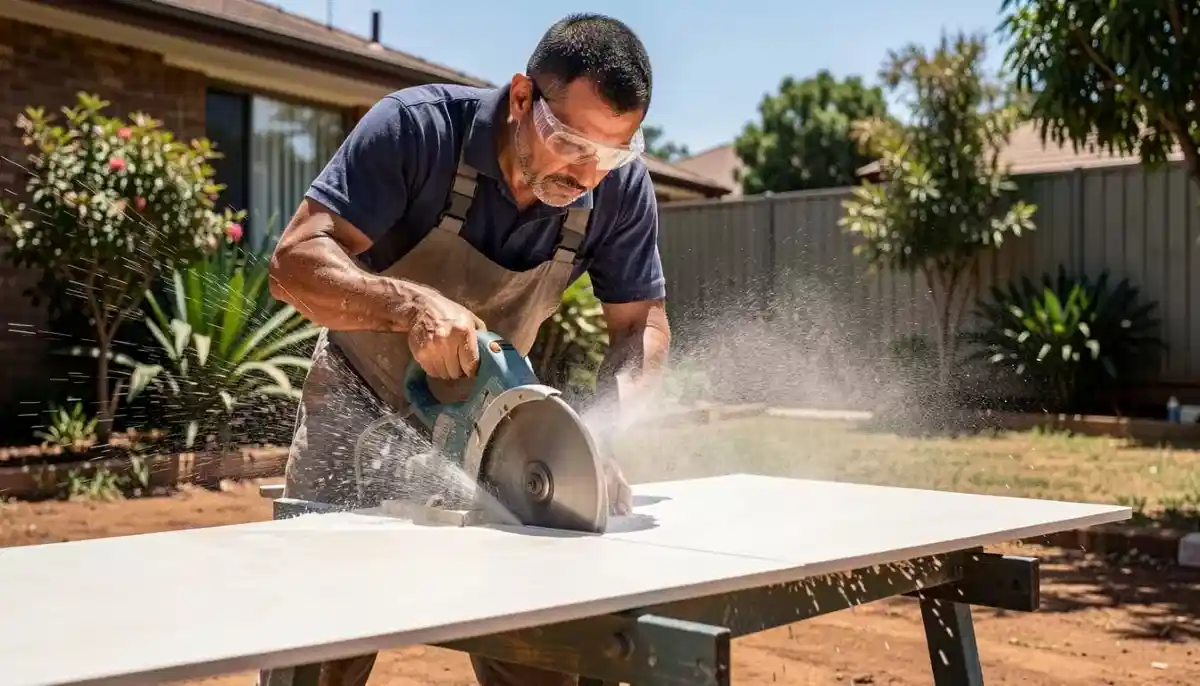
This is often overlooked but critically important. If a tiler is injured on your property or damages your home, and they don’t have insurance, YOU could be liable.
Public Liability Insurance
- Covers damage to your property during installation.
- Covers injury to you or your family caused by their work.
- Minimum cover should be R1 million – ask to see the certificate.
COIDA (Workman’s Compensation)
- Covers their employees if injured on your property.
- If they don’t have COIDA, you pay for medical costs and lost wages.
- Request a Letter of Good Standing from the Compensation Fund.
Questions to Ask
- “Can you provide a certificate of public liability insurance?”
- “Are you registered with COIDA? Can I see your letter of good standing?”
📋 TAL’s Top 6 Considerations Before Hiring
TAL’s technical advisory service provides excellent guidance on hiring tilers. Here’s their expert advice.
1. Choose Your Tile First
“The type of tile and layout can affect the labour rate. Large-format tiles, or a project involving different-sized tiles in a pattern, will be more difficult to install and therefore more expensive.” – TAL
Before getting quotes, decide on your tiles. This allows tilers to price accurately. Our porcelain and ceramic tile guides can help you choose.
2. Finding a Reputable Tiling Contractor
“Word of mouth is often best. If you know of someone who recently tiled their home and was happy with their tiling contractor, ask for their contact details. You can also ask at your local tiling outlet for a list of tiling contractors who buy regularly from them.”
3. Choosing the Right Tiler for You
- How long have they been in business? (minimum 3 years recommended)
- Number of projects undertaken
- Average project completion time
- Availability
- Request photos of previous installations and references
4. Request a Quote in Writing
“Now that you have found the right tiling contractor, it is important to get a signed and detailed quote that explains the exact services being supplied before you begin the project.”
We’ll cover written quotes in detail later.
5. Check the Correct Installation System
“For peace of mind check that the tiler you have selected is using the correct adhesive and grout system, speak to a trained salesperson at the tile merchant used by that specific tiler.”
6. When in Doubt, Use the Technical Advice Line
“Contact the TAL Technical Advisory Service on 0860 000 TAL (825) to find out more about TAL products, specifications and value-added on-site service offering.”
💡 Pudlo’s Five Tips for Choosing the Right Tiler
Pudlo’s practical advice complements TAL’s technical guidance.
1. The More Information, The Better
Provide potential tilers with:
- Accurate square meterage
- Type of tile
- Substrate material
- Interior vs exterior application
2. The Power of the Spoken Word
“Ask to see the work. Look out for tight spaces like corners, behind toilets, around taps and door frames to see how well the tiler executed the job.” – Pudlo
Visit completed projects if possible. A tiler confident in their work will welcome this.
3. Social Media is a Virtual Portfolio
“If the page is set up well, you will have access to reviews too. For those who don’t have any form of visual presence – website or otherwise is a red flag.”
Check our customer reviews and HelloPeter for genuine feedback.
4. Test Your Choice of Tiler
“When you have the quote, ask questions – even if you know the answer. If you don’t know the answer, make sure you understand what they mean and that you are both on the same page.”
Key points to discuss:
- 10-15% extra tiles – industry standard for waste/damage
- Expansion joints – great tiler knows not to lay tiles too tightly; corners require soft joints
5. Substrate is Critical
“If the substrate isn’t right, the tiles won’t stick, may pop off, could crack – any number of things. It is the job of the tiler to know what to do to make the substrate suitable if it isn’t.”
“If he arrives and says there is a problem with the substrate, rather listen to the tiler and get that fixed first.”
See our floor leveling and surface preparation guide for more.
🔍 Want Us to Vet Tilers for You?
We only connect you with tilers who meet our strict criteria: CIDB registered, insured, and with proven experience. Save time and get peace of mind.
❓ 10 Questions to Ask Every Potential Tiler
Use these questions when interviewing tilers. Take notes on their responses.
- “What is your CIDB grading and number?” – Verify it online.
- “Are you NHBRC registered? What is your registration number?” – Essential for new builds.
- “Can you provide a certificate of public liability insurance?” – Minimum R1 million cover.
- “Are you registered with COIDA? Can I see your letter of good standing?” – Protects you from liability.
- “How long have you been in business?” – TAL recommends minimum 3 years.
- “What warranty do you offer on labour and materials?” – Minimum 1 year, preferably 2-3.
- “Can you provide three recent references from similar projects?” – Call them.
- “Will you do a site visit before providing a quote?” – If no, red flag.
- “What is your payment structure?” – Deposit should be reasonable (10-30% max).
- “Do you handle waterproofing, or is that separate?” – Critical for bathroom tiling projects.
🚩 10 Red Flags – When to Walk Away
Trust your instincts. If something feels off, it probably is. These red flags should send you running.
⚠️ Major Red Flags
- ✗ Refuses to provide CIDB or NHBRC number.
- ✗ No physical business address (only cellphone).
- ✗ No visual presence – website, social media, portfolio.
- ✗ Requests full payment upfront.
- ✗ Cannot explain movement joint requirements – fundamental technical gap.
- ✗ No mention of substrate assessment – 70% of failures originate in prep.
⚠️ Caution Signs
- ⚠️ Quote provided without site visit.
- ⚠️ Vague about insurance or “we’re covered”.
- ⚠️ No written contract or quote.
- ⚠️ Negative online reviews with no response.
- ⚠️ Cash-only payment requests.
- ⚠️ Quote significantly lower than competitors – corners will be cut.
As Master Builders South Africa advises, always verify credentials before committing.
🏠 Why a Site Visit Is Non-Negotiable
A quote provided without a site visit is a guess, not a quote. Here’s why a site visit matters:
- Accurate measurements: No guessing on quantities.
- Assess substrate: Is the floor level? Does it need preparation?
- Identify challenges: Uneven walls, pipes, corners that need special attention.
- Check access: Can materials be delivered easily? Is there space to work?
- Discuss options: In-person advice on layout and design.
- Build trust: You meet the person who’ll do the work.
As Pudlo notes, substrate assessment is critical – a good tiler will identify problems before quoting.
📄 Written Quotes – What Must Be Included
Never accept a verbal quote. A proper written quote protects both parties.
A Professional Quote Should Include:
- ✅ Company name, address, contact details, VAT number.
- ✅ Your name and project address.
- ✅ Detailed description of work: tile type, area in m², layout pattern.
- ✅ Itemised pricing: labour, materials, waterproofing, waste removal, VAT.
- ✅ Warranty terms.
- ✅ Payment terms (deposit amount, balance on completion).
- ✅ Estimated timeline (start and completion dates).
- ✅ Valid until date (prices subject to change).
- ✅ Terms and conditions.
TAL advises that quotes must clarify:
- Who removes and disposes old tiles/flooring?
- Is floor repair and levelling included?
- Is surface priming included?
- Who supplies tiles, primers, adhesives, additives, grout, sealants?
- Is waterproofing included (bathrooms)?
- Start and finish dates
- Upfront payment amount
- Workmanship guarantee
⭐ Checking References & Online Reviews
A tiler’s reputation is one of your best guides.
How to Check References
- Ask for 3 recent references from similar projects (homes, not just commercial).
- Call them. Ask:
- Was the work completed on time and on budget?
- Were there any unexpected costs?
- How was the cleanliness and professionalism?
- Would you hire them again?
- Any issues since installation? How were they handled?
Online Reviews
- Check Google Reviews, HelloPeter, Facebook.
- Look for patterns – one bad review among many good is normal.
- Look at how the company responds to negative reviews – professionally or defensively?
- Beware of fake reviews (too many 5-star, same wording).
💰 Payment Terms – What’s Reasonable
Understanding normal payment practices protects you from scams.
Typical Payment Structure
- Deposit: 10-30% to secure materials and booking. Should be reasonable.
- Progress payment: Sometimes for large projects (e.g., 50% mid-way).
- Final payment: On completion, after you’ve inspected and are satisfied.
What’s NOT Normal
- ❌ 50%+ deposit for a small residential job.
- ❌ Full payment upfront.
- ❌ Cash-only requests (to avoid VAT).
- ❌ Payment to a personal bank account (not company account).
Scam Alert: If a tiler demands a large deposit and then becomes unreachable, you’ve been scammed. Stick to reputable companies with verifiable credentials.
🔧 Technical Knowledge – Testing Your Tiler
A truly professional tiler should be able to answer basic technical questions. Use these to gauge their expertise.
Questions to Test Technical Knowledge
- “What movement joints will you include, and where?” – Should know perimeter and intermediate joints at 5m centres interior, 3m exterior.
- “What adhesive do you recommend for my tiles and substrate?” – Should consider tile type, size, and location.
- “Do you back-butter large format tiles?” – Yes – essential for 95% coverage.
- “How will you ensure the substrate is suitable?” – Should check flatness, moisture, and soundness.
- “What joint width will you use?” – Minimum 3mm for rectified porcelain, 5mm for ceramic.
Billy Sebrandt of V&L Innovations puts it simply: “The products will guarantee the workmanship. There are no substitutes for ‘know-how’.”
A tiler who understands these concepts is more likely to deliver a quality installation. For complex projects like commercial tiling or mosaic tiling, technical knowledge is essential.
📊 Tiler Comparison Worksheet
Use this table to compare up to 3 tilers objectively.
| Criteria | Tiler 1 | Tiler 2 | Tiler 3 |
|---|---|---|---|
| CIDB registered (Grade) | |||
| NHBRC registered (if applicable) | |||
| Public liability insurance (R1m+) | |||
| COIDA registered | |||
| Years in business (3+ recommended) | |||
| Warranty offered (labour) | |||
| Site visit conducted | |||
| Detailed written quote | |||
| References provided (called?) | |||
| Online reviews (positive) | |||
| Technical knowledge (movement joints, etc.) | |||
| Total price (incl VAT) | |||
| Payment terms | |||
| Estimated timeline |
😱 Real-Life Horror Stories – Learn from Others
Story 1: The Uninsured Tiler
Homeowner hired a “cheap tiler” for bathroom renovation. Tiler cut his hand badly with a tile cutter – no COIDA. Homeowner sued for R80,000 medical costs.
Lesson: Always verify insurance and COIDA.
Story 2: The Vanished Deposit
Tiler demanded 50% deposit for “materials”. Never showed up, phone disconnected. 6 homeowners lost R15,000+ each.
Lesson: Never pay large deposits. 10-30% max.
Story 3: The No-Movement-Joint Disaster
Tiler installed large format porcelain without movement joints. Within 6 months, tiles tented and cracked – R25,000 replacement.
Lesson: Test technical knowledge – movement joints are essential.
Story 4: The Verbal Quote Trap
Verbal quote of R8,000. Final bill R15,000 with “extras”. No written quote to dispute.
Lesson: Always get detailed written quotes.

❌ 7 Common Mistakes When Hiring Tilers
Learn from others’ errors: These mistakes cost homeowners time, money, and peace of mind.
Mistake #1: Hiring Based on Price Alone
The cheapest quote is cheap for a reason – no insurance, no credentials, no warranty. Paying a fair price for a qualified tiler is always cheaper in the long run.
Mistake #2: Not Verifying Credentials
Taking their word for it that they’re “registered” or “insured”. Always verify online or ask for certificates.
Mistake #3: Skipping the Site Visit
Allowing a quote without a site visit. This guarantees hidden costs later.
Mistake #4: No Written Contract
Relying on verbal agreements. When disputes happen, you have no proof.
Mistake #5: Paying Too Much Upfront
Large deposits put you at risk. Stick to 10-30% maximum.
Mistake #6: Not Checking References
Skipping reference checks. Those 10 minutes could save you thousands.
Mistake #7: Ignoring Technical Knowledge
Assuming all tilers know about movement joints, adhesive coverage, and waterproofing. Test their knowledge.
❓ Frequently Asked Questions – Hiring Tilers
How do I verify if a tiler is CIDB registered?
Go to cidb.org.za, click on “Register of Contractors”, and enter their company name or registration number. Check that status is “Registered” and note their grade.
Do tilers need to be NHBRC registered?
For new home builds, the principal builder must be NHBRC registered. Subcontractors like tilers don’t need individual registration, but working for an NHBRC-registered builder provides protection.
What insurance should a tiler have?
Public liability insurance (minimum R1 million) and COIDA registration (Workman’s Compensation). Ask for certificates and verify.
How much deposit should I pay a tiler?
10-30% is normal for residential work. Never pay 50% or more upfront. Final payment should be on completion after you’ve inspected the work.
What warranty should I expect on tiling work?
Minimum 1 year on labour, preferably 2-3 years from quality tilers. Material warranties vary by manufacturer. Get warranty terms in writing.
Should I get multiple quotes for tiling?
Absolutely. Get at least 3 written quotes from different tilers. Compare not just price, but credentials, warranty, and what’s included. Our quote service makes this easy.
What if a tiler refuses to do a site visit?
Walk away. A quote without a site visit is a guess. They will find “extras” once work starts. Always insist on a site visit.
How do I check a tiler’s reputation?
Check Google Reviews, HelloPeter, and Facebook. Ask for references and call them. Look for patterns in reviews – consistent complaints are a red flag.
What questions should I ask to test a tiler’s knowledge?
Ask about movement joints, adhesive coverage, back buttering, and joint widths. A knowledgeable tiler should explain these confidently. See our technical knowledge section above.
What’s the difference between a handyman and a professional tiler?
A professional tiler has specific training, understands substrate preparation, movement joints, and waterproofing. A handyman may offer lower prices but lacks specialised knowledge. For bathrooms, kitchens, or expensive tiles, choose a specialist.
✅ Final Thoughts – Your Tiler Selection Action Plan
Choosing the right tiler isn’t complicated, but it requires diligence. Follow this action plan to ensure you hire a professional who will do the job safely, correctly, and with accountability.
Your 5-Step Tiler Selection Action Plan:
- Shortlist 3-5 candidates: Use our quote service, word of mouth, or local recommendations.
- Verify credentials: Check CIDB, NHBRC (if applicable), insurance, COIDA.
- Test technical knowledge: Ask about movement joints, adhesive coverage, substrate preparation.
- Compare detailed quotes: Use our comparison worksheet. Don’t just compare price.
- Check references and reviews: Call past clients. Read online reviews on HelloPeter.
🔑 The Bottom Line:
An hour of vetting saves years of headaches.
Pay for quality, verify everything, and never ignore red flags.
🔍 Ready to Find a Verified Tiler?
Don’t risk your safety and investment. Get free quotes from pre-vetted, registered tilers in your area.
📞 Call our tiler verification helpline: 073 138 4726
📚 Official Resources & Technical Advice:
- TAL – Top 6 considerations before hiring a tiling contractor.
- Pudlo – Five tips, substrate assessment, expansion joints.
- CIDB – Contractor grading verification.
- NHBRC – NHBRC registration lookup.
- Master Builders SA – Accredited contractor network.
- Cemcrete – 5 tips for hiring a listed contractor.
This guide is for informational purposes. Always verify credentials yourself before hiring.
Written by: Innocent T Hanyani
21+ years construction and digital industry experience, ServiceLink SA
Innocent has spent decades in the South African construction industry, vetting contractors and managing installations. He’s seen every scam, every mistake, and every horror story – and compiled this guide with insights from TAL, Pudlo, and industry experts to help you avoid them.