
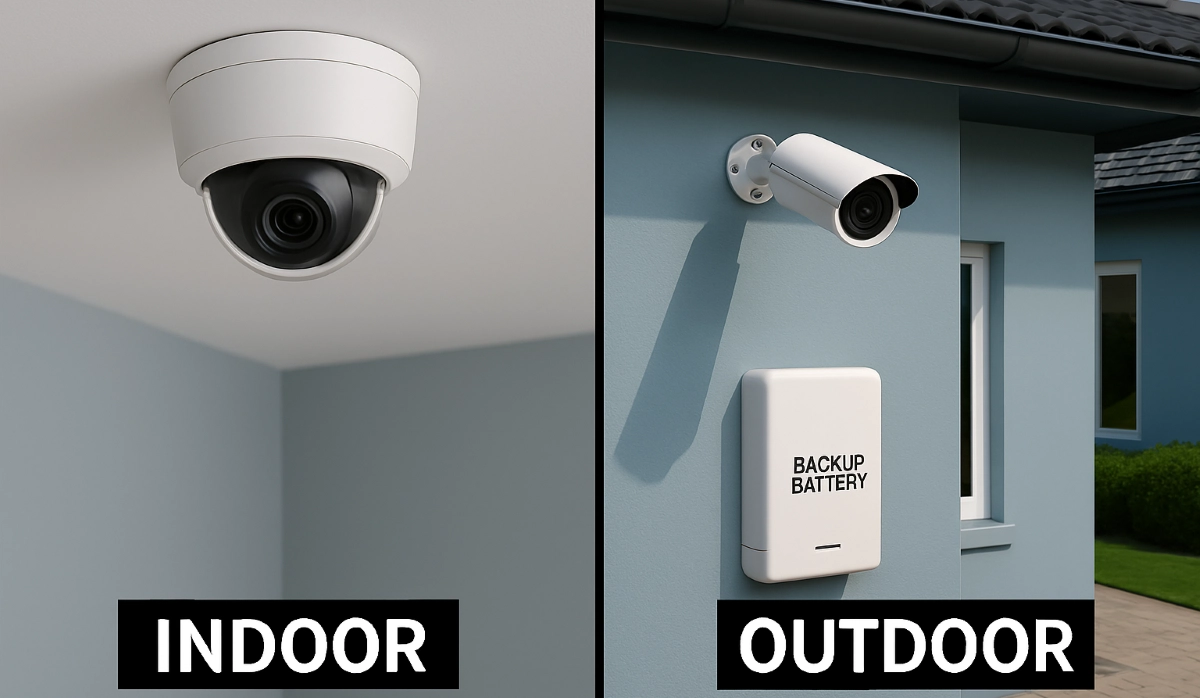
Indoor vs Outdoor CCTV Cameras South Africa: The Complete Selection Guide
🏠🌳 Dome vs Bullet? IP66 vs IK10? Vandal-proof vs discreet? We explain the critical differences and help you choose the right camera for every location.
You’ve decided to invest in security for your home in Johannesburg or your business in Cape Town. But when you start shopping, you’re faced with a confusing array of choices: dome cameras, bullet cameras, turret cameras, PTZ cameras – and that’s before you even get to specifications. The first and most important decision is whether a camera is designed for indoor or outdoor use. This isn’t just about where you mount it; it’s about durability, weather resistance, vandal protection, and image quality in different conditions. This comprehensive guide explains everything you need to know about indoor vs outdoor CCTV cameras South Africa homeowners and business owners need to consider, from coastal corrosion in Durban to Highveld UV exposure in Pretoria.
📹 Not Sure Which Cameras You Need?
Get free, expert advice from PSIRA-registered installers who can assess your property and recommend the perfect indoor and outdoor cameras for your specific needs.
Servicing Johannesburg, Pretoria, Cape Town, Durban, and all major areas
📋 Table of Contents – Indoor vs Outdoor Camera Guide
🏠🌳 Indoor vs Outdoor Cameras: The Fundamental Differences
At first glance, indoor and outdoor cameras might look similar. But they are engineered for completely different environments.
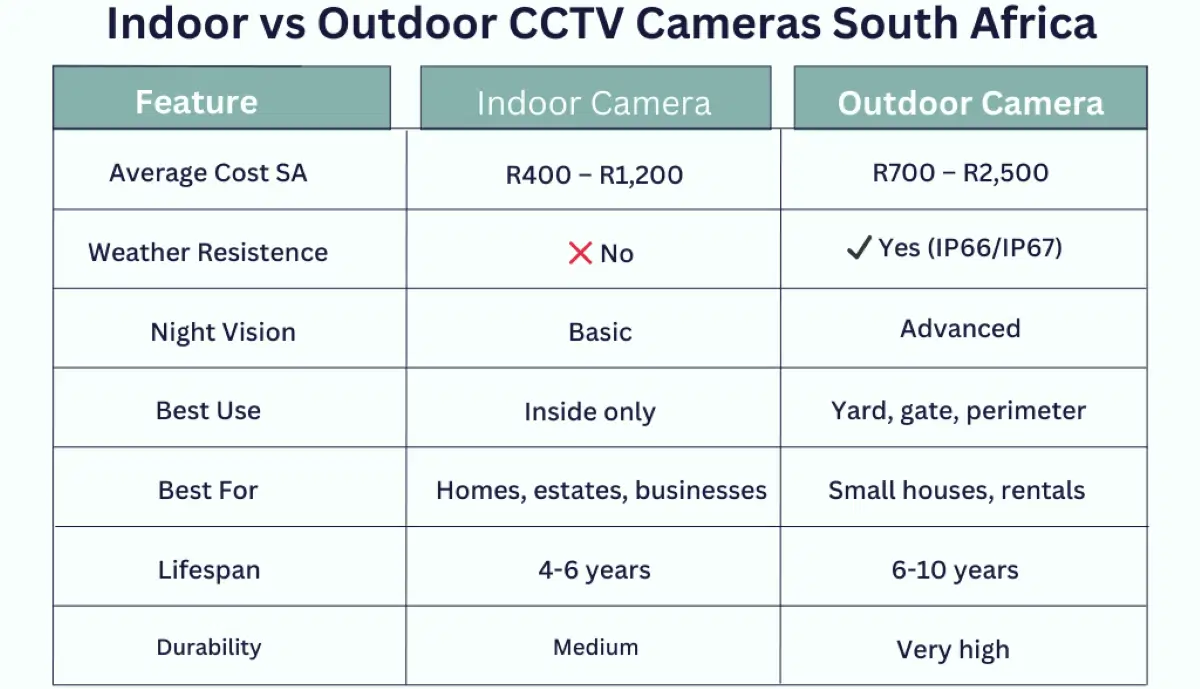
✅ Indoor Cameras
- Designed for controlled environments (temperature, humidity).
- Lower weather resistance (usually no IP rating).
- Often more discreet and aesthetically pleasing.
- May lack IR cut filters for extreme light changes.
- Less robust housing (plastic, not metal).
- No vandal resistance features.
✅ Outdoor Cameras
- Weatherproof housing (IP66, IP67 ratings).
- UV-stabilised materials to prevent sun damage.
- Wider operating temperature range.
- Vandal-resistant options (IK10 rating).
- Heavier-duty IR LEDs for long-range night vision.
- Sunshields to prevent glare and overheating.
- Sealed against dust, rain, and insects.
🚨 Never use an indoor camera outdoors. Even under a covered patio, humidity, temperature extremes, and insects will destroy it within months. Always match the camera to its environment.
💧 IP Ratings: What Do They Mean for CCTV?
The Ingress Protection (IP) rating tells you how resistant a camera is to dust and water. This is critical for outdoor cameras in South Africa’s varied climate.
IP ratings have two digits: IP (first digit)(second digit)
- First digit (0-6): Protection against solid objects (dust). 6 = dust-tight.
- Second digit (0-9): Protection against liquids (water). 6 = powerful jets; 7 = temporary immersion; 8 = continuous immersion.
Common CCTV IP Ratings:
- IP65: Dust-tight, protected against water jets. Suitable for most outdoor areas not directly exposed to heavy rain.
- IP66: Dust-tight, protected against powerful water jets. The most common rating for outdoor cameras in South Africa. Handles rain and hose-down cleaning.
- IP67: Dust-tight, protected against temporary immersion (up to 1m for 30 minutes). Good for areas prone to flooding.
- IP69K: Dust-tight, protected against high-pressure, high-temperature jets. Used in industrial settings.
For most South African homes, IP66 is the recommended minimum for outdoor cameras. Coastal areas may benefit from IP67 for added protection against salt spray. All equipment should meet SABS standards for environmental resistance.
🔨 IK Ratings: Protection Against Vandalism
In high-crime areas or accessible locations, cameras need protection from physical attack. This is where IK ratings come in.
IK ratings measure impact resistance on a scale from IK00 to IK10.
- IK08: 5 joule impact (e.g., 1.7kg object dropped from 300mm). Good for general outdoor use.
- IK10: 20 joule impact (e.g., 5kg object dropped from 400mm). The highest standard, often called “vandal-proof.”
Where you need IK-rated cameras:
- Ground-level installations within arm’s reach.
- Public areas like shopping centres, schools, and parking lots.
- High-risk residential properties in areas like Sandton or Fourways.
- Anywhere cameras could be targeted by vandals.
Dome cameras with IK10-rated polycarbonate domes are excellent for vandal-prone areas. The IK10 standard is internationally recognised.
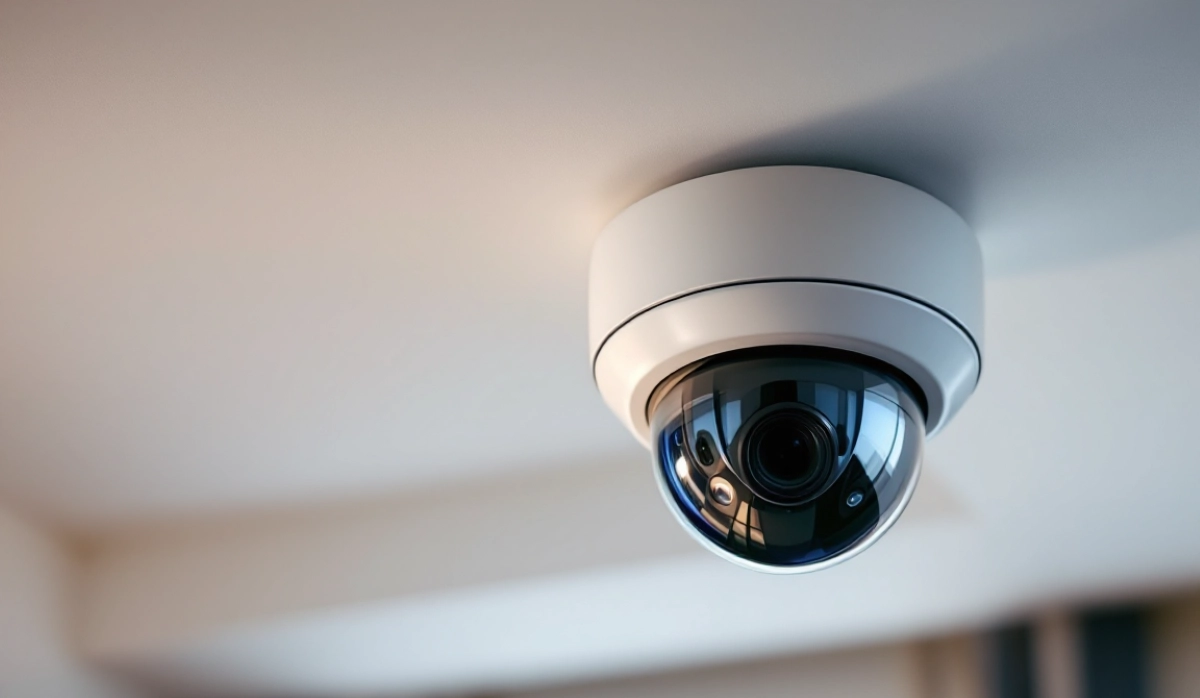
🔮 Dome Cameras: Discreet and Vandal-Resistant
Dome cameras are named for their distinctive dome-shaped housing. They are the most versatile camera type.
Advantages:
- Discreet: The dome makes it hard to tell which direction the camera is pointing, increasing the psychological deterrent.
- Vandal-resistant: Dome cameras often have IK10-rated polycarbonate domes that are difficult to damage or obscure.
- Indoor/Outdoor: Available in both indoor and outdoor versions with appropriate IP ratings.
- Aesthetic: Low-profile design blends into ceilings and walls.
Disadvantages:
- IR Reflection: In dirty or poorly designed domes, IR LEDs can reflect off the dome, causing a halo effect at night. This is a common installation mistake.
- Cleaning: Domes need regular cleaning to maintain image clarity.
Best Uses:
- Indoor: Living areas, corridors, offices, retail stores.
- Outdoor: Under eaves, covered patios, areas requiring vandal resistance.
🔫 Bullet Cameras: Long-Range and Deterrent
Bullet cameras are long, cylindrical cameras that are highly visible – which is often an advantage.
Advantages:
- Visible Deterrent: Their obvious presence can discourage criminals before they approach.
- Longer IR Range: The cylindrical shape allows for larger IR LED arrays, providing better night vision at distance.
- Sunshields: Most bullet cameras include a sunshield to reduce glare and protect from rain.
- Easy to Aim: The visible shape makes it easy to see where the camera is pointing.
Disadvantages:
- Obvious: Some homeowners prefer less visible security.
- Larger: Takes up more space and is more conspicuous.
- Wind Load: In very windy areas, large bullet cameras can vibrate, affecting image stability.
Best Uses:
- Outdoor: Perimeter walls, driveways, parking lots, farm perimeters.
- Long-range monitoring: Where you need to identify subjects at a distance.
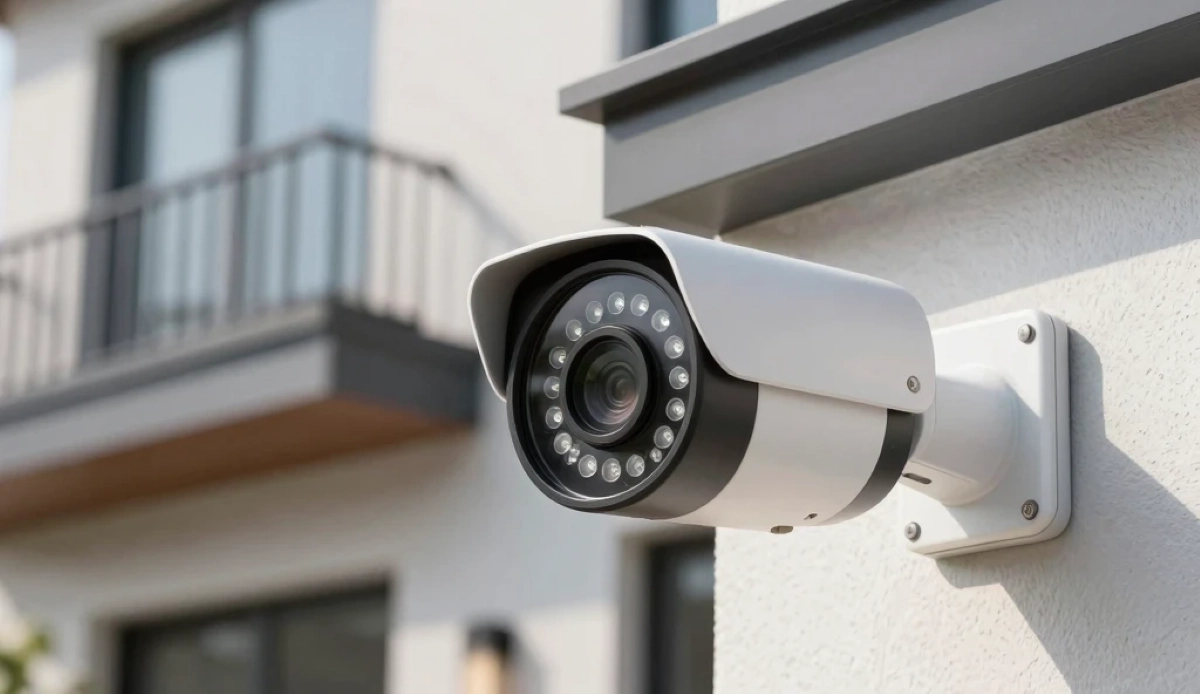
🔄 Turret Cameras: A Popular Compromise
Turret cameras (also called eyeball or fixed-dome cameras) are a hybrid design gaining massive popularity.
Advantages:
- No IR Reflection: The lens and IR LEDs are separate from the dome, eliminating the halo effect common in dome cameras.
- Easy Adjustment: The camera can be physically aimed in any direction after installation.
- Good Weather Resistance: Available with IP66 and IP67 ratings.
- Less Obtrusive than Bullet: Smaller profile than bullet cameras but still visible.
Disadvantages:
- Less Vandal-Resistant than Dome: The exposed lens is more vulnerable than a sealed dome.
Best Uses:
- Outdoor: Under eaves, on walls, anywhere you need excellent night vision without reflection.
- Indoor: Where you need adjustable aiming and good image quality.
🎥 PTZ Cameras: Active Surveillance
PTZ (Pan-Tilt-Zoom) cameras can move to follow activity, offering active deterrence.
Advantages:
- Wide Coverage: One PTZ camera can cover the area of several fixed cameras.
- Active Deterrence: Can be programmed to automatically track moving objects.
- Optical Zoom: Powerful zoom for identifying subjects at great distance.
Disadvantages:
- Expensive: Much higher cost than fixed cameras.
- Mechanical Wear: Moving parts can fail over time.
- Complex Installation: Requires more careful setup and configuration.
Best Uses:
- Large commercial areas: Parking lots, warehouses, school grounds.
- High-security perimeters: Estates, farms, industrial sites.
🌊 Coastal Considerations: Beating the Salt
If you live near the coast in Durban, Cape Town, George, or Ballito, salt spray is your camera’s enemy.
Coastal Corrosion Challenges:
- Salt accelerates corrosion of metal housings and connectors.
- Electronic components can fail prematurely.
- Image quality can degrade as lenses and domes are etched by salt.
Solutions for Coastal Installations:
- Marine-grade cameras: Look for cameras specifically rated for coastal environments.
- Stainless steel housings: More resistant to corrosion than standard metals.
- Higher IP ratings: IP67 provides better sealing against salt spray.
- Regular cleaning: Wash cameras with fresh water monthly to remove salt deposits.
- Die-cast aluminium with marine coating: Many quality outdoor cameras use this.
Consult the South African Weather Service for coastal climate data in your area.
☀️ UV Protection: Surviving the Highveld Sun
South Africa’s sun is intense, especially in Gauteng and the Highveld. UV radiation degrades plastics over time.
UV Damage:
- Plastic housings become brittle and crack.
- Domes yellow, reducing image quality.
- Rubber seals dry out, compromising weather resistance.
What to Look For:
- UV-stabilised materials: Quality outdoor cameras use plastics treated to resist UV.
- Metal housings: Die-cast aluminium is impervious to UV.
- Sunshields: Protect the camera from direct sun, reducing heat and UV exposure.
- Reputable brands: Hikvision, Dahua, and other top brands use UV-stabilised materials as standard.
🌙 Night Vision: Different Needs Indoors and Out
Night vision requirements differ significantly between indoor and outdoor environments.
Indoor Night Vision:
- Shorter range needed: 10-20 metres is usually sufficient.
- IR reflection risk: In small rooms, IR can bounce off walls and wash out the image.
- Less powerful IR LEDs: Lower power is adequate and safer for eyes.
Outdoor Night Vision:
- Long range needed: 30-60 metres for driveways and perimeters.
- Powerful IR LEDs: Multiple high-power LEDs to illuminate large areas.
- Smart IR technology: Adjusts IR intensity to prevent overexposure of nearby objects.
- ColorVu / Full-colour options: Uses white light to provide colour night vision, which can also act as a deterrent.
For more on smart night vision features, see our smart CCTV guide.
Still Confused About Which Cameras to Choose?
Every property is different. Let a local, PSIRA-registered installer assess your home and recommend the perfect mix of indoor and outdoor cameras for complete coverage.
🏠 Indoor Camera Placement: Best Practices
Where you place indoor cameras matters as much as the camera type.
- Entry points first: Cover all doors leading into the home – front door, back door, garage entry.
- Common areas: Living rooms, hallways, and open-plan areas where intruders are likely to pass.
- Staircases: Cover the main route between floors.
- High and angled down: Mount cameras high on walls or ceilings, angled down to capture faces.
- Avoid backlight: Don’t point cameras at windows or bright light sources, which will silhouette subjects.
- Consider privacy: Avoid pointing cameras into bedrooms or bathrooms.
🌳 Outdoor Camera Placement: Best Practices
Outdoor placement requires additional considerations.
- Perimeter coverage: Cover all boundary walls, gates, and fences.
- Driveways and parking: Capture vehicle entry points and number plates.
- Entry points: Front door, back door, garage doors, side gates.
- Height matters: Mount at least 3-4 metres high to prevent tampering, but not so high that faces become unrecognisable.
- Avoid direct sun: Face cameras north or south if possible, avoiding direct east/west sun that can cause glare.
- Protect from elements: Use sunshields and ensure cameras are not directly exposed to driving rain.
- Coverage overlap: Ensure camera views overlap slightly to eliminate blind spots.
🕵️ Covert and Discreet Indoor Camera Options
For indoor use, you may want cameras that blend in.
- Smoke detector cameras: Hidden inside fake smoke detectors.
- Clock or radio cameras: Hidden in everyday objects.
- PIR-style cameras: Designed to look like motion sensors.
- Mini dome cameras: Very small and unobtrusive.
Legal Note: Covert cameras are subject to strict laws under RICA and POPIA. You cannot use hidden cameras to record people in areas where they have a reasonable expectation of privacy (like bathrooms or guest bedrooms). Always ensure your use is legal and ethical. See our CCTV laws guide for more.
❌ Common Indoor vs Outdoor Camera Mistakes
- Using indoor cameras outdoors: The most common and costly mistake. They will fail within months.
- Ignoring IP ratings: Assuming any camera labelled “outdoor” is adequate. Always check the actual IP rating.
- Forgetting about coastal corrosion: Standard outdoor cameras may fail quickly near the ocean.
- Poor placement causing IR reflection: Mounting dome cameras too close to walls or ceilings causes night vision issues.
- Not considering vandal resistance: Ground-level cameras need IK10 ratings.
- Buying based on price alone: Cheap outdoor cameras often have poor seals and short lifespans.
- Ignoring UV protection: Non-UV-stabilised cameras will yellow and crack in the Highveld sun.
- Overlooking night vision range: An outdoor camera with only 20m IR range won’t cover a long driveway.
- Not matching camera to purpose: Using a wide-angle dome for long-range perimeter monitoring (you need a bullet or varifocal camera).
- Skipping professional advice: A qualified installer can save you from these mistakes.
❓ Frequently Asked Questions
What is the difference between indoor and outdoor CCTV cameras?
Outdoor cameras are weatherproof (IP66+), UV-stabilised, have longer-range night vision, and often feature vandal-resistant housings. Indoor cameras lack these protections and are designed for controlled environments only. Using an indoor camera outdoors will destroy it quickly.
Can I use an indoor camera under a covered patio?
Not recommended. Even covered patios experience temperature extremes, humidity, dust, and insects. Only outdoor-rated cameras (IP66 minimum) should be used in any semi-exposed location.
What IP rating do I need for outdoor cameras in South Africa?
For most areas, IP66 is the recommended minimum. It provides dust-tight protection and can withstand powerful water jets. For coastal areas or locations with extreme weather, consider IP67 for better protection against salt spray and temporary immersion.
What is the best camera for coastal homes in Durban or Cape Town?
Look for cameras with marine-grade coatings, stainless steel housings, and IP67 ratings. Regular outdoor cameras may corrode quickly in salt air. Regular cleaning with fresh water is also essential to remove salt deposits.
Are dome cameras better than bullet cameras?
It depends on the application. Dome cameras are better for discreet, vandal-resistant indoor use. Bullet cameras are better for long-range outdoor monitoring and visible deterrence. Many modern installations use a mix of both.
What is an IK rating and why does it matter?
IK ratings measure impact resistance. IK10 is the highest standard, meaning the camera can withstand 20 joules of impact (vandal-proof). This is essential for ground-level installations or high-risk areas where cameras might be attacked.
Do outdoor cameras need special protection from the sun?
Yes. Quality outdoor cameras use UV-stabilised materials to prevent yellowing and cracking. Many also include sunshields to reduce heat buildup and glare. This is especially important in Gauteng and the Highveld.
What night vision range do I need for outdoor cameras?
For a standard suburban home, 30-40 metres is usually sufficient to cover driveways and perimeters. Larger properties may need 60+ metres or PTZ cameras with powerful IR. Check manufacturer specifications carefully.
Can I use PTZ cameras outdoors?
Yes, but they must be specifically rated for outdoor use (IP66+). PTZ cameras have moving parts and seals that must withstand weather. They are excellent for large areas like parking lots, farms, or estates.
✅ Final Thoughts: Choosing the Right Cameras for Every Location
Selecting between indoor and outdoor cameras isn’t complicated once you understand the fundamentals. Always match the camera to its environment, check IP and IK ratings, and consider your specific needs for night vision, vandal resistance, and coastal protection.
Your 3-Step Camera Selection Action Plan:
- Assess each location: Indoor, covered outdoor, or fully exposed? Coastal or inland?
- Choose the right type: Dome for discreet indoor, bullet for long-range outdoor, turret for versatile outdoor with good night vision.
- Verify ratings: Ensure IP66+ for outdoor, IK08/IK10 for vandal-prone areas, and UV-stabilised materials.
🔒 The Bottom Line:
The right camera in the right place
means the difference between catching a criminal and having a blind spot
Ready to Get the Perfect Cameras for Your Property?
Don’t guess – get expert advice. Connect with trusted, PSIRA-registered installers who can recommend and install the ideal indoor and outdoor cameras for your specific needs.
📞 Call our camera advisory line: 073 138 4726
📚 Official Resources:
- SABS – IP rating certification and standards.
- South African Weather Service – Coastal and climate data.
- IK10 – Vandal resistance standards information.
This guide is for informational purposes. Always consult with a qualified professional for your specific security needs.
Written by: Innocent T Hanyani
21+ years construction and digital industry experience, ServiceLink SA
Innocent has overseen thousands of CCTV installations across South Africa, from coastal homes in KZN to Highveld estates in Gauteng. His practical experience ensures this guide provides real-world advice you can trust.