
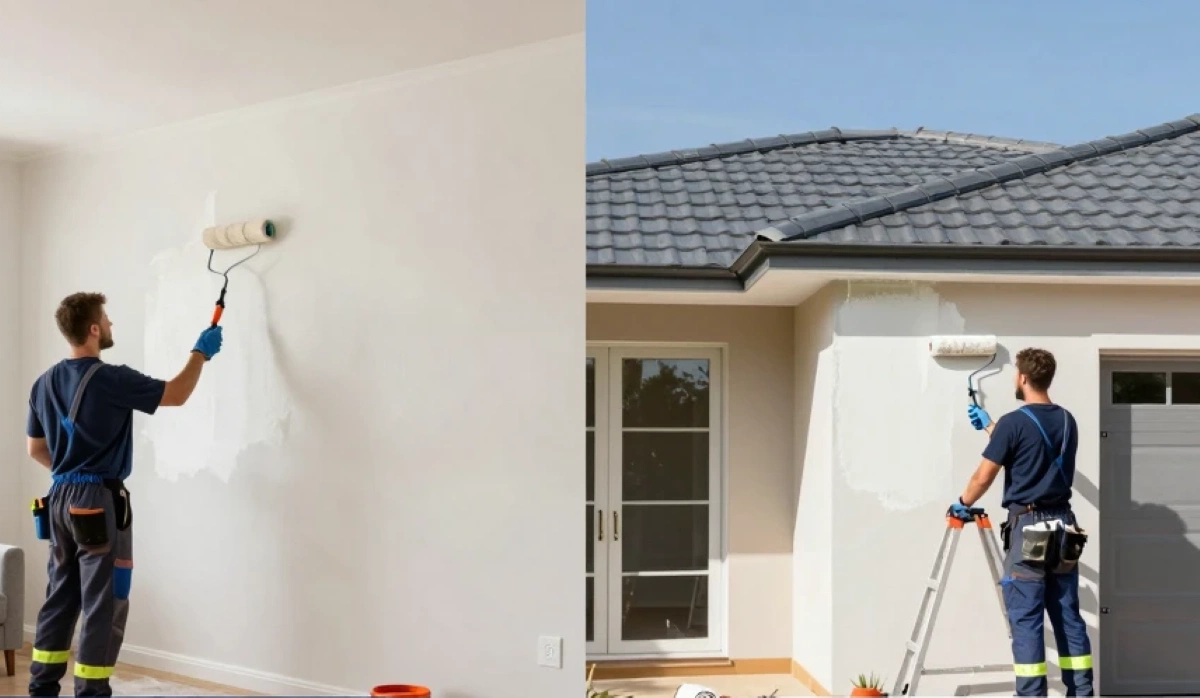
Interior vs Exterior Paint – What’s the Difference? Complete South Africa Guide
🎨 Can you use exterior paint inside? What about interior paint outside? Here’s the truth.
It’s a question we hear often from homeowners in Johannesburg, Cape Town, and Durban: “I have leftover exterior paint – can I use it in my bathroom?” or “This interior paint was on special – will it work on my outside walls?”
The short answer: NO – and here’s why it matters. Using the wrong paint type can lead to health hazards, rapid deterioration, and costly repaints. This comprehensive guide explains the technical differences, what happens when you mix them up, and how to choose the right paint for every surface in your South African home.
⚠️ CRITICAL: Interior and exterior paints are formulated differently for specific environments. Using exterior paint indoors can release harmful VOCs; using interior paint outdoors guarantees failure within months. Always choose the right paint for the job.
Not sure which paint you need?
Get free advice from registered painting contractors in your area – they’ll recommend the right products and provide accurate quotes.
Servicing Johannesburg, Pretoria, Cape Town, Durban, and nationwide
📋 Table of Contents – Interior vs Exterior Paint Guide
🔬 Key Differences – Interior vs Exterior Paint
At a chemical level, interior and exterior paints are formulated completely differently. Here’s what makes them unique :
🏠 Interior Paint Formulation
- ✓ Low VOC or zero VOC – safe for enclosed spaces
- ✓ Stain resistance – easy to clean scuffs and marks
- ✓ Washability – withstands repeated cleaning
- ✓ Hides imperfections – smooth, forgiving finish
- ✓ Limited UV protection – not exposed to sun
- ✓ Lower flexibility – stable indoor temperatures
- ✓ No fungicides – indoor humidity controlled
☀️ Exterior Paint Formulation
- ✓ Higher VOC – safe outdoors, not for indoors
- ✓ UV protectants – prevents fading from sun
- ✓ Flexible binders – handles thermal expansion
- ✓ Fungicides & mildewcides – resists mould
- ✓ Water resistance – repels rain and moisture
- ✓ Breathable – allows moisture to escape
- ✓ Abrasion resistant – withstands weather
📊 Complete Comparison: Interior vs Exterior Paint
| Feature | Interior Paint | Exterior Paint |
|---|---|---|
| VOC Levels | Low/Zero VOC – safe for enclosed spaces | Higher VOC – not safe for indoor use |
| Additives | Stain resistance, easy-clean | UV protectants, fungicides, flexible binders |
| Durability | Handles cleaning, daily wear | Withstands sun, wind, rain, temperature fluctuations |
| Drying Time | 1-2 hours to touch; 4-6 hours recoat | Longer; requires specific weather conditions |
| Surface Suitability | Drywall, plaster, ceilings | Brick, cement, wood, stucco, textured surfaces |
| Lifespan | 5-10 years depending on traffic | 7-15 years with proper preparation |
| Application Conditions | Year-round, temperature controlled | Dry days, mild temperatures (10–25°C) |
| Price per Litre | R70 – R180 (premium) | R90 – R240 (premium, coastal grades higher) |
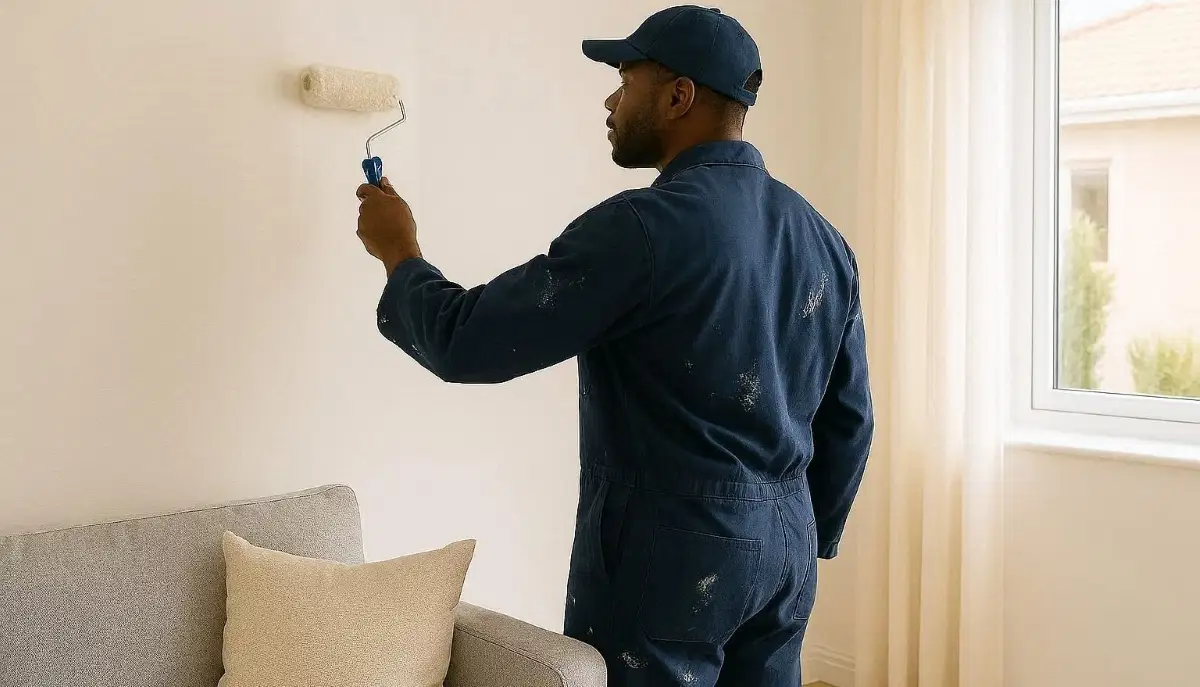
⚠️ Can You Use Exterior Paint Indoors? (WARNING)
🚨 DO NOT USE EXTERIOR PAINT INDOORS
Exterior paint contains higher levels of VOCs (volatile organic compounds), fungicides, and other chemicals that are safe outdoors but dangerous in enclosed spaces. These chemicals continue off-gassing for months, causing headaches, respiratory issues, and long-term health problems .
What Happens If You Use Exterior Paint Indoors?
- Health risks: High VOC emissions affect air quality; unsafe for enclosed spaces, especially bedrooms, nurseries, and living areas .
- Strong odour: The smell lingers for weeks or months, making rooms uninhabitable .
- Poor washability: Exterior paint isn’t formulated for frequent cleaning – scuffs and marks are harder to remove .
- Potential yellowing: Some exterior paints yellow indoors due to lack of UV exposure .
What About High-Moisture Areas Like Bathrooms?
Even for bathrooms and kitchens where moisture is a concern, you should use interior bathroom paint (with mildewcides) rather than exterior paint. Bathroom-specific interior paints offer moisture resistance without the dangerous VOCs of exterior formulations .
⚠️ Can You Use Interior Paint Outdoors? (WARNING)
🚨 NEVER USE INTERIOR PAINT OUTDOORS
Interior paint lacks UV protection, flexible binders, and weather-resistant additives. It will fade, peel, and crack within months when exposed to South African sun and rain .
What Happens If You Use Interior Paint Outdoors?
- Fading: Within 3-6 months, interior paint fades dramatically under intense Highveld UV exposure .
- Peeling and blistering: Lack of flexible binders means the paint can’t expand and contract with temperature changes – it cracks and peels .
- Mould growth: No fungicides or mildewcides means mould thrives in damp conditions, especially in Cape Town and Durban .
- Water damage: Interior paint isn’t waterproof – rain causes bubbling and failure .
- Complete repaint needed: You’ll be repainting within 12-18 months, costing far more than using the correct paint initially .
The 12-month test: If you’re tempted to use interior paint outside, do a small test patch. Check it after 3 months, then 6, then 12. You’ll see exactly why professionals never mix them .
🌫️ VOCs – Why They Matter for Indoor Air Quality
VOCs (Volatile Organic Compounds) are chemicals that evaporate from paint as it dries and for months afterward. They cause :
- Headaches and dizziness
- Respiratory irritation
- Eye, nose, and throat discomfort
- Long-term health risks with prolonged exposure
VOC Regulations in South Africa
The NRCS (National Regulator for Compulsory Specifications) regulates VOC content in architectural paints. Under SANS 10064, interior paints must meet strict VOC limits :
- Matt finishes: Maximum 30g/L
- Gloss finishes: Maximum 100g/L
- Exterior paints: Higher limits allowed (not for indoor use)
Low-VOC and Zero-VOC Options
For homeowners concerned about indoor air quality – especially families with children, elderly, or chemically sensitive individuals – low-VOC and zero-VOC paints are available. ProNature leads the South African market with VOC-free, plant-based, biodegradable paints .
☀️ UV Protection – Why Exterior Paint Needs It
South Africa has some of the harshest UV radiation in the world, especially on the Highveld. UV rays cause :
- Fading: Colours lose intensity, become chalky
- Degradation: Paint film breaks down, becomes brittle
- Chalking: White powdery residue forms on surface
- Loss of adhesion: Paint peels away from substrate
How Exterior Paint Resists UV
Quality exterior paints contain UV stabilisers and light-resistant pigments that absorb or reflect UV radiation. Titanium dioxide (white pigment) is particularly effective at reflecting UV. Premium exterior paints also use acrylic resins that resist UV degradation better than vinyl alternatives .
In Pretoria and Midrand, where UV levels are intense, always specify “UV-resistant exterior paint” and avoid budget brands that cut corners on UV protection .
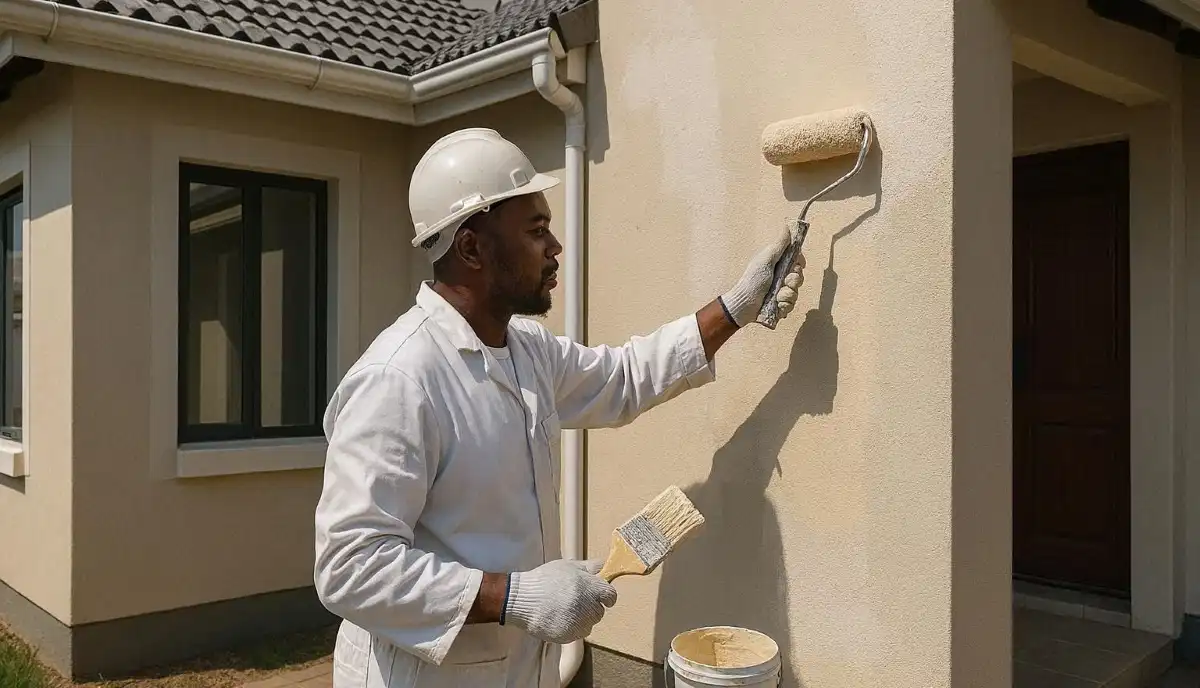
🔄 Flexible Binders – Handling Temperature Changes
South Africa experiences dramatic temperature swings – from freezing Highveld nights to scorching daytime heat. These changes cause building materials to expand and contract .
Why Flexibility Matters
- Thermal expansion: Walls expand in heat, contract in cold
- Movement: Buildings settle, shift slightly over time
- Cracking: Inflexible paint cracks under stress
Exterior paint contains flexible binders (acrylic polymers) that move with the substrate. Interior paint lacks this flexibility – it’s formulated for stable indoor temperatures where expansion is minimal .
Elastomeric Coatings for Extreme Conditions
For homes with significant movement issues or in extreme climates, elastomeric coatings offer superior flexibility. These thick coatings can bridge hairline cracks and move with the substrate. They’re particularly valuable for roof painting and problem walls .
🌧️ Fungicides & Mildewcides – Coastal Necessities
In humid coastal areas like Cape Town, Durban, and Umhlanga, mould and mildew are constant threats to painted surfaces. Exterior paint contains fungicides and mildewcides that :
- Prevent mould growth on paint film
- Protect the substrate from fungal attack
- Maintain appearance and prevent staining
⚠️ Coastal Warning:
Using interior paint (which lacks fungicides) on exterior walls in coastal areas guarantees mould growth within months. The black/green staining is difficult to remove and often requires complete repainting with proper exterior paint .
For Constantia, Camps Bay, and other coastal suburbs, always specify “marine-grade” or “coastal-formulated” exterior paint with enhanced fungicide packages .
🌊 Coastal Considerations – Cape Town & Durban
Living near the ocean brings unique painting challenges. Here’s what you need to know for coastal properties :
| Challenge | Effect on Paint | Solution |
|---|---|---|
| Salt air | Corrosion, peeling, blistering | Marine-grade paint with salt-resistant binders |
| High humidity | Mould, mildew, fungal growth | Fungicides and mildewcides in paint |
| Moisture penetration | Bubbling, delamination | Breathable paints that release moisture |
| Salt spray | Abrasion, surface degradation | Tougher resin systems, more coats |
Recommended Products for Coastal Areas
- Plascon Marine Range – specifically formulated for coastal conditions
- Dulux Weatherguard Coastal – enhanced fungicide protection
- ProNature Exterior – breathable, eco-friendly coastal option
⛰️ Highveld Considerations – Johannesburg & Pretoria
The Highveld presents different challenges: intense UV, large temperature swings, and dust. Here’s what matters :
| Challenge | Effect on Paint | Solution |
|---|---|---|
| Intense UV | Fading, chalking, degradation | UV-resistant pigments, acrylic resins |
| Temperature swings | Expansion/contraction cracking | Flexible binders, elastomeric options |
| Dust | Dirt accumulation on paint | Self-cleaning paints, smooth finishes |
| Dry winters | Cracking from dehydration | Quality paints with moisture retention |
Recommended Products for Highveld
- Dulux Weatherguard Shield – UV-resistant, flexible
- Plascon Double Velvet – good for interior, easy clean
- Sika elastomeric coatings for problem walls
🏡 Interior Paint Types – Choosing by Room
Different rooms need different interior paint formulations :
| Room | Recommended Paint Type | Sheen | Why |
|---|---|---|---|
| Living Room | Standard interior wall paint | Matt/Eggshell | Hides imperfections, warm feel |
| Bedrooms | Low-VOC interior paint | Matt | Health, restful environment |
| Kitchen | Washable kitchen & bathroom paint | Satin/Semi-gloss | Resists grease, easy cleaning |
| Bathroom | Moisture-resistant bathroom paint | Satin | Mildewcides, humidity resistance |
| Kids’ Room | Zero-VOC, scrubbable paint | Eggshell/Satin | Safety, easy clean of marks |
| Ceilings | Ceiling paint (flat white) | Flat | Hides imperfections, non-reflective |
| Woodwork/Trim | Gloss or semi-gloss enamel | Gloss/Semi-gloss | Durable, washable, highlights detail |

🏠 Exterior Paint Types – Choosing by Surface
| Surface | Recommended Paint Type | Special Requirements |
|---|---|---|
| Brick/Plaster walls | Exterior masonry paint | Breathable, UV-resistant |
| Roof tiles | Roof paint (elastomeric) | Flexible, waterproof, reflective |
| Metal surfaces | Metal primer + exterior enamel | Rust-inhibitive primer required |
| Wood | Wood primer + exterior wood paint | Flexible, resists cracking |
| Boundary walls | Exterior masonry paint | Often textured, may need more coats |
| Fascia & gutters | Exterior gloss/satin | Weather-resistant, durable |
✨ Sheen & Finish – Interior vs Exterior
Paint sheen affects appearance, durability, and cleanability. Here’s how interior and exterior sheens compare :
| Sheen Level | Interior Use | Exterior Use |
|---|---|---|
| Flat/Matt | Ceilings, low-traffic walls (hides imperfections) | Rare (dirt shows, hard to clean) |
| Eggshell | Living rooms, bedrooms (subtle sheen, washable) | Occasional, for specific effects |
| Satin | Kitchens, bathrooms, kids’ rooms (easy clean) | Popular for exterior walls (durable, washable) |
| Semi-gloss | Trim, doors, skirting (highlights detail) | Windows, doors, fascia (weather-resistant) |
| Gloss | Feature trim, front doors | Metalwork, front doors (maximum durability) |
💰 Price Comparison – Interior vs Exterior Paint
Exterior paint typically costs more due to additional additives and more complex formulations :
| Paint Grade | Interior (per 5L) | Exterior (per 5L) | Price Difference |
|---|---|---|---|
| Economy | R150 – R250 | R200 – R350 | +20-30% |
| Standard | R250 – R400 | R350 – R550 | +30-40% |
| Premium | R400 – R700 | R550 – R900 | +30-40% |
| Coastal/Marine | N/A | R700 – R1,200+ | +50-70% vs standard exterior |
While exterior paint costs more, it’s essential for longevity. Using interior paint outside is a false economy – you’ll repaint far sooner .
🌱 Eco-Friendly Options – Low VOC & Natural Paints
For environmentally conscious homeowners, both interior and exterior eco-friendly options exist :
🌿 Interior Eco-Paints
- Zero-VOC formulations
- Plant-based resins
- Natural pigments
- Biodegradable
- Allergen-friendly
🌍 Exterior Eco-Paints
- Low-VOC exterior formulations
- Natural fungicides
- Breathable, moisture-managing
- Sustainable manufacturing
- Recyclable packaging
ProNature is South Africa’s leading manufacturer of eco-friendly, VOC-free, plant-based paints. Their products are suitable for both interior and exterior use (with different formulations) and are Green Star SA compliant .
Unsure Which Paint to Choose?
Get expert advice from registered painting contractors in your area – they’ll recommend the right products for your specific project and climate.
Serving Johannesburg, Pretoria, Cape Town, Durban, and nationwide
❌ 7 Common Paint Selection Mistakes
- Using exterior paint indoors for “better durability”: The high VOCs and chemicals make it unsafe for enclosed spaces. You’re trading health for durability – never worth it .
- Using interior paint outdoors to save money: It will fail within months, costing far more in the long run. Always use proper exterior paint .
- Ignoring coastal requirements: Using standard exterior paint in Cape Town or Durban means repainting in 2-3 years. Marine-grade paint lasts 7-10 years .
- Not checking VOC levels for bedrooms/nurseries: Children are more vulnerable to VOC exposure. Always use zero-VOC paint in sleeping areas .
- Choosing sheen based on looks alone: High-gloss shows every imperfection. Match sheen to surface condition and function .
- Skipping primer: Primer isn’t optional – it ensures adhesion, blocks stains, and reduces topcoat usage. Use appropriate primer for each surface .
- Not testing colours in actual light: Interior paint colours look different under artificial vs natural light. Test samples before committing .
❓ Frequently Asked Questions
Can I use exterior paint inside my house?
No – absolutely not. Exterior paint contains higher VOCs, fungicides, and chemicals that are unsafe in enclosed spaces. It will off-gas for months, causing health issues. Only use interior paint indoors .
What happens if I use interior paint outside?
Interior paint lacks UV protection, flexible binders, and weather-resistant additives. It will fade, peel, and crack within months. You’ll need to repaint completely within 12-18 months – costing far more than using the correct paint initially .
Is exterior paint more expensive than interior?
Yes – exterior paint typically costs 30-50% more than interior paint due to additional additives (UV protectants, fungicides, flexible binders). Coastal/marine-grade exterior paint can cost 50-70% more than standard exterior .
Can I use bathroom paint (interior) on exterior walls?
No. While bathroom paint has mildewcides, it lacks UV protection and flexible binders. It will fail quickly outdoors. Use proper exterior paint with fungicides for exterior walls .
What paint should I use for a braai room or covered patio?
These “semi-exterior” spaces need special consideration. For covered areas not exposed to rain but open to air, use exterior-grade paint – it handles temperature changes and humidity better. For fully enclosed braai rooms, interior paint with good washability works .
How do I choose paint for coastal areas?
Look for “marine-grade” or “coastal-formulated” exterior paint with enhanced fungicide packages and salt-resistant binders. Brands like Plascon Marine Range and Dulux Weatherguard Coastal are formulated for these conditions .
What’s the difference between acrylic and vinyl paint?
Acrylic paints use acrylic resins – they’re more flexible, UV-resistant, and durable. Vinyl paints are cheaper but less durable and flexible. For exterior use, always choose 100% acrylic paint. For interior, high-quality vinyl-acrylic blends can be acceptable .
Do I need different paint for ceilings?
Yes – ceiling paint is specifically formulated to be non-reflective, spatter-resistant, and easier to apply overhead. It’s thinner than wall paint and dries to a flat finish that hides imperfections .
Can I paint exterior walls with a sprayer?
Yes – exterior paint is often applied with airless sprayers for efficiency, especially on large areas or textured surfaces. However, proper masking and overshoot protection are essential. Many contractors combine spraying with back-rolling for best adhesion .
How long does exterior paint last compared to interior?
Quality exterior paint lasts 7-15 years with proper preparation. Interior paint lasts 5-10 years depending on traffic and cleaning. Coastal areas may see reduced exterior lifespan (5-8 years) unless marine-grade paint is used .
✅ Final Thoughts – Choosing the Right Paint
The difference between interior and exterior paint isn’t marketing – it’s chemistry. Using the wrong paint leads to health risks, rapid failure, and wasted money. Key takeaways:
- Interior paint: Low VOC, stain-resistant, washable – for inside only
- Exterior paint: UV protection, flexible binders, fungicides – for outside only
- Never mix them: Exterior paint indoors is a health hazard; interior paint outdoors fails quickly
- Coastal areas need marine-grade: Salt air and humidity require specialist formulations
- Highveld needs UV protection: Intense sun demands quality UV-resistant paints
- Eco-options exist: Low-VOC and natural paints available for health-conscious homeowners
🎨 The Bottom Line:
Use the right paint for the right surface
A few hundred rand more for correct paint saves thousands in early repainting
Need Help Choosing the Right Paint?
Connect with registered painting contractors in your area – they’ll advise on the best products for your specific project and climate.
📞 Call us: 073 138 4726 for expert advice
📚 Official resources & standards:
- SABS (SANS 10400) – External coating requirements
- NRCS – VOC compliance for interior paints
- Plascon – Interior vs exterior technical guide
- ProNature – Eco-friendly, VOC-free interior paints
- Marley Roofing – Exterior surface preparation
This guide is for informational purposes only. Always consult professional painters for specific project advice.
Written by: Innocent T Hanyani
21+ years construction and digital industry experience, ServiceLink SA
Innocent has worked with painting contractors across South Africa, from coastal Cape Town to Highveld Johannesburg. His expertise ensures this guide reflects real-world conditions and current industry standards for paint selection.