

Project Management Tips for Building Your Home in South Africa
📋 Need Help Managing Your Building Project?
Connect with experienced project managers and builders who handle the details for you.
Building a home is one of life’s biggest projects. Success depends on:
How well you manage the process from start to finish.
This comprehensive guide provides project management tips for building your home in South Africa. Whether you’re constructing in Johannesburg, renovating in Cape Town, or building from scratch in Durban, these proven strategies will help you avoid costly mistakes, manage timelines, and ensure quality.
In this complete guide, you’ll discover:
- How to manage a building project effectively
- Homeowner building project checklist for every stage
- Building project timeline South Africa – what to expect
- Site meeting agenda – what to discuss weekly
- Construction stage payments explained
- How to oversee a house build in Johannesburg
- Construction project communication tips
- Managing builder delays in South Africa
- Construction phase plan template
- Critical path, snag list, and practical completion explained
📌 Industry Best Practice: These project management guidelines align with JBCC principal building agreement requirements and NHBRC enrolment guidelines. Following these steps reduces dispute risk by over 70%.
📖 Table of Contents: Project Management Guide
📊 Why Project Management Matters for Your Home Build
Building a home involves hundreds of decisions, dozens of tradespeople, thousands of materials, and significant financial investment. Without proper project management, even simple builds can spiral into chaos. Here’s what’s at stake:
Timeline Overruns
Poorly managed projects run 30-50% over schedule, costing additional holding costs and frustration.
Budget Blowouts
Lack of oversight leads to cost overruns averaging 15-25% beyond initial quotes.
Quality Issues
Without proper inspections, defects go unnoticed until after completion.
Good project management delivers:
- Clear communication between all parties
- Early identification of potential problems
- Controlled costs with minimal surprises
- Quality workmanship that meets specifications
- Timely completion within agreed periods
- Peace of mind throughout the process
Whether you manage the project yourself or hire a professional project manager, understanding these principles is essential. Read our guide on how to choose the right contractor before you start.

📝 Pre-Construction Phase: Get It Right Before You Start
The work you do before breaking ground determines 80% of your project’s success. Here’s your pre-construction checklist:
1. Finalise Your Design
- Complete architectural drawings with all details
- Structural engineer calculations and certifications
- Electrical and plumbing layouts
- Finishes schedule (tiles, paints, sanitaryware, etc.)
- Landscaping and external works
2. Obtain All Approvals
- Municipal building plan approval
- NHBRC enrolment (for new homes)
- Title deed checks for restrictions
- Homeowners association approval (if applicable)
- Neighbour consent (if building near boundaries)
3. Prepare Your Budget
- Detailed builder quotes (3-4 for comparison)
- Provisional sums for unfinished selections
- Prime cost items for materials to be chosen later
- Contingency fund (15-20% of total)
- Professional fees (architect, engineer, project manager)
4. Site Preparation
- Geotechnical investigation if required
- Site survey and pegging
- Service connections arranged (water, electricity, sewer)
- Site access and storage arrangements
- Neighbour notifications about upcoming work
Pro Tip: Don’t start construction until ALL approvals are in hand and ALL selections are made. Changing finishes mid-project causes delays, costs extra, and frustrates builders. Use our free inspection service to verify site readiness.
👷 Builder Selection and Contract Essentials
Your choice of builder is the single most important project management decision. Refer to our detailed guide on how to choose a reliable builder for full methodology. Key contract elements:
| Contract Element | What to Include | Why It Matters |
|---|---|---|
| Scope of work | Detailed specifications, drawings, finishes schedule | Prevents arguments about what’s included |
| Payment schedule | Stage payments linked to completed work | Protects your cash flow, incentivises progress |
| Timeline | Start date, duration per stage, completion date | Sets expectations, manages delays |
| Retention | 5-10% held until defects period ends | Ensures builder returns for fixes |
| Variation order procedure | Written approval required for changes | Prevents surprise costs |
| Warranties | 5-year structural, 1-year workmanship | Protection after completion |
Use standard contracts like JBCC or NHBRC contracts – they’re balanced and legally tested. Read our building contract pitfalls guide before signing.
⏱️ Building Project Timeline South Africa
Typical durations for different project types:
| Project Type | Typical Duration | Key Milestones |
|---|---|---|
| Single storey home (150-200m²) | 6-9 months | Foundation, structure, roof, finishes |
| Double storey home (250-350m²) | 9-14 months | Ground floor, first floor, roof, complex finishes |
| Major renovation | 4-8 months | Demolition, structural, services, finishes |
| Room addition | 2-4 months | Foundations, walls, roof, connection to existing |
Typical Construction Phases (New Home)
- Site establishment (1 week): Fencing, site office, services, pegging
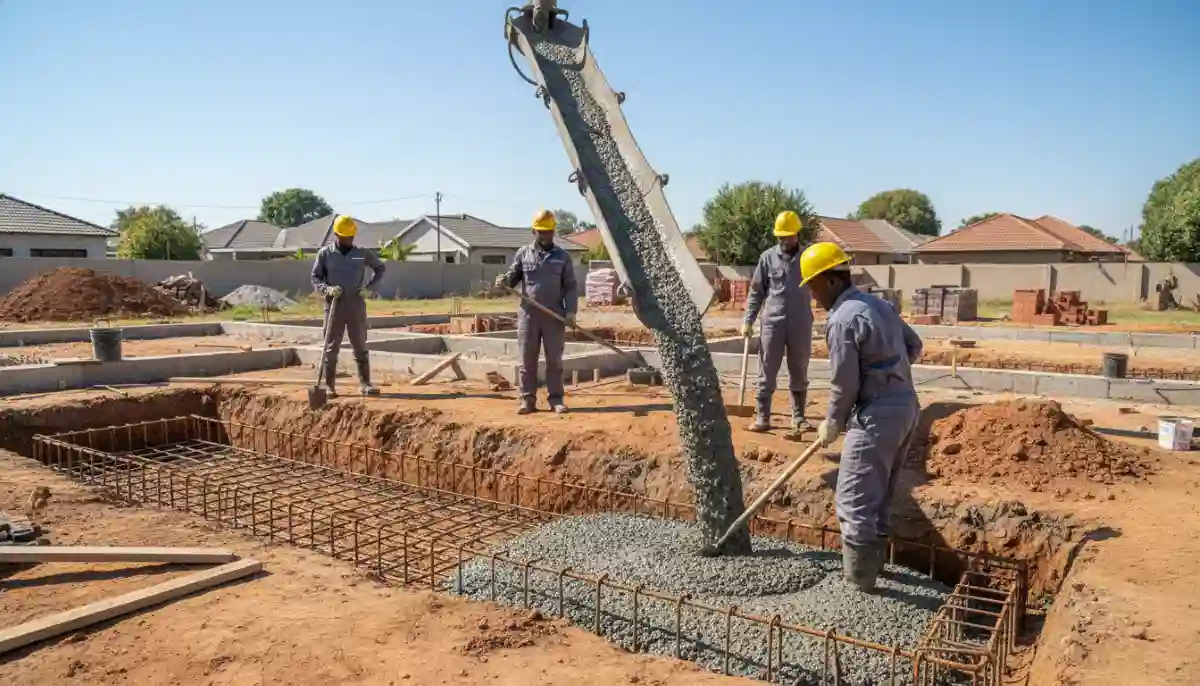
- Excavation and foundations (2-4 weeks): Trenching, reinforcement, concrete
- Floor slab (1-2 weeks): Compaction, waterproofing, concrete
- Brickwork (4-8 weeks): Wall construction, lintels, damp proof courses
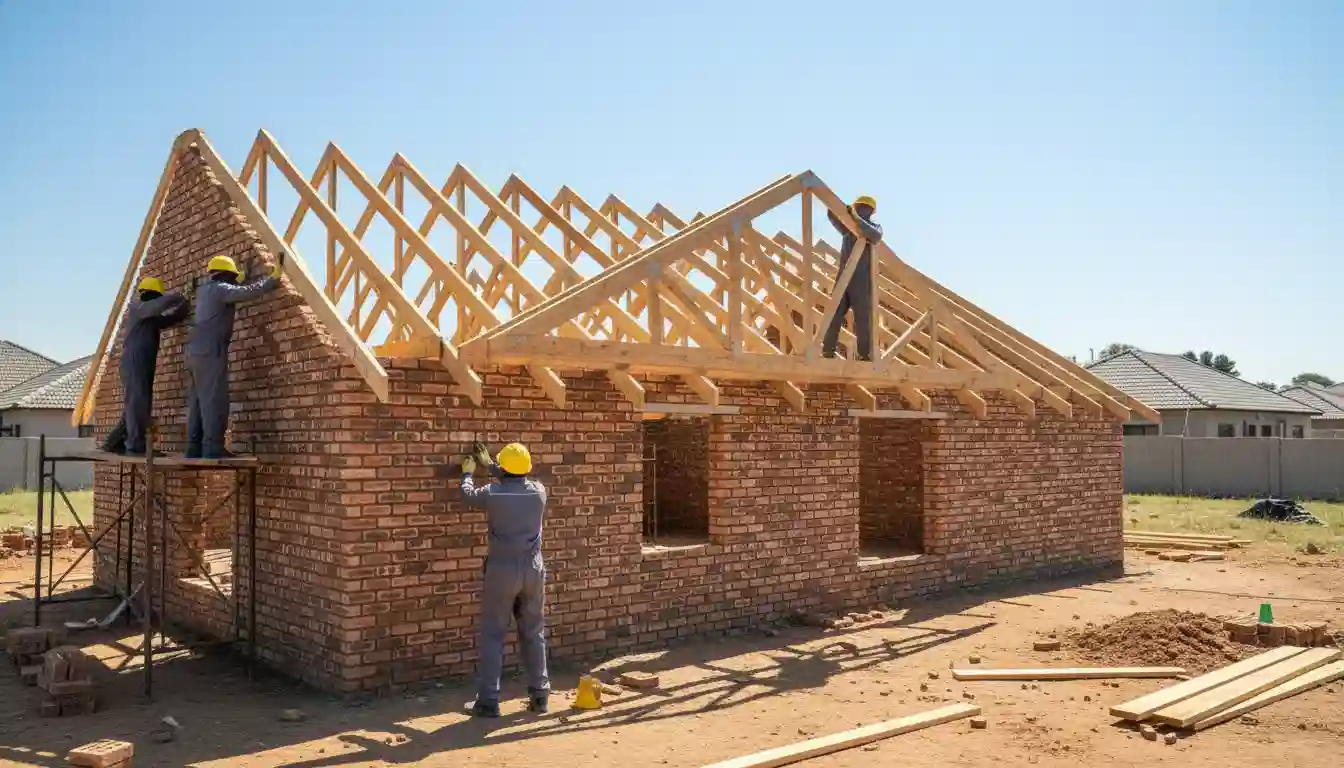
- Roof structure (2-4 weeks): Trusses, battens, roof covering
- First fix (3-5 weeks): Plumbing, electrical, ceiling installation
- Plastering and screeding (2-4 weeks): Internal and external plaster
- Second fix (3-6 weeks): Finishes, tiling, cupboards, sanitaryware
- Painting and decorating (2-4 weeks): Final finishes
- Practical completion (1 week): Snag list, handover, occupancy certificate
Timelines vary based on weather, contractor availability, material supply, and complexity. Always add 10-20% buffer for unforeseen delays.
📅 Site Meeting Agenda: What to Discuss Weekly
Regular site meetings are the backbone of project management. Hold weekly meetings with your builder and attend in person when possible. Here’s your agenda template:
1. Progress Review
- Work completed since last meeting
- Planned work for coming week
- Comparison to project schedule
- Photos of completed work
2. Quality Control
- Inspection of recent work
- Compliance with specifications
- Any defects or rework needed
- Upcoming inspections required
3. Financial Status
- Payment claims submitted
- Payments processed
- Variation orders pending
- Budget vs actual tracking
4. Issues and Risks
- Problems encountered
- Solutions agreed
- Potential delays identified
- Material availability concerns
5. Decisions Required
- Outstanding selections
- Approvals needed
- Client decisions by when
6. Next Steps
- Action items with deadlines
- Who is responsible
- Next meeting date
Document everything: Take minutes, distribute to all parties, and file for reference. This prevents “I didn’t know” disputes later.
💰 Construction Stage Payments Explained
Stage payments protect both you and the builder. Here’s a typical structure for a new home:
| Stage | Payment % | Verification Required |
|---|---|---|
| Deposit (materials) | 10-15% | Materials delivered to site, receipts provided |
| Foundation complete | 15-20% | NHBRC inspection sign-off, concrete cured |
| Floor slab complete | 10-15% | Slab cured, waterproofing applied |
| Walls to roof height | 15-20% | Brickwork complete, lintels in place |
| Roof on (lock-up) | 10-15% | Roof structure complete, building weathertight |
| First fix complete | 10-15% | Plumbing, electrical in walls, ceilings up |
| Finishes in progress | 10-15% | Plastering, tiling, painting started |
| Practical completion | 5-10% (retention) | Final inspection, snag list created |
| Defects period end | 5% retention released | All defects fixed after 3-6 months |
⚠️ Never pay cash or large upfront deposits. Insist on stage payments linked to completed, inspected work. Read our contract pitfalls guide for payment protection strategies.
💬 Construction Project Communication Tips
Clear communication prevents most disputes. Follow these guidelines:
- Designate a single point of contact: Either you or your project manager – not the whole family
- Put everything in writing: Emails, messages, meeting minutes – document all decisions
- Be responsive: Delays in your decisions hold up the site – answer queries promptly
- Use visual communication: Photos, videos, samples – avoid describing colours/textures by name only
- Respect site hours: Don’t expect builders to answer calls at night or weekends
- Stay professional: Keep emotions in check – focus on solutions, not blame
- Regular check-ins: Brief site visits (2-3 times weekly) keep you informed without micromanaging
⏰ Managing Builder Delays in South Africa
Delays happen. The key is managing them effectively:
Common Delay Causes
- Weather: Rain stops bricklaying, plastering, painting – build buffer time
- Material supply: Stock shortages, import delays – order critical items early
- Labour availability: Skilled trades in demand – book well in advance
- Municipal inspections: Slow approval processes – schedule early, follow up
- Client decisions: Delays in selections hold up work – decide before needed
- Unforeseen site conditions: Rock, bad soil, hidden services – contingency budget needed
How to Handle Delays
- Identify cause: Is it within builder’s control or external?
- Document everything: Record dates, reasons, communication
- Review contract: Check liquidated damages clauses
- Discuss solutions: Can they accelerate other areas?
- Adjust expectations: Update timeline realistically
- Consider penalties: Only enforce if contract specifies
🔍 Quality Control and Independent Inspections
Don’t rely solely on your builder’s self-certification. Arrange independent inspections at key stages:
| Stage | Who Should Inspect | What They Check |
|---|---|---|
| Foundations | Structural engineer, NHBRC | Depth, reinforcement, soil conditions |
| Floor slab | Structural engineer | Reinforcement, concrete strength, waterproofing |
| Brickwork | NHBRC, independent inspector | Wall alignment, mortar quality, DPC |
| Roof structure | Structural engineer | Truss installation, fixings, bracing |
| First fix | Electrician, plumber (certified) | Wiring, pipework before covering |
| Practical completion | You, architect, NHBRC | Final snag list, compliance certificates |
Use our free inspection service to connect with qualified inspectors in your area.
📝 Variation Orders: Managing Changes Properly
Changes during construction are inevitable. But uncontrolled changes destroy budgets. Follow this variation order process:
- Request in writing: Describe the change clearly
- Get a quote: Builder provides cost and time impact
- Review and approve: Sign variation order BEFORE work starts
- File documentation: Keep with contract for final accounting
Never agree to verbal changes. Even small variations can add up to significant sums. Track all variations in a spreadsheet.
📂 Essential Project Documentation
Maintain a complete project file with:
- Contracts: Signed building agreement, all annexures
- Drawings: Approved plans, structural details, revisions
- Specifications: Finishes schedule, material brands, models
- Approvals: Municipal approvals, NHBRC enrolment, engineering certificates
- Quotes and invoices: All financial records
- Payment records: Proof of all stage payments
- Variation orders: Signed approvals for changes
- Meeting minutes: Records of all site meetings
- Correspondence: Emails, messages, letters
- Photos: Daily/weekly progress photos
- Certificates: Occupation certificate, warranties, guarantees
Digital copies are essential – scan everything and store in the cloud. You’ll need these for future reference and when selling the property.
✅ Snag List and Practical Completion Process
Practical completion is when the building is substantially complete and habitable. Before final payment:
- Walk through together: You, builder, architect (if applicable)
- Create snag list: Document every defect, incomplete item, or poor finish
- Agree deadlines: Builder commits to fixing snags within reasonable period
- Hold retention: Keep 5-10% until all snags fixed
- Final inspection: Check all items completed satisfactorily
- Release retention: After defects period (usually 3-6 months)
Latent defects: Hidden problems that appear later (up to 5 years) are covered by NHBRC warranty for new homes. Read our guarantees guide.
📊 Critical Path: What It Means for Your Build
The critical path is the sequence of tasks that determines project duration. Delays to critical path tasks delay the entire project. Key critical path tasks in home building:
- Foundations → Walls → Roof → First fix → Finishes (must happen in order)
- Non-critical tasks (like landscaping) can happen alongside without delaying completion
Understanding critical path helps you focus on what really matters. Ask your builder for a simple programme showing dependencies.
🏠 Tips for First-Time Homeowners Building in South Africa
- Educate yourself: Read our building regulations guide and builder selection guide
- Visit site regularly: At least twice weekly, but don’t interfere with work
- Build relationships: Treat site workers with respect – they’ll take more care
- Trust but verify: Check work against plans, ask questions
- Stay calm: Problems will arise – focus on solutions
- Celebrate milestones: Foundation, roof-on, handover – acknowledge progress
❌ 15 Common Project Management Mistakes
- No written contract: Verbal agreements lead to disputes
- Poor documentation: No records of decisions, changes, payments
- Inadequate contingency: No buffer for unexpected costs
- Skipping inspections: Problems hidden until too late
- Micromanaging: Slows progress, annoys builders
- Being unavailable: Delays decisions, holds up site
- Ignoring site meetings: Miss critical information
- Paying cash: No paper trail, no protection
- Changing mind constantly: Causes delays and variation costs
- Not checking progress claims: Paying for work not done
- Releasing retention too early: No leverage for snags
- Poor communication: Assumptions instead of clarity
- No snag list: Accepting incomplete work
- Ignoring NHBRC requirements: Invalidates warranty
- Going with cheapest quote: Often costs most long-term

📱 Project Management Tools for Homeowners
Free or low-cost tools to track your project:
- Trello/Asana: Track tasks, decisions, deadlines
- Google Sheets: Budget tracking, payment schedules
- Dropbox/Google Drive: Store all documents, photos
- WhatsApp groups: Quick communication (but document decisions)
- BuilderTrend/CoConstruct: Professional construction management (paid)
- Camera phone: Daily progress photos, timestamped
❓ Frequently Asked Questions
How do I manage a building project effectively?
Start with a detailed contract and payment schedule. Hold weekly site meetings with an agenda. Document everything in writing. Inspect work at key stages. Keep a contingency fund. Communicate clearly and promptly. Use our project management guide for complete methodology.
What is a reasonable building project timeline in South Africa?
Single storey home: 6-9 months • Double storey: 9-14 months • Major renovation: 4-8 months • Room addition: 2-4 months. Timelines vary based on size, complexity, weather, and contractor availability. Add 10-20% buffer for unforeseen delays.
What should be discussed at site meetings?
Progress since last meeting, work planned, quality control, financial status, issues and risks, decisions required, and action items. Document minutes and distribute to all parties. See our site meeting agenda section for detailed template.
How are stage payments structured in construction?
Payments are linked to completed milestones: deposit (10-15%), foundation (15-20%), floor slab (10-15%), walls (15-20%), roof on (10-15%), first fix (10-15%), finishes (10-15%), with 5-10% retention held until defects period ends. Never pay for work not yet done.
How do I handle builder delays?
Identify the cause – is it within builder’s control? Document everything. Review contract for liquidated damages clauses. Discuss solutions with builder. Adjust timeline realistically. Only enforce penalties if contract specifies. Read our dispute resolution guide.
What is a snag list and when is it created?
A snag list documents all defects, incomplete items, or poor finishes at practical completion. Walk through with builder, list every issue, agree fixing deadlines. Hold retention until all snags resolved. This is your final quality check before moving in.
What is the difference between practical completion and final completion?
Practical completion: Building substantially complete and habitable, snag list created. Final completion: All snags fixed, retention released, defects period begins. Practical completion is when you move in; final completion closes the contract.
How do I handle variation orders?
Always put change requests in writing. Get a quote for cost and time impact before approving. Sign variation order BEFORE work starts. Track all variations in a spreadsheet. Never agree to verbal changes – they destroy budgets.
What inspections are required during construction?
Foundations (engineer/NHBRC), floor slab (engineer), brickwork (NHBRC), roof structure (engineer), first fix (electrician/plumber), practical completion (you/architect). Independent inspections catch problems early when they’re cheap to fix.
Can I manage my own building project?
Yes, if you have time, attention to detail, and willingness to learn. You’ll need to understand contracts, scheduling, quality control, and communication. Consider hiring a professional project manager for complex projects or if you’re not on site regularly.
✅ Action Plan: Your Project Management Checklist
- Pre-construction: Complete designs, approvals, builder selection, contract signed
- Establish systems: Set up documentation, communication channels, meeting schedule
- Site establishment: Confirm site setup, services, access
- Construction phase: Weekly site meetings, progress tracking, quality inspections
- Financial management: Verify stage payments before releasing funds
- Variation control: Written approvals only, track all changes
- Practical completion: Thorough snag list, retention held
- Defects period: Monitor, ensure fixes completed, release retention
- Final handover: All certificates, warranties, manuals received
Need Help Managing Your Building Project?
Connect with experienced project managers and vetted builders who handle the details for you.
Official project management resources:
- JBCC – Joint Building Contracts Committee – Standard contract forms
- NHBRC – Enrolment guidelines – Warranty requirements and inspections
- CIDB – Best practice procurement – Contractor selection guidelines
Information accurate as of publication date. Always verify current requirements with relevant authorities.
Written by: ServiceLink SA Research Team
Verified by Innocent T Hanyani (21+ years construction and digital industry experience)
Innocent has managed numerous residential construction projects across South Africa, developed project management systems for builders, and advised hundreds of homeowners on successful project completion. His expertise in construction contracts and site management has helped clients avoid costly mistakes.