Solar Panel Installation & Electrical Integration – Complete South Africa Guide
☀️ Thinking of going solar? Here’s exactly how electrical integration works and what it costs.
South Africa’s solar revolution is here. With loadshedding showing no signs of ending and electricity tariffs rising faster than inflation, hundreds of thousands of homeowners in Johannesburg, Cape Town, Pretoria, and Durban are investing in solar power. But here’s what many don’t realise: the panels are only half the story. The electrical integration – how your solar system connects to your home’s DB board, inverter, batteries, and the grid – is where the magic (and complexity) happens.
This comprehensive guide covers solar panel electrical integration, connection costs, regulations, and everything you need to know before installing. We’ve gathered pricing data from registered electricians and solar installers across Gauteng, Western Cape, and KZN to give you accurate, current figures.
⚡ IMPORTANT: Solar installation must comply with SANS 10142-1 (wiring regulations) and NERSA grid connection requirements. All electrical work must be done by registered electricians. This guide is for informational purposes – always consult professionals.
Ready to go solar?
Get free, no-obligation quotes from registered solar installers and electricians in your area – compare prices and find the best system for your home.
Servicing Johannesburg, Pretoria, Cape Town, Durban, Stellenbosch, and nationwide
📋 Table of Contents – Solar Electrical Integration Guide
🔋 Solar System Basics – What You Actually Need
A complete solar power system consists of several components that must work together seamlessly. The electrical integration is what makes them function as a unified system :
Solar Panels (PV Modules)
Capture sunlight and convert it to DC electricity. Mounted on your roof or ground-mounted. Panel orientation and shading affect output .
Inverter
The brain of your system. Converts DC from panels to AC for home use. Manages battery charging, grid interaction, and system monitoring .
Batteries (Optional)
Store excess solar energy for use at night or during loadshedding. Essential for backup power .
DB Board Connection
The interface between your solar system and your home’s electrical circuits. Includes breakers, isolators, and changeover switching .
AC & DC Isolators
Safety switches that allow you to disconnect solar components for maintenance or emergencies .
Monitoring System
Tracks production, consumption, and battery status – often via smartphone app .
🔄 Grid-Tied vs Hybrid vs Off-Grid – What’s the Difference?
Understanding these three system types is crucial before you start – they determine how your system is electrically integrated :
| System Type | How It Works | Battery Required? | Loadshedding Backup? | Typical Cost |
|---|---|---|---|---|
| Grid-Tied (No battery) | Solar feeds into home; excess exported to grid. No power during grid outage. | No | ❌ No | R50,000 – R120,000 |
| Hybrid (with battery) | Solar charges batteries; excess to grid. Powers home during outages. | Yes | ✅ Yes | R120,000 – R250,000 |
| Off-Grid | Completely independent from Eskom. Requires large battery bank. | Yes (large) | ✅ Yes (always) | R200,000 – R500,000+ |
For most South African homes, a hybrid system with battery backup is the sweet spot – you get loadshedding protection while still having grid backup for extended cloudy periods .
🔌 How Solar Electrically Integrates with Your Home
This is the critical part most homeowners don’t see – but it’s where safety and performance are determined .
The Electrical Integration Process
- Solar panels generate DC electricity – voltage varies with sunlight
- DC runs to the inverter via DC isolators and surge protection
- Inverter converts DC to AC – matching grid voltage and frequency
- AC feeds into your DB board through a dedicated solar circuit breaker
- Power flows to your home loads – lights, plugs, appliances
- Excess power (if any) – charges batteries (hybrid) or exports to grid (grid-tied)
- When solar insufficient – power drawn from batteries (if available) or grid
Key Electrical Integration Points
- AC connection point: Inverter connects to a dedicated circuit in your DB board
- Grid connection: Bi-directional meter required for grid-tied systems
- Essential loads vs non-essential: Some systems separate circuits that get backup power
- Changeover switching: Automatically disconnects from grid during loadshedding
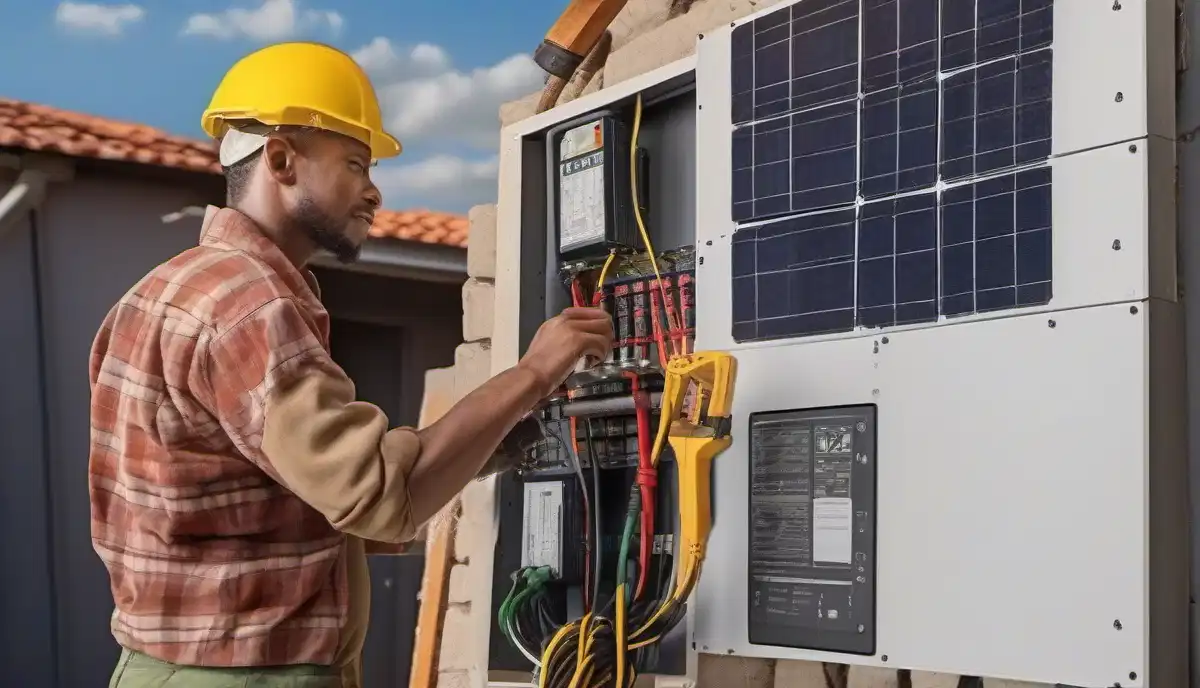
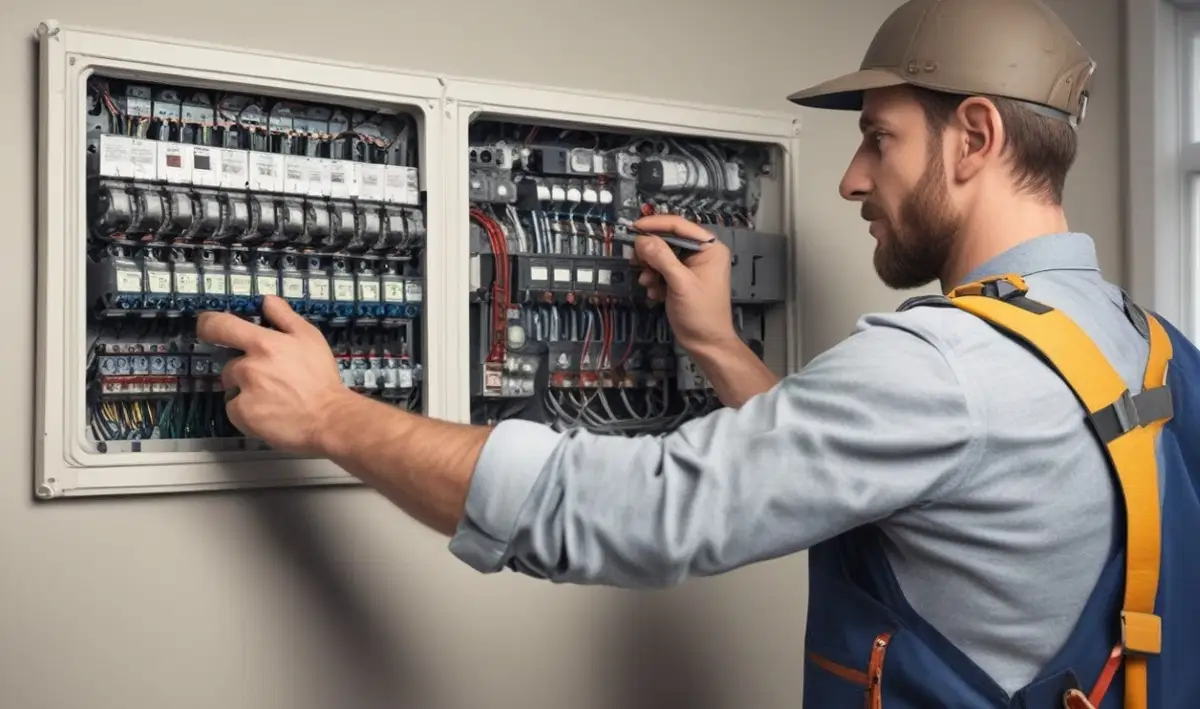
⚡ Solar DB Board Connection – How It Works
Your Distribution Board (DB) is the central hub. Solar integration requires specific modifications :
Typical Residential DB Setup
- Main switch (grid supply)
- Earth leakage unit(s)
- Circuit breakers for each circuit
- Neutral and earth bars
Solar-Integrated DB Setup
- + Solar input breaker from inverter
- + AC isolator for inverter
- + Possible essential loads sub-panel
- + Surge protection device (SPD)
- + Bi-directional meter (grid-tied)
Essential Loads vs Non-Essential Loads
For systems with battery backup, electricians often create two separate panels :
- Essential loads panel: Lights, plugs in key areas, fridge, WiFi, security – powered during loadshedding
- Non-essential loads: Geysers, pool pump, oven, aircons – only powered when grid available or excess solar
This separation ensures your battery lasts longer during outages. A typical essential loads panel costs R2,000 – R5,000 extra to install .
🏠 Inverter Placement – Where and How
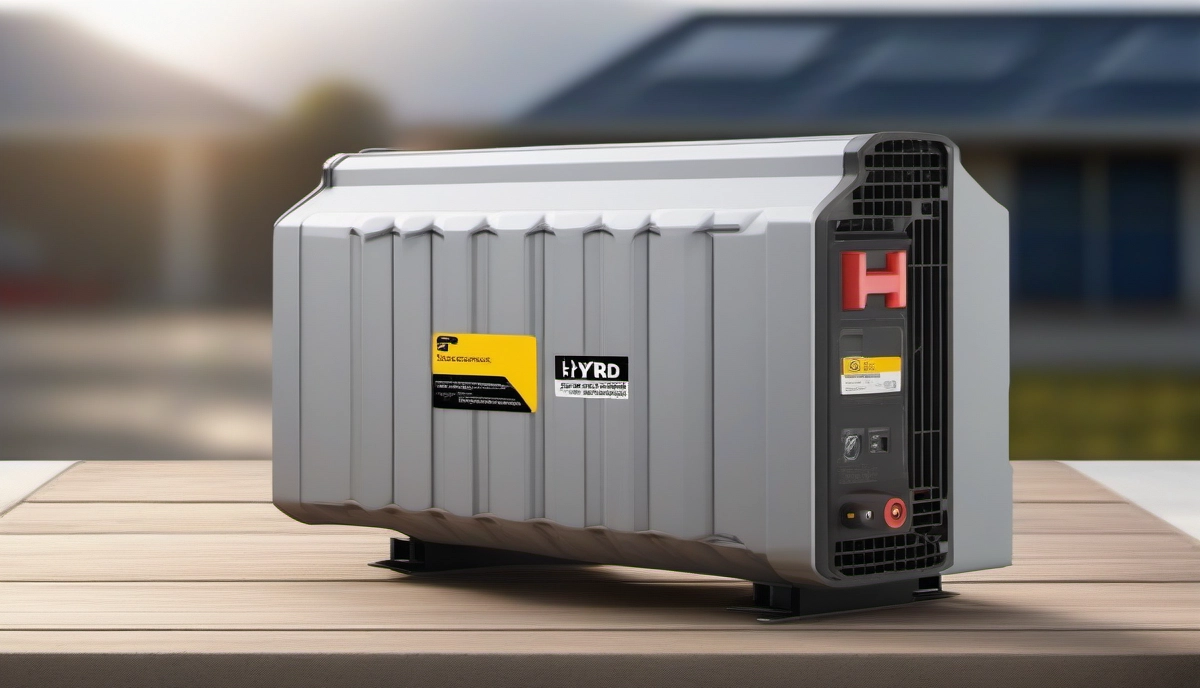
Inverter placement affects performance, safety, and longevity. Key considerations :
- Indoor vs outdoor: Most inverters are indoor-rated (IP21) and need protection from weather. Outdoor-rated inverters (IP65) can be mounted outside but cost more .
- Ventilation: Inverters generate heat – they need airflow. Never enclose in a cupboard without ventilation .
- Proximity to DB board: Keep AC cabling short to minimise losses. Maximum recommended distance: 10-15 metres .
- Battery proximity: Keep batteries close to inverter (within 2-3 metres) for DC efficiency .
- Noise considerations: Some inverters have cooling fans that generate noise – consider placement away from bedrooms .
- Wall mounting: Must be on a solid wall capable of supporting weight (20-50kg depending on size) .
🔋 Battery Backup – Electrical Integration Details
Adding batteries changes the electrical integration significantly :
Battery Connection Types
- AC-coupled: Batteries have their own inverter, connected on AC side. Good for retrofitting to existing solar .
- DC-coupled: Batteries connected directly to hybrid inverter’s DC side. More efficient, common in new installations .
Battery Electrical Requirements
- DC cabling: Thick, high-quality cables sized for current (often 35-95mm²) – R200 – R500 per metre .
- DC isolators: Required for safe disconnection – R800 – R2,000 .
- Battery management system (BMS) communication: Ensures inverter and batteries communicate properly .
- Ventilation: Some battery chemistries (lead-acid) need ventilation – lithium is sealed .
- Temperature monitoring: Batteries perform best in moderate temperatures (15-25°C) .
🔧 Essential Electrical Components for Solar
| Component | Purpose | Typical Cost | Compliance |
|---|---|---|---|
| DC Isolator (PV array) | Disconnect panels from inverter for safety | R500 – R1,200 | SANS 10142-1 |
| AC Isolator | Disconnect inverter from grid | R400 – R900 | SANS 10142-1 |
| Surge Protection Device (SPD) | Protect against lightning & surges | R1,500 – R3,500 | SANS 10142-1 |
| Bi-directional Meter | Measures import/export for grid-tied | R2,500 – R5,000 | NERSA approved |
| Earth Leakage (RCD) | Life safety protection | R600 – R1,500 | SANS 10142-1 |
| DC Breakers/Fuses | Overcurrent protection for DC side | R300 – R800 | SANS 10142-1 |
| AC Breaker (Solar) | Dedicated circuit for inverter | R300 – R700 | SANS 10142-1 |
💰 Complete Solar Installation Costs South Africa
Solar system costs vary widely based on size, component quality, and installation complexity. Here are current market ranges :
Typical System Costs (Fully Installed)
| System Size | Suitable For | Grid-Tied (No Battery) | Hybrid with Battery |
|---|---|---|---|
| 3 kW | Small home, essential loads | R45,000 – R65,000 | R95,000 – R130,000 |
| 5 kW | Medium 3-bedroom home | R65,000 – R95,000 | R130,000 – R180,000 |
| 8 kW | Large home, pool, geysers | R95,000 – R140,000 | R180,000 – R250,000 |
| 10 kW+ | Estate homes, high consumption | R140,000 – R200,000+ | R250,000 – R400,000+ |
Electrical Integration-Only Costs (Labour + Components)
If you already have panels and inverter, the electrical integration work typically costs :
| Work Required | Typical Cost | Includes |
|---|---|---|
| Basic grid-tied connection | R4,500 – R7,500 | AC breaker, isolator, COC, testing |
| Hybrid with battery integration | R7,500 – R12,000 | Essential loads panel, DC isolation, battery cabling |
| Essential loads sub-panel | R2,000 – R5,000 | Separate DB for backup circuits |
| Surge protection installation | R1,500 – R3,000 | SPD device and installation |
| Bi-directional meter installation | R2,500 – R5,000 | Meter, municipal coordination |
Budgeting tip: For most 3-bedroom homes in Sandton or Cape Town, budget R130,000 – R180,000 for a complete 5kW hybrid system with battery backup. Electrical integration typically accounts for 10-15% of total cost .
📜 Solar Installation Regulations South Africa
Solar installations in South Africa must comply with multiple regulations :
- SANS 10142-1 (Wiring of Premises): The core standard for all electrical work, including solar integration
- NERSA connection rules: Grid-tied systems must comply with NERSA’s grid connection codes
- Municipal by-laws: Many municipalities have specific requirements for solar installations, especially grid-tied
- SANS 10139: Specific requirements for PV installations
- COC required: Certificate of Compliance must be issued after installation
- Registered installer: Only registered electricians with Wireman’s License can legally perform electrical work
Municipal Approval for Grid-Tied Systems
If you plan to export power to the grid (feed-in), you need :
- Application to municipality: Forms, system specs, single-line diagrams
- Approval before installation: In most areas, you must apply before installing
- Bi-directional meter installation: Municipality installs or approves meter
- Connection agreement: Legal agreement with municipality/Eskom
- Typical fees: R1,000 – R3,000 for application and inspection
In Cape Town, the process is well-established. In other areas, it may be more complex. Your installer should handle this .
📋 COC for Solar – What’s Required
After solar installation, you must receive a Certificate of Compliance (COC) covering :
- The new solar-specific electrical work
- Any modifications to existing DB board
- Earth leakage and earthing verification
- Isolator and breaker compliance
- Surge protection (if installed)
Some installers issue a separate COC for the solar work; others endorse the existing COC. Both are acceptable as long as all new work is certified .
Read our complete guide: Electrical Compliance Certificates South Africa
📍 Solar Installation Costs by Region
☀️ Johannesburg Solar Installers
Johannesburg has the most competitive solar market with many installers .
- 5kW hybrid with battery: R130,000 – R175,000
- Electrical integration only: R5,000 – R10,000
- Popular suburbs: Sandton, Fourways, Midrand, Bryanston
☀️ Pretoria Solar Installers
- 5kW hybrid with battery: R125,000 – R170,000
- Electrical integration only: R4,500 – R9,500
- Popular suburbs: Pretoria East, Centurion, Waterkloof
☀️ Cape Town Solar Installers
Cape Town has mature solar market with experienced installers .
- 5kW hybrid with battery: R135,000 – R185,000
- Electrical integration only: R5,500 – R11,000
- Popular suburbs: Southern Suburbs, Atlantic Seaboard, Stellenbosch
☀️ Durban Solar Installers
Durban’s humid coastal environment requires corrosion-resistant components .
- 5kW hybrid with battery: R130,000 – R175,000
- Electrical integration only: R5,000 – R10,000
- Popular suburbs: Durban North, Umhlanga, Ballito
☀️ Estate Living – Stellenbosch, Fourways, Hartbeespoort
- Stellenbosch: Premium area, many wine estates – expect higher-end installations
- Fourways: High density, competitive pricing
- Hartbeespoort: Large properties, estate access fees may apply
❌ 10 Common Solar Electrical Integration Mistakes
Learn from others’ expensive errors:
- No surge protection: South Africa has high lightning activity. Without SPDs, your inverter and panels are vulnerable .
- Incorrect cable sizing: DC cables too thin cause voltage drop, heat, and fire risk. Always use correctly sized cables .
- Poor ventilation for inverter: Enclosing inverter without airflow causes overheating and shutdowns .
- No essential loads separation: During loadshedding, your battery drains quickly trying to power geysers and pool pumps .
- DIY electrical connections: Illegal and dangerous. All electrical work must be done by registered electricians .
- Ignoring municipal approval: Installing grid-tied without approval can result in fines and disconnection .
- No COC issued: Without a COC, your installation is illegal and insurance may be invalid .
- Incorrect earth leakage configuration: Some inverters need specific earth leakage arrangements – get it wrong and nuisance tripping occurs .
- Battery placement too far: Long DC runs cause voltage drop and inefficiency – keep batteries close to inverter .
- Using unregistered installers: Solar installers must also be registered electricians for the electrical work .
Ready to Install Solar?
Get quotes from registered, verified solar installers and electricians in your area – compare prices and find the right system for your home.
Serving Johannesburg, Pretoria, Cape Town, Durban, Stellenbosch, and nationwide
❓ Frequently Asked Questions
How much does solar panel installation cost in South Africa?
A complete 5kW hybrid system with battery backup costs R130,000 – R180,000 installed. Grid-tied systems without battery start from R65,000. Electrical integration typically accounts for 10-15% of total cost .
Do I need municipal approval for solar panels?
For grid-tied systems that export power, yes – you need municipal approval and a bi-directional meter. For off-grid systems, approval may not be required, but you should still inform your municipality. Your installer should handle applications .
Can solar panels power my house during loadshedding?
Only if you have a hybrid inverter with battery backup. Grid-tied systems without batteries shut down during loadshedding for safety. With batteries, you can power essential loads .
What electrical work is needed for solar installation?
Solar requires: AC connection to DB board, DC isolators, surge protection, possibly essential loads sub-panel, battery cabling (if applicable), and COC. All work must be done by a registered electrician .
Do I need a COC for solar panels?
Yes – absolutely. Any electrical work requires a Certificate of Compliance. Your installer must provide a COC covering all new solar-related electrical work. Without it, your installation is illegal and insurance invalid .
What size solar system do I need for my home?
For a typical 3-bedroom home with normal usage (lights, TV, fridge, WiFi, occasional appliances): 3-5kW system. If you want to run pool pump, geysers, or aircons: 5-8kW system. Your installer will do a proper load calculation .
How long does solar installation take?
Most residential installations take 1-3 days depending on system size and complexity. Electrical integration (DB board work) typically takes 4-8 hours. Add 2-4 weeks for municipal approval if grid-tied .
Can I add batteries to my existing solar system?
Yes – if your inverter is hybrid-ready or you install an AC-coupled battery system. This requires additional electrical work including DC cabling, isolators, and possibly DB board modifications. Costs range from R40,000 – R100,000+ depending on battery size .
What is an essential loads panel?
A sub-panel that separates critical circuits (lights, plugs in key areas, fridge, WiFi, security) from non-essential loads (geysers, pool pump, oven). During loadshedding, only essential loads receive battery power, extending backup time .
Do solar panels work during cloudy days?
Yes, but at reduced output – typically 10-25% of rated capacity. This is why battery storage and grid backup are important for consistent power. Your system is designed to handle varying conditions .
✅ Final Thoughts – Your Solar Journey
Solar power is a significant investment, but with loadshedding and rising electricity costs, it’s one that pays back in comfort, security, and savings. Key takeaways:
- System costs: R65,000 – R250,000+ depending on size and battery
- Electrical integration: 10-15% of total cost – don’t skimp on quality
- Essential components: Surge protection, isolators, proper cabling, COC
- Regulations: SANS 10142, NERSA, municipal approval for grid-tied
- Professional installation: Only registered electricians can do electrical work
☀️ The Bottom Line:
R130,000 – R180,000
buys a complete 5kW hybrid solar system with battery backup for most 3-bedroom homes – loadshedding freedom and long-term savings
Your 5-Step Action Plan
- Assess your needs: What do you want to power? What’s your budget?
- Research system types: Grid-tied, hybrid, or off-grid?
- Get 3-4 quotes from registered solar installers and electricians
- Verify credentials: ECASA registration, Wireman’s License, solar experience
- Check municipal requirements – your installer should handle this
Ready to Go Solar?
Connect with registered, verified solar installers and electricians in your area – compare quotes and find the perfect system for your home.
📞 Call us: 073 138 4726 for expert advice
📚 Official resources & standards:
- SAREC (South African Renewable Energy Council) – Solar PV installer standards
- NERSA – Grid-tied connection regulations
- ECASA – Electrical compliance for solar integration
- SABS (SANS 10142) – Wiring regulations
Prices accurate as of current market rates. Always verify current quotes with local installers. This guide is for informational purposes and does not constitute a quote.
Written by: ServiceLink SA Research Team
In partnership with registered solar installers and electricians across South Africa
Our team works directly with ECASA-registered electricians and SAREC-affiliated solar installers across Johannesburg, Pretoria, Cape Town, Durban, and Stellenbosch. This guide reflects current best practices, regulations, and pricing for 2025.