
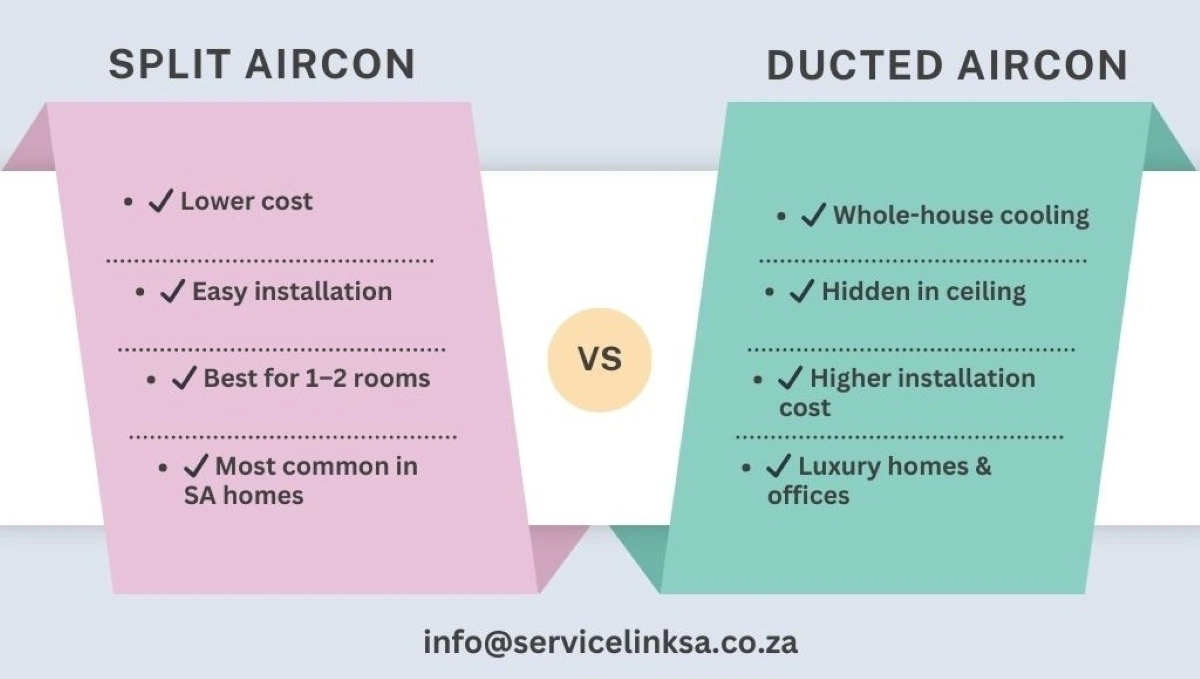
Split vs Ducted Aircon South Africa – 2026 Complete Comparison Guide
Choosing between split and ducted air conditioning is one of the most important decisions for your home, office, or business in South Africa. The wrong choice can cost you tens of thousands of rands extra, higher electricity bills, and poor cooling performance that leaves you uncomfortable during our scorching summers.
This expert guide explains everything you need to know to make the right decision for your property:
- Installation cost South Africa – 2026 prices compared
- Electricity consumption differences and monthly running costs
- Pros and cons of each system – honest assessment
- Which system is best for different house types
- Long-term savings and resale value impact
- Maintenance requirements and costs over time
- Installation complexity and timeline
- How to choose the right system near you
📅 2026 Update: All prices reflect current market rates based on verified quotes from Johannesburg, Pretoria, Cape Town, and Durban installers. All figures include VAT where indicated and reflect actual market conditions in early 2026.
Get Free Quotes From Local Aircon Installers Near You
Compare installation prices for split and ducted systems from registered professionals in your area. Free, no-obligation quotes with same-day response available.
✓ Verified installers ✓ Free site inspections ✓ Compare installation costs
Table of Contents
🧊 What Is a Split Air Conditioner?
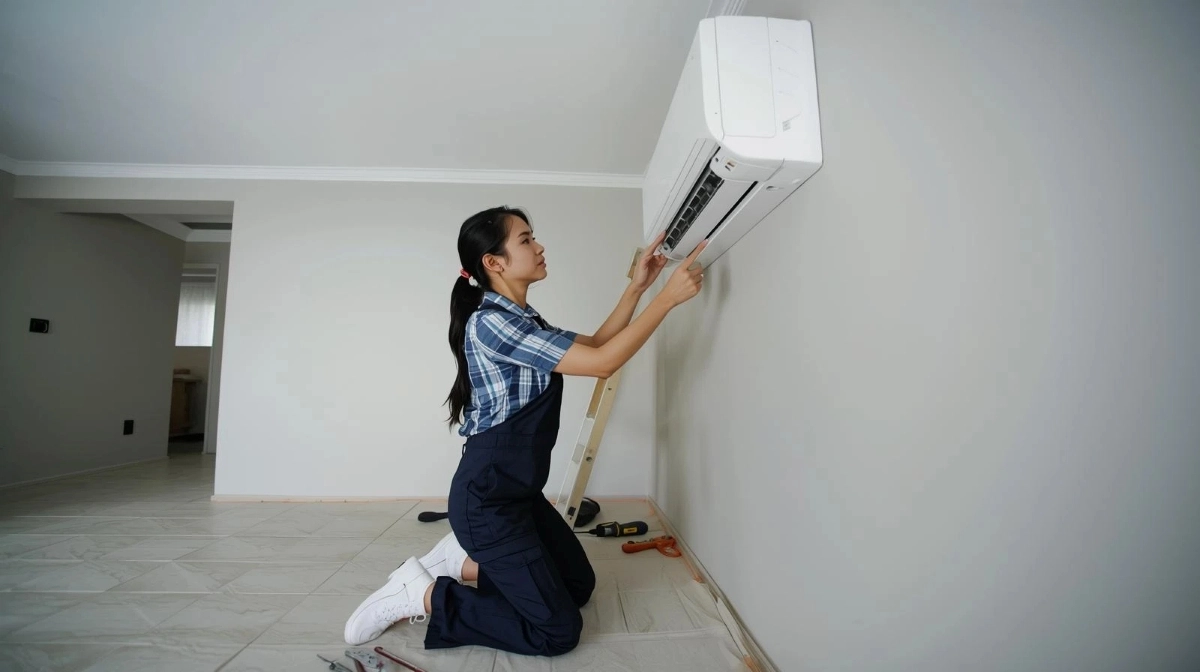
A split air conditioner is the most common type of aircon in South African homes. If you’ve seen a white unit mounted high on a bedroom wall with an outside compressor, you’ve seen a split system.
It has 2 main parts:
- Indoor unit: Mounted on the wall, contains the evaporator and fan
- Outdoor unit: The compressor and condenser, installed outside the building
They are connected by copper pipes, electrical cables, and a drain line – usually concealed in trunking or chased into the wall.
Split aircons are ideal for cooling:
- Bedrooms
- Living rooms
- Home offices
- Small shops and offices
- Individual rooms in larger homes
This is the most affordable and popular air conditioning option across South Africa, from Johannesburg to Cape Town and everywhere in between. It’s estimated that over 90% of South African homes with aircon use split systems.
🏢 What Is a Ducted Air Conditioner?
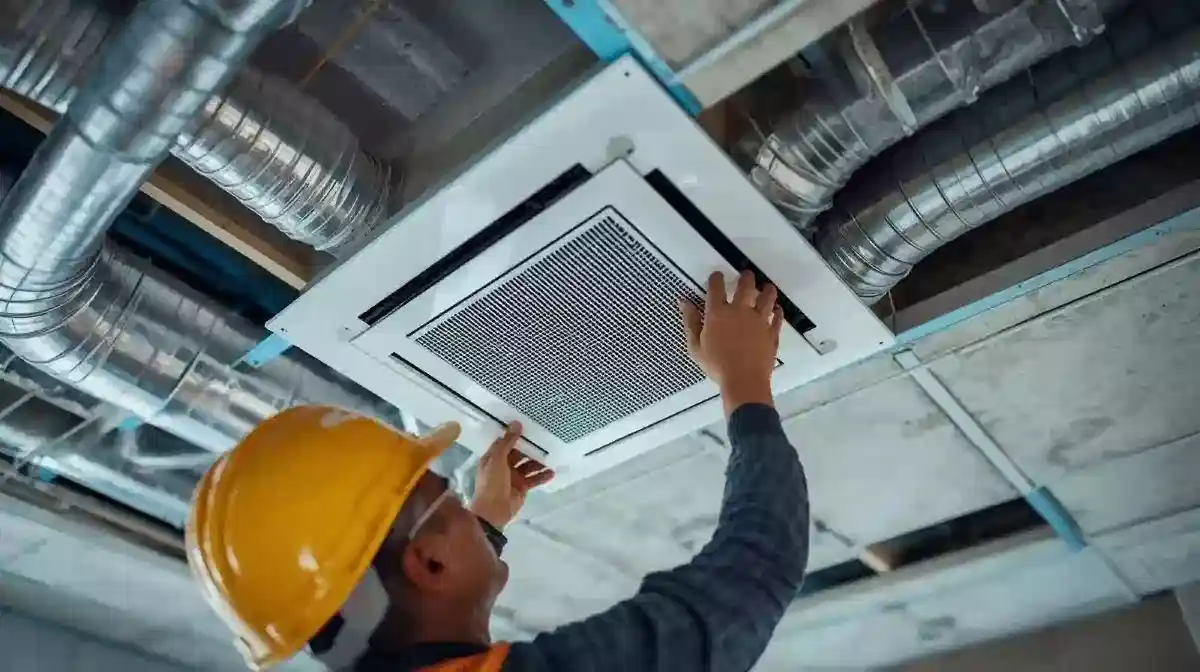
A ducted aircon system cools the entire house using hidden ducts in the ceiling. It’s a central cooling system – often described as the “premium” option for whole-home comfort.
It includes:
- Central unit: Installed in the ceiling or roof space (the indoor unit)
- Outdoor unit: Large condenser/compressor outside the house
- Air ducts: Insulated flexible or rigid ducting running through the ceiling
- Ceiling vents: Discreet outlets in each room (usually 600x600mm or similar)
Cooled air flows through the ducts and enters each room through the ceiling vents. Return air grilles pull warm air back to the central unit to be cooled again.
Ducted systems are ideal for:
- Large houses (250m²+)
- Luxury homes and estates
- Open-plan living areas
- Offices and commercial spaces
- Homes where aesthetics matter (no visible units)
Ducted aircon is significantly less common in South Africa due to cost, but growing in popularity in upscale areas like Sandton, Bryanston, Constantia, and Umhlanga.
💰 Split vs Ducted Aircon Cost South Africa (2026)
Cost is usually the biggest deciding factor for most homeowners. Here’s the detailed breakdown of installation costs for both systems.
Split Aircon Installation Cost
| Unit Size | Room Size | Installed Cost (2026) |
|---|---|---|
| 9000 BTU | 12-18m² | R5,500 – R9,500 |
| 12000 BTU | 18-25m² | R6,500 – R12,000 |
| 18000 BTU | 25-35m² | R9,000 – R16,000 |
| 24000 BTU | 35-50m² | R12,000 – R22,000 |
Note: These are total installed prices including the unit, standard installation (3m piping), and basic electrical work.
Ducted Aircon Installation Cost
| House Size | Typical Area | Installed Cost (2026) |
|---|---|---|
| Small house | 100-150m² | R40,000 – R60,000 |
| Medium house | 150-250m² | R60,000 – R90,000 |
| Large house | 250-350m² | R90,000 – R140,000 |
| Premium / luxury | 350-500m²+ | R140,000 – R250,000+ |
📊 Cost comparison for a 3-bedroom house (approx 200m²):
Split: R45,000 – R70,000
Ducted: R70,000 – R120,000
Ducted costs 50-80% more upfront
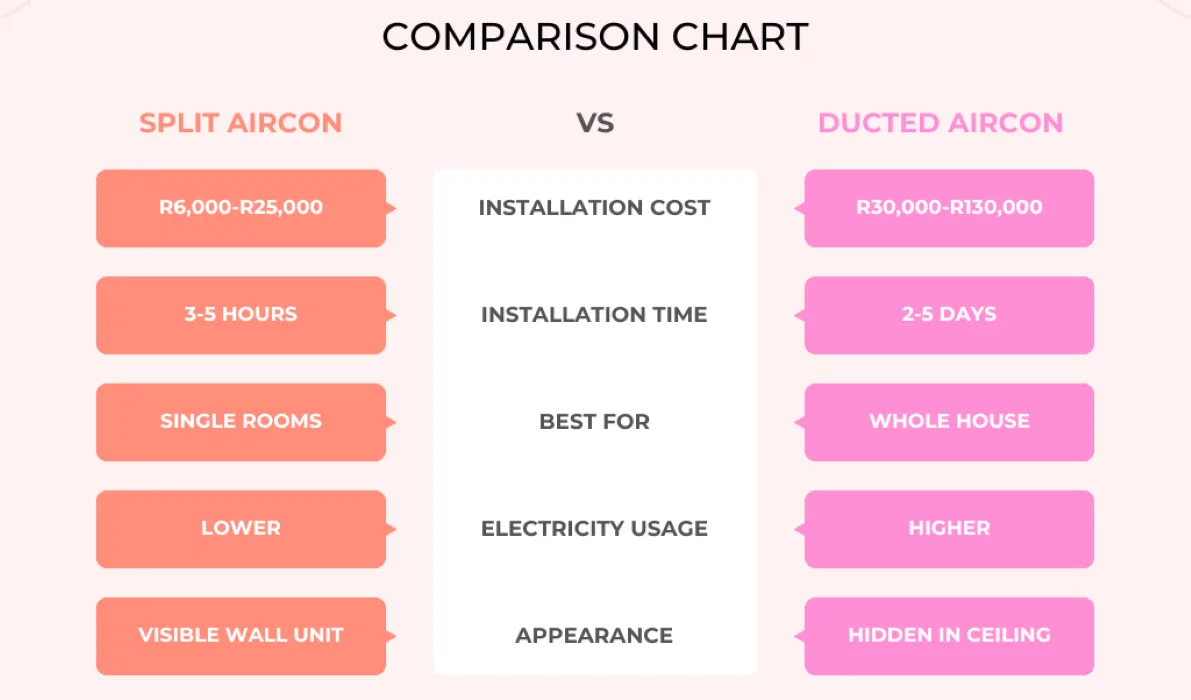
As you can see, ducted systems are significantly more expensive initially – often double the cost of equipping the same home with multiple split units. This upfront premium is the main reason most South Africans choose split systems.
⚡ Electricity Consumption Comparison
With Eskom electricity tariffs rising every year, running costs are just as important as installation costs. Here’s how the two systems compare:
Split Aircon Electricity Use
- Per unit monthly cost: R200 – R600 depending on usage and size
- Key advantage: You only cool rooms that are occupied
- Efficiency: Very efficient for targeted cooling
- Zoning: Natural zoning – each room controlled independently
Ducted Aircon Electricity Use
- Whole house monthly cost: R800 – R2,500 depending on house size and usage
- Key disadvantage: System cools entire house (though zoning helps)
- Efficiency: Less efficient for partial-house cooling
- Zoning: Can be zoned, but adds cost (R5,000-15,000 extra)
| Scenario | Split System | Ducted System | Winner |
|---|---|---|---|
| Cooling 1 bedroom at night | R250/month | R800/month | Split |
| Cooling whole house (daytime) | R1,200/month | R1,400/month | Split (slightly) |
| Entertaining – open plan only | R400/month | R1,000/month | Split |
Verdict: Split systems use significantly less electricity for typical South African usage patterns where families cool bedrooms at night and living areas during the day. Ducted systems only become competitive if you regularly cool the entire house simultaneously.
🏠 Best Choice for Different Home Types
✅ Split Aircon Best For:
- Flats and apartments
- Townhouses
- Small to medium houses (under 200m²)
- Individual room cooling
- Budget-conscious installations
- Rental properties
- Homes with limited ceiling space
- Retrofits to existing homes
This is best for 90% of South Africans
👑 Ducted Aircon Best For:
- Large houses (250m²+)
- Luxury homes and estates
- Open-plan architectural homes
- Offices and commercial spaces
- Whole-house cooling requirements
- Homes where aesthetics are critical
- New builds (easier to install)
- Properties aiming for top resale value
For a typical 3-bedroom house in Pretoria or Centurion, split systems make the most financial sense. For a luxury home in Sandton or Constantia, ducted may be worth the investment.
❄️ Cooling Performance Comparison
Split Aircon Cooling
Advantages:
- Powerful, directed airflow
- Very fast cooling of individual rooms
- Individual temperature control per room
- Can turn off unused rooms completely
Disadvantages:
- Can create hot spots in open-plan areas
- Multiple remote controls to manage
Ducted Aircon Cooling
Advantages:
- Even cooling throughout the house
- No hot spots – consistent temperature
- Single thermostat/control system
- Better for open-plan living
Disadvantages:
- Slower to cool individual rooms
- Less powerful directed airflow
- Zoning adds cost and complexity
Verdict: Split systems cool individual rooms faster and more powerfully. Ducted systems provide superior whole-house comfort with even temperatures throughout. The “better” system depends entirely on whether you need room-by-room or whole-house cooling.
🎨 Appearance and Aesthetics
Split Aircon
Visible on wall
White unit mounted visibly on the wall. Modern designs are sleeker than older models, but still noticeable. Can clash with interior design in luxury homes.
Ducted Aircon
Hidden in ceiling
Completely concealed – only ceiling vents visible. These blend in seamlessly and can be painted to match the ceiling. The ultimate in discreet cooling.
This is the main reason luxury homes choose ducted systems. No visible units means interior designers have complete freedom, and rooms look cleaner and more elegant. For most homes, however, modern split units are acceptable and much more affordable.
🔧 Installation Complexity
Split Aircon
Easy installation – 4–6 hours per unit
Requirements:
- ✓ Solid wall for mounting
- ✓ Space for outdoor unit
- ✓ Access for pipes (trunking or chase)
- ✓ Electrical point nearby
Minimal disruption – installers work in one room at a time. Can be installed in existing homes easily.
Ducted Aircon
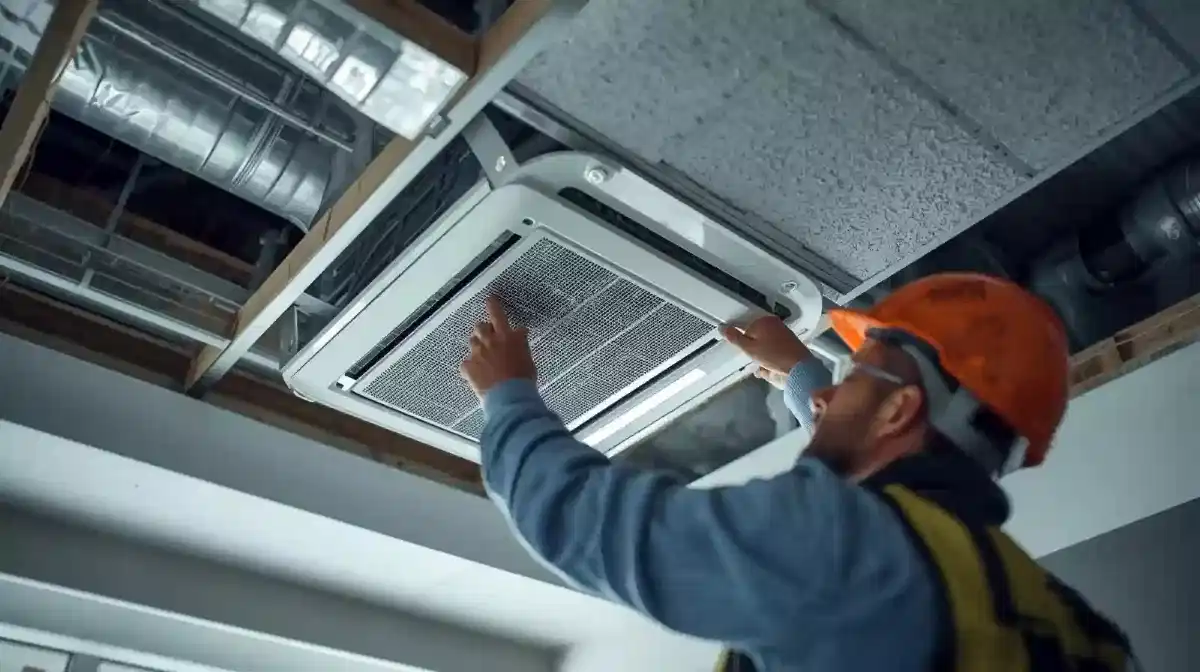
Complex installation – 2–5 days
Requirements:
- ✓ Adequate ceiling space (500mm+ minimum)
- ✓ Structural support for central unit
- ✓ Extensive ducting layout
- ✓ Multiple ceiling vents installation
- ✓ Specialist design and engineering
Significant disruption – installers need ceiling access throughout the house. Much easier during construction than as a retrofit.
Retrofit considerations: Installing ducted aircon in an existing house is possible but expensive and disruptive. Ceilings may need to be opened, and space must be available. Always get a professional site inspection before committing.
🛠 Maintenance Cost Comparison
| Service Type | Split Aircon | Ducted Aircon |
|---|---|---|
| Annual service | R450 – R850 per unit | R1,500 – R3,500 total |
| Filter cleaning | DIY (monthly) | Professional (annual) |
| Gas refill (if needed) | R900 – R2,500 per unit | R2,500 – R5,000 system |
| Repair costs | Lower (simple systems) | Higher (complex) |
For a 3-bedroom house with 4 split units, annual servicing costs around R2,000 – R3,500. A ducted system for the same house costs R1,500 – R3,500 for a single service – similar or slightly less. However, repairs on ducted systems are generally more expensive due to complexity and access issues.
⏳ Lifespan Comparison
Split Aircon
10 – 15 years
with proper maintenance
Ducted Aircon
15 – 20 years
with proper maintenance
Ducted systems typically last longer because:
- Commercial-grade components (often heavier duty)
- Less cycling on/off (inverter technology)
- Protected from elements in ceiling space
- Professional maintenance more common
However, both systems can achieve maximum lifespan with proper installation and regular servicing. Poor installation dramatically shortens lifespan regardless of system type.
💎 Property Value Impact
Split Aircon
Adds value: Moderate
Multiple split units are expected in modern homes. They add value but are seen as standard fittings, not luxury features. Estate agents report split systems are expected, not exceptional.
Ducted Aircon
Adds value: Significant
Ducted aircon is a premium feature that appeals to luxury buyers. In high-end areas like Sandton, Bryanston, and Constantia, ducted cooling is almost expected in homes above R5 million. It can add 2-5% to resale value.
If you’re planning to sell within 5-10 years, ducted aircon can be a worthwhile investment for premium properties. For standard homes, split systems provide adequate value without overcapitalising.
📋 Pros and Cons Summary
✅ Split Aircon Pros
- Affordable – cheapest option by far
- Easy installation – done in hours
- Low electricity use – cool only occupied rooms
- Easy repair – simple systems, parts available
- Individual room control
- Fast cooling – powerful directed airflow
- Easy to add more units later
❌ Split Aircon Cons
- Visible units on walls
- Only cool one room per unit
- Multiple outdoor units (can look cluttered)
- Trunking may be visible
👑 Ducted Aircon Pros
- Premium comfort – even cooling throughout
- Hidden system – no visible units
- Whole house cooling from one system
- Increases property value significantly
- Zoning options available
- Single outdoor unit (neater appearance)
- Longer lifespan (15-20 years)
❌ Ducted Aircon Cons
- Very expensive – double the cost
- High electricity use if cooling partially
- Complex installation – 2-5 days disruption
- Requires ceiling space
- Harder to retrofit existing homes
- More expensive repairs
🏆 Expert Recommendation for South Africa
For most South African homes:
Split aircon is the best choice
It provides excellent value, low running costs, and the flexibility to cool only the rooms you’re using. For the average 3-bedroom house in Johannesburg, Pretoria, Durban, or Cape Town, split systems make the most financial sense.
For luxury homes and large properties:
Ducted aircon is best
If you have a large home (250m²+), want premium aesthetics with no visible units, and have the budget for higher installation and running costs, ducted aircon delivers unmatched comfort and adds significant property value.
Bottom line: Split aircon gives the best value for money for the vast majority of South Africans. Ducted is a luxury upgrade for those who can afford it and value aesthetics and whole-home comfort over cost.
🚨 Biggest Mistake to Avoid
Installing the wrong size system
This is the #1 mistake we see across South Africa. An incorrectly sized aircon – whether split or ducted – causes:
- Higher electricity bills – oversized units short-cycle and waste power
- Poor cooling – undersized units run constantly but never catch up
- Short lifespan – constant cycling wears out components faster
- Poor dehumidification – oversized units don’t run long enough to remove humidity
Solution: Always use our aircon sizing BTU calculator and get professional site inspections. Never guess the size – it’s the most expensive mistake you can make.
💰 Long-Term Cost Comparison (10 Years)
Let’s look at the total cost of ownership over 10 years for a typical 3-bedroom home (200m²).
| Cost Component | Split System (4 units) | Ducted System |
|---|---|---|
| Initial installation | R55,000 | R95,000 |
| Electricity (10 years) | R45,000 | R85,000 |
| Maintenance (10 years) | R15,000 | R18,000 |
| Repairs (10 years) | R8,000 | R12,000 |
| TOTAL 10-YEAR COST | R123,000 | R210,000 |
📊 10-year cost difference:
R87,000 more for ducted
Ducted costs 70% more over 10 years
This is why split systems dominate the South African market. The long-term cost difference is substantial, and most homeowners prefer to keep that R87,000 in their pocket.
❓ Frequently Asked Questions
Is ducted aircon worth it in South Africa?
Ducted air conditioning is worth it if you have a large home (250m²+), want premium comfort with even cooling throughout, and can afford the higher installation and electricity costs. It provides superior aesthetics with no visible units and improves property value. However, for most average South African homes, split aircons provide far better value and lower running costs – typically saving R80,000+ over 10 years.
Which is cheaper – split or ducted aircon?
Split air conditioning is much cheaper than ducted systems. A split unit costs between R5,500 and R22,000 installed, while ducted systems cost between R40,000 and R180,000 for a whole house. Split aircons also use less electricity because you only cool rooms you’re using, making them significantly cheaper long-term in South African conditions. For a 3-bedroom house, split systems save around R80,000-100,000 over 10 years.
Does ducted aircon use more electricity?
Yes, ducted air conditioning uses more electricity because it cools the entire house at once – even rooms you’re not using unless you have expensive zoning installed. Split aircons only cool individual rooms, which dramatically reduces energy consumption. This makes split systems more energy-efficient and affordable for most homeowners concerned about Eskom electricity costs. Expect ducted systems to cost 50-100% more to run for typical usage patterns.
Is ducted aircon better than split?
Ducted aircon is better for luxury, aesthetics, and whole-house cooling. Split aircon is better for affordability, efficiency, and flexibility. Neither is universally “better” – the best choice depends on your budget, house size, and comfort expectations. Most South African homes (90%+) benefit more from split systems due to lower costs and the ability to cool only occupied rooms. Ducted systems are reserved for large luxury homes where aesthetics matter most.
How long does ducted aircon last?
Ducted air conditioning systems typically last between 15 and 20 years when properly installed and maintained. Regular servicing is important to keep the system efficient and prevent costly breakdowns. Professional installation plays a major role in lifespan – poorly installed ducted systems can fail in under 10 years. The longer lifespan compared to split units (10-15 years) is one advantage of ducted systems.
How long does split aircon last?
Split air conditioners last between 10 and 15 years with proper maintenance. Regular servicing, cleaning filters monthly, and correct installation can extend lifespan. Poor installation is one of the biggest causes of early failure in South Africa – incorrect pipe flaring, inadequate vacuum, and wrong gas charge all shorten lifespan significantly. Premium brands like Daikin, Samsung, and LG often last longer than budget options.
Can you install ducted aircon in an existing house?
Yes, but installation is more difficult and expensive because ducts must be installed in the ceiling. This requires adequate ceiling space (typically 500mm minimum), access for installers, and may involve opening ceilings. It is much easier and cheaper when installed during construction. Professional inspection is required to determine feasibility – some older homes lack sufficient ceiling space. Free site inspections can assess your home’s suitability.
Which aircon is best for a 3-bedroom house?
For most 3-bedroom houses in South Africa, installing multiple split aircons is the best and most affordable solution. A typical configuration: 3x 9000/12000 BTU units for bedrooms and 1x 18000/24000 BTU unit for the lounge. Total cost R45,000-70,000 installed. Ducted aircon is better only if you want whole-house luxury cooling, have a large budget (R70,000-120,000), and value aesthetics with no visible wall units.
Can I mix split and ducted systems?
Yes, hybrid approaches are common. Many homeowners install ducted aircon for the main living areas (open-plan lounge/dining/kitchen) and split units for bedrooms. This gives you the aesthetics and even cooling of ducted in entertaining areas, with the efficiency and low running costs of splits in bedrooms where you want individual control. This approach balances cost, comfort, and efficiency effectively.
Does ducted aircon require more maintenance?
Ducted systems require professional maintenance annually at R1,500-3,500 per service. Split systems also need annual servicing but at lower cost per unit. However, split systems have user-serviceable filters that should be cleaned monthly – a simple DIY task. Ducted system filters are usually accessed by professionals only. Overall maintenance costs are similar for a whole house, but split systems offer more DIY options to keep costs down.
❌ Common Mistakes When Choosing Between Split and Ducted
Choosing based on price alone
Cheapest isn’t always best value. Consider long-term costs, not just installation price.
Ignoring ceiling space for ducted
Many homeowners commit to ducted without checking if their ceiling has enough space. Always inspect first.
Underestimating running costs
Ducted running costs are much higher. Factor this into your budget – it’s not just the installation.
No zoning on ducted systems
Without zoning, you cool the whole house even when empty. This wastes huge electricity.
Wrong size on splits
Installing one large split for open plan instead of two smaller units often fails to cool evenly.
Not getting multiple quotes
Prices vary dramatically between installers. Always compare at least 3 quotes.
Written by Innocent T Hanyani
21+ years construction and digital industry experience, ServiceLink SA
Having advised thousands of homeowners on air conditioning choices, our team has seen every possible mistake and success. This guide is based on real-world experience across South Africa’s diverse climates – from Johannesburg’s highveld to Cape Town’s coast and Durban’s humidity. We recommend based on what actually works for South African families, not what looks good in marketing brochures.
References: CIDB installation guidelines, SANS 10400 building regulations, and feedback from SAQA-registered refrigeration technicians nationwide.
🎯 Action Plan – Choosing Your System
- Measure your house – Calculate total floor area and individual room sizes
- Determine your budget – Both upfront and monthly running costs
- Consider aesthetics priority – Do visible units bother you?
- Check ceiling space – For ducted, measure available height (500mm+ needed)
- Get professional advice – Use free site inspections from qualified installers
- Calculate correctly – Use our BTU calculator for each room
- Compare quotes – Get at least 3 detailed quotes for your preferred system
- Check credentials – Verify installer certification and insurance
- Consider hybrid options – Ducted living areas + split bedrooms often works well
- Make decision – Choose based on total 10-year cost, not just installation price
📞 Need Help Choosing? Get Free Quotes From Local Experts
Compare installation prices for split and ducted systems from registered professionals in your area. Free, no-obligation quotes with same-day response.
✓ Split installation ✓ Ducted specialists ✓ Free site inspections ✓ Compare costs
Gauteng •
Johannesburg •
Pretoria •
Cape Town •
Durban •
Sandton
External references and industry standards:
- CIDB – Ducted installation and ceiling access requirements
- ECASA – Electrical requirements for ducted systems
- SANS 10400 – Building regulations for ceiling voids and installations
- SABS – SANS 10147 refrigeration safety standards
- Department of Energy – Energy efficiency guidelines
Prices accurate as of February 2026. Always verify current rates with local installers.