
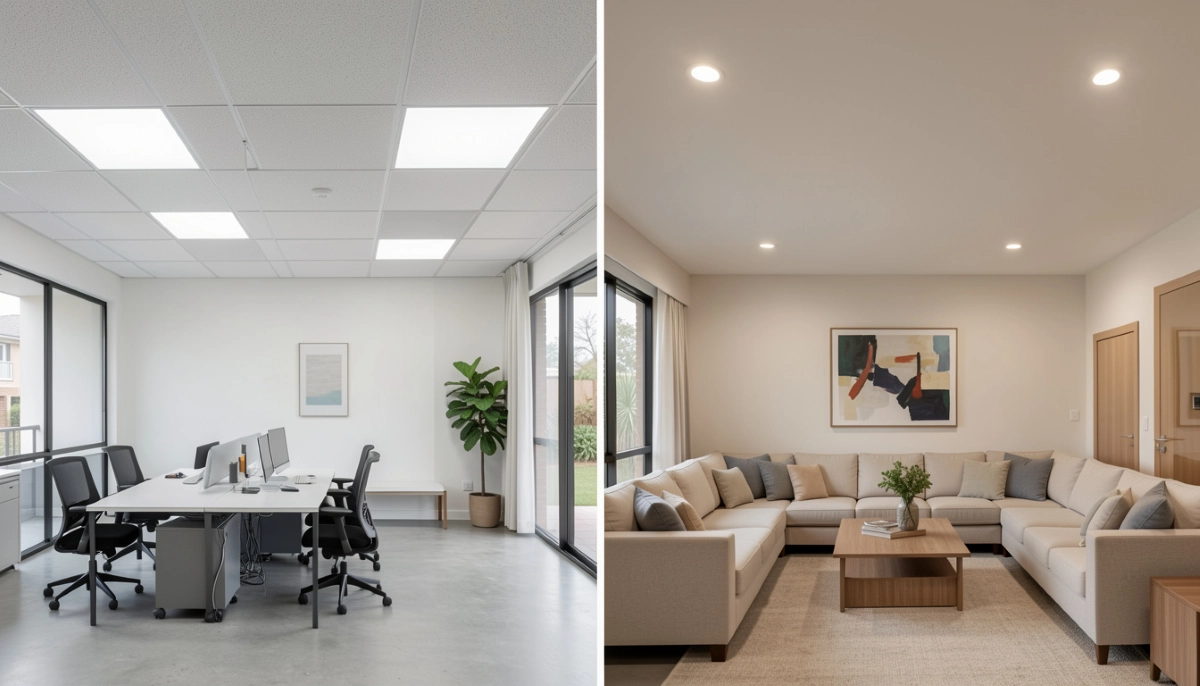
Suspended vs Flush Plastered Ceilings South Africa
🏢 Drop ceiling or smooth plaster? Grid access vs seamless finish? We compare costs, installation, maintenance, and applications.
One of the biggest decisions in any building or renovation project is choosing between a suspended (drop) ceiling and a flush plastered ceiling. Each has passionate advocates, and the right choice depends on your specific needs, budget, and application. Whether you’re building a home in Sandton, renovating an office in Pretoria, or designing a commercial space in Cape Town, this comprehensive guide compares suspended vs flush plastered ceilings across every important factor – cost, installation time, access to services, aesthetics, acoustics, and maintenance. We’ll help you make an informed decision that balances functionality, appearance, and budget.
📋 Not Sure Which Ceiling Type to Choose?
Get expert advice from experienced ceiling contractors in your area. They’ll assess your space and recommend the best solution for your needs.
Compare Local Ceiling Installers
Servicing Johannesburg, Pretoria, Cape Town, Durban, and all major areas
📖 Table of Contents – Suspended vs Flush Plastered Ceilings
📊 Quick Comparison: Suspended vs Flush Plastered Ceilings
Here’s your at-a-glance comparison of the two ceiling types across key factors.
| Feature | Suspended Ceiling | Flush Plastered Ceiling |
|---|---|---|
| Cost (installed per m²) | R300 – R450 (standard) | R220 – R350 (standard gypsum) |
| Installation Time | Fast – 1-2 days for average room | Slower – 2-4 days including drying |
| Access to Services | Excellent – tiles lift out | Poor – requires cutting access holes |
| Aesthetics | Grid visible or concealed grid options | Seamless, smooth finish |
| Acoustic Performance | Excellent with acoustic tiles | Moderate – reflects sound |
| Maintenance | Easy – replace individual tiles | More difficult – patching required |
| Headroom Reduction | 100-200mm typical | Minimal (board thickness only) |
| Design Flexibility | Modular, can mix tile types | Can create curves, bulkheads |
| Best Applications | Offices, commercial, basements | Homes, living areas, bedrooms |
Key Insight: There’s no universal “better” choice – it depends entirely on whether you prioritise access to services (suspended) or seamless aesthetics (flush plastered).
🔲 Suspended Ceilings – The Access Champion
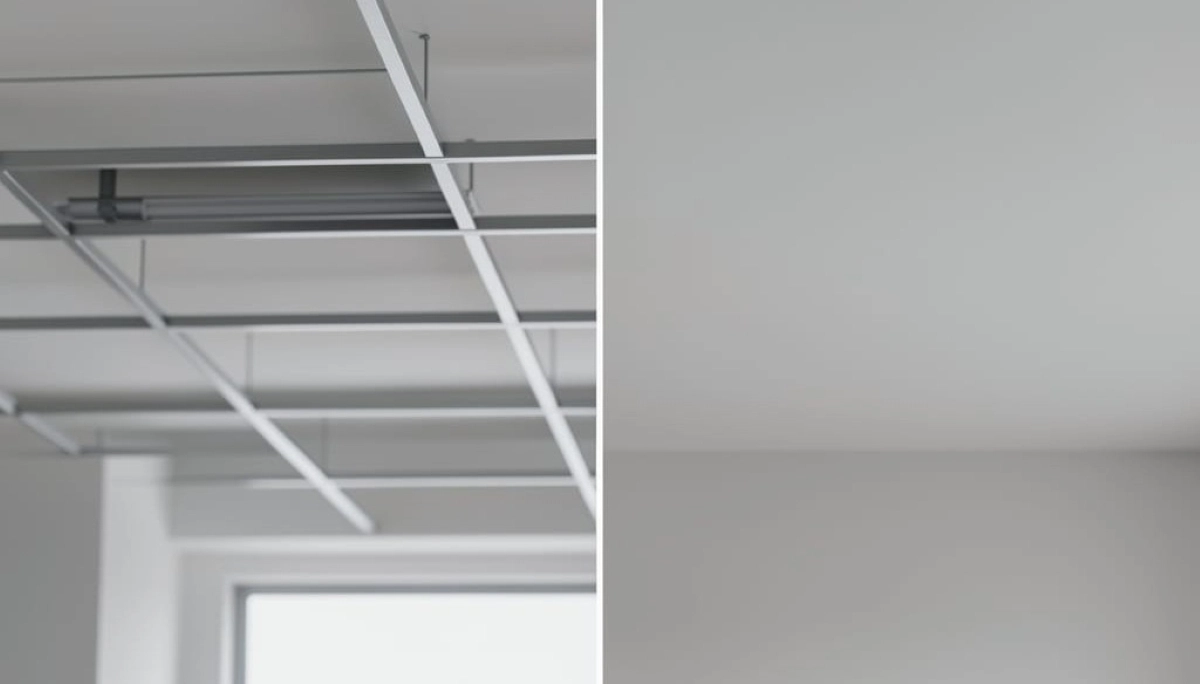
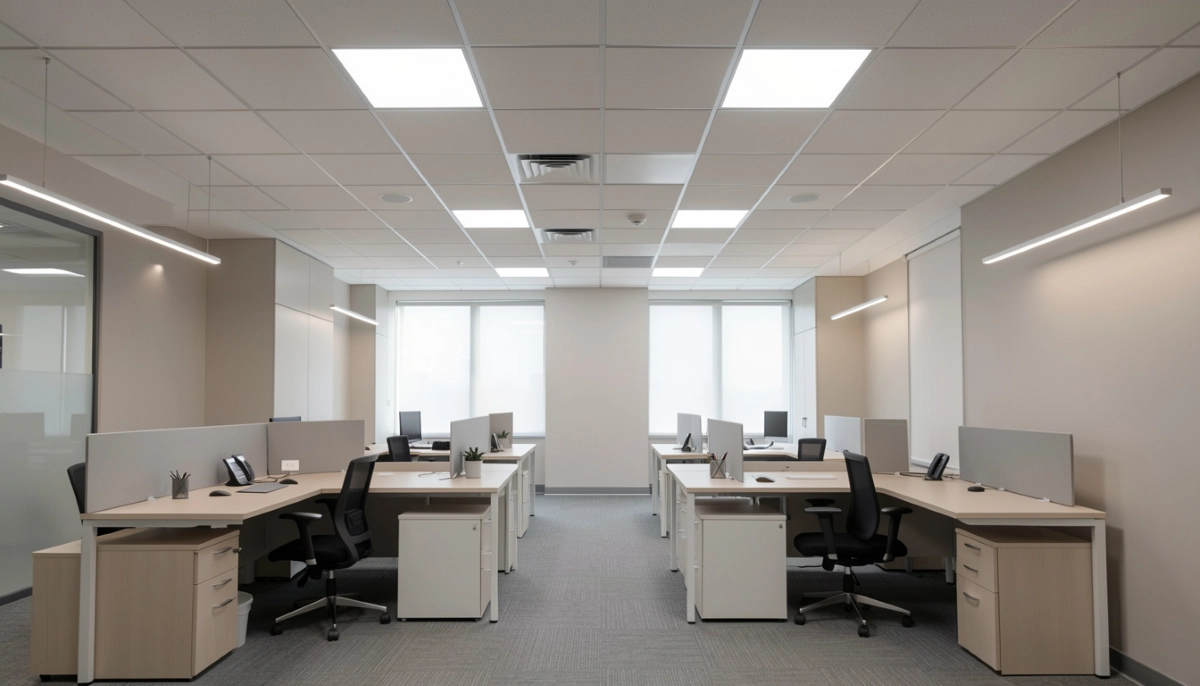
Suspended ceilings (also called drop ceilings or grid ceilings) consist of a metal grid suspended from the structural ceiling, with lightweight tiles that lay into the grid.
What Is a Suspended Ceiling?
A suspended ceiling system uses a galvanised steel grid (main tees and cross tees) hung from the structural ceiling with wires or rods. Ceiling tiles or panels are placed into the grid, creating a finished surface below.
Types of Suspended Ceilings
- Exposed grid: The grid is visible – most common in offices.
- Concealed / secret fix: Grid hidden – tiles clip together, cleaner look.
- Lay-in: Tiles simply rest in grid – easiest access.
- Clip-in: Tiles clip to grid – more secure, slightly harder to remove.
Tile Options
- Mineral fibre: Standard, good acoustics, affordable.
- Acoustic tiles: Superior sound absorption.
- PVC / vinyl faced: Moisture-resistant, easy clean.
- Metal / aluminium: Modern look, durable.
- Gypsum: Can be painted to match.
Pros of Suspended Ceilings
- Excellent access: Tiles lift out for access to wiring, pipes, ductwork – invaluable in commercial spaces.
- Hides services: Conceals unsightly cables and pipes above.
- Acoustic performance: Acoustic tiles absorb sound, reduce echo.
- Quick installation: No messy jointing or plastering.
- Easy repairs: Damaged tile? Replace it in minutes.
- Flexible: Easy to modify or add lights later.
- Fire rated options: Available for compliance.
Cons of Suspended Ceilings
- Reduces room height: Typically drops 100-200mm.
- Grid can look “commercial”: Exposed grid may feel less homely (though concealed grid options exist).
- Tile shifting: Tiles can move or fall if not properly fitted.
- Cleaning: Tiles can collect dust and may be difficult to clean.
- Less seamless: Visible joints between tiles.
Best Applications
Offices, shops, schools, hospitals, basements, commercial spaces, and any area requiring frequent access to ceiling services. Also excellent for home theatres with acoustic tiles.
See our types of ceiling materials guide for detailed tile options.
✨ Flush Plastered Ceilings – The Seamless Choice
Flush plastered ceilings (also called drywall ceilings or plasterboard ceilings) are what most South Africans think of as a standard ceiling.
What Is a Flush Plastered Ceiling?
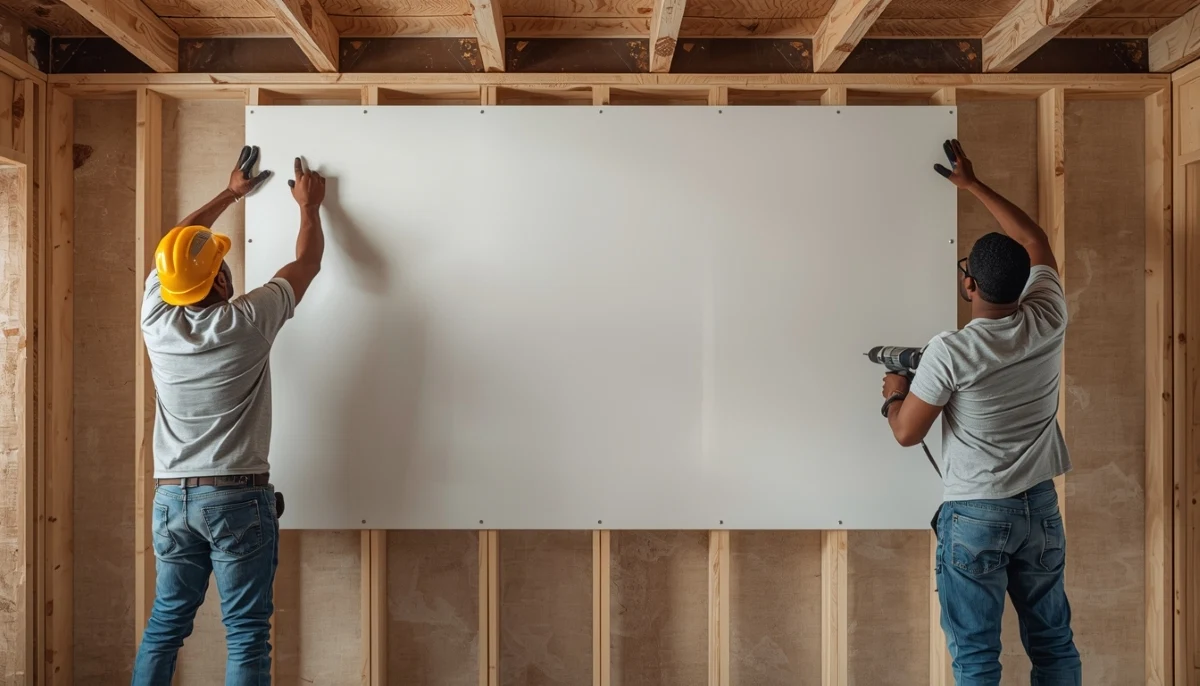
Sheets of gypsum plasterboard are fixed to ceiling battens, then the joints are taped and filled with joint compound, sanded smooth, and painted. The result is a seamless, monolithic surface.
Types of Flush Plastered Ceilings
- Standard gypsum: Most common, affordable.
- Moisture-resistant (green board): For bathrooms, kitchens.
- Fire-rated (pink board): For garages, attached dwellings.
- Impact-resistant: For high-traffic areas.
Pros of Flush Plastered Ceilings
- Seamless finish: No visible joints – smooth, elegant appearance.
- Design flexibility: Can create curves, bulkheads, coffers, recessed lighting.
- Cost-effective: Generally cheaper than suspended ceilings for homes.
- Minimal height loss: Only the board thickness (9.5-12.5mm).
- Can be painted any colour: Matches any decor.
- Familiar: What most homeowners expect.
Cons of Flush Plastered Ceilings
- Poor access: To reach services above, you must cut access holes and patch afterwards.
- Slower installation: Taping, jointing, sanding takes time and drying between coats.
- Messy: Sanding creates dust.
- Repairs are visible: Patching holes leaves痕迹 unless expertly done.
- Acoustic performance: Reflects sound – can create echo in large rooms.
- Cracking potential: Can crack if building settles.
Best Applications
Homes, living rooms, bedrooms, dining rooms, and any space where aesthetics are paramount and access to services isn’t frequently needed.
For cost details, see our ceiling installation cost guide.
💰 Cost Comparison – Installation & Materials
Cost is often a deciding factor. Here’s a detailed breakdown.
| Cost Component | Suspended Ceiling | Flush Plastered Ceiling |
|---|---|---|
| Materials – Basic | Grid: R80 – R120/m² Tiles: R70 – R120/m² |
Boards: R80 – R130/m² Battens: R20 – R40/m² |
| Materials – Premium | Acoustic tiles: R120 – R250/m² Metal tiles: R200 – R400/m² |
Fire-rated: R130 – R160/m² Moisture-resistant: R120 – R150/m² |
| Labour | R80 – R120/m² | R100 – R150/m² (incl taping/jointing) |
| Total Installed – Basic | R300 – R400/m² | R220 – R320/m² |
| Total Installed – Premium | R400 – R650/m² | R300 – R400/m² |
| 20m² Bedroom | R6,000 – R8,000 | R4,400 – R6,400 |
| 100m² Office | R30,000 – R40,000 | R22,000 – R32,000 |
Cost Insight: Flush plastered ceilings are generally 20-30% cheaper than suspended ceilings for basic installations. However, if you need acoustic tiles or frequent access, the suspended system may be better value despite higher upfront cost.
⏱️ Installation Time & Complexity
Suspended Ceiling Installation
- Time for 20m² room: 1-2 days
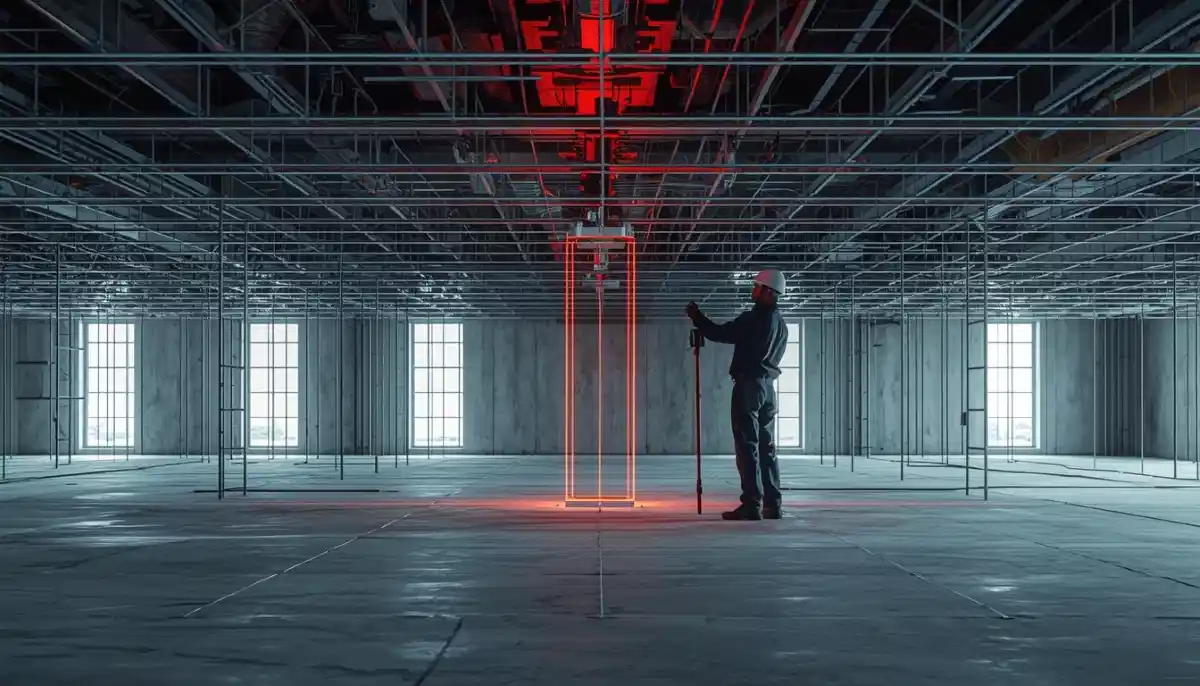
- Process: Mark levels, install perimeter angles, hang grid, level, install tiles.
- Drying time: None – usable immediately.
- Complexity: Moderate – requires careful levelling.
- Mess: Minimal – no dust from sanding.
Flush Plastered Ceiling Installation
- Time for 20m² room: 2-4 days (including drying)
- Process: Install battens, fix boards, tape joints, first coat, sand, second coat, sand, prime, paint.
- Drying time: 12-24 hours between coats.
- Complexity: Higher – taping and jointing requires skill for invisible seams.
- Mess: Significant dust from sanding.
🔧 Access to Services – The Critical Difference
This is often the deciding factor between the two systems.
Suspended Ceilings – Unbeatable Access
With a suspended ceiling, access is effortless. Tiles simply lift out, revealing the ceiling void. This is invaluable when:
- You have frequent maintenance needs (commercial kitchens, server rooms).
- Services above are likely to change (offices with evolving IT needs).
- You want to add lights, speakers, or HVAC diffusers later.
Flush Plastered Ceilings – Access Is Difficult
With a flush plastered ceiling, access requires cutting. To reach wiring or pipes, you must:
- Cut an access hole.
- Perform the work.
- Patch and repaint the hole – which never looks perfect.
This is why flush ceilings are better suited to areas where services are unlikely to need frequent access.
Compromise: Access Hatches
For flush ceilings, you can install access hatches at key points (above junction boxes, etc.). This provides limited access but maintains the seamless look elsewhere. See our regulations guide for access hatch requirements.
🏢 Need Help Choosing the Right Ceiling?
Every space is different. Get expert advice from experienced ceiling contractors who can assess your needs and recommend the perfect solution.
🎨 Aesthetics & Design Options
Suspended Ceiling Aesthetics
- Exposed grid: Industrial, commercial look. Can be modern and intentional in some designs.
- Concealed grid: Cleaner appearance – grid hidden, tiles appear almost flush.
- Tile variety: Mix and match tiles, create patterns, use different colours.
- 3D options: Some tiles have textured or 3D designs.
- Linear metal: Very modern, sleek appearance for contemporary spaces.
Flush Plastered Ceiling Aesthetics
- Seamless: The ultimate smooth finish – no visible joints.
- Design flexibility: Create curves, step-bulkheads, coffered ceilings, recessed light troughs.
- Shadow gaps: Modern detail where ceiling meets wall with a recessed gap.
- Paint any colour: White is standard, but can be any colour.
- Cornice options: Decorative cornices add elegance. See our cornice design guide.
Which Is More Attractive?
This is subjective. For homes, most people prefer the seamless look of flush plastered ceilings. For modern commercial spaces, exposed grid can be part of the design aesthetic. For contemporary homes, concealed grid suspended ceilings offer a clean look with access benefits.
🔊 Acoustic Performance
Suspended Ceilings – Excellent Acoustics
Suspended ceilings can achieve excellent acoustic performance with the right tiles:
- Acoustic tiles: Mineral fibre tiles with high NRC (Noise Reduction Coefficient) absorb sound, reducing echo.
- Perforated metal with acoustic backing: Modern look with sound absorption.
- Sound isolation: The air gap above can improve sound insulation between floors.
This makes suspended ceilings ideal for offices, call centres, home theatres, and restaurants. See our acoustic ceilings guide.
Flush Plastered Ceilings – Sound Reflection
Flush plastered ceilings are hard and reflective. They:
- Reflect sound, creating echo in large rooms.
- Do little to absorb noise.
- Can be improved with acoustic insulation above, but sound still reflects off the surface.
For homes, this is usually fine. For home theatres or noisy spaces, you may need acoustic treatment (baffles, panels).
🔧 Maintenance & Repairability
Suspended Ceilings – Easy Maintenance
- Cleaning: Wipe tiles with damp cloth. Some tiles can be vacuumed.
- Damage: Damaged tile? Simply lift out and replace. No patching, no painting.
- Water damage: Replace affected tile – cheap and easy.
- Access: For repairs above, tiles lift out, no damage to ceiling.
Flush Plastered Ceilings – Difficult Repairs
- Cleaning: Can be painted when dirty, but can’t be washed easily.
- Damage: Cracks or holes require patching, sanding, repainting – and the repair may be visible.
- Water damage: Often requires cutting out and replacing whole sections.
- Access: Cutting holes damages the finish and requires patching.
🔥 Fire Safety & Regulations
Both ceiling types can meet fire safety requirements, but the approach differs.
Fire-Rated Suspended Ceilings
- Special fire-rated grid and tiles available.
- Penetrations (lights, vents) require fire-rated downlight covers.
- Fire rating maintained by intumescent seals around penetrations.
Fire-Rated Flush Plastered Ceilings
- Use fire-rated plasterboard (pink boards).
- Double-layer boards for higher fire ratings.
- Penetrations require fire-rated downlight covers and sealant.
See our regulations guide for detailed fire safety requirements under SANS 10400-T.
📏 Room Height Considerations
Suspended Ceilings – Height Loss
Suspended ceilings typically reduce room height by 100-200mm (more if services require deeper void). In rooms with already low ceilings, this can make the space feel cramped. Minimum ceiling height regulations (2.4m for living areas) must still be met after installation.
Flush Plastered Ceilings – Minimal Loss
Flush ceilings only lose the board thickness (9.5-12.5mm) – effectively no height loss. This makes them ideal for rooms with limited headroom.
✅ Application Guide – Which Ceiling for Which Room?
| Room / Application | Recommended Ceiling Type | Why |
|---|---|---|
| Living Room | Flush plastered | Aesthetics matter most – seamless look preferred. Access to services rarely needed. |
| Bedroom | Flush plastered | Same as living room – homes expect smooth ceilings. |
| Kitchen | Either (moisture-resistant) | Flush with moisture-resistant board, or PVC tiles in suspended grid. |
| Bathroom | Suspended with PVC tiles | Easy access to plumbing above, moisture-resistant tiles, easy replacement if leaks occur. |
| Office / Commercial | Suspended | Access to IT cabling, acoustic performance, easy reconfiguration. |
| Home Theatre | Suspended with acoustic tiles | Acoustic performance essential – suspended allows acoustic tiles and insulation. |
| Basement | Suspended | Access to services, can accommodate low headroom with minimal framing. |
| Garage | Flush (fire-rated) | Cheaper, fire-rated boards if room above, no need for frequent access. |
| Restaurant / Bar | Suspended | Acoustics, access to services, easy to replace damaged tiles. |
| School / Classroom | Suspended with acoustic tiles | Acoustics critical for learning, access for maintenance. |
🏠 Real-Life Installation Examples
Example 1: Family Home, Fourways
Entire house (200m²) flush plastered ceilings.
Choice: Flush plastered
Homeowners wanted seamless finish throughout. No need for frequent access. Cost: R48,000.
Example 2: Office Park, Midrand
500m² open-plan office.
Choice: Suspended with acoustic tiles
Acoustics and IT cabling access were priorities. Cost: R175,000.
Example 3: Coastal Home, Ballito
Bathrooms and kitchen only.
Choice: Suspended with PVC tiles
Moisture resistance and access to plumbing. Rest of home flush plastered. Cost: R12,000 for wet areas.
Example 4: Home Theatre, Stellenbosch
25m² dedicated home theatre.
Choice: Suspended with acoustic tiles
Acoustic performance critical. Concealed grid for clean look. Cost: R11,500.
❌ 7 Common Mistakes When Choosing Ceiling Type
Learn from others’ errors: These mistakes cost homeowners time, money, and functionality.
Mistake #1: Flush Plastered in Commercial Spaces
Installing a flush ceiling in an office with frequent IT changes. Every time cabling needs to change, you cut holes and patch – expensive and messy.
Mistake #2: Suspended Ceiling in Low Rooms
Adding a suspended ceiling in a room with only 2.4m height reduces it to 2.2-2.3m – feels claustrophobic and may fail building regulations.
Mistake #3: Ignoring Access Needs
Putting a flush ceiling over plumbing in a bathroom. When the pipe leaks, you’re cutting holes. Suspended with PVC tiles would allow access.
Mistake #4: Cheap Tiles in Suspended Ceiling
Using cheapest mineral fibre tiles that sag, discolour, or look cheap. Invest in quality tiles for better appearance and longevity.
Mistake #5: No Acoustic Consideration
Flush ceiling in a home theatre or open-plan office without acoustic treatment – echo and poor sound quality result.
Mistake #6: Wrong Material for Environment
Standard gypsum in a coastal bathroom – moisture damage within months. Use PVC in suspended or moisture-resistant boards.
Mistake #7: Not Consulting Professionals
Choosing based on internet research alone without a site visit from a qualified ceiling contractor. Each space has unique considerations.
❓ Frequently Asked Questions – Suspended vs Flush Plastered Ceilings
Which is cheaper – suspended or flush plastered ceiling?
Flush plastered is generally 20-30% cheaper for basic installations. For a 20m² bedroom, flush costs R4,400 – R6,400 vs suspended R6,000 – R8,000. However, suspended can be more cost-effective long-term if you need frequent access.
Which ceiling type is better for soundproofing?
Suspended ceilings with acoustic tiles offer superior sound absorption. For sound isolation between floors, both can work with insulation above, but suspended allows easier installation of acoustic materials.
Can you get a seamless look with suspended ceilings?
Yes, with concealed grid systems. Tiles clip together, hiding the grid. The result is almost seamless, though fine joints are still visible on close inspection. For truly seamless, flush plastered is still best.
How much height does a suspended ceiling lose?
Typically 100-200mm, depending on services in the void. The grid itself needs 50-100mm, plus any space for ductwork or cables. Flush ceilings lose only board thickness (9.5-12.5mm).
What ceiling is best for bathrooms?
Suspended ceiling with PVC tiles is ideal. PVC is 100% waterproof, and you can access plumbing above easily. Flush plastered with moisture-resistant board works but access is difficult if pipes leak.
How long do suspended ceilings last?
Quality suspended ceilings last 20-30+ years. Tiles may need replacement sooner if damaged, but the grid system is very durable. Flush plastered ceilings also last 20-30+ years with proper maintenance.
Can I install lights in a suspended ceiling?
Yes, easily. Most suspended ceilings accept standard downlights, recessed lights, or lay-in light fixtures. Wiring is accessible from above. Flush ceilings require cutting holes and may need extra support.
Which ceiling adds more value to a home?
Flush plastered ceilings are what buyers expect in homes. Suspended ceilings can look commercial and may detract value unless in basements or specific areas. For resale, flush is safer.
Do suspended ceilings meet fire regulations?
Yes, if specified correctly. Use fire-rated grid and tiles, and ensure penetrations are sealed with fire-rated materials. Check SANS 10400-T requirements.
Which is easier to clean?
Suspended ceilings – most tiles can be wiped with a damp cloth. Flush plastered ceilings are painted and can’t be washed – they need repainting when dirty.
✅ Final Thoughts – Making the Right Choice
The choice between suspended and flush plastered ceilings comes down to three factors: access needs, aesthetics, and application.
Choose suspended ceilings if:
- You need frequent access to services above.
- Acoustic performance is critical (offices, home theatres).
- You want easy maintenance and replaceable tiles.
- The space is commercial, basement, or wet area.
Choose flush plastered ceilings if:
- Aesthetics are paramount – you want seamless finish.
- It’s a home (living rooms, bedrooms).
- Room height is limited.
- You don’t need frequent access above.
Your 4-Step Decision Plan:
- Assess your space: Room function, height, services above.
- Consider future needs: Will you need access to wiring or pipes?
- Set your budget: Include installation and long-term maintenance.
- Get professional advice: Use our quote service to connect with local experts.
🔑 The Bottom Line:
Suspended for access and acoustics.
Flush plastered for seamless beauty.
Choose based on YOUR priorities, not trends.
🏠 Ready to Choose Your Ceiling?
Get free, no-obligation quotes from experienced ceiling contractors who can advise on the best solution for your specific space.
📞 Call our ceiling advisory line: 073 138 4726
📚 Official Resources & Standards:
- Gyproc – Suspended ceiling systems and specifications.
- SASBO – Flush plastered ceiling standards and installation guides.
- SABS – Grid system compliance and fire ratings.
This guide is for informational purposes. Always consult with a qualified professional for your specific project.
Written by: Innocent T Hanyani
21+ years construction and digital industry experience, ServiceLink SA
Innocent has specified and overseen thousands of ceiling installations across South Africa, from residential homes to large commercial developments. His practical experience with both suspended and flush plastered systems ensures this guide reflects real-world considerations.