
Thatched Roof Maintenance & Fireproofing South Africa: The Ultimate Guide
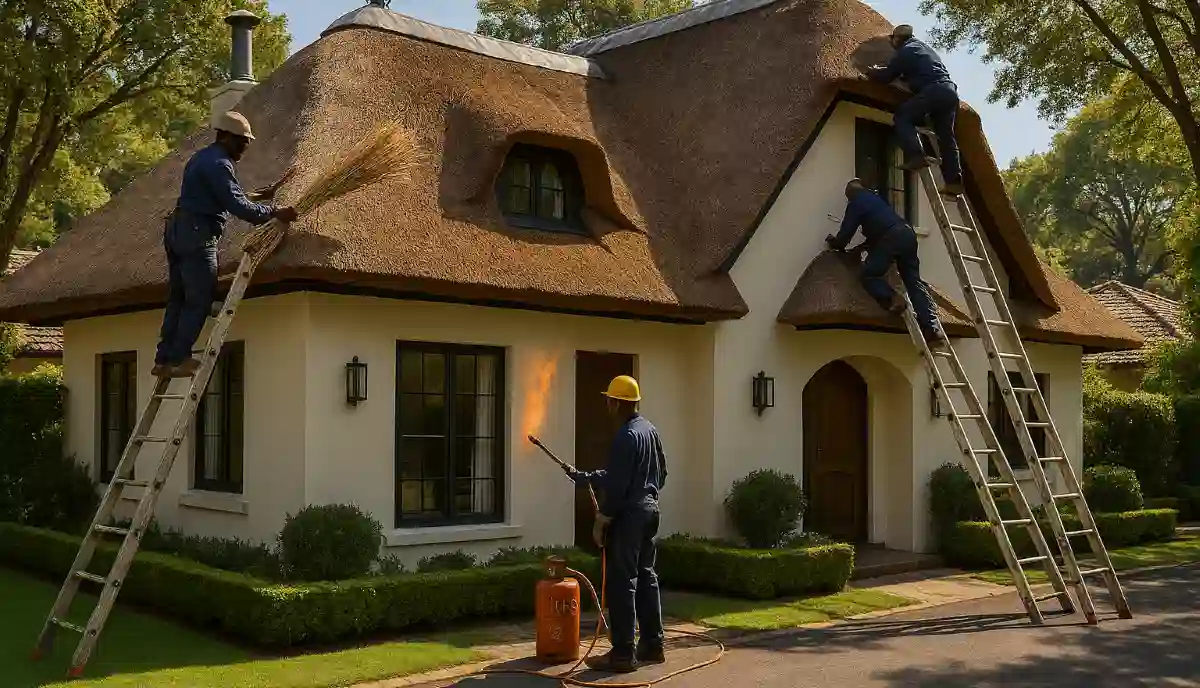
A thatched roof is a thing of beauty. It evokes images of luxury lodges in Mpumalanga, tranquil retirement homes in George, and rustic-chic cottages in Cape Town‘s Winelands. However, owning a thatch property comes with a unique set of responsibilities that go far beyond standard roof maintenance. Thatch is a natural, organic material that requires specialist care to protect it from fire, decay, and pests.
This comprehensive 2026 guide covers everything you need to know about maintaining a thatched roof in South Africa. We provide detailed information on maintenance schedules, fireproofing requirements, costs, and how to ensure your property meets strict safety and insurance standards.
In this complete guide, you’ll discover:
- Annual thatch roof maintenance tasks
- Fireproofing methods and costs (2026)
- Re-thatching and ridge replacement costs
- SANS 10400-T fire safety compliance
- Insurance requirements for thatch homes
- Beetle treatment and wire netting inspection
- How to find a specialist thatch contractor
Own a Thatch Property? Don’t Compromise on Safety
Get free, no-obligation quotes from specialist thatch roof contractors in your area for maintenance, fireproofing, or inspections.
Table of Contents
🏡 Why Thatch Roofs Need Specialist Care
Thatch is not like tile or metal. It’s a living, breathing material that is susceptible to unique threats. Neglecting a thatch roof doesn’t just lead to a leak—it can lead to a total loss of the structure, often from fire.
- Fire Risk: Dry thatch is highly flammable. A single ember from a fireplace or a lightning strike can engulf a roof in minutes.
- Decay and Rot: In damp, shady conditions, thatch can retain moisture, leading to fungal decay and rot that compromises the structure.
- Pest Infestation: Beetles, birds, and rodents can burrow into thatch, creating nests and pathways for water and further decay.
- Weather Erosion: High winds and heavy rain can erode the surface of the thatch, especially on the ridge and windward sides.
Because of these unique challenges, thatch roof maintenance must be carried out by a specialist contractor with experience in traditional thatching techniques and modern fire-retardant treatments.
📅 Thatch Roof Maintenance Schedule & Costs (2026)
Here is the recommended maintenance schedule for a thatched roof in South Africa, based on data from specialist contractors.
| Maintenance Task | Frequency | Cost Range | Notes |
|---|---|---|---|
| Annual inspection | Yearly | R1,500 – R3,000 | Checks for structural damage, weather wear, and pest activity. |
| Ridge replacement | 10-15 years | R500 – R1,200 per m² | The ridge takes the most weather damage and wears out faster. |
| Full re-thatch | 25-40 years | R800 – R1,500 per m² | Depends on reed type (Cape reed vs. Belgian reed). |
| Fire retardant treatment | 5-10 years | R80 – R180 per m² | Pressure spray application; lifespan varies by product. |
| Wire netting inspection | Yearly | Included in inspection | Check for holes or rust where birds/rodents can enter. |
| Beetle treatment | As needed | R100 – R200 per m² | For borer beetle infestations. |
🔥 Fireproofing: Why It’s Non-Negotiable
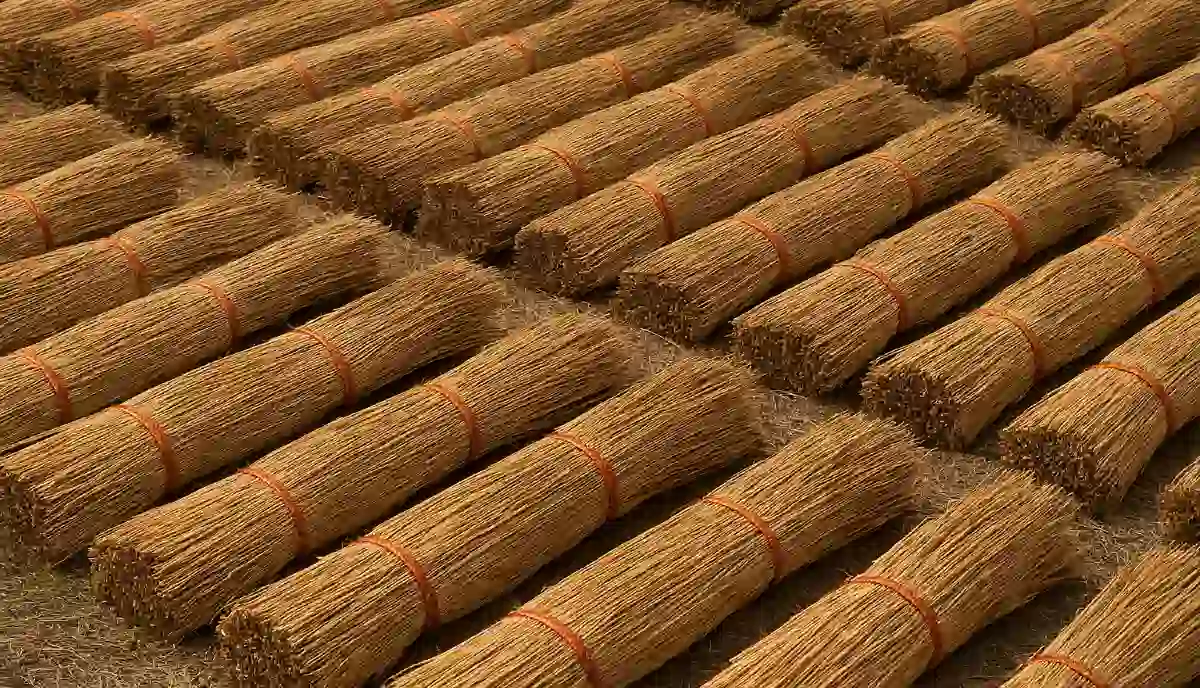
Fire is the single greatest threat to a thatched property. A dry thatch roof can ignite in under two minutes and be completely engulfed in less than 15. This is why fireproofing is not optional—it’s a critical safety measure and a non-negotiable requirement for insurance.
Fire retardant treatments work by:
- Reducing the flammability of the reed.
- Causing the reed to char rather than support a flame.
- Slowing the spread of fire, giving firefighters and occupants valuable time to respond.
Most South African insurers require a valid fire retardant certificate, renewed every 5-7 years, to maintain coverage on a thatched property.
🧯 Fire Retardant Treatment Methods & Costs
There are several methods for applying fire retardant to a thatch roof, ranging from post-construction treatments to pre-treatment of the reed itself.
| Product Type | Application | Lifespan | Cost per m² |
|---|---|---|---|
| Pressure spray (water-based) | External saturation | 5-7 years | R80 – R120 |
| Pressure spray (solvent-based) | External saturation | 7-10 years | R120 – R180 |
| Immersion treatment | During installation | 25-30 years | R200 – R300 |
| Internal barrier coating | Underside application | 10-15 years | R150 – R250 |
Immersion treatment is the most effective and longest-lasting method, but it must be done during the initial construction or a full re-thatch. Pressure spray treatments are the most common for existing roofs.
📜 SANS 10400-T Fire Requirements for Thatch Roofs
The South African National Standard SANS 10400-T (The application of the National Building Regulations – Fire Protection) sets out specific requirements for thatched roofs. Compliance is essential for building plan approval and insurance.
- Thatch roof fire rating: Must achieve a Class A rating (severe fire exposure).
- Smoke detector requirement: Mandatory in all thatched dwellings, often interconnected.
- Fire extinguisher requirement: 4.5kg dry chemical extinguishers are required on every level of the home.
- Spark arrestor (chimney): Mandatory if there is a solid fuel fireplace. This prevents embers from escaping and landing on the thatch.
- Separation distance: Minimum 5m from boundary lines and other structures to prevent fire spread.
- Wire mesh requirement: 13mm galvanized wire mesh must be installed over the thatch to provide bird and ember protection.
🛡️ Insurance Requirements for Thatch Properties
Insuring a thatched property is more complex than a standard home. Most insurers have strict requirements that must be met for coverage to be valid.
Most South African insurers require thatched roof properties to have:
- Valid fire retardant certificate (renewed every 5-7 years).
- Smoke detectors on every level, often with monitoring.
- Fire extinguishers in designated, easily accessible locations (e.g., kitchen, braai area).
- Spark arrestors on all fireplaces and chimneys.
- 13mm galvanized wire netting in good condition over the entire roof.
Failure to comply with these requirements may void your fire damage claim. Always inform your insurer of any changes to your roof and keep your fire retardant certificate up to date. For more on protecting your investment, see our guide on contractor liability insurance.
💰 Re-thatching & Ridge Replacement Costs (2026)
Eventually, every thatch roof will need its ridge replaced or a full re-thatch. Here’s what to budget.
- Ridge replacement: R500 – R1,200 per metre. The ridge is the most exposed part of the roof and typically needs replacement every 10-15 years.
- Full re-thatch (Cape reed): R800 – R1,200 per m². Cape reed has a lifespan of 25-30 years.
- Full re-thatch (Belgian reed): R1,200 – R1,500 per m². Belgian reed is denser and longer-lasting (35-40 years).
- Hybrid (synthetic/reed): R2,000+ per m². Offers a 50+ year lifespan but at a significant premium.
Example: A 150m² thatch roof using Cape reed would cost between R120,000 and R180,000 for a full re-thatch.
🌊 Coastal Thatch Considerations (Cape Town, George, Knysna)
Coastal environments present unique challenges for thatch roofs. The combination of high humidity, salt air, and strong winds requires a tailored approach.
- Challenge: High humidity. Solution: Increase roof ventilation to allow the thatch to breathe and dry out between rains. Treat for mould and algae annually.
- Challenge: Strong winds. Solution: Upgrade wire netting fixings and inspect the ridge annually for signs of wind damage or lifting.
- Challenge: Salt air. Solution: Rinse the roof with fresh water annually (low pressure) to remove salt deposits that can accelerate decay.
- Challenge: Algae growth. Solution: Apply a biocide treatment every 3-5 years to prevent algae and moss, which retain moisture.
For specialist advice in these regions, consult with George thatch specialists or Knysna thatch contractors.

🐞 Beetle & Pest Treatment for Thatch Roofs
Borer beetles are a significant threat to thatch roofs. They burrow into the reeds, weakening the structure and creating pathways for water and rot. An infestation can dramatically shorten a roof’s lifespan.
- Signs of infestation: Fine, powdery dust (frass) on ceilings or walls, small holes in the reeds, and visible beetles or larvae during certain seasons.
- Treatment: Professional application of a borate-based or synthetic pyrethroid insecticide. This is typically a pressure spray treatment that soaks into the reeds.
- Cost: R100 – R200 per m².
- Prevention: Regular annual inspections are the best defense, catching infestations early before they spread.
🕊️ Wire Netting Inspection and Maintenance
The galvanized wire netting over a thatch roof serves two critical purposes: it holds the thatch in place and, crucially, prevents birds and rodents from burrowing into the roof. It also acts as an ember guard during a fire.
- Inspection: Check the netting annually for any holes, tears, or areas where it has come loose from its fixings. Pay special attention to the ridge and edges.
- Rust: Over time, the galvanizing can wear off, especially in coastal areas, leading to rust. Rusty netting is weak and must be replaced.
- Repair: Small holes can be patched, but large areas of damage or rust require replacement. This is a specialist job as the netting must be securely fixed without damaging the thatch.
⚠️ Common Thatch Roof Mistakes
- Neglecting annual inspections: Small problems like a bird hole or a patch of beetle activity can become a major repair if caught late.
- Letting fire retardant expire: Assuming one treatment lasts forever. Mark your calendar and renew the certificate on schedule.
- Using a non-specialist contractor: A general handyman or roofer is not qualified to work on thatch. Always use a master thatcher with proven experience.
- Ignoring chimney safety: An undersized chimney or a missing spark arrestor is a leading cause of thatch fires.
- Allowing vegetation to touch the thatch: Overhanging branches or climbing plants can provide a pathway for pests and retain moisture against the roof.
- Pressure washing the thatch: High-pressure water will damage the reeds and force water deep into the roof. Only low-pressure rinses are acceptable.
✅ How to Choose a Thatch Roof Contractor
Selecting the right thatcher is the most important decision you’ll make. Look for:
- Specialization: Do they specialize in thatch? Ask how many years of experience they have.
- Portfolio: Ask for a portfolio of completed projects, especially in your area. Look for examples of ridge work and fireproofing.
- References: Ask for recent client references and actually call them. Ask about the contractor’s reliability, quality of work, and adherence to timelines.
- Insurance: Ensure they have public liability insurance. Thatching is high-risk work.
- Fire Retardant Certification: If they are applying fire retardant, they should provide a certificate of application that is recognized by major insurers.
- CIDB Registration: While not all thatchers are CIDB registered, it is a mark of a legitimate business. Check their registration if they have one.
Read our full guide on how to choose the right contractor for more tips.
⏳ Thatch Roof Lifespan by Reed Type
| Reed Type | Typical Lifespan | Cost Premium vs. Cape Reed |
|---|---|---|
| Cape reed | 25-30 years | Baseline |
| Belgian reed | 35-40 years | +30-50% |
| Hybrid (synthetic/reed) | 50+ years | +100-150% |
While Belgian reed has a higher upfront cost, its longer lifespan can make it more cost-effective over the life of the roof, especially in high-maintenance coastal areas.
🚨 Emergency Thatch Repairs
Sometimes, damage is unavoidable. High winds can lift sections of thatch, or a bird can create a large hole. In these cases, emergency repairs are needed to prevent further damage.
- Wind damage: If a section of thatch has been lifted, it needs to be re-secured immediately by a professional. Temporary tarps can be used, but thatch needs to breathe, so don’t leave them on for long.
- Storm damage: Fallen trees or branches can crush a thatch roof. This requires immediate structural assessment and repair by a specialist.
- Fire damage: Even a small fire can damage a significant area. The damaged thatch must be cut out and replaced, and the rest of the roof should be inspected for heat damage.
If you need urgent help, contact emergency roof repair services that have experience with thatch.
❓ Frequently Asked Questions
How much does thatch roof maintenance cost in South Africa?
An annual professional inspection costs between R1,500 and R3,000. Fire retardant treatment costs R80 – R180 per m² and is needed every 5-10 years. Ridge replacement costs R500 – R1,200 per metre every 10-15 years.
How often does a thatch roof need to be fireproofed?
The frequency depends on the treatment method. Pressure-sprayed treatments typically last 5-10 years. You must renew it according to the manufacturer’s specifications to maintain your insurance certificate. Immersion-treated thatch can last 25-30 years.
How long does a thatch roof last?
A Cape reed roof lasts 25-30 years. A Belgian reed roof lasts 35-40 years. With proper maintenance and fireproofing, a thatch roof can achieve its maximum lifespan.
Is it safe to have a fireplace in a thatched house?
Yes, but it must be professionally installed with the correct safety features. This includes a correctly sized chimney that extends well above the roof ridge and a spark arrestor to prevent embers from escaping. This is a strict SANS 10400-T requirement.
Does insurance cover thatch roofs?
Yes, but premiums are higher and coverage is conditional. You must provide proof of regular maintenance, a valid fire retardant certificate, and evidence that all SANS safety requirements (smoke detectors, extinguishers, spark arrestors) are met. Failure to do so can void your policy.
What is the wire mesh on a thatch roof for?
The galvanized wire mesh (usually 13mm) serves two purposes: it holds the thatch in place against wind, and it prevents birds, rodents, and other animals from burrowing into the roof. It also provides some protection against flying embers during a fire.
How do I know if my thatch roof has beetles?
Look for fine, powdery dust (frass) on ceilings, window sills, or floors. You may also see small holes in the reeds or the beetles themselves, especially in spring and summer. An annual inspection by a specialist will identify any infestation early.
Can I walk on my thatch roof?
No. Walking on a thatch roof will crush and damage the reeds, leading to premature decay and leaks. Only specialist thatchers with proper crawling boards should access the roof.
🎯 Final Advice: Your Thatch Roof Action Plan
A beautiful thatch roof is a joy, but it demands respect and care.
- Schedule your annual inspection today. Don’t wait for a problem to appear.
- Check your fire retardant certificate. Is it still valid? If not, book a treatment immediately.
- Review your insurance policy. Ensure you meet all the requirements and are fully covered.
- Find a trusted, specialist thatcher. Use a professional, not a generalist.
Protect Your Thatch Investment
Get free, no-obligation quotes from specialist thatch contractors in your area for inspections, fireproofing, or repairs.

Written by: ServiceLink SA Research Team
This guide was compiled using current data from specialist thatch contractors across South Africa and safety standards from SABS and the Fire Protection Association. Our aim is to provide accurate, unbiased information to help owners of thatch properties make informed decisions.
External references and industry standards:
- SABS – SANS 10400-T: Fire protection for buildings, including thatch roofs.
- Fire Protection Association of South Africa – Guidelines for thatch roof fire safety.
- Knysna Thatch Specialists – Industry resources and maintenance guides.
Information accurate as of February 2026. Always consult with a qualified professional for work on your thatch roof.