
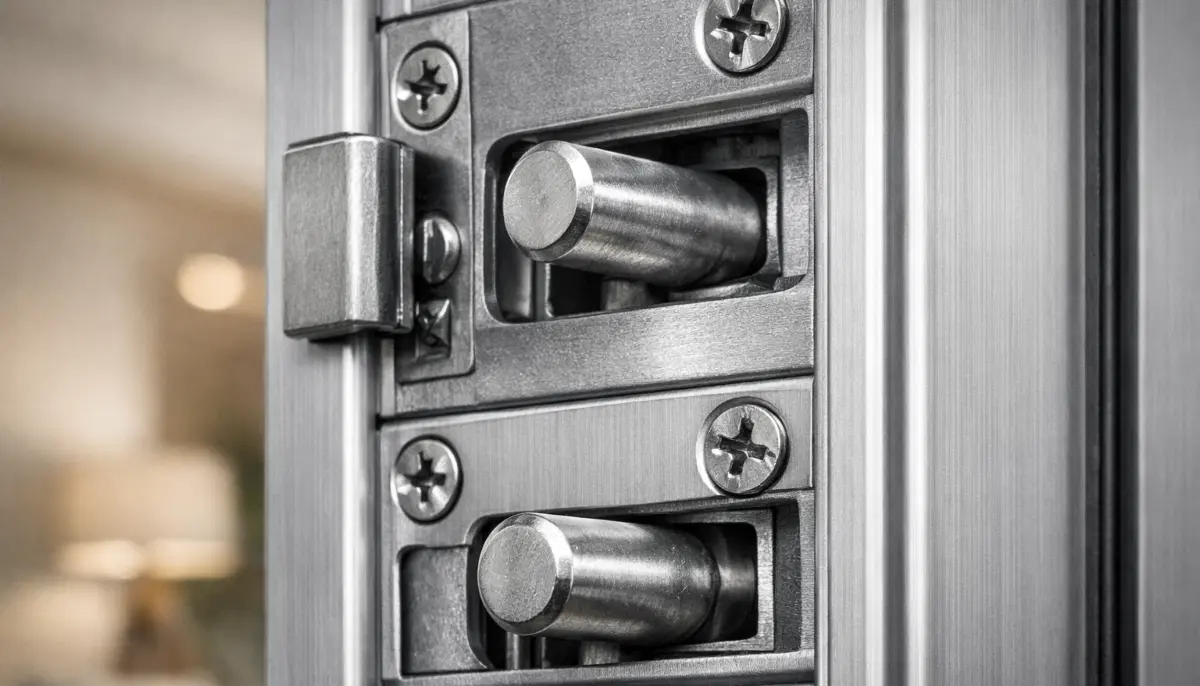
Lock Stuck or Broken?
Get free quotes from verified aluminium repair specialists. Don’t let a lock repair issue compromise your home’s security.
Get Emergency Lock Repair Quotes
Emergency services available in Gauteng, Johannesburg, Pretoria, and Sandton
How to Fix Aluminium Door Lock Problems: Complete Troubleshooting Guide
🔐 The essential guide to diagnosing and fixing faulty locks on sliding and hinged aluminium doors
Let me paint a picture that happens all too often. You’re rushing to leave for work. You pull the sliding door closed and lift the handle to lock it. Nothing happens. The latch doesn’t engage. You try again. Still nothing. Now you’re late, stressed, and worried about security.
I’ve diagnosed thousands of aluminium door lock problems across Gauteng, Johannesburg, and Pretoria. The good news? Most lock issues are simple – misaligned strike plates, loose screws, or dirty mechanisms. The bad news? Ignoring a faulty lock compromises your home’s security.
In this complete fix door lock guide, I’ll help you answer how to fix aluminium door lock problems for sliding doors, hinged doors, and multi-point locking systems. You’ll learn about common issues (stiff locks, key won’t turn, latch won’t engage), DIY fixes you can try safely, and when to call a professional for locking mechanism repair.
For more door repair guidance, read our door sticking guide, window closing guide, or security features guide. Ready to fix that lock? Let’s dive in.
📋 Table of Contents – Door Lock Repair Guide
🔒 Types of Aluminium Door Locks
Understanding your locking mechanism helps you diagnose and fix problems correctly.
Sliding door locks:
- Hook or claw lock: The most common. A hook swings into a striker plate when you lift the handle. Found on most patio sliding doors.
- Pin lock: A metal pin drops into a hole in the track. Simple but less secure. Common on older or budget doors.
- Keyed sliding door lock: A key-operated lock built into the handle assembly. Provides better security.
- Multi-point sliding lock: Locks the door at multiple points (top, centre, bottom). Premium security.
Hinged door locks (casement/entrance):
- Standard keyed cylinder lock: A standard door lock with a key cylinder and latch. The latch engages with the strike plate.
- Multi-point locking system (most common): Turning the handle activates locking hooks at multiple points along the door edge. Found on most modern hinged doors.
- Deadbolt only: A separate deadbolt above the handle. Adds security but requires two actions to lock.
French door locks:
- Similar to hinged doors but often include top and bottom shoot bolts on the inactive door.
- The active door has a standard latch that engages with the inactive door or floor.
Read our full locks buying guide for detailed specifications.

⚠️ Common Lock Problems & Diagnosis
Before attempting any lock repair, identify what’s wrong.
Sliding door lock problems:
- Handle won’t lift/lock: Dirt in mechanism, misaligned strike plate, or broken hook. Most common cause: debris in the lock assembly.
- Key won’t turn in sliding door lock: Dried lubricant or misaligned cylinder. Try silicone spray first.
- Lock hooks but door can still be opened: Worn hook or strike plate. The hook isn’t engaging fully.
- Latch won’t spring back: Spring broken – needs replacement.
Hinged door lock problems:
- Latch doesn’t engage strike plate: Door has dropped (hinge issue) or strike plate misaligned.
- Key turns but latch doesn’t retract: Broken cylinder or detached mechanism. Requires professional.
- Multi-point lock won’t engage all points: Misaligned locking rods or worn gearbox.
- Key is hard to turn or stuck: Dried lubricant or worn cylinder. Never force – you may break the key.
| Symptom | Door Type | Likely Cause | DIY Fix? |
|---|---|---|---|
| Handle won’t lift to lock位置 | Sliding door | Dirt in mechanism, misaligned strike plate | Yes – clean and lubricate first |
| Key won’t turn / hard to turn | Both | Dried lubricant, dirt, worn cylinder | Yes – lubricate; if persists, call pro |
| Latch doesn’t catch strike plate | Hinged door | Strike plate misaligned, door dropped | Yes – adjust strike plate first |
| Key broken inside lock | Both | Weak key, forcing stuck lock | Pro – requires extractor tools |
| Multi-point lock won’t engage all points | Hinged door | Misaligned rods, worn gearbox | Pro – complex mechanism |
According to SANS 10400 lock standards and SAPS security recommendations, properly functioning locks are essential for home security.
🪟 Sliding Door Lock Fixes (DIY)
Most aluminium door lock problems on sliding doors are easy to fix.
Fix #1: Clean and lubricate the lock mechanism (80% of problems)
- Open the sliding door fully.
- Locate the lock mechanism – usually at the top or bottom of the door frame.
- Use compressed air or a vacuum to remove visible dust and debris.
- Apply silicone spray lubricant to the moving parts (hook, latch, and pivot points).
- Operate the handle several times to work in the lubricant.
- Test the lock – it should operate smoothly.
- Wipe away excess lubricant (prevents dust accumulation).
Fix #2: Adjust the strike plate (if lock doesn’t engage)
- Locate the strike plate on the door frame where the lock hook engages.
- Check if the hook aligns with the strike plate opening.
- If misaligned, loosen the strike plate screws slightly.
- Move the strike plate up/down or in/out until aligned.
- Tighten screws firmly.
- Test the lock – the hook should slide in smoothly.
Fix #3: Tighten loose handle assembly
- If the handle is loose or wobbly, the lock won’t engage properly.
- Remove the handle cover plate (usually 2 screws under a snap-on cover).
- Tighten the handle mounting screws.
- Replace the cover plate.
What NOT to do: Don’t use WD-40 on locks – it attracts dust and gums up the mechanism. Use silicone spray or dry graphite lubricant only.
Read our window closing guide for related alignment fixes.

🚪 Hinged Door Lock Fixes (DIY)
Hinged doors (casement, entrance, French) have different locking mechanism issues.
Fix #1: Latch won’t engage – adjust strike plate
- Close the door and mark where the latch contacts the strike plate.
- Open the door and inspect the strike plate – is it aligned with the latch?
- Loosen the strike plate screws slightly.
- Adjust the strike plate up, down, or in/out until aligned.
- Tighten screws and test – the latch should click into place smoothly.
Fix #2: Fix loose or wobbly handle
- Look for a small screw on the handle (may be under a cover plate).
- Tighten with an Allen key or flathead screwdriver.
- If the handle is still loose, the spindle may need replacement (remove the handle to access).
Fix #3: Lubricate sticky lock cylinder
- Insert the key and spray silicone lubricant into the keyhole.
- Insert and remove the key several times to work in lubricant.
- If still sticky after lubrication, the cylinder may be worn – call a professional.
Fix #4: Adjust door alignment (if door has dropped)
- If the door has dropped, the latch won’t align with strike plate.
- Read our door alignment guide for hinge adjustment instructions.
- Adjust the hinges to raise or lower the door.
What NOT to do: Never force a deadbolt if it doesn’t engage – you’ll break the mechanism. Adjust the strike plate instead.
🔗 Multi-Point Locking System Repairs (Pro)
Multi-point locks are common on modern hinged doors. They’re complex – most repairs need a professional.
How multi-point locks work: Turning the handle operates rods that extend locking hooks at multiple points (top, centre, bottom). This provides excellent security but has many moving parts.
Common multi-point lock problems:
- Handle turns but hooks don’t extend: Gearbox failure – the internal mechanism has stripped. Requires replacement.
- Only some hooks extend: Rods are bent or misaligned. Professional adjustment needed.
- Handle is stiff: Lack of lubrication or bent rods. Try lubricating; if still stiff, call a pro.
- Lock won’t unlock: Broken gearbox or detached rod – emergency call-out may be required.
DIY limitations: You can lubricate multi-point locks (spray into the gearbox). You can also adjust the strike plates for individual hooks. But internal gearbox replacement or rod alignment requires professional expertise.
When to call a pro for multi-point locks:
- The handle turns but nothing happens (gearbox failure).
- You’ve lubricated but the lock is still stiff.
- The door won’t unlock at all.
- You hear grinding or crunching when operating the handle.
Use our repair services for professional multi-point lock repair.
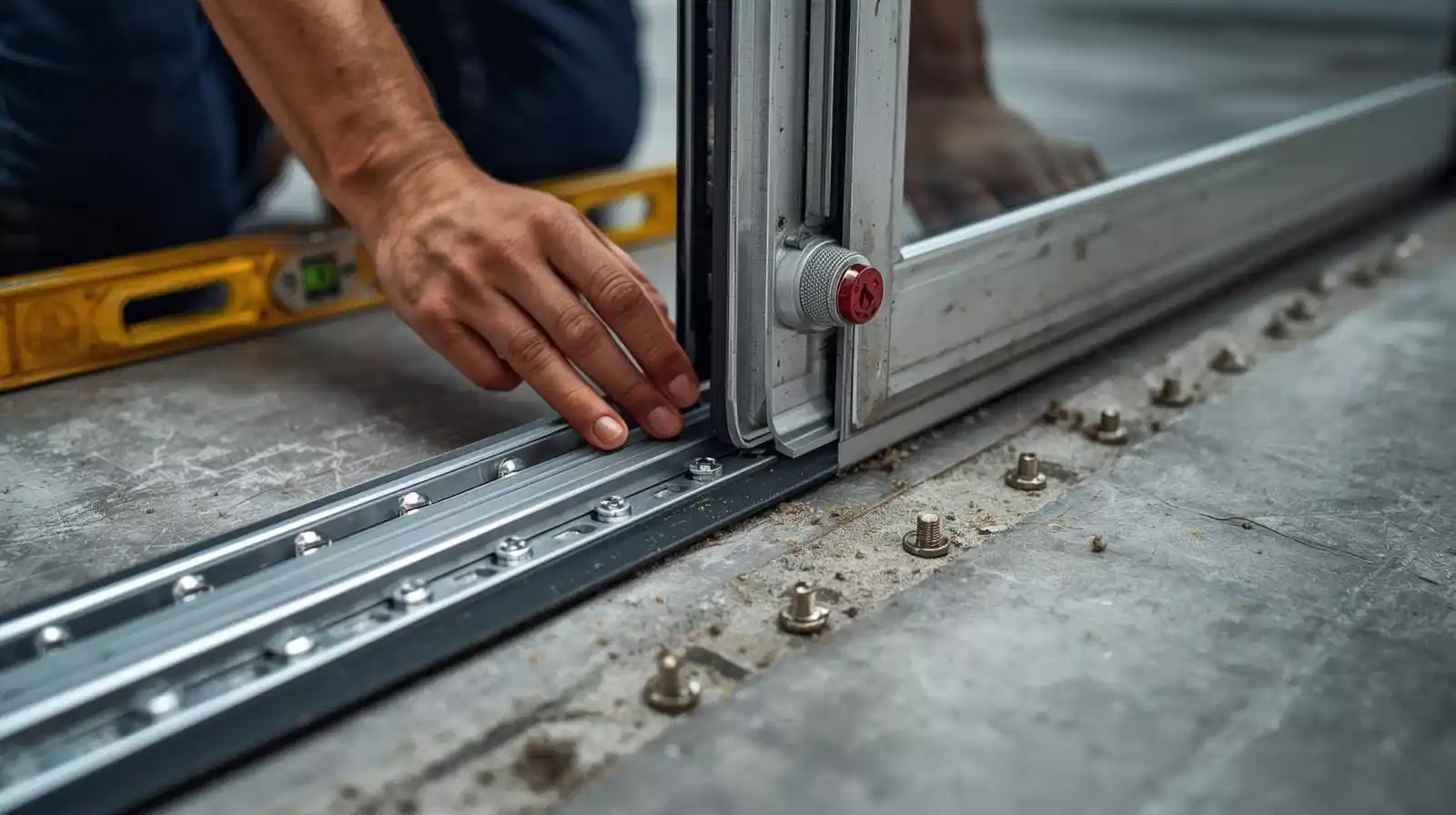
🎯 Strike Plate Adjustment – The Most Common Fix
Misaligned strike plates cause 60% of aluminium door lock problems.
How to identify strike plate issues:
- The latch or hook hits the strike plate instead of going into the hole.
- You see wear marks on the strike plate or door frame from the latch rubbing.
- The door closes but the latch doesn’t click into place.
Step-by-step adjustment:
- Open the door fully to access the strike plate.
- Mark the current position with a pencil (helps you return if needed).
- Loosen the strike plate screws (don’t remove them completely).
- Gently tap the strike plate with a screwdriver handle to move it up, down, or in/out.
- Test the alignment by closing the door slowly – the latch should enter the hole smoothly.
- Tighten the screws firmly.
- If the plate needs to move significantly, you may need to chisel the recess deeper (professional).
When to replace the strike plate: If the strike plate is badly worn (groove worn through the metal), replace it. Cost: R50-150 from a hardware store. Match the size and screw spacing.
For French doors, also check the floor-mounted strike plate (shoot bolt). Read our locks guide for more.
💧 Proper Lock Lubrication – What to Use (and What to Avoid)
Correct lubrication prevents lock repair issues and extends lock life.
What to use (recommended):
- Silicone spray: Best all-purpose lubricant for locks. Doesn’t attract dust, safe for all materials. Use on handles, latches, and multi-point mechanisms. Cost: R80-150 per can.
- Dry graphite lubricant: Excellent for key cylinders. Powdered graphite doesn’t attract dust. Best for sticky keys. Cost: R60-120 per tube.
- PTFE (Teflon) spray: Similar to silicone, excellent for moving parts.
What to NEVER use:
- WD-40: It’s a water displacer, not a lubricant. It evaporates quickly and attracts dust. Never use on locks.
- Oil (3-in-1, engine oil, cooking oil): Attracts dust and gums up the mechanism. Will cause more problems than it solves.
- Grease or petroleum jelly: Too thick for locks. Attracts dirt and hardens over time.
How to lubricate a lock correctly:
- For key cylinders: Insert the straw into the keyhole. Spray silicone or puff graphite. Insert and remove the key several times. Wipe excess.
- For sliding door hooks: Spray silicone directly onto moving parts. Operate the handle several times. Wipe excess.
- For multi-point mechanisms: Spray into the gearbox (through the handle opening). Turn the handle several times.
🎁 Pro Tip: Silicone Spray Is Your Best Friend
For 90% of aluminium door lock problems, silicone spray is the solution. It’s safe for all lock types, doesn’t attract dust, and lasts for months. Keep a can in your toolbox. At R80-150, it’s the cheapest lock repair you’ll ever buy. Apply every 6 months as preventative maintenance.
🔑 Key Problems – Stuck, Broken, or Lost Keys
Key issues are a common fix door lock challenge.
Key is stuck in the lock:
- Try lubricating with silicone spray – often frees stuck keys.
- Gently wiggle the key while pulling – don’t force.
- If the key is bent, straighten carefully with pliers.
- If still stuck, call a locksmith (professional).
Broken key inside the lock:
- Do NOT attempt to remove it yourself unless you have a key extractor tool.
- Pushing the broken piece further in will lock the mechanism permanently.
- Call a locksmith – they have extractor tools and can remove the broken piece without damage.
- Cost: R500-1,500 for extraction (may include new key cutting).
Lost keys / need spare keys:
- Take the lock cylinder to a locksmith (if removable) or call a locksmith to site.
- Most standard aluminium door locks use common key blanks – duplicates cost R50-150 each.
- If you have the key code (often stamped on the key or lock), you can order duplicates online.
Key turns but doesn’t retract latch:
- Likely a broken cylinder or detached mechanism – call a professional.
- For sliding door locks, the hook mechanism may be disconnected.
For security concerns, read our security features guide.

Lock Still Not Working?
Get free quotes from verified aluminium repair specialists. Don’t compromise your home’s security – let professionals handle your aluminium door lock problems.
Get Professional Lock Repair Quotes
24/7 emergency services • Free inspections • Workmanship guarantees
✅ Prevention – Lock Maintenance Tips
Regular maintenance prevents most aluminium door lock problems.
Quarterly maintenance (every 3 months):
- Apply silicone spray to the lock mechanism and moving parts.
- Operate the lock several times to distribute lubricant.
- Wipe excess lubricant with a cloth.
- Check that all screws are tight (handle, strike plate, hinges).
Annually:
- Remove the handle cover plate and inspect internal components for wear.
- Check that multi-point locks engage all hooks evenly.
- Tighten any loose screws.
- For coastal areas, check for corrosion – replace any rusted parts with stainless steel.
What damages locks:
- Slamming doors – shocks the lock mechanism.
- Hanging heavy items on door handles – puts sideways pressure on the lock.
- Dirt and dust accumulation – causes sticky operation.
- Using WD-40 or oil – attracts dust and gums up the mechanism.
When to replace preemptively: If your lock is 10+ years old and feels gritty or loose, replace it before it fails. A new lock costs R200-800; a break-in costs far more.
Read our full maintenance guide for more tips.
🔒 Security Upgrades for Aluminium Doors
Consider upgrading your locking mechanism for better security.
For sliding doors:
- Add a security bar: A metal bar that wedges between the sliding door and frame. Cost: R200-500. Prevents the door from being forced open even if the lock fails.
- Upgrade to a multi-point sliding lock: Locks at top and bottom. Cost: R800-2,000 + installation.
- Add a keyed lock: Many sliding doors have only a hook latch – not secure. Add a keyed cylinder. Cost: R300-800.
- Security film on glass: Makes glass harder to break. Read our security integration guide.
For hinged doors:
- Upgrade to a multi-point lock (if not already): Hooks at top, centre, and bottom. Cost: R2,000-5,000 installed.
- Add a security deadbolt: Separate deadbolt above the handle. Cost: R500-1,500.
- Use high-security cylinders: Anti-pick, anti-drill, anti-bump. Cost: R800-2,000.
- Fit hinge bolts: Prevents the door from being lifted off hinges. Cost: R200-500.
For comprehensive home security, integrate with CCTV systems and garage door security.
📞 When to Call a Professional for Lock Repair
Some how to fix aluminium door lock situations need expert help.
Call a professional immediately if:
- The key is broken inside the lock.
- The lock will not unlock (you’re locked in or out).
- The handle turns but nothing happens (likely gearbox failure).
- You’ve tried lubricating and adjusting but the problem persists.
- The door frame or door itself is damaged near the lock.
- You have a multi-point lock with multiple points not engaging.
- You’re not comfortable with DIY or lack the right tools.
What a professional locksmith can do:
- Extract broken keys without damaging the lock.
- Gain entry without destroying the door.
- Replace gearboxes and complex multi-point mechanisms.
- Re-key locks (change the keys without replacing the whole lock).
- Advise on security upgrades.
Use our repair services for professional lock repair.
💰 Aluminium Door Lock Repair Cost Estimates
Here’s what aluminium door lock problems cost to fix.
| Service | Cost Range | Includes | DIY or Pro? |
|---|---|---|---|
| Silicone spray lubricant (DIY) | R80 – R150 (per can) | Multiple uses – best value | DIY – 2 minutes |
| Strike plate adjustment (DIY) | Free (just time) | Screwdriver only | DIY – 5 minutes |
| New sliding door hook lock (part only) | R150 – R400 | Replacement lock mechanism | DIY moderate / Professional recommended |
| New hinged door lock cylinder (part only) | R200 – R600 | Standard cylinder | DIY moderate |
| Professional lockout service (emergency opening) | R500 – R1,500 | Gain entry without damage | Professional only |
| Broken key extraction (professional) | R500 – R1,500 | Extract broken key + test | Professional only |
| Multi-point lock gearbox replacement | R1,200 – R2,500 | Parts + labour + warranty | Professional only |
| Full lock replacement (hinged door, standard) | R800 – R2,000 | New lock, installation, keys | DIY moderate / Professional recommended |
Use our Beat Your Quote guarantee for competitive pricing.
❓ Frequently Asked Questions About Aluminium Door Lock Problems
Why won’t my aluminium sliding door lock?
Most aluminium door lock problems on sliding doors are caused by dirt in the mechanism, misaligned strike plate, or a worn hook. First, clean and lubricate with silicone spray (solves 80% of issues). If that doesn’t work, adjust the strike plate. If the lock still won’t engage, the hook mechanism may be worn – replace the lock assembly (R150-400).
How do you fix a door lock that won’t latch?
A fix door lock that won’t latch is usually a strike plate alignment issue. Close the door and note where the latch hits. Loosen the strike plate screws, reposition it so the latch enters the hole smoothly, then tighten. If the door has dropped (gaps at the top), adjust the hinges first. Read our door alignment guide.
Why is my key hard to turn in the lock?
A stiff key is usually caused by dried lubricant or dirt in the cylinder. Spray silicone lubricant or dry graphite into the keyhole. Insert and remove the key several times to work in the lubricant. If still stiff after lubrication, the cylinder may be worn – replace it (R200-600). Never force a stiff key – you could break it inside the lock.
What should I do if my key breaks in the lock?
If a key breaks inside your locking mechanism, DO NOT try to remove it yourself unless you have a key extractor tool. Pushing the broken piece further in will lock the mechanism permanently. Call a professional locksmith – they have extractor tools and can remove the piece without damage. Cost: R500-1,500. This is cheaper than replacing the whole lock.
Can I lubricate my door lock with WD-40?
No – never use WD-40 on locks. WD-40 is a water displacer, not a lubricant. It evaporates quickly and attracts dust, which gums up the locking mechanism. Use silicone spray or dry graphite lubricant instead. These don’t attract dust and provide long-lasting lubrication. A R150 can of silicone spray will last years and prevent most lock problems.
How much does it cost to replace a sliding door lock?
A replacement sliding door lock (hook lock) costs R150-400 for the part. DIY installation is moderate difficulty – you’ll need to remove the old lock and install the new one (allow 30-60 minutes). Professional installation costs R500-1,000 including parts. For better security, upgrade to a keyed lock (adds R200-400) or a multi-point lock (R800-2,000).
Why does my multi-point lock only lock at some points?
If your multi-point lock engages only some locking points (e.g., centre works but top and bottom don’t), the connecting rods are likely misaligned or bent. This is a common aluminium door lock problems issue. Try lubricating the entire mechanism with silicone spray. If that doesn’t help, the door may have dropped (hinge adjustment) or the rods need professional realignment. Call a specialist – this is not a DIY repair.
How do I find a reliable door lock repair specialist?
Use ServiceLink SA’s free quote service to find verified aluminium repair specialists and locksmiths. Look for: verified contractors, customer reviews, experience with aluminium doors, transparent pricing, and workmanship guarantees. For Gauteng, Johannesburg, Pretoria, or Sandton, ask for local references. For emergency lockout service, use our 24/7 emergency service.
✅ Final Thoughts: Don’t Ignore Lock Problems
After reading this aluminium door lock problems guide, you know that most lock issues have simple fixes.
A sticky latch or misaligned strike plate might seem minor – but every time you struggle to lock your door, you’re more likely to skip locking it altogether. That’s a security risk. Fixing lock problems is quick, cheap, and essential.
Start with silicone spray – it solves 80% of issues. Adjust the strike plate next. If those don’t work, call a professional. A R500-1,500 lock repair is far cheaper than a burglary.
Key takeaways for door lock repair:
- Silicone spray lubricant solves 80% of lock problems – never use WD-40
- Misaligned strike plates are the #1 cause of latch problems – adjust, don’t force
- Strike plate adjustment takes 5 minutes and requires only a screwdriver
- If a key breaks in the lock, call a professional – don’t try DIY removal
- Multi-point lock issues (gearbox, rods) need professional repair
- Lubricate locks every 6 months as preventative maintenance
- Upgrade security with security bars, deadbolts, or high-security cylinders
- Never ignore a faulty lock – it’s a security risk and will get worse
- Use ServiceLink SA to find professional help when needed
Your next step: Got a sticky lock or a latch that won’t engage? Spray with silicone lubricant today. If that doesn’t work, adjust the strike plate. Still not working? Get free quotes from verified professionals.
Lock Still Not Working?
Get free, no-obligation quotes from verified aluminium repair specialists and locksmiths. Don’t compromise your home’s security – fix your aluminium door lock problems today.
📞 Call us: 073 138 4726 for immediate lockout assistance.
Free inspections •
Hiring tips •
Beat Your Quote •
Our guarantees
📚 Official resources & standards referenced:
- SANS 10400 – South African National Standard for lock standards and building regulations.
- SAPS – South African Police Service security recommendations for home safety.
Information provided for general guidance. DIY repairs are at your own risk. For complex locks or security concerns, always consult a qualified professional locksmith.
Written by: ServiceLink SA Research Team
Specialist Aluminium Door & Security Hardware Experts
The ServiceLink SA Research Team has extensive experience diagnosing and repairing aluminium door lock problems across thousands of South African homes and businesses. Our team has worked closely with certified locksmiths, security specialists, and homeowners to develop this comprehensive fix door lock guide. This guide is based on real repair data, common failure patterns, and feedback from across Gauteng, Johannesburg, Pretoria, Sandton, Centurion, and nationwide. We update our information regularly to reflect current best practices for lock maintenance and security upgrades.
For more information about aluminium door locks and security, explore our related resources: door sticking guide, window closing guide, roller replacement guide, security features guide, and locks buying guide. Learn about our process on how ServiceLink SA works and how we verify contractors. Find specialists in your area: Gauteng, Johannesburg, Pretoria, Sandton, and Centurion. For integrated security, see our CCTV and garage doors and gates guides.