
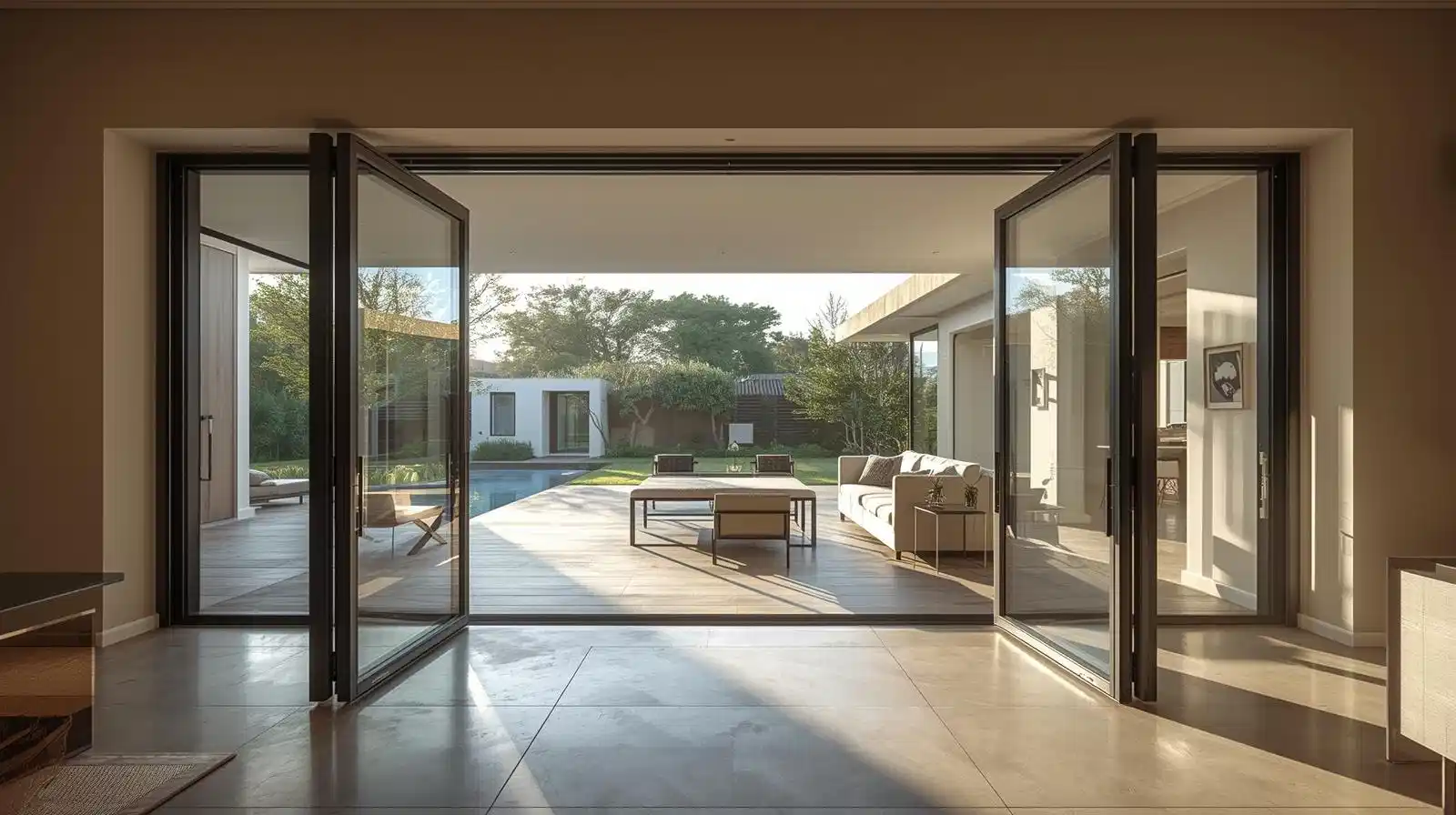
Dreaming of a Statement Pivot Door?
Get free quotes from verified aluminium fabricators. Explore modern pivot doors and find the perfect design for your home.
Servicing Gauteng, Johannesburg, Pretoria, and Sandton
Aluminium Pivot Doors for Modern Homes: Design Guide & Installation Cost SA
🚪 The complete guide to South Africa’s most dramatic entrance statement – pivot doors explained
Let me describe a moment I’ll never forget. Walking through a new home in Sandton, the architect said “wait here” and opened the front door. But it wasn’t a normal door. It was massive – floor-to-ceiling, nearly 2m wide. And it didn’t swing on hinges. It rotated. Smoothly. Silently. Dramatically. That was my first encounter with aluminium pivot doors.
Unlike traditional hinged doors that attach to the side of the frame, pivot doors rotate on a central pivot point – top and bottom. This allows for much larger, heavier doors without sagging. The result is a stunning architectural statement that transforms any entrance.
In this complete guide to aluminium pivot doors, I’ll answer what are aluminium pivot doors, explore their unique benefits and drawbacks, compare them to hinged alternatives, provide cost breakdowns, and help you decide if these revolving door-style entrances are right for your modern home.
For more aluminium guidance, check out our aluminium services, read about why choose aluminium doors, or explore French door costs. Ready to master pivot doors? Let’s dive in.
📋 Table of Contents – Pivot Door Guide
📐 What Are Aluminium Pivot Doors?
To answer what are aluminium pivot doors, think of a door that rotates on a central axis rather than swinging from the side.
How pivot doors work: Instead of hinges on the side, pivot doors use a top pivot (mounted in the header) and a bottom pivot (mounted in the floor). The door rotates around this central vertical axis. When you push one side, the door swings open – but the pivot point can be off-centre, creating an unequal swing (e.g., a 300mm/1700mm split).
Key differences from hinged doors:
- Weight is distributed through the floor and header, not just the side frame
- Allows for much larger and heavier doors (up to 150kg+ per door)
- Creates a dramatic, balanced swinging motion
- Can be manufactured with very wide panels (1.2m to 2m+ wide)
- Available in single or double pivot configurations
- Requires structural floor and header reinforcement
Common configurations:
- Off-centre pivot (most common): Pivot point is offset – creates a small swing side and large swing side. Typically 200-400mm on the small side, rest on the large side.
- Centre pivot: Door rotates exactly from the centre – equal swing on both sides. Less common for entrances.
- Double pivot doors: Two pivot doors that meet in the middle – massive entrance statement.
- Flush pivot (invisible): Pivot mechanism hidden within the door and frame for a seamless look.
According to SANS 10400 door standards and SAQA installation qualifications, pivot doors require certified installers due to structural complexity.
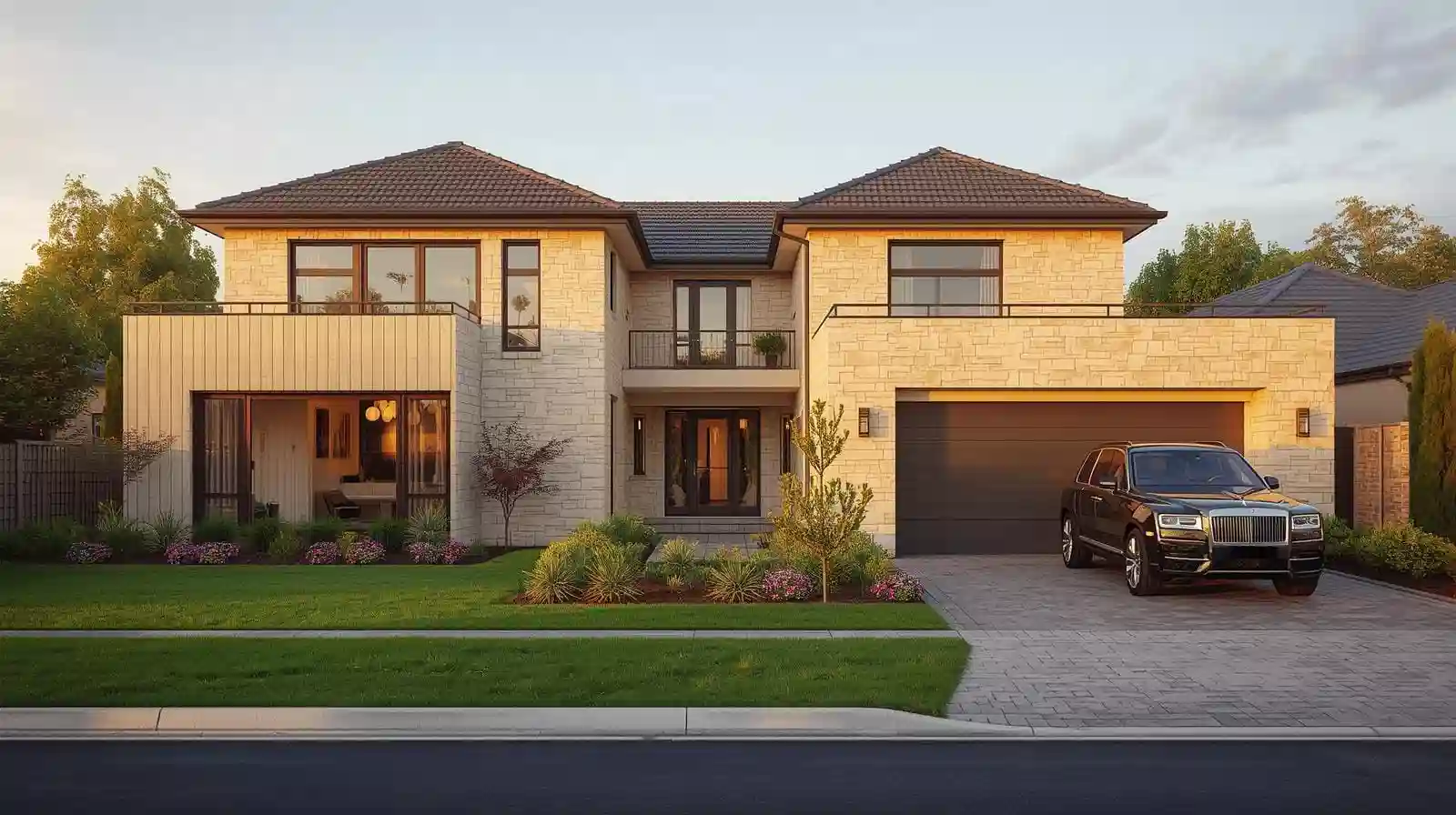
✅ Key Benefits of Aluminium Pivot Doors
Here’s why modern pivot doors are the choice of architects for luxury homes.
1. Dramatic Architectural Statement
No other door type makes an entrance like a pivot door. The massive scale, the smooth rotation, the minimalist hardware – it immediately communicates luxury and sophistication. For modern homes, pivot doors are almost expected.
2. Allows Much Larger Doors
Traditional hinged doors are limited to about 1.2m wide before hinges can’t handle the weight. Pivot doors can be 1.5m, 1.8m, even 2m+ wide. The weight is transferred through the floor and header, not just the side frame. This creates a stunning floor-to-ceiling glass panel or solid door.
3. Smooth, Effortless Operation
Despite their weight, quality pivot doors operate smoothly with minimal effort. The pivot mechanism uses sealed bearings – even a 150kg door can be opened with one finger. No sagging, no rubbing, no sticking.
4. Clean, Minimalist Aesthetic
No visible hinges on the side. No bulky handle required (though you can add one). Just a clean panel that rotates. This minimalist look is perfect for contemporary architecture.
5. Excellent for Glass Panels (Full-Height Glazing)
Pivot doors are ideal for floor-to-ceiling glass panels. The absence of side hinges means you see uninterrupted glass. Creates a seamless indoor-outdoor connection.
6. Can Be Used Internally or Externally
Pivot doors work as dramatic entrance doors, internal room dividers, or patio entrances. With thermal break profiles and double glazing, they perform well as exterior doors.
7. Unique Swing Experience
The off-centre pivot creates a unique opening experience. The door “folds” open rather than swinging wide. In tight spaces, you can pivot the door to create a smaller swing arc on one side.
🎁 Pro Tip: Perfect for Narrow Entrances
In tight spaces like hallways or small foyers, an off-centre pivot door can be designed so the small swing side (200-300mm) faces the narrow area. The large swing side opens into the more spacious room. This is impossible with hinged doors. For Sandton townhouses with limited space, pivot doors are often the smartest solution.
❌ Drawbacks to Consider Before Buying
Honest assessment means acknowledging where aluminium pivot doors fall short.
1. Significantly More Expensive
Pivot doors cost 2-3x more than standard hinged doors. A premium pivot door system can cost R30,000 – R80,000+ just for the door, plus installation. The pivot hardware alone is R5,000 – R15,000.
2. Complex Installation – Requires Structural Work
Pivot doors need reinforced floor and header to handle the weight. Existing homes may need structural modifications (adding steel beams, reinforcing concrete). Installation is not DIY – requires specialist installers.
3. Floor and Ceiling Must Be Perfectly Aligned
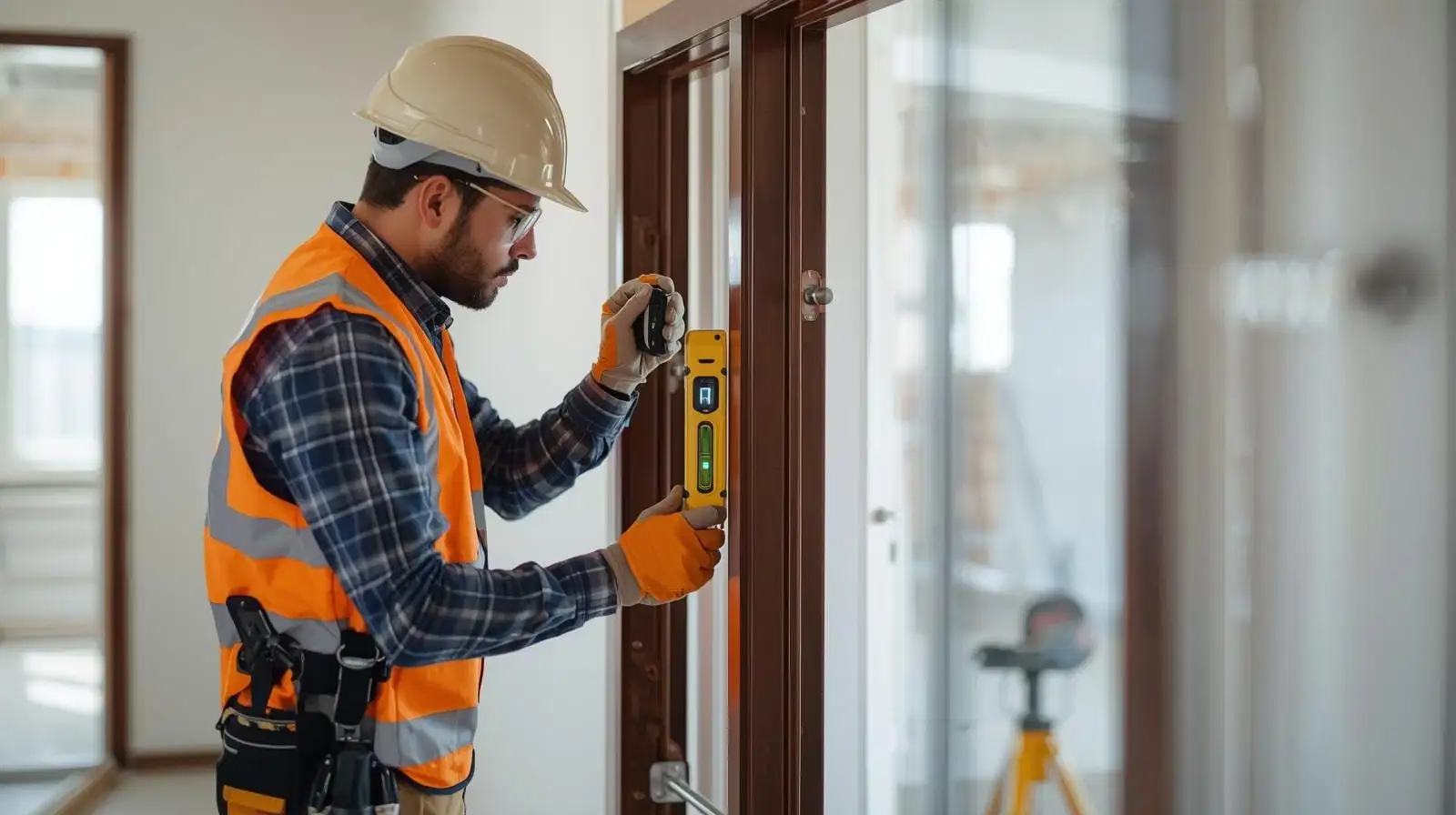
The top and bottom pivots must be exactly aligned vertically. Any misalignment causes binding or uneven gaps. In existing homes, floors and ceilings are rarely perfectly aligned – corrections are expensive.
4. Heavy – Difficult to Replace or Repair
Once installed, a pivot door is difficult to remove or replace. The weight (often 100-200kg) requires multiple people and specialised equipment.
5. Limited Hardware Options
Unlike hinged doors where you can choose any handle, pivot doors have limited hardware options. The handle must be designed for the specific pivot mechanism. Typically only minimalist handles work aesthetically.
6. Can Be Drafty (Poor Sealing)
Standard pivot doors don’t seal as tightly as hinged doors. The pivot mechanism creates gaps at top and bottom. For exterior applications, specify upgraded seals and thermal break profiles.
7. Not Suitable for Every Architectural Style
Pivot doors look distinctly modern. They look out of place in traditional Cape Dutch, Victorian, or rustic homes. Match the door style to your architecture.
⚠️ Warning: Check Your Floor!
Before ordering aluminium pivot doors, have a structural engineer assess your floor. The bottom pivot transfers significant weight directly to the floor. Standard concrete slabs may need reinforcement. For second-storey installations, this is critical. Don’t skip this step – I’ve seen floors crack under heavy pivot doors.
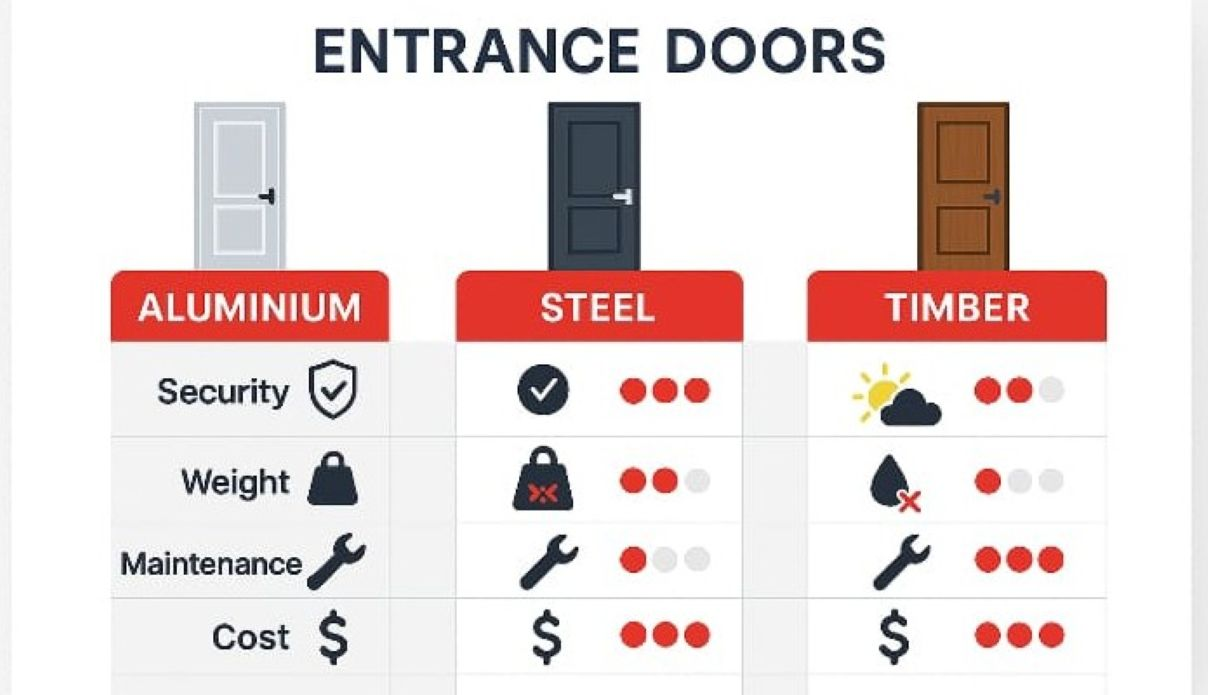
📊 Pivot Doors vs Hinged Doors – Complete Comparison
Here’s how aluminium pivot doors compare to traditional hinged doors.
| Feature | Pivot Doors | Hinged Doors | Winner |
|---|---|---|---|
| Maximum width+? | 1.5m – 2.5m+ (very wide possible)+? | 0.9m – 1.2m max for standard hinges+? | Pivot (much wider) |
| Maximum weight capacity+? | 150kg – 300kg+RSU | 40kg – 80kg (standard) / 100kg (heavy-duty)+? | Pivot (handles massive panels) |
| Cost (standard size)+? | R15,000 – R40,000+ per door+RSU | R5,000 – R15,000 per door+RSU | Hinged (2-3x cheaper) |
| Installation complexity+? | Very high – requires structural reinforcement+? | Moderate – standard installation+? | Hinged (much easier) |
| Aesthetic – minimalist look+? | Excellent – no visible hinges+? | Good – hinges visible on one side+? | Pivot (cleaner look) |
| Space-saving swing+? | Good – off-centre pivot creates smaller swing arc+? | Poor – full-width swing arc+? | Pivot (better for tight spaces) |
| Energy efficiency (standard)+? | Fair – gaps at pivot points+? | Good – compression seal+? | Hinged (better sealing) |
| Suitable for DIY+? | No – specialist only+? | Yes – experienced DIY possible+? | Hinged (DIY-friendly) |
| Hardware options+? | Limited – specialised pivot hardware+? | Wide range – many handle/lock options+? | Hinged (more choice) |
| Best application | Statement entrances, modern homes, large openings | Standard rooms, traditional homes, budget projects | Depends on project |
Verdict: Choose pivot doors for dramatic entrances, modern architecture, and very wide openings. Choose hinged doors for budget projects, traditional homes, and where simplicity matters.
For other comparisons, read our aluminium vs steel guide.
Ready to Make a Statement with a Pivot Door?
Get free quotes from verified aluminium fabricators specialising in pivot door installation. Transform your entrance today.
🎨 Aluminium Pivot Doors – Design Options & Configurations
Modern pivot doors come in many configurations to suit your home.
Glass pivot doors (most popular):
- Full-height glass panels – create seamless indoor-outdoor connection
- Frameless or slim-framed designs – minimalist aesthetic
- Double glazing available for energy efficiency
- Frosted or textured glass for privacy
- Cost: R20,000 – R50,000+ depending on size and glass specification
Solid aluminium pivot doors:
- Solid panel with clean, modern lines
- Excellent for privacy and security
- Can be powder-coated any RAL colour
- Cost: R15,000 – R35,000+ depending on size
TIMBER-look aluminium pivot doors:
- Wood grain finish on aluminium – timber look without maintenance
- Suitable for homes wanting warmth but practicality
- Cost: Add 15-25% to solid aluminium prices
Double pivot doors:
- Two pivot doors meeting in the middle – massive 3-4m wide entrance
- Both doors pivot independently
- Creates spectacular grand entrance
- Cost: R50,000 – R120,000+ for the pair + installation
Flush (invisible) pivot doors:
- Pivot mechanism completely hidden
- No visible hardware, no visible frame on one side
- Ultimate minimalist design – door appears to float
- Cost: Significantly more – add R10,000 – R25,000
For custom designs, read our custom fabrication guide.
💰 Aluminium Pivot Door Cost Breakdown
Here’s a realistic breakdown of aluminium pivot doors costs in South Africa.
| Component | Budget Range | Premium Range | Notes |
|---|---|---|---|
| Pivot door only (supply, 1.2m x 2.4m) | R12,000 – R20,000 | R20,000 – R40,000 | Glass vs solid panels and hardware quality affect price |
| Pivot hardware mechanism | R4,000 – R8,000 | R8,000 – R15,000 | German vs local hardware, weight capacity matters |
| Double glazing upgrade | R2,000 – R4,000 | R4,000 – R8,000 | Per door – improves insulation and noise reduction |
| Structural reinforcement | R5,000 – R10,000 | R10,000 – R25,000 | Steel beams or reinforced framing for heavy doors |
| Pivot door installation labour | R5,000 – R8,000 | R8,000 – R15,000 | Requires specialist installers |
| Total installed cost (standard pivot door) | R26,000 – R46,000 | R46,000 – R80,000+ | Depends on door size, glazing, and structural support |
Size impact on cost:
- 1.2m wide pivot door: R26,000 – R50,000+ installed
- 1.5m wide pivot door: R35,000 – R65,000+ installed
- 1.8m wide pivot door: R45,000 – R85,000+ installed
- 2.0m+ wide pivot door: R60,000 – R120,000+ installed
- Double pivot doors: R60,000 – R150,000+ installed
For pricing comparisons, read our French door cost guide and brand quality guide.
🛠️ Pivot Door Installation – What’s Involved
Pivot door installation is complex and requires specialist skills. Here’s what’s involved.
Step 1: Structural assessment (critical)
- Engineer assesses floor and header capacity
- Determines if reinforcement needed (steel beams, concrete reinforcement)
- Provides specifications for pivot mechanism mounting
- Cost: R2,000 – R5,000 for assessment
Step 2: Structural reinforcement (often required)
- Install steel beams in header to support top pivot
- Reinforce floor slab for bottom pivot (may involve cutting and pouring new concrete)
- Ensure wall is plumb and opening is square
- Cost: R5,000 – R25,000 depending on work
Step 3: Frame and pivot installation
- Install outer frame (must be perfectly square)
- Mount top and bottom pivot mechanisms exactly aligned
- Check alignment with laser level – within 1mm tolerance
- Cost: Included in installation labour
Step 4: Door panel hanging
- Heavy panel (100-200kg) lifted into place
- Pivot pins inserted into mechanisms
- Door adjusted for smooth operation
- Requires 2-3 installers and glass suction cups
Step 5: Hardware and finishing
- Install handle (minimalist design – standard for pivot doors)
- Add lock mechanism if required
- Apply weather seals (exterior applications)
- Clean and final inspection
Total installation timeline: 2-5 days including structural work. The door itself takes 1-2 days to install once structural work is complete.
Read our contractor hiring guide to find pivot door specialists.
🏗️ Structural Requirements for Pivot Doors
Understanding structural needs is essential before ordering modern pivot doors.
Floor requirements:
- Bottom pivot transfers weight directly to the floor – not the frame
- Standard concrete slab (100mm) may be adequate for doors up to 100kg
- Heavier doors (>150kg) require reinforced slab (150mm+ or additional steel)
- Timber floors cannot support pivot doors – structural reinforcement required
- Second-storey installations always require structural engineer assessment
Header (top) requirements:
- Top pivot transfers some weight and lateral forces
- Requires solid mounting – timber headers often inadequate
- Steel header beam recommended for doors over 100kg
- Must be perfectly level across the entire width
Wall requirements:
- The wall must be able to handle the pivot mechanism fixings
- Brick or concrete walls are fine
- Drywall/plasterboard walls are completely unsuitable – require structural framing
When you MUST hire a structural engineer:
- Door weight exceeds 100kg
- Second-storey or above installation
- Timber floors anywhere in the building
- Any uncertainty about structural capacity
Never skip structural assessment – failed pivot doors cause serious damage and injury risk. For related structural work, see our building construction guide.
🚫 Common Mistakes to Avoid with Pivot Doors
⚠️ Warning: These Mistakes Ruin Pivot Door Performance
Avoid these errors when selecting or installing aluminium pivot doors.
- Skipping structural engineering assessment: The most common and dangerous mistake. Inadequate floor/header support causes failure and injury.
- Installing on standard timber floor: Timber cannot support pivot door weight. Requires structural reinforcement or steel frame.
- DIY installation: Pivot doors are not DIY. Specialist tools, experience, and multiple people required. Professional installation is mandatory.
- Cheap pivot hardware: Low-quality pivot mechanisms fail under heavy doors. Invest in German or European hardware. Cost difference is R3,000-5,000 – worth it.
- Not accounting for thermal movement: Aluminium expands and contracts. Fixings must allow slight movement – rigid mounting causes stress.
- Poor alignment tolerances: Even 2mm misalignment causes binding. Laser level is non-negotiable.
- Single-glazed glass for exterior: Pivot doors have poor standard sealing. Exterior applications require double glazing and upgraded weather seals.
- Inadequate weather sealing: Standard pivot doors can be drafty. Specify upgraded compression seals for exterior use.
For repair issues, see our repair services.
✅ When Should You Choose Aluminium Pivot Doors?
Based on this guide, here’s my practical advice on when aluminium pivot doors are the right choice.
Choose pivot doors when:
- You want a dramatic architectural statement for your entrance
- Your home has modern or contemporary architecture
- You have a wide opening (1.5m+) where hinged doors would be impractical
- Budget allows for premium pricing (R30,000 – R80,000+ installed)
- You have structural capacity (concrete floor, reinforced header)
- You want a minimalist look with no visible hinges
- You’re building new or doing major renovation – easier to plan structural reinforcement
- You want a glass entrance that feels seamless
Consider hinged doors instead when:
- Budget is limited – hinged doors cost 1/2 to 1/3 of pivot doors
- Your home has traditional architecture (Cape Dutch, Victorian, rustic)
- You have standard width openings (under 1.2m)
- You’re retrofitting into existing home without structural work
- You want to DIY or use standard installers
- Energy efficiency is a top priority (hinged seals better)
For other modern door options, read our French door guide or custom fabrication guide.
❓ Frequently Asked Questions About Aluminium Pivot Doors
What are aluminium pivot doors and how do they work?
What are aluminium pivot doors? They’re doors that rotate on a central vertical pivot point (top and bottom) rather than swinging from side hinges. This allows much larger, heavier doors (1.5-2.5m wide, 100-300kg). The pivot mechanism uses sealed bearings for smooth operation. When you push the door, it rotates around the pivot point – often offset for unequal swing widths.
How much do aluminium pivot doors cost in South Africa?
Aluminium pivot doors cost R12,000 – R40,000+ supply only, or R26,000 – R80,000+ installed depending on size and specification. A standard 1.2m pivot door costs R26,000-50,000 installed. A premium 1.8m full-glass pivot door with double glazing costs R60,000-85,000+. Double pivot doors (3.6m opening) cost R60,000-150,000+ installed. Structural reinforcement adds R5,000-25,000.
What is the difference between pivot and hinged doors?
Pivot doors rotate on a central axis (top and bottom pivots), allowing much wider (1.5-2.5m+) and heavier (>150kg) doors. Hinged doors swing from side hinges, limited to about 1.2m width and 80kg weight. Pivot doors cost 2-3x more, require structural reinforcement, and offer a cleaner minimalist look with no visible hinges. Hinged doors are cheaper, easier to install, and seal better for energy efficiency.
Are pivot doors more expensive than French doors?
Yes – significantly. A standard double aluminium pivot door (1.8m opening) costs R45,000-85,000+ installed vs R15,000-30,000 for French doors of similar width. Pivot doors are more expensive due to complex hardware, heavier construction, structural requirements, and specialist installation. French doors offer better value for most homes. Read our French door cost guide.
Do pivot doors need structural reinforcement?
Often yes – this is critical for pivot door installation. The bottom pivot transfers weight directly to the floor. Standard concrete slabs may be adequate for doors under 100kg. Heavier doors (>150kg) require reinforced floor. Timber floors always need reinforcement or are unsuitable. The header also needs solid mounting – steel beam recommended for heavy doors. Always have structural engineer assessment before ordering.
Can pivot doors be used as exterior doors?
Yes, but with upgrades. Standard pivot doors have poor weather sealing – gaps at pivot points. For exterior use, specify: thermal break profiles (reduce heat transfer), double glazing (energy efficiency), upgraded compression seals (block draughts/water), and marine-grade hardware (coastal areas). Even with upgrades, pivot doors don’t seal as tightly as quality hinged doors. Consider your climate before choosing pivot for exposed locations.
How long do pivot doors last?
Quality modern pivot doors with premium hardware last 20-30+ years. The pivot mechanism itself can last 20+ years with proper maintenance (annual lubrication). The aluminium frame lasts 40-50+ years. Cheaper hardware may fail in 5-10 years. Invest in German or European pivot hardware – the price premium (R3,000-5,000) is worth it for longevity. Stainless steel hardware essential for coastal areas.
How do I find a qualified pivot door installer?
Use ServiceLink SA’s free quote service to find verified aluminium fabricators specialising in pivot doors. Ask potential installers: How many pivot doors have you installed? Can you provide references of completed projects? Do you work with a structural engineer? What pivot hardware brands do you use? What warranty do you offer? Read our contractor guide for more.
✅ Final Thoughts: Pivot Doors – The Ultimate Design Statement
After reading this aluminium pivot doors guide, you understand why these are the choice of architects for luxury modern homes.
Pivot doors are not for every home or every budget. They cost 2-3x more than hinged doors, require structural engineering, and need specialist installation. But for the right project – a modern home, a dramatic entrance, a wide opening with a view – pivot doors create a statement that no other door type can match.
If you’re building new or doing a major renovation, consider pivot doors for your main entrance. The dramatic impact, the smooth operation, the minimalist aesthetic – they transform how you experience your home. Just budget appropriately (R30,000-80,000+ installed) and hire specialists.
Key takeaways for aluminium pivot doors:
- Budget R26,000 – R80,000+ for a standard pivot door installed
- 2-3x more expensive than hinged doors – but allows much wider panels
- Requires structural engineering – floor and header must support weight
- Specialist installation only – not a DIY project
- Best for modern homes, dramatic entrances, and wide openings
- Exterior use requires thermal break, double glazing, and upgraded seals
- Stainless steel hardware essential for coastal areas
- Use ServiceLink SA to find verified pivot door specialists
Your next step: Ready to install a stunning pivot door? Get free quotes from verified aluminium fabricators specialising in pivot door installation.
Ready to Install a Stunning Pivot Door?
Get free, no-obligation quotes from verified aluminium fabricators specialising in aluminium pivot doors. Transform your entrance today.
📞 Call us: 073 138 4726 to discuss your pivot door project.
Free inspections •
Hiring tips •
Beat Your Quote •
Our guarantees
📚 Official resources & standards referenced:
- SANS 10400 – South African National Standard for door standards and building regulations.
- SAQA – South African Qualifications Authority for installer qualification verification.
Information provided for general guidance. Pivot doors require structural engineering assessment and specialist installation. Always consult qualified professionals.
Written by: ServiceLink SA Research Team
Specialist Aluminium Doors & Architectural Design Experts
The ServiceLink SA Research Team has extensive experience with aluminium pivot door installations across luxury homes in South Africa. Our team has worked closely with certified fabricators, structural engineers, and architects to develop this comprehensive aluminium pivot doors guide. This guide is based on real project data, fabricator quotes, and installation feedback from across Gauteng, Johannesburg, Pretoria, Sandton, Rosebank, and nationwide. We update our information regularly to reflect current market conditions and material costs.
For more information about aluminium doors, explore our related resources: why choose aluminium, French door cost, custom fabrication guide, material comparison, and brand quality guide. Learn about our process on what is ServiceLink SA and how we verify contractors. Find fabricators in your area: Gauteng, Johannesburg, Pretoria, Sandton, and Rosebank. For related services, see our painting services and building construction guides.