
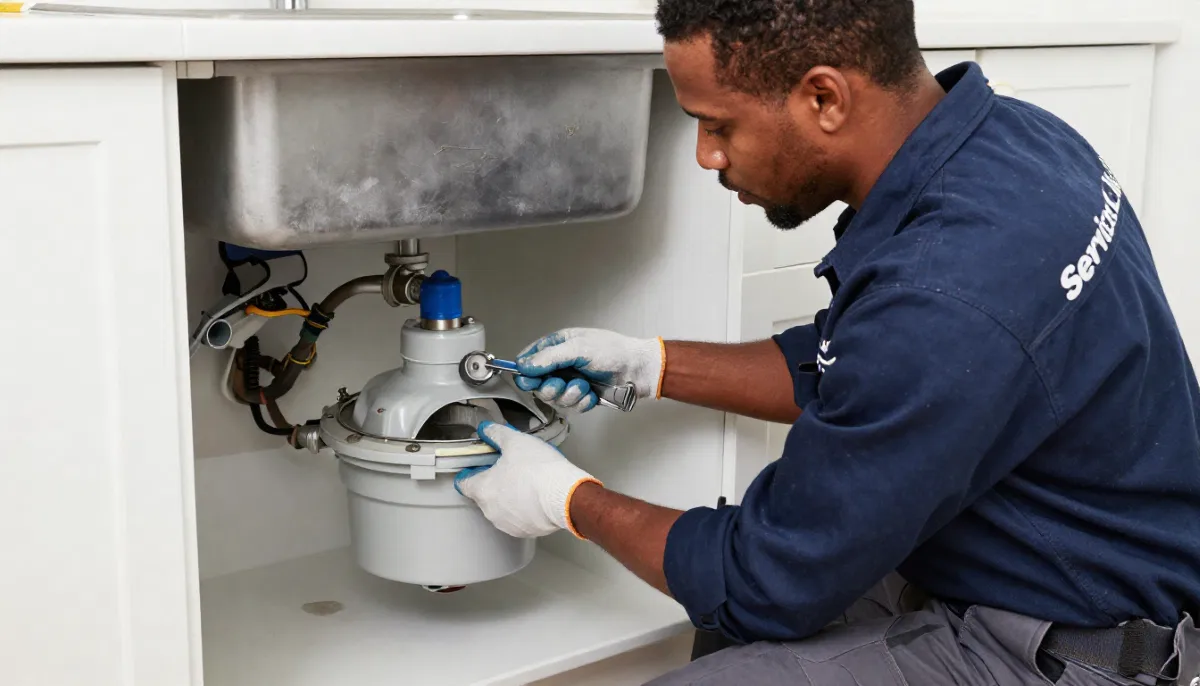
🗑️ Installing a Garbage Disposal?
Get quotes from verified plumbers for waste disposal installation. Free inspections available. Same-day service.
Get Garbage Disposal Installation Quotes Near You
Servicing Gauteng, Johannesburg, Pretoria, Sandton, Centurion, Midrand, and across South Africa
Garbage Disposal Installation Guide: How to Install a Waste Disposal Unit
🗑️ From mounting ring to electrical connection—complete guide to installing a garbage disposal unit yourself
Food scraps down the drain. No more smelly bins. No more scraping plates into the trash. A garbage disposal (or waste disposal unit) is a game-changer for any kitchen. But installing one can seem intimidating—electrical work, plumbing connections, and a heavy unit to maneuver.
The good news? Garbage disposal installation is a straightforward DIY project for most homeowners. With basic tools and 2-3 hours, you can install a food waste disposer yourself and save R800-R1,500 in professional installation costs.
I’ve helped hundreds of homeowners across South Africa with waste disposal installations. This guide will walk you through every step—from removing the old sink drain to mounting the unit, connecting the electrical, and hooking up the dishwasher. You’ll learn how to install a garbage disposal safely and correctly.
For related information, read our kitchen sink installation guide, dishwasher installation guide, and kitchen sink leak repair guide. Let’s get started.
📋 Table of Contents – Garbage Disposal Installation Guide
🗑️ Types of Garbage Disposals
Before you install waste disposal, choose the right type for your needs:
- Continuous feed (most common): Runs continuously while the switch is on. You can add food while it’s running. Most popular for home use.
- Batch feed: Only runs when the stopper is in place. Safer (can’t run without cover), but more expensive and less convenient.
Power ratings:
- ½ HP (horsepower): Basic model, good for light use (couples, small households). R800-R1,500
- ¾ HP: Mid-range, good for most families. R1,200-R2,500
- 1 HP: Heavy-duty, can handle bones and tough waste. R2,000-R4,000+
Brands available in South Africa: InSinkErator (most common), Franke, KitchenAid, Whirlpool.
For most households, a ¾ HP continuous feed disposal is the best choice.
Read our kitchen plumbing guide for more on kitchen upgrades.
🛠️ Tools & Materials You’ll Need
For garbage disposal installation, gather these items:
🔧 Tools
- Adjustable wrench
- Channel lock pliers
- Phillips screwdriver
- Wire strippers (for electrical)
- Voltage tester
- Bucket and towels
- Flashlight
🧩 Materials
- Garbage disposal unit
- Plumber’s putty
- Electrical cable (if hardwiring)
- Wire nuts
- Dishwasher drain hose (if connecting)
- Hose clamp
Most disposals come with: Mounting assembly, gaskets, dishwasher inlet plug (already installed), power cord (some models).
Read our plumbing tools guide for more equipment information.
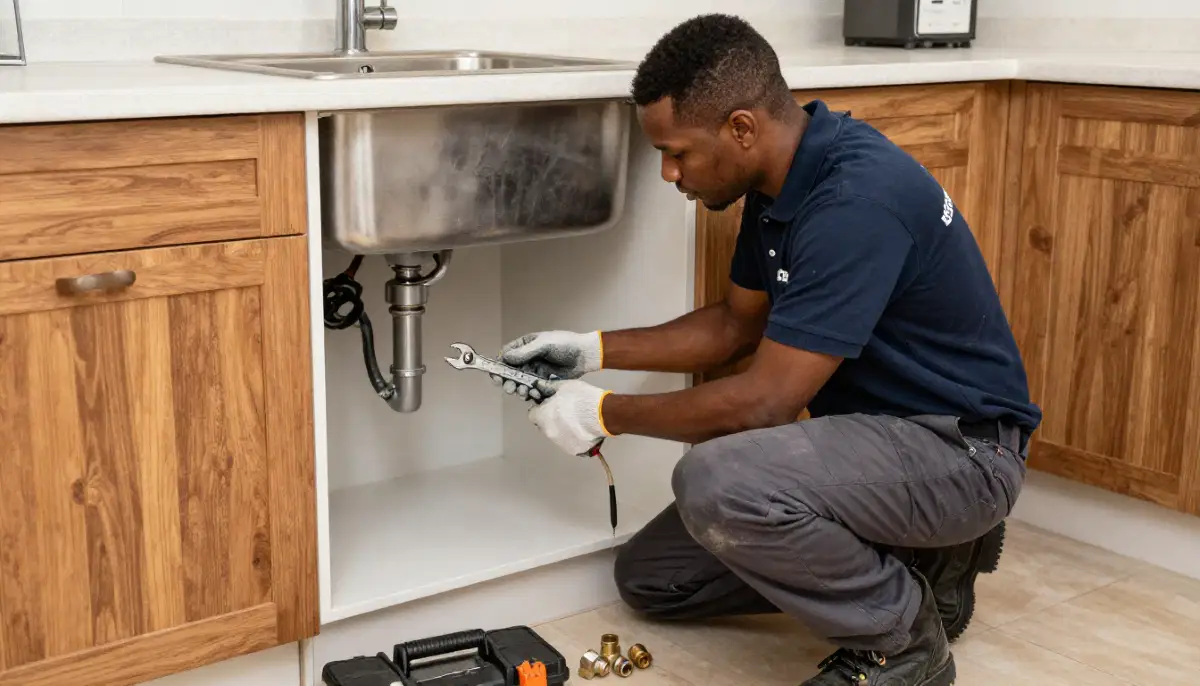
⚠️ Before You Start: Important Checks
Before attempting how to install a garbage disposal, verify these requirements:
- Electrical outlet under sink: Disposals need a 220-240V outlet (GFCI protected). If you don’t have one, hire an electrician (R1,000-R2,000).
- Switch on the wall: Most disposals are controlled by a wall switch. If you don’t have one, an electrician can install it.
- Single or double sink: Disposals fit under most sinks. Double sinks may need a special drain fitting.
- Space under sink: Ensure enough height for the disposal (typically 300-400mm below the sink).
⚠️ Critical Warning:
Never plug a garbage disposal into a standard outlet without GFCI protection. Water and electricity under the sink create a shock hazard. GFCI protection is essential and required by electrical code.
For electrical work, use our electrical services network.
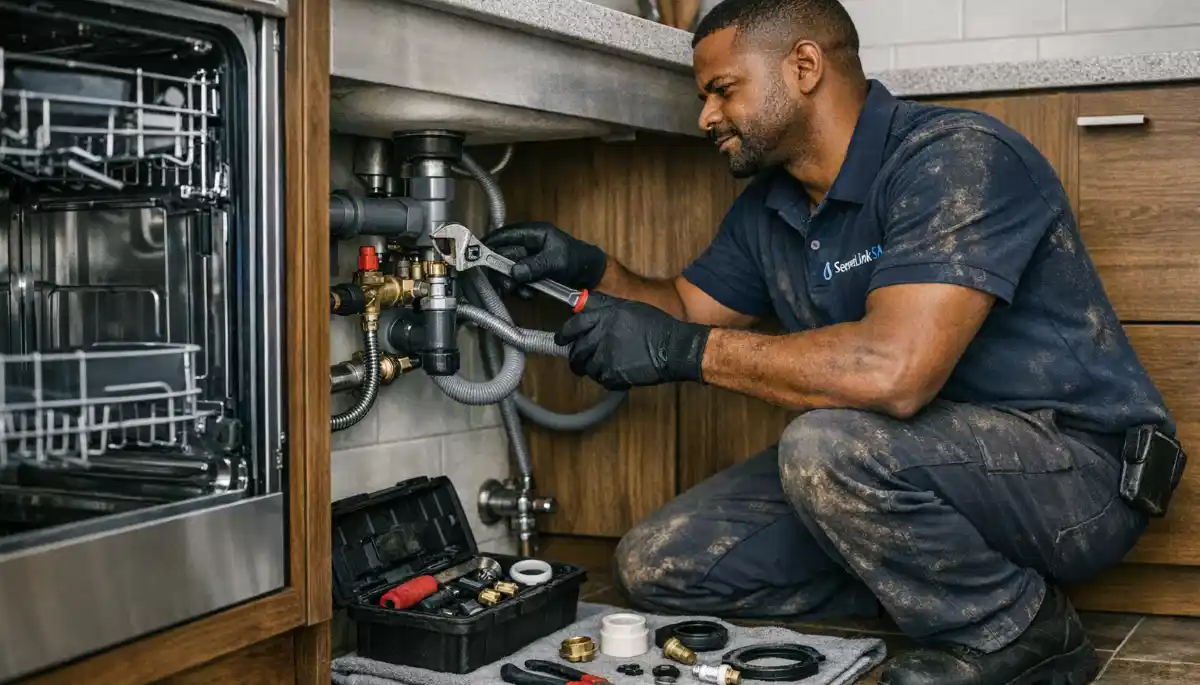
🗑️ Installing a Garbage Disposal?
Get quotes from verified plumbers for waste disposal installation. Free inspections available. Same-day service.
Free quotes • Same-day service • Verified specialists
🔧 Step 1: Remove the Old Sink Drain
Before you can install waste disposal, remove the existing sink drain assembly:
- Turn off water supply (optional, but safe).
- Place a bucket under the sink to catch water.
- Disconnect the P-trap from the sink drain tailpiece.
- Loosen the large lock nut holding the basket strainer from underneath.
- From above, remove the basket strainer (may need to tap with a hammer).
- Clean the sink drain opening thoroughly—remove old putty, debris, and rust.
🔧 Step 2: Install the Mounting Assembly
The mounting assembly attaches to the sink and holds the disposal unit:
- Apply a bead of plumber’s putty around the underside of the mounting flange.
- Insert the mounting flange into the sink drain opening from above.
- From underneath, install the backup ring, mounting ring, and snap ring (follow manufacturer instructions).
- Tighten the mounting screws evenly to secure the assembly to the sink.
- Wipe away excess putty from above.
💡 Pro Tip:
If your sink is stainless steel, the mounting flange may have a foam gasket instead of requiring putty. Check your disposal’s instructions.
⚡ Step 3: Connect Electrical Supply
Important: If you’re not comfortable with electrical work, hire an electrician.
Option A – Plug-in cord (most disposals):
- Most disposals come with a pre-attached power cord.
- Simply plug into the GFCI-protected outlet under the sink.
Option B – Hardwired (if no outlet):
- Turn off power at the circuit breaker.
- Remove the disposal’s wiring cover plate.
- Connect the house wiring (black to black, white to white, green/bare to ground).
- Use wire nuts and electrical tape.
- Replace the cover plate.
Wall switch: The disposal should be controlled by a wall switch near the sink. If you don’t have one, an electrician can install it.
For electrical work, read our electrical services guide.
🔧 Step 4: Mount the Disposal Unit
Now for the main garbage disposal installation step—mounting the unit:
- Check that the mounting ring is in the “open” position (not locked).
- Lift the disposal unit into place (they’re heavy—get help if needed).
- Align the disposal’s mounting ears with the mounting ring.
- Twist the disposal to lock it into place (clockwise).
- Tighten the mounting screws to secure it.
- Ensure the disposal is snug against the sink—no gaps.
Pro tip: Some disposals have a metal wrench to help tighten the mounting ring. Use it if provided.
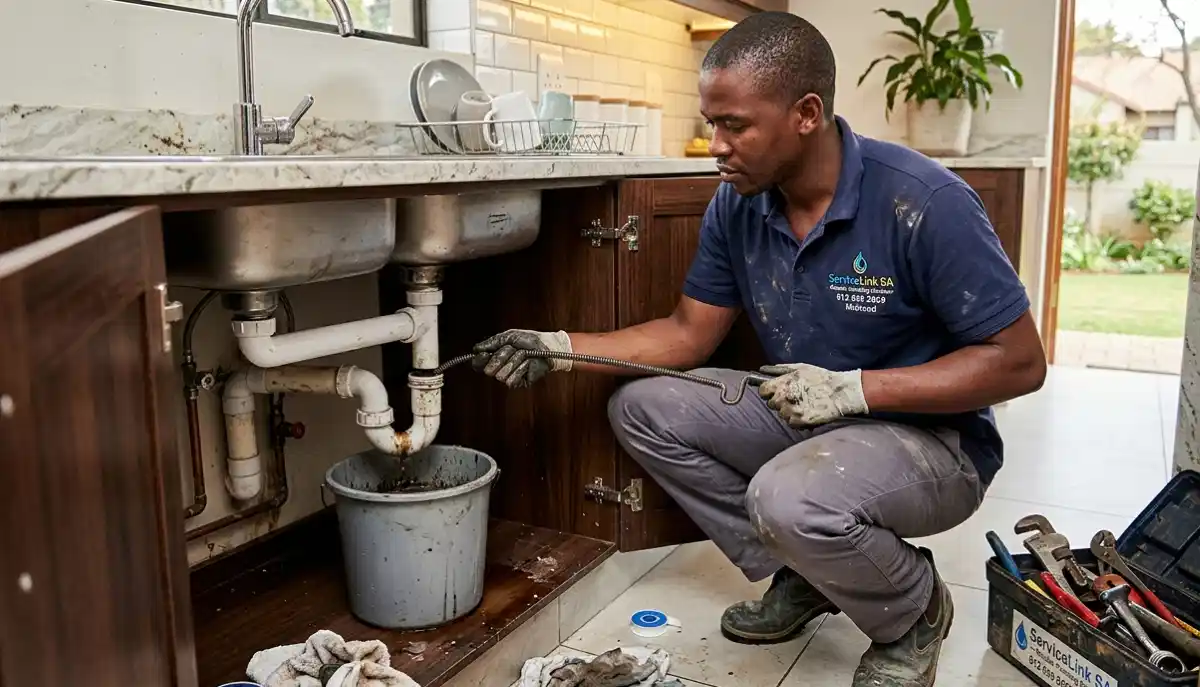
💧 Step 5: Connect the Drain & Dishwasher
Now connect the plumbing for your garbage disposal unit:
Connect the P-trap:
- Attach the disposal’s drain outlet to the P-trap using the included gasket and nuts.
- Tighten slip nuts hand-tight plus 1/4 turn (don’t overtighten plastic nuts).
Connect the dishwasher (if you have one):
- Locate the dishwasher inlet on the disposal (a small tube with a plug).
- Using a screwdriver or punch, knock out the plastic plug INSIDE the inlet (CRITICAL—forgetting this step prevents draining).
- Connect the dishwasher drain hose to the inlet.
- Secure with a hose clamp.
⚠️ Critical Warning:
You MUST knock out the plastic plug inside the dishwasher inlet. Forgetting this step is the #1 mistake—water won’t drain from the dishwasher and it will flood. Use a screwdriver and hammer to punch it through, then fish out the plug.
Read our dishwasher installation guide for more details.
✅ Step 6: Test for Leaks & Operation
After completing your garbage disposal installation, test thoroughly:
- Turn on water at the sink faucet.
- Check all connections under the sink for leaks (mounting ring, P-trap, dishwasher connection).
- Run water for 2-3 minutes while checking for drips.
- Turn on the disposal (with water running). Listen for unusual noises.
- Turn off disposal, then turn off water.
- Check again for leaks after 10 minutes.
- If you have a dishwasher, run a cycle and check for leaks during drain.
💡 The Golden Rule:
Always run cold water when using the disposal—never hot water. Hot water melts grease, which then solidifies further down the pipe, causing blockages. Cold water keeps grease solid so it gets chopped and flushed away.
⚡ Electrical Safety Requirements
Safety is critical for any install waste disposal project with electrical components:
- GFCI protection required – The outlet under the sink must be GFCI-protected (ground fault circuit interrupter). This prevents electrocution if water contacts the outlet.
- Dedicated circuit recommended – A 15-amp dedicated circuit is ideal. Sharing with other appliances may trip breakers.
- Wall switch required – Disposals must be controlled by a wall switch, not just the outlet plug.
- Turn off power before working – Always switch off the circuit breaker before any electrical work.
If you’re unsure about any electrical requirement, hire an electrician. Read our electrical services guide.
❌ 5 Costly Mistakes to Avoid
Mistake #1: Forgetting to Knock Out the Dishwasher Plug
The #1 mistake. The dishwasher inlet has a plastic plug that MUST be removed. Forgetting it means the dishwasher won’t drain—it will flood. Always punch it out with a screwdriver.
Mistake #2: No GFCI Protection
Water and electricity under the sink are a deadly combination. GFCI protection is essential and required by code. If your outlet isn’t GFCI-protected, call an electrician.
Mistake #3: Overtightening the Mounting Ring
The mounting ring should be snug, not crushed. Overtightening can crack the sink or disposal housing. Follow manufacturer instructions.
Mistake #4: Not Using Plumber’s Putty
The mounting flange needs a watertight seal. Use plumber’s putty (or the included foam gasket) to prevent leaks at the sink drain.
Mistake #5: Running Hot Water
Hot water melts grease, which then solidifies in your pipes and causes blockages. Always run COLD water when using the disposal.
📞 When to Call a Professional
While how to install a garbage disposal is DIY-friendly, call a pro if:
- No electrical outlet or GFCI under sink – Electrician needed
- No wall switch – Electrician needed
- Persistent leaks after installation – You may have damaged a seal
- Plumbing modifications needed – Moving drain lines or P-trap
- You’re uncomfortable with electrical work
Professional cost: R800-R1,500 for disposal installation (labour only). In Sandton or Centurion, rates may be higher.
For professional help, use our plumbing services network.
💰 Garbage Disposal Installation Cost Guide
Here’s what to budget for garbage disposal installation:
| Item | Cost Range (ZAR) | Notes |
|---|---|---|
| Disposal Unit (½ HP) | R800 – R1,500 | Basic model, light use |
| Disposal Unit (¾ HP) | R1,200 – R2,500 | Most common, good for families |
| Disposal Unit (1 HP) | R2,000 – R4,000+ | Heavy-duty, handles bones |
| DIY Installation (materials) | R50 – R150 | Plumber’s putty, maybe new P-trap |
| Professional Labour (installation) | R800 – R1,500 | Replace existing, 1-2 hours |
| Electrician (GFCI outlet) | R1,000 – R2,000 | If no outlet under sink |
| Total DIY (½ HP) | R850 – R1,650 | Unit + materials |
| Total Professional (½ HP) | R1,650 – R3,000 | Unit + labour |
DIY saves R800-R1,500 in labour—worth it if you’re handy and have existing electrical.
📋 Real-World Garbage Disposal Case Studies
🗑️ Case 1: DIY Installation in Pretoria
Location: Pretoria | Homeowner: The Nkosi Family
Project: Replace old disposal with new ¾ HP unit. Existing electrical and plumbing.
Approach: DIY using this guide. Cost: R1,800 for disposal + R50 for putty = R1,850.
Outcome: Successful installation in 2 hours. No leaks. Saved R1,000 in labour.
Lesson: Replacement is DIY-friendly when existing connections are present.
🗑️ Case 2: First-Time Installation in Johannesburg
Location: Johannesburg | Homeowner: The Van Wyk Family
Project: First disposal installation—no existing unit. Needed electrical outlet installed.
Approach: Electrician (R1,500) + plumber for installation (R1,200) = R2,700 labour. Disposal R2,000.
Outcome: Professional installation, GFCI outlet installed, disposal works perfectly.
Lesson: New installations needing electrical work are best left to professionals.
❓ Frequently Asked Questions About Garbage Disposal Installation
How to install a garbage disposal myself?
How to install a garbage disposal yourself: 1) Remove old sink drain, 2) Install mounting ring with plumber’s putty, 3) Connect electrical (plug in or hardwire), 4) Mount disposal unit, 5) Connect P-trap, 6) Connect dishwasher drain (knock out plug!), 7) Test for leaks. Takes 2-3 hours. Ensure you have GFCI-protected outlet under sink.
Does a garbage disposal need a dedicated electrical circuit?
A dedicated 15-amp circuit is recommended but not always required. However, the outlet MUST be GFCI-protected (ground fault circuit interrupter). If sharing a circuit, avoid running the disposal and another high-draw appliance simultaneously (like a microwave).
Can I install a garbage disposal myself without a plumber?
Yes—garbage disposal installation is DIY-friendly if you have basic plumbing and electrical skills. The biggest challenge is often the electrical connection. If you have an existing disposal being replaced, it’s very straightforward. If you’re adding a disposal where none existed, you may need an electrician for the outlet.
What size garbage disposal do I need?
½ HP: Light use, couples, small households. ¾ HP: Most common, good for families of 3-5. 1 HP: Heavy use, large families, frequent bone disposal. For most South African homes, a ¾ HP garbage disposal unit is the best choice.
How much does professional garbage disposal installation cost?
Professional install waste disposal labour costs R800-R1,500 for a standard replacement (1-2 hours). Adding a disposal where none existed costs more (R1,500-R2,500) plus electrical work if needed. In Sandton or Midrand, rates may be higher.
Why is my garbage disposal leaking from the bottom?
A leak from the bottom of the disposal usually means the internal seals have failed—the unit needs replacement. Leaks from the top (mounting ring) are fixable by tightening or resealing. Leaks from the dishwasher inlet or drain outlet are fixable by tightening connections. If the unit itself is leaking, replace it.
Do I need a special sink for a garbage disposal?
No—most standard kitchen sinks can accommodate a food waste disposer. The sink needs a standard 90mm (3½ inch) drain opening, which most sinks have. Double sinks can also accommodate a disposal on one side with a special drain fitting.
How do I find a reliable plumber for disposal installation?
To find a reliable plumber for garbage disposal installation: 1) Verify PIRB registration, 2) Ask for disposal installation experience, 3) Get detailed quotes, 4) Check reviews. ServiceLink SA connects you with verified plumbers in Gauteng.
✅ Final Thoughts: A Worthwhile Kitchen Upgrade
A garbage disposal is one of the most useful kitchen upgrades you can make. Garbage disposal installation is a achievable DIY project for most homeowners—especially if you’re replacing an existing unit.
The keys to success: proper mounting, correct electrical connection (GFCI required!), and remembering to knock out the dishwasher plug. Take your time, follow the steps, and test thoroughly for leaks.
Key takeaways for South African homeowners:
- DIY replacement is straightforward – New installations need professional help for electrical
- GFCI protection is essential – Water and electricity are dangerous without it
- Remember the dishwasher plug! – The #1 mistake—knock it out
- DIY cost: R850-R1,650 (unit + materials) – Professional: R1,650-R3,000
- Run cold water only – Hot water melts grease, causing blockages
- Never put bones, fibrous foods, or grease down the disposal
- Test for leaks before using regularly
Your action plan: Check under your sink for an electrical outlet (GFCI) and space for a disposal. If you have both, DIY is achievable. If not, get quotes from 3 verified plumbers through ServiceLink SA. Either way, enjoy the convenience of a waste disposal unit.
🗑️ Installing a Garbage Disposal?
Get quotes from verified plumbers for waste disposal installation. Free inspections available. Same-day service.
📞 Call us: 073 138 4726 for immediate help finding a plumber near you.
Kitchen sink installation •
Dishwasher installation •
Sink leak repair •
Leaking tap fix •
Beat Your Quote guarantee
📚 Official resources & standards referenced:
- SANS 10400 – Disposal unit standards and installation requirements.
- South African Bureau of Standards (SABS) – Electrical safety standards for appliances.
- Plumbing Industry Registration Board (PIRB) – Find registered plumbers.
Information provided for general guidance based on industry research and SANS/SABS standards. For garbage disposal installation, professional assistance is recommended for electrical work.
Written by: ServiceLink SA Research Team
Kitchen Appliance & Plumbing Specialists
The ServiceLink SA Research Team comprises kitchen appliance specialists, plumbing experts, and DIY professionals with decades of experience helping homeowners with garbage disposal installation and food waste disposer projects across South Africa. Our team works directly with PIRB-registered plumbers, appliance manufacturers, and electrical safety authorities to bring you accurate, actionable information about how to install a garbage disposal safely and correctly. We continuously update this guide to reflect current standards and best practices for waste disposal installation.
For more information about garbage disposal installation and kitchen plumbing, explore our related resources:
kitchen sink installation guide,
dishwasher installation guide,
garbage disposal guide,
kitchen sink leak repair guide,
and leaking kitchen tap fix guide.
Our what is ServiceLink SA and
contractor verification process pages explain how we connect you with trusted professionals.
See our service areas page for garbage disposal coverage in your region.