
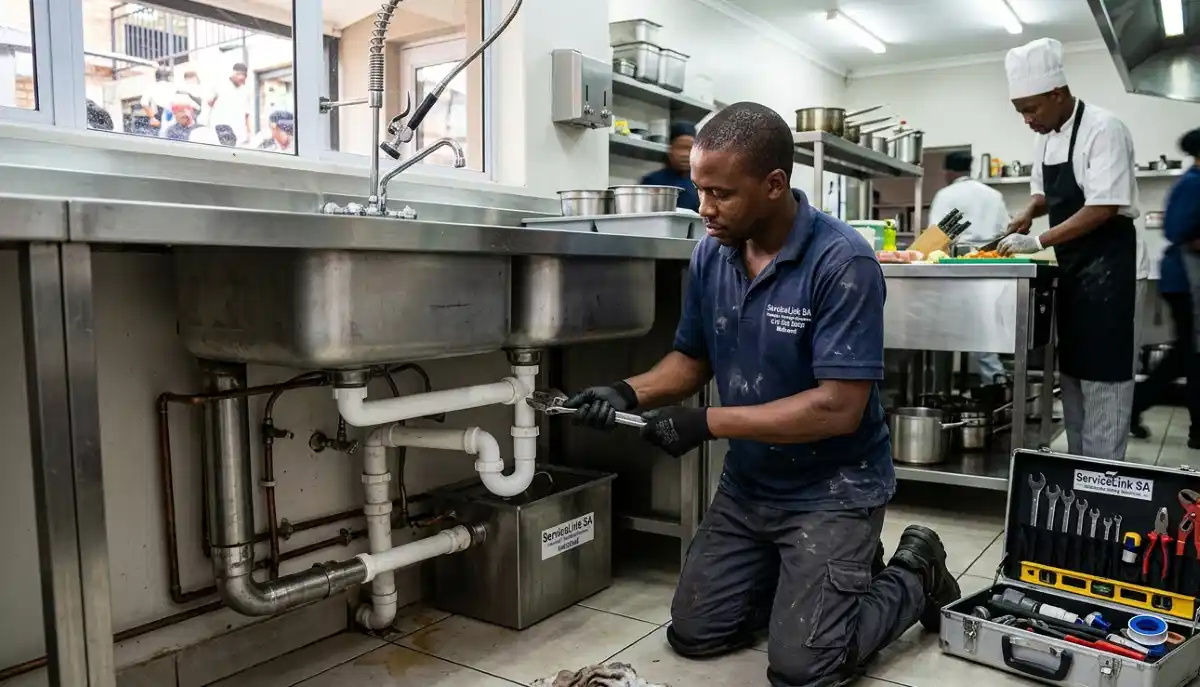
🍽️ Need a Grease Trap for Your Restaurant?
Get quotes from verified commercial plumbing specialists for grease trap installation, sizing, and maintenance.
Get Grease Trap Installation Quotes
Servicing Gauteng, Johannesburg, Pretoria, Sandton, Midrand, Centurion, and across South Africa
Grease Trap Installation for Restaurants: Complete Guide for Commercial Kitchens
🍽️ From sizing to compliance—everything restaurant owners need to know about grease trap installation, costs, and maintenance
You’re opening a new restaurant. The menu is perfected, the staff is hired, and the装修 looks amazing. But have you thought about where all the grease from your kitchen goes? Every time you wash a pan, rinse a plate, or clean a grill, fat, oil, and grease (FOG) flow down your drains.
Without proper interception, that grease will solidify in your pipes, causing blockages, backups, and potentially thousands in plumbing repairs. Worse, it will flow into the municipal sewer system, where it contributes to massive “fatbergs” that cost municipalities millions to remove. And if you’re caught without a compliant grease trap, you face fines, closure orders, and legal liability.
I’ve helped hundreds of restaurant owners across Gauteng navigate grease trap installation requirements. The process can seem overwhelming—sizing calculations, municipal regulations, plumbing permits, and ongoing maintenance. But with the right guidance, it’s manageable.
This comprehensive guide will teach you everything about restaurant grease trap systems—how they work, how to size them, installation costs, legal requirements, and maintenance schedules. Whether you’re opening a new restaurant, upgrading an existing kitchen, or need a commercial grease trap for any food service business, this grease interceptor guide has you covered.
For related information, read our commercial plumbing services guide, restaurant plumbing guide, drain cleaning services guide, and kitchen sink installation guide. Let’s protect your business and the environment.
📋 Table of Contents – Grease Trap Installation Guide
🍳 What Is a Grease Trap & Why Do You Need One?
A grease trap (also called a grease interceptor) is a plumbing device installed between a commercial kitchen’s sinks, dishwashers, and floor drains and the municipal sewer line. Its purpose is to capture fats, oils, and grease (FOG) before they enter the sewer system.
Why every restaurant needs a grease trap:
- Legal requirement – South African law requires grease traps for all commercial food service establishments.
- Prevents costly blockages – Grease solidifies in pipes, causing backups and expensive plumbing repairs.
- Protects the municipal sewer – Grease contributes to massive “fatbergs” that block main sewer lines.
- Avoids fines and closure – Municipalities inspect and fine non-compliant businesses.
- Environmental responsibility – Proper grease management protects water treatment facilities.
⚠️ Critical Warning:
Operating a commercial kitchen without a properly sized and maintained restaurant grease trap is illegal in South Africa. Fines can reach R50,000+, and repeat offenders risk business closure. Don’t risk your livelihood—ensure compliance.
⚖️ Legal Requirements in South Africa
Understanding the legal framework for grease trap installation is essential for compliance:
Which businesses require a grease trap?
- Restaurants, cafés, and fast-food outlets
- Hotels with commercial kitchens
- Hospitals and care facilities with kitchens
- School and university canteens
- Food processing facilities
- Bakeries and delis
- Any business that generates FOG (fats, oils, grease)
Regulatory bodies and standards:
- Department of Water and Sanitation (DWS) – Sets national standards for grease trap discharge.
- Local municipalities – Enforce regulations through inspections and permits.
- SANS 10252 – Plumbing standard covering grease trap installation.
- SANS 10400 – Building regulations for commercial kitchens.
Consequences of non-compliance:
- Fines: R10,000-R50,000+ depending on municipality
- Business closure orders until compliance is achieved
- Liability for sewer blockages and environmental damage
- Negative inspection reports affecting licensing
Read our commercial plumbing guide for more on compliance.
🔧 How a Grease Interceptor Works
A grease interceptor uses gravity and density separation to capture grease:
- Wastewater enters the trap – From sinks, dishwashers, and floor drains.
- Flow is slowed – Internal baffles reduce water velocity, allowing separation.
- Grease rises – FOG (fats, oils, grease) is lighter than water, so it floats to the top.
- Solids sink – Food particles and other solids settle at the bottom.
- Clear water exits – The middle layer (clear water) flows out to the sewer.
- Grease is retained – Trapped grease is periodically removed by a licensed waste hauler.
Efficiency: A properly sized and maintained grease trap captures 90-99% of FOG before it enters the sewer system.
📏 Grease Trap Sizing Guide
Proper sizing is critical for grease trap installation—too small, and it won’t capture enough grease; too large, and you’ve wasted money. Here’s how to calculate:
Basic sizing formula (flow rate method):
Flow rate (litres per minute) × retention time (minutes) = required capacity (litres)
Simplified sizing by kitchen type:
| Kitchen Type | Recommended Grease Trap Size | Notes |
|---|---|---|
| Coffee shop / Bakery (minimal cooking) | 500 – 1,000 litres | Minimal grease generation, smaller trap sufficient |
| Small restaurant / Takeaway | 1,000 – 2,000 litres | Standard for most small to medium restaurants |
| Medium restaurant (full kitchen) | 2,000 – 4,000 litres | Multiple fryers, grills, dishwashers |
| Large restaurant / Hotel kitchen | 4,000 – 8,000+ litres | High-volume cooking, multiple shifts |
Professional sizing factors considered:
- Number of sinks and their sizes
- Dishwasher capacity and cycles per hour
- Number of floor drains in kitchen area
- Type of cooking (high-grease vs low-grease)
- Peak hour water usage
- Local municipal requirements (may specify minimum size)
💡 Pro Tip:
Never undersize your restaurant grease trap. Municipalities often require professional sizing calculations. A qualified commercial plumber can perform the calculations and submit them with your permit application. Slightly oversized is better than undersized.
🍽️ Need a Grease Trap for Your Restaurant?
Get quotes from verified commercial plumbing specialists for grease trap installation, sizing, and maintenance.
Get Grease Trap Installation Quotes
Free quotes • Commercial specialists • Compliance guaranteed
🏗️ Types of Grease Traps
Several types of grease interceptor systems are available for commercial kitchens:
| Type | Best For | Pros | Cons | Cost Range |
|---|---|---|---|---|
| Passive (Gravity) Grease Trap | Most restaurants | Simple, reliable, no moving parts | Requires regular cleaning | R8,000-R25,000 |
| Automatic Grease Trap | High-volume kitchens, 24/7 operations | Self-cleaning, less maintenance | Expensive, requires power, mechanical parts | R25,000-R60,000+ |
| Under-Sink Grease Trap | Small cafes, coffee shops, prep sinks | Small, easy to install, inexpensive | Limited capacity, frequent cleaning | R2,000-R8,000 |
| Concrete In-Ground Trap | Large restaurants, hotels, institutions | Very large capacity, durable | Requires excavation, expensive installation | R20,000-R60,000+ (installed) |
Most restaurants use passive gravity grease traps (1,000-4,000 litre capacity) installed indoors or outdoors depending on space and local regulations.
🔧 Grease Trap Installation Process
Professional grease trap installation follows these steps:
- Site assessment (1 day) – Plumber assesses kitchen layout, identifies drain locations, determines optimal trap placement.
- Sizing calculation – Professional calculates required capacity based on fixtures, usage, and local codes.
- Permit application (1-4 weeks) – Municipality approves plans. This can be the longest step.
- Excavation or preparation (1-2 days) – For in-ground traps, excavation is required. For indoor traps, access is prepared.
- Installation (1-3 days) – Trap is placed, inlet/outlet pipes connected to kitchen drains and sewer line.
- Venting installation – Proper venting prevents air locks and ensures flow.
- Inspection (1 day) – Municipality inspects installation and issues compliance certificate.
- Final connections – Kitchen equipment is reconnected and tested.
Total timeline: 2-6 weeks depending on permit processing and installation complexity.
💰 Grease Trap Installation Cost Guide
Here’s what to budget for grease trap installation in South Africa:
| Item | Cost Range (ZAR) | Notes |
|---|---|---|
| Grease Trap Unit (passive, 1,000-2,000L) | R8,000 – R15,000 | Equipment only |
| Grease Trap Unit (passive, 2,000-4,000L) | R12,000 – R25,000 | Equipment only |
| Under-Sink Grease Trap | R2,000 – R8,000 | For small cafes, prep sinks |
| Installation Labour | R5,000 – R15,000 | Depends on complexity, access |
| Excavation (if in-ground) | R3,000 – R10,000 | Plus backfill and concrete |
| Permit Fees | R500 – R2,000 | Varies by municipality |
| Total Installed (1,000-2,000L) | R15,000 – R35,000 | Complete installation |
| Total Installed (2,000-4,000L) | R25,000 – R55,000 | Complete installation |
Ongoing costs: Regular cleaning every 1-3 months (R1,000-R3,000 per service). Budget R6,000-R18,000 annually for professional cleaning.
Read our commercial plumbing services guide for more cost information.
📅 Maintenance & Cleaning Schedule
A restaurant grease trap only works if properly maintained. Neglect leads to blockages, backups, and fines.
Cleaning frequency guidelines:
- Under-sink grease trap: Weekly to monthly (DIY or professional)
- Small passive trap (500-1,000L): Monthly to quarterly
- Medium passive trap (1,000-2,000L): Quarterly (every 3 months)
- Large passive trap (2,000-4,000L+): Every 3-6 months
Signs your grease trap needs cleaning:
- Slow draining sinks in the kitchen
- Grease odours in the kitchen
- Visible grease in the trap inspection port
- More than 25% of the trap’s capacity is grease
- Last cleaning was more than 3 months ago
Cleaning process (professional):
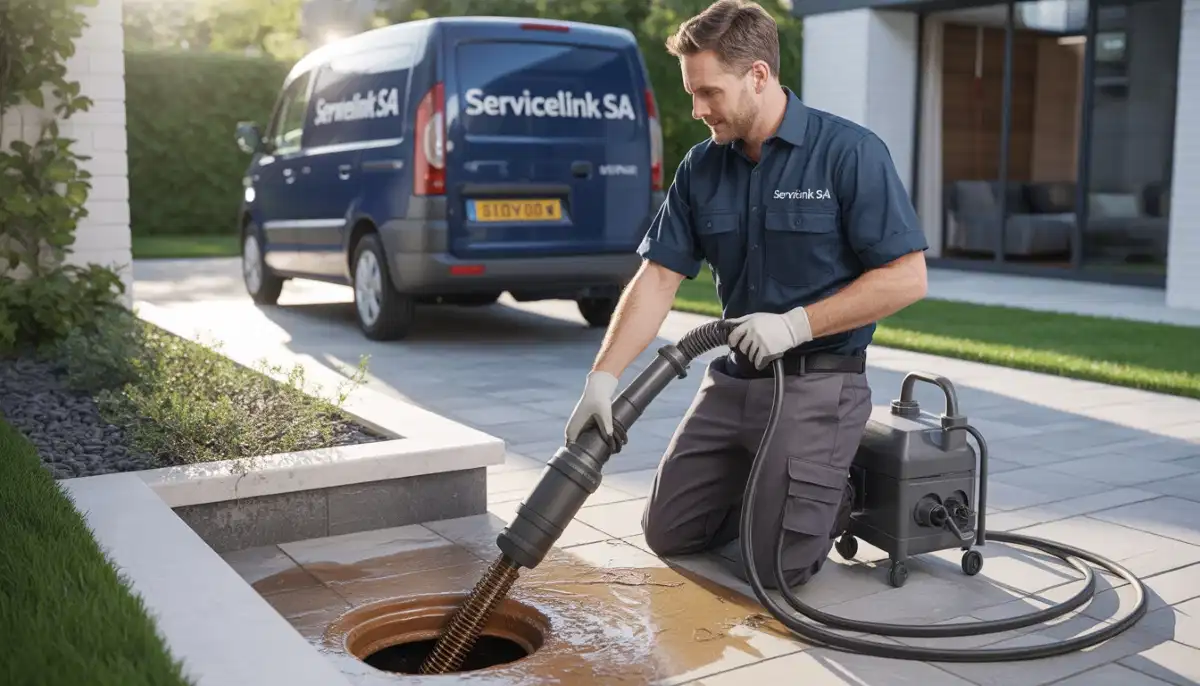
- Licensed waste hauler vacuums grease and solids from the trap
- Grease is disposed of at approved facility (can’t go to landfill or sewer)
- Trap is inspected for damage
- Manifest/receipt is provided for compliance records
⚠️ Critical Compliance:
You MUST keep records of all grease trap cleanings—receipts, manifests, dates. Municipal inspectors will ask for these records. Failure to provide documentation can result in fines even if your trap is clean. Keep a logbook on-site.
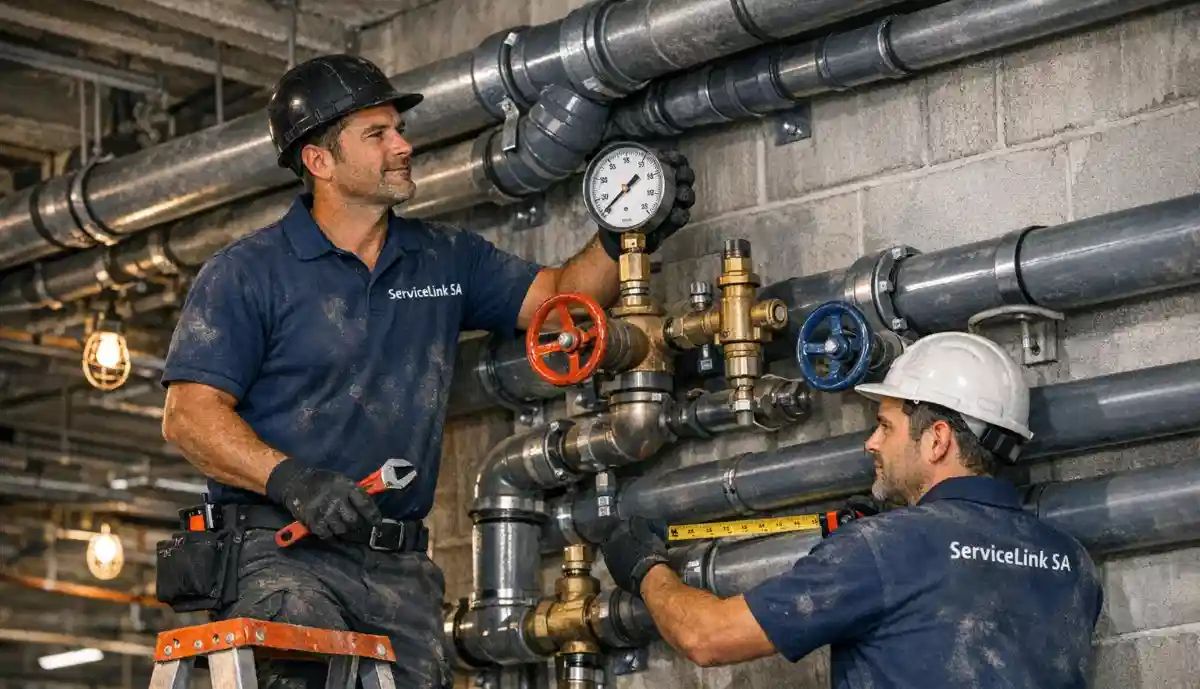
👨🔧 How to Choose a Grease Trap Installer
Selecting the right professional for grease trap installation is critical:
Read our how to choose a contractor guide and commercial plumbing guide for more.
❌ 5 Costly Mistakes Restaurant Owners Make With Grease Traps
Mistake #1: Undersizing the Grease Trap
Buying a cheaper, smaller trap to save money upfront. Result: trap fills quickly, grease escapes to sewer, leading to blockages, backups, and fines. The cost of replacing an undersized trap (R20,000-R50,000) is far more than buying the right size initially.
Mistake #2: Neglecting Regular Cleaning
“We’ll clean it when it smells” is the most expensive maintenance strategy. A neglected grease trap fails completely, sending grease to the sewer. Cleaning every 1-3 months costs R1,000-R3,000. An emergency sewer backup costs R10,000-R30,000 plus lost business.
Mistake #3: Pouring Grease Directly into Sinks
Even with a trap, large amounts of grease overwhelm the system. Scrape pans into the bin before washing. Use grease caddies. Train staff on proper disposal. Prevention reduces cleaning frequency and extends trap life.
Mistake #4: Not Keeping Maintenance Records
Municipal inspectors ask for cleaning receipts and manifests. Without records, you can’t prove compliance—even if your trap is clean. Keep a logbook on-site with dates, receipts, and waste hauler information.
Mistake #5: Using Chemicals to “Clean” the Trap
Enzymes and chemicals that claim to eliminate grease trap cleaning are often ineffective and can damage the trap. Worse, they may be prohibited by your municipality. Only mechanical cleaning (vacuuming) is approved. Avoid “miracle” products.
📋 Real-World Grease Trap Case Studies
🍽️ Case 1: New Restaurant Opening in Sandton
Location: Sandton | Business: 120-seat restaurant
Challenge: New build, needed compliant grease trap installation before municipal approval. Limited indoor space.
Solution: Commercial plumber sized a 3,000L passive grease trap installed outdoors (excavation required). Total cost R38,000 including permits.
Outcome: Restaurant passed inspection, opened on schedule. Quarterly cleaning (R1,800/service) maintains compliance.
Lesson: Plan grease trap installation early in your build-out—permits can take weeks.
🍳 Case 2: Failed Inspection in Johannesburg
Location: Johannesburg | Business: Takeaway restaurant
Problem: Municipality inspection found undersized grease trap (500L for high-volume kitchen) and no cleaning records for 6 months.
Solution: Emergency upgrade to 2,000L trap (R22,000) plus cleaning (R1,500). Fines totalled R15,000.
Outcome: Restaurant compliant after 2 weeks. Now on quarterly cleaning schedule with documented records.
Lesson: Undersizing and neglect are expensive. Proper restaurant grease trap sizing and maintenance saves money long-term.
❓ Frequently Asked Questions About Grease Trap Installation
How much does grease trap installation cost for a restaurant in South Africa?
Grease trap installation costs R15,000-R35,000 for a 1,000-2,000 litre trap (typical for small-medium restaurants), and R25,000-R55,000 for a 2,000-4,000 litre trap (larger restaurants). This includes the unit, labour, and permits. Under-sink traps for small cafes cost R2,000-R8,000 installed. Ongoing cleaning costs R1,000-R3,000 every 1-3 months.
How to install a grease trap in a restaurant?
How to install a grease trap in a restaurant involves: 1) Professional sizing calculation based on fixtures and usage, 2) Permit application to municipality, 3) Site preparation (excavation for in-ground traps or space allocation for indoor), 4) Plumber installs trap, connects all kitchen drains to inlet, and outlet to sewer, 5) Proper venting installation, 6) Municipal inspection and approval. Always use a PIRB-registered commercial plumber—DIY installation is illegal.
What size grease trap do I need for my restaurant?
Sizing depends on kitchen type. Coffee shop/bakery: 500-1,000 litres. Small restaurant/takeaway: 1,000-2,000 litres. Medium restaurant (full kitchen): 2,000-4,000 litres. Large restaurant/hotel kitchen: 4,000-8,000+ litres. Professional calculation considers number of sinks, dishwasher capacity, floor drains, and peak usage. Municipalities may have minimum requirements—check with your local authority.
How often should a restaurant grease trap be cleaned?
Cleaning frequency depends on trap size and kitchen volume. Under-sink traps: weekly to monthly. 500-1,000L traps: monthly to quarterly. 1,000-2,000L traps: quarterly (every 3 months). 2,000-4,000L+ traps: every 3-6 months. Signs it needs cleaning: slow drains, grease odours, visible grease in inspection port, or more than 25% of capacity is grease. Always use a licensed waste hauler and keep records.
Is a grease trap legally required for restaurants in South Africa?
Yes—all commercial food service establishments in South Africa are legally required to have a properly sized and maintained restaurant grease trap. Regulations are enforced by local municipalities under the Department of Water and Sanitation’s bylaws. Operating without a trap or with an undersized/neglected trap can result in fines (R10,000-R50,000+), closure orders, and liability for sewer blockages.
What’s the difference between a grease trap and a grease interceptor?
The terms are often used interchangeably, but technically: A grease interceptor typically refers to larger, passive, in-ground units (500+ litres). A grease trap often refers to smaller under-sink units. Both capture FOG using gravity separation. For commercial kitchens, the required size usually qualifies as an interceptor. Your plumber will specify the correct type for your application.
Do I need a permit for grease trap installation?
Yes—grease trap installation requires a plumbing permit from your local municipality. The application typically requires professional drawings, sizing calculations, and licensed plumber details. Permits take 1-4 weeks to process. Installation without a permit is illegal and can result in fines and forced removal. A qualified commercial plumber can handle the permit application for you.
Can I install a grease trap myself?
No—commercial grease trap installation must be performed by a PIRB-registered commercial plumber. DIY installation is illegal, will not pass municipal inspection, and puts your business at risk of fines and closure. Additionally, improper installation can cause sewer backups, health code violations, and void your insurance. Always hire a qualified professional for grease trap installation.
✅ Final Thoughts: Protect Your Business, Protect the Environment
A properly installed and maintained grease trap is not an expense—it’s an investment in your restaurant’s future. It protects your plumbing from costly blockages, keeps you compliant with municipal regulations, and prevents fines and closure orders. Most importantly, it protects the municipal sewer system from the devastating effects of FOG buildup.
Key takeaways for restaurant owners:
- Grease traps are legally required for all commercial kitchens—no exceptions
- Proper sizing is critical – undersizing leads to failures and fines
- Installation costs R15,000-R55,000 depending on size and complexity
- Regular cleaning every 1-3 months – budget R6,000-R18,000 annually
- Keep maintenance records – inspectors will ask for them
- Use a PIRB-registered commercial plumber for installation and maintenance
- Prevention is cheaper than emergency repairs – scrape pans, use grease caddies, train staff
Your action plan: If you’re opening a new restaurant, plan grease trap installation early in your build-out—permits take time. If you have an existing restaurant, verify your trap is properly sized and on a regular cleaning schedule. Use ServiceLink SA to find verified commercial plumbing specialists for installation and maintenance.
🍽️ Need a Grease Trap for Your Restaurant?
Get quotes from verified commercial plumbing specialists for grease trap installation, sizing, and maintenance.
📞 Call us: 073 138 4726 for immediate help finding a commercial plumbing specialist near you.
Commercial plumbing •
Restaurant plumbing guide •
Drain cleaning costs •
Beat Your Quote guarantee
📚 Official resources & standards referenced:
- Department of Water and Sanitation – Grease trap regulations and FOG management guidelines.
- SANS 10400 – Commercial standards for grease trap installation.
- Plumbing Industry Registration Board (PIRB) – Find registered commercial plumbers for grease trap installation.
Information provided for general guidance based on industry research and DWS/SANS standards. For specific grease trap installation requirements for your restaurant, consult a qualified commercial plumber and your local municipality.
Written by: ServiceLink SA Research Team
Commercial Plumbing & Grease Trap Specialists
The ServiceLink SA Research Team comprises commercial plumbing experts, grease trap specialists, and restaurant industry professionals with decades of experience in grease trap installation and maintenance across South Africa. Our team works directly with PIRB-registered commercial plumbers, municipal inspectors, and waste management specialists to bring you accurate, actionable information about restaurant grease trap compliance, sizing, and ongoing maintenance. We continuously update our guides to reflect current regulations, SANS standards, and real-world best practices for commercial kitchens.
For more information about commercial plumbing and grease traps, explore our related resources:
commercial plumbing services guide,
restaurant plumbing guide,
drain cleaning services guide,
grease trap installation guide,
and kitchen sink installation guide.
Our what is ServiceLink SA and
why contractors join ServiceLink SA pages explain our verification process.
See our service areas page for commercial plumbing coverage in your region.