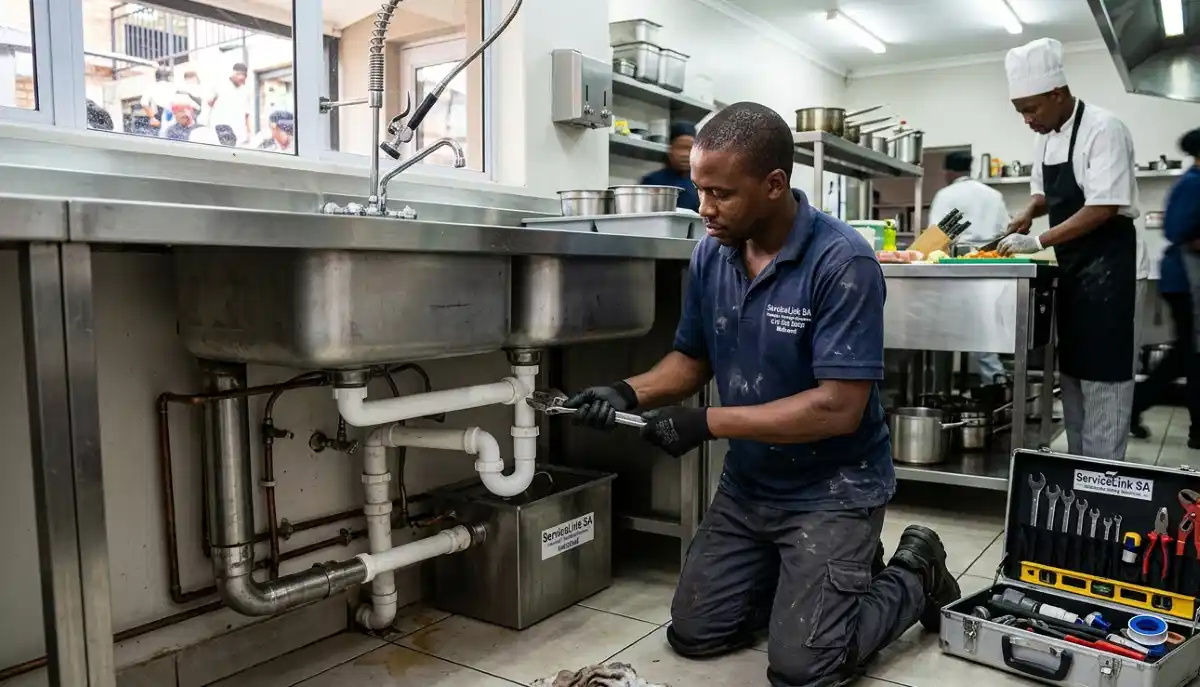
🍽️ Opening or Renovating a Restaurant?
Get quotes from verified commercial kitchen plumbing specialists. Grease traps, drains, dishwashers—we connect you with experts.
Get Restaurant Plumbing Quotes Near You
Servicing Gauteng, Johannesburg, Pretoria, Sandton, Midrand, Centurion, and across South Africa
Plumbing for Restaurants & Commercial Kitchens: Complete Guide
🍽️ From grease traps to floor drains—everything restaurant owners need to know about commercial kitchen plumbing, compliance, and maintenance
You’re opening a new restaurant. The menu is perfected, the staff is hired, and the décor is stunning. But have you thought about where all the grease, food waste, and wastewater will go? A single plumbing failure can shut down your kitchen for days, cost thousands in lost revenue, and attract health department fines.
I’ve helped hundreds of restaurant owners across Gauteng design, install, and maintain commercial kitchen plumbing systems. The difference between a smooth opening and a disaster often comes down to understanding the unique requirements of food service plumbing—grease traps, floor drains, backflow prevention, and high-volume fixtures.
This comprehensive guide will teach you everything about restaurant kitchen drainage, grease trap sizing and maintenance, commercial dishwasher requirements, floor drain placement, and the plumbing requirements for restaurant kitchen compliance. Whether you’re opening a new restaurant or renovating an existing one, this guide will help you avoid costly mistakes.
For related information, read our commercial plumbing services guide, grease trap installation guide, industrial plumbing systems guide, and office building maintenance guide. Let’s build a kitchen that works.
📋 Table of Contents – Restaurant Plumbing Guide
🍽️ Why Restaurant Plumbing Is Different
Restaurant plumbing faces challenges that residential and even other commercial properties don’t:
🍳 Grease, Oil & Fat (FOG)
The #1 challenge. Grease solidifies in pipes, causing massive blockages. Restaurants must have grease traps to capture FOG before it enters the sewer.
🍽️ Food Solids
Food particles, scraps, and debris can clog drains quickly. Pre-rinse stations and strainers are essential.
🔥 High Temperatures
Dishwashers, pot washers, and steam tables require high-temperature water (75-85°C). Specialised piping and commercial geysers needed.
⚡ High Volume
Commercial kitchens use water continuously during peak hours—far more than residential. Pipes must be sized accordingly.
📋 Health Code Compliance
Restaurants face regular health inspections. Plumbing failures mean failed inspections, fines, and closure orders.
🚨 Business Interruption
A plumbing issue can shut down your kitchen. Lost revenue during repairs can be devastating.
Read our commercial plumbing services guide for more on business plumbing.
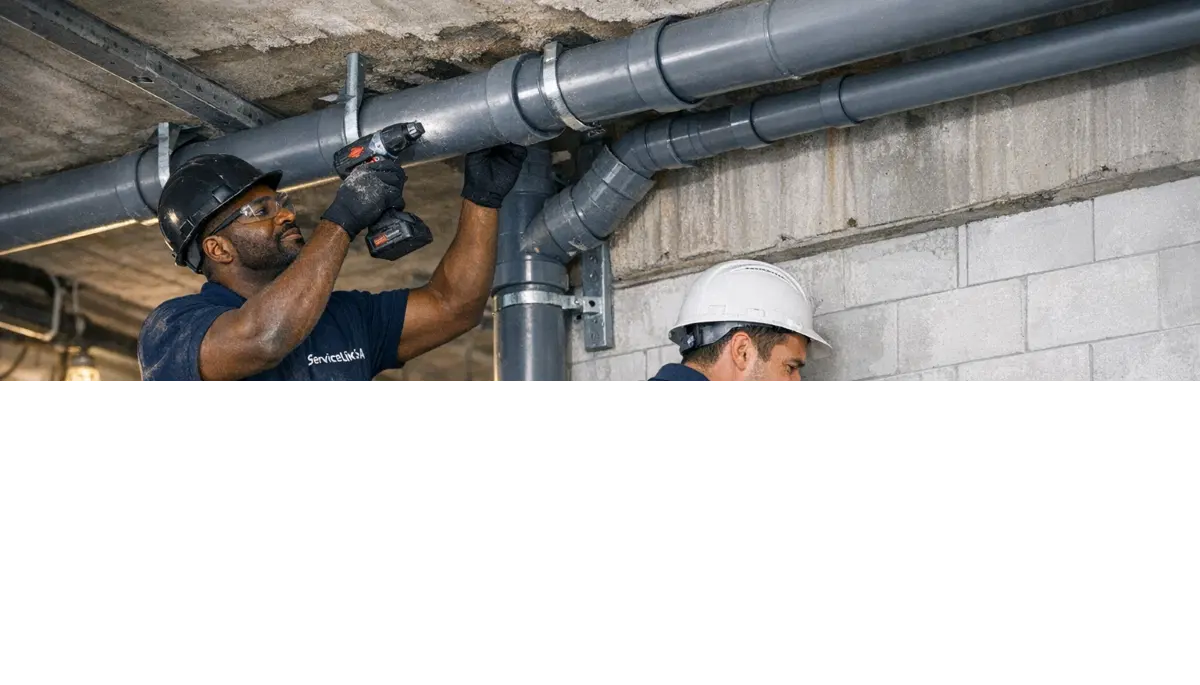
🛢️ Grease Traps: The Most Critical Component
A grease trap (also called a grease interceptor) is legally required for all commercial kitchens in South Africa. It captures fats, oils, and grease (FOG) before they enter the sewer system.
Why grease traps are essential:
- Legally required by the Department of Water and Sanitation and local municipalities
- Prevents sewer blockages (fatbergs) that can shut down your kitchen
- Avoids fines (R10,000-R50,000+) and closure orders
- Protects your plumbing from grease buildup
How a grease trap works:
- Wastewater enters the trap from sinks, dishwashers, and floor drains
- Flow slows, allowing grease to rise to the top
- Solids sink to the bottom
- Clear water flows out to the sewer
- Trapped grease must be periodically removed by a licensed waste hauler
Cleaning frequency:
- Small cafe/prep sink: monthly
- Medium restaurant: every 2-3 months
- Large restaurant/high-volume: monthly
- Fast food with heavy frying: weekly to monthly
Read our detailed grease trap installation guide for complete information.
📏 Grease Trap Sizing Guide
Proper sizing of your commercial kitchen plumbing grease trap is critical:
| Kitchen Type | Recommended Grease Trap Size | Cleaning Frequency | Installation Cost |
|---|---|---|---|
| Coffee shop / Bakery (minimal cooking) | 500 – 1,000 litres | Monthly | R8,000-R15,000 |
| Small restaurant / Takeaway | 1,000 – 2,000 litres | Every 2-3 months | R15,000-R25,000 |
| Medium restaurant (full kitchen) | 2,000 – 4,000 litres | Quarterly | R25,000-R40,000 |
| Large restaurant / Fast food | 4,000 – 8,000+ litres | Monthly | R40,000-R60,000+ |
Never undersize your grease trap. An undersized trap will fill quickly, allowing grease to escape to the sewer—resulting in fines, blockages, and expensive emergency cleaning.
For professional sizing assistance, use our quote request service.

🍽️ Opening or Renovating a Restaurant?
Get quotes from verified commercial kitchen plumbing specialists. Grease traps, drains, dishwashers—we connect you with experts.
Get Restaurant Plumbing Quotes
Free quotes • Verified specialists • Beat Your Quote guarantee
🚰 Floor Drains & Drainage Systems
Proper restaurant kitchen drainage requires strategically placed floor drains:
Where floor drains are needed:
- Under dishwashers (leak protection)
- Around ice machines (drainage from melting ice)
- Near sinks and prep areas (spills, washdown)
- Walk-in cooler/freezer floors (condensation drainage)
- Throughout kitchen for daily washdown
Floor drain requirements:
- Minimum 100mm diameter
- Proper slope (1-2%) toward drains
- Grease-resistant materials (stainless steel)
- Removable grates for cleaning
- Traps to prevent sewer gas entry
Trench drains (slot drains): Increasingly popular in commercial kitchens. Long, narrow drains that collect water along a wider area. Better for washdown areas.
Read our drain cleaning guide for maintenance tips.
🍽️ Commercial Dishwasher Plumbing
Commercial dishwashers have specific food service plumbing requirements:
Water supply requirements:
- High-temperature models: 75-85°C water (requires commercial geyser or booster heater)
- Flow rate: 15-30 litres per minute
- Dedicated hot water line (not shared with sinks)
- Backflow prevention required
Drain requirements:
- Connects to grease trap (not directly to sewer)
- Air gap required to prevent backflow
- Minimum 50mm drain pipe
- Floor drain underneath for leaks
Chemical injection systems: Many commercial dishwashers inject detergents, rinse aids, and sanitisers. Requires chemical-resistant piping and proper ventilation.
Read our dishwasher installation guide for more details.
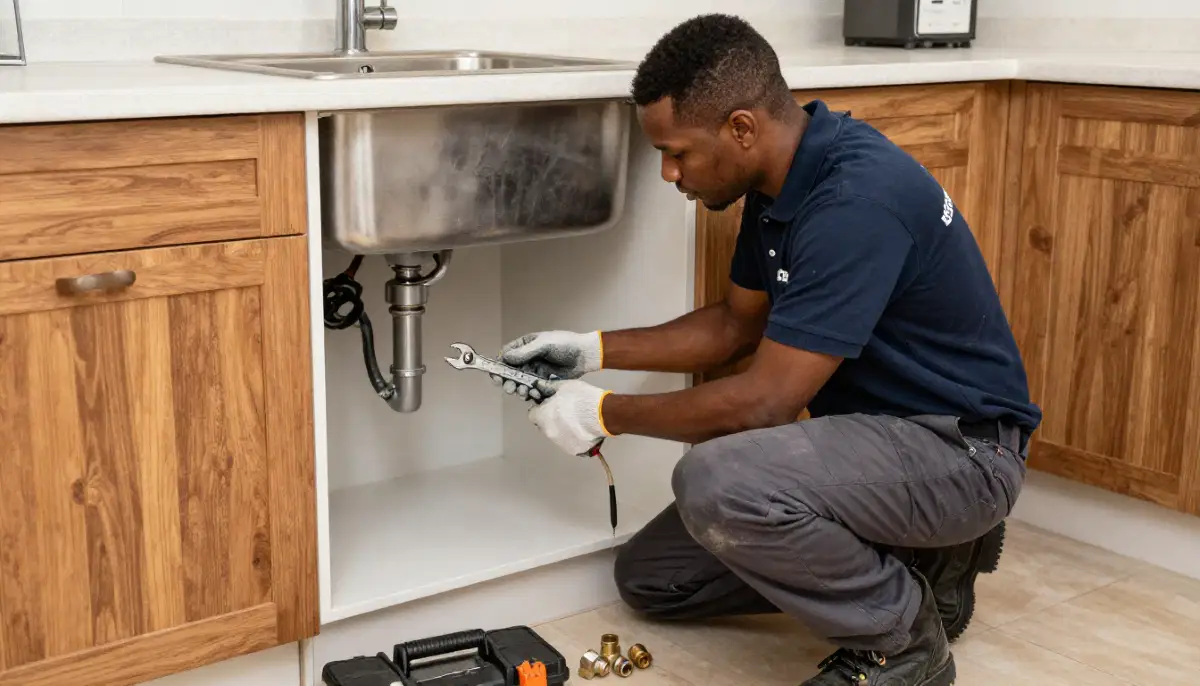
🚰 Commercial Kitchen Sinks
Restaurant kitchens require specialised sink configurations:
Three-compartment sink (legally required):
- Compartment 1: Wash (with detergent)
- Compartment 2: Rinse (clear water)
- Compartment 3: Sanitise (chemical or hot water)
- Each compartment: minimum 300x300x300mm
- Drain connections to grease trap
Handwashing sinks:
- Required in food prep areas
- Hands-free operation (knee or foot valves preferred)
- Hot and cold water mixing valve
- Soap and paper towel dispensers
Prep sinks (vegetable wash sinks):
- Cold water only
- May require backflow prevention
- Drain to grease trap
Read our kitchen sink installation guide for more.
🔥 Hot Water Systems for Restaurants
Restaurants need substantial hot water capacity:
Commercial geyser options:
- Storage tank geysers: 500L-2,000L capacity. Most common. Requires significant space.
- Tankless (instantaneous) heaters: Heat water on demand. Energy efficient but high electrical demand.
- Booster heaters: Raise water temperature from 60°C to 85°C for dishwashers.
Sizing guide (storage tank):
- Small cafe (20 seats): 200-300L
- Medium restaurant (60 seats): 500-800L
- Large restaurant (120+ seats): 1,000-2,000L
Recirculation pumps: Maintain hot water temperature throughout the kitchen, reducing wait time and water waste.
Read our geyser costs guide for pricing.
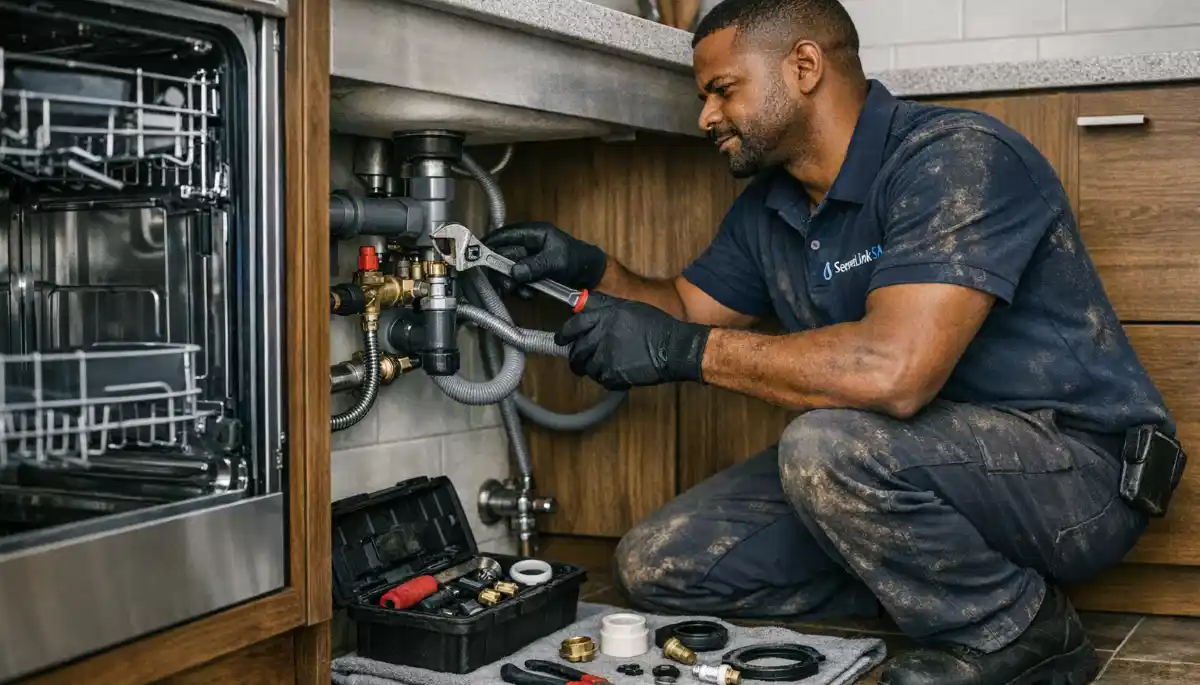
🔄 Backflow Prevention
Backflow prevention is legally required for all commercial kitchens:
Why backflow prevention matters:
- Prevents contaminated water from flowing back into municipal supply
- Protects public health
- Legally required—annual testing mandatory
Where backflow devices are required:
- Main water line entering the building
- Dishwasher water supply
- Ice machine water supply
- Any equipment with chemical injection
- Hose bibs (outside taps)
Testing requirements: Annual testing by certified backflow tester. Keep records for health inspectors.
Cost: R800-R1,500 per test.
💨 Ventilation & Odour Control
Proper ventilation is essential for commercial kitchen plumbing:
Plumbing vents: Every drain needs a vent pipe to prevent air locks and allow smooth drainage. In commercial kitchens, vents must be sized for high-volume flow.
Grease trap vents: Grease traps require venting to prevent odours and allow proper flow.
Floor drain odour control: Floor drains can emit sewer gases. Options:
- Primer valves (auto-fill traps with water)
- One-way check valves
- Regular use (run water weekly in unused drains)
Read our drain cleaning guide for maintenance.
📜 Regulatory Compliance & Inspections
Restaurants face regular health and municipal inspections:
What inspectors check:
- Grease trap installation and cleaning records
- Backflow prevention devices and test records
- Floor drains (clean, functioning, no odours)
- Handwashing sink availability and operation
- Three-compartment sink setup
- Hot water temperature (minimum 60°C at taps)
- No cross-connections between potable and non-potable water
Required documentation:
- Grease trap cleaning manifests (keep for 3+ years)
- Backflow test reports (annual)
- Plumbing COC for any new work
- Geyser service records
Penalties for non-compliance: Fines (R10,000-R50,000+), closure orders, negative inspection reports affecting liquor licenses.
Read our plumbing COC guide for more.
📐 Design Considerations for New Kitchens
When designing a new restaurant kitchen, consider these plumbing requirements for restaurant kitchen:
Early planning: Involve a commercial plumber during the design phase—not after construction starts. Plumbing layout affects equipment placement.
Accessibility: Ensure grease traps, shut-off valves, and cleanouts are accessible for maintenance. Don’t bury them behind equipment.
Future expansion: Design pipe runs with capacity for future equipment. It’s cheaper to oversize pipes now than to replace them later.
Slope requirements: Drain pipes must slope 1-2% toward the sewer. In large kitchens, this affects floor height and equipment placement.
Grease trap location: Ideally outdoors or in a service area, not under equipment. Must be accessible for cleaning trucks.
For professional design assistance, use our free inspection service.
📅 Maintenance Schedule
Protect your restaurant plumbing with regular maintenance:
Daily:
- Scrape food waste into bins (not down drains)
- Use sink strainers
- Run hot water for 30 seconds after each use
Weekly:
- Check floor drains for debris
- Inspect under-sink connections for leaks
- Run water in unused floor drains (prevent odours)
Monthly:
- Grease trap cleaning (or as scheduled)
- Clean aerators and spray nozzles
- Check water temperature at all taps
Quarterly:
- Professional drain cleaning (hydro-jetting)
- Inspect grease trap for damage
- Check backflow prevention devices
Annually:
- Backflow testing (legally required)
- Professional plumbing inspection
- Geyser service and anode replacement
- CCTV drain inspection
Read our maintenance checklist guide for more.
❌ 5 Costly Restaurant Plumbing Mistakes
Mistake #1: Undersizing the Grease Trap
Buying a cheaper, smaller grease trap to save money upfront. Result: trap fills quickly, grease escapes to sewer, leading to blockages, backups, and fines. Replacement costs far more than buying the right size initially.
Mistake #2: Neglecting Grease Trap Cleaning
“We’ll clean it when it smells” is the most expensive maintenance strategy. A neglected grease trap fails completely. Cleaning every 1-3 months costs R1,000-R3,000. An emergency sewer backup costs R10,000-R30,000 plus lost business.
Mistake #3: No Floor Drains in Key Areas
Missing floor drains under dishwashers or ice machines. When (not if) these appliances leak, water floods your kitchen. Install floor drains under all water-using equipment.
Mistake #4: Not Keeping Maintenance Records
Health inspectors ask for grease trap cleaning receipts and backflow test reports. Without records, you can’t prove compliance—even if your systems are clean. Keep a logbook on-site.
Mistake #5: DIY Plumbing Without Commercial Experience
Commercial kitchen plumbing is complex. A mistake can shut down your kitchen, fail health inspections, or cause environmental damage. Always use commercial plumbers with restaurant experience.
📋 Real-World Restaurant Plumbing Case Studies
🍳 Case 1: Grease Trap Success in Sandton
Location: Sandton | Business: 80-seat restaurant
Challenge: New restaurant opening. Needed compliant grease trap installation.
Solution: Commercial plumber sized and installed 2,500L grease trap (R28,000). Monthly cleaning schedule established.
Outcome: Passed health inspection with no issues. No plumbing emergencies in 2 years. Grease trap cleaning records maintained.
Lesson: Proper sizing and regular cleaning prevent emergencies and ensure compliance.
💧 Case 2: Emergency Grease Trap Failure in Johannesburg
Location: Johannesburg | Business: Fast food outlet
Problem: Sewage backing up into kitchen. Health inspector called. Business threatened with closure.
Diagnosis: Grease trap not cleaned in 8 months. Completely full. Grease had flowed into sewer line, causing blockage.
Solution: Emergency grease trap cleaning (R2,500) + sewer line hydro-jetting (R3,500) = R6,000 total.
Outcome: Business reopened after 2 days. Owner signed annual maintenance contract (R9,000/year).
Lesson: Neglected grease trap cleaning cost R6,000 in emergency repairs plus 2 days lost revenue. Regular cleaning would have cost R1,000/month.
❓ Frequently Asked Questions About Restaurant Plumbing
What are the plumbing requirements for a restaurant kitchen?
Plumbing requirements for restaurant kitchen include: grease trap (sized appropriately), three-compartment sink, handwashing sink, floor drains under all water-using equipment, commercial dishwasher with high-temperature water, backflow prevention devices, and proper venting. All must comply with SANS 10400 and local health codes.
How often should a restaurant grease trap be cleaned?
Restaurant kitchen drainage grease trap cleaning frequency: small cafe/bakery: monthly; medium restaurant: every 2-3 months; large restaurant/fast food: monthly. Signs it needs cleaning: slow drains, grease odours, visible grease in inspection port, or more than 25% of capacity is grease. Always use a licensed waste hauler and keep records.
Do I need a grease trap for my restaurant?
Yes—all commercial kitchens in South Africa are legally required to have a properly sized and maintained grease trap. Operating without a trap or with an undersized trap can result in fines (R10,000-R50,000+), closure orders, and liability for sewer blockages. Read our grease trap guide for details.
What size grease trap do I need for my restaurant?
Sizing depends on kitchen volume. Coffee shop/bakery: 500-1,000L. Small restaurant: 1,000-2,000L. Medium restaurant: 2,000-4,000L. Large restaurant/fast food: 4,000-8,000L+. Professional sizing calculation considers number of sinks, dishwasher capacity, and peak usage. Never undersize—it leads to compliance failures and backups.
What is a three-compartment sink and do I need one?
A three-compartment sink is legally required for most restaurants. It has three basins: wash (detergent), rinse (clear water), and sanitise (chemical or hot water). Used for manual dishwashing when the dishwasher is down or for large pots that don’t fit in the dishwasher. Health inspectors will check for proper setup.
How hot should restaurant hot water be?
Restaurants need two temperature zones: Handwashing sinks: 40-50°C (comfortable). Dishwashers: 75-85°C for sanitising (may require booster heater). Three-compartment sinks: 43-49°C for washing. Commercial geysers typically supply 60°C water; dishwashers often need a booster heater.
How do I find a reliable commercial kitchen plumber?
To find a reliable plumber for commercial kitchen plumbing: 1) Verify PIRB registration, 2) Ask for restaurant-specific experience, 3) Request references from other restaurants, 4) Ask about grease trap expertise, 5) Get maintenance contract quotes. ServiceLink SA connects you with verified commercial plumbers in Gauteng.
What happens during a health inspection of restaurant plumbing?
Health inspectors check: grease trap cleaning records, backflow test reports, handwashing sink availability and operation, three-compartment sink setup, hot water temperature (minimum 60°C at taps), floor drain cleanliness and odours, no cross-connections, and overall plumbing condition. Failed inspections can result in fines, closure orders, and negative reports affecting liquor licenses.
✅ Final Thoughts: Invest in Proper Restaurant Plumbing
Your restaurant’s plumbing system is as important as your menu and your staff. A single failure can shut down your kitchen, cost thousands in lost revenue, and damage your reputation. Investing in proper commercial kitchen plumbing—grease traps, floor drains, backflow prevention, and regular maintenance—is essential for success.
Key takeaways for restaurant owners:
- Grease traps are legally required – size correctly, clean regularly, keep records
- Floor drains prevent flooding – install under all water-using equipment
- Three-compartment sinks are mandatory – wash, rinse, sanitise
- Backflow prevention protects public health – annual testing required
- Commercial dishwashers need high-temp water – 75-85°C, may need booster heater
- Regular maintenance prevents emergencies – monthly grease trap cleaning, annual inspections
- Use PIRB-registered commercial plumbers – with restaurant experience
Your action plan: If you’re opening a new restaurant, involve a commercial plumber during design. If you own an existing restaurant, verify your grease trap size and cleaning schedule. Get a maintenance contract. Keep records. Pass your next health inspection with confidence. Use ServiceLink SA to find verified commercial kitchen plumbing specialists.
🍽️ Opening or Renovating a Restaurant?
Get quotes from verified commercial kitchen plumbing specialists. Grease traps, drains, dishwashers—we connect you with experts.
📞 Call us: 073 138 4726 for immediate help finding a commercial kitchen plumber near you.
Commercial plumbing •
Grease trap guide •
Industrial systems •
Office maintenance •
Beat Your Quote guarantee
📚 Official resources & standards referenced:
- SANS 10400 – Commercial kitchen standards and plumbing requirements.
- Department of Water and Sanitation – Grease trap regulations and FOG management.
- Plumbing Industry Registration Board (PIRB) – Find registered commercial plumbers.
Information provided for general guidance based on industry research and SANS/DWS standards. For specific restaurant plumbing advice for your business, consult multiple verified commercial kitchen plumbing specialists.
Written by: ServiceLink SA Research Team
Commercial Kitchen Plumbing & Restaurant Specialists
The ServiceLink SA Research Team comprises commercial kitchen plumbing experts, restaurant consultants, and industry professionals with decades of experience designing and maintaining commercial kitchen plumbing systems across South Africa. Our team works directly with PIRB-registered commercial plumbers, grease trap manufacturers, health inspectors, and restaurant owners to bring you accurate, actionable information about plumbing requirements for restaurant kitchen compliance, grease trap sizing, and maintenance best practices. We continuously update this guide to reflect current regulations, SANS standards, and real-world solutions for food service plumbing.
For more information about restaurant and commercial kitchen plumbing, explore our related resources:
commercial plumbing services guide,
grease trap installation guide,
restaurant plumbing guide,
industrial systems guide,
and office maintenance guide.
Our what is ServiceLink SA and
how ServiceLink SA works pages explain our verification process.
See our service areas page for restaurant plumbing coverage in your region.