🏭 Need Industrial Plumbing Services?
Get quotes from verified industrial plumbing specialists for factories, plants, and heavy-duty facilities.
Get Industrial Plumbing Quotes Near You
Servicing Gauteng, Mpumalanga, Emalahleni, Secunda, Middelburg, Standerton, and across South Africa
Industrial Plumbing Systems Explained: What You Need to Know
🏭 From chemical plants to food processing—complete guide to industrial plumbing, pipe materials, and heavy-duty systems
A leak in a residential pipe is an inconvenience. A leak in an industrial facility can mean production shutdowns, environmental contamination, worker safety hazards, and millions in lost revenue.
Industrial plumbing systems are the backbone of manufacturing, processing, and production facilities. They move water, chemicals, steam, gases, and waste through miles of pipes. The stakes are higher, the pressures are greater, and the materials are more specialised than anything in residential or even commercial plumbing.
I’ve worked with industrial clients across South Africa’s industrial heartlands—from the mines and processing plants of Mpumalanga to the factories of Gauteng’s industrial corridors. Factory plumbing requires specialised knowledge of material compatibility, pressure ratings, temperature extremes, and regulatory compliance.
This comprehensive guide will answer how industrial plumbing works, explain the different types of industrial pipe systems, compare materials, and help you understand what to look for in an industrial plumbing contractor. Whether you’re in Gauteng, Mpumalanga, Emalahleni, or Secunda, this heavy duty plumbing guide has you covered.
For related information, read our commercial plumbing services guide, restaurant plumbing guide, office building maintenance guide, and residential vs commercial guide. Let’s dive into industrial systems.
📋 Table of Contents – Industrial Plumbing Systems Guide
🏭 What Is Industrial Plumbing?
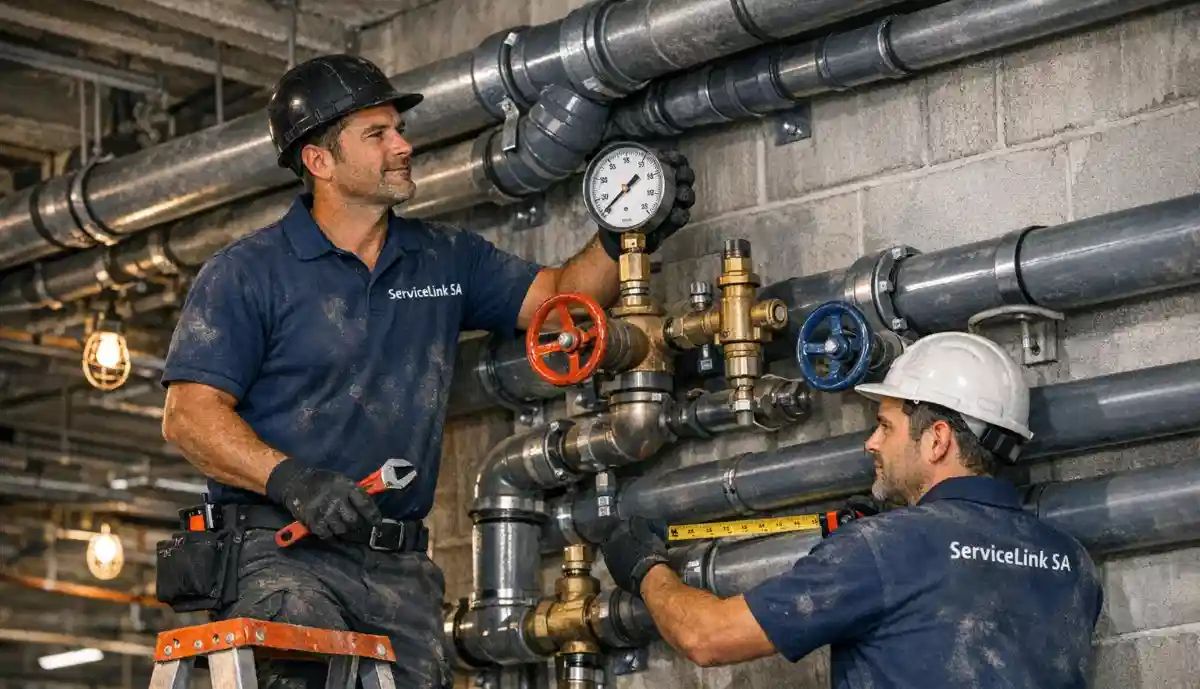
Industrial plumbing systems encompass the piping, fixtures, and equipment used in manufacturing, processing, power generation, mining, and heavy industrial facilities. Unlike residential or commercial plumbing, industrial systems often carry hazardous materials, operate at extreme temperatures and pressures, and are subject to stringent safety regulations.
Key characteristics of industrial plumbing:
- Large diameters: Pipes from 50mm to 600mm+ (vs 15-50mm residential)
- High pressures: Up to 1,000-10,000+ kPa (vs 400-600 kPa residential)
- Extreme temperatures: From cryogenic (-200°C) to superheated steam (500°C+)
- Specialised materials: Stainless steel, carbon steel, HDPE, FRP, CPVC, lined pipes
- Hazardous contents: Chemicals, acids, solvents, gases, high-temperature fluids
- Continuous operation: 24/7/365 in many facilities (no downtime for repairs)
- Strict regulations: OHSA, environmental, industry-specific standards
Examples of industrial facilities: Chemical plants, refineries, power stations, mines, food processing plants, pharmaceutical facilities, paper mills, steel mills, and manufacturing plants.
Read our commercial plumbing services guide for comparison.
📊 Residential vs Commercial vs Industrial: The Spectrum
Understanding where heavy duty plumbing fits on the spectrum helps clarify its unique demands:
| Factor | Residential | Commercial | Industrial |
|---|---|---|---|
| Pipe Diameter | 15-50mm | 50-150mm | 50-600mm+ |
| Operating Pressure | 400-600 kPa | 400-800 kPa | 1,000-10,000+ kPa |
| Temperature Range | 10-60°C | 10-90°C | -200°C to 500°C+ |
| Pipe Materials | Copper, PEX, PVC, CPVC | Copper, PVC, CPVC, mild steel | SS, CS, HDPE, FRP, lined, alloy |
| Contents | Potable water only | Potable water, wastewater | Chemicals, acids, gases, steam, slurry |
| Operation Schedule | Intermittent | Business hours | 24/7/365 continuous |
| Safety Risk | Low | Moderate | High (chemical, pressure, temperature) |
| Regulatory Oversight | SANS, municipal | SANS, municipal, health | SANS, OHSA, DEA, industry-specific |
The progression from residential to industrial is exponential in complexity, risk, and required expertise.
🔧 Types of Industrial Plumbing Systems
Industrial pipe systems can be categorised by function:
1. Process Piping: Carries the product being manufactured—chemicals, food products, petroleum, etc. Highest purity/safety requirements.
2. Utility Piping: Supports facility operations—steam, compressed air, cooling water, boiler feed water, fire suppression.
3. Sanitary Piping: Wastewater, industrial effluent, chemical waste. Often requires treatment before discharge.
4. Instrumentation Piping: Small-diameter lines for sensors, gauges, and control systems.
5. HVAC Piping: Heating, ventilation, and air conditioning for large industrial spaces.
6. Fire Protection Piping: Sprinkler systems, deluge systems, foam systems for high-hazard areas.
Read our drain cleaning guide for industrial drainage considerations.
🏭 Need Industrial Plumbing Services?
Get quotes from verified industrial plumbing specialists for factories, plants, and heavy-duty facilities.
Get Industrial Plumbing Quotes
Free quotes • Verified specialists • Beat Your Quote guarantee
🔧 Industrial Pipe Materials
How industrial plumbing works depends heavily on material selection. Different materials for different applications:
Carbon Steel (CS): Most common for general industrial applications. Good strength, cost-effective. Not for corrosive services. Used for steam, compressed air, cooling water.
Stainless Steel (SS): Corrosion-resistant. Grades 304 (general), 316 (chemical), 316L (welded, low carbon). Used for food processing, pharmaceuticals, chemicals.
HDPE (High-Density Polyethylene): Flexible, corrosion-proof, chemical-resistant. Used for slurry lines, chemical waste, mining.
FRP (Fibreglass Reinforced Plastic): Lightweight, corrosion-resistant. Used for corrosive chemicals, acids.
CPVC (Industrial grade): Corrosion-resistant, lower temperature limit (93°C). Used for chemical drain lines, corrosive services.
Alloy Pipes (Hastelloy, Inconel, Monel): Extreme corrosion resistance, very expensive. Used for highly corrosive chemicals, high temperatures.
Lined Pipes (PTFE, rubber, glass): Carbon steel pipe with corrosion-resistant liner. Used for aggressive chemicals where solid alloy is too expensive.
📊 Pipe Material Comparison
Selecting the right material for industrial pipe systems is critical:
| Material | Cost | Corrosion Resistance | Temperature Max | Best Applications |
|---|---|---|---|---|
| Carbon Steel | Low | Poor | 500°C+ | Steam, air, water, oil |
| Stainless Steel 304 | Moderate | Good | 500°C+ | Food, beverage, general chemical |
| Stainless Steel 316 | High | Excellent | 500°C+ | Chemical, pharmaceutical, marine |
| HDPE | Low | Excellent | 60°C | Slurry, mining, chemical waste |
| FRP | Moderate | Excellent | 100°C | Corrosive chemicals, acids |
| PTFE-Lined | Very High | Excellent | 230°C | Aggressive chemicals, high purity |
Read our best pipes for home plumbing guide for comparison with residential materials.
⚙️ Process Piping vs Utility Piping
A key distinction in how industrial plumbing works is the difference between process and utility piping:
Process Piping:
- Carries the actual product being manufactured
- Higher purity/safety requirements
- More stringent material specifications
- Often requires sanitary finishes (food/pharma)
- Examples: Chemical transfer lines, food product lines, pharmaceutical water (WFI)
Utility Piping:
- Supports facility operations (not the product)
- Less stringent requirements (but still regulated)
- Larger volumes, lower cost materials
- Examples: Steam, compressed air, cooling water, boiler feed water
Both are essential; both require specialised expertise.
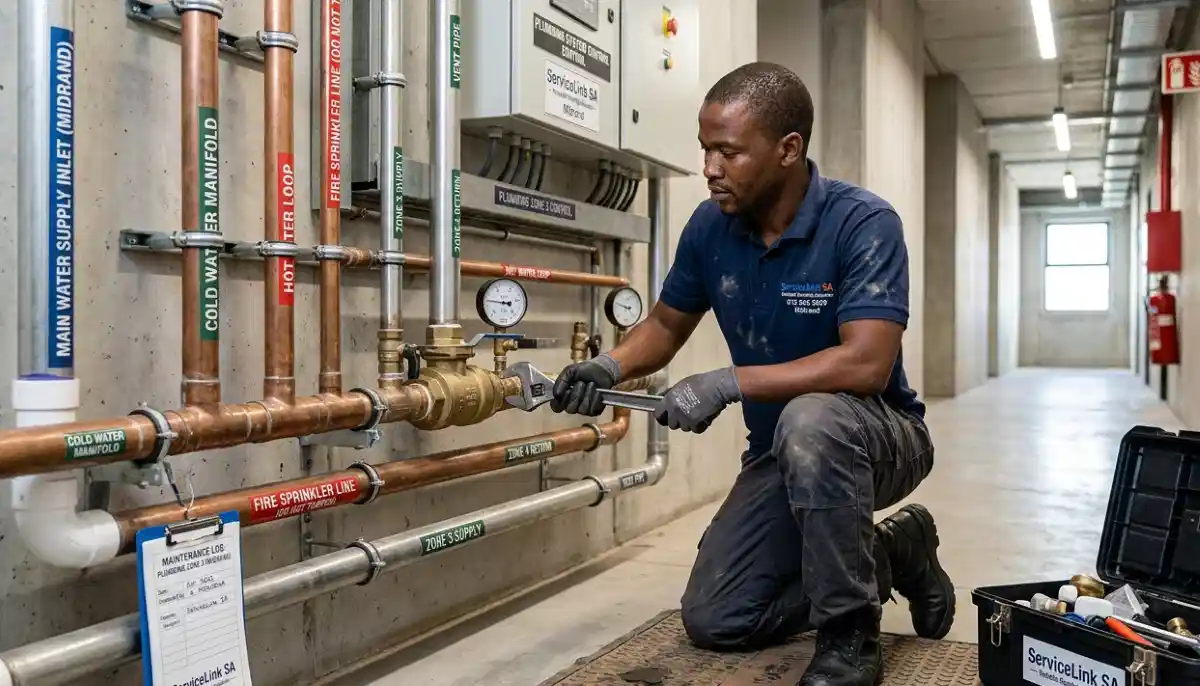
🧪 Chemical & Petrochemical Plants
Chemical plants represent the most demanding industrial plumbing systems:
Key challenges:
- Corrosive chemicals (acids, caustics, solvents)
- High pressures and temperatures
- Toxic or flammable contents
- Stringent leak detection requirements
- Double-wall piping for hazardous materials
Typical materials: Stainless steel 316, Hastelloy, PTFE-lined carbon steel, FRP for non-metallic.
Special requirements: Leak detection systems, secondary containment, cathodic protection, regular NDT inspection.
For industrial facilities in Secunda and Emalahleni, specialised chemical plant experience is essential.
🍺 Food & Beverage Processing
Food and beverage facilities have unique factory plumbing requirements:
Key requirements:
- Sanitary design (smooth finishes, no crevices)
- Corrosion-resistant materials (stainless steel 304/316)
- Clean-in-place (CIP) systems
- Temperature control for product safety
- FDA/health department compliance
Applications: Dairy processing, beverage production (beer, soft drinks), meat processing, bakery ingredients, fruit juice production.
Typical materials: Stainless steel 304/316, sanitary tubing, EPDM gaskets.
Read our restaurant plumbing guide for smaller-scale food service.
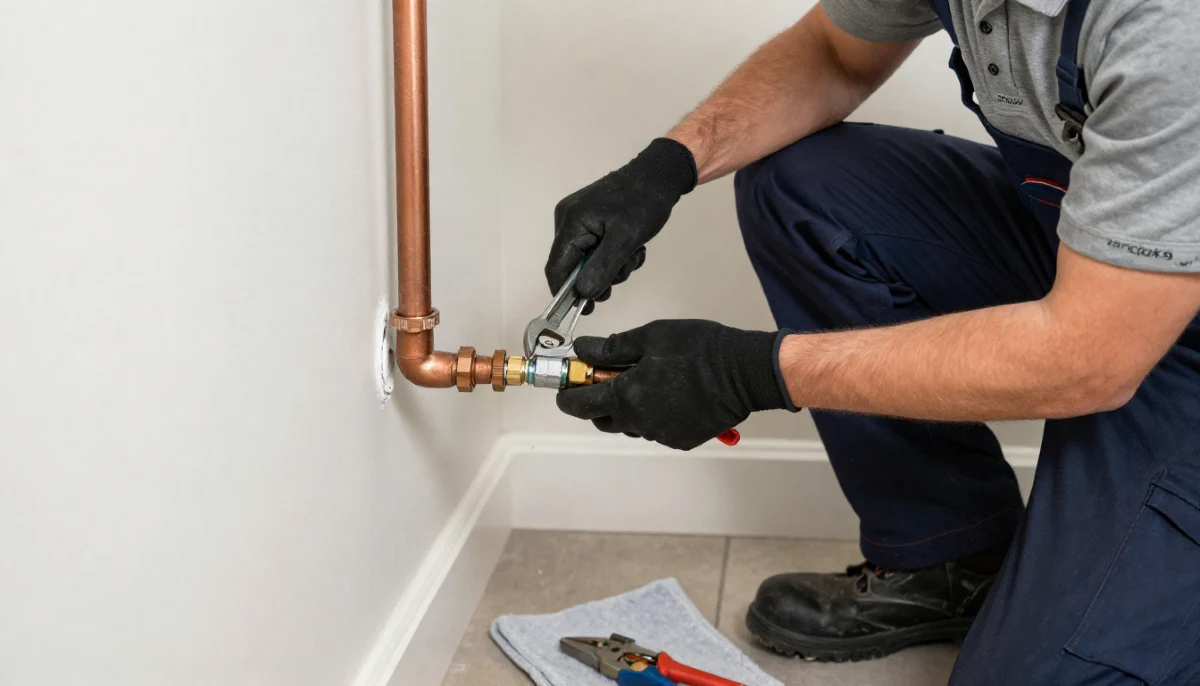
⛏️ Mining & Heavy Industry
Mining operations have unique industrial pipe systems needs:
Applications: Slurry lines (ore + water), tailings disposal, process water, dewatering, chemical leaching (cyanide, acid), compressed air for equipment.
Key challenges: Abrasion (slurry wears pipes), long distances (kilometres of pipe), remote locations (limited access), extreme weather (outdoor exposure).
Typical materials: HDPE (flexible, abrasion-resistant), rubber-lined steel, stainless steel for chemicals.
For mining facilities in Mpumalanga and Middelburg, specialised mining plumbing experience is critical.
⚡ Power Generation Facilities
Power plants have the most extreme heavy duty plumbing requirements:
Applications: High-pressure steam lines (500°C+, 10,000+ kPa), cooling water (massive volumes), boiler feed water, fuel oil/gas lines, ash handling slurry, condensate return.
Key challenges: Extreme temperatures and pressures, thermal expansion management, high-purity water requirements (boilers), corrosion control.
Typical materials: Alloy steel (chrome-moly), stainless steel, carbon steel for lower pressure.
📜 Regulatory Requirements
Industrial plumbing systems face extensive regulation:
Key regulations and standards:
- SANS 10400: Building regulations (industrial sections)
- OHSA (Occupational Health and Safety Act): Worker safety, pressure vessels, hazardous materials
- DEA (Department of Environmental Affairs): Effluent discharge, environmental compliance
- Pressure Equipment Regulations (PER): Design, manufacture, inspection of pressure systems
- Industry-specific: Food safety (FSSC 22000), pharmaceutical (GMP), mining (MHSA)
Required documentation:
- Design calculations and drawings (engineer-stamped)
- Material test certificates
- Welding procedures and welder qualifications
- Non-destructive testing (NDT) reports
- Pressure test records
- Operating and maintenance manuals
- COC (Certificate of Compliance)
Read our plumbing COC guide for general compliance information.
🔧 Maintenance & Inspection
Industrial systems require rigorous maintenance programs:
Regular inspections:
- Visual inspection for leaks, corrosion, damage (daily/weekly)
- Wall thickness measurements (ultrasonic testing) – annual
- Pressure testing – after repairs or on schedule
- Non-destructive testing (NDT) – radiography, dye penetrant, magnetic particle
Maintenance tasks:
- Valve exercising and lubrication
- Gasket replacement
- Pipe support inspection and adjustment
- Corrosion under insulation (CUI) inspection
- Cathodic protection system testing (buried pipes)
Failure consequences: Production downtime (R10,000-R1,000,000+/hour), environmental fines, safety incidents, equipment damage.
👨🔧 Choosing an Industrial Plumbing Contractor
Selecting the right contractor for heavy duty plumbing is critical:
- Verify certifications: PIRB registration, pressure equipment authorisation, relevant industry certifications
- Check industrial experience: Ask for references from similar facilities (chemical, mining, food, etc.)
- Verify safety record: TRIR (Total Recordable Incident Rate), safety certifications
- Check welding qualifications: ASME, AWS, or relevant standards. Ask for welder certifications.
- Verify NDT capabilities: In-house or subcontractor? Certifications?
- Ask about emergency response: 24/7 availability for critical failures
- Get detailed quotes: Scope, materials, labour, testing, documentation
For industrial facilities in Standerton and Middelburg, local industrial experience is valuable.
❌ 5 Costly Industrial Plumbing Mistakes
Mistake #1: Using the Wrong Material for the Application
Carbon steel in corrosive service fails rapidly. Plastic pipe where high temperature is expected melts. Material selection must consider chemical compatibility, temperature, pressure, and abrasion. A failure can be catastrophic.
Mistake #2: No Corrosion Allowance
Industrial pipes corrode over time. Design must include corrosion allowance (extra wall thickness) for expected service life. Without it, pipes fail prematurely.
Mistake #3: Inadequate Support
Industrial pipes are heavy and expand/contract with temperature. Inadequate supports cause sagging, stress fractures, and premature failure. Proper support spacing and guided supports are essential.
Mistake #4: No Leak Detection for Hazardous Materials
Double-wall piping, leak detection systems, and secondary containment are required for hazardous materials. Without them, a small leak becomes an environmental disaster.
Mistake #5: Using Residential/Commercial Plumbers for Industrial Work
Industrial systems require specialised knowledge of codes, materials, welding, and safety. A residential plumber cannot design or install a chemical plant piping system. Use qualified industrial contractors.
📋 Real-World Industrial Plumbing Case Studies
🏭 Case 1: Chemical Plant Piping Upgrade in Secunda
Location: Secunda | Facility: Chemical manufacturing plant
Problem: 20-year-old carbon steel piping failing due to corrosion. Frequent leaks, production downtime, safety concerns.
Solution: Replacement with stainless steel 316 and FRP for corrosive services. Project cost R4.5 million.
Outcome: Leaks eliminated. Downtime reduced by 95%. Project payback 18 months.
Lesson: Material selection is critical—carbon steel failed; stainless steel and FRP succeeded.
⛏️ Case 2: Mining Slurry Line in Mpumalanga
Location: Mpumalanga | Facility: Coal mine
Problem: Steel slurry line wearing through every 6 months. High maintenance costs, production interruptions.
Solution: Replacement with HDPE (high-density polyethylene). HDPE more abrasion-resistant and flexible.
Outcome: Slurry line now lasts 5+ years. Maintenance costs reduced by 80%.
Lesson: HDPE is superior to steel for abrasive slurry applications.
❓ Frequently Asked Questions About Industrial Plumbing
How does industrial plumbing work?
How industrial plumbing works depends on the application. Generally, industrial systems use larger pipes (50-600mm+), higher pressures (1,000-10,000+ kPa), specialised materials (stainless steel, HDPE, FRP), and rigorous safety standards. Systems may carry water, steam, chemicals, gases, or slurries. Design follows SANS, ASME, or industry-specific codes.
What materials are used in industrial pipe systems?
Industrial pipe systems use a wide range of materials: Carbon steel (general service), stainless steel 304/316 (corrosive, food, pharmaceutical), HDPE (slurry, mining, chemical waste), FRP (corrosive chemicals), alloy pipes (Hastelloy, Inconel for extreme corrosion), and lined pipes (PTFE, rubber for aggressive chemicals). Material selection depends on chemical compatibility, temperature, pressure, and abrasion.
What’s the difference between industrial and commercial plumbing?
Industrial plumbing handles hazardous materials, higher pressures, extreme temperatures, and continuous 24/7 operation. Commercial plumbing serves offices, restaurants, and retail—lower pressures, potable water only, business hours operation. Industrial systems require specialised materials (stainless steel, alloys), welding, NDT inspection, and strict regulatory compliance. Commercial uses copper, PVC, CPVC.
What qualifications should an industrial plumber have?
An industrial plumber should have: PIRB registration, pressure equipment authorisation (where required), welding certifications (ASME, AWS), NDT certifications, relevant industry experience (chemical, mining, food, etc.), safety training (OHSA), and familiarity with SANS, ASME, and industry-specific codes. Not all plumbers are qualified for industrial work.
How often should industrial pipes be inspected?
Inspection frequency depends on service conditions. Visual inspection: daily/weekly (operator rounds). Wall thickness measurement: annually. Pressure testing: after repairs or per schedule. NDT (radiography, ultrasound): per risk-based inspection plan. Corrosive services may require more frequent inspection. Industry standards (API 570, ASME) provide guidance.
What is process piping vs utility piping?
Process piping carries the product being manufactured (chemicals, food, pharmaceuticals). Requires higher purity, stricter material specs, often sanitary finishes. Utility piping supports facility operations (steam, compressed air, cooling water). Less stringent requirements but still regulated. Both are essential; both require specialised design.
How do I find a reliable industrial plumbing contractor?
To find a reliable contractor for industrial plumbing systems: 1) Verify PIRB registration and pressure equipment authorisation, 2) Ask for industrial experience and references from similar facilities, 3) Verify safety record and certifications, 4) Check welding qualifications, 5) Ask about NDT capabilities, 6) Get detailed quotes. ServiceLink SA connects you with verified industrial plumbing specialists in Gauteng and Mpumalanga.
What are the biggest risks in industrial plumbing?
Biggest risks: chemical leaks (environmental damage, worker exposure), high-pressure failures (explosive decompression), high-temperature burns (steam, hot process fluids), production downtime (lost revenue, customer impact), regulatory fines (environmental, safety), and catastrophic equipment damage. Proper design, material selection, installation, and maintenance mitigate these risks.
✅ Final Thoughts: Industrial Plumbing Requires Specialised Expertise
Industrial plumbing systems are among the most complex and critical infrastructure in any manufacturing or processing facility. The stakes are high—safety, environmental compliance, production uptime, and regulatory requirements all depend on properly designed, installed, and maintained piping systems.
Key takeaways for industrial facility managers:
- Material selection is critical – wrong material = premature failure, safety risk
- Industrial systems are far more complex than residential or commercial
- Proper design prevents failures – corrosion allowance, supports, thermal expansion
- Regular inspection prevents disasters – NDT, wall thickness, visual
- Documentation is essential – design calculations, material certs, test records
- Use qualified industrial contractors – not residential or commercial plumbers
- Preventive maintenance is cheaper than emergency repairs – by orders of magnitude
Your action plan: Assess your facility’s piping systems. Identify high-risk areas. Implement regular inspection program. Use ServiceLink SA to find verified industrial plumbing specialists with relevant industry experience.
🏭 Need Industrial Plumbing Services?
Get quotes from verified industrial plumbing specialists for factories, plants, and heavy-duty facilities.
📞 Call us: 073 138 4726 for immediate help finding an industrial plumbing specialist near you.
Commercial plumbing •
Restaurant plumbing •
Office maintenance •
Residential vs commercial •
Beat Your Quote guarantee
📚 Official resources & standards referenced:
- SANS 10400 – Industrial standards and building regulations.
- South African Bureau of Standards (SABS) – Pipe material standards and certification.
- Plumbing Industry Registration Board (PIRB) – Find registered industrial plumbing specialists.
Information provided for general guidance based on industry research and SANS/SABS standards. For specific industrial plumbing systems advice for your facility, consult qualified industrial engineering and plumbing professionals.
Written by: ServiceLink SA Research Team
Industrial Plumbing & Process Piping Specialists
The ServiceLink SA Research Team comprises industrial plumbing experts, process piping specialists, and industry professionals with decades of experience designing, installing, and maintaining industrial pipe systems across South Africa. Our team works directly with PIRB-registered industrial plumbers, welding inspectors, NDT technicians, and regulatory authorities to bring you accurate, actionable information about how industrial plumbing works, material selection, and maintenance best practices. We continuously update this guide to reflect current SANS standards, ASME codes, and real-world solutions for factory plumbing and heavy duty plumbing applications.
For more information about industrial plumbing and commercial systems, explore our related resources:
commercial plumbing services guide,
restaurant plumbing guide,
industrial systems guide,
office maintenance guide,
and residential vs commercial guide.
Our what is ServiceLink SA and
why contractors join ServiceLink SA pages explain our verification process.
See our service areas page for industrial plumbing coverage in your region.