
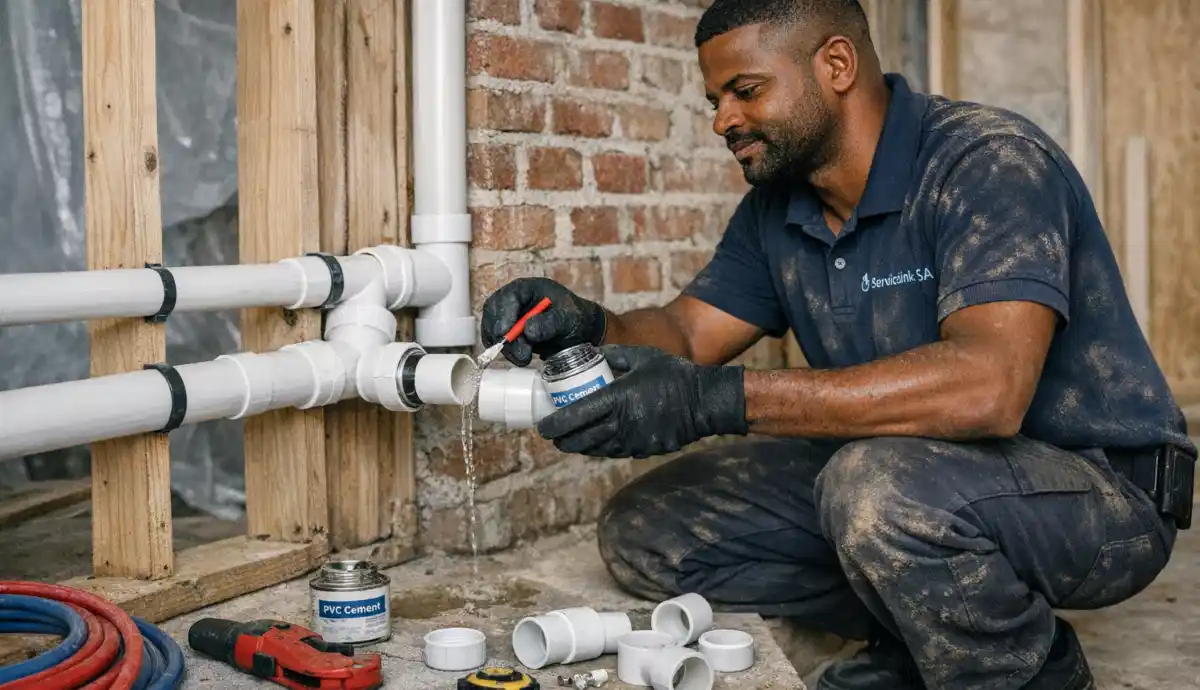
🔧 Planning New Plumbing or Repiping?
Get quotes from verified plumbers for copper, PEX, or PVC pipe installation. Free inspections available.
Get Pipe Installation Quotes Near You
Servicing Gauteng, KwaZulu-Natal, Durban, Umhlanga, Ballito, Westville, and across South Africa
Best Pipes for Home Plumbing in South Africa: Complete Buyer’s Guide
🔧 From copper to PEX to PVC—everything you need to know to choose the right plumbing pipe for your South African home
You’re building a new home or replacing old pipes. You walk into the hardware store and face a wall of options: copper pipes, PEX pipes, PVC pipes, CPVC pipes. Which one is right for your home? The decision affects your budget, your home’s reliability, and potentially your health.
After decades of helping homeowners across South Africa select materials for new construction and repiping projects, I’ve learned that there’s no single “best” pipe for every situation. The right choice depends on your budget, water chemistry (pH), whether the pipes will be exposed to sunlight, your climate (freezing risk), and your long-term plans.
This comprehensive guide will help you navigate the plumbing pipe types available in South Africa. You’ll learn how to choose plumbing pipes based on your specific needs, compare costs and lifespans, and avoid costly mistakes. Whether you’re in Gauteng, KwaZulu-Natal, or Durban, this pipe selection guide has you covered.
For related information, read our pipe replacement costs guide, copper vs PVC guide, PEX plumbing pipes guide, and pipe insulation guide. Let’s find the perfect pipe for your home.
📋 Table of Contents – Best Pipes for Home Plumbing Guide
🔧 Overview of Plumbing Pipe Types
Here are the main plumbing pipe types available in South Africa:
🔴 Copper Pipe
Best for: Long-term homes (50-70 years), neutral pH water, exposed outdoor applications, hot water lines. Pros: Durable, UV-resistant, recyclable, proven track record. Cons: Expensive, difficult DIY, can corrode in acidic water.
🔵 PEX Pipe (Cross-linked Polyethylene)
Best for: New construction, repiping, homes in freezing climates, renovations. Pros: Flexible, freeze-resistant, fewer fittings, 30-50% cheaper than copper. Cons: UV sensitive, rodent susceptible, shorter lifespan than copper.
🟢 PVC Pipe (Polyvinyl Chloride)
Best for: Cold water only, drainage, irrigation, budget projects. Pros: Cheap, easy DIY, corrosion-proof. Cons: NOT for hot water (max 60°C), UV sensitive, shorter lifespan.
🟡 CPVC Pipe (Chlorinated PVC)
Best for: Hot and cold water on a budget, acidic water areas. Pros: Handles hot water (90°C), cheaper than copper, corrosion-proof. Cons: UV sensitive, can become brittle over time.
⚠️ AVOID: Galvanised Steel – Found in homes pre-1990. Corrodes internally, reduces pressure, develops leaks. Should be replaced during renovation.
Read our pipe replacement guide for replacing old pipes.
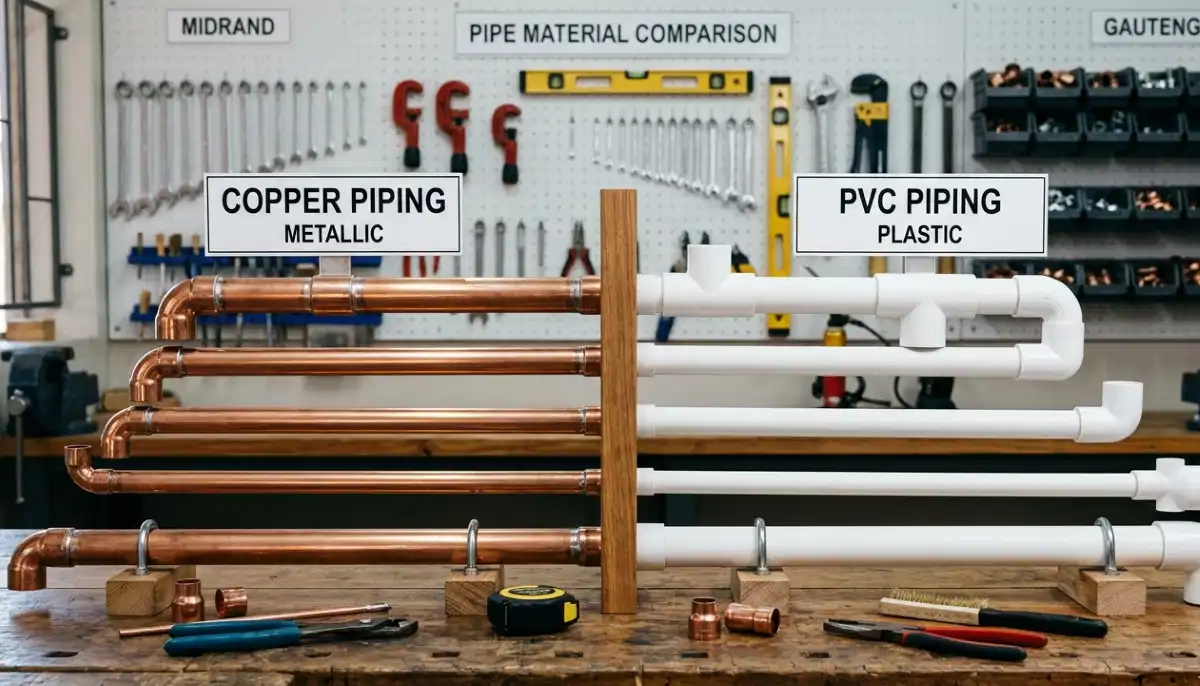
📊 Complete Pipe Comparison Table
Here’s how all plumbing pipe types compare across key factors:
| Factor | Copper | PEX | CPVC | PVC | Galvanised Steel |
|---|---|---|---|---|---|
| Lifespan | 50-70+ years | 40-50 years | 40-50 years | 25-40 years | 30-50 years (failing) |
| Cost (15mm per metre) | R60-R120 | R10-R25 | R25-R50 | R15-R30 | R30-R60 (obsolete) |
| Hot Water Compatible | ✅ Yes (100°C+) | ✅ Yes (95°C) | ✅ Yes (90°C) | ❌ No (max 60°C) | ✅ Yes |
| Freeze Resistant | ❌ Poor (bursts) | ✅ Excellent | ❌ Poor (cracks) | ❌ Poor (cracks) | ❌ Poor (bursts) |
| UV Resistant | ✅ Excellent | ❌ No | ❌ No | ❌ No | ✅ Yes |
| Corrosion Resistance | Good (neutral pH) | ✅ Excellent | ✅ Excellent | ✅ Excellent | ❌ Poor |
| Acidic Water Resistance | ❌ Poor | ✅ Excellent | ✅ Excellent | ✅ Excellent | ❌ Poor |
| DIY Installation | Difficult | Moderate | Easy | Easy | Difficult |
| Fittings Required | Many | Fewest | Many | Many | Many |
| Recyclable | ✅ 100% | ❌ No | ❌ No | ❌ Limited | ✅ Yes |
For complete pricing context, see our plumbing prices guide.
🔴 Copper Pipes: The Traditional Standard
Copper has been the gold standard for residential plumbing for over 80 years. Here’s what you need to know about this plumbing pipe type:
Best for: Long-term homeowners (50-70 years), neutral pH water (6.5-8.5), exposed outdoor applications, hot water lines, main water lines.
Pros:
- Proven longevity (50-70+ years)
- UV-resistant (can be used outdoors)
- 100% recyclable
- No plastic taste or odour
- High heat tolerance (100°C+)
- Rodent-proof
Cons:
- Most expensive option
- Difficult DIY installation (soldering required)
- Can corrode in acidic water (pH below 6.5)
- Poor freeze resistance (bursts when frozen)
- Can be stolen for scrap value
Types of copper pipe: Type K (thickest, underground), Type L (standard residential), Type M (thinnest, budget).
Read our copper vs PVC guide for detailed comparison.
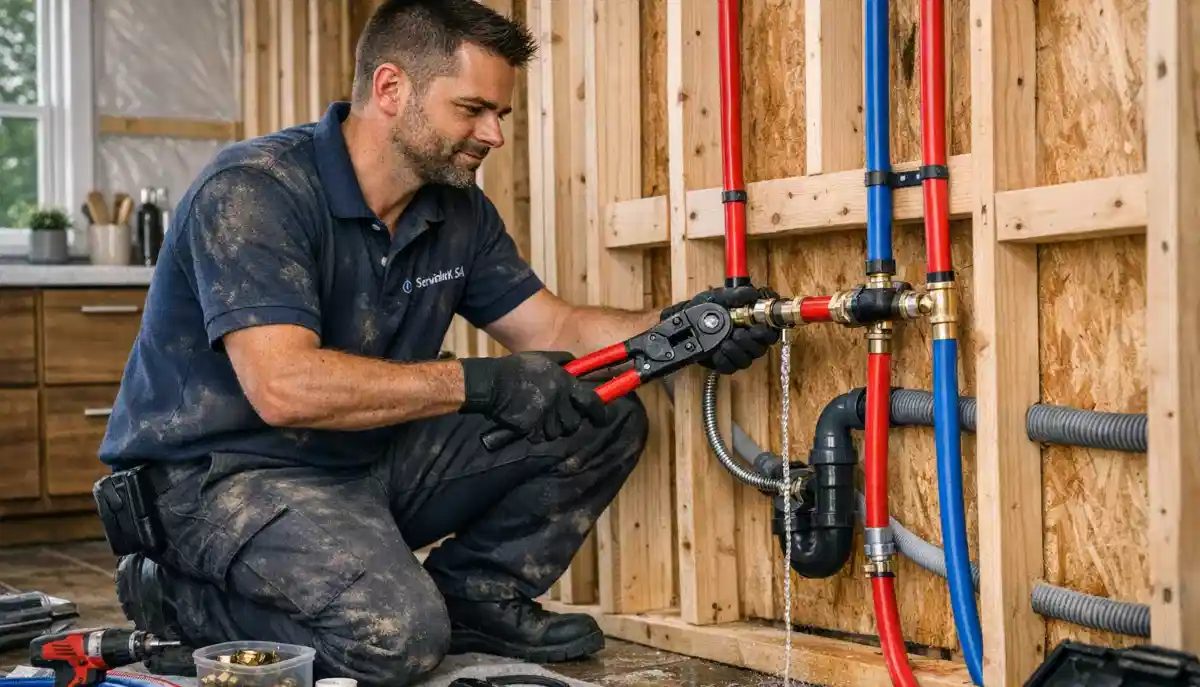
🔧 Planning New Plumbing or Repiping?
Get quotes from verified plumbers for copper, PEX, or PVC pipe installation. Free inspections available.
Free quotes • Verified specialists • Beat Your Quote guarantee
🔵 PEX Pipes: The Modern Alternative
PEX (cross-linked polyethylene) has revolutionised residential plumbing. Here’s why it’s becoming the best pipes for home plumbing for many homeowners:
Best for: New construction, whole-house repiping, homes in freezing climates, renovations, DIY-friendly projects.
Pros:
- Flexible—bends around corners, fewer fittings
- Freeze-resistant—expands instead of bursting
- 30-50% cheaper than copper
- Faster installation (50-70% faster than copper)
- Colour-coded (red for hot, blue for cold)
- Quieter than copper (less water hammer)
- No corrosion in acidic water
Cons:
- UV sensitive—cannot be used outdoors
- Rodents may chew PEX (uncommon but possible)
- Shorter lifespan than copper (40-50 vs 50-70 years)
- Special tools required for installation
- Not recyclable
PEX types: PEX-A (most flexible), PEX-B (most common, best value), PEX-C (least flexible).
Read our PEX plumbing pipes guide for detailed information.
🟢 PVC & CPVC Pipes: The Budget Option
PVC and CPVC are the most affordable plumbing pipe types, but they have significant limitations:
PVC (Polyvinyl Chloride):
- Best for: Cold water only, drainage, irrigation
- NOT for hot water (max 60°C—deforms above)
- Cheapest option (R15-R30 per metre)
- Easy DIY (glue joints)
- Lifespan 25-40 years
- UV sensitive—must be painted or buried outdoors
CPVC (Chlorinated PVC):
- Best for: Hot and cold water on a budget, acidic water areas
- Handles hot water up to 90°C
- Cost: R25-R50 per metre
- Easy DIY (glue joints)
- Lifespan 40-50 years
- UV sensitive—cannot be used outdoors
- Can become brittle over time
⚠️ Important: Never use standard PVC for hot water—it will soften, deform, and fail.
Read our copper vs PVC guide for detailed comparison.
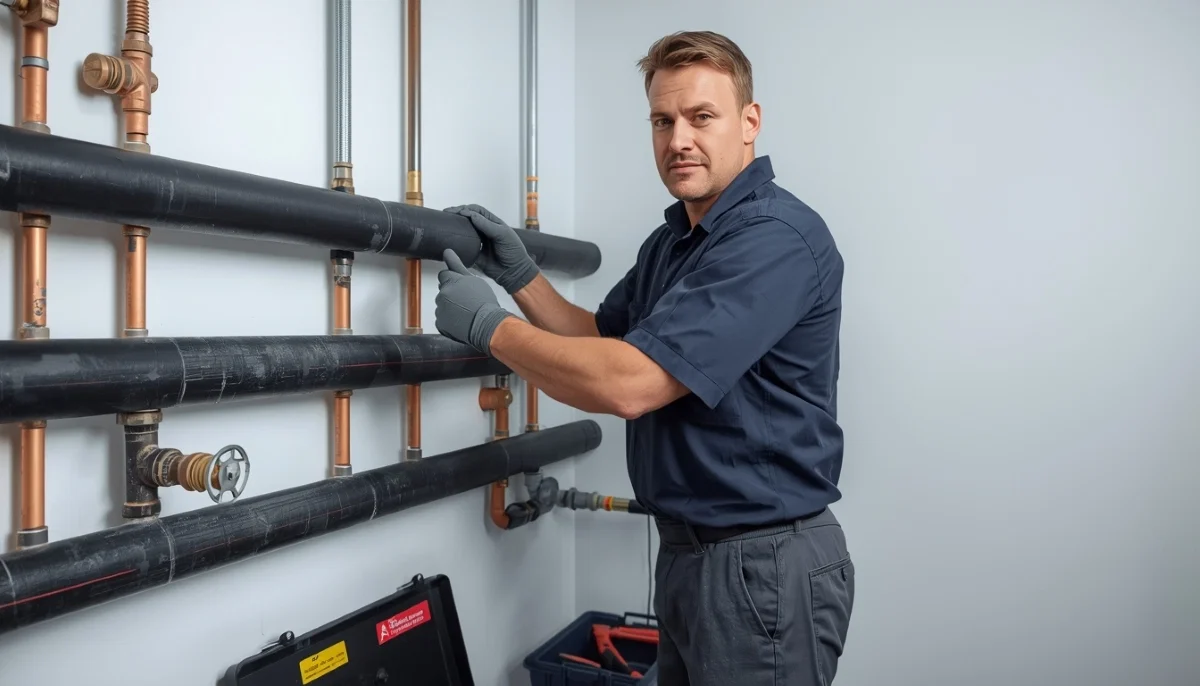
⚠️ Galvanised Steel: The One to Avoid
If your home was built before 1990, it may have galvanised steel pipes. These are NOT recommended for continued use:
Problems with galvanised steel:
- Corrodes internally over time (rust builds up inside)
- Internal diameter shrinks, reducing water pressure
- Rusty water from taps (brown or yellow)
- Develops pinhole leaks randomly
- Lifespan 30-50 years (most are now failing)
- Difficult to repair (threaded connections seize)
What to do: If your home still has galvanised steel pipes, plan for full repiping with copper, PEX, or CPVC. Don’t wait for catastrophic failure.
💰 Cost Comparison for a Typical 3-Bedroom Home
Here’s what what pipes are best for home plumbing looks like in real dollars:
| Pipe Type | Material Cost | Labour Cost | Total Installed | Savings vs Copper |
|---|---|---|---|---|
| Copper (Type L) | R10,000-R20,000 | R8,000-R15,000 | R18,000-R35,000 | Baseline |
| PEX (Manifold System) | R6,000-R12,000 | R5,000-R10,000 | R11,000-R22,000 | Save R7,000-R13,000 |
| CPVC | R5,000-R10,000 | R5,000-R10,000 | R10,000-R20,000 | Save R8,000-R15,000 |
| PVC (cold water only) | R3,000-R7,000 | R4,000-R8,000 | R7,000-R15,000 | Save R11,000-R20,000 |
Note: PVC cannot be used for hot water—you would need CPVC for hot water lines, increasing cost.
🤔 Decision Guide: Which Pipe Is Right for You?
Use this flow chart to choose plumbing pipes for your home:
❓ Do you have acidic water (pH below 6.5)?
YES → Avoid copper. Choose PEX or CPVC. Copper will corrode in acidic water.
NO → Copper is an option. Proceed to next question.
❓ Will pipes be exposed to sunlight (outdoors)?
YES → Choose COPPER. PEX, PVC, and CPVC degrade in UV light.
NO → All options available. Proceed to next question.
❓ Do you live in an area with freezing winters?
YES → Choose PEX. PEX expands when frozen; copper and PVC burst.
NO → All options available. Proceed to next question.
❓ What is your budget and timeline?
Long-term home (10+ years), higher budget → COPPER (best longevity)
Mid-range budget, want freeze resistance → PEX (best value)
Budget conscious, acidic water → CPVC (affordable, handles hot water)
Cold water only, very tight budget → PVC (cheapest, but limited use)
For most South African homes, PEX offers the best balance of cost, performance, and features.
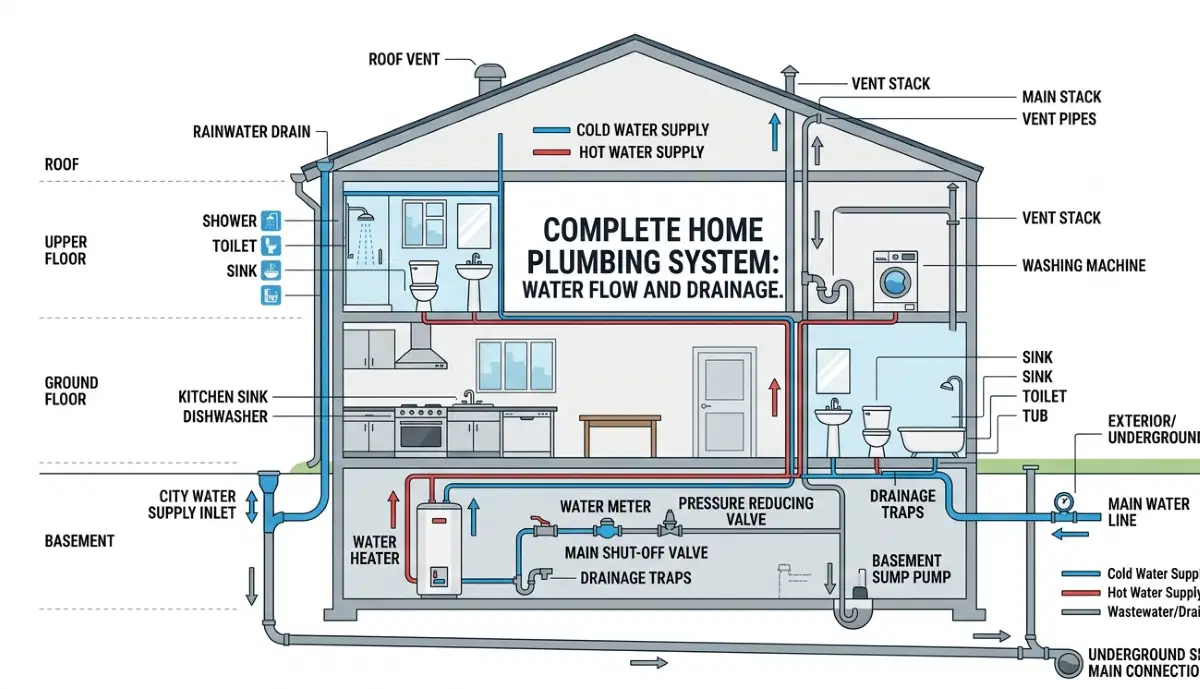
📋 Best Pipe by Application
Different applications may call for different plumbing pipe types:
- Main water line from meter: Copper (Type K) or PEX (buried)
- Hot water supply lines: Copper or PEX or CPVC (not PVC)
- Cold water supply lines: Any type (PEX, CPVC, copper, PVC)
- Outdoor exposed pipes: Copper only (UV damages plastic pipes)
- Underground (buried): Copper (Type K) or PEX (with protection)
- Drainage (non-pressure): PVC only
- Radiant floor heating: PEX only (standard in the industry)
- Ice maker/refrigerator line: PEX or copper (small diameter)
For location-specific services, explore our plumbing services Gauteng and KwaZulu-Natal pages.
💧 Water Quality Considerations
Your water chemistry significantly affects pipe selection:
Test your water pH before choosing pipes:
- pH 6.5-8.5 (neutral): All pipe types acceptable. Copper is safe.
- pH below 6.5 (acidic): AVOID COPPER. Acidic water causes pitting and corrosion. Choose PEX or CPVC.
- pH above 8.5 (alkaline): All pipe types acceptable, but copper may develop scale over time.
How to test: Buy a pH test kit (R50-R150) from a hardware store. Test water from multiple taps. In coastal areas (Cape Town, Durban), water can be slightly acidic. In inland areas (Gauteng), water is typically neutral.
Read our water efficiency guide for more.
❄️ Climate & Freezing Considerations
Your local climate affects what pipes are best for home plumbing:
Freezing risk areas in South Africa: Free State, Northern Cape, Eastern Cape mountains, Gauteng highveld (occasional frost).
If you live in a freezing area:
- Best choice: PEX – expands when frozen, returns to size when thawed
- Avoid: Copper and PVC – burst or crack when frozen
- Also important: Insulate pipes, let taps drip during freezing nights
If you live in a coastal area (no freezing): All pipe types are acceptable from a freeze perspective.
Read our pipe insulation guide for winter preparation.
🔧 Installation Complexity & DIY Potential
Your DIY skill level matters when you choose plumbing pipes:
- Copper: Difficult—requires soldering, torch (fire risk), special tools. Professional recommended.
- PEX: Moderate—requires crimping tool (R500-R1,500). DIY possible with research and practice.
- CPVC/PVC: Easy—glue joints, no special tools. Very DIY-friendly.
For whole-house installation, professional is recommended regardless of material. A small repair or single fixture can be DIY.
For professional help, use our plumbing services network.
⏳ Lifespan & Replacement Timeline
Consider how long you plan to stay in your home when selecting plumbing pipe types:
- Copper: 50-70+ years. Best for long-term homeowners (10+ years).
- PEX: 40-50 years. Good for most homeowners.
- CPVC: 40-50 years. Good for most homeowners.
- PVC: 25-40 years. Acceptable for budget projects, but may need replacement sooner.
If you’re planning to sell within 5 years: PEX or CPVC are cost-effective choices. The next owner won’t need to replace them.
If you’re planning to stay 20+ years: Copper’s longevity may justify the higher upfront cost.
Read our pipe replacement guide for more.
🌍 Environmental Impact
Consider the environmental footprint of your pipe selection:
- Copper: Mining has significant impact, but 100% recyclable. Scrap copper has value.
- PEX: Lower production energy than copper, but not recyclable. Ends in landfill.
- PVC/CPVC: Low production energy, but difficult to recycle. Releases toxic fumes if burned.
Verdict: Copper is most recyclable; plastic pipes have lower production energy. Trade-offs exist for both.
❌ 5 Costly Pipe Selection Mistakes to Avoid
Mistake #1: Using PVC for Hot Water
Standard PVC is rated for cold water only (max 60°C). Using it for hot water causes softening, deformation, and eventual failure. Use copper, PEX, or CPVC for hot water lines.
Mistake #2: Installing Plastic Pipes Outdoors Without UV Protection
PEX, PVC, and CPVC degrade rapidly in sunlight. If using outdoors, they must be painted with UV-resistant paint or buried. Copper is the only choice for exposed outdoor pipes.
Mistake #3: Using Copper with Acidic Water
Acidic water (pH below 6.5) causes pitting and corrosion in copper pipes. Test your water pH before choosing copper. If acidic, use PEX or CPVC.
Mistake #4: Choosing Based on Price Alone
PVC is cheapest upfront, but can’t be used for hot water. CPVC is affordable and handles hot water. PEX offers freeze resistance. Copper lasts longest. Consider total cost of ownership, not just initial price.
Mistake #5: Not Replacing Old Galvanised Steel Pipes
If your home still has galvanised steel pipes, they WILL fail. Don’t wait for a burst pipe and water damage. Plan for repiping with modern materials.
📋 Real-World Pipe Selection Case Studies
🏠 Case 1: New Home Construction in Ballito
Location: Ballito | Builder: The Development Group
Requirements: Coastal home, mild climate, neutral pH water, moderate budget.
Choice: PEX-B with manifold system. Total cost R18,000 for 3-bedroom home.
Reasoning: Faster installation, fewer fittings, individual fixture shut-offs, good value.
Lesson: PEX is excellent for new construction in coastal areas.
🏚️ Case 2: Whole-House Repipe in Gauteng
Location: Gauteng | Homeowner: The Nkosi Family
Problem: 1970s home with failing galvanised steel pipes. Low pressure, rusty water, leaks.
Choice: PEX-B repipe. Cost R22,000 installed.
Result: Pressure restored, clear water, no leaks. Freeze resistance valuable in Gauteng winters.
Lesson: PEX is ideal for repiping old homes—faster, less destructive than copper.
❓ Frequently Asked Questions About Plumbing Pipes
What pipes are best for home plumbing in South Africa?
What pipes are best for home plumbing depends on your situation. For most South African homes, PEX offers the best balance of cost, freeze resistance, and ease of installation. Copper is best for longevity (50-70 years) and outdoor exposure. CPVC is best for budget projects with hot water. PVC is for cold water only.
Which plumbing pipe lasts the longest?
Copper pipes last the longest—50-70+ years with proper water chemistry. PEX and CPVC last 40-50 years. PVC lasts 25-40 years. Galvanised steel lasts 30-50 years but fails internally due to corrosion. For long-term homeowners (20+ years), copper is worth the premium.
Is PEX better than copper?
PEX is better than copper in several ways: flexible (fewer fittings), freeze-resistant (expands instead of bursting), 30-50% cheaper, and faster to install. Copper is better for longevity (50-70 vs 40-50 years), UV resistance (outdoor use), and recycling. For most interior applications, PEX is the modern choice.
Can I use PVC pipe for hot water?
No—standard PVC is rated for cold water only (maximum 60°C). Using PVC for hot water causes softening, deformation, and eventual pipe failure. For hot water, use copper, PEX, or CPVC. CPVC is the plastic alternative rated for hot water (up to 90°C).
How do I choose between copper, PEX, and CPVC?
To choose plumbing pipes: 1) Test water pH (acidic = avoid copper), 2) Consider exposure (outdoors = copper only), 3) Consider freezing risk (PEX best), 4) Consider budget (PEX/CPVC cheaper), 5) Consider longevity (copper longest). For most homes, PEX offers the best balance.
Are plastic pipes safe for drinking water?
Yes—PEX, CPVC, and PVC that are SABS-approved are certified for potable (drinking) water. Some people notice a slight plastic taste initially, which dissipates after flushing. Copper has no taste impact. If you’re concerned about plastic taste, copper may be preferable for drinking water lines.
How much does repiping a house cost in South Africa?
Repiping a 3-bedroom house costs: Copper R18,000-R35,000, PEX R11,000-R22,000, CPVC R10,000-R20,000. In Umhlanga or Westville, rates may vary. PEX and CPVC are significantly cheaper than copper. Read our pipe replacement costs guide for details.
How do I find a reliable plumber for pipe installation?
To find a reliable plumber for pipe selection and installation: 1) Verify PIRB registration, 2) Ask for experience with your chosen pipe material, 3) Get detailed quotes, 4) Check reviews. ServiceLink SA connects you with verified plumbers in Gauteng and KwaZulu-Natal.
✅ Final Thoughts: Choose Wisely, Save Money
Selecting the best pipes for home plumbing is one of the most important decisions in any building or renovation project. The right choice saves you money, prevents future problems, and ensures reliable water supply for decades.
Key takeaways for South African homeowners:
- Test your water pH first – acidic water destroys copper pipes
- PEX is best for most homes – flexible, freeze-resistant, good value
- Copper is best for longevity – 50-70 years, outdoor use, neutral pH water
- CPVC is best for budget hot water – affordable, handles 90°C
- PVC is for cold water only – cheapest, but limited use
- Avoid galvanised steel – replace it during renovation
- Get multiple quotes – compare material and labour costs
Your action plan: Test your water pH. Consider your climate (freezing risk) and whether pipes will be outdoors. Set your budget. Then get quotes from 3 verified plumbers through ServiceLink SA for your chosen material.
🔧 Planning New Plumbing or Repiping?
Get quotes from verified plumbers for copper, PEX, or PVC pipe installation. Free inspections available.
📞 Call us: 073 138 4726 for immediate help finding a pipe specialist near you.
Pipe replacement costs •
Copper vs PVC •
PEX guide •
Pipe insulation •
Beat Your Quote guarantee
📚 Official resources & standards referenced:
- South African Bureau of Standards (SABS) – Pipe standards and certification.
- SANS 10400 – Plumbing regulations and installation standards.
- Plumbing Industry Registration Board (PIRB) – Find registered plumbers.
Information provided for general guidance based on industry research and SABS/SANS standards. For specific best pipes for home plumbing advice for your home, consult multiple verified plumbers.
Written by: ServiceLink SA Research Team
Plumbing Materials & Pipe Selection Specialists
The ServiceLink SA Research Team comprises plumbing materials experts, pipe selection specialists, and industry professionals with decades of experience helping homeowners choose plumbing pipes for their South African homes. Our team works directly with PIRB-registered plumbers, pipe manufacturers, and building standards authorities to bring you accurate, actionable information about what pipes are best for home plumbing for different applications. We continuously update this pipe selection guide to reflect current material costs, installation standards, and real-world performance data for all plumbing pipe types.
For more information about plumbing pipes and materials, explore our related resources:
pipe replacement costs guide,
copper vs PVC guide,
PEX plumbing pipes guide,
pipe insulation guide,
and best pipes guide.
Our what is ServiceLink SA and
ServiceLink SA review pages explain our verification process.
See our service areas page for pipe installation coverage in your region.