
🔧 Planning New Plumbing or Repiping?
Get quotes from verified plumbers for copper or PVC pipe installation. Free inspections available.
Get Pipe Installation Quotes Near You
Servicing Gauteng, Johannesburg, Pretoria, Sandton, Centurion, Midrand, and across South Africa
Copper vs PVC Pipes: Which Is Better for Your Home Plumbing?
🔧 From cost to durability to installation—complete comparison of copper and PVC pipes for South African homes
You’re building a new home or replacing old pipes. You walk into the hardware store and face a wall of options: copper pipes, PVC pipes, PEX pipes. Which one should you choose? The decision affects your budget, your home’s reliability, and potentially your health.
In the copper vs PVC pipes debate, there’s no single “best” answer. Copper has been the gold standard for decades—durable, reliable, and proven. PVC is newer, cheaper, and easier to install. Each has strengths and weaknesses that matter for different applications.
I’ve specified and installed thousands of metres of both materials over the years. The right choice depends on your budget, local water chemistry, application (hot vs cold water), and whether the pipes will be exposed or buried.
This comprehensive guide will settle the copper pipe vs PVC question once and for all. You’ll learn about costs, lifespan, installation requirements, pros and cons, and how to choose the best plumbing pipe for your specific situation.
For related information, read our pipe replacement costs guide, PEX plumbing pipes guide, best pipes for home plumbing guide, and pipe insulation guide. Let’s compare.
📋 Table of Contents – Copper vs PVC Pipes Guide
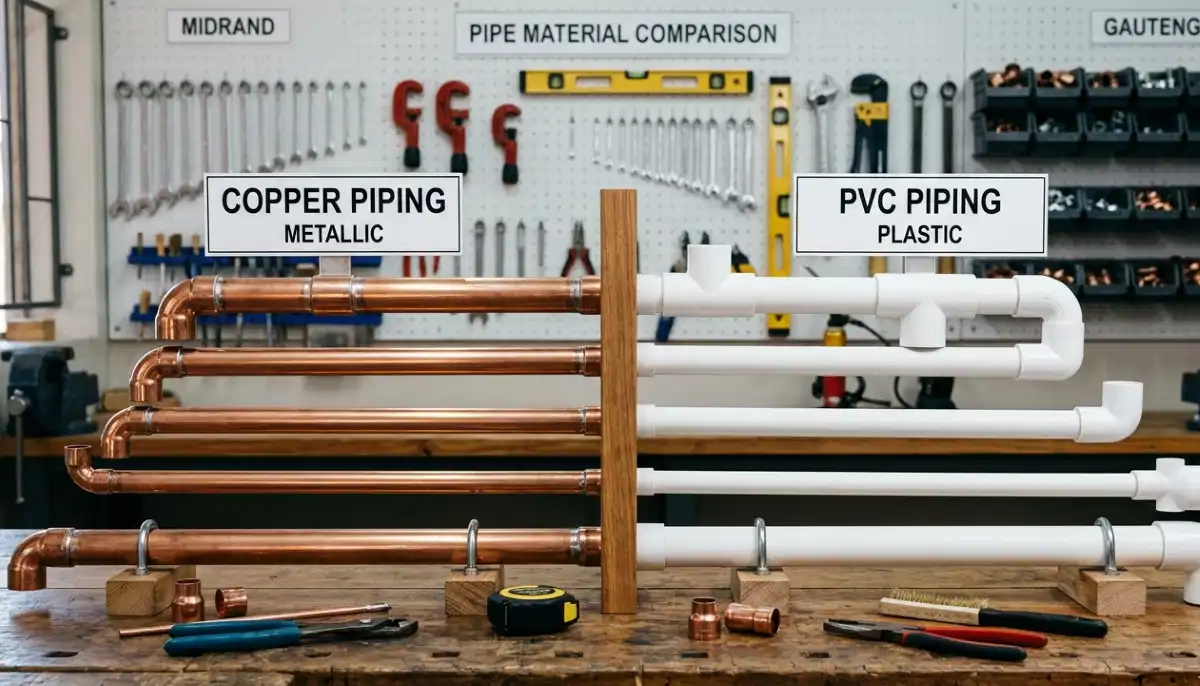
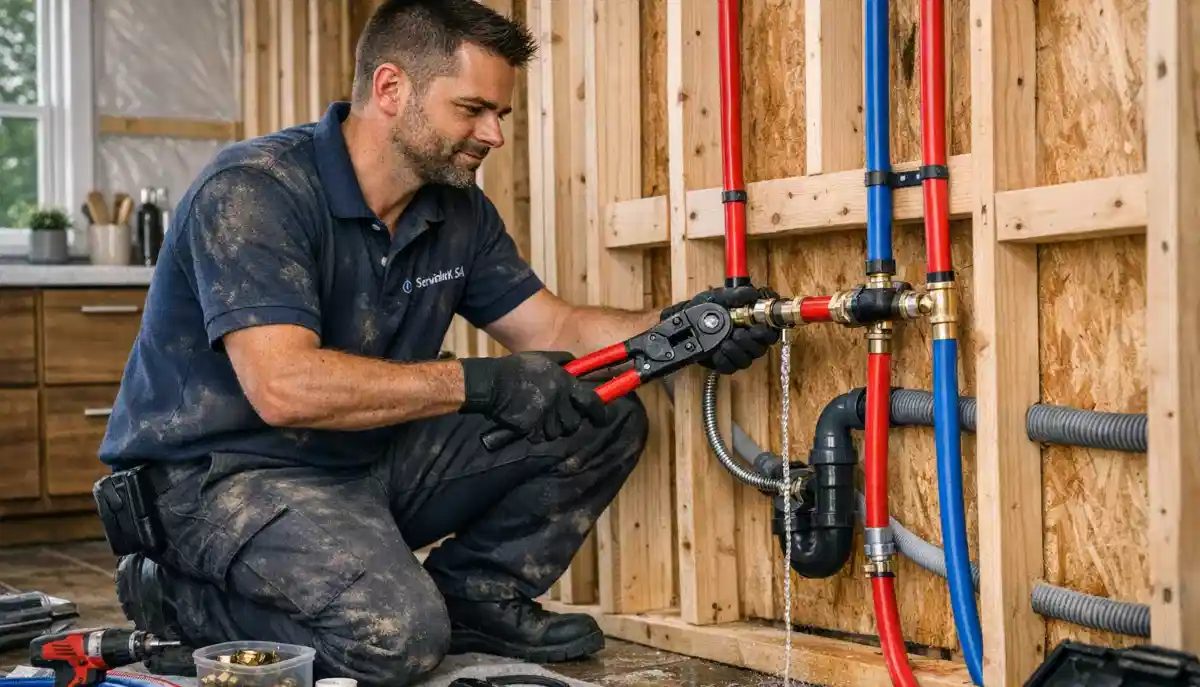
🔴 Copper Pipes: Properties & Applications
Copper has been the standard for residential plumbing for over 80 years. Here’s what you need to know about copper pipe vs PVC from the copper side:
Types of copper pipe:
- Type K (thickest): Used for underground applications. Highest pressure rating. Most expensive.
- Type L (medium): Standard for residential water supply. Most common choice. Good balance of cost and durability.
- Type M (thinnest): Used for low-pressure applications. Not recommended for main water lines.
Key properties:
- Lifespan: 50-70+ years with proper installation and water chemistry
- Temperature rating: Suitable for hot and cold water (up to 100°C+)
- Pressure rating: Excellent—handles high pressure well
- Corrosion resistance: Good in neutral pH water (6.5-8.5). Poor in acidic water (pH below 6.5)
- UV resistance: Excellent—can be used outdoors
- Fire resistance: Non-combustible (won’t burn)
Common applications: Main water lines, hot water supply, cold water supply, gas lines (in some areas).
Read our plumbing services guide for professional installation.
🔵 PVC Pipes: Properties & Applications
PVC (polyvinyl chloride) is a plastic pipe that has become popular for certain applications. Here’s the pipe comparison from the PVC side:
Types of PVC pipe:
- PVC (standard): For cold water only. Cannot handle hot water (max 60°C).
- CPVC (chlorinated PVC): Can handle hot water up to 90°C. More expensive than standard PVC.
- Schedule 40: Standard thickness for residential use.
- Schedule 80: Thicker wall, higher pressure rating. Used for commercial applications.
Key properties:
- Lifespan: 25-40 years (PVC), 40-50 years (CPVC)
- Temperature rating: PVC max 60°C (cold water only). CPVC up to 90°C.
- Pressure rating: Good—adequate for residential use
- Corrosion resistance: Excellent—does not corrode, unaffected by acidic water
- UV resistance: Poor—PVC degrades in sunlight. Must be painted or buried outdoors.
- Fire resistance: Poor—releases toxic fumes when burned
Common applications: Cold water supply, drainage systems, irrigation, swimming pool plumbing.
📊 Copper vs PVC: Side-by-Side Comparison
Here’s how these two materials compare across key factors in the which is better copper or PVC pipes decision:
| Factor | Copper Pipe | PVC Pipe | CPVC Pipe |
|---|---|---|---|
| Lifespan | 50-70+ years | 25-40 years | 40-50 years |
| Cost (per metre, 15mm) | R60-R120 | R15-R30 | R25-R50 |
| Installation Labour | Higher (soldering) | Lower (gluing) | Lower (gluing) |
| Hot Water Compatible | ✅ Yes (100°C+) | ❌ No (max 60°C) | ✅ Yes (90°C) |
| Freeze Resistance | Poor (can burst) | Poor (can crack) | Poor (can crack) |
| UV Resistance | ✅ Excellent | ❌ Poor | ❌ Poor |
| Corrosion Resistance | Good (neutral pH) | ✅ Excellent | ✅ Excellent |
| Acidic Water Resistance | ❌ Poor | ✅ Excellent | ✅ Excellent |
| Fire Safety | ✅ Non-combustible | ❌ Toxic fumes | ❌ Toxic fumes |
| DIY Installation | Difficult | Easy | Easy |
For complete pricing context, see our plumbing prices guide.
🔧 Planning New Plumbing or Repiping?
Get quotes from verified plumbers for copper or PVC pipe installation. Free inspections available.
Free quotes • Verified specialists • Beat Your Quote guarantee
💰 Cost Comparison: Copper vs PVC
For a typical 3-bedroom house (150m²), here’s the material cost difference:
| Pipe Type | Material Cost (3-bedroom house) | Labour Cost | Total Installed | Difference from Copper |
|---|---|---|---|---|
| Copper (Type L) | R10,000-R20,000 | R8,000-R15,000 | R18,000-R35,000 | Baseline |
| PVC (cold water only) | R3,000-R7,000 | R4,000-R8,000 | R7,000-R15,000 | Save R11,000-R20,000 |
| CPVC (hot + cold) | R5,000-R10,000 | R5,000-R10,000 | R10,000-R20,000 | Save R8,000-R15,000 |
Payback consideration: While PVC/CPVC is cheaper upfront, copper’s longer lifespan (50-70 years vs 25-50 years) may make it better value over decades.
Read our pipe replacement costs guide for detailed pricing.
⏳ Lifespan & Durability
When comparing copper pipe vs PVC, lifespan is a critical factor:
Copper pipe lifespan: 50-70+ years with proper water chemistry. Factors that shorten copper life:
- Acidic water (pH below 6.5) causes pitting and corrosion
- High water velocity causes erosion
- Poor installation (excess flux residue)
- Water with high chloride or sulphate levels
PVC/CPVC lifespan: 25-50 years depending on type and conditions. Factors that affect PVC life:
- UV exposure (sunlight degrades PVC rapidly)
- Temperature (PVC fails above 60°C)
- Chemical exposure (solvents, certain chemicals)
- Physical damage (PVC is less impact-resistant than copper)
Winner for longevity: Copper, when water chemistry is suitable.
🔧 Installation: DIY vs Professional
The best plumbing pipe for DIY depends on your skill level:
Copper pipe installation:
- Requires soldering/brazing skills
- Needs torch (fire risk), flux, solder, pipe cutter, deburring tool
- Not recommended for DIY unless experienced
- Professional labour: R8,000-R15,000 for a house
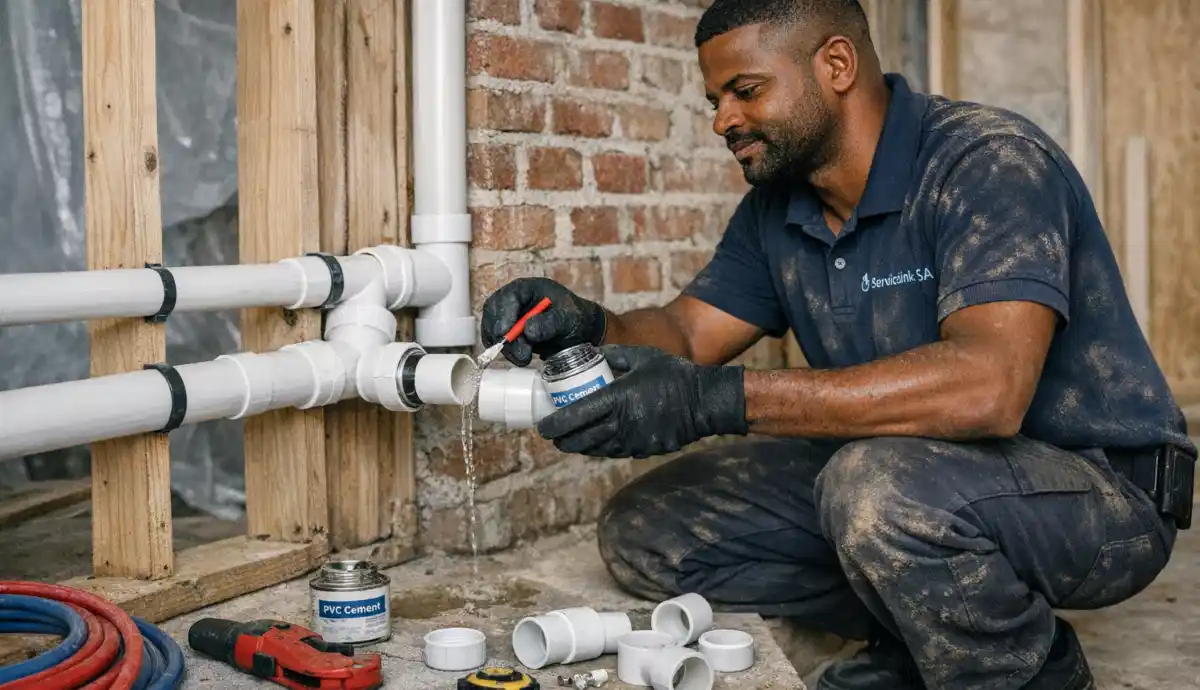
PVC/CPVC installation:
- Requires solvent cement (glue), primer, pipe cutter
- Easier than copper—glue joints, no fire risk
- DIY-friendly for basic installations
- Professional labour: R4,000-R10,000 for a house
Verdict: PVC/CPVC is much easier for DIY. Copper requires professional installation in most cases.
For professional help, use our plumbing services network.
💧 Water Quality & Health Considerations
In the copper vs PVC pipes decision, water quality and health matter:
Copper pipes:
- Can leach copper into water if water is acidic (pH below 6.5)
- High copper levels can cause stomach upset, nausea
- Copper has natural antimicrobial properties
- No plastic taste or odour
PVC/CPVC pipes:
- No metal leaching
- May impart plastic taste or odour, especially in hot water
- Some concerns about chemical leaching from plastic pipes (studies ongoing)
- Approved by SABS for potable water
Recommendation: If your water is acidic (common in coastal areas), PVC/CPVC is safer. If your water pH is neutral (6.5-8.5), copper is fine.
Read our home plumbing system guide for more.
🔥 Hot Water Applications
This is a critical difference in the which is better copper or PVC pipes debate:
Copper: ✅ Excellent for hot water. Can handle temperatures up to 100°C+ without degradation. The traditional choice for geyser connections.
PVC: ❌ NOT for hot water. Maximum 60°C. Using PVC for hot water causes softening, deformation, and eventual failure.
CPVC: ✅ Good for hot water. Can handle up to 90°C. Suitable for geyser connections.
Verdict for hot water: Copper or CPVC only. Never use standard PVC for hot water.
Read our geyser installation guide for hot water system information.
🏗️ Underground & Outdoor Applications
For buried or exposed outdoor pipes, material choice matters:
Copper: Excellent for underground. Resists soil chemicals, high strength. Type K (thickest) recommended for direct burial. Can be exposed outdoors (UV resistant).
PVC: Good for underground but must be buried (UV degrades PVC). Use Schedule 40 or 80 for burial. Cannot be left exposed to sunlight without paint or covering.
Verdict for underground: Both work, but copper is more durable for high-traffic areas.
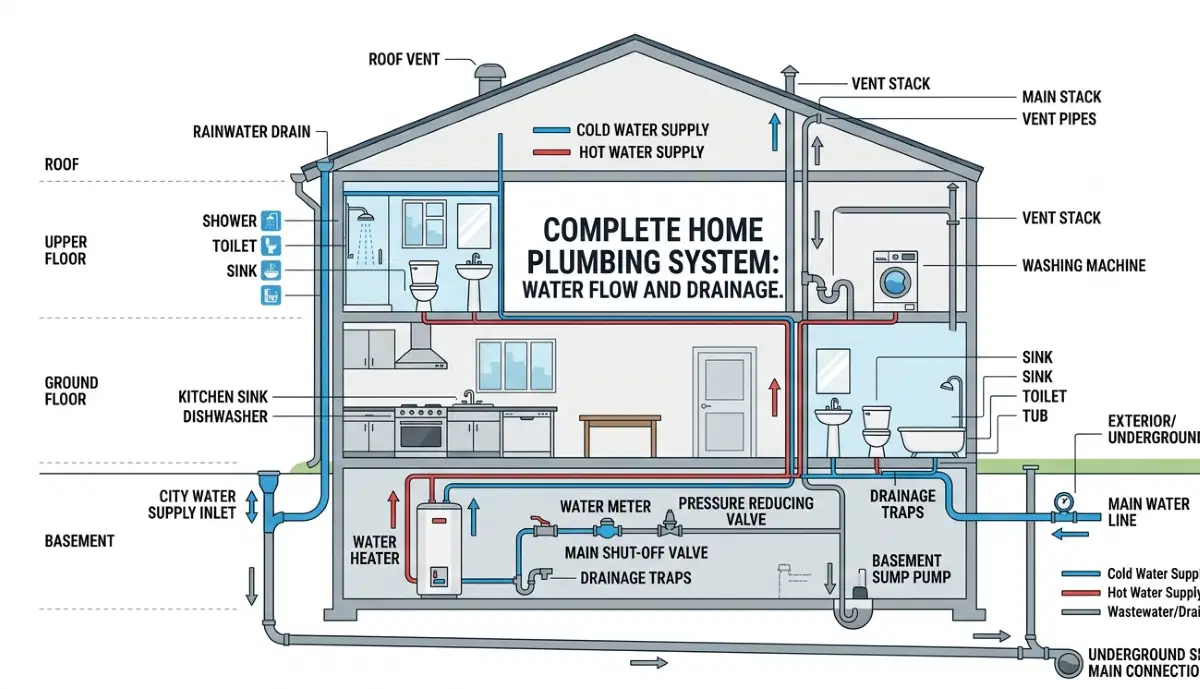
🌍 Environmental Impact
Consider the environmental footprint in your pipe comparison:
Copper:
- Mining has significant environmental impact
- High energy to produce
- 100% recyclable (valuable scrap metal)
- Long lifespan reduces replacement frequency
PVC/CPVC:
- Manufacturing uses petroleum products and produces toxic byproducts
- Lower energy to produce than copper
- Difficult to recycle (most ends in landfill)
- Releases toxic fumes if burned
Verdict: Copper is more recyclable; PVC has lower production energy. Trade-offs exist for both.
✅ When to Use Copper Pipe
Choose copper in these scenarios:
- Hot water supply lines (geyser to taps)
- Homes with neutral pH water (6.5-8.5)
- Exposed outdoor pipes (UV resistant)
- High-pressure applications
- When you want the longest lifespan (50-70+ years)
- For the main water line from the meter
- In areas with freezing risk (copper is more freeze-resistant than PVC)
For copper installation in Sandton or Centurion, professional installation is recommended.
✅ When to Use PVC/CPVC Pipe
Choose PVC or CPVC in these scenarios:
- Cold water supply only (use standard PVC)
- Hot water on a budget (use CPVC)
- Acidic water (pH below 6.5) – PVC/CPVC won’t corrode
- DIY installations (easier to work with)
- Budget-conscious projects
- Drainage systems (PVC is standard for drains)
- Irrigation and outdoor non-potable water
Read our best pipes for home plumbing guide for more recommendations.
🔄 The PEX Alternative
Before finalising your copper vs PVC pipes decision, consider PEX (cross-linked polyethylene):
PEX advantages:
- Flexible (fewer fittings, fewer leak points)
- Freeze-resistant (expands slightly instead of bursting)
- Faster installation than copper or PVC
- Cost between copper and PVC
- Lifespan 40-50 years
- Suitable for hot and cold water
PEX disadvantages:
- Cannot be used outdoors (UV sensitive)
- Requires special fittings and tools
- Rodents may chew PEX (uncommon but possible)
- Not suitable for very high temperatures (max 95°C)
Verdict: For many homeowners, PEX offers the best balance of cost, performance, and ease of installation. Read our PEX plumbing pipes guide for details.
❌ 5 Costly Mistakes to Avoid
Mistake #1: Using PVC for Hot Water
Standard PVC is rated for cold water only (max 60°C). Using it for hot water causes softening, deformation, and eventual failure. Use copper or CPVC for hot water lines.
Mistake #2: Installing PVC Outdoors Without UV Protection
PVC degrades rapidly in sunlight. If using PVC outdoors, it must be painted with UV-resistant paint or buried. Copper is the better choice for exposed outdoor pipes.
Mistake #3: Using Copper with Acidic Water
Acidic water (pH below 6.5) causes pitting and corrosion in copper pipes. Test your water pH before choosing copper. If acidic, use PVC/CPVC or install a neutralising filter.
Mistake #4: Mixing Copper and PVC Directly
Copper and PVC cannot be directly joined. Use a dielectric union or brass adapter to connect them. Direct contact can cause galvanic corrosion.
Mistake #5: Choosing Based on Price Alone
PVC is cheaper upfront, but copper’s longer lifespan (50-70 vs 25-50 years) may make it better value over decades. Consider total cost of ownership, not just initial price.
📋 Real-World Pipe Selection Case Studies
🏠 Case 1: Copper for Long-Term Value in Johannesburg
Location: Johannesburg | Homeowner: The Nkosi Family
Situation: Building new home, planning to stay 20+ years. Neutral pH water (7.2).
Choice: Copper pipes (Type L) for all water supply. Cost R28,000 installed.
Reasoning: Longer lifespan (50-70 years), no replacement needed, higher resale value.
Lesson: For long-term homeowners with neutral pH water, copper is worth the premium.
🏚️ Case 2: CPVC for Budget Renovation in Pretoria
Location: Pretoria | Homeowner: The Van Wyk Family
Situation: Renovating rental property, budget-conscious. Acidic water (pH 6.2).
Choice: CPVC pipes for hot and cold water. Cost R14,000 installed.
Reasoning: Affordable, handles acidic water well, suitable for hot water.
Lesson: CPVC is an excellent budget-friendly alternative when copper is too expensive or water is acidic.
❓ Frequently Asked Questions About Copper vs PVC Pipes
Which is better: copper or PVC pipes for home plumbing?
Which is better copper or PVC pipes depends on your situation. Copper is better for longevity (50-70 years), hot water, and outdoor applications. PVC is better for cold water only, budget projects, and acidic water. CPVC is a middle ground—handles hot water, lower cost than copper, but shorter lifespan. For most homes, a combination is best: copper for hot water and exposed areas, PVC/CPVC for cold water and buried lines.
Is PVC pipe safe for drinking water?
Yes—PVC and CPVC pipes that are SABS-approved are safe for potable (drinking) water. However, some people notice a plastic taste, especially with hot water. Copper has no taste impact. If you’re concerned about plastic taste, copper may be preferable for drinking water lines.
How long do copper pipes last compared to PVC?
Copper pipes last 50-70+ years with proper water chemistry. PVC lasts 25-40 years. CPVC lasts 40-50 years. Copper’s longer lifespan can justify its higher upfront cost for long-term homeowners. However, if your water is acidic (pH below 6.5), copper lifespan drops significantly—PVC/CPVC may actually outlast copper.
Can I use PVC pipe for hot water?
No—standard PVC is rated for cold water only (maximum 60°C). Using PVC for hot water causes softening, deformation, and eventual pipe failure. For hot water, use copper or CPVC. CPVC is rated for hot water up to 90°C and is a lower-cost alternative to copper.
Which is cheaper: copper or PVC pipes?
PVC is significantly cheaper than copper. For a 3-bedroom house, copper materials cost R10,000-R20,000 vs PVC R3,000-R7,000. CPVC is in between at R5,000-R10,000. Labour is also cheaper for PVC/CPVC (gluing vs soldering). Total installed: copper R18,000-R35,000, PVC R7,000-R15,000, CPVC R10,000-R20,000.
Do copper pipes need insulation?
Yes—copper pipes benefit from insulation, especially hot water pipes. Insulation reduces heat loss (saving energy), prevents condensation on cold pipes, and protects against freezing. PVC pipes also benefit from insulation but are less critical. Read our pipe insulation guide for details.
Can I connect copper pipe to PVC pipe?
Yes, but not directly. Copper and PVC cannot be directly joined. Use a dielectric union or brass adapter to connect them. Direct contact can cause galvanic corrosion (metal pipes corrode when touching dissimilar metals or materials). Always use proper transition fittings.
How do I choose the best plumbing pipe for my home?
To choose the best plumbing pipe: 1) Test your water pH (acidic = PVC/CPVC, neutral = copper), 2) Consider your budget (copper premium, PVC budget), 3) Consider your timeline (long-term = copper, short-term = PVC), 4) Consider hot water needs (copper or CPVC only), 5) Consider DIY vs professional (PVC easier for DIY). Many homes use a hybrid approach: copper for hot water and exposed areas, PVC/CPVC for cold water and buried lines.
✅ Final Thoughts: Choose Based on Your Needs
In the copper vs PVC pipes debate, there’s no universal winner. Copper offers superior longevity, hot water capability, and UV resistance—at a higher cost. PVC offers affordability, corrosion resistance, and easier installation—but only for cold water.
Key takeaways for South African homeowners:
- Copper: Best for longevity (50-70 years), hot water, outdoor exposure, neutral pH water
- PVC: Best for cold water only, budget projects, acidic water, DIY installation
- CPVC: Best for hot water on a budget, acidic water, DIY installation
- PEX: Best for flexibility, freeze resistance, modern installations
- Cost difference: PVC saves R8,000-R20,000 on a 3-bedroom house
- Test your water pH before choosing copper—acidic water destroys copper
- Consider a hybrid approach—copper for hot water, PVC for cold water
Your action plan: Test your water pH. Determine your budget and timeline. For long-term ownership with neutral pH water, invest in copper. For budget projects or acidic water, choose CPVC or PVC. Get quotes from 3 verified plumbers through ServiceLink SA for your specific project.
🔧 Planning New Plumbing or Repiping?
Get quotes from verified plumbers for copper or PVC pipe installation. Free inspections available.
📞 Call us: 073 138 4726 for immediate help finding a pipe specialist near you.
Pipe replacement costs •
PEX pipes guide •
Best pipes guide •
Pipe insulation •
Beat Your Quote guarantee
📚 Official resources & standards referenced:
- South African Bureau of Standards (SABS) – Pipe material standards and certification.
- SANS 10400 – Plumbing regulations and installation standards.
- Plumbing Industry Registration Board (PIRB) – Find registered plumbers.
Information provided for general guidance based on industry research and SABS/SANS standards. For specific copper vs PVC pipes advice for your home, consult multiple verified plumbers.
Written by: ServiceLink SA Research Team
Plumbing Materials & Pipe System Specialists
The ServiceLink SA Research Team comprises plumbing materials experts, pipe system specialists, and industry professionals with decades of experience in copper vs PVC pipes selection and installation across South Africa. Our team works directly with PIRB-registered plumbers, pipe manufacturers, and building standards authorities to bring you accurate, actionable information about which is better copper or PVC pipes for different applications. We continuously update this pipe comparison guide to reflect current material costs, installation standards, and real-world performance data.
For more information about pipe materials and plumbing systems, explore our related resources:
pipe replacement costs guide,
PEX plumbing pipes guide,
best pipes for home plumbing guide,
pipe insulation guide,
and copper vs PVC guide.
Our what is ServiceLink SA and
contractor verification process pages explain how we connect you with trusted professionals.
See our service areas page for pipe installation coverage in your region.