
🔧 Considering PEX for Your Home?
Get quotes from verified plumbers for PEX pipe installation. Free inspections available.
Get PEX Installation Quotes Near You
Servicing Gauteng, Western Cape, Cape Town, Bellville, Stellenbosch, Paarl, and across South Africa
PEX Plumbing Pipes Explained: Benefits, Installation & Costs
🔧 From flexible piping to freeze resistance—complete guide to PEX, the modern alternative to copper and PVC
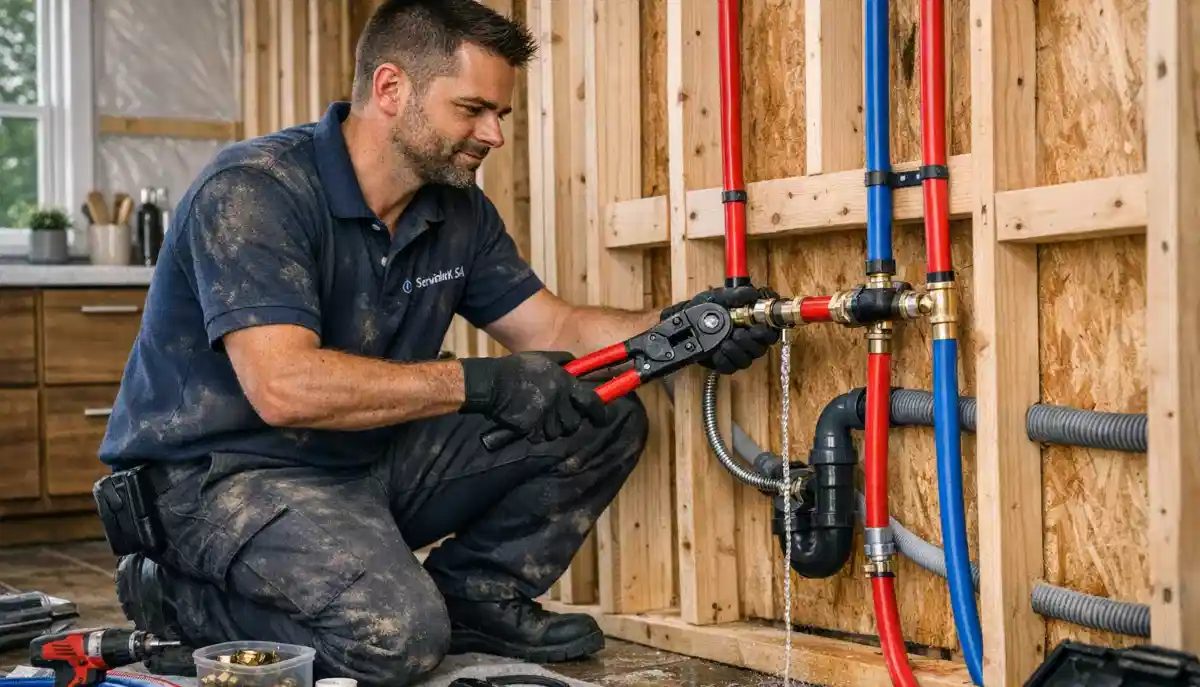
If you’ve built a home in the last 10 years or watched a renovation show, you’ve probably seen PEX pipes—those flexible blue and red lines snaking through walls and ceilings. But what exactly is cross-linked polyethylene, and why has it become so popular?
PEX (cross-linked polyethylene) has revolutionised residential plumbing. It’s flexible, durable, freeze-resistant, and often cheaper to install than copper. But it’s not perfect—it has limitations like UV sensitivity and potential rodent issues.
I’ve installed thousands of metres of PEX plumbing pipes over the years. The material has transformed how we plumb homes—faster installations, fewer fittings (fewer leak points), and better performance in freezing conditions. For many South African homes, PEX offers the best balance of cost, performance, and longevity.
This comprehensive guide will answer what is PEX plumbing pipe, how it compares to copper and PVC, costs, installation methods, pros and cons, and whether it’s right for your home.
For related information, read our pipe replacement costs guide, copper vs PVC guide, best pipes guide, and pipe insulation guide. Let’s explore PEX.
📋 Table of Contents – PEX Plumbing Pipes Guide
🔧 What Is PEX? (Cross-Linked Polyethylene)
What is PEX plumbing pipe? PEX (cross-linked polyethylene) is a flexible plastic pipe used for residential and commercial water supply lines. The “cross-linking” refers to a chemical process that creates bonds between polyethylene molecules, giving the material strength, durability, and temperature resistance.
Key characteristics of PEX:
- Flexible: Bends around corners, reducing need for fittings
- Freeze-resistant: Expands slightly instead of bursting when water freezes
- Corrosion-resistant: Not affected by acidic water or minerals
- Quiet: Reduces water hammer noise compared to copper
- Long lifespan: 40-50 years typical
- Colour-coded: Red for hot water, blue for cold water, white for general use
PEX is approved for: Hot and cold potable water, radiant floor heating, hydronic heating systems, snow melting systems.
Read our best pipes for home plumbing guide for comparisons with other materials.
📊 Types of PEX: PEX-A, PEX-B, PEX-C
Not all cross-linked polyethylene is the same. There are three manufacturing methods:
| Type | Manufacturing Method | Flexibility | Cost | Best For |
|---|---|---|---|---|
| PEX-A (Engel method) | Peroxide cross-linking (highest quality) | Most flexible (can be kink-free repaired) | Highest ($) | Professional installations, cold climates, tight bends |
| PEX-B (Silane method) | Moisture-cured cross-linking (most common) | Moderate flexibility (coils well, kinks less) | Moderate ($$) | Most residential applications (best value) |
| PEX-C (Electronic method) | Electron beam cross-linking (least common) | Least flexible (stiffer, more prone to kinking) | Lowest ($) | Budget projects, straight runs (not for tight bends) |
Recommendation: For most South African homes, PEX-B offers the best balance of quality, flexibility, and cost. PEX-A is premium but may be overkill. Avoid PEX-C for complex layouts with many bends.
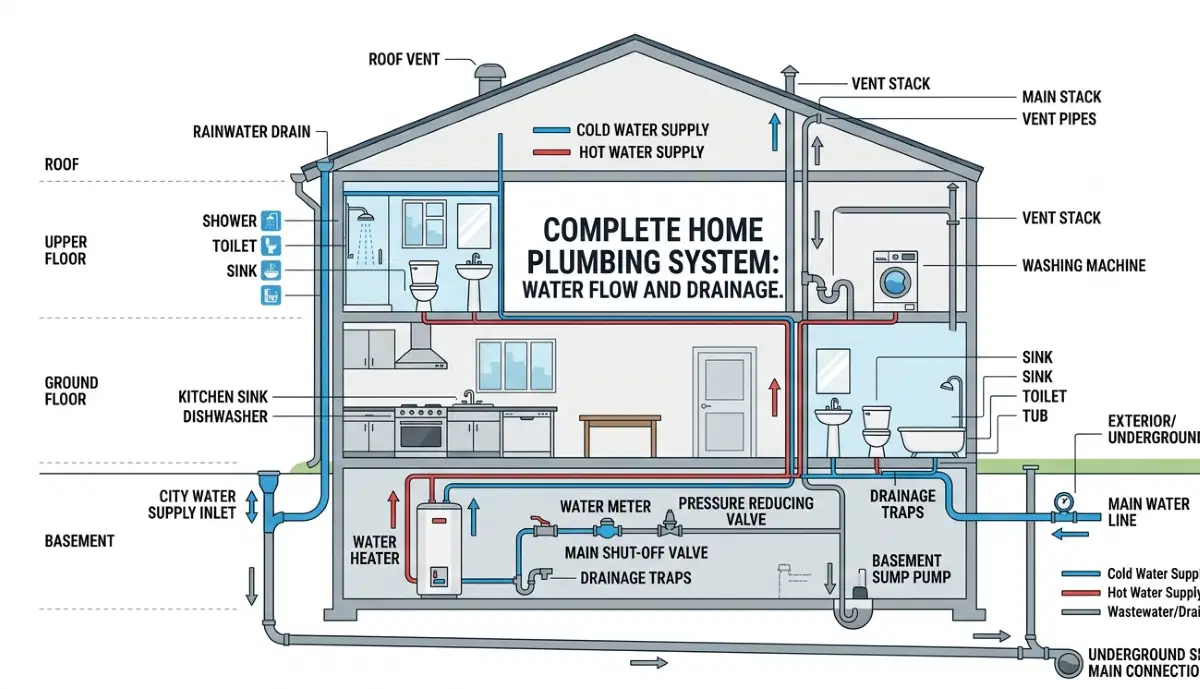
🔧 How PEX Plumbing Systems Work
PEX systems differ from traditional “trunk and branch” copper systems:
Traditional trunk and branch (copper/PVC):
- Single main pipe (trunk) runs through the house
- Smaller pipes (branches) tee off to each fixture
- Many fittings (more potential leak points)
- Pressure drops when multiple fixtures used simultaneously
PEX home-run (manifold) system (recommended):
- Central manifold (distribution panel) near water heater
- Dedicated PEX line runs directly from manifold to each fixture
- No fittings between manifold and fixture (fewer leak points)
- Individual shut-off valves for each fixture at manifold
- Consistent pressure even when multiple fixtures used
PEX trunk and branch (traditional layout):
- Similar layout to copper systems
- Uses PEX instead of rigid pipe
- Still requires fittings at tee points
The home-run manifold system is the gold standard for new PEX pipe installation.
Read our home plumbing system guide to understand your layout.
🔧 Considering PEX for Your Home?
Get quotes from verified plumbers for PEX pipe installation. Free inspections available.
Free quotes • Verified specialists • Beat Your Quote guarantee
✅ Advantages of PEX Pipes
PEX plumbing pipes offer numerous benefits over traditional materials:
- Flexibility: Bends around corners, reducing fittings by 50-80%. Can be installed in continuous lengths.
- Freeze resistance: Expands up to 3x its diameter when water freezes, then returns to size. Much less likely to burst than copper or PVC.
- Corrosion resistance: Unaffected by acidic water, minerals, or electrolysis. Ideal for areas with aggressive water chemistry.
- Quieter operation: Dampens water hammer noise better than copper.
- Faster installation: 50-70% faster than copper. Fewer fittings, no soldering, no heavy tools.
- Fewer leak points: Continuous runs from manifold to fixture eliminate joints behind walls.
- Lower cost: Materials cheaper than copper. Labour significantly less.
- Energy efficient: Better insulation properties than copper (less heat loss).
- Colour-coded: Red for hot, blue for cold—easy to identify.
❌ Disadvantages of PEX Pipes
Consider these limitations before choosing cross-linked polyethylene:
- UV sensitivity: PEX degrades in sunlight. Cannot be used outdoors or in direct sunlight. Must be stored indoors.
- Rodent damage: In rare cases, rodents may chew PEX (copper is rodent-proof). This is uncommon but possible in rural areas.
- Chemical sensitivity: Certain chemicals (solvents, petroleum products) can damage PEX. Keep away from paint thinners, etc.
- Not recyclable: PEX cannot be recycled like copper. Most ends up in landfill.
- Special tools required: Crimping or expansion tools needed for fittings (though many are affordable).
- Temperature limits: Maximum 95°C for short periods (geyser output should be 55-60°C—fine).
- Less rigid: Requires more support/clips to prevent sagging between joists.
📊 PEX vs Copper vs PVC: Comparison
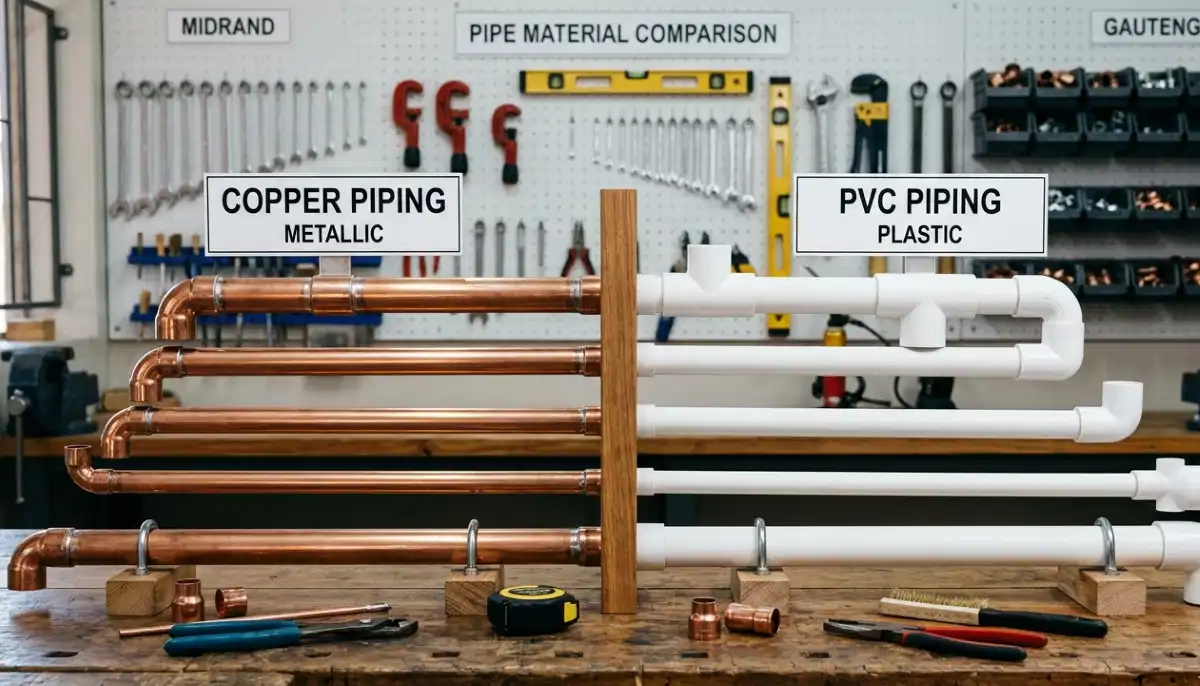
Here’s how PEX compares to traditional materials in the flexible piping market:
| Factor | PEX | Copper | CPVC |
|---|---|---|---|
| Lifespan | 40-50 years | 50-70+ years | 40-50 years |
| Cost (materials, 15mm) | R10-R25/m | R60-R120/m | R25-R50/m |
| Installation Speed | Fastest | Slow | Moderate |
| DIY Friendly | Moderate (special tools) | Difficult | Easy |
| Freeze Resistant | ✅ Excellent | ❌ Poor (bursts) | ❌ Poor (cracks) |
| UV Resistant | ❌ No | ✅ Yes | ❌ No |
| Hot Water Compatible | ✅ Yes (95°C) | ✅ Yes (100°C+) | ✅ Yes (90°C) |
| Corrosion Resistance | ✅ Excellent | Good (neutral pH) | ✅ Excellent |
| Acidic Water Resistance | ✅ Excellent | ❌ Poor | ✅ Excellent |
| Fittings Required | Fewest | Many | Many |
| Rodent Resistant | ❌ Moderate (can be chewed) | ✅ Excellent | ❌ Moderate |
For complete pricing context, see our plumbing prices guide.
💰 Cost Comparison: PEX vs Copper vs PVC
For a typical 3-bedroom house (150m²), here’s the cost difference:
| Material | Material Cost | Labour Cost | Total Installed | Savings vs Copper |
|---|---|---|---|---|
| Copper (Type L) | R10,000-R20,000 | R8,000-R15,000 | R18,000-R35,000 | Baseline |
| CPVC | R5,000-R10,000 | R5,000-R10,000 | R10,000-R20,000 | Save R8,000-R15,000 |
| PEX (Manifold System) | R6,000-R12,000 | R5,000-R10,000 | R11,000-R22,000 | Save R7,000-R13,000 |
PEX typically saves 30-50% compared to copper while offering better freeze resistance and fewer leak points.
Read our pipe replacement costs guide for detailed pricing.
🔧 PEX Installation Methods
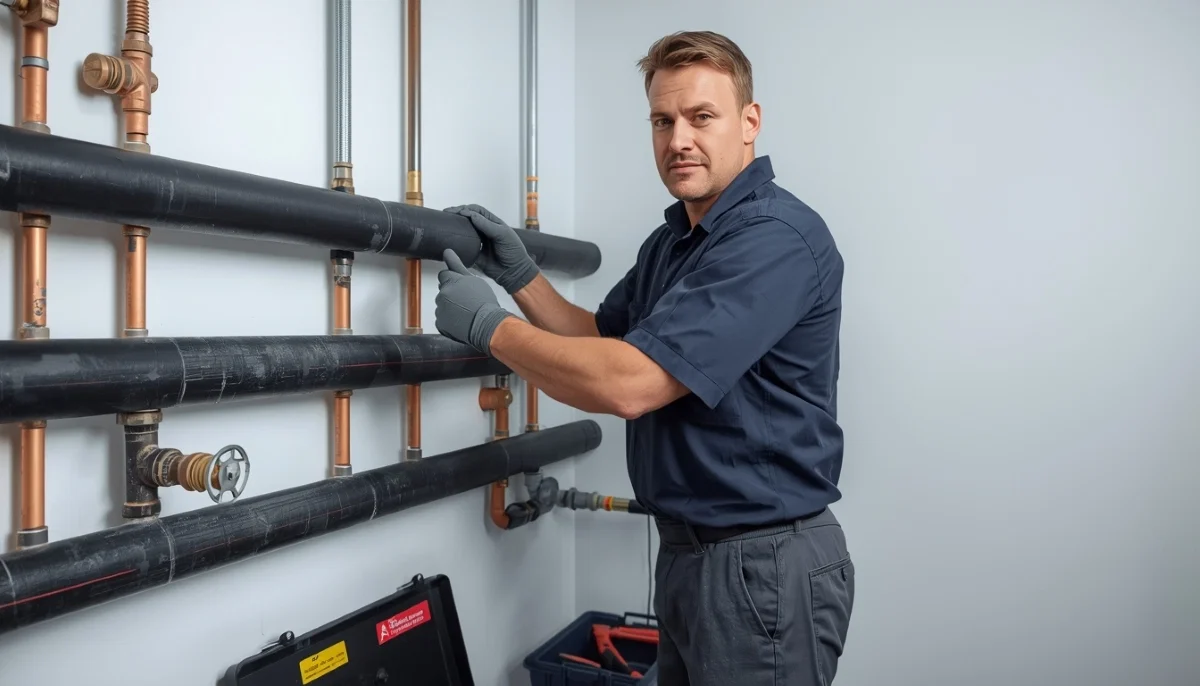
There are three main methods for PEX pipe installation:
1. Crimp/Cinch Method (Most common for DIY):
- Uses copper crimp rings or stainless steel cinch rings
- Requires crimping tool (R500-R1,500)
- Reliable, widely accepted, affordable tools
- Most plumbers use this method
2. Expansion Method (Uponor/Wirsbo):
- Uses expansion tool to stretch PEX-A pipe
- Pipe shrinks back over fitting—no metal rings
- More expensive tools (R3,000-R8,000)
- Best flow characteristics (full inside diameter)
- Professional method
3. Push-Fit (SharkBite) Method:
- Push fitting onto pipe—no tools required
- Most expensive fittings (R50-R200 each)
- Great for repairs and small jobs
- Not cost-effective for whole-house installation
Recommendation for DIY: Crimp/cinch method offers the best balance of cost and reliability.
🔧 PEX Fittings & Connection Systems
Cross-linked polyethylene requires specific fittings and connection methods:
Types of PEX fittings:
- Brass fittings: Most durable, most expensive, best for high-temperature applications
- Polyalloy (plastic) fittings: Cheaper, corrosion-proof, but bulkier
- Push-fit (SharkBite): No tools, removable, most expensive
Key fitting types:
- Couplings (straight connectors)
- Elbows (90° and 45° bends)
- Tees (branch connections)
- Manifolds (distribution hubs)
- Adapter fittings (PEX to copper/PVC)
PEX to existing plumbing: Use adapter fittings to connect PEX to copper or PVC. Always use dielectric unions when connecting to dissimilar metals.
📋 Manifold Systems: Home-Run Plumbing
The manifold system is the gold standard for new PEX plumbing pipes installations:
How it works:
- Central manifold (distribution panel) installed near water heater
- Dedicated PEX line runs from manifold to each fixture (toilet, sink, shower)
- Individual shut-off valves for each line at the manifold
- No fittings between manifold and fixture
Advantages:
- Minimal fittings (fewer leak points)
- Individual fixture shut-offs (no need to shut off whole house)
- Consistent pressure (one fixture doesn’t affect others)
- Faster installation (continuous pipe runs)
- Easy to add future fixtures
Cost: Manifold R500-R1,500 + PEX pipe + fittings.
🏠 Best Applications for PEX
PEX plumbing pipes excel in these applications:
- New home construction: Faster installation, fewer fittings, freeze resistance
- Whole-house repiping: Replace old galvanised or polybutylene pipes
- Bathroom renovations: Easy to route through walls
- Radiant floor heating: PEX is the standard for hydronic heating
- Ice maker/refrigerator lines: Small-diameter PEX is ideal
- Water heater connections: Flexible PEX absorbs vibration
- Homes in freezing climates: PEX’s freeze resistance is invaluable
NOT recommended for: Outdoor exposed applications (UV damages PEX), areas with rodent problems, high-temperature industrial applications.
For outdoor applications, copper remains the better choice.
💡 PEX Installation Tips
For successful PEX pipe installation, follow these tips:
- Support properly: PEX needs support every 32-48 inches (800-1200mm) to prevent sagging. Use plastic clips, never metal that can rub.
- Allow for expansion: PEX expands and contracts. Leave slack in long runs. Use expansion loops for long straight runs.
- Protect from UV: Keep PEX covered until installation. Install only in areas not exposed to sunlight.
- Use correct fittings: Match fitting type to your connection method (crimp vs expansion vs push-fit).
- Insulate hot water lines: Even though PEX insulates better than copper, still insulate hot water lines for efficiency.
- Pressure test before covering: Always pressure test (1.5x operating pressure) before closing walls.
Read our pipe insulation guide for insulation recommendations.
🛠️ DIY vs Professional PEX Installation
PEX plumbing pipes are more DIY-friendly than copper, but still require skill:
DIY-appropriate tasks:
- Small repairs (replacing a section of pipe)
- Adding a single fixture (ice maker line)
- Basic manifold system in a small home (with research)
Professional recommended for:
- Whole-house repiping (complex layout, many connections)
- New home construction (coordination with other trades)
- Complex manifold systems (proper sizing critical)
- Any installation requiring permits/COC
Professional cost: R5,000-R10,000 labour for a 3-bedroom house (plus materials).
For professional help, use our plumbing services network.
⏳ Lifespan & Maintenance
Cross-linked polyethylene pipes require minimal maintenance:
Expected lifespan: 40-50 years under normal conditions (similar to CPVC, shorter than copper’s 50-70 years).
Maintenance requirements:
- Minimal—PEX doesn’t corrode or scale
- Check for rodent damage annually (in rural areas)
- Ensure no UV exposure (pipes should be covered)
- Monitor for kinks or damage
Signs of PEX failure:
- Cracking or brittleness (rare—usually due to UV exposure)
- Leaking at fittings (improper crimping)
- Rodent damage (chew marks)
Read our home plumbing maintenance checklist for a complete schedule.
❌ 5 Costly Mistakes to Avoid
Mistake #1: Exposing PEX to Sunlight
UV radiation degrades PEX, causing cracking and failure. Never store PEX in sunlight. Install only in areas not exposed to UV (inside walls, ceilings, or covered crawl spaces).
Mistake #2: Using the Wrong Fittings or Tools
PEX-A requires expansion fittings; PEX-B uses crimp fittings. Using incompatible systems causes leaks. Also ensure your crimping tool is calibrated—loose crimps leak, over-crimps damage pipe.
Mistake #3: Not Supporting PEX Properly
PEX sags between supports if spacing is too wide. Support every 32-48 inches (800-1200mm). Use plastic clips—metal can rub and damage pipe over time.
Mistake #4: Sharp Bends Without Bend Supports
PEX can kink if bent too sharply. Minimum bend radius is 5-6 times pipe diameter (75-90mm for 15mm pipe). Use bend supports for tight turns.
Mistake #5: Not Pressure Testing Before Covering
Always pressure test PEX installations before closing walls. Test at 1.5x operating pressure for 24 hours. A leak behind a finished wall costs thousands to repair.
📋 Real-World PEX Installation Case Studies
🏠 Case 1: New Home Construction in Stellenbosch
Location: Stellenbosch | Builder: The Development Group
Project: 200m² new home, 3 bedrooms, 2.5 bathrooms.
Choice: PEX-B with manifold system. Total cost R18,000 installed.
Comparison: Copper would have cost R32,000 (44% more). CPVC would have cost R14,000 (22% less).
Result: Homeowner chose PEX for freeze resistance and individual fixture shut-offs.
Lesson: PEX offers the best balance of cost and features for new construction.
🔧 Case 2: Whole-House Repipe in Cape Town
Location: Cape Town | Homeowner: The Williams Family
Project: 1970s home with failing galvanised steel pipes. Low pressure, rusty water.
Choice: PEX-B repipe with manifold system. Cost R22,000 installed.
Result: Pressure restored from 180 kPa to 520 kPa. No more rusty water. Individual fixture shut-offs at manifold.
Lesson: PEX repiping is faster and less destructive than copper—no open flames in walls.
❓ Frequently Asked Questions About PEX Plumbing Pipes
What is PEX plumbing pipe and why is it better than copper?
What is PEX plumbing pipe? PEX (cross-linked polyethylene) is a flexible plastic pipe for water supply. It’s better than copper in several ways: flexible (fewer fittings), freeze-resistant (expands instead of bursting), faster to install, and typically 30-50% cheaper. However, copper lasts longer (50-70 vs 40-50 years) and is UV-resistant.
Is PEX safe for drinking water?
Yes—cross-linked polyethylene that is SABS-approved is certified for potable (drinking) water. PEX has been used for residential plumbing for over 30 years. Some people notice a slight plastic taste initially, which dissipates after flushing. Copper has no taste impact.
How long do PEX pipes last?
PEX pipes typically last 40-50 years under normal conditions. This is similar to CPVC (40-50 years) but shorter than copper (50-70+ years). Factors affecting lifespan: UV exposure (destroys PEX), water chemistry, installation quality, and physical damage.
Can PEX be used for hot water?
Yes—PEX is rated for hot water up to 95°C (short periods) and 82°C continuous. Your geyser should be set to 55-60°C, well within PEX’s limits. PEX is colour-coded: red for hot water, blue for cold water.
Does PEX burst when frozen?
No—PEX’s key advantage is freeze resistance. PEX can expand up to 3x its diameter when water freezes, then return to size without bursting. Copper and PVC will crack or burst when frozen. However, PEX fittings can still be damaged by freezing, so prevention is still best.
How much does PEX installation cost in South Africa?
PEX pipe installation for a 3-bedroom house costs R11,000-R22,000 (materials + labour). This is 30-50% cheaper than copper (R18,000-R35,000). In Cape Town or Stellenbosch, rates may vary. Get quotes for accurate pricing.
Can rats chew through PEX pipes?
Yes—in rare cases, rodents can chew through PEX pipes (they cannot chew through copper). This is uncommon but has been reported, especially in rural areas or homes with existing rodent problems. If you have rodent issues, copper may be a safer choice, or protect PEX with conduit.
How do I find a reliable PEX installer?
To find a reliable installer for flexible piping: 1) Verify PIRB registration, 2) Ask for PEX installation experience, 3) Get detailed quotes specifying PEX type (A/B/C), 4) Check reviews. ServiceLink SA connects you with verified plumbers in Gauteng and Western Cape.
✅ Final Thoughts: PEX Is the Future of Residential Plumbing
PEX plumbing pipes have revolutionised residential plumbing. They offer the best balance of cost, performance, and ease of installation for most South African homes. While copper still has advantages for longevity and UV resistance, PEX is the go-to choice for new construction and repiping projects.
Key takeaways for South African homeowners:
- PEX advantages: Flexible, freeze-resistant, fewer fittings, 30-50% cheaper than copper
- PEX disadvantages: UV sensitive, rodent susceptible, shorter lifespan than copper
- Cost for 3-bedroom house: R11,000-R22,000 installed (vs copper R18,000-R35,000)
- Lifespan: 40-50 years (copper 50-70 years)
- Best for: New construction, repiping, homes in freezing climates, renovations
- Manifold systems: Gold standard—individual fixture shut-offs, consistent pressure
- Always use SABS-approved PEX and PIRB-registered plumbers
Your action plan: For new construction or repiping, consider PEX. Get quotes for both PEX and copper to compare. Ask about manifold systems—they’re worth the extra cost. Use ServiceLink SA to find verified PEX installers in your area.
🔧 Considering PEX for Your Home?
Get quotes from verified plumbers for PEX pipe installation. Free inspections available.
📞 Call us: 073 138 4726 for immediate help finding a PEX specialist near you.
Pipe replacement costs •
Copper vs PVC •
Best pipes guide •
Pipe insulation •
Beat Your Quote guarantee
📚 Official resources & standards referenced:
- South African Bureau of Standards (SABS) – PEX standards and certification.
- SANS 10400 – Installation regulations and plumbing standards.
- Plumbing Industry Registration Board (PIRB) – Find registered PEX installers.
Information provided for general guidance based on industry research and SABS/SANS standards. For specific PEX plumbing pipes advice for your home, consult multiple verified installers.
Written by: ServiceLink SA Research Team
Plumbing Materials & PEX System Specialists
The ServiceLink SA Research Team comprises plumbing materials experts, PEX installation specialists, and industry professionals with decades of experience in PEX plumbing pipes across South Africa. Our team works directly with PIRB-registered plumbers, pipe manufacturers, and building standards authorities to bring you accurate, actionable information about what is PEX plumbing pipe, installation methods, and cost comparisons. We continuously update this flexible piping guide to reflect current material costs, installation standards, and real-world performance data for cross-linked polyethylene systems.
For more information about PEX and plumbing materials, explore our related resources:
pipe replacement costs guide,
copper vs PVC guide,
best pipes for home plumbing guide,
pipe insulation guide,
and PEX plumbing pipes guide.
Our what is ServiceLink SA and
how ServiceLink SA works pages explain our verification process.
See our service areas page for PEX installation coverage in your region.