💧 Ready to Save Water and Money?
Get quotes from verified plumbers specializing in water efficient fixture installation. Start saving from day one.
Get Water Saving Quotes Near You
Servicing Gauteng, Western Cape, KwaZulu-Natal, and across South Africa
Water Efficient Plumbing Fixtures South Africa: Save Money and Conserve Water
💧 From low-flow showerheads to dual-flush toilets—complete guide to eco friendly plumbing that reduces bills and protects our water future
Every month, you open your water bill and wince. In Cape Town, you remember the “Day Zero” crisis and wonder if it could happen again. In Johannesburg and Pretoria, you’ve seen municipal notices about water restrictions. In Durban, you’ve watched reservoirs drop during dry spells. Water is becoming South Africa’s most precious—and expensive—resource.
I’ve worked with homeowners across this country who are taking control of their water consumption. They’re not waiting for municipalities to solve the problem. They’re installing water efficient plumbing fixtures that cut their usage by 30-50% without sacrificing comfort or convenience.
One client in Sandton reduced his family’s water bill from R1,800 to R950 per month—saving over R10,000 annually—just by upgrading to efficient fixtures. Another in Cape Town cut consumption from 35 kilolitres to 18 kilolitres per month during the drought, staying within strict restrictions while maintaining a comfortable lifestyle.
This comprehensive guide will teach you everything about water saving plumbing, from the best fixtures to install, to eco friendly plumbing systems like greywater and rainwater harvesting, to the actual savings you can expect. Whether you’re motivated by environmental concerns, rising water bills, or both, this water conservation guide will help you make smart choices.
For related information, read our greywater system installation guide, rainwater harvesting plumbing setup, water saving plumbing tips, and low flow toilets and faucets explained. Let’s transform your home into a water-efficient haven.
📋 Table of Contents – Water Efficient Plumbing Fixtures Guide
💧 Why Water Efficiency Matters in South Africa
South Africa is a water-scarce country. With an average annual rainfall of about 450mm (well below the global average of 860mm), every drop counts. Here’s why water efficient plumbing fixtures are more than just a trend:
📉
30-50% Reduction
Typical household water savings when upgrading to water efficient plumbing fixtures throughout the home.
💰
R3,000-R8,000/Year
Average annual savings on water bills for a family of four after upgrading fixtures.
🏠
15-25% of Usage
Percentage of household water that goes to toilets and taps—easily reduced with efficient fixtures.
The bigger picture: South Africa’s water scarcity isn’t temporary. Climate change, population growth, and aging infrastructure mean water will only become more expensive and restricted. Homes with eco friendly plumbing fixtures are not just saving money today—they’re future-proofing against stricter regulations and higher costs.
📊 South African Water Facts:
- Average household uses 20-35 kilolitres of water per month
- Toilets account for 25-30% of indoor water use
- Showers account for 15-20% of indoor water use
- Taps (faucets) account for 10-15% of indoor water use
- Water tariffs have increased 8-12% annually in most municipalities
📊 Water Efficient Fixtures: Comparison & Savings
Here’s how different water efficient plumbing fixtures compare to standard fixtures:
| Fixture Type | Standard Model Usage | Water Efficient Model Usage | Water Saved per Use | Annual Savings (Family of 4) |
|---|---|---|---|---|
| Toilet (single flush) | 11-15 litres/flush | 3-4 litres (dual-flush) | 8-11 litres | 25,000-35,000 litres |
| Showerhead | 15-20 litres/minute | 6-9 litres/minute | 9-11 litres/minute | 30,000-40,000 litres |
| Kitchen Tap | 12-15 litres/minute | 5-7 litres/minute | 7-8 litres/minute | 10,000-15,000 litres |
| Bathroom Tap | 10-12 litres/minute | 4-6 litres/minute | 6 litres/minute | 8,000-12,000 litres |
Total potential savings: A family of four can save 70,000-100,000 litres of water annually—equivalent to R3,000-R8,000 in water bills depending on local tariffs.
🚽 Low-Flow & Dual-Flush Toilets: The Biggest Water Saver
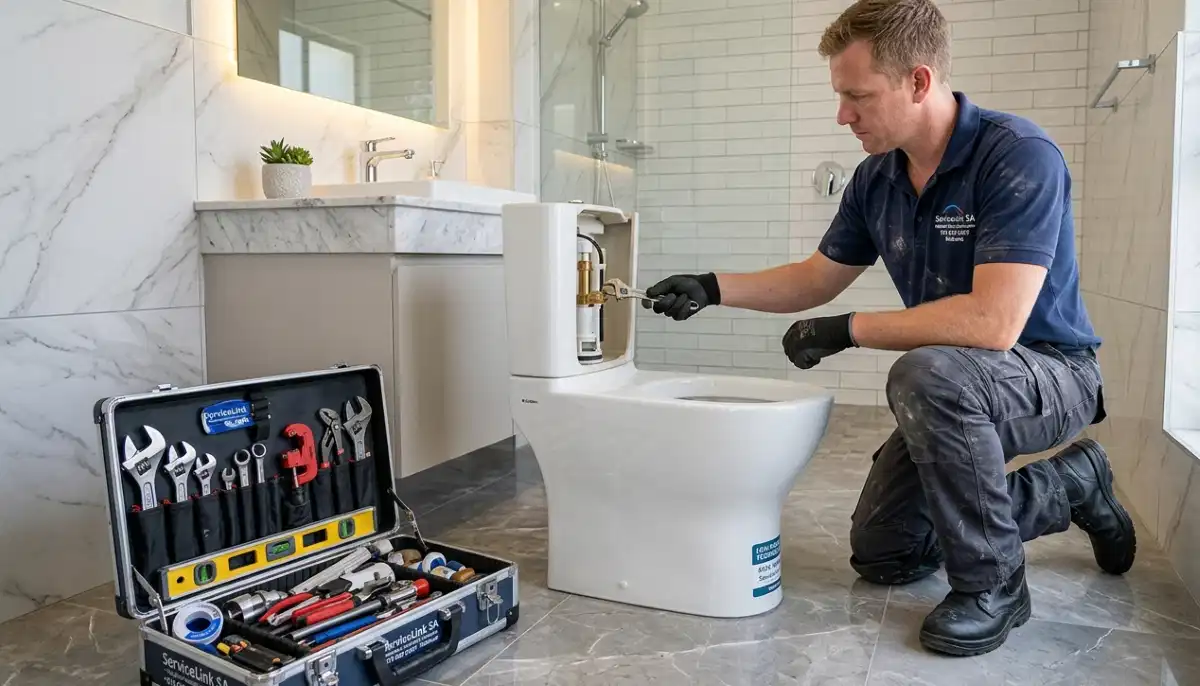
Toilets are the largest consumer of water in most homes, making them the top priority for water saving plumbing upgrades.
How they work: Dual-flush toilets offer two buttons—a half-flush (2-3 litres) for liquid waste and a full-flush (4-6 litres) for solid waste. Single-flush low-flow toilets use a consistent 4-6 litres per flush.
Savings calculation: A family of 4 flushes approximately 20 times per day. Old toilet (13 litres): 260 litres/day. Dual-flush (average 4 litres): 80 litres/day. Savings: 180 litres/day × 365 = 65,700 litres/year.
What to look for when buying: South African Bureau of Standards (SABS) approval, dual-flush mechanism, smooth glazing (prevents sticking), and a reputable brand (Geberit, Cobra, Caroma, Ideal Standard).
Installation cost: R2,500-R6,000 including unit and installation. Read our toilet installation cost guide for details.
💡 Pro Tip:
If replacing your toilet isn’t in the budget, install a “toilet displacement device”—a sealed bottle filled with pebbles placed in the cistern. It reduces water per flush by 1-2 litres. Free savings!
🚿 Water Efficient Showerheads: Comfort Without Waste
Many homeowners worry that water efficient plumbing fixtures for showers will mean weak, unsatisfying water flow. Modern technology has solved this problem.
How they work: Efficient showerheads use aerating or laminar-flow technology to maintain pressure while reducing volume. Aerating mixes air with water, creating a full, misty spray. Laminar-flow creates individual water streams that feel powerful but use less water.
Flow rates explained: Standard showerhead: 15-20 L/min. Efficient showerhead: 6-9 L/min. For a 10-minute shower, savings of 90 litres per shower. Family of 4 showering daily: 360 litres/day × 365 = 131,400 litres/year.
What to look for: SABS-approved, flow rate clearly marked (aim for 9 L/min or less), multi-function settings, and easy-clean nozzles (prevents mineral buildup).
Installation cost: R300-R1,500 for the showerhead. DIY installation is simple—screw on like any showerhead.
For professional installation, read our shower installation cost guide.
💧 Ready to Cut Your Water Bill by 30-50%?
Get quotes from verified plumbers specializing in water efficient fixture installation. Start saving from day one.
Free quotes • Verified specialists • Beat Your Quote guarantee
🚰 Water Saving Taps & Faucets: Small Changes, Big Impact
Taps are used dozens of times daily—for handwashing, dishwashing, teeth brushing, and food prep. Small savings per use add up dramatically.
How they work: Efficient taps use aerators (mesh screens) that mix air with water, maintaining spray force while reducing volume. Some modern taps have motion sensors or timers that automatically shut off.
Savings calculation: Standard tap: 10-15 L/min. Efficient tap with aerator: 4-6 L/min. Average family uses taps for 30 minutes daily. Savings: 300 litres/day × 365 = 109,500 litres/year.
Simple upgrade: If replacing taps is too expensive, just replace the aerator. A R50-R150 aerator screws into your existing tap and reduces flow by 30-50%.
Installation cost: R1,500-R4,000 per tap including installation. Read our bathroom sink installation guide and kitchen sink installation guide.
🔄 Greywater Systems: Reuse Water from Baths, Showers & Laundry
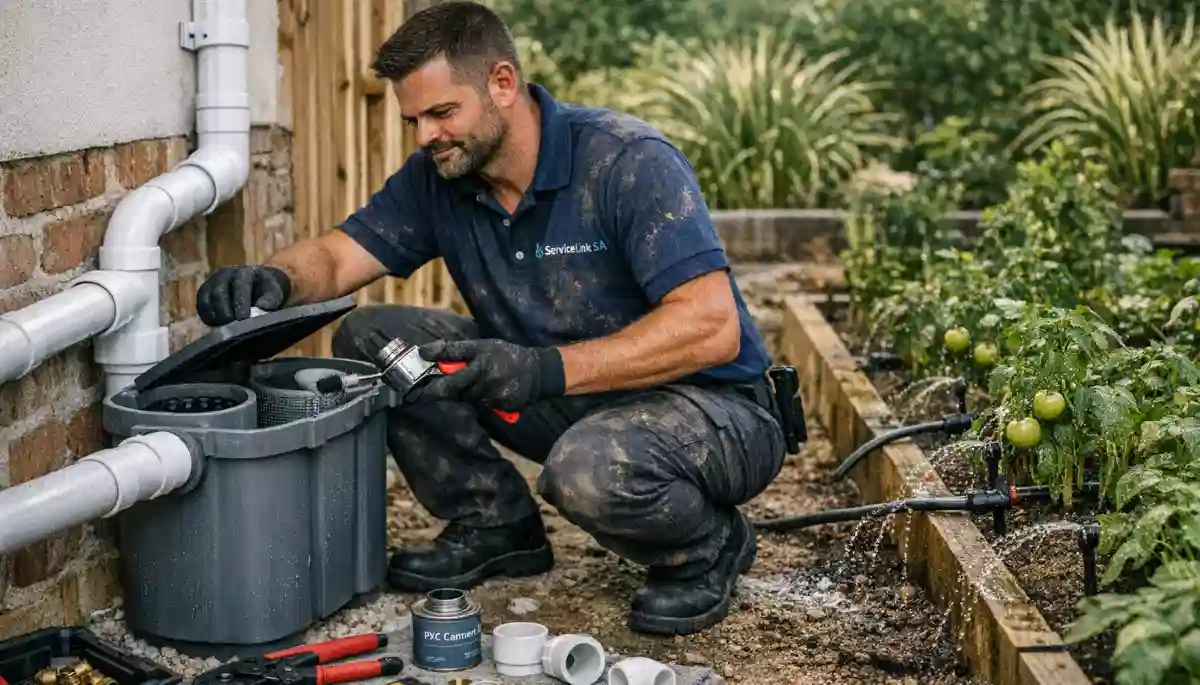
Greywater is gently used water from baths, showers, bathroom sinks, and washing machines. It can be reused for toilet flushing and garden irrigation—cutting your household water consumption by 30-50%.
What greywater CAN be used for: Toilet flushing, garden irrigation (underground drip systems only), and outdoor cleaning.
What greywater CANNOT be used for: Drinking, cooking, bathing, or any human consumption. Never use greywater from kitchens (grease and food waste).
System types:
- Simple diverter (R2,000-R5,000): Diverts washing machine or shower water directly to garden. Basic but effective.
- Treatment system (R15,000-R35,000): Filters, treats, and pumps greywater to toilets and irrigation. More expensive but safer and more convenient.
Legal requirements: Greywater systems must comply with municipal bylaws and SANS standards. Most require a permit and must include backflow prevention to protect the main water supply.
For detailed guidance, read our greywater system installation guide.
☔ Rainwater Harvesting for Toilets & Gardens
Rainwater harvesting collects free water from your roof during rainfall, storing it for later use. It’s the ultimate water conservation strategy.
What rainwater can be used for: Toilet flushing (with filtration), garden irrigation, car washing, and outdoor cleaning. With proper treatment, it can be used for laundry and even drinking (though this requires extensive filtration).
System components: Gutters and downspouts, first-flush diverter (removes initial dirty water), storage tank (1,000-10,000 litres), pump and pressure tank, and filtration.
Typical savings: A 5,000-litre tank in Johannesburg (annual rainfall 700mm) on a 150m² roof can collect 100,000+ litres annually—enough to cover most toilet and garden needs.
Installation cost: R15,000-R50,000 depending on tank size and system complexity. Payback period: 3-7 years depending on water tariffs and usage.
For detailed guidance, read our rainwater harvesting plumbing setup guide.
💰 Cost Savings Calculator & ROI Analysis
Here’s how best water saving plumbing fixtures south africa investments pay for themselves:
| Fixture/System | Installation Cost | Annual Water Savings | Payback Period | Lifespan |
|---|---|---|---|---|
| Dual-flush toilet | R2,500-R6,000 | R800-R2,000 | 3-4 years | 20-30 years |
| Efficient showerhead | R300-R1,500 | R600-R1,500 | 3-12 months | 5-10 years |
| Tap aerators (4-pack) | R150-R400 | R300-R800 | 3-6 months | 3-5 years |
| Greywater diverter | R2,000-R5,000 | R1,000-R3,000 | 1-3 years | 10-15 years |
| Rainwater tank (5,000L) | R15,000-R30,000 | R2,000-R5,000 | 4-7 years | 20-30 years |
Example: Complete home upgrade (family of 4 in Cape Town, water tariff R40/kl)
Investment: Dual-flush toilet R4,000 + 2 efficient showerheads R1,000 + 4 tap aerators R300 + greywater diverter R3,500 = R8,800 total.
Annual water savings: 120,000 litres = R4,800. Payback period: 1.8 years. After that, pure savings for 10-20 years.
🔧 Installation Cost Guide (2025)
Here’s what to budget for professional installation of water efficient plumbing fixtures:
| Service | Labour Cost (ZAR) | DIY Possible? | Notes |
|---|---|---|---|
| Replace showerhead | R200-R400 | ✅ Yes (screw on) | DIY in 5 minutes |
| Replace tap aerator | R100-R200 | ✅ Yes (unscrew/screw) | DIY in 2 minutes |
| Replace toilet (same position) | R1,200-R2,500 | ⚠️ Advanced DIY | Professional recommended |
| Replace tap/faucet | R500-R1,500 | ⚠️ Moderate DIY | Depends on access |
| Greywater system | R2,000-R5,000 | ❌ No | Professional required |
| Rainwater system | R5,000-R15,000 | ❌ No | Professional required |
For professional installation, use ServiceLink SA to find verified plumbers in your area. Read our how to choose a contractor guide.
⭐ Best Water Saving Plumbing Fixtures South Africa
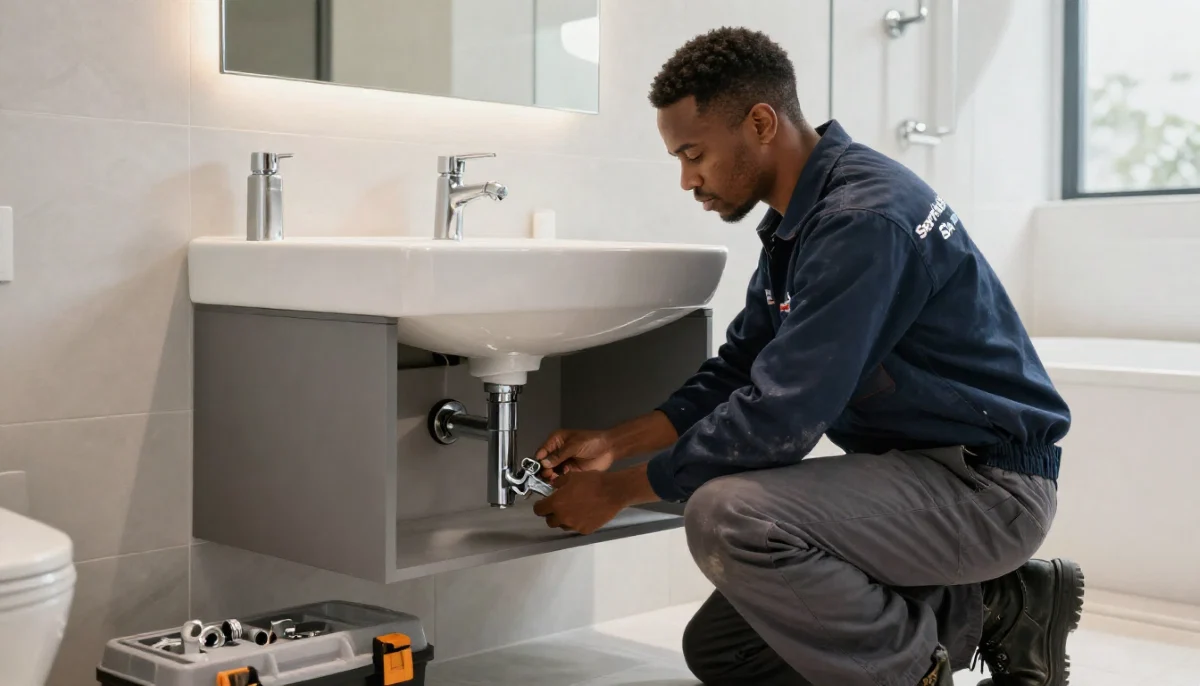
Here are top-rated best water saving plumbing fixtures south africa brands and models available locally:
🚽 Toilets
- Geberit – Dual-flush systems, 3/4.5 litre options. R3,000-R6,000
- Cobra – SABS-approved, 4/6 litre dual-flush. R2,500-R5,000
- Ideal Standard – European quality, 4-litre full flush. R4,000-R8,000
🚿 Showerheads
- Hansgrohe EcoSmart – 6-9 L/min, R800-R2,500
- Victoria & Alfred – Local brand, 7 L/min, R300-R800
- Hydra – Multi-function, 8 L/min, R400-R1,200
🚰 Taps & Faucets
- Franke – Kitchen taps with flow restrictors, R1,500-R4,000
- Dela – Basin taps with aerators, R800-R2,500
- Neoperl – Universal aerators, R50-R150 each
💧 Greywater & Rainwater
- Hydraloop – Advanced greywater treatment, R30,000-R50,000
- JoJo Tanks – Rainwater tanks, 1,000-10,000L, R3,000-R15,000
- Water Rhapsody – Greywater diverters, R2,500-R5,000
🏢 Commercial & Multi-Unit Applications
Water efficient plumbing fixtures aren’t just for homes. Businesses, office buildings, and multi-unit residential complexes can achieve even greater savings:
- Office buildings: Sensor taps (reduce water waste by 70%), dual-flush toilets, waterless urinals (save 150,000 litres/urinal/year).
- Hotels: Low-flow showerheads (guests don’t notice difference), greywater systems for landscaping.
- Restaurants: Pre-rinse spray valves (reduce kitchen water use by 50%), efficient dishwashers.
- Schools: Timed taps (prevent students from leaving taps running), rainwater harvesting for sports fields.
For commercial installations, read our commercial plumbing services guide.
❌ 5 Mistakes to Avoid With Water Efficient Plumbing
Mistake #1: Buying Cheap, Uncertified Fixtures
Non-SABS-approved fixtures may not perform as advertised and could fail prematurely. Look for the SABS mark—it ensures the product meets South African efficiency and safety standards.
Mistake #2: Using Greywater Incorrectly
Never store greywater for more than 24 hours (bacteria growth). Never use greywater on vegetables or root crops. Never use kitchen greywater (grease and food cause problems). Read our greywater guide for safety.
Mistake #3: Ignoring Leaks After Upgrading
A dripping tap wastes more water than an inefficient tap that doesn’t leak. After installing water efficient plumbing fixtures, maintain them and fix leaks immediately.
Mistake #4: Overestimating Rainwater Collection
Rainwater tanks need regular maintenance (cleaning gutters, checking filters). They also require proper winterisation in freezing areas. Plan your system capacity based on actual rainfall data, not optimism.
Mistake #5: Not Checking Municipal Bylaws
Some municipalities restrict greywater use or rainwater harvesting. Always check local regulations before installing systems. Some require permits and backflow prevention devices.
📋 Real-World Case Studies: Water Savings in Action
🏠 Case 1: The Sandton Family of 5
Location: Sandton | Homeowner: The Mkhize Family
Before: 38 kilolitres/month, R1,850 water bill. Old toilets (15L), standard showerheads (18L/min), no efficient taps.
Upgrades: 3 dual-flush toilets (R12,000), 2 efficient showerheads (R800), tap aerators (R300).
After (12 months): 22 kilolitres/month, R980 water bill. Savings: R870/month × 12 = R10,440/year.
ROI: Investment R13,100, payback 15 months, pure savings thereafter.
💧 Case 2: The Cape Town Drought Response
Location: Cape Town | Homeowner: James
Before (pre-drought): 28 kilolitres/month. Installed rainwater tank (5,000L, R18,000) and greywater diverter (R3,500).
During drought (50L/person/day restrictions): Greywater + rainwater covered 80% of toilet and garden needs. Municipal usage dropped to 12 kilolitres/month.
After drought: Maintained efficient habits. 15 kilolitres/month average. Annual water bill R4,200 vs R9,800 pre-upgrade.
Savings: R5,600/year. Payback 4 years on rainwater system. Peace of mind during drought—priceless.
❓ Frequently Asked Questions About Water Efficient Plumbing Fixtures
What are the best water saving plumbing fixtures in South Africa?
The best water saving plumbing fixtures south africa homeowners should consider are: dual-flush toilets (SABS-approved Geberit or Cobra, 3/4.5 litre flush), efficient showerheads (6-9 L/min from Hansgrohe or Hydra), tap aerators (Neoperl universal fit), and greywater diversion systems (Water Rhapsody). These offer the fastest payback and greatest water conservation impact.
How much water can I save with efficient plumbing fixtures?
A typical family of four can save 70,000-100,000 litres annually by upgrading to water efficient plumbing fixtures throughout their home. This translates to R3,000-R8,000 per year depending on your municipal water tariff. Toilets offer the biggest single saving (25,000-35,000 litres/year), followed by showerheads (30,000-40,000 litres/year).
Do low-flow showerheads actually work well?
Yes—modern low-flow showerheads use aerating or laminar-flow technology that maintains pressure while reducing volume. Many users can’t tell the difference from standard showerheads. Look for models with flow rates of 6-9 litres per minute. Avoid cheap, uncertified models—they often produce weak spray. Brands like Hansgrohe EcoSmart and Hydra offer excellent performance.
Is a greywater system worth the investment?
For most South African homes, a greywater diverter (R2,000-R5,000) pays for itself within 1-3 years through reduced water bills. Full treatment systems (R15,000-R35,000) have longer paybacks (5-8 years) but offer convenience and safety. Greywater is especially valuable in water-restricted areas (Cape Town, drought-prone regions) where every litre saved matters. Read our greywater installation guide for details.
Can I install water efficient fixtures myself?
Simple upgrades like showerheads and tap aerators are DIY-friendly (5-10 minutes, no tools needed for many). Toilet replacement requires moderate plumbing skill—if unsure, hire a professional. Greywater and rainwater systems always require professional installation for compliance with municipal bylaws and safety standards. ServiceLink SA can connect you with verified plumbers for any installation.
Are there rebates for water efficient fixtures in South Africa?
Some municipalities offer rebates for installing water efficient plumbing fixtures. The City of Cape Town previously offered rebates for rainwater tanks and greywater systems (check current programs). The City of Johannesburg has offered toilet replacement rebates. Contact your local municipality directly for current programs—availability and funding change frequently.
What’s the difference between greywater and rainwater harvesting?
Greywater reuses water from baths, showers, and laundry for toilet flushing and irrigation. Rainwater harvesting collects rain from your roof for the same purposes. Greywater provides year-round supply (dependent on household usage) but requires more treatment. Rainwater provides high-quality water but depends on rainfall. Many eco friendly plumbing homes use both systems for maximum water conservation.
How do I maintain water efficient fixtures?
Maintenance is minimal but important: Clean tap aerators every 6 months (unscrew, rinse, reinstall). Descale showerheads in vinegar if flow reduces (hard water areas). Check toilet flush mechanisms annually. For greywater systems, clean filters monthly and never store water for more than 24 hours. For rainwater systems, clean gutters and tank filters quarterly. Read our maintenance checklist for full guidance.
✅ Final Thoughts: Every Drop Counts
South Africa is a water-scarce country. Climate change, population growth, and aging infrastructure mean water will only become more expensive and restricted. Installing water efficient plumbing fixtures is one of the smartest investments you can make—for your wallet, for your property value, and for our collective water future.
Key takeaways for South African homeowners:
- Water efficient fixtures cut usage by 30-50% without sacrificing comfort
- Dual-flush toilets save 25,000-35,000 litres/year per family
- Efficient showerheads save 30,000-40,000 litres/year
- Tap aerators cost R50-R150 and pay back in 3-6 months
- Greywater and rainwater systems offer even deeper savings but require professional installation
- Most upgrades pay for themselves within 1-4 years
- SABS approval matters—don’t buy uncertified fixtures
Your action plan: Start with the easy wins—install tap aerators and efficient showerheads this weekend. Then plan for toilet replacements and consider greywater or rainwater systems. Use ServiceLink SA to find verified plumbers for professional installation. Every drop you save today protects our water future for tomorrow.
💧 Ready to Cut Your Water Bill by 30-50%?
Get quotes from verified plumbers specializing in water efficient fixture installation. Start saving from day one.
📞 Call us: 073 138 4726 for immediate help finding water efficiency specialists near you.
Greywater systems •
Rainwater harvesting •
Water saving tips •
Low flow fixtures •
Beat Your Quote guarantee
📚 Official resources & standards referenced:
- Department of Water and Sanitation – Water conservation regulations and guidelines.
- South African Bureau of Standards (SABS) – Fixture efficiency standards and certification.
- SANS 10400 – South African National Standard for plumbing and water efficiency.
Information provided for general guidance based on industry research and DWS/SABS standards. For specific best water saving plumbing fixtures south africa recommendations, consult a verified plumber familiar with your local water quality and municipal requirements.
Written by: ServiceLink SA Research Team
Water Conservation & Eco Friendly Plumbing Specialists
The ServiceLink SA Research Team comprises water conservation experts, eco-friendly plumbing specialists, and industry professionals with extensive experience in water efficient plumbing fixtures across South Africa. Our team works directly with SABS-certified manufacturers, greywater system installers, and municipal water authorities to bring you accurate, actionable information about water saving plumbing, fixture efficiency, and regulatory compliance. We continuously update our guides to reflect current water tariffs, conservation technologies, and best practices for sustainable home plumbing.
For more information about water conservation and eco-friendly plumbing, explore our related resources:
greywater system installation,
rainwater harvesting plumbing setup,
water saving plumbing tips,
low flow toilets and faucets explained,
and water efficient fixtures guide.
Our what is ServiceLink SA and
how we protect homeowners pages explain our verification process.
See our service areas page for water efficiency coverage in your region.