💧 Upgrade to Water Efficient Fixtures
Get quotes from verified plumbers for low flow toilet and faucet installation. Save water and money. Free inspections available.
Get Low Flow Fixture Quotes Near You
Servicing Gauteng, Johannesburg, Pretoria, Sandton, Centurion, Midrand, and across South Africa
Low Flow Toilets and Faucets Explained: Save Water Without Sacrificing Performance
💧 From dual-flush toilets to aerated faucets—complete guide to water efficient fixtures that save money and protect our water future
You’ve heard the term “low flow” and wondered: do they actually work? Will I need to flush twice? Will my shower feel like a weak trickle? These are the most common questions I’ve heard from homeowners across South Africa.
The truth is, modern low flow toilets and low flow faucets have come a long way. Today’s water efficient fixtures use advanced technology—dual-flush mechanisms, aerators, and laminar flow—to deliver excellent performance while using dramatically less water. A 2024 model low flow toilet flushes better than a 1990s 15-litre toilet. A modern low flow showerhead feels just as powerful as an old 20-litre-per-minute model.
I’ve helped hundreds of homeowners upgrade to water efficient fixtures. The results are consistently positive: lower water bills, reduced environmental impact, and no sacrifice in comfort or performance.
This comprehensive guide will answer the question are low flow toilets worth it, explain how different fixtures work, compare costs and savings, and help you choose the right water saving fixtures for your home.
For related information, read our water efficient fixtures guide, water saving plumbing tips, greywater system guide, and rainwater harvesting guide. Let’s save water without compromise.
📋 Table of Contents – Low Flow Toilets & Faucets Guide
💧 What Are Low Flow Plumbing Fixtures?
Water efficient fixtures are designed to use significantly less water than standard fixtures while maintaining or improving performance.
Key water efficiency standards in South Africa:
- Toilets: Standard old toilets use 11-15 litres per flush. Low flow toilets use 3-6 litres per flush. Dual-flush models use 3 litres (half-flush) and 4.5 litres (full-flush).
- Faucets (taps): Standard faucets flow at 10-15 litres per minute. Low flow faucets with aerators flow at 4-6 litres per minute.
- Showerheads: Standard showerheads flow at 15-20 litres per minute. Low flow showerheads flow at 6-9 litres per minute.
How they work without sacrificing performance:
- Toilets: Improved trapway design, larger water surface area, and gravity-assisted flush technology
- Faucets: Aerators mix air with water, maintaining spray force while reducing volume
- Showerheads: Laminar-flow technology creates individual water streams that feel powerful
Read our water efficient fixtures guide for more details.

📊 How Much Water Can You Save?
Here’s the potential impact of upgrading to water saving fixtures:
| Fixture | Standard Model | Low Flow Model | Water Saved per Use | Annual Savings (Family of 4) |
|---|---|---|---|---|
| Toilet (single flush) | 11-15 litres/flush | 3-4 litres (dual-flush) | 8-11 litres | 25,000-35,000 litres |
| Showerhead | 15-20 L/min | 6-9 L/min | 9-11 L/min | 30,000-40,000 litres |
| Kitchen Tap | 12-15 L/min | 5-7 L/min | 7-8 L/min | 10,000-15,000 litres |
| Bathroom Tap | 10-12 L/min | 4-6 L/min | 6 L/min | 8,000-12,000 litres |
| Total Potential Savings | 70,000-100,000 litres/year → R2,100-R3,000/year | |||
A family of four can save 70,000-100,000 litres annually—equivalent to R2,100-R3,000 on water bills depending on local tariffs.
Read our water saving plumbing tips guide for more conservation strategies.
🚽 Low Flow Toilets: Types & Technology
Low flow toilets are the biggest water savers in most homes. Here’s what you need to know:
Types of low flow toilets:
- Dual-flush (most common, recommended): Two buttons—half-flush (3 litres) for liquid waste, full-flush (4.5 litres) for solid waste. Saves 30-50% compared to single-flush low flow.
- Single-flush low flow: Consistent 4-6 litres per flush. Simpler but less efficient than dual-flush.
- Pressure-assisted: Uses compressed air to boost flush power. More expensive but very effective. Less common in homes.
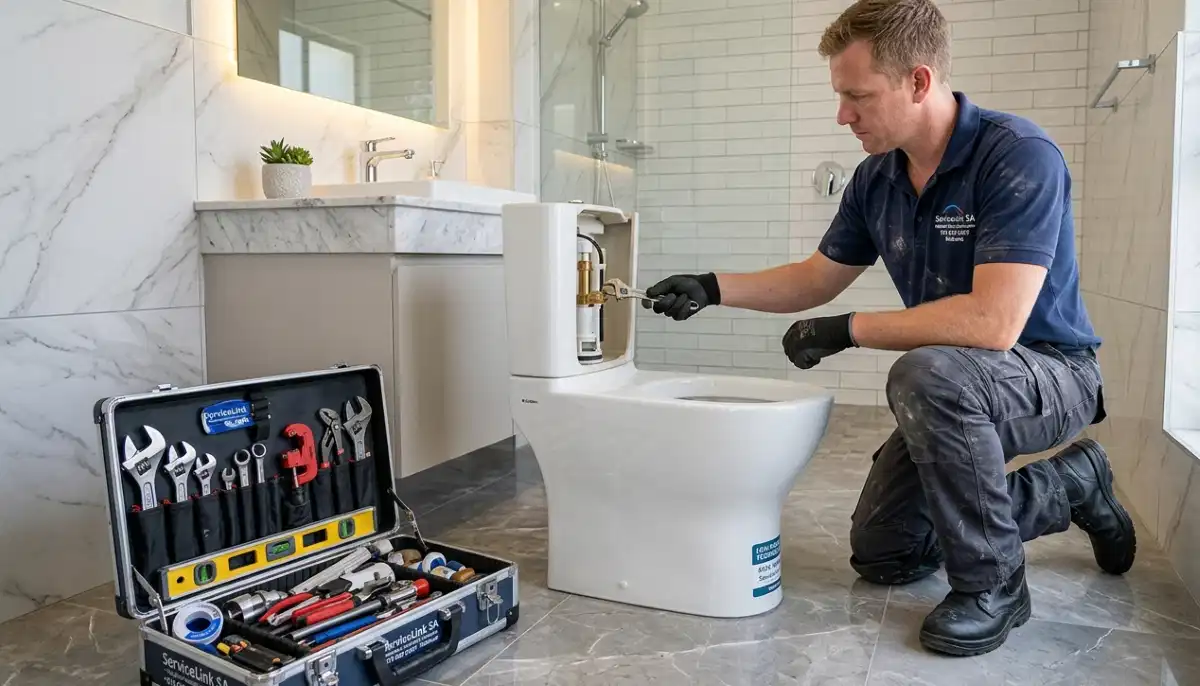
How they perform: Modern low flow toilets use improved trapway design (wider, smoother, glazed), larger water surface area, and gravity-assisted technology to clear the bowl effectively. A 2024 model low flow toilet flushes better than a 1990s 15-litre toilet.
What to look for when buying:
- SABS approval (South African Bureau of Standards)
- Dual-flush mechanism (3/4.5 litre or similar)
- Smooth-glazing trapway (prevents sticking)
- Reputable brand (Geberit, Cobra, Caroma, Ideal Standard)
- MaP score (Maximum Performance) – higher is better
Read our toilet installation cost guide for pricing.
💧 Upgrade to Water Efficient Fixtures
Get quotes from verified plumbers for low flow toilet and faucet installation. Save water and money. Free inspections available.
Free quotes • Verified specialists • Beat Your Quote guarantee
📊 Toilet Water Savings Calculator
Here’s how upgrading to low flow toilets pays off:
| Household Size | Flushes/Day | Old Toilet (13L avg) | Dual-Flush (4L avg) | Daily Saving | Annual Saving | Annual Money Saved |
|---|---|---|---|---|---|---|
| 2 people | 10 | 130 litres | 40 litres | 90 litres | 32,850 litres | R986 |
| 3-4 people | 20 | 260 litres | 80 litres | 180 litres | 65,700 litres | R1,971 |
| 4-5 people | 30 | 390 litres | 120 litres | 270 litres | 98,550 litres | R2,957 |
Example: A family of 4 upgrading from an old 13-litre toilet to a dual-flush (4L average) saves 65,700 litres/year—R1,971/year. A new dual-flush toilet costs R2,500-R6,000 installed. Payback period: 1.5-3 years.
🚰 Low Flow Faucets: Aerators & Technology
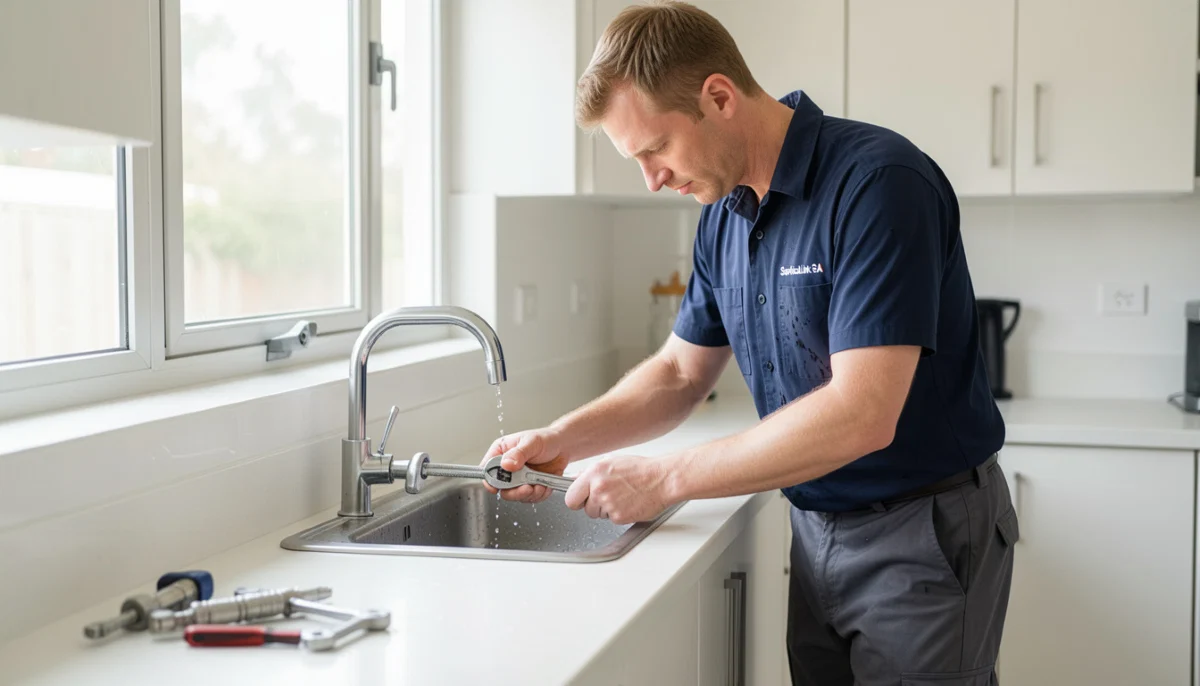
Low flow faucets use aerators to reduce water consumption without sacrificing performance.
What is an aerator? A small mesh screen that screws onto the end of your tap. It mixes air with water, maintaining spray force while reducing flow from 10-15 L/min to 4-6 L/min.
Types of aerators:
- Standard aerator (R50-R150): Reduces flow to 4-6 L/min. Good for bathroom sinks.
- Dual-flow aerator (R100-R250): Allows switching between spray and stream modes.
- Pressure-compensating aerator (R150-R300): Maintains consistent flow regardless of water pressure.
Installation: Unscrew old aerator, screw in new one. Takes 2 minutes. Fits most standard taps.
Savings: Family of 4 can save 10,000-15,000 litres/year (R300-R450/year) from bathroom taps alone.
For kitchen taps: Look for dual-flow aerators that allow a higher flow for filling pots and lower flow for handwashing.
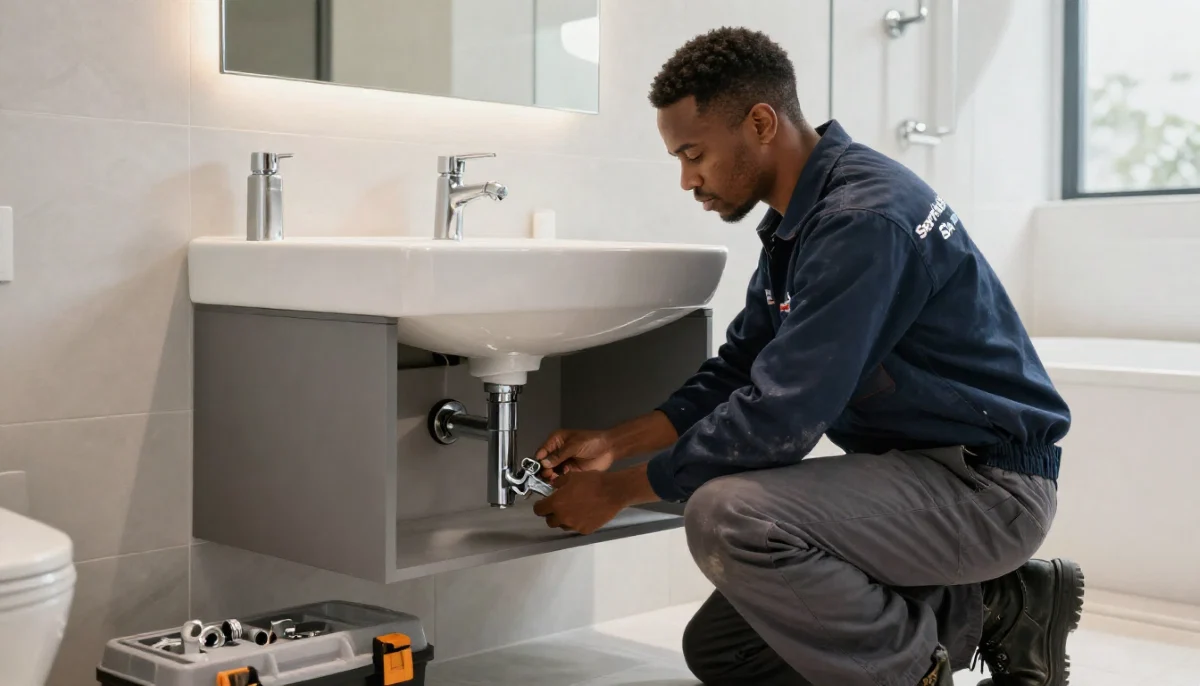
Read our bathroom sink installation guide for fixture information.
🚿 Low Flow Showerheads
Many homeowners worry that low flow faucets for showers will mean weak, unsatisfying water flow. Modern technology has solved this problem.
How they work: Efficient showerheads use aerating or laminar-flow technology to maintain pressure while reducing volume. Aerating mixes air with water, creating a full, misty spray. Laminar-flow creates individual water streams that feel powerful but use less water.
Flow rates: Standard: 15-20 L/min → Efficient: 6-9 L/min
Savings: Family of 4 showering 10 minutes daily saves 360 litres/day × 365 = 131,400 litres/year (R3,942/year).
Cost: R300-R1,500. DIY installation (screws on like any showerhead).
Payback: 1-4 months.
What to look for: SABS-approved, flow rate clearly marked (aim for 9 L/min or less), multi-function settings, easy-clean nozzles.
🔧 Performance Myths Debunked
Let’s address common concerns about water saving fixtures:
Myth #1: “Low flow toilets don’t flush properly”
FALSE. Modern low flow toilets use improved trapway design (wider, smoother, glazed), larger water surface area, and gravity-assisted technology. A 2024 model low flow toilet flushes better than a 1990s 15-litre toilet. Look for MaP scores above 500 grams (the amount of waste the toilet can clear in one flush).
Myth #2: “Low flow showerheads feel weak”
FALSE. Modern low flow showerheads use aerating or laminar-flow technology. Aerating mixes air with water—the spray feels full and misty. Laminar-flow creates individual water streams that feel powerful. Most users cannot tell the difference between a 9 L/min efficient showerhead and a 18 L/min standard one.
Myth #3: “Low flow faucets take forever to fill pots”
FALSE for modern designs. Many kitchen low flow faucets have dual-flow aerators. Pull a lever for higher flow (8-10 L/min) when filling pots, then return to low flow (4-6 L/min) for handwashing and rinsing.
Myth #4: “Low flow fixtures are expensive”
FALSE. Tap aerators cost R50-R150. Efficient showerheads cost R300-R1,500. Dual-flush toilets cost R2,500-R6,000 (similar to standard toilets). The water savings pay for the fixtures—often within months for aerators and showerheads.
Myth #5: “Low flow fixtures require special installation”
FALSE. Aerators screw onto existing taps. Showerheads screw onto existing arms. Toilets install the same as standard toilets. No special tools or skills required for basic upgrades.
📜 Certifications & Standards (SABS)
When buying water efficient fixtures, look for SABS approval:
- SABS mark: Ensures the product meets South African National Standards for performance and efficiency.
- Water Efficiency Label: Some products carry a water efficiency rating label (similar to energy efficiency labels). Look for higher star ratings.
- MaP score (toilets): Maximum Performance score indicates how much waste the toilet can clear. Look for 500 grams or higher.
- Flow rate marking: Legitimate low flow products clearly mark the flow rate (L/min for taps/showerheads, L/flush for toilets).
Why certification matters: Non-certified “low flow” products may not perform as advertised. They may reduce flow without maintaining pressure, leading to poor user experience. SABS-approved products have been tested and verified.
Read our plumbing COC guide for compliance information.
💰 Low Flow Fixture Cost Guide
Here’s what to budget for water saving fixtures in South Africa:
| Fixture | Product Cost | Installation Cost | Total | Annual Water Saving | Payback |
|---|---|---|---|---|---|
| Tap Aerator (4-pack) | R150-R400 | R0 (DIY) | R150-R400 | R300-R450 | 4-12 months |
| Low Flow Showerhead | R300-R1,500 | R0 (DIY) | R300-R1,500 | R900-R1,200 | 3-18 months |
| Dual-Flush Toilet | R1,500-R4,000 | R800-R1,500 | R2,300-R5,500 | R750-R1,050 | 3-6 years |
| Complete Bathroom Upgrade (toilet, showerhead, 2x aerators) | R2,300-R6,500 | R800-R1,500 | R3,100-R8,000 | R2,000-R2,700 | 1.5-4 years |
For location-specific pricing, explore our plumbing services Gauteng, Johannesburg, Pretoria, Sandton, Centurion, and Midrand pages.
📈 Return on Investment & Payback Period
Are low flow toilets worth it? Let’s look at the numbers:
Example 1: Tap aerators (R200 for 4-pack)
- Annual water saving: R300-R450
- Payback: 4-12 months
- 10-year saving: R2,500-R4,000
Example 2: Dual-flush toilet (R3,500 installed)
- Annual water saving: R750-R1,050
- Payback: 3-5 years
- 10-year saving: R4,000-R7,000
Example 3: Complete bathroom upgrade (R5,000 installed)
- Annual water saving: R2,000-R2,700
- Payback: 2-3 years
- 10-year saving: R15,000-R22,000
The bottom line: Low flow toilets and faucets pay for themselves—often multiple times over. The water savings alone justify the investment, and you’re also helping preserve South Africa’s precious water resources.
Read our benefits of choosing us guide for more on long-term savings.
🔧 Installation: DIY vs Professional
Most water efficient fixtures are DIY-friendly:
DIY (30 minutes or less):
- Tap aerators (unscrew old, screw in new – 2 minutes)
- Showerheads (unscrew old, screw in new – 5 minutes)
- Toilet flapper/fill valve (15-30 minutes)
Professional recommended:
- Complete toilet replacement (heavy, requires sealing)
- Faucet replacement (if existing one is damaged)
- Any work requiring pipe modification
Professional cost: R800-R1,500 for toilet installation. R500-R1,000 for faucet installation.
For professional help, use our plumbing services network.
❌ 5 Costly Mistakes to Avoid
Mistake #1: Buying Cheap, Uncertified Fixtures
Non-SABS-approved fixtures may not perform as advertised and could fail prematurely. Look for the SABS mark—it ensures the product meets South African efficiency and safety standards. Cheap imports often disappoint.
Mistake #2: Not Checking Flow Rate Before Buying
Some “low flow” products still use 9-10 L/min for showerheads (better than 15-20 L/min but not optimal). Look for 6-9 L/min. For faucets, aim for 4-6 L/min. Read the specifications carefully.
Mistake #3: Installing a Low Flow Toilet Without Checking Trapway
P-trap (wall outlet) vs S-trap (floor outlet). Buying the wrong type means the toilet won’t connect. Check before buying. Read our toilet installation guide.
Mistake #4: Not Cleaning Aerators Regularly
Aerators can clog with sediment and debris, reducing flow further than intended. Clean them every 6 months—unscrew, rinse, reinstall. Takes 2 minutes.
Mistake #5: Replacing Only One Fixture at a Time Without a Plan
To maximize savings, replace all old fixtures systematically. Start with the biggest water users (toilets), then showerheads, then faucets. A complete upgrade saves 2-3 times more than piecemeal replacements.
📋 Real-World Low Flow Fixture Case Studies
🚽 Case 1: Toilet Upgrade in Pretoria
Location: Pretoria | Homeowner: The Nkosi Family
Before: Two old toilets using 15 litres per flush. Water bill R1,200/month.
After: Installed two dual-flush toilets (3/4.5 litres). Cost R5,500 total installed.
Savings: Water bill reduced to R850/month (R350/month, R4,200/year).
Payback: 1.3 years.
Lesson: Are low flow toilets worth it? Absolutely—payback in just over a year.
💧 Case 2: Full Bathroom Retrofit in Johannesburg
Location: Johannesburg | Homeowner: The Van Wyk Family
Before: Old toilet (15L), standard showerhead (18 L/min), no aerators. Water bill R1,400/month.
After: Dual-flush toilet (R3,500), efficient showerhead (R600), aerators (R200). Total R4,300.
Savings: Water bill reduced to R850/month (R550/month, R6,600/year).
Payback: 8 months.
Lesson: Low-cost upgrades (aerators, showerhead) provide the fastest payback. Combined with a toilet upgrade, savings are substantial.
❓ Frequently Asked Questions About Low Flow Fixtures
Are low flow toilets worth it?
Are low flow toilets worth it? Yes—a family of 4 can save 65,000+ litres/year (R1,950+/year). A dual-flush toilet costs R2,500-R6,000 installed. Payback is 1.5-3 years. After payback, free savings for 10-15 years. Modern low flow toilets flush better than old 15-litre models.
Do low flow showerheads actually work well?
Yes—modern low flow faucets for showers use aerating or laminar-flow technology that maintains pressure while reducing volume. Many users can’t tell the difference from standard showerheads. Look for models with flow rates of 6-9 litres per minute. Avoid cheap, uncertified models—they often produce weak spray.
How much water do low flow toilets save?
A dual-flush low flow toilet uses 3-4.5 litres per flush vs 11-15 litres for old toilets. A family of 4 saves 65,000+ litres/year. That’s enough to fill a 5,000-litre rainwater tank 13 times. Annual water saving value: R1,950+ depending on local tariffs.
What is the best low flow toilet brand in South Africa?
Top brands for water efficient fixtures in South Africa include: Geberit (dual-flush systems, 3/4.5 litre options), Cobra (SABS-approved, affordable), Ideal Standard (European quality), and Caroma (Australian, excellent flush performance). For most homes, Geberit or Cobra offer the best value.
Do low flow faucets reduce water pressure?
No—low flow faucets with aerators maintain pressure while reducing volume. The aerator mixes air with water, so the spray feels similar but uses less water. However, if your water pressure is already very low (below 300 kPa), adding aerators may make flow feel weaker. Test your pressure first.
How do I know if my toilet is low flow?
Check inside the tank. If the date stamp is 1994 or earlier, it’s likely 11-15 litres. Look for “1.6 gpf” (gallons per flush) or “6 Lpf” (litres per flush) markings. Dual-flush toilets have two buttons. If you’re unsure, measure: mark the water level, flush, and measure how much water refills (use a bucket to measure).
Can I convert my old toilet to low flow?
Partially. You can install a toilet displacement device (sealed bottle in cistern) to save 1-2 litres per flush. You can replace the flapper and fill valve for better efficiency. However, for significant savings (11-15L to 3-4.5L), replacement with a dual-flush low flow toilet is the only option.
How do I find a reliable plumber for low flow fixture installation?
To find a reliable plumber for water saving fixtures: 1) Verify PIRB registration, 2) Ask for water efficiency experience, 3) Get detailed quotes, 4) Check reviews. ServiceLink SA connects you with verified plumbers in Gauteng, Johannesburg, Pretoria, Sandton, Centurion, and Midrand.
✅ Final Thoughts: Save Water, Save Money, No Sacrifice
Modern low flow toilets, faucets, and showerheads deliver excellent performance while saving thousands of litres of water annually. The technology has advanced dramatically—today’s water efficient fixtures work better than the water-guzzling models of the past.
Key takeaways for South African homeowners:
- Low flow toilets save 25,000-35,000 litres/year – payback 1.5-3 years
- Low flow showerheads save 30,000-40,000 litres/year – payback 3-18 months
- Tap aerators save 10,000-15,000 litres/year – payback 4-12 months
- Complete bathroom upgrade saves 70,000-100,000 litres/year – R2,100-R3,000/year
- Modern low flow fixtures perform excellently – myths about poor performance are outdated
- Look for SABS approval – ensures quality and efficiency
- Start with the cheapest upgrades first – aerators and showerheads offer fastest payback
Your action plan: Install tap aerators today—they’re cheap, easy, and provide immediate savings. Upgrade your showerhead next. Plan for toilet replacement within the next year. Every litre saved reduces your water bill and helps protect South Africa’s precious water resources.
💧 Upgrade to Water Efficient Fixtures
Get quotes from verified plumbers for low flow toilet and faucet installation. Save water and money. Free inspections available.
📞 Call us: 073 138 4726 for immediate help finding a water efficiency specialist near you.
Water efficient fixtures •
Water saving tips •
Greywater systems •
Rainwater harvesting •
Beat Your Quote guarantee
📚 Official resources & standards referenced:
- Department of Water and Sanitation – Water efficiency standards and regulations.
- SANS 10400 – Fixture regulations and plumbing compliance.
- Plumbing Industry Registration Board (PIRB) – Find registered plumbers.
Information provided for general guidance based on industry research and DWS/SANS standards. For specific low flow toilets and fixture advice for your home, consult multiple verified plumbers.
Written by: ServiceLink SA Research Team
Water Efficiency & Plumbing Fixture Specialists
The ServiceLink SA Research Team comprises water efficiency experts, plumbing fixture specialists, and industry professionals with decades of experience helping homeowners understand low flow toilets, low flow faucets, and water efficient fixtures. Our team works directly with PIRB-registered plumbers, fixture manufacturers, and water authorities to bring you accurate, actionable information about are low flow toilets worth it, cost savings, and installation. We continuously update our guides to reflect current technology, SANS standards, and real-world performance data for water saving fixtures.
For more information about low flow fixtures and water conservation, explore our related resources:
water efficient fixtures guide,
water saving plumbing tips,
greywater system guide,
rainwater harvesting guide,
and low flow fixtures guide.
Our what is ServiceLink SA and
how ServiceLink SA works pages explain our verification process.
See our service areas page for water efficiency coverage in your region.