
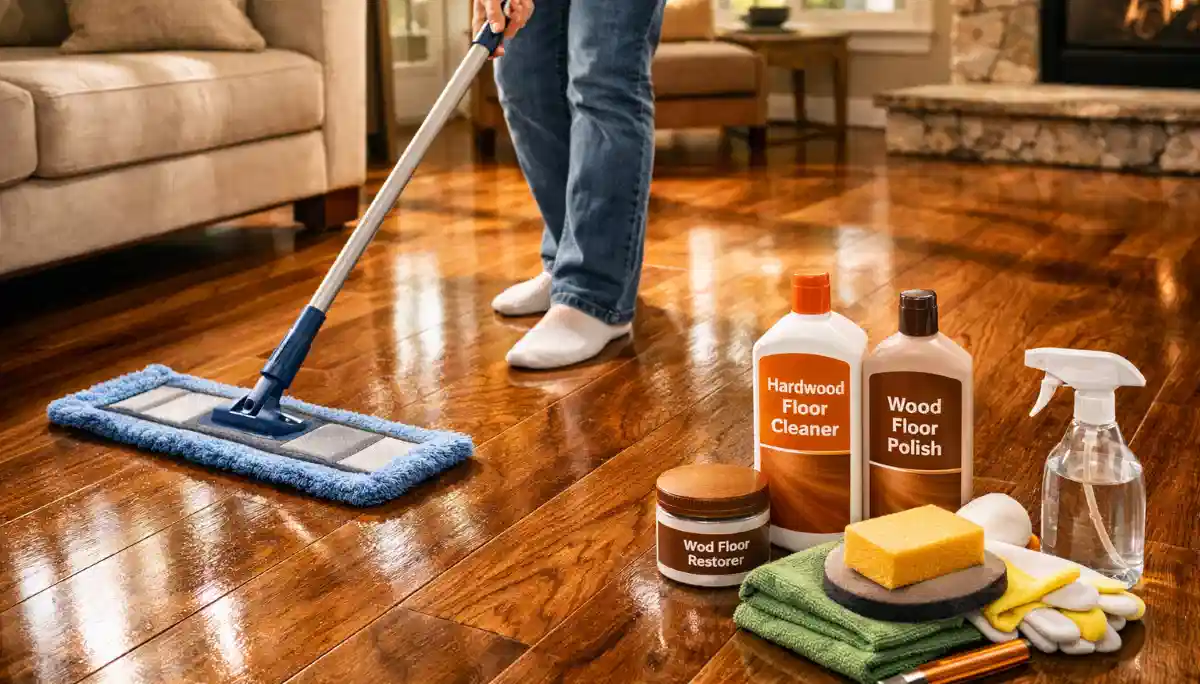
How to Maintain Wooden Floors in South Africa – The Complete Care Guide
🌳 Daily cleaning, scratch repair, and when to sand: keep your hardwood or engineered wood floors looking new for life.
You invested in beautiful solid hardwood for your Bryanston home, or perhaps you chose engineered wood for its stability in your Durban apartment. Either way, you want that floor to last. But life happens—spills, scratches from the dog, the relentless South African sun. Without the right care, even the best wood floors can lose their lustre. Knowing how to maintain wooden floors South Africa is essential to protect your investment.
This guide covers everything. You’ll learn the daily and weekly routines for hardwood floor cleaning, the difference between caring for oiled vs lacquered wood floor maintenance, how to tackle scratches and pet stains, and when it’s time for a professional screen and recoat or a full sand and seal. We also cover climate-specific advice for wood floor humidity protection in cities like Cape Town and Constantia. Whether your floors are solid or engineered, lacquered or oiled, this guide has you covered.
If you’re ready for professional help, explore our Services Overview or visit our Flooring Services page to find vetted specialists for sanding, polishing, and repairs. For more on how we work, see How It Works.
Need Professional Wood Floor Care?
Get free, no-obligation quotes from vetted floor sanding and polishing specialists in your area.
Find Wood Floor Experts Near Me
Servicing Johannesburg, Pretoria, Cape Town, Durban, and nationwide
📋 Table of Contents – Wood Floor Maintenance Guide
❓ Why Proper Wood Floor Maintenance Matters
Wood is a natural, living material. It reacts to its environment and how it’s treated. Good maintenance does three things:
- Protects the finish: The surface coating (lacquer or oil) is your floor’s first line of defence. Regular cleaning prevents dirt from acting like sandpaper and wearing it down.
- Prevents permanent damage: Spills left unattended can stain. Humidity swings can cause cupping or crowning. Maintenance prevents small issues from becoming big, expensive problems.
- Extends the time between sanding: Sanding removes a layer of the wood. By protecting the finish with regular care, you can delay a full sand for 10-15 years or more.
Read more about our approach on our About Us page or see why clients choose us on our Benefits page.
🧹 Daily & Weekly Wood Floor Cleaning Routine
Consistency is key. Here’s your simple routine.
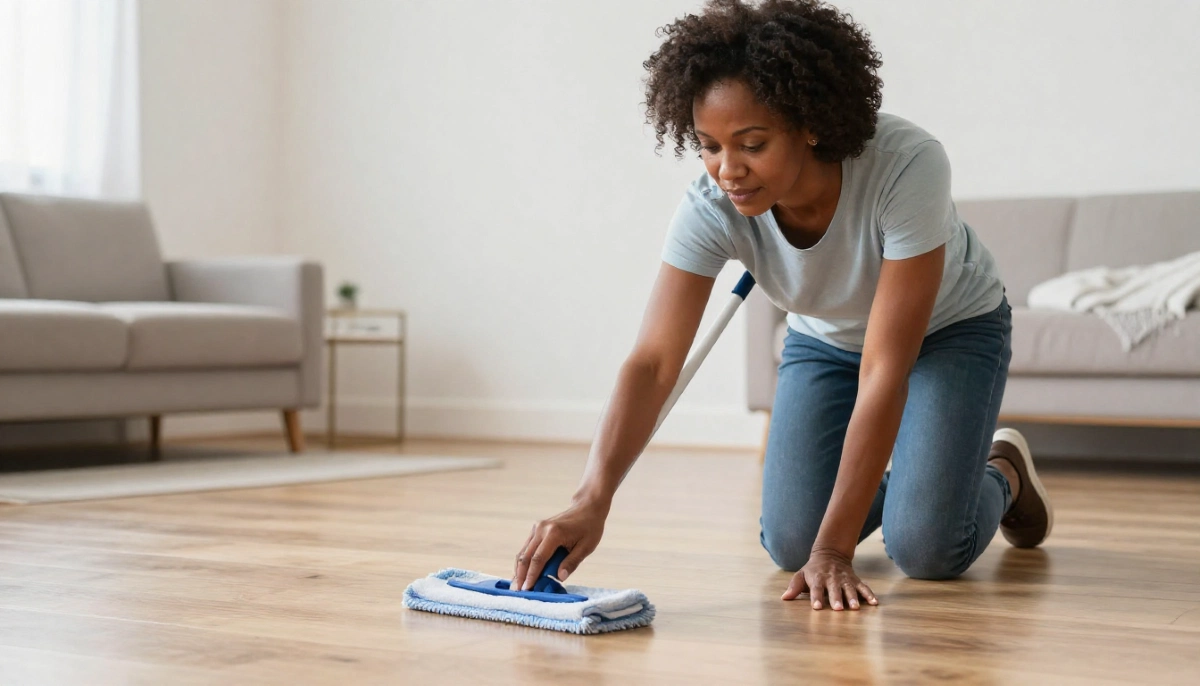
- Daily: Sweep or use a microfiber mop (dry) to remove dust, hair, and grit. Grit is the enemy—it scratches the finish when walked on. A dust mop is ideal.
- Weekly: Damp mop using a well-wrung microfiber mop and a pH neutral cleaner specifically designed for wood floors. Never use a soaking wet mop—water is wood’s enemy. The mop should be just damp. Spray the cleaner onto the floor, not directly onto the mop, to control moisture.
- Avoid: Vinegar, ammonia, bleach, or all-purpose cleaners. These can strip the finish or dull it over time. Stick to products from reputable brands like Bona.
Best wood floor cleaner South Africa: Look for products labelled specifically for wood floors, available at Builders Warehouse or specialist suppliers. Bona and Junckers have excellent local ranges.
🧼 Quarterly Deep Cleaning for Wood Floors
Every 3-4 months, give your floor a deeper clean to remove built-up grime, especially in high-traffic areas like hallways in Randburg homes.
- Step 1: Move light furniture and rugs.
- Step 2: Dry dust the entire floor thoroughly.
- Step 3: Use a wood floor cleaner concentrate diluted as per instructions. Mop in sections, rinsing the mop head frequently.
- Step 4: For stubborn spots, gently agitate with a soft brush or the gentle side of a sponge.
- Step 5: Allow to dry completely before replacing furniture. Consider using felt pads under furniture legs.
This deep clean also allows you to inspect the floor for any developing issues like loose boards or worn spots. See our guide on fixing common problems.
🎨 Lacquered vs Oiled Wood Floor Maintenance
Your floor’s finish determines its care needs. This is a critical distinction.
Lacquered Floors
Lacquer forms a hard, protective plastic-like layer on top of the wood.
- Care: Clean with a pH-neutral wood floor cleaner. Avoid wax or oil-based products—they won’t penetrate and can make the surface slippery.
- Refinishing: When the lacquer wears thin in traffic areas, you can do a screen and recoat. This involves lightly abrading the surface and applying a new coat of lacquer. It’s a job for a professional.
Oiled Floors
Oil penetrates the wood, protecting it from within. It leaves a more natural, matte finish.
- Care: Oiled floors need to be re-oiled periodically (every 1-3 years depending on traffic). Use maintenance oils specifically for wood floors. Cleaning should be done with products designed for oiled floors.
- Refinishing: Lightly sanding and reapplying oil is the standard refresh method. This is more involved than a lacquer recoat but can restore the natural look beautifully.
Oiled vs lacquered wood floor maintenance – oiled requires more frequent attention, but many prefer the natural look. Lacquered is lower maintenance day-to-day but needs professional recoating.
🩹 Scratch Repair for Wood Floors
Scratches happen. Here’s how to deal with them based on depth.
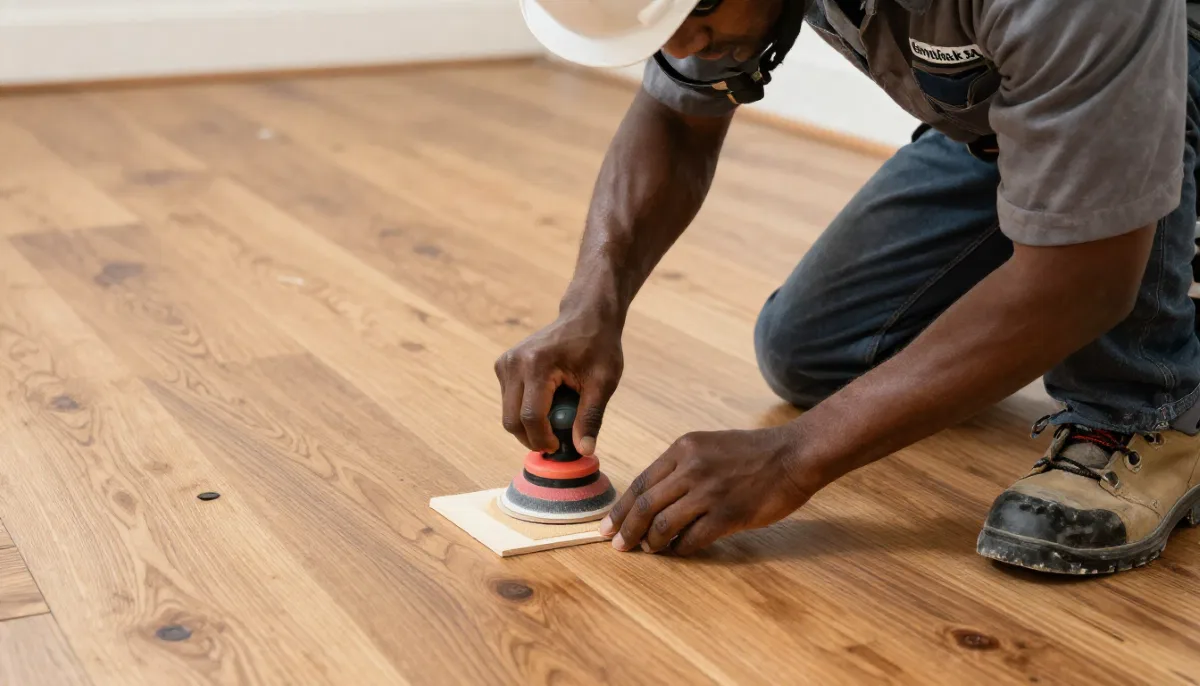
- Surface scratches (in the finish only): For lacquered floors, a specialized touch-up marker or wax crayon that matches the wood colour can fill the scratch. For oiled floors, a light sanding with fine grit paper and re-oiling the spot often works.
- Deep scratches (into the wood): These require more work. Clean the scratch, use a wood filler that matches your floor colour, sand smooth once dry, and then touch up the finish (lacquer or oil).
- For pets: Keep their nails trimmed. Place rugs in their favourite paths. For existing pet scratches, the repair methods above apply. Removing pet stains from wood floors is covered next.
For extensive scratches, a professional floor repair or screen and recoat may be the best option.
🧴 Removing Stains from Wood Floors
Speed is key. The faster you act, the better your chances.
- Water rings (white marks): These are often moisture in the finish. Try gently rubbing with a soft cloth and a tiny amount of non-gel toothpaste or mayonnaise. Let it sit for a few minutes, then wipe. If that fails, a professional may need to buff the area.
- Dark water/urine stains (black marks): These have penetrated the wood and usually require sanding down to bare wood to remove. This is a job for a professional. For pet stains, act immediately—blot, don’t rub, and clean with a damp cloth.
- General stains: For non-water stains, a damp cloth with a pH-neutral cleaner is the first step. Never use harsh chemicals.
Our floor polishing service can often restore stained areas without a full sand.
💧 Wood Floor Humidity Protection for South Africa
South Africa’s climate varies wildly, and wood reacts. Wood floor humidity protection is non-negotiable.
- Inland (Johannesburg, Pretoria): Dry winters can cause wood to shrink and gaps to appear between boards. Use a humidifier in very dry conditions if possible. In summer, manage humidity.
- Coastal (Durban, Cape Town): High humidity can cause wood to expand (cupping or crowning). Ensure good ventilation, use air conditioners or dehumidifiers in very humid rooms, and immediately wipe up any spills.
- General rule: Maintain indoor humidity between 40-60%. Avoid large, sudden swings. This is especially important for solid wood floor care, as solid wood moves more than engineered.
Engineered wood is more dimensionally stable and a better choice for humid climates. See our best flooring types guide for more.
🛡️ Preventive Measures: Felt Pads & Entrance Matting
Prevention is the most effective maintenance.
- Entrance Matting: Place high-quality doormats both outside and inside every entrance. This traps the grit that would otherwise scratch your floor. “Walk-off” mats are ideal.
- Felt Pads: Attach felt pads to the bottom of all furniture legs—chairs, sofas, tables. Replace them when they wear down. This prevents scratches from dragging.
- Rugs in High-Traffic Areas: Use runners in hallways and rugs in front of sinks and sofas to protect the most vulnerable spots.
- Protect from Sun: Direct sunlight can fade and dry out wood. Use blinds, curtains, or UV-protective window film. Rearrange rugs periodically to ensure even fading.
- High Heels & Pet Nails: Be mindful of stiletto heels (they can dent) and keep pet nails trimmed.
These small steps dramatically extend the life of your floor. Our free inspection can identify any areas needing extra protection.
🔄 Professional Refinishing: Recoating vs Sanding
Eventually, your floor will need professional attention. There are two main options.
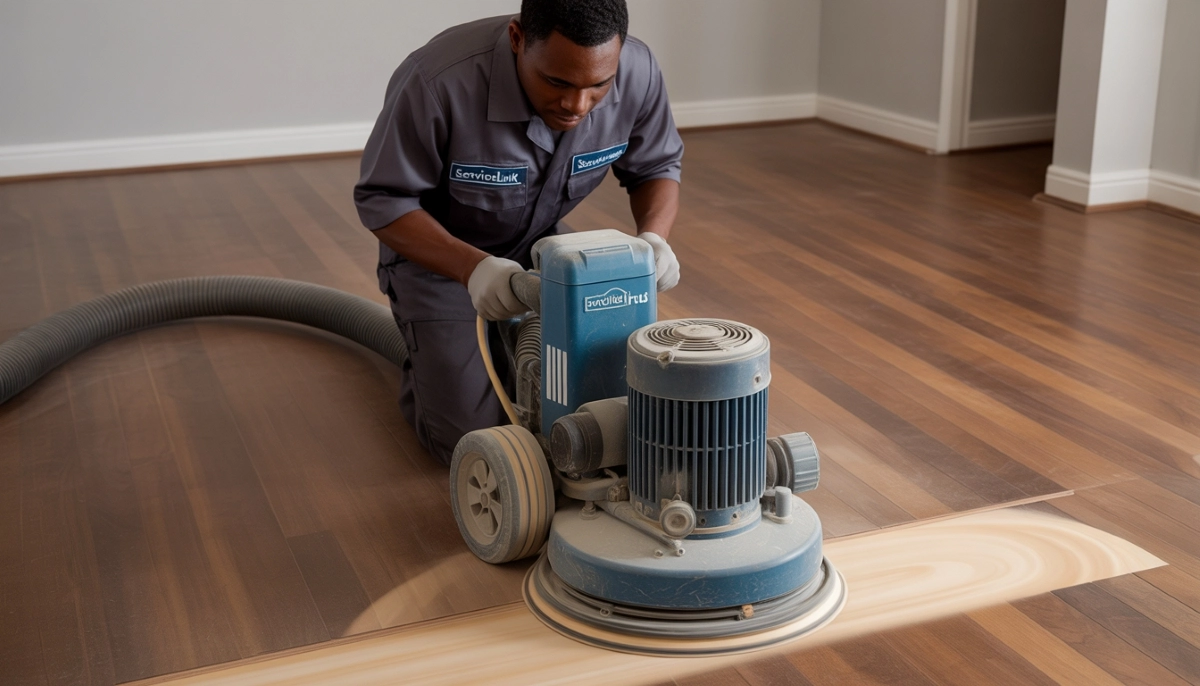
- Screen and Recoat (aka Buff and Coat): This is for floors where the finish is worn but the wood itself is in good condition. A professional uses a machine with an abrasive screen to scuff the existing finish, then applies a fresh topcoat. It refreshes the look and adds protection without removing wood. Suitable for lacquered floors. Cost: R80 – R150/m².
- Full Sand and Seal (Full Sanding): This involves sanding down through the old finish and into the wood to remove scratches, stains, and imperfections. It’s a major job but restores the floor to like-new condition. Suitable for both solid and engineered wood (as long as the wear layer is thick enough). Cost: R150 – R300/m².
Check if your floor is suitable for recoating via our floor polishing page.
⏳ How Often to Sand Wooden Floors
This depends on the wood type and traffic.
- Solid Hardwood: Can be sanded many times over its life. Typically, a full sand is needed every 15-25 years, depending on wear. You might do a screen and recoat every 3-5 years in between.
- Engineered Wood: The top veneer (wear layer) can only be sanded 1-3 times, depending on its thickness (usually 2-6mm). Once that layer is gone, the floor cannot be sanded again. Sand only when necessary, typically every 15-20 years, and only if the wear layer is thick enough.
How often to sand wooden floors – the key is to monitor the finish. If you see bare wood in traffic areas, it’s time for a recoat or sand. Regular maintenance delays the need for a full sand.
📅 Complete Wood Floor Maintenance Schedule
Here’s your at-a-glance plan.
- Daily: Sweep or dry dust mop to remove grit.
- Weekly: Damp mop with a pH-neutral wood floor cleaner.
- Quarterly: Deep clean, inspect for scratches or wear, re-apply felt pads if needed.
- Annually: Professional inspection (can be part of our free service). For oiled floors, consider a maintenance coat of oil.
- Every 3-5 years: Screen and recoat for lacquered floors in good condition.
- Every 10-15+ years: Full sand and seal (for solid wood or thick engineered veneer).
💰 Cost of Professional Wood Floor Maintenance
For when DIY isn’t enough.
- Deep clean and inspection: R500 – R1,500 (often credited against future work).
- Screen and recoat (lacquered floors): R80 – R150 per m².
- Re-oiling (oiled floors): R100 – R200 per m².
- Scratch repair (spot repair): R500 – R1,500 per repair, depending on size.
- Full sand and seal (solid wood): R150 – R300 per m².
- Full sand and seal (engineered wood): R180 – R350 per m² (requires extra care).
For accurate pricing, see our cost guide or request a quote.
❌ 9 Common Wood Floor Care Mistakes
- Mistake #1: Using a steam mop. The heat and moisture can damage the finish and force water into the wood, causing warping. Never use a steam mop on wood.
- Mistake #2: Wet mopping. A sopping wet mop is a disaster. Water seeps into the joints and causes swelling. The mop must be well-wrung.
- Mistake #3: Using the wrong cleaner. Vinegar, bleach, and all-purpose cleaners can strip or dull the finish. Always use a pH-neutral wood floor cleaner.
- Mistake #4: Ignoring spills. A spill left overnight can become a permanent stain. Wipe up immediately.
- Mistake #5: Dragging furniture. Always lift, never drag. Use felt pads.
- Mistake #6: Not using entrance mats. You’re tracking in grit that acts like sandpaper. Good mats are essential.
- Mistake #7: Walking on floors with high heels or cleats. They can dent and scratch.
- Mistake #8: Ignoring humidity. Extreme swings cause gaps or cupping. Manage your indoor climate.
- Mistake #9: Delaying professional recoating. Once the finish is worn through in areas, dirt damages the bare wood, making a full sand necessary sooner.
Avoid these to keep your floors beautiful. If you’ve made a mistake, our floor repair services can often help.
❓ Frequently Asked Questions
What is the best wood floor cleaner in South Africa?
The best wood floor cleaner South Africa is a pH-neutral product specifically designed for wood. Brands like Bona, Junckers, and local specialist brands available at Builders Warehouse are excellent choices. Avoid all-purpose cleaners.
How often should I sand and seal my wooden floors?
How often to sand wooden floors depends on wear. For solid hardwood, a full sand is typically needed every 15-25 years. Engineered wood may only be sandable once or twice. Between sanding, a screen and recoat every 3-5 years refreshes the finish.
What’s the difference between oiled vs lacquered wood floor maintenance?
Oiled vs lacquered wood floor maintenance differs significantly. Lacquered floors need a screen and recoat every few years. Oiled floors require periodic re-oiling (every 1-3 years) to maintain protection and look. Cleaners are also different—use products formulated for each finish.
How do I repair a deep scratch in my wood floor?
Scratch repair for wood floors that are deep: clean the area, apply a colour-matched wood filler, let it dry, sand smooth (with fine grit), and then touch up the finish with matching lacquer or oil. For extensive scratches, consider a professional.
Can I use a steam mop on my engineered wood floor?
No. Never use a steam mop on any wood floor, including engineered. The heat and moisture can damage the finish and cause the layers to separate. Stick to a well-wrung microfiber mop.
How do I remove pet stains from wood floors?
Removing pet stains from wood floors: For fresh stains, blot immediately, then clean with a damp cloth and pH-neutral cleaner. For old, dark stains (urine), they have likely penetrated the wood and will require sanding to remove. Professional help is usually needed.
What is wood floor humidity protection?
Wood floor humidity protection means maintaining stable indoor humidity (40-60%). In dry climates like Johannesburg, use humidifiers if needed. In humid climates like Durban, use dehumidifiers or air conditioners to prevent expansion.
How much does it cost to professionally sand a wooden floor?
Professional full sanding costs R150 – R300 per m² for solid wood, and R180 – R350 per m² for engineered wood (due to the care required). A screen and recoat is cheaper: R80 – R150 per m².
What are felt pads and why are they important?
Felt pads are self-adhesive pads that you stick to the bottom of furniture legs. They prevent scratches when chairs or sofas are moved. Replace them when they wear down. They’re a cheap and essential preventive measure.
Can all wood floors be refinished?
Solid hardwood can be refinished many times. Engineered wood can only be refinished if its top wear layer is thick enough (at least 2mm) to withstand sanding. Check with a professional before assuming your floor can be sanded.
✅ Final Thoughts – Your Wood Floor Care Action Plan
Knowing how to maintain wooden floors South Africa is about consistency and using the right methods. A little regular care prevents major problems and keeps your floor looking stunning for decades.
Key takeaways:
- Daily sweeping and weekly damp mopping with a pH neutral cleaner are non-negotiable.
- Protect your floor with entrance matting and felt pads.
- Understand your finish – lacquered and oiled floors need different care.
- Address scratches and spills immediately.
- Schedule professional inspections and know when to recoat vs sand.
Your 5-Step Action Plan
- Assess your floor: Is it solid or engineered? Lacquered or oiled?
- Gather the right tools: Microfiber mop, pH-neutral cleaner, felt pads.
- Establish a routine: Daily/Weekly cleaning schedule.
- Inspect for damage: Look for scratches, worn spots, or humidity issues.
- Call a professional if needed: For deep scratches, stains, or when it’s time for a recoat or sand.
Ready to Give Your Wood Floor Some Love?
Get free, no-obligation quotes from vetted floor sanding and polishing specialists in your area. Professional care extends the life of your floor.
📞 Call us: 073 138 4726 for personalised assistance
Free site inspections •
Beat-your-quote guarantee •
Our guarantees
📚 Official resources & standards:
- Junckers South Africa – Wood floor maintenance systems and product guides.
- Bona – Professional floor care products and how-to videos.
- SA Wood – Timber floor restoration and industry information.
Information accurate as of publication. Prices are indicative and may vary by supplier and location. This guide is for informational purposes.
Written by: Innocent T Hanyani
21+ years construction and digital industry experience, ServiceLink SA
Innocent has overseen the restoration and maintenance of countless wooden floors, from century-old hardwood in heritage homes to modern engineered floors in new developments. His expertise ensures this guide reflects best practices for the South African climate.
For more detailed information, explore our related guides: common flooring problems for troubleshooting issues, our cost guide for budgeting professional work, and our best flooring types guide if you’re considering wood for a new project. Our floor polishing and floor repair pages detail our professional services.