
Common Flooring Problems and How to Fix Them – A South African Guide
🔧 Squeaky boards, loose tiles, buckling laminate – diagnose the issue and learn when to DIY and when to call a pro.
Your beautiful laminate floor in Randburg has started to buckle near the patio door. The tiles in your Durban bathroom sound hollow when you walk on them. And that creaking floorboard in the hallway of your Cape Town home is driving you crazy. Before you panic, know this: most common flooring problems have a fix. Sometimes it’s a simple DIY repair; other times, it’s a sign of a deeper issue that needs professional attention. Knowing how to diagnose the problem is half the battle.
This guide is your troubleshooting manual for the most frequent flooring issues in South African homes. We cover everything from laminate buckling repair and vinyl plank lifting to scratched wood floor repair and loose tiles fix. We’ll help you understand what causes problems like hollow sound under tiles, floor popping noise, and grout cracking. You’ll learn the difference between cupping and crowning in wood floors, and what efflorescence on tiles means. We also provide a diagnostic guide for flooring sounds – what that creak, pop, or crunch is telling you. Whether you’re in Pretoria or George, this guide helps you decide: DIY or call a professional?
If you’re ready for professional help, explore our Services Overview or visit our Flooring Services page to find vetted repair specialists near you. For more on how we work, see How It Works.
Need a Professional to Fix Your Floor?
Get free, no-obligation quotes from vetted flooring repair specialists in your area. Don’t let a small problem become a big one.
Servicing Johannesburg, Pretoria, Cape Town, Durban, and nationwide
📋 Table of Contents – Flooring Troubleshooter
⚡ Quick Flooring Problem Diagnostic Tool
Answer these quick questions to identify the most likely problem and find the right fix.
- Is the problem a sound? → Go to Flooring Sounds Diagnostic.
- Is your laminate floor buckling or tenting? → See Laminate Buckling Repair.
- Does your laminate have swollen, dark planks? → See Water Damaged Laminate Repair.
- Are your vinyl planks lifting or separating? → See Vinyl Plank Lifting Fix.
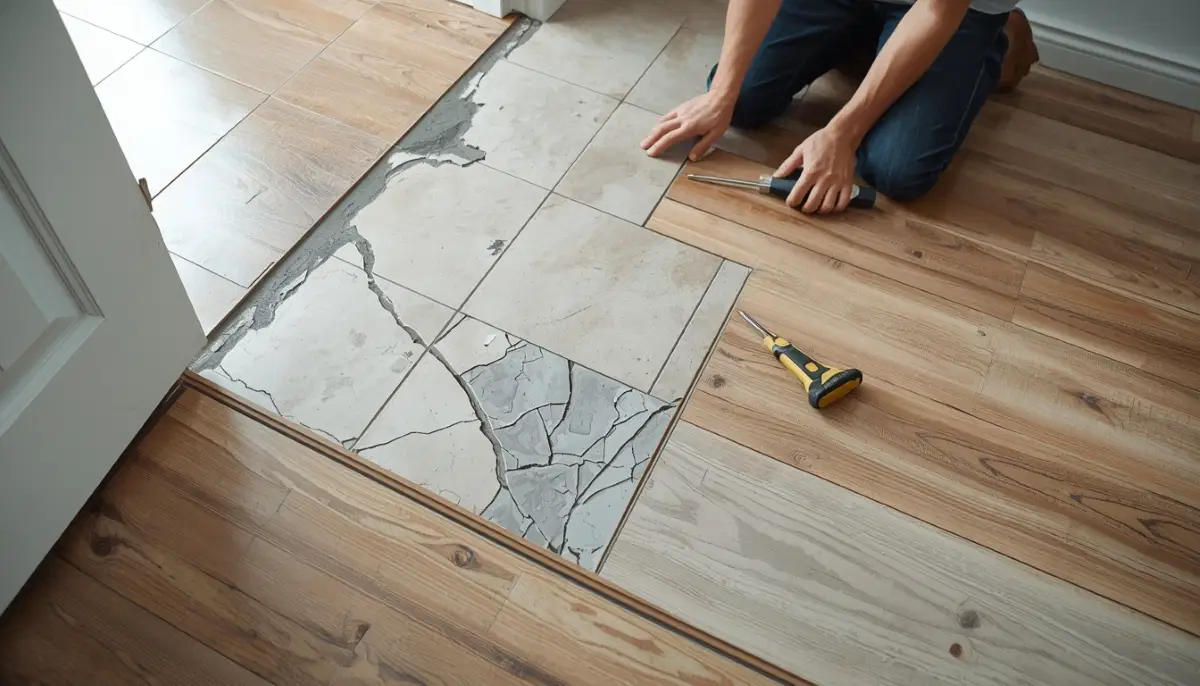
- Do you have loose or cracked tiles? → See Loose Tiles Fix.
- Is your grout cracking or crumbling? → See Grout Cracking Repair.
- Do tiles sound hollow when tapped? → See Hollow Sound Under Tiles Causes.
- Is your wood floor scratched or gouged? → See Scratched Wood Floor Repair.
- Are your floorboards creaking? → See Creaking Floorboards Repair.
Read more about our approach on our About Us page or see why clients choose us on our Benefits page.
👂 Flooring Sounds Diagnostic: What Your Floor is Telling You
Different sounds point to different problems. Listen carefully.
- Creaking/Squeaking: Usually caused by wood flooring rubbing against nails, subfloor, or itself. Often due to humidity changes or loose boards. Creaking floorboards repair involves securing the board to the subfloor with screws (countersunk) or injecting adhesive.
- Popping: A sudden loud pop when you walk? This is often floor popping noise fix related to laminate or floating floors. It usually means the floor has no room to expand – it’s pressing against something. The fix is to relieve the pressure by trimming the edge and ensuring a proper expansion gap.
- Crunching/Gritty sound: This feels like sand underfoot. It’s often debris under floor – dust, grit, or loose underlay. For floating floors, you may need to lift the affected area, clean thoroughly, and relay it. For tiles, it could mean adhesive failure.
- Clicking: A rhythmic click as you walk. Common in laminate or click-lock vinyl. It’s usually an uneven subfloor causing the planks to move and click against each other. The fix is to either re-click the planks (if it’s a small area) or, more permanently, level the subfloor.
- Hollow sound when tapping: Tap a tile with a coin. If it sounds hollow, it means insufficient adhesive coverage. This is a serious problem – the tile is not properly bonded and will eventually crack. Hollow sound under tiles causes point to poor installation. The fix may involve injecting adhesive or full replacement.
🪵 Laminate Flooring Problems & Solutions
Laminate is durable, but it has specific vulnerabilities.
- Buckling or tenting: The floor rises in a ridge. This is almost always due to expansion gap too small fix needed. The floor has expanded and has nowhere to go. Solution: Remove skirting, trim the edge of the laminate to restore the gap (usually 8-10mm).
- Gaps between planks: Caused by low humidity (planks shrink) or poor installation (not tapping tightly). For small gaps, try tapping them closed with a tapping block. For persistent gaps, you may need to disassemble and relay.
- Water damage (swollen edges, darkening): Water damaged laminate repair is tricky because the HDF core swells permanently. The affected planks must be cut out and replaced with new ones. Prevention is key – wipe spills immediately.
- Scratches: Surface scratches can be minimized with laminate repair kits (wax crayons or markers). Deep scratches may require plank replacement.
For more on installation, see our laminate installation page.
💧 Vinyl Flooring Problems & Solutions
Vinyl is waterproof, but not immune to issues.
- Planks lifting or separating: Vinyl plank lifting is often due to an uneven subfloor or debris under the plank. For click-lock, try tapping it back into place. For glue-down, you may need to re-glue the affected plank with vinyl adhesive and weigh it down.
- Peaking (raised edges at joints): This can happen if the subfloor is uneven or if the planks weren’t fully clicked. It may require tapping down or, in severe cases, replacement.
- Indentations: Heavy furniture can dent vinyl, especially softer WPC cores. For minor dents, a hair dryer can sometimes help the material expand back. For deep dents, replacement is the only option.
- Fading: Prolonged direct sunlight can fade some vinyl. Use blinds or UV-protective film on windows.
See our vinyl installation page for more.
🧱 Tile Flooring Problems & Solutions
Tile is hard and durable, but issues arise from the subfloor or installation.
- Loose tiles: A loose tiles fix involves removing the tile, cleaning the old adhesive, applying new thin-set mortar, and re-setting the tile. Use spacers to maintain joint width.
- Cracked tiles: Cracks can be from a point load, subfloor movement, or improper movement joint provision. The only real fix is to replace the tile. Ensure the underlying cause (like lack of expansion joints) is addressed first.
- Hollow sound: As mentioned, this indicates insufficient adhesive coverage. For a few tiles, you can try injecting epoxy adhesive through drilled holes (a specialist job). For large areas, it may mean replacement.
- Grout cracking or crumbling: Grout cracking in tile floor is common. Old grout can be removed with a grout saw and replaced. For persistent cracking, the issue may be movement in the subfloor – check movement joint failure.
- Efflorescence: White, powdery deposits on tiles or grout. It’s caused by moisture bringing salts to the surface. Fix the moisture source first, then clean with a suitable cleaner.
TAL offers products for tile repair and regrouting.
🌳 Wood Flooring Problems & Solutions
Wood is beautiful but sensitive to moisture and wear.
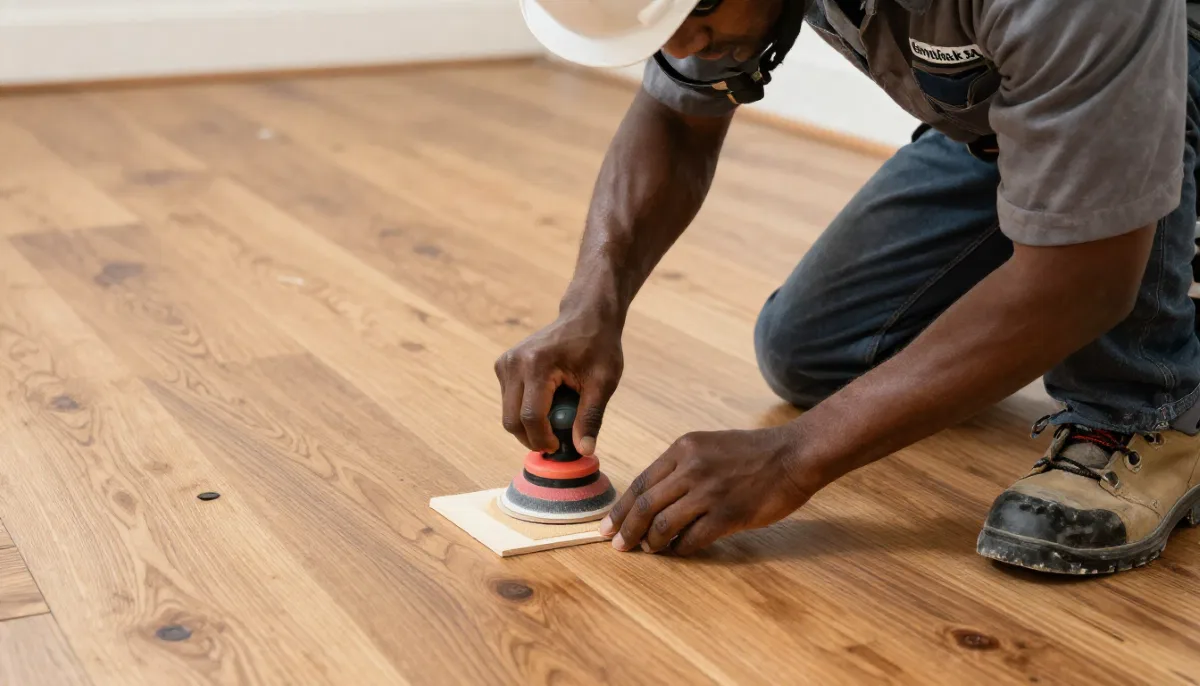
- Scratches and gouges: For light scratches, a scratched wood floor repair kit with stain markers or wax crayons works. For deeper gouges, clean the area, fill with colour-matched wood filler, sand smooth, and refinish the spot.
- Cupping (edges higher than centre): This is caused by moisture from below (e.g., damp subfloor). You must fix the moisture source first. Once dry, the boards may flatten. Severe cupping may require sanding.
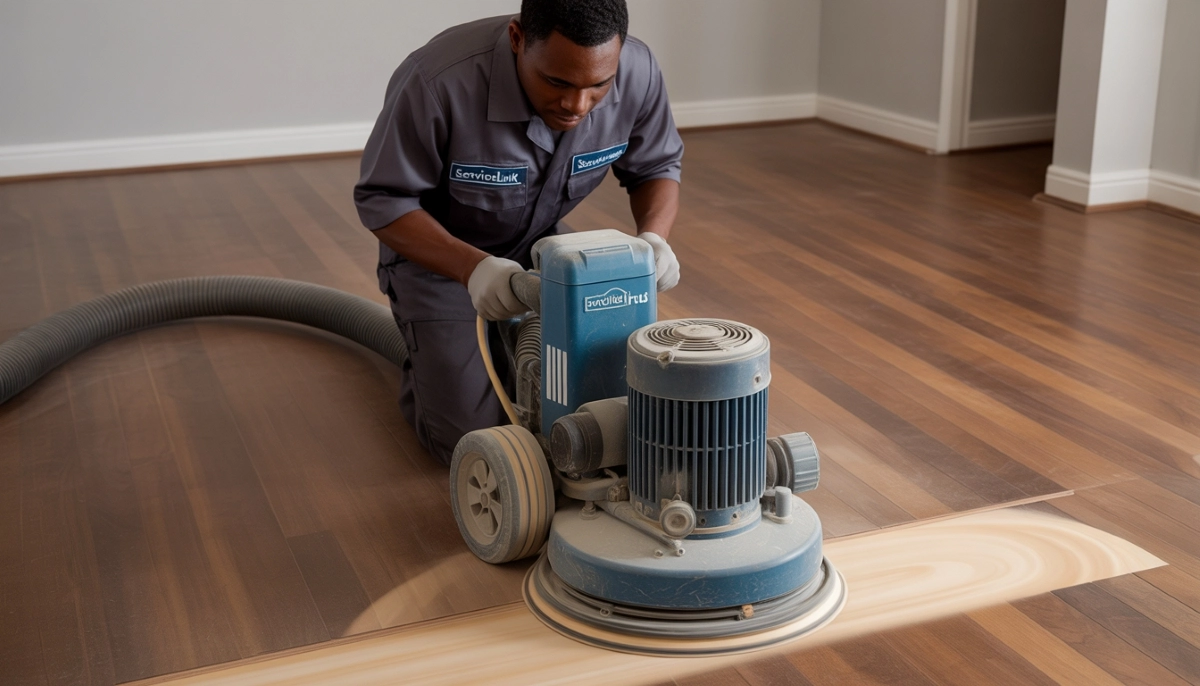
- Crowning (centre higher than edges): Opposite of cupping – often from moisture on the surface or sanding a floor that was previously cupped. May require professional sanding.
- Gaps between boards: Seasonal humidity changes cause wood to shrink and expand. Small gaps in winter are normal. Large, persistent gaps may need filling with rope or wood filler, or professional attention.
- Creaking: Creaking floorboards repair – secure loose boards with screws (counter-sink and plug the holes) or inject adhesive between the board and joist/subfloor.
Bona offers professional wood floor repair systems. See our wood maintenance guide for prevention.
🧶 Carpet Problems & Solutions
- Stains: Act immediately. Blot (don’t rub) with a clean cloth. Use a carpet stain remover suitable for your carpet type.
- Wrinkles or ripples: Often caused by humidity or poor installation. A professional can re-stretch the carpet using a power stretcher.
- Matting or crushing: In high-traffic areas, fibres get crushed. Regular vacuuming with a beater bar can help. Professional cleaning may revive some carpets. Severe matting may require replacement.
- Seam showing: If the carpet seam is visible or lifting, a professional can re-glue or re-seam it.
See our carpet installation page for more.
📏 Laminate Buckling Repair (Expansion Gap Fix)
This is one of the most common issues. Here’s how to fix it.
- Identify the pinch point: Find where the floor is pressing against a wall, door frame, or pipe. This is where the expansion gap is missing or too small.
- Remove skirting or quarter round: Carefully prise off the moulding covering the gap.
- Cut the laminate: Use a multi-tool or circular saw set to the depth of the plank. Cut 10-15mm from the edge to create a proper expansion gap (8-10mm is usually sufficient).
- Clean out debris: Vacuum the gap to remove dust.
- Replace moulding: Reattach the skirting or quarter round, ensuring it’s fixed to the wall, not the floor, so the floor can float freely.
This is a expansion gap too small fix that usually solves the buckling. If the planks are damaged, they may need replacement.
💦 Water Damaged Laminate Repair
Laminate and water don’t mix. Once the core is swollen, it won’t go back.
- Stop the water source: Fix the leak first.
- Dry the area thoroughly: Use fans and dehumidifiers for several days.
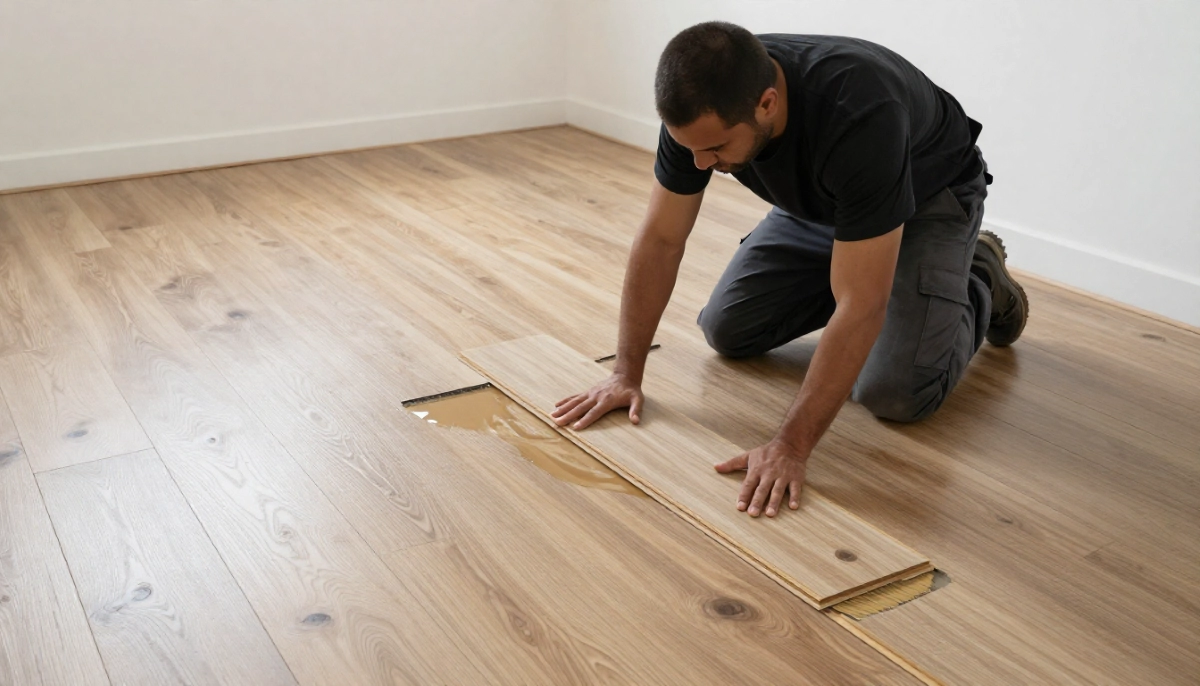
- Remove damaged planks: This requires disassembling the floor from the nearest edge until you reach the damaged planks. Click-lock floors can be taken apart row by row.
- Replace with new planks: Install new planks from the same batch (hopefully you kept spares).
- Reassemble the floor: Click the planks back together, ensuring proper expansion gaps.
This is a complex job. If you’re not confident, our floor repair service can help.
⬆️ Vinyl Plank Lifting Fix
For click-lock vinyl planks that have lifted at the edges:
- Clean the area: Ensure no debris is under the plank.
- Use a tapping block: Gently tap the raised edge back down. Sometimes it re-engages the lock.
- Apply weight: Place a heavy object on the plank for 24 hours.
For glue-down vinyl that is lifting:
- Clean under the plank: Remove any dirt.
- Apply vinyl adhesive: Use a syringe to inject adhesive under the lifting edge.
- Weight it down: Place a heavy, flat object (like a stack of books) on the area for 24 hours until the adhesive cures.
🔨 Loose Tiles Fix
- Remove the tile: Carefully chip away the grout around the tile and gently prise it up with a chisel and hammer, trying not to break it.
- Clean the subfloor and tile back: Remove all old adhesive and dust.
- Apply new adhesive: Use a suitable thin-set mortar, applied with a notched trowel. For large tiles, also back butter the tile.
- Set the tile: Press it firmly into place, using spacers to maintain the grout joint. Ensure it’s level with adjacent tiles.
- Allow to cure: Wait 24 hours before grouting.
- Grout: Apply new grout and seal if necessary.
This is a straightforward DIY job for a few tiles. For a large area, consider a pro.
🧪 Grout Cracking Repair
- Remove old grout: Use a grout saw or multi-tool to carefully remove the cracked grout, going deep enough to get fresh grout.
- Clean the joint: Vacuum out all dust and debris.
- Apply new grout: Mix grout according to instructions and press it firmly into the joints with a rubber float.
- Clean excess: Wipe away excess grout with a damp sponge before it hardens.
- Seal (if needed): Once cured, apply grout sealer to protect against future staining.
If grout cracks repeatedly in the same area, there may be movement in the subfloor. Check for movement joint failure.
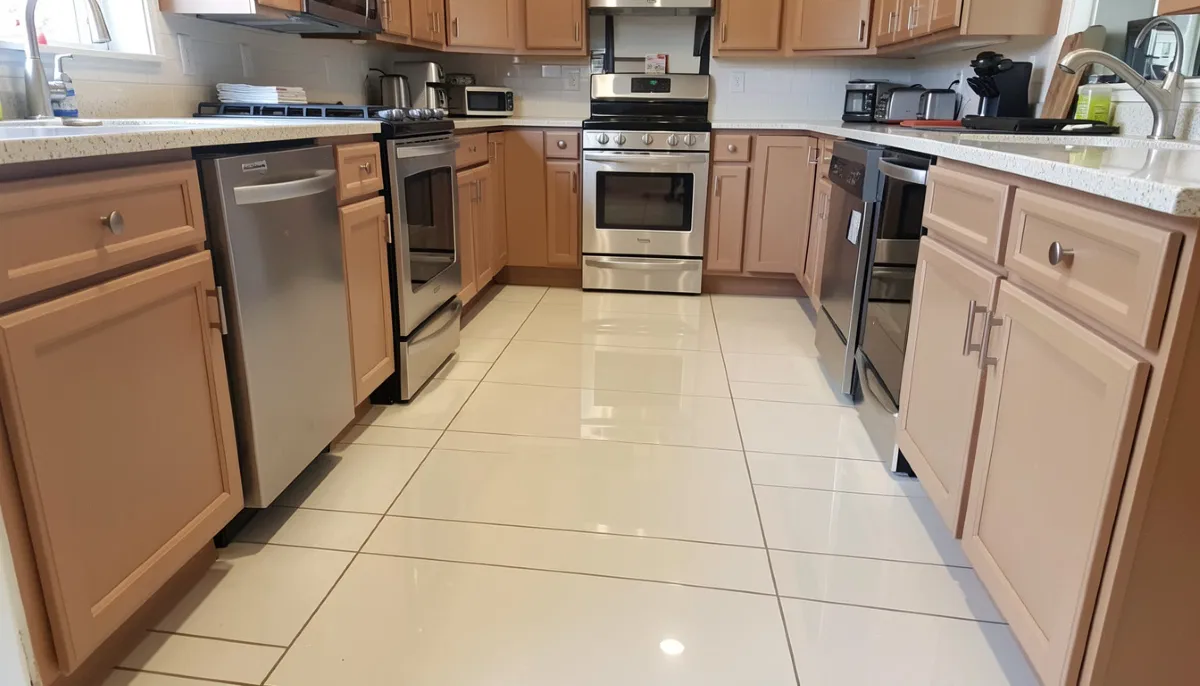
🔊 Hollow Sound Under Tiles Causes & Fixes
Tap a tile with a coin. If it sounds hollow, it means the adhesive bond is weak.
- Cause: Insufficient adhesive coverage during installation (less than the required 95%). The tile is only partially stuck down.
- Risk: Hollow tiles are likely to crack under heavy point loads.
- Fix for a few tiles: A specialist can drill small holes in the grout lines and inject epoxy adhesive to re-bond the tile. This is a skilled job.
- Fix for large area: If many tiles are hollow, the only reliable fix is to remove and relay them. This is a major project.
This is a classic sign of poor workmanship. See our contractor guide to avoid this in future.
🩹 Scratched Wood Floor Repair
- For light surface scratches: Use a wood floor repair marker or wax crayon that matches the floor colour. Rub it into the scratch and buff.
- For deeper scratches: Clean the area. Apply colour-matched wood filler with a putty knife, overfilling slightly. Let it dry, then sand smooth with fine-grit sandpaper (120-220 grit). Touch up the finish with matching varnish or oil.
- For multiple scratches in an area: Consider a screen and recoat for lacquered floors. A professional lightly abrades the surface and applies a fresh topcoat, which can hide minor scratches.
- For deep gouges or pet damage: May require professional sanding and refinishing. See our floor polishing page.
🔊 Creaking Floorboards Repair
- Identify the squeak: Have someone walk while you listen and mark the spot.
- From above (if you have access to the subfloor): Use screws to secure the loose board to the joist. Countersink the screws and fill the holes with wood plugs or filler.
- From above (if no access to joists): Use construction adhesive injected into the joint between boards. You can buy kits with syringes for this.
- From below (if you have a basement or crawlspace): Have someone walk on the squeaky area while you use a shim or screw a block of wood to bridge the joist and subfloor.
Creaking floorboards repair is often successful, but persistent squeaks may indicate a deeper issue.
💥 Floor Popping Noise Fix
A loud pop when you step is usually a floating floor (laminate/vinyl) under pressure.
- Locate the source: The noise often comes from where the floor meets a wall, door frame, or fixed object.
- Check for pinch points: Look for areas where the floor is tight against something.
- Relieve the pressure: As with buckling, you may need to trim the edge of the flooring to restore the expansion gap. See Laminate Buckling Repair for the method.
- Check for debris: Sometimes a piece of debris under the underlay can cause a popping sound. This is harder to fix and may require lifting the floor.
📐 Expansion Gap Too Small Fix
This is the root cause of many laminate and floating floor problems.
- Signs: Buckling, tenting, popping noises, or gaps appearing at joints.
- Fix: As detailed in Laminate Buckling Repair, you need to cut the flooring back to create a 8-10mm gap around the entire perimeter. This allows the floor to expand and contract without stress.
- Prevention: Always ensure your installer (or you) maintains the gap during installation. It’s not optional.
❌ 7 Common DIY Repair Mistakes
- Mistake #1: Not identifying the root cause. Fixing a popped tile without addressing the subfloor movement means it will pop again.
- Mistake #2: Using the wrong adhesive. Using wood glue for a loose tile, or regular glue for vinyl, leads to failure. Use the correct adhesive for the material.
- Mistake #3: Over-sanding wood floors. Sanding too aggressively or with too coarse grit can ruin a floor, especially engineered wood with a thin wear layer.
- Mistake #4: Ignoring safety. Working with old tiles may expose you to silica dust. Wear a mask. Grinding grout creates dust – protect yourself.
- Mistake #5: Not matching the finish. After repairing a wood floor, the touched-up area may look different if the finish isn’t matched perfectly. Test in an inconspicuous area.
- Mistake #6: Rushing the cure time. Adhesives, grout, and finishes need time to cure. Walking on them too soon ruins the repair.
- Mistake #7: Attempting a complex repair without experience. Replacing multiple laminate planks or re-laying a section of tiles is tricky. Know when to call a pro. Our contractor guide helps you find one.
❓ Frequently Asked Questions
How do I fix a creaking floorboard?
Creaking floorboards repair involves securing the loose board. If you have access from below, add a shim or screw a block. From above, use screws (countersunk and filled) or inject adhesive into the joint. See our detailed guide above.
Why does my laminate floor buckle and how do I fix it?
Laminate buckling repair is usually an expansion gap too small fix. The floor has no room to expand. Remove skirting, cut the edge of the laminate to create an 8-10mm gap, and replace the moulding. This relieves the pressure.
What causes a hollow sound under tiles?
Hollow sound under tiles causes include insufficient adhesive coverage during installation (less than 95%). The tile isn’t fully bonded. For a few tiles, epoxy injection can work. For many, replacement is needed.
Can I repair water damaged laminate?
Water damaged laminate repair is possible by replacing the affected planks. The swollen planks cannot be restored. You’ll need to disassemble the floor to the damaged area and replace with new planks. Act quickly to prevent mould.
How do I fix a loose tile?
Loose tiles fix: carefully remove the tile, clean old adhesive from the subfloor and tile back, apply new thin-set mortar, and reset the tile. Use spacers and ensure it’s level. Grout after 24 hours.
What is the best way to repair scratched wood floors?
Scratched wood floor repair depends on depth. Light scratches: use a matching touch-up marker or wax crayon. Deep scratches: clean, fill with colour-matched wood filler, sand smooth, and touch up the finish. For multiple scratches, consider a professional screen and recoat.
Why does my floor make a popping noise?
Floor popping noise fix often involves relieving pressure on a floating floor. The sound means the floor is under stress, usually from being tight against a wall or fixed object. Restore the expansion gap around the perimeter.
How do I fix lifting vinyl planks?
Vinyl plank lifting can be fixed by cleaning under the plank and tapping it back into place (click-lock) or injecting adhesive and weighing it down (glue-down). Ensure the subfloor is smooth and clean.
What causes grout to crack in tile floors?
Grout cracking in tile floor can be due to normal aging, but persistent cracking often indicates subfloor movement or lack of proper expansion joints. Repair by removing old grout and re-grouting. If it recurs, check for movement joint failure.
When should I call a professional for floor repair?
Call a pro if: you have large areas of adhesive failure (many hollow tiles), extensive water damage, cupping or crowning in wood floors, or if a repair requires disassembling a large section of flooring. Also, if you’re unsure of the cause. Our floor repair service can help.
✅ Final Thoughts – Your Floor Repair Action Plan
Most common flooring problems how to fix them South Africa starts with correct diagnosis. Listen to your floor, look for the signs, and identify the root cause before reaching for tools. Many issues are simple fixes – a loose tile, a missing expansion gap, a creaking board. Others, like widespread adhesive failure or delamination, require professional help.
Key takeaways:
- Diagnose the cause, don’t just treat the symptom.
- Many floating floor issues are due to expansion gaps – check there first.
- Water damage in laminate and wood requires immediate action.
- Hollow tiles and persistent grout cracks point to installation problems.
- Know your limits – some repairs are best left to professionals.
Your 5-Step Action Plan
- Diagnose the problem: Use our diagnostic tool and sound guide.
- Assess your skill level: Is this a DIY repair you’re confident in?
- Gather the right materials: Use the correct adhesives, fillers, and tools.
- Attempt the repair: Follow our step-by-step guides carefully.
- Call a pro if needed: If the problem is beyond DIY, use our quote service to find a vetted repair specialist.
Floor Problem Too Big to Handle?
Get free, no-obligation quotes from vetted flooring repair specialists in your area. We’ll connect you with experts who can fix it right.
📞 Call us: 073 138 4726 for personalised assistance
Free site inspections •
Beat-your-quote guarantee •
Our guarantees
📚 Official resources & standards:
- TAL – Tile repair, regrouting, and adhesive systems.
- Bona – Professional wood floor repair and maintenance systems.
- Topps Tiles – Flooring diagnostic guide (international reference).
Information accurate as of publication. This guide is for informational purposes. For complex repairs, consult a professional.
Written by: Innocent T Hanyani
21+ years construction and digital industry experience, ServiceLink SA
Innocent has diagnosed and overseen repairs for hundreds of flooring issues across South Africa, from simple creaks to complex structural failures. His experience ensures this guide provides practical, reliable advice for homeowners.
For more detailed information, explore our related guides: flooring costs for budgeting, our wood maintenance guide for prevention, and our tile installation guide for technical details. For finding the right professional to fix your floor, see our contractor selection guide and ensure they have proper liability insurance. Our floor repair and floor polishing pages detail our professional services. Dispute resolution information is available if needed.