
Tile Flooring Installation Process & Costs in South Africa
🧱 From subfloor prep to final grouting: what the pros do, what it costs, and how to get it right the first time.
You’ve chosen beautiful porcelain tiles for your Cape Town kitchen. The quote for installation seems reasonable, but you’re not sure what’s included. Why is there a separate charge for tile floor preparation? What’s this about movement joints? And is the price for ceramic vs porcelain tile cost really that different? Understanding the tile flooring installation process costs South Africa is the key to a successful project and a budget you can trust.
This guide takes you through every stage of a professional tile installation – from assessing the subfloor to applying the final sealer. You’ll learn what happens at each step, why it matters, and exactly what you’re paying for. We cover critical technical requirements like lippage control, back buttering, expansion gaps, and the correct movement joint spacing as per South African building regulations (SANS 10400). Whether you’re tiling a small bathroom in Roodepoort or a large retail space in Somerset West, this is your complete reference.
If you’re ready to get started, explore our Services Overview or visit our Flooring Services page to find vetted tiling contractors near you. For more on how we work, see How It Works.
Get Accurate Tiling Quotes from Local Pros
Compare prices from registered, verified tiling specialists in your area. It’s free and obligation-free.
Servicing Johannesburg, Pretoria, Cape Town, Durban, and nationwide
📋 Table of Contents – Tile Installation Guide
🔨 The Tile Installation Process: What Professionals Do
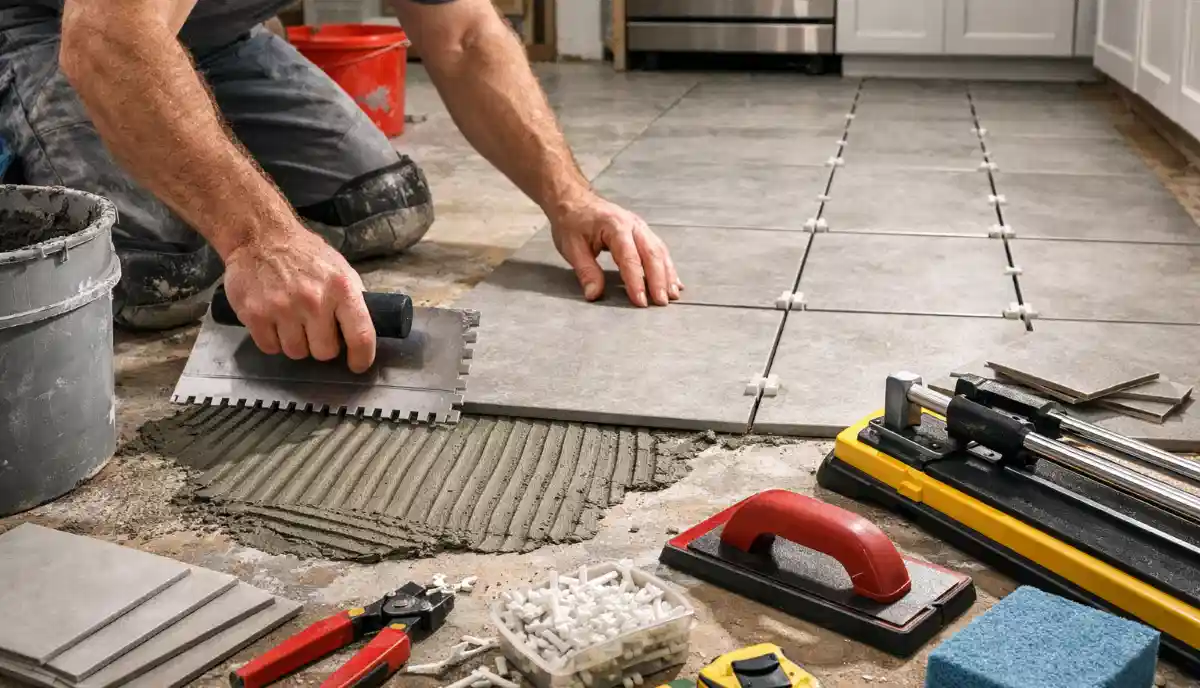
A proper tile installation is a sequence of critical steps. Skipping any of them leads to failure. Here’s what a professional tiler does.
- Subfloor Inspection & Preparation: The concrete slab or existing floor is checked for level, cracks, and contaminants. Any floor leveling is done using self-levelling compound. This is crucial to prevent lippage (uneven edges) later.
- Waterproofing (Wet Areas): For bathrooms, kitchens, and balconies, a liquid or sheet membrane is applied according to SANS 10400. This is a non-negotiable step before tiling.
- Layout & Planning: The tiler measures the room and plans the tile layout to minimize cuts and ensure a balanced look, especially with large format tile installation.
- Adhesive Application: Using the correct notched trowel size for the tile, adhesive (from TAL or similar) is spread. For large tiles, back buttering (applying a thin layer of adhesive to the tile back) ensures 95% coverage as required.
- Tile Laying: Tiles are placed, and leveling systems are used to keep them flat and evenly spaced. Spacers ensure consistent joint widths (min 3mm for porcelain, 5mm for glazed ceramic).
- Cutting: Tiles are cut to fit edges, corners, and obstacles using a wet saw.
- Curing: The adhesive is left to cure for 24-48 hours before grouting.
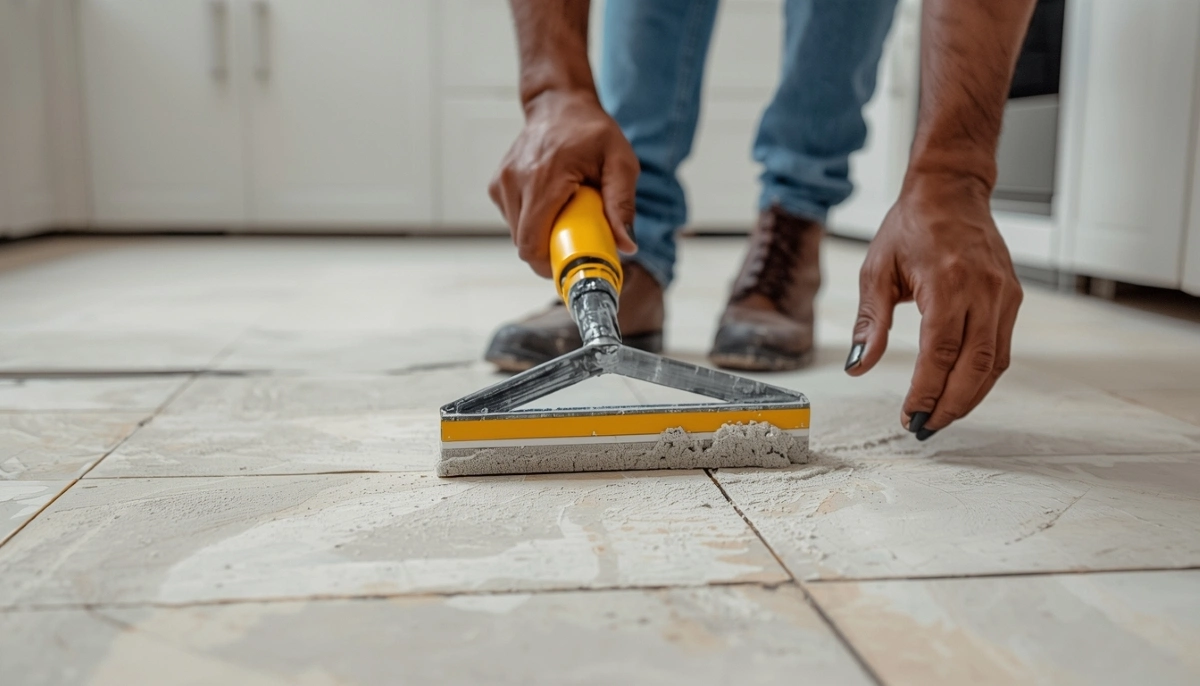
- Grouting: Grout is applied to fill the joints. Tile grouting cost depends on the grout type (cementitious, epoxy) and joint width.
- Sealing (if required): Some tiles and grouts need sealing to protect against stains.
- Final Clean & Inspection: The floor is cleaned, and the installation is checked for any issues.
Read more about our approach on our About Us page or see why clients choose us on our Benefits page.
💰 Complete Tile Installation Cost Breakdown
Your total cost is made up of several components. Here’s what they typically include.
- Materials (Tiles): The biggest variable. R250 – R1,200+ per m².
- Adhesive & Grout: R50 – R150 per m² depending on type and coverage.
- Labour: R200 – R500 per m².
- Subfloor Preparation: R100 – R250 per m² for levelling compound and priming.
- Waterproofing: R150 – R300 per m² for membrane and application in wet areas.
- Tile Trim/Edging: R50 – R150 per linear metre for schluter or similar profiles.
- Removal of Old Flooring: R80 – R200 per m² depending on difficulty.
- Waste Factor: 10-15% added to tile quantity for cuts and breakage.
Always ask for a detailed quote that breaks these items down. Our free inspection service includes a full assessment and transparent quotation.
🧱 Tile Material Costs: Ceramic vs Porcelain
The choice of tile dramatically affects your budget. Here’s the difference.
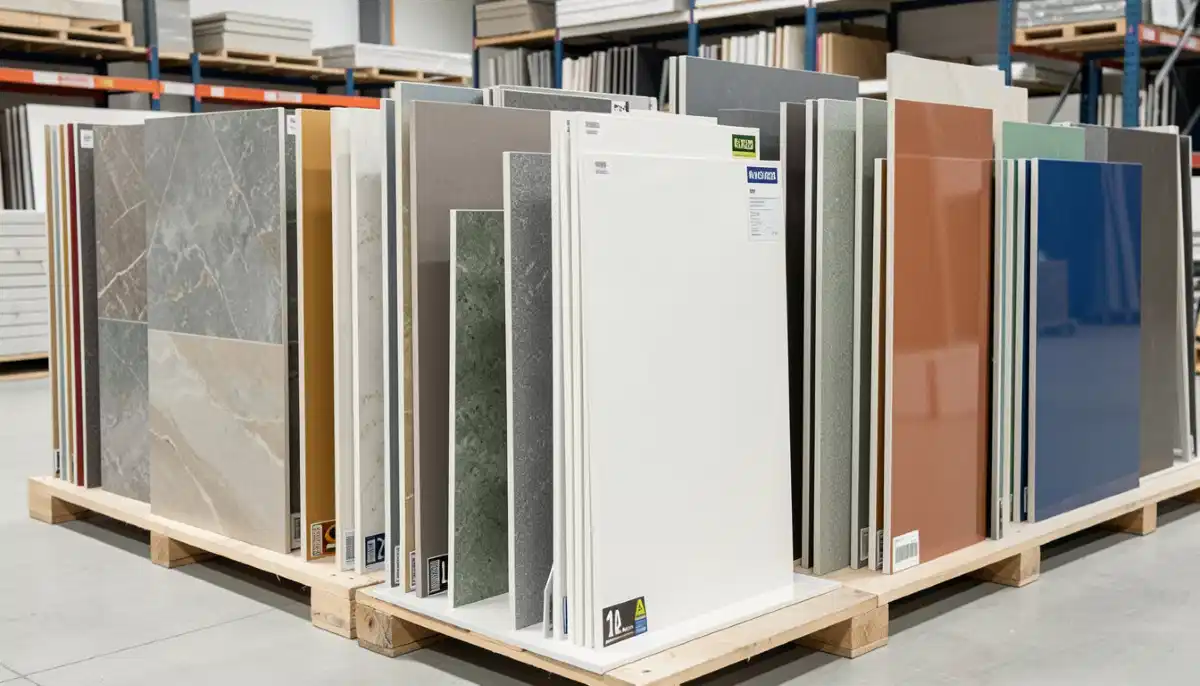
- Ceramic Tiles: Made from red or white clay. They are softer, more porous, and less durable than porcelain. Best for walls or low-traffic floors. Cost: R250 – R600/m².
- Porcelain Tiles: Made from denser clay and fired at higher temperatures. They are harder, less porous (more waterproof), and more durable. Ideal for floors, high-traffic areas, and outdoors. Porcelain tile vs ceramic tile price: Porcelain is more expensive, typically R400 – R1,200+/m².
- Large Format Tiles: Tiles larger than 600x600mm. They cost more to buy and install (more labour, requires more skill, often need two-person teams).
- Rectified Edge: These tiles are mechanically cut to exact dimensions, allowing for very tight grout joints (as small as 1.5-2mm). They cost a premium but give a sleek, modern look.
Check SANS 10107 for ceramic tile standards.
👷 Tile Installation Labour Cost
Labour is a significant part of your budget. Rates vary by tile type and complexity.
- Standard tiles (up to 600x600mm): R200 – R350/m².
- Large format tiles (600x600mm and larger): R350 – R500/m². Requires more skill, adhesive, and often two installers.
- Herringbone, diagonal, or complex patterns: +50-100% on labour.
- Mosaic tiles: R300 – R600/m² (very labour-intensive).
- Skirting installation: R80 – R150 per linear metre.
Tile installation cost per m2 Johannesburg and Pretoria typically falls within these ranges. Always verify the installer’s experience with the specific tile you’ve chosen. See our contractor selection guide for tips.
⚙️ Subfloor Preparation & Levelling Costs
This is where many budgets get stretched. A poor subfloor guarantees a poor tile job.
- Inspection & Priming: The subfloor must be clean, dry, and primed with a suitable primer. Cost: R20 – R50/m² for primer.
- Self-Levelling Compound: If the floor is uneven (more than 3mm over 2m), levelling compound is essential. Tile levelling compound cost: R150 – R300 per 20kg bag, covering approx. 3-5m² at 3mm thickness. Labour extra.
- Crack Repair: Fixing cracks in concrete adds cost depending on severity.
A free inspection will identify if your subfloor needs work. Don’t skip this step.
🧪 Grouting & Sealing Costs
Grout isn’t just a filler; it’s part of the waterproofing and aesthetic.
- Cementitious Grout: Standard, porous, needs sealing. Tile grouting cost (materials + labour): R60 – R120/m².
- Epoxy Grout: Stain-proof, waterproof, extremely durable, but more expensive and harder to install. Cost: R150 – R300/m².
- Grout Sealer: R30 – R60/m² for application. Essential for cementitious grout in wet areas.
For bathrooms and kitchens, epoxy grout is a worthwhile investment to prevent mould and stains. See our grout sealing services.
💧 Waterproofing Under Tiles (Wet Areas)
This is a legal and practical requirement in South Africa, governed by SANS 10400. It’s not optional.
- Liquid Membrane: Applied like paint, forms a seamless rubber layer. Cost (materials + labour): R150 – R250/m².
- Sheet Membrane: Matting applied to floors and up walls. Cost: R200 – R300/m².
- Required areas: All bathroom floors, shower bases, and usually kitchen floors and balconies.
Use certified products like those from TAL and ensure the installer provides a warranty on the waterproofing. Check NHBRC guidelines for new homes.
📐 Technical Requirements: Joints, Gaps & Standards
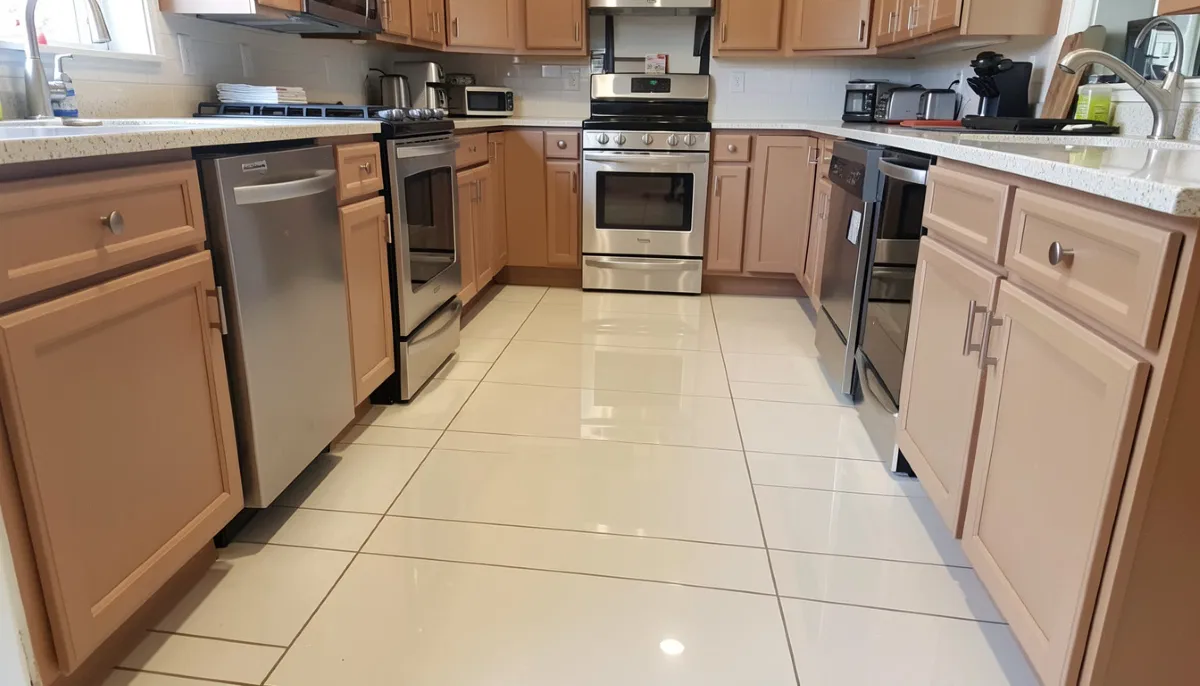
Professional tilers follow strict rules to prevent cracking and failure. Here are key South African requirements.
- Expansion Gaps (Perimeter Joint): A 5-10mm gap must be left between the tiles and any wall, column, or fixed object. This allows for movement and is later covered by skirting.
- Movement Joints (Intermediate Joints): Required to relieve stress in large tiled areas. Movement joint requirements in tiling in SA: Install at 5m centres indoors, and 3m centres for exteriors or areas with temperature changes. These joints go through the tile and adhesive down to the subfloor and are filled with a flexible sealant.
- Minimum Joint Widths: Glazed ceramic tiles: min 5mm. Porcelain tiles: min 3mm. Rectified tiles: can be as low as 1.5-2mm.
- Adhesive Coverage: For floors, 95% coverage is mandatory, especially for wet areas and large tiles. This is achieved by back buttering and using the correct trowel.
Ignoring these leads to cracked tiles and tenting. See our guide on fixing common problems.
📍 Installation Costs by Major City
Here’s an estimate for tiling a 50m² floor with mid-range porcelain tiles (600x600mm), including standard prep and labour.
- Johannesburg & Sandton: R35,000 – R55,000. High demand in complexes.
- Pretoria & Centurion: R33,000 – R52,000. Slightly lower labour rates.
- Cape Town & Somerset West: R36,000 – R58,000. Premium for experienced tilers.
- Durban & Ballito: R34,000 – R54,000. Waterproofing costs may be higher due to humidity.
- Roodepoort & Boksburg: R32,000 – R50,000.
Get local quotes via our request-a-quote page.
🏘️ Realistic Pricing Examples
Let’s look at real-world projects.
🚿 Small Bathroom in Fourways
Project: 8m² floor & 20m² walls. Ceramic wall tiles, porcelain floor.
- Tiles: R6,000
- Adhesive/Grout/Waterproofing: R2,500
- Labour (tiler): R8,000
- Removal old tiles: R1,500
- Total Estimate: R18,000
🏡 50m² Living Area in Cape Town
Project: 50m² large format porcelain (800x800mm), rectified edge.
- Tiles: R25,000
- Adhesive/Leveling/Trim: R5,500
- Labour (large format specialist): R20,000
- Subfloor leveling: R3,000
- Total Estimate: R53,500
📊 Complete Tile Installation Cost Table
| Cost Component | Typical Range (per m²) | Notes |
|---|---|---|
| Ceramic Tiles (material) | R250 – R600 | For walls or light traffic floors |
| Porcelain Tiles (material) | R400 – R1,200+ | For floors, high traffic |
| Standard Tile Labour | R200 – R350 | Tiles up to 600x600mm |
| Large Format Labour | R350 – R500 | 600x600mm and larger |
| Adhesive & Grout | R50 – R150 | Epoxy grout is at higher end |
| Subfloor Levelling | R100 – R250 | Depends on unevenness |
| Waterproofing (wet areas) | R150 – R300 | Non-negotiable for bathrooms |
| Old Tile Removal | R80 – R200 | Higher for large format |
| Total Installed (mid-range) | R650 – R1,800+ | Depends heavily on choices |

❌ 8 Common Tiling Mistakes to Avoid
- Mistake #1: Skipping subfloor preparation. An uneven subfloor guarantees lippage and cracked tiles. Always check and level.
- Mistake #2: No waterproofing in wet areas. This leads to leaks, mould, and structural damage. It’s false economy.
- Mistake #3: Ignoring movement joints. Without them, tiles will crack or tent as the subfloor expands and contracts.
- Mistake #4: Using the wrong adhesive. Not all adhesives are suitable for all tiles (e.g., porcelain needs a high-bond adhesive).
- Mistake #5: Insufficient adhesive coverage. For floors, you need 95% coverage. Hollow-sounding tiles will crack.
- Mistake #6: Grouting too soon. The adhesive must be fully cured. Trapped moisture can cause efflorescence or mould.
- Mistake #7: Not sealing grout (if required). Unsealed cementitious grout stains easily and harbours mould.
- Mistake #8: Hiring based on lowest price only. Cheap tilers often skip these critical steps. Verify credentials and experience.
Our contractor guide helps you find a qualified professional. Ensure they have liability insurance.
❓ Frequently Asked Questions
What is the tile installation cost per m2 in Johannesburg?
Tile installation cost per m2 Johannesburg ranges from R200 to R500 for labour, depending on tile size. Total installed cost with mid-range porcelain tiles is typically R650 – R1,200/m². Get local quotes for accuracy.
What is the difference between ceramic vs porcelain tile cost?
Porcelain tile vs ceramic tile price – porcelain is generally more expensive (R400–R1,200+/m²) than ceramic (R250–R600/m²). Porcelain is denser, more durable, and less porous, making it the better choice for floors.
What is the cost to tile a 50m2 floor?
The cost to tile 50m2 floor with mid-range porcelain tiles, including materials, labour, and basic prep, is approximately R35,000 – R60,000. This varies by city and tile choice.
Do I need waterproofing under tiles in a bathroom?
Yes, absolutely. Waterproofing under tiles in bathrooms (floors and shower areas) is required by South African building regulations (SANS 10400). It prevents water damage to the structure and mould growth.
What is tile levelling compound cost?
Tile levelling compound cost is R150 – R300 per 20kg bag. Coverage is about 3-5m² at a 3mm thickness. Labour for application is additional (often part of the prep quote).
What are movement joint requirements in tiling?
Movement joint requirements in tiling in South Africa: install intermediate joints at 5m centres indoors and 3m centres outdoors or in areas with thermal changes. A perimeter joint (5-10mm) is also required against walls.
Why is large format tile installation more expensive?
Large format tile installation costs more because it requires more skill, often two installers, special leveling systems, and full adhesive coverage (back buttering) to prevent lippage and breakage.
What is the minimum grout joint width for porcelain tiles?
The minimum joint width for standard porcelain tiles is 3mm. For rectified edge porcelain tiles (precision-cut), you can go as low as 1.5-2mm for a very sleek look.
Can I tile over existing tiles?
In some cases, yes, if the existing tiles are well-bonded, level, and the floor height increase is acceptable. However, it adds cost and may hide potential issues. A free inspection can determine suitability.
What does ‘back buttering’ mean?
Back buttering is applying a thin layer of adhesive to the back of the tile before placing it into the adhesive on the floor. This ensures 95% coverage, which is critical for large format tiles and wet areas.
✅ Final Thoughts – Your Tile Installation Action Plan
A properly tiled floor is an investment that can last a lifetime. The key is to respect the process and not cut corners. Understanding the tile flooring installation process costs South Africa helps you budget realistically and ask the right questions.
Key takeaways:
- Always factor in subfloor prep, waterproofing, and movement joints.
- Choose the right tile for the location – porcelain for floors, ceramic for walls.
- Labour costs reflect skill level; don’t automatically choose the cheapest quote.
- Verify your installer’s experience with your specific tile type (especially large format).
Your 5-Step Action Plan
- Measure your space and calculate m². Add 10-15% waste.
- Choose your tile – consider porcelain for floors, and get samples.
- Book a free inspection to assess subfloor and get accurate quotes.
- Get detailed quotes breaking down all cost components.
- Verify credentials – check experience, insurance, and references.
Ready to Start Your Tiling Project?
Get free, no-obligation quotes from vetted tiling specialists in your area. Compare installation costs and choose the right professional for your job.
📞 Call us: 073 138 4726 for personalised assistance
Free site inspections •
Beat-your-quote guarantee •
Our guarantees
📚 Official resources & standards:
- TAL – Tile adhesives, grouts, and waterproofing systems technical data.
- SABS – SANS 10107 for ceramic tiles, SANS 10400 for building regulations.
- NHBRC – Tile installation requirements for new home enrolments.
Information accurate as of publication. Prices are indicative and may vary by supplier and location. This guide is for informational purposes.
Written by: ServiceLink SA Research Team
Industry research and analysis team, ServiceLink SA
The ServiceLink SA Research Team combines technical knowledge of tiling standards with real-world installation data from hundreds of projects across South Africa. This guide reflects current best practices and market rates to help homeowners budget accurately and avoid costly mistakes.
For more detailed information, explore our related guides: best flooring types for a broader overview of materials, our vinyl vs laminate comparison for alternative options, and our common problems guide for troubleshooting issues like cracked tiles or lippage. For help finding the right professional, see our contractor selection guide and ensure they have proper liability insurance. These resources work together to give you complete knowledge for your tiling project.
<div class="cta-box bg-accent text-white p-5 rounded-lg my-5