
Ready to Automate Your Garage Door?
Get free quotes from verified garage door automation specialists. Compare smart garage doors options for your home.
Servicing Gauteng, Johannesburg, Pretoria, Sandton, and Centurion
Remote Controlled Aluminium Garage Doors: Smart Access Guide SA
🚗 The complete guide to automating your garage door – remotes, smartphone control, battery backup, and installation
Let me describe a scene that plays out in thousands of South African homes every day. You pull into your driveway after a long day. It’s raining. You press a button on your visor. Your garage door opens silently. You drive in, press the button again, and the door closes behind you. You never leave the warmth of your car.
That’s the convenience of remote controlled aluminium garage doors. They’re not just for luxury homes anymore. Affordable automation kits mean any sectional or roll-up garage door can be motorised. The result? Convenience, security, and protection from the elements.
In this complete guide to smart garage doors, I’ll cover everything you need to know: how automation works, types of motors, remote control options, smartphone integration, battery backup for load shedding, safety features, installation, costs, and maintenance. You’ll learn how to install remote controlled aluminium garage doors and whether it’s worth the investment.
For more garage door guidance, read our garage door cost guide, load shedding guide, or electric sliding door guide. Ready to automate? Let’s dive in.
📋 Table of Contents – Garage Door Automation Guide
🚗 Why Automate Your Garage Door?
Automatic garage doors offer benefits that manual doors can’t match.
Key benefits of remote controlled garage doors:
- Convenience: Open/close from your car – no getting out in rain, cold, or at night.
- Security: Motorised locks engage automatically. Rolling code technology prevents code grabbing.
- Protection: Close the door immediately after entering – no leaving it open while you unload.
- Home value: Automated garage doors are expected in modern homes and add resale value.
- Remote access: Open for deliveries or family members even when you’re not home (with smart features).
- Load shedding resilience: With battery backup, your door works normally during power outages.
- Integration: Connect to home automation systems, security alarms, and CCTV.
Is automation worth it? For most homeowners, yes. The convenience of pressing a button from your car is hard to overstate. For homes where the garage is the main entrance, automation is almost essential.
According to SANS 10400 garage door standards and SABS remote control standards, automated garage doors must meet specific safety requirements including auto-reverse and pinch protection.
🎁 Pro Tip: Test Your Manual Release
Every remote controlled garage door has a manual release cord (usually red). Pull it to disengage the motor, then lift the door by hand. Test this today. Make sure every adult in your household knows how to do it. During load shedding or motor failure, this is your only way in or out.
🚪 Types of Garage Doors – Sectional vs Roll-Up vs Tilt
Different garage door automation systems work with different door types.
Sectional garage doors (most common):
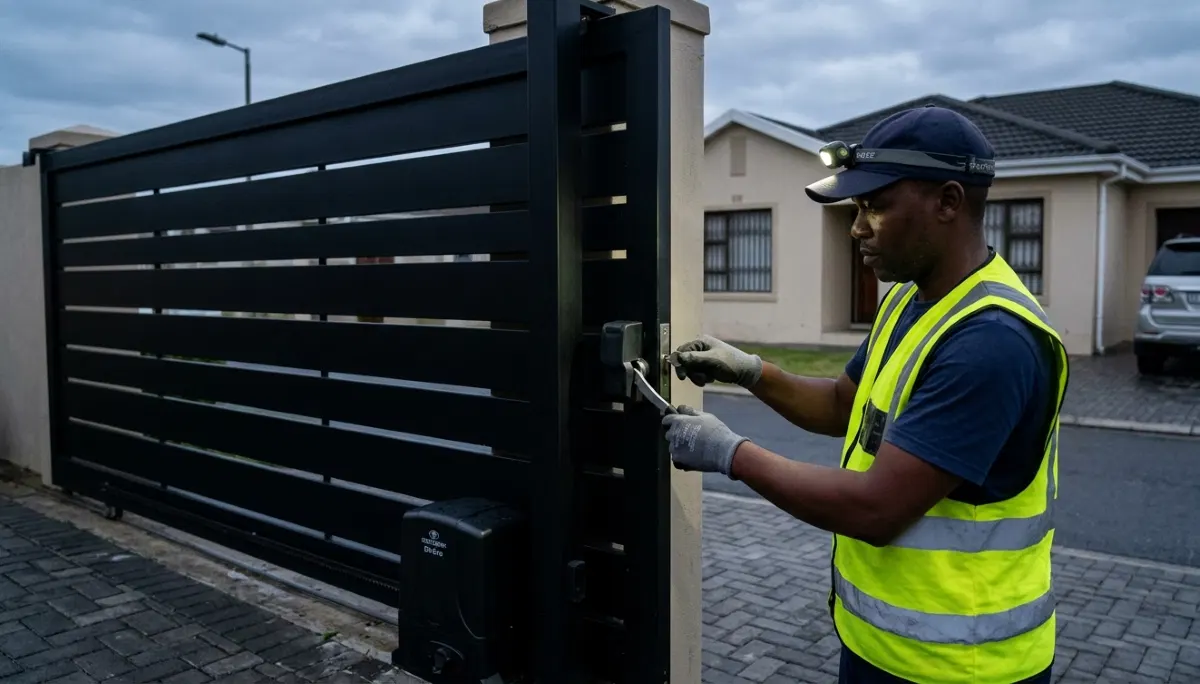
Made of horizontal panels that roll up on tracks along the ceiling. When open, the door sits parallel to the ceiling – saves driveway space. These are the easiest to automate and the most common in South Africa. Tracks must be in good condition; rollers must be lubricated. Most garage door motors are designed for sectional doors. Cost for automation: R3,000-8,000 (motor only).
Roll-up garage doors (aluminium or steel):
A single curtain of aluminium slats that rolls into a box above the opening. Very compact – no tracks visible inside the garage. These require a tubular motor mounted inside the roll. Automation is built into the door design. Cost for automation: R2,000-5,000 (motor only – often included in the door price).
Tilt-up (canopy) doors:
A single solid panel that tilts up and out. When open, part of the door extends outside the garage. These are older technology and less common now. They can be automated but require a different type of motor (arm-style opener). The motor attaches to the door and pushes/pulls it open. Cost for automation: R3,000-6,000 (motor only).
Which is best for automation? Sectional doors are the most reliable and widely supported. Roll-up doors have integrated motors. Tilt doors can be automated but are less common.
Read our garage door cost guide for pricing on new doors.
⚙️ How Remote Controlled Garage Doors Work
The technology behind garage door automation is reliable and secure.
The main components:
- Electric motor (opener): The power source mounted on the ceiling. Connects to the door via a rail and trolley system.
- Rail and trolley: The rail runs from the motor to the door. The trolley moves along the rail, pulling or pushing the door.
- Force sensor: Detects resistance – if the door meets an obstruction, it stops and reverses.
- Limit switches: Tell the motor when the door is fully open or fully closed.
- Control board (receiver): The “brain” that processes signals from remotes, wall switches, and sensors.
- Remote control transmitter: Sends a coded signal to the receiver. Modern systems use “rolling code” technology – the code changes each time to prevent code grabbing.
- Battery backup (optional): Keeps the door operational during power outages.
- Photocell sensors (optional): Infrared beams across the door opening – if broken, the door reverses.
How it operates: When you press your remote, the receiver verifies the code, activates the motor, and the trolley moves along the rail, pulling the door up (or pushing it down). Force sensors monitor resistance. If the door hits an obstruction, it stops and reverses to prevent injury or damage.
Read our installation guide for more on door alignment.
📱 Remote Control & Smart Features
Modern remote controlled aluminium garage doors offer multiple control options.
Standard remote controls:
- Visor clip remote: Small transmitter that clips to your car’s sun visor. Range: 20-50 metres. Most common and affordable. Usually 2 remotes included.
- Keychain remote: Small remote for your keyring. Convenient if you don’t always drive the same car.
- Wall-mounted switch: Fixed button inside your garage, usually near the access door. Also serves as a lockout switch.
- Keypad (exterior): Enter a code to open from outside – no remote needed. Useful for family members, cleaners, or deliveries.
Smart features (premium):
- Smartphone app control: Open/close from anywhere via Wi-Fi. Check door status (open/closed) remotely. Receive notifications when door opens. Cost: add R1,500-3,000.
- Voice control: Integrate with Alexa, Google Assistant, or Siri. “Hey Google, close the garage door.”
- Scheduled operation: Set timers – close automatically at 10 PM. Useful if you often forget.
- Geofencing: Automatically open when you arrive home (based on phone location). Close when you leave.
- Activity logs: See who opened the door and when. Good for monitoring family members or renters.
Security note – rolling codes: Modern garage door openers use “rolling code” technology. Each time you press the remote, a new code is transmitted. Even if someone intercepts the signal, the captured code won’t work next time. This prevents code grabbing by thieves.
Read our electric sliding door guide for similar automation principles.
🔋 Battery Backup – Essential for Load Shedding
In South Africa, battery backup is not optional – it’s essential for automatic garage doors.
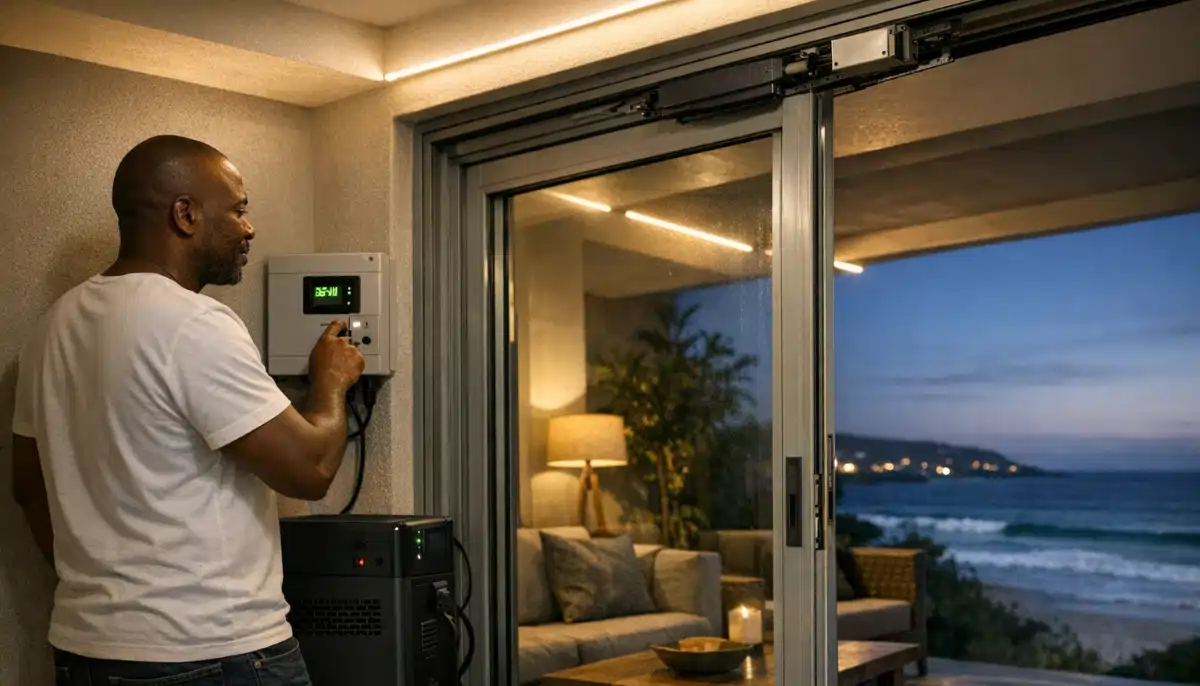
Why battery backup matters: Without it, your garage door won’t open during power outages. You’ll need to use the manual release cord (pull red cord, lift door by hand). This requires physical effort and may be difficult for some homeowners. With battery backup, the door works normally – no interruption.
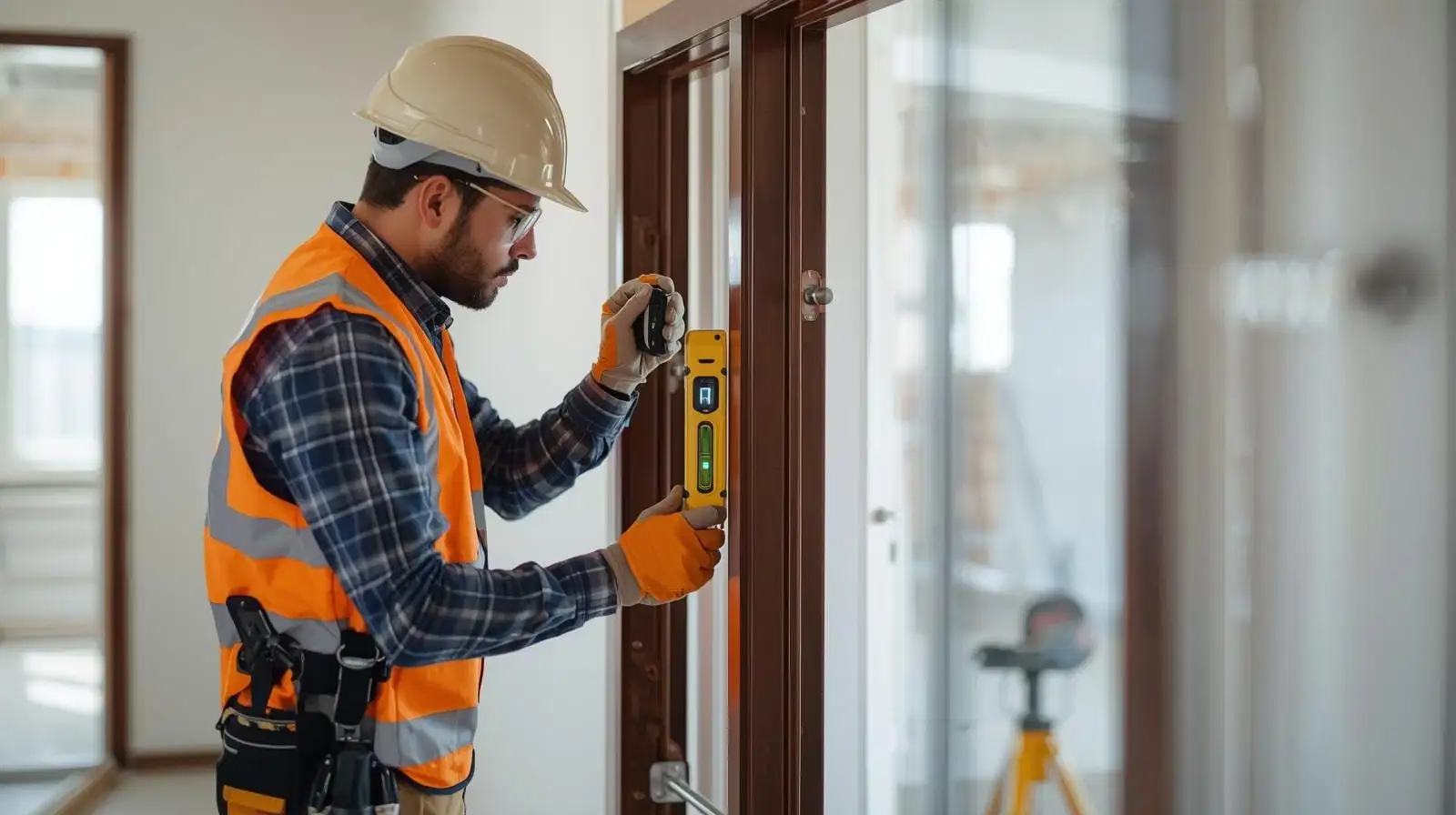
How battery backup works: A rechargeable battery is connected to the garage door motor. When mains power fails, the system automatically switches to battery power. You’ll notice no difference in operation – the door opens and closes normally. When power returns, the battery recharges automatically.
What to look for in battery backup:
- Number of operations: Minimum 20-30 cycles per charge (enough for 2-3 days of normal use).
- Automatic switchover: Must be seamless – no manual intervention required.
- Recharge time: 4-8 hours typically.
- Battery type: Sealed lead-acid (affordable, 3-5 year life) or lithium-ion (longer life, more expensive).
- Status indicator: Shows battery charge level – often a light on the motor unit.
Cost of battery backup:
- Built-in battery (included with motor): add R2,000-5,000 to motor cost
- External battery unit (retrofit): R2,000-6,000
- Replacement battery (when old): R800-2,500
Recommendation: Always specify battery backup when purchasing a new garage door motor. It’s much cheaper to include upfront than to retrofit later. For existing motors, retrofit battery kits are available.
Read our load shedding guide for more on power outage preparation.
🛡️ Safety Features – Auto-Reverse & Photocells
Smart garage doors have mandatory safety features to prevent injury.
Auto-reverse (force sensing):
Every modern garage door opener has force sensing. If the door meets resistance while closing (a person, pet, or object), it stops and reverses direction. Test this monthly: place a brick or piece of wood under the closing door – it should reverse immediately. If not, call a technician immediately – this is a serious safety hazard.
Photocell sensors (infrared beams):
Optional but highly recommended. A pair of sensors mounted near the floor on each side of the door. They project an invisible infrared beam across the opening. If the beam is broken while the door is closing, the door reverses. This detects objects that force sensing might miss (e.g., a child lying under the door). Cost: add R500-1,500.
Pinch protection:
Modern garage doors are designed with pinch-resistant joints between panels. Your fingers are less likely to be caught between sections. Older doors may not have this feature.
Manual release (required):
The red cord hanging from the motor allows you to disengage the motor and operate the door manually. This is essential for power outages and motor failure. Ensure the cord is accessible and not tied up.
Safety checklist:
- Test auto-reverse monthly – place a brick under the closing door
- Check that photocells (if fitted) are clean and aligned
- Ensure the manual release cord is accessible
- Keep fingers away from panel joints when door is moving
- Teach children that garage doors are not toys – never play near a moving door
Read our lock repair guide for security issues.
🛠️ Installation Process & Requirements
Professional installation is essential for remote controlled aluminium garage doors.
Pre-installation checklist:
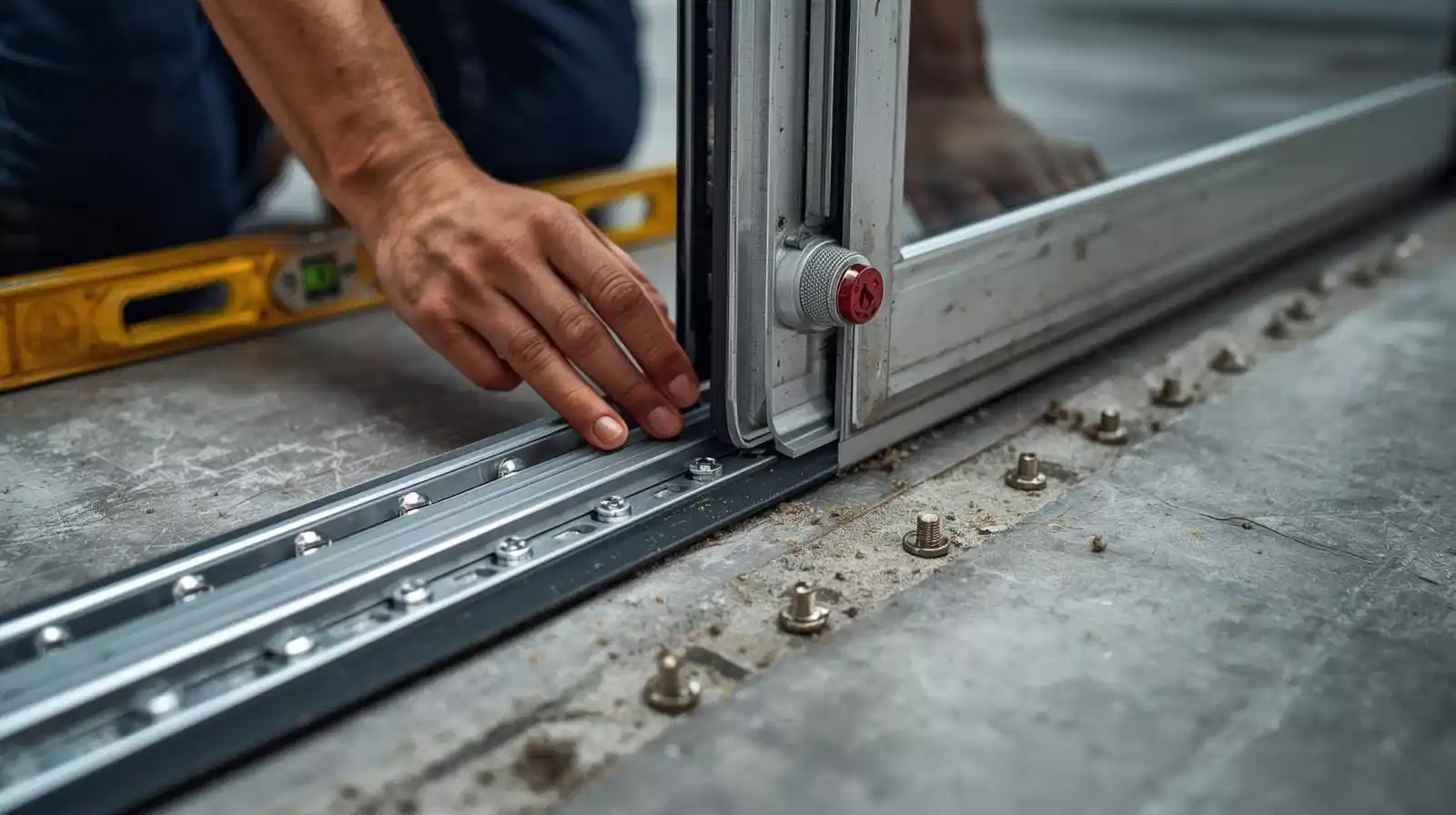
- The door must open and close smoothly by hand – no sticking or binding.
- Tracks must be straight and securely mounted.
- Rollers must be in good condition – replace if worn (R50-200 each).
- Springs must be properly tensioned (do not adjust springs yourself – dangerous).
- The door must be balanced – should stay open halfway when manually lifted. If it falls, call a technician.
- A power outlet must be within 1 metre of the motor location (electrician may be required).
- Ceiling must have sufficient headroom for the motor and rail (typically 150-300mm).
Installation steps:
- Site survey (1-2 hours): Technician measures your door, checks balance, and assesses electrical requirements.
- Motor selection: Based on door weight and size, the appropriate motor is selected (1-2 week lead time if not in stock).
- Electrical preparation (if needed): An electrician installs a power outlet near the motor location (add R1,000-3,000).
- Motor installation (2-4 hours): The motor is mounted to the ceiling, the rail attached, and the trolley connected to the door.
- Sensor installation (optional): Photocell sensors are mounted near the floor on each side of the door.
- Programming: Remotes are programmed, limit switches set, and force sensitivity calibrated.
- Safety testing: Auto-reverse is tested, and all safety features are verified.
- User training: The technician shows you how to use remotes, manual release, and basic troubleshooting.
DIY vs professional installation: Do not attempt DIY garage door automation. Garage door springs are under extreme tension and can cause serious injury or death. Electrical work must be done by a qualified electrician. Professional installation is not expensive (R1,500-3,500) and includes warranty and safety testing.
Read our contractor guide for hiring advice.

Ready to Automate Your Garage Door?
Get free quotes from verified garage door automation specialists. Compare automatic garage doors options for your home.
💰 Cost Breakdown – What to Budget
Here’s what remote controlled aluminium garage doors cost in South Africa.
Automation only (existing manual door):
- Basic motor (no battery backup): R3,000 – R5,000 installed
- Motor with battery backup: R5,000 – R8,000 installed
- Premium motor (quieter, smart features, belt drive): R7,000 – R12,000 installed
- Roller door tubular motor: R2,500 – R5,000 installed (often integrated with door)
Complete new door + automation:
- Sectional aluminium door (single) + motor: R15,000 – R25,000
- Sectional aluminium door (double) + motor: R25,000 – R40,000
- Roll-up aluminium door + motor: R12,000 – R20,000 (single)
- Premium insulated sectional door + motor: R20,000 – R35,000
Additional costs:
- Electrical work (if no power outlet nearby): R1,000 – R3,000
- Photocell sensors (safety): R500 – R1,500
- Smart home Wi-Fi module: R1,500 – R3,000
- Exterior keypad: R800 – R1,500
- Additional remote controls: R200 – R500 each
- Door service/repair before automation: R500 – R2,000
Cost example for a typical single sectional garage door:
- Basic automation (motor only, no battery): R3,500 – R5,500
- Recommended setup (motor + battery + installation): R5,500 – R9,000
- Premium setup (motor + battery + smart features + sensors): R9,000 – R15,000
Use our Beat Your Quote guarantee for competitive pricing.
🧹 Maintenance & Troubleshooting
Regular maintenance keeps your garage door automation running safely.
Quarterly maintenance (user):
- Lubricate rollers, hinges, and tracks with silicone spray or garage door lubricant (never grease – it attracts dirt).
- Check that the door opens and closes smoothly – address any sticking immediately.
- Clean tracks with a brush – remove debris.
- Tighten any loose bolts on hinges, rollers, and track brackets.
- Test auto-reverse – place a brick under the closing door. It should reverse immediately.
Annual maintenance (professional recommended):
- Inspect spring tension – do not attempt this yourself (springs are dangerous).
- Check motor and drive belt/chain – tighten if loose, replace if worn.
- Test battery backup – disconnect mains power, verify door operation.
- Inspect and clean photocell sensors (if fitted).
- Check that limit switches are correctly set.
Common problems and solutions:
- Door won’t move (motor runs): The trolley may be disengaged (pull cord pulled). Re-engage by running the motor once.
- Door won’t move (motor silent): Check power supply, circuit breaker, and battery charge. If motor makes no sound, call a technician.
- Remote not working: Replace battery in remote. If still not working, the receiver may need reprogramming or replacement.
- Door reverses before reaching the floor: The down limit switch may need adjustment. Call a technician – incorrect adjustment can damage the door.
- Door is noisy: Worn rollers or lack of lubrication. Lubricate first – if still noisy, replace rollers.
- Battery not holding charge: Replace battery every 3-5 years (R800-2,500).
What NOT to do:
- Never attempt to adjust springs yourself – they are under extreme tension and can kill.
- Never disable safety features (auto-reverse, photocells).
- Never leave the manual release cord pulled (door will be heavy and may fall).
- Never let children play with remote controls – they could operate the door unsafely.
Read our full maintenance guide.
Are You a Garage Door Automation Specialist?
Join ServiceLink SA’s network of verified contractors. Get qualified leads for remote controlled garage door projects.
❓ Frequently Asked Questions About Remote Controlled Aluminium Garage Doors
How much do remote controlled aluminium garage doors cost?
Remote controlled aluminium garage doors cost R3,000-8,000 to automate an existing manual door (motor + installation). A complete new sectional door with motor costs R15,000-25,000 for a single door. Add battery backup (R2,000-5,000) – essential for load shedding. Smart features (Wi-Fi, app control) add R1,500-3,000. Use our free quote service to compare prices.
Can any garage door be automated?
Most sectional, roll-up, and tilt doors can be automated. The door must be in good condition – balanced, sliding smoothly, with no damage. For garage door automation, have a professional inspect your door first. If your door needs repairs, fix those before adding a motor. Tilt doors can be automated but are less common; sectional doors are the easiest and most reliable.
Do I need battery backup for my garage door?
In South Africa – yes. Without battery backup, your smart garage door won’t work during load shedding. You’ll need to use the manual release cord (pull red cord, lift by hand). Battery backup (add R2,000-5,000) keeps the door working normally during outages. For elderly homeowners or those with mobility issues, battery backup is essential. Read our load shedding guide.
Are remote controlled garage doors secure?
Yes – modern remote controlled aluminium garage doors use rolling code technology. Each time you press the remote, a new code is transmitted. Even if someone intercepts the signal, the captured code won’t work next time. This prevents code grabbing by thieves. For additional security, some models integrate with home security systems and CCTV. Read our security guide.
How long do garage door motors last?
Quality automatic garage doors motors last 10-15 years with proper maintenance. Battery backup batteries need replacement every 3-5 years (R800-2,500). The door itself lasts 20-30+ years. Regular maintenance – lubricating moving parts, testing auto-reverse, annual professional inspection – extends motor life significantly.
Can I control my garage door from my smartphone?
Yes – most modern garage door automation systems offer Wi-Fi modules. You can open/close from anywhere, receive notifications when the door opens, check door status, and set schedules. Cost: add R1,500-3,000. During load shedding, if your Wi-Fi is down, you’ll still have the remote control and manual release. Requires battery backup to work during outages.
How do I reset my garage door remote?
To reset a lost or stolen remote, clear the memory on your garage door motor (press and hold the learn button until the light goes out). Then reprogram your remaining remotes. The process varies by brand – check your manual or call your installer. This prevents lost remotes from working. Always re-pair your existing remotes after clearing memory.
How do I find a garage door automation specialist?
Use ServiceLink SA’s free quote service to find verified garage door specialists. Look for: experience with your door type, knowledge of battery backup solutions, positive customer reviews, and workmanship guarantees. For Gauteng, Johannesburg, Pretoria, or Sandton, ask for local references.
✅ Final Thoughts: Automation is a Game-Changer
After reading this guide on remote controlled aluminium garage doors, you understand the benefits of automation.
A remote controlled garage door is one of those things you don’t appreciate until you have it. Then you wonder how you ever lived without it. No more getting out of the car in the rain. No more fumbling for keys in the dark. No more worrying whether you remembered to close the door (you can check from your phone).
Yes, it costs money – R3,000-8,000 to automate an existing door, or R15,000-25,000 for a complete new door with motor. But the convenience, security, and protection from the elements are worth it for most homeowners. Add battery backup for load shedding resilience, and you’ll never be trapped in your garage during a power outage.
Start by having your existing door inspected – ensure it’s in good condition. Then get quotes from verified specialists. And always test the manual release – you should know how to operate your door even without power.
Key takeaways for garage door automation:
- Automation cost: R3,000-8,000 for motor only; R15,000-25,000 for new door + motor
- Battery backup is essential for load shedding (add R2,000-5,000)
- Sectional doors are easiest to automate; roll-up doors have integrated motors
- Manual release cord (red) is your lifeline – know where it is and how to use it
- Test auto-reverse monthly – place a brick under the closing door
- Never attempt to adjust springs yourself – extremely dangerous
- Smart features (Wi-Fi, app control) available for R1,500-3,000
- Rolling code technology prevents code grabbing – modern systems are secure
- Professional installation required – not a DIY project
- Use ServiceLink SA to find verified specialists
Your next step: Ready to automate your garage door? Get free quotes from verified garage door specialists in your area.
Ready to Automate Your Garage Door?
Get free, no-obligation quotes from verified garage door automation specialists. Compare remote controlled aluminium garage doors options for your home.
📞 Call us: 073 138 4726 for automation advice.
Free site assessments •
Hiring tips •
Beat Your Quote •
Our guarantees
📚 Official resources & standards referenced:
- SANS 10400 – South African National Standard for garage door standards and building regulations.
- SABS – South African Bureau of Standards for remote control standards and product certification.
Information provided for general guidance. Garage door springs are under extreme tension – never attempt DIY repairs. Always consult qualified professionals for installation and maintenance.
Written by: ServiceLink SA Research Team
Specialist Garage Door Automation & Home Access Experts
The ServiceLink SA Research Team has extensive experience with remote controlled aluminium garage door installations across thousands of South African homes. Our team has worked closely with certified automation specialists, electrical contractors, and homeowners to develop this comprehensive garage door automation guide. This guide is based on real installation data, customer feedback, and load shedding experience from across Gauteng, Johannesburg, Pretoria, Sandton, Centurion, Midrand, and nationwide. We update our information regularly to reflect current automation technology and safety standards.
For more information about garage door automation, explore our related resources: garage door cost guide, load shedding guide, electric sliding door guide, remote control guide, and lock repair guide. Learn about our process on what is ServiceLink SA and how ServiceLink SA works. Find automation specialists in your area: Gauteng, Johannesburg, Pretoria, Sandton, Centurion, and Midrand. For integrated security, see our garage doors and gates and CCTV guides.