
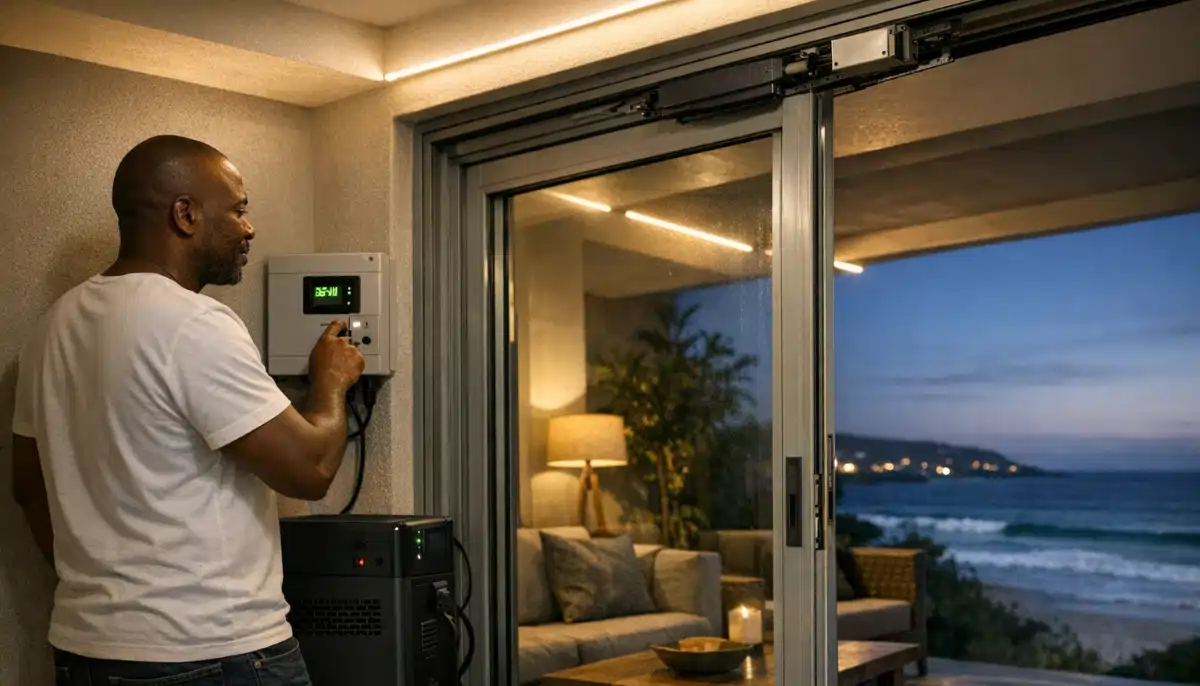
Ready to Automate Your Sliding Door?
Get free quotes from verified aluminium automation specialists. Compare automated sliding doors options for your home.
Servicing Gauteng, Johannesburg, Pretoria, Sandton, and Centurion
Electric Aluminium Sliding Doors: Automation Guide for SA Homes
⚡ The complete guide to motorising your sliding doors – benefits, costs, installation, and load shedding solutions
Imagine this. You’re carrying groceries. Your hands are full. You press a button on your key fob, and your sliding door glides open silently. No fumbling for keys. No struggling with a heavy door. Just effortless access.
That’s the promise of electric aluminium sliding doors. They’re no longer just for commercial buildings or luxury homes. Affordable automation kits mean any sliding door can be motorised. The result? Convenience, security, and a touch of modern luxury.
In this complete guide to automated sliding doors, I’ll cover everything you need to know: how automation works, types of motors, remote control options, battery backup for load shedding, installation requirements, costs, and maintenance. You’ll learn how to automate aluminium sliding doors and whether it’s worth the investment.
For more sliding door guidance, read our sliding door guide, load shedding guide, or remote control garage doors guide. Ready to automate? Let’s dive in.
📋 Table of Contents – Automation Guide
🤖 Why Automate Your Sliding Door?
Motorised doors offer benefits that manual doors can’t match.
Key benefits of electric sliding doors:
- Convenience: Open/close with a button press – no pushing or pulling. Perfect when your hands are full.
- Accessibility: Ideal for elderly homeowners or those with mobility issues. No physical effort required.
- Security: Motorised locks engage automatically. Some systems integrate with home security alarms.
- Child safety: No heavy door for toddlers to push open. Motorised locks prevent unauthorised opening.
- Remote control: Open from your car, from across the room, or via smartphone app.
- Automation integration: Connect to smart home systems (Alexa, Google Home, Apple HomeKit).
- Timer functions: Schedule doors to close automatically at night or open in the morning.
- Load shedding resilience: With battery backup, doors work normally during power outages.
Is automation worth it? For main entrances, patio doors, or homes with elderly residents – yes. The convenience and security benefits outweigh the cost for most homeowners.
According to SANS 10400 automation standards and SABS electrical safety standards, automated doors must meet specific safety requirements including pinch protection and emergency release.
🎁 Pro Tip: Start with Your Most-Used Door
You don’t have to automate every door. Start with your most-used entrance – the patio door or main sliding door. Experience the convenience, then decide if you want to automate others. For how to automate aluminium sliding doors, one door at a time is perfectly fine.
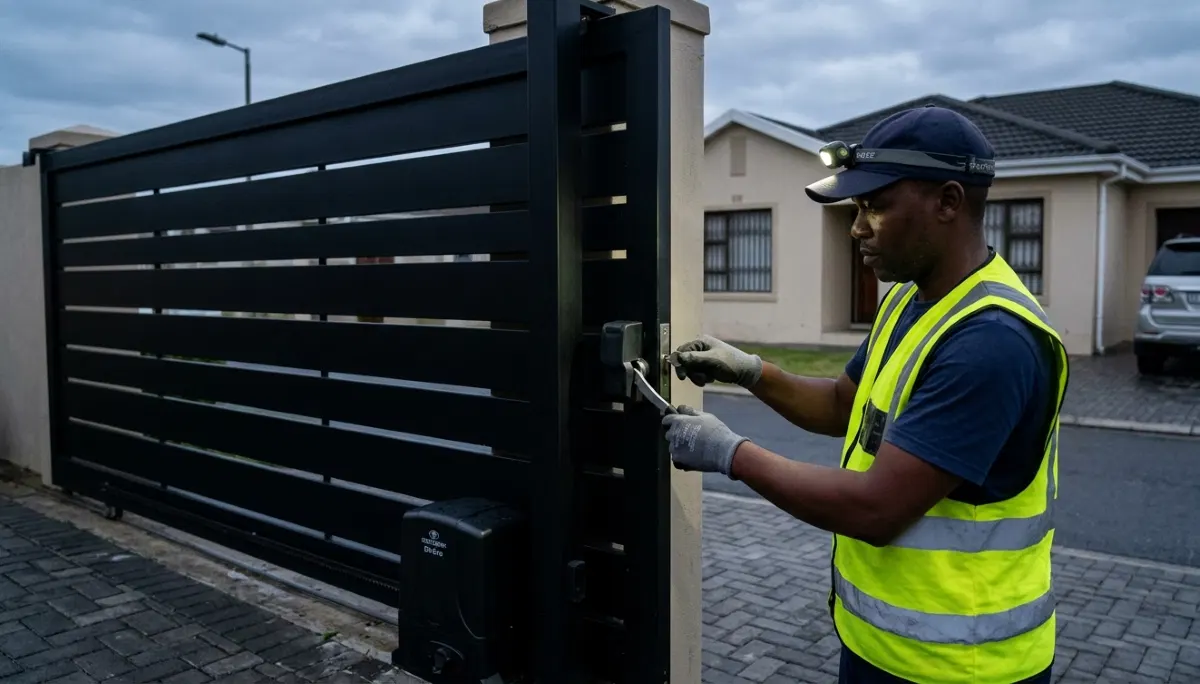
⚙️ How Electric Sliding Doors Work
The technology behind electric aluminium sliding doors is simpler than you might think.
The main components:
- Electric motor: The power source that drives the door. Mounted on the door frame (track system) or under the floor (undercarriage).
- Drive system: Belt or chain that transfers motor power to the door. Belt drives are quieter; chain drives are stronger.
- Track system: The guide rails that the door slides along. Must be kept clean and lubricated for smooth operation.
- Control board: The “brain” that processes commands from remotes, sensors, and switches.
- Remote receivers: Wireless receivers that detect signals from key fobs or wall switches.
- Safety sensors (optional): Photocells that detect obstructions and stop/reverse the door.
- Battery backup (optional): Keeps the door operational during power outages.
How it operates: When you press a button on your remote, the receiver sends a signal to the control board. The control board activates the motor, which turns a belt or chain. The belt/chain moves the door along the track. When the door reaches fully open or closed, limit switches cut power to the motor. Force sensors detect obstructions and reverse the door to prevent injury.
For a well-functioning manual door, read our roller replacement guide before automating.
📦 Types of Motors – Track vs Underfloor
There are two main types of motorised doors systems.
Track-mounted motors (most common):
The motor is mounted on the track itself, usually at the top of the door. The drive belt runs alongside the track. This is the most affordable and common system for residential sliding doors. Installation is straightforward, and maintenance is easy. Cost: R5,000-12,000 including motor and installation. The motor is visible on the frame – some homeowners find it unattractive, but modern motors are sleek and can be colour-matched.
Underfloor motors (premium hidden system):
The motor is concealed in a recess under the floor. A magnetic drive transfers power through the track. The door slides silently with no visible motor. This is the premium choice – completely hidden, ultra-quiet operation, but significantly more expensive. Cost: R15,000-30,000+ including motor and installation (requires floor cutting). Best for high-end homes where aesthetics are paramount.
Which should you choose? For most homeowners, track-mounted motors offer the best value. They’re reliable, affordable, and effective. Underfloor motors are for those who want the cleanest possible look and have the budget for premium installation.
Read our track installation guide for more on track systems.
📱 Remote Control & Smart Features
Modern electric aluminium sliding doors offer multiple control options.
Standard remote controls:
- Key fob transmitter: Small remote that fits on your keyring. Range: 20-50 metres. Most common and affordable.
- Wall-mounted switch: Fixed button inside your home, usually near the door. Convenient for daily use.
- Keypad (exterior): Enter a code to open from outside – no remote needed. Useful for rental properties or family access.
Smart features (premium):
- Smartphone app control: Open/close from anywhere via Wi-Fi. Check door status remotely. Cost: add R1,500-3,000.
- Voice control: Integrate with Alexa, Google Assistant, or Siri. “Hey Google, open the patio door.”
- Scheduled operation: Set timers – close automatically at 10 PM, open at 7 AM.
- Integration with home automation: Trigger door based on security system, lights, or other sensors.
- Usage logs: See who opened the door and when (useful for monitoring).
Security note: Smart features require internet connection. During load shedding, if your Wi-Fi is down, you’ll need a remote or manual override. Battery backup for your router solves this.
Read our remote control guide for similar automation principles.
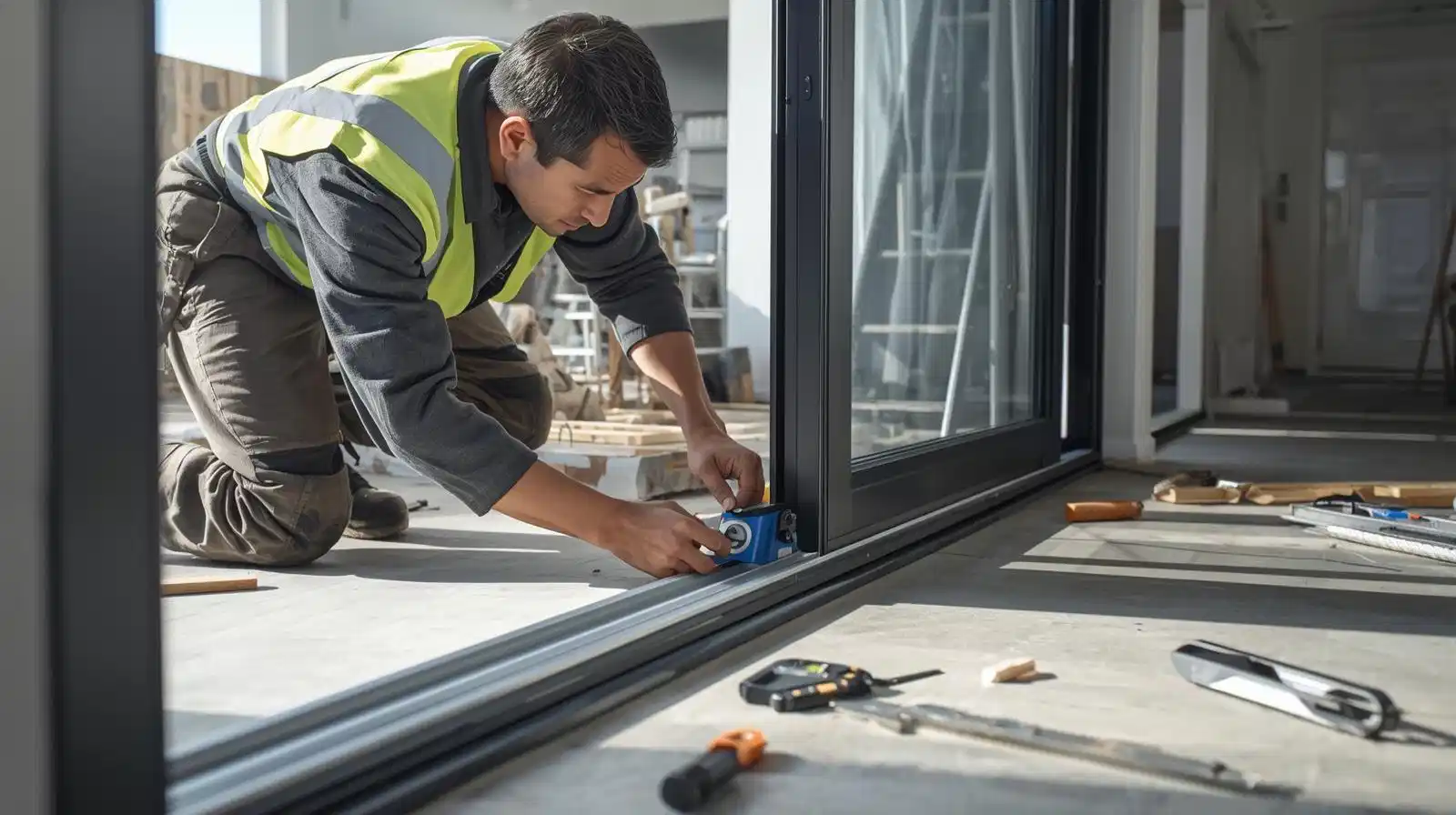
🔋 Battery Backup – Essential for Load Shedding
In South Africa, battery backup is not optional – it’s essential for automated sliding doors.
Why battery backup matters: Without it, your electric door becomes a manual door during power outages. You’ll need to use the manual override (which requires physical effort). With battery backup, the door works normally – no interruption to your convenience.
How battery backup works: A rechargeable battery is connected to the door motor. When mains power fails, the system automatically switches to battery power. You’ll notice no difference in operation. When power returns, the battery recharges automatically.
What to look for in battery backup:
- Number of operations: Minimum 20-30 cycles per charge (enough for 1-2 days of normal use).
- Automatic switchover: Must be seamless – no manual intervention required.
- Recharge time: 4-8 hours typically.
- Battery type: Sealed lead-acid (affordable, 3-5 year life) or lithium-ion (longer life, more expensive).
- Status indicator: Shows battery charge level.
Cost of battery backup:
- Built-in battery (included with motor): add R2,000-5,000 to motor cost
- External battery unit (retrofit): R3,000-8,000
- Replacement battery (when old): R800-2,500
Recommendation: Always specify battery backup when purchasing a new electric sliding door. It’s much cheaper to include upfront than to retrofit later. For existing automated doors, retrofit battery kits are available.
Read our load shedding guide for more on power outage preparation.
🔧 Manual Override – Never Get Trapped
Every motorised door must have a manual override. This is a safety requirement and a practical necessity.
What is a manual override? A mechanical system that allows you to operate the door without power. Typically a release lever, key, or crank that disengages the motor.
Types of manual overrides:
- Release lever: Pull a lever to disconnect the motor from the drive belt. The door can then be pushed/pulled manually.
- Override key: A special key that engages a manual winding mechanism. Provides mechanical advantage – useful for heavy doors.
- Release cord: Pull cord that disengages the motor (similar to garage doors).
Critical checklist:
- Know where your manual override is located.
- Know how to use it – practice during the day, not during an emergency.
- Keep any special keys or tools in an accessible location.
- Test the override every 3-6 months.
- Ensure the door is balanced (doesn’t slide on its own when disengaged).
What if my door doesn’t have a manual override? Contact your installer immediately. This is a safety hazard and may be non-compliant with building regulations.
Read our door jamming guide for troubleshooting issues.
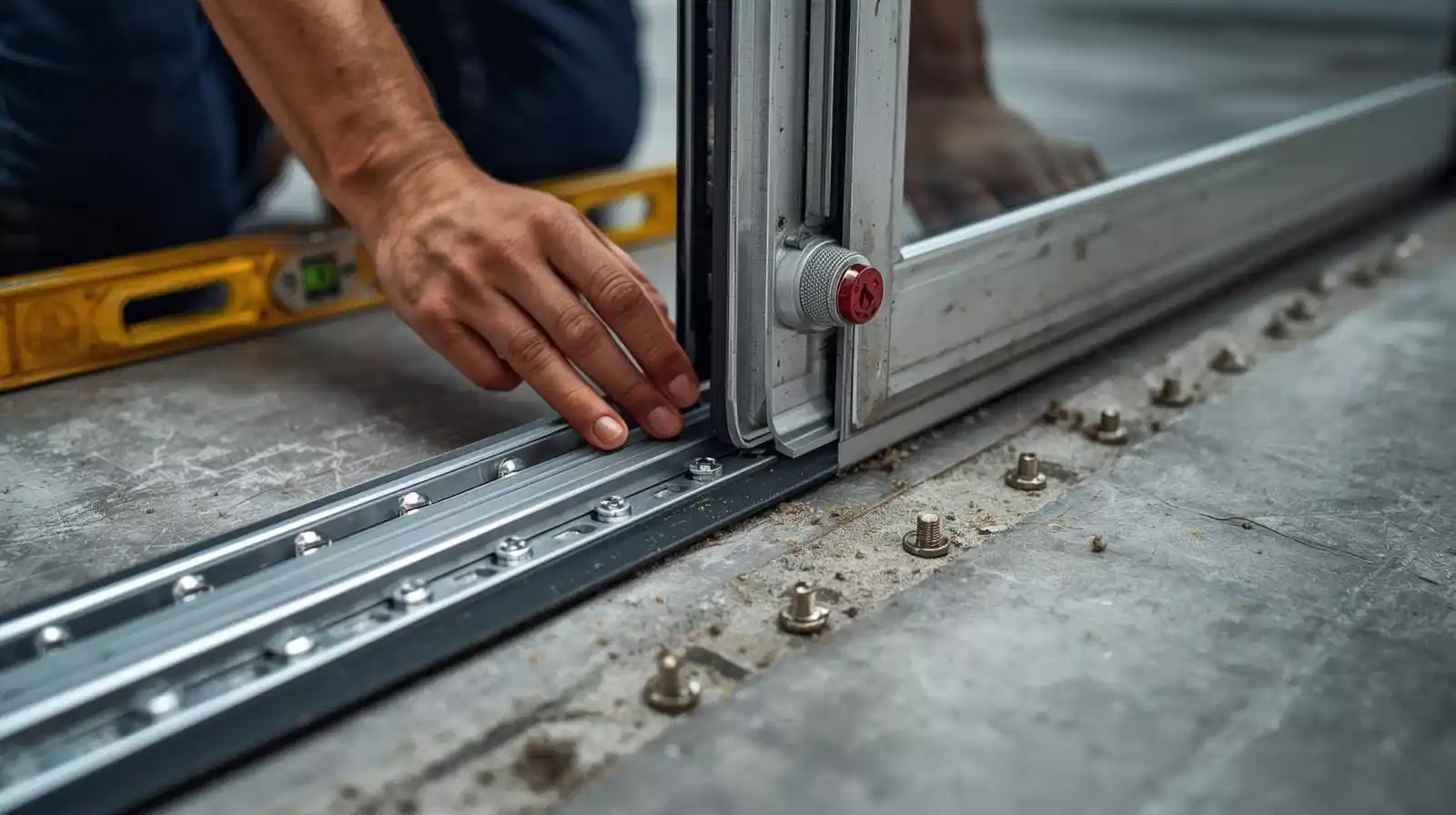
🛠️ Installation Process & Requirements
Professional installation is essential for electric aluminium sliding doors.
Installation steps:
- Site survey (1-2 hours): The installer measures your door, checks the track condition, and assesses electrical requirements.
- Motor selection and ordering: Based on door weight and size, the appropriate motor is ordered (1-2 weeks lead time).
- Electrical preparation (if needed): A power outlet must be within 1-2 metres of the motor location. If not, an electrician is needed (add R1,000-3,000).
- Motor installation (2-4 hours): The motor is mounted, the drive belt connected, and the control board wired.
- Track and roller inspection: The installer checks that the door slides smoothly – repairs may be needed before automation.
- Sensor installation (optional): Photocells for obstruction detection are fitted.
- Testing and programming: Remotes are programmed, limit switches set, and safety features tested.
- User training: The installer shows you how to use remotes, manual override, and basic troubleshooting.
Requirements for automation:
- The door must slide smoothly – no sticking or jamming. Read our fix guide.
- Tracks must be clean and free of debris.
- Rollers must be in good condition – replace if worn.
- A power outlet must be accessible (electrician may be required).
- There must be clearance for the motor (usually 150-200mm above the door).
DIY vs professional installation: This is not a DIY project. Electrical work, motor alignment, and safety sensor calibration require specialist expertise. Incorrect installation can damage the door, create safety hazards, and void warranties.
Read our contractor guide for hiring advice.
🚪 Which Doors Can Be Automated?
Most aluminium sliding doors can be automated – with some conditions.
Doors suitable for automation:
- Standard 2-panel sliding doors (one fixed, one sliding). Most common and easiest to automate.
- 3-panel sliding doors (centre fixed, two sliding). Can be automated but may require two motors.
- Large sliding doors (up to 300kg). Heavy-duty motors available.
- Sliding doors as patio entrances, room dividers, or closet doors.
Doors that may NOT be suitable:
- Doors that stick or jam – fix these issues first.
- Doors with damaged tracks or worn rollers – repair before automation.
- Very old doors with non-standard profiles – check compatibility with the motor manufacturer.
- Doors without a fixed panel (both panels slide). These require more complex automation.
Before automating, ensure your door:
- Slides smoothly with one finger – no sticking.
- Tracks are clean and undamaged.
- Rollers are in good condition (read our roller replacement guide).
- The door is properly aligned and seals when closed.
Read our sliding door guide for more on door selection.
Ready to Automate Your Sliding Door?
Get free quotes from verified aluminium automation specialists. Compare automated sliding doors options for your home.
💰 Cost Breakdown – What to Budget
Here’s what electric aluminium sliding doors cost in South Africa.
Automation only (existing manual door):
- Basic motor (track-mounted, no battery backup): R5,000 – R8,000 installed
- Motor with battery backup: R8,000 – R13,000 installed
- Premium motor (quieter, smart features): R12,000 – R18,000 installed
- Underfloor motor (hidden): R20,000 – R35,000+ installed
Complete door + automation (new installation):
- Standard sliding door (3m opening) + automation: R25,000 – R45,000
- Premium sliding door (thermal break, double glazing) + automation: R40,000 – R70,000
- Large sliding door (4m+ opening) + heavy-duty automation: R50,000 – R90,000+
Additional costs:
- Electrical work (if no power outlet nearby): R1,000 – R3,000
- Track cleaning/repair before automation: R500 – R2,000
- Roller replacement (if worn): R300 – R800 per door
- Smart home integration (Wi-Fi module): R1,500 – R3,000
- Safety sensors (photocells): R1,000 – R2,500
Cost example for a typical 3m patio door:
- Basic automation (motor only, no battery): R6,000 – R9,000
- Recommended setup (motor + battery backup + installation): R9,000 – R14,000
- Premium setup (motor + battery + smart features + sensors): R14,000 – R22,000
Use our Beat Your Quote guarantee for competitive pricing.
🧹 Maintenance & Troubleshooting
Regular maintenance keeps your automated sliding doors running smoothly.
Quarterly maintenance (user):
- Clean tracks with vacuum and brush – remove debris that can jam the door.
- Lubricate tracks with silicone spray (never oil – oil attracts dust).
- Check that the door slides smoothly – address any sticking immediately.
- Wipe down the motor housing (do not open – electrical hazard).
Annual maintenance (professional):
- Inspect motor and drive belt – tighten if loose, replace if worn.
- Check all electrical connections.
- Test battery backup (disconnect mains power, verify door operation).
- Lubricate moving parts with manufacturer-recommended products.
- Inspect safety sensors – clean lenses, test obstruction detection.
- Check that limit switches are correctly set.
Common problems and solutions:
- Door won’t move: Check power supply, battery charge, and manual override. If motor hums but door doesn’t move, the drive belt may be broken.
- Door moves slowly: Dirty track, worn rollers, or underpowered motor. Clean track first – if problem persists, call a professional.
- Remote not working: Replace battery in remote. If still not working, the receiver may need reprogramming.
- Door reverses unexpectedly: Obstruction detected – check for debris in track. Safety sensors may be misaligned.
- Battery not holding charge: Battery may need replacement (every 3-5 years).
When to call a professional: Any electrical issue, motor noise, or problem you can’t diagnose. Don’t attempt DIY repairs on motorised doors – they involve electrical components and moving parts that can cause injury.
Read our full maintenance guide.
Are You an Aluminium Door Automation Specialist?
Join ServiceLink SA’s network of verified contractors. Get qualified leads for electric sliding door projects.
❓ Frequently Asked Questions About Electric Aluminium Sliding Doors
How much do electric aluminium sliding doors cost?
Electric aluminium sliding doors cost R5,000-8,000 to automate an existing manual door (basic motor, no battery backup). A complete new door with automation costs R25,000-45,000 for a standard 3m opening. Add battery backup (R2,000-5,000) – essential for load shedding. Underfloor hidden motors cost R20,000-35,000+. Use our free quote service to compare prices.
Can any sliding door be automated?
How to automate aluminium sliding doors starts with ensuring your door is suitable. The door must slide smoothly with no sticking – fix any jamming first. Tracks must be clean, rollers in good condition. Most standard 2-panel sliding doors can be automated. Very old doors or doors with damage may need repair before automation. Read our fix guide for troubleshooting.
Do electric sliding doors need battery backup?
In South Africa – yes. Without battery backup, your automated sliding door won’t work during load shedding. You’ll need to use the manual override, which requires physical effort. Battery backup (add R2,000-5,000) keeps the door working normally during outages. For elderly homeowners or those with mobility issues, battery backup is essential. Read our load shedding guide.
What is the weight limit for automated sliding doors?
Standard motors handle doors up to 150-200kg (typical for 3-4m openings). Heavy-duty motors handle up to 300-400kg. Your installer will weigh your door and specify the correct motor. If your door is heavier than the motor’s rating, the motor will struggle, overheat, and fail prematurely. Always oversize slightly for reliability.
Do electric sliding doors have safety features?
Yes – quality motorised doors include force sensing (door reverses if it hits an obstruction). Optional photocells (infrared beams) detect objects and stop/reverse the door before contact. These features are essential for homes with children or pets. Ask your installer about safety sensor options (add R1,000-2,500).
Can I add smart home control to my electric sliding door?
Yes – most modern automated sliding doors offer Wi-Fi modules. You can control the door via smartphone app, integrate with Alexa/Google Home, set schedules, and receive notifications. Cost: add R1,500-3,000. During load shedding, if your Wi-Fi is down, you’ll still have remote control and manual override. Read our remote control guide.
How long do electric sliding door motors last?
Quality electric aluminium sliding doors motors last 10-15 years with proper maintenance. Battery backup batteries need replacement every 3-5 years (R800-2,500). The door itself lasts 20-30+ years. Regular maintenance – cleaning tracks, lubricating, annual professional inspection – extends motor life significantly.
How do I find an automation specialist?
Use ServiceLink SA’s free quote service to find verified aluminium automation specialists. Look for: experience with sliding door automation, knowledge of load shedding solutions (battery backup), positive customer reviews, and workmanship guarantees. For Gauteng, Johannesburg, Pretoria, or Sandton, ask for local references.
✅ Final Thoughts: Automation Adds Convenience and Value
After reading this guide on electric aluminium sliding doors, you understand the benefits, costs, and requirements.
Automating your sliding door transforms daily living. No more struggling with heavy doors. No more fumbling for keys. Just effortless access at the touch of a button. For elderly homeowners, people with mobility issues, or anyone who values convenience, automation is life-changing.
Yes, it costs money – R5,000-15,000 to automate an existing door. But the convenience, security, and accessibility benefits are worth it for most homeowners. Add battery backup for load shedding resilience, and you’ll never be trapped during a power outage.
Start by ensuring your door slides smoothly – fix any jamming or worn rollers first. Then get quotes from verified automation specialists. And always test the manual override – you should know how to operate your door even without power.
Key takeaways for electric sliding doors:
- Automate your most-used door first – you don’t have to do all doors at once
- Track-mounted motors: R5,000-12,000 – most common and affordable
- Underfloor motors: R20,000-35,000+ – hidden, quiet, premium
- Battery backup is essential for load shedding (add R2,000-5,000)
- Manual override is mandatory – locate and test it
- Ensure your door slides smoothly before automating – fix sticking/jamming first
- Professional installation required – not a DIY project
- Add safety sensors for homes with children/pets (R1,000-2,500)
- Smart home integration available (R1,500-3,000)
- Use ServiceLink SA to find verified automation specialists
Your next step: Ready to automate your sliding door? Get free quotes from verified aluminium automation specialists in your area.
Ready to Automate Your Sliding Door?
Get free, no-obligation quotes from verified aluminium automation specialists. Compare electric aluminium sliding doors options for your home.
📞 Call us: 073 138 4726 for automation advice.
Free site assessments •
Hiring tips •
Beat Your Quote •
Our guarantees
📚 Official resources & standards referenced:
- SANS 10400 – South African National Standard for automation standards and building regulations.
- SABS – South African Bureau of Standards for electrical safety standards and product certification.
Information provided for general guidance. Electrical work requires a qualified electrician. Always consult certified professionals for installation.
Written by: ServiceLink SA Research Team
Specialist Aluminium Door Automation & Home Convenience Experts
The ServiceLink SA Research Team has extensive experience with electric aluminium sliding door installations across thousands of South African homes. Our team has worked closely with certified automation specialists, electrical contractors, and homeowners to develop this comprehensive automated sliding doors guide. This guide is based on real installation data, customer feedback, and load shedding experience from across Gauteng, Johannesburg, Pretoria, Sandton, Centurion, Midrand, and nationwide. We update our information regularly to reflect current automation technology and electrical standards.
For more information about sliding door automation, explore our related resources: load shedding guide, remote control garage doors guide, sliding door guide, door fixing guide, and roller replacement guide. Learn about our process on what is ServiceLink SA and how ServiceLink SA works. Find automation specialists in your area: Gauteng, Johannesburg, Pretoria, Sandton, Centurion, and Midrand. For related services, see our garage doors and gates and electrical services guides.