
🌳 Tree Roots in Your Sewer Line?
Get quotes from verified specialists for root removal, hydro-jetting, and pipe repair. CCTV inspection available.
Get Root Removal Quotes Near You
Servicing Gauteng, Johannesburg, Sandton, Randburg, Roodepoort, Alberton, and across South Africa
Tree Roots in Sewer Pipes: Detection, Removal & Prevention (Save Your Drainage)
🌳 From slow drains to complete blockages—everything you need to know about root intrusion, removal methods, and prevention
You’ve noticed your toilet flushing slower than usual. The shower drain gurgles when you run the sink. Every few months, you need to call a plumber to clear a blockage. And there’s a beautiful jacaranda tree in your front yard that you’ve always loved.
I’ve seen this scenario play out hundreds of times across Gauteng. Homeowners spend thousands on repeated drain cleaning, not realising that the culprit is right there in plain sight—tree roots seeking moisture in their sewer lines.
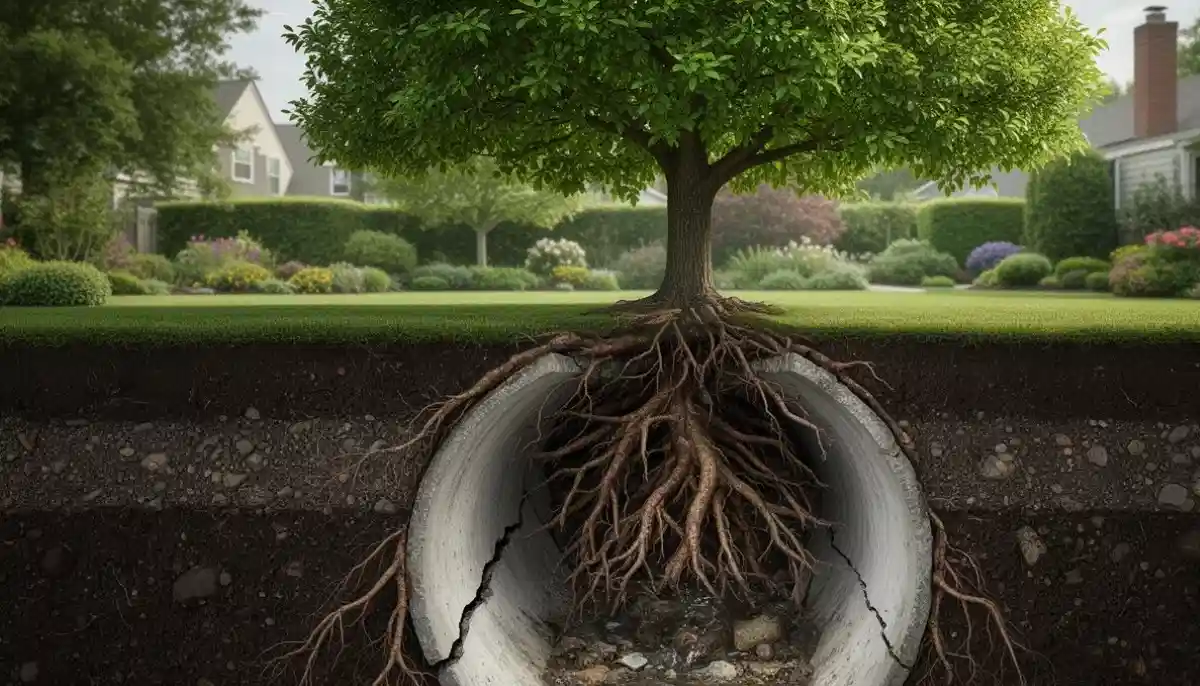
Tree roots in sewer pipes are the #1 cause of recurring drain blockages in South Africa. Roots are naturally attracted to the moisture and nutrients in sewer pipes. They infiltrate through tiny cracks or joints—openings as small as 0.5mm—then grow inside, expanding and cracking pipes over time.
The good news? Modern technology can detect roots in drain pipes without digging, remove them effectively, and even repair damaged pipes without destroying your garden.
This comprehensive guide will teach you everything about root intrusion detection, removal methods (DIY vs professional), repair options, and how to prevent future problems. Whether you need plumbing services in Gauteng, drain cleaning in Johannesburg, or sewer line repair in Sandton, this guide has you covered.
For related information, read our sewer line repair guide, drain camera inspection guide, underground pipe leak repair guide, and blocked drain causes guide. Let’s tackle those roots.
📋 Table of Contents – Tree Roots in Sewer Pipes Guide
🔍 7 Signs You Have Tree Roots in Your Sewer Line
Early detection of roots in drain pipes saves thousands in repair costs. Watch for these signs:
🐌 1. Recurring Slow Drains
Drains that slow down every few months, clear temporarily with DIY methods, then return—classic root intrusion pattern.
💨 2. Gurgling Sounds
Strange gurgling or bubbling from toilets or drains when water is running elsewhere indicates trapped air from root blockage.
🌊 3. Sewage Backups
Water or sewage backing up into your shower, bath, or floor drain when you flush the toilet.
🌿 4. Lush Patches in Your Lawn
An area of your lawn that’s dramatically greener and lusher than the rest—sewage acts as fertiliser.
👃 5. Sewage Odours
Persistent rotten egg or sewage smells inside or outside your home, especially near the sewer line path.
🏠 6. Foundation Cracks or Sinking
A leaking sewer line from root damage can erode soil beneath your foundation, causing settlement cracks.
🐀 7. Rodent or Insect Infestation
Rats, roaches, and other pests are attracted to cracks in sewer lines. Unexplained infestations may indicate root damage.
⚠️ Critical Warning:
If you have recurring blockages (every 3-6 months) and you have trees near your sewer line, you almost certainly have tree roots in sewer pipes. Continued drain cleaning without addressing the roots wastes money and allows the roots to grow larger, eventually cracking the pipe completely.
🌱 How Tree Roots Damage Sewer Pipes
Understanding the process helps you appreciate why early action matters:
- Roots seek moisture – Tree roots naturally grow toward water and nutrients. Sewer pipes are an ideal source.
- Roots find an entry point – They infiltrate through pipe joints, tiny cracks (as small as 0.5mm), or damaged sections.
- Roots grow inside the pipe – Once inside, roots expand, creating a web that catches debris (toilet paper, waste).
- Blockage forms – The root mass combined with trapped debris creates a complete or partial blockage.
- Pipe damage occurs – As roots grow, they exert pressure, widening cracks, separating joints, and eventually causing pipe collapse.
💡 The Progression:
What starts as a tiny root hair through a 0.5mm crack becomes a massive root ball within 2-3 years. The crack expands from 0.5mm to 50mm+. Early detection and treatment can save your pipe. Ignoring it guarantees eventual pipe replacement.
🌳 Which Trees Are Most Dangerous for Sewer Lines?
Not all trees pose the same risk. These are the worst offenders in South Africa:
| Tree Species | Root Aggressiveness | Safe Distance from Sewer Line | Common in SA |
|---|---|---|---|
| Jacaranda | 🔴 Very High | 10-15 metres+ | Yes (widespread in Gauteng) |
| Oak | 🔴 Very High | 15-20 metres+ | Yes (older suburbs) |
| Poplar / Cottonwood | 🔴 Very High | 15-20 metres+ | Yes |
| Willow | 🔴 Very High | 15-20 metres+ | Yes (near water) |
| Ficus / Fig | 🔴 Very High | 10-15 metres+ | Yes (common in gardens) |
| Pine | 🟡 Moderate | 5-10 metres | Yes |
| Coral Tree | 🟡 Moderate | 5-10 metres | Yes |
| Palm | 🟢 Low | 2-3 metres | Yes |
Safe planting distances: For aggressive root trees, plant at least 10-15 metres from your sewer line. For moderate trees, 5-10 metres. For low-risk trees, 2-3 metres. When in doubt, plant further away.
📹 Detection Methods: CCTV Inspection
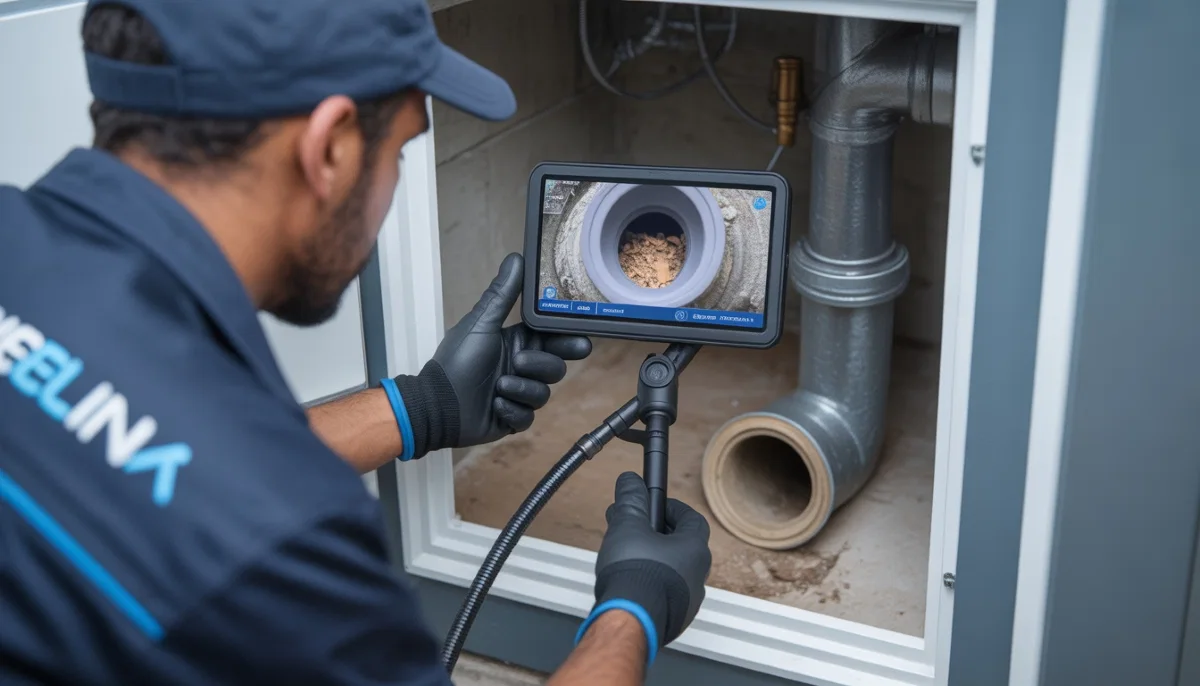
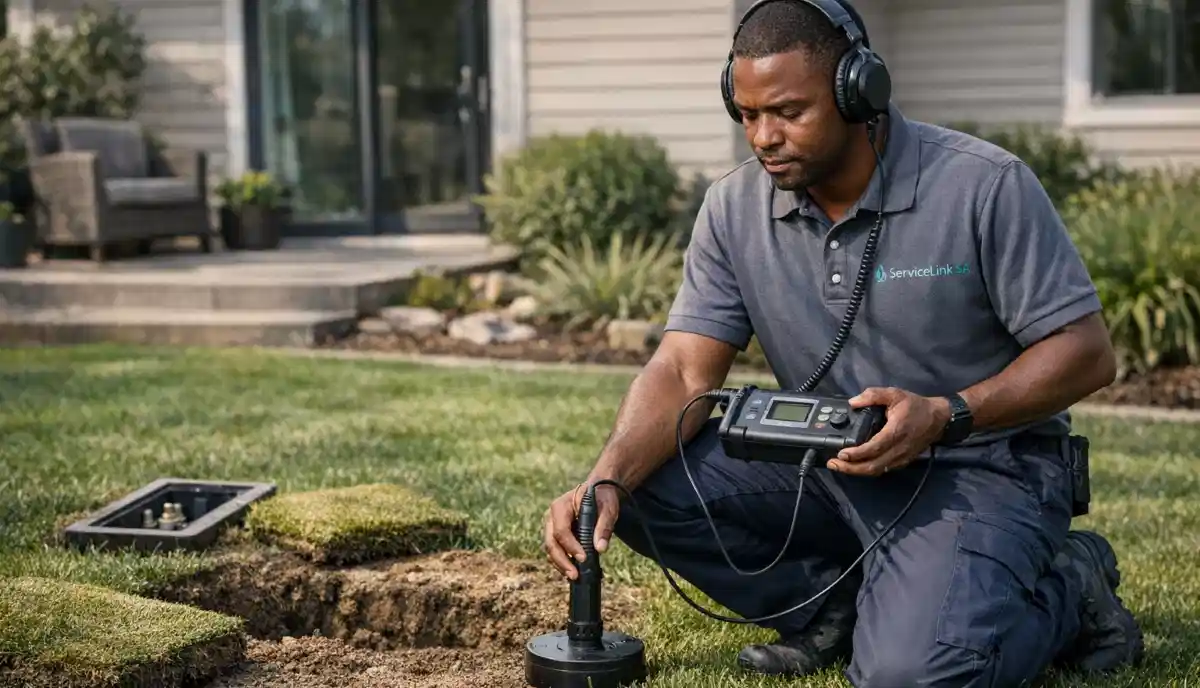
The only reliable way to confirm tree roots in sewer pipes is with a CCTV drain inspection:
- What it is: A waterproof camera travels through your sewer line, transmitting real-time video to a monitor.
- What it shows: Exact location of root intrusion, pipe material, crack size, pipe condition, and extent of damage.
- Why it’s essential: Without CCTV, you’re guessing. A R1,500-R3,500 inspection can save you R10,000+ in unnecessary excavation or repeated drain cleaning.
- When to get one: If you have recurring blockages (every 3-6 months), visible tree roots in cleanouts, or suspect sewer line damage.
Read our drain camera inspection guide for more details.
🌳 Tree Roots in Your Sewer Line?
Get quotes from verified specialists for root removal, hydro-jetting, and pipe repair. CCTV inspection available.
Free quotes • CCTV inspection • Trenchless repair options
🔧 Tree Root Removal Methods Compared
Several methods exist to remove tree roots from sewer lines. Here’s how they compare:
| Method | Best For | Cost Range | Permanent? | DIY/Pro |
|---|---|---|---|---|
| Hydro-Jetting | Cutting roots, cleaning pipes | R1,500-R4,000 | Temporary (roots regrow) | Professional |
| Mechanical Auger | Cutting roots, clearing blockages | R1,500-R3,500 | Temporary | Professional |
| Chemical Root Treatment | Killing roots, prevention | R800-R2,000 per treatment | Temporary (annual treatment needed) | Professional |
| Copper Sulfate | DIY root killing | R200-R500 | Temporary | DIY (with caution) |
| Pipe Relining | Sealing cracks, preventing re-entry | R8,000-R25,000+ | Yes (50+ years) | Professional |
| Pipe Replacement | Severely damaged pipes | R15,000-R50,000+ | Yes | Professional |
💦 Method 1: Hydro-Jetting (Professional Root Cutting)
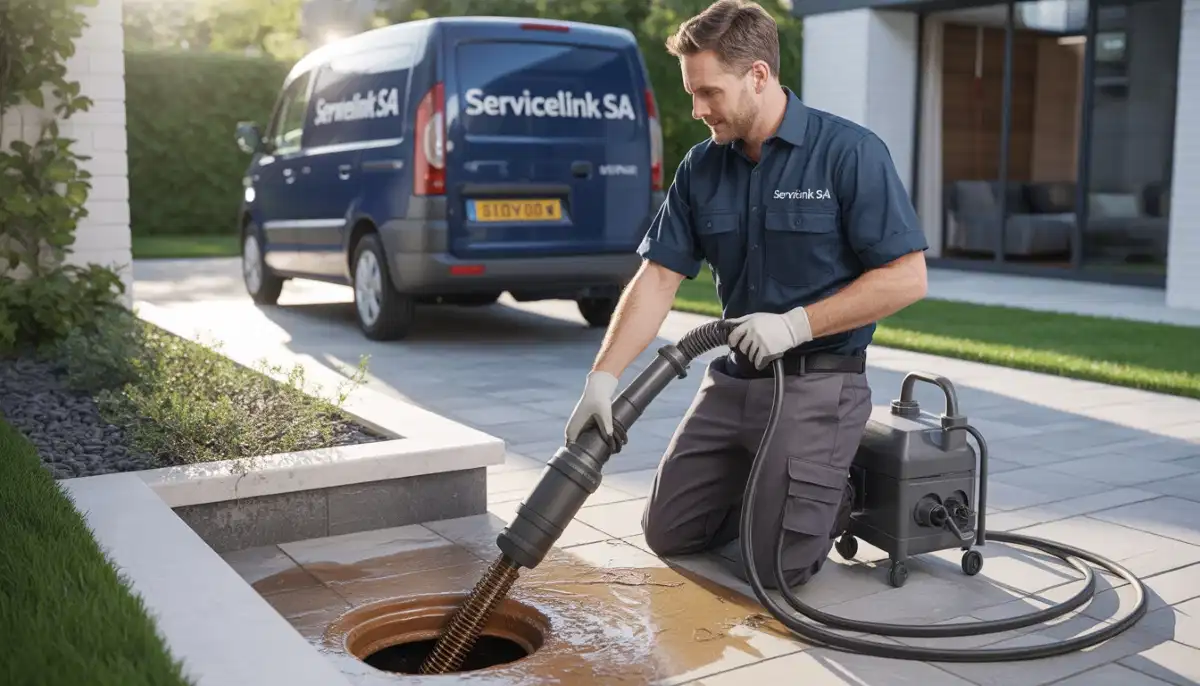
Hydro-jetting is the most effective professional method to remove tree roots from sewer lines temporarily.
How it works: High-pressure water (2,000-4,000 PSI) with a specialised cutting nozzle is fed into the pipe. The water jet cuts through roots, scours pipe walls, and flushes debris away.
Best for: Cutting roots that have entered the pipe, clearing blockages, and cleaning pipe walls.
Pros: Effective, no chemicals, cleans entire pipe, can be done annually for maintenance.
Cons: Temporary (roots regrow in 1-3 years), professional equipment required, doesn’t seal cracks.
Cost: R1,500-R4,000 depending on pipe length and root severity.
Read our drain cleaning guide for more information.
🧪 Method 2: Chemical Root Treatments (Professional)
Professional chemical treatments kill roots inside pipes and prevent regrowth for 1-2 years.
How it works: A foaming chemical (usually dichlobenil or copper sulfate-based) is applied through cleanouts. The foam fills the pipe, coating roots and killing them without harming the tree itself.
Best for: Ongoing maintenance after initial root cutting, preventing regrowth.
Pros: Kills roots effectively, doesn’t harm tree (when applied correctly), prevents regrowth for 1-2 years.
Cons: Professional application recommended, doesn’t remove existing root mass (cut first, then treat).
Cost: R800-R2,000 per treatment. Annual treatment is often needed.
🔧 Method 3: Mechanical Auger (Root Cutting)
A mechanical auger (drain snake) with a cutting head can physically cut through roots.
How it works: A rotating cable with a cutting blade is fed into the pipe. The blade spins, cutting through roots as it advances.
Best for: Initial root removal, clearing complete blockages.
Pros: Effective at cutting thick roots, widely available.
Cons: Temporary (roots regrow), can miss smaller roots, doesn’t clean pipe walls.
Cost: R1,500-R3,500.
🧴 Method 4: Copper Sulfate (DIY Option – Use with Caution)
Copper sulfate crystals can kill roots inside pipes, but use with caution.
How it works: Flush 1-2 cups of copper sulfate crystals down the toilet nearest the sewer line. Crystals settle in pipe, kill roots over several weeks.
Best for: Light root intrusion, maintenance prevention.
Pros: Inexpensive (R200-R500), DIY-friendly.
Cons: Can harm trees if overused, doesn’t remove existing root mass, not effective for severe intrusion, can be harmful to septic systems.
⚠️ Copper Sulfate Warning:
Copper sulfate can kill trees if overused—the roots absorb the chemical and transport it to the tree. Follow package instructions exactly. Do NOT use if you have a septic system (kills beneficial bacteria). For severe root intrusion, professional methods are safer and more effective.
🔄 Pipe Repair After Root Removal
Once roots are removed, the pipe may still have cracks where roots entered. These need to be sealed to prevent re-entry:
Option 1: Pipe Relining (Trenchless)
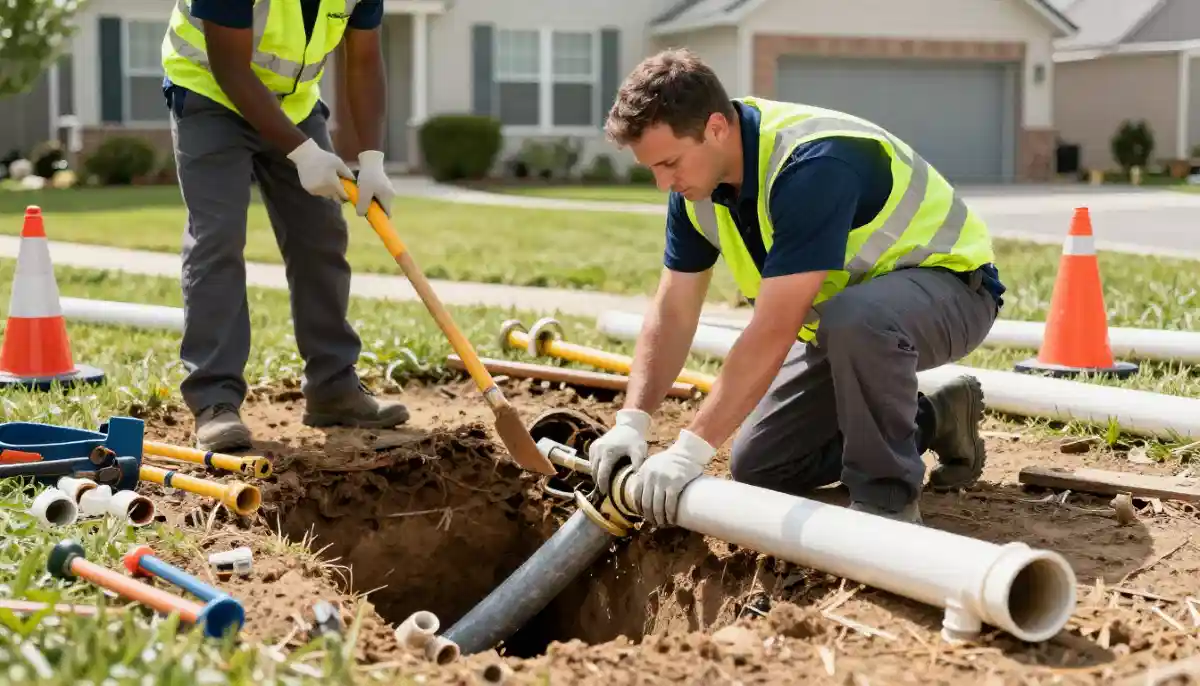
- An epoxy liner is inserted into the pipe and cured, creating a new pipe inside the old one.
- Seals cracks, prevents root re-entry, smooth surface prevents future clogs.
- Cost: R8,000-R25,000+ (length dependent).
- Read our sewer line repair guide for more.
Option 2: Spot Excavation Repair
- Dig at the crack location, cut out damaged section, replace with new pipe.
- Cost: R5,000-R15,000+.
Option 3: Full Pipe Replacement
- For severely damaged pipes with multiple cracks or collapse.
- Cost: R15,000-R50,000+.
🛡️ Preventing Future Tree Roots in Sewer Pipes
Prevention is far cheaper than how to remove tree roots from sewer line repairs:
🌳 Tree Management
- Know where your sewer line runs before planting trees
- Plant aggressive-root trees at least 10-15 metres from sewer lines
- Remove trees that are causing problems
- Install root barriers between trees and sewer lines
🔧 Pipe Maintenance
- Schedule annual CCTV inspection if you have trees near sewer lines
- Annual hydro-jetting to remove small roots before they grow
- Chemical root treatments every 1-2 years
- Pipe relining to seal existing cracks
Read our home plumbing maintenance checklist for more prevention tips.
🛠️ DIY vs Professional: What You Can Do
When dealing with roots in drain pipes, know your limits:
✅ SAFE TO DIY
- Monthly baking soda/vinegar treatments (prevention)
- Using drain strainers
- Copper sulfate (light root intrusion only – with caution)
- Monitoring for early warning signs
- Keeping trees pruned away from sewer line area
❌ CALL A PROFESSIONAL
- CCTV inspection to confirm roots
- Hydro-jetting for root cutting
- Mechanical auger for thick roots
- Professional chemical treatments
- Pipe relining or replacement
- Severe or recurring root intrusion
❌ 5 Costly Mistakes Homeowners Make With Tree Roots
Mistake #1: Repeated Drain Cleaning Without Diagnosis
If you’re calling a plumber every 3-6 months for drain cleaning, you have an underlying problem—likely tree roots in sewer pipes. A CCTV inspection (R1,500-R3,500) identifies the root cause. Continued cleaning without addressing roots wastes money.
Mistake #2: Ignoring Recurring Blockages
“It’s just a slow drain—I’ll deal with it” allows roots to grow larger and crack pipes further. A small crack today is a collapsed pipe in 2-3 years.
Mistake #3: Planting Aggressive-Root Trees Near Sewer Lines
Jacarandas, oaks, poplars, and willows within 10 metres of your sewer line will eventually cause problems. Research before planting.
Mistake #4: Using Copper Sulfate Without Knowing Pipe Condition
Copper sulfate won’t fix a cracked pipe—it only kills roots. If the pipe is already cracked, roots will return. Worse, the chemical can harm the tree if overused.
Mistake #5: Removing the Tree But Not Repairing the Pipe
Removing the tree stops new roots, but the existing cracks remain. Water will still leak out, attracting new roots from nearby trees or causing soil erosion. The pipe still needs repair or relining.
📋 Real-World Root Intrusion Case Studies
🌳 Case 1: The Jacaranda in Sandton
Location: Sandton | Homeowner: The Mkhize Family
Problem: Toilet backups every 3-4 months. Multiple drain cleanings provided only temporary relief. Beautiful 20-year-old jacaranda in front yard.
Solution: CCTV inspection revealed tree roots had infiltrated a 2-metre section of clay pipe through a cracked joint.
Outcome: Hydro-jetting removed roots (R2,800). Pipe relining (R6,000 for 2 metres) sealed the crack. Annual root treatment planned (R1,200/year). Total R9,000 vs excavation quote of R18,000 plus garden restoration.
Lesson: Trenchless pipe relining saved the jacaranda and the garden.
🏠 Case 2: The Oak Tree in Randburg
Location: Randburg | Homeowner: Mr. van der Merwe
Problem: Sewage smell in garden, lush grass patch, slow drains throughout house.
Solution: CCTV inspection found massive oak tree roots had cracked a 5-metre section of pipe. Pipe was severely damaged.
Outcome: Tree removal (R5,000) + pipe bursting (R25,000) replaced the damaged section without full trenching. Total R30,000. Full excavation would have cost R22,000 plus R15,000 garden restoration.
Lesson: Oak trees and sewer lines don’t mix. Tree removal was necessary—prevention would have been cheaper.
❓ Frequently Asked Questions About Tree Roots in Sewer Pipes
How do I know if I have tree roots in my sewer line?
Signs of tree roots in sewer pipes include: recurring slow drains (every 3-6 months), gurgling sounds from toilets or drains, sewage backups, lush patches in your lawn above the pipe line, sewage odours, and visible roots in cleanout access points. The only way to confirm is with a CCTV drain inspection (R1,500-R3,500). If you have trees near your sewer line and recurring blockages, roots are the likely cause.
How to remove tree roots from sewer line without digging?
How to remove tree roots from sewer line without digging: Hydro-jetting uses high-pressure water with cutting nozzles to slice through roots (R1,500-R4,000). Mechanical augers with cutting blades can also cut roots. Both methods remove roots temporarily—roots regrow in 1-3 years. To prevent regrowth without digging, chemical root treatments kill roots in pipes, or pipe relining seals cracks so roots can’t re-enter.
Can tree roots really crack sewer pipes?
Yes—root intrusion is the #1 cause of sewer pipe failure. Roots infiltrate through tiny cracks or joints (openings as small as 0.5mm). Once inside, they grow, expanding the crack over time. A 0.5mm crack can become a 50mm crack within 2-3 years. The pressure from growing roots can crack clay pipes, separate joints, and even collapse cast iron pipes. Early detection is critical.
Does copper sulfate kill tree roots in sewer lines?
Copper sulfate can kill roots inside pipes, but it’s a temporary solution. Flush 1-2 cups down the toilet nearest the sewer line. However: it doesn’t remove existing root mass (must be cut first), doesn’t seal cracks (roots return), can harm trees if overused, and damages septic systems. For severe roots in drain pipes, professional hydro-jetting or chemical treatments are more effective and safer.
How much does it cost to remove tree roots from sewer line?
Costs to remove tree roots from sewer: CCTV inspection R1,500-R3,500, hydro-jetting R1,500-R4,000, mechanical auger R1,500-R3,500, chemical root treatment R800-R2,000 per treatment. If the pipe is damaged, pipe relining costs R8,000-R25,000+, and pipe replacement costs R15,000-R50,000+. Most homeowners with root intrusion pay R2,000-R5,000 for removal plus annual maintenance.
How far should trees be planted from sewer lines?
Safe distances depend on the tree species. Aggressive-root trees (jacaranda, oak, poplar, willow, ficus): 10-15 metres minimum. Moderate-root trees (pine, coral tree): 5-10 metres. Low-risk trees (palms): 2-3 metres. When in doubt, plant further away. Also consider mature root spread—roots can extend 2-3 times the tree’s canopy width.
Will removing the tree solve my sewer line problem?
Removing the tree stops new root growth, but it doesn’t fix existing damage. The cracks or holes where roots entered remain. Water will still leak out, attracting new roots from nearby trees or causing soil erosion. You still need to repair or reline the pipe. If the pipe is severely damaged, removal plus pipe replacement is the solution. For minor cracks, pipe relining after tree removal is effective.
How often should I treat my sewer line for tree roots?
If you have aggressive trees near your sewer line, annual maintenance is recommended. Options: Hydro-jetting annually (R1,500-R4,000) cuts roots and cleans pipes. Chemical root treatments annually (R800-R2,000) kill roots and prevent regrowth. Some homeowners combine both: hydro-jetting every 2-3 years with chemical treatment in between. CCTV inspection every 2-3 years monitors pipe condition.
✅ Final Thoughts: Don’t Let Roots Destroy Your Sewer Line
Tree roots in sewer pipes are the #1 cause of recurring drain blockages and sewer line failure in South Africa. But with early detection and proper treatment, you can manage root intrusion without destroying your garden or your budget.
Key takeaways for South African homeowners:
- Signs of root intrusion: recurring blockages (every 3-6 months), gurgling drains, lush lawn patches, sewage odours
- CCTV inspection is essential – R1,500-R3,500, often credited toward repair
- Hydro-jetting removes roots temporarily – R1,500-R4,000, roots regrow in 1-3 years
- Pipe relining seals cracks permanently – R8,000-R25,000+, prevents root re-entry
- Aggressive trees need 10-15 metre clearance – jacaranda, oak, poplar, willow, ficus
- Annual maintenance prevents major damage – hydro-jetting or chemical treatments
- Don’t ignore recurring blockages – early action saves thousands
Your action plan: If you have recurring drain blockages and trees near your sewer line, start with a CCTV inspection—not another drain cleaning. Get quotes from at least 2-3 specialists. Ask about hydro-jetting, chemical treatments, and pipe relining. Use ServiceLink SA to find verified specialists who can remove tree roots from sewer lines effectively.
🌳 Tree Roots in Your Sewer Line?
Get quotes from verified specialists for root removal, hydro-jetting, and pipe repair. CCTV inspection available.
📞 Call us: 073 138 4726 for immediate help finding a root removal specialist near you.
Sewer line repair •
CCTV inspection •
Underground leak repair •
Blocked drain guide •
Beat Your Quote guarantee
📚 Official resources & standards referenced:
- Department of Agriculture, Forestry and Fisheries – Tree regulations and planting guidelines.
- SANS 10400 – Pipe standards and sewer installation requirements.
- Plumbing Industry Registration Board (PIRB) – Find registered root removal specialists.
Information provided for general guidance based on industry research and DAFF/SANS standards. For suspected tree roots in sewer pipes, professional CCTV inspection and treatment are recommended.
Written by: ServiceLink SA Research Team
Tree Root & Sewer Line Specialists
The ServiceLink SA Research Team comprises sewer line specialists, arborists, and plumbing industry professionals with decades of experience dealing with tree roots in sewer pipes across South Africa. Our team works directly with PIRB-registered plumbers, hydro-jetting technicians, CCTV inspection specialists, and tree removal experts to bring you accurate, actionable information about root intrusion detection, removal methods, and prevention strategies. We continuously update our guides to reflect current industry standards, SANS regulations, and real-world best practices for managing tree roots in drainage systems.
For more information about tree roots and sewer line maintenance, explore our related resources:
sewer line repair guide,
drain camera inspection guide,
tree roots in sewer pipes guide,
underground pipe leak repair guide,
and blocked drain causes guide.
Our how ServiceLink SA works and
contractor verification process pages explain how we connect you with trusted professionals.
See our service areas page for root removal coverage in your region.