
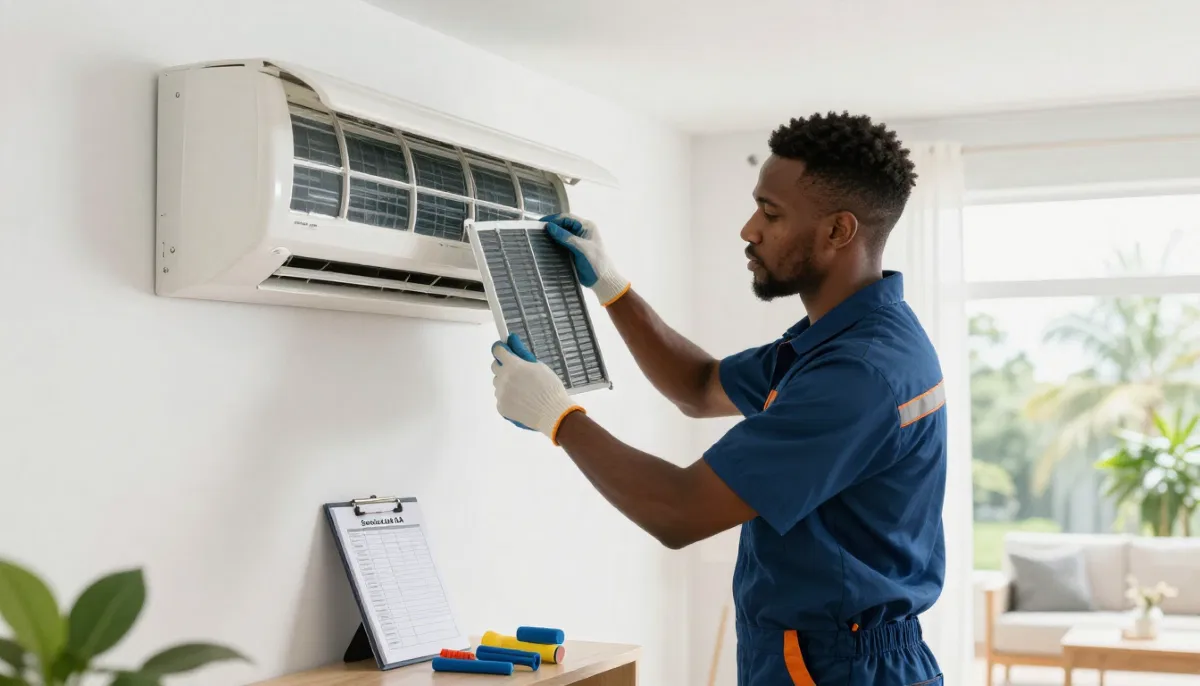
Aircon Leaking Water? Clear the Drain Line Fast
Get free quotes from verified local aircon repair technicians for persistent drain line blockages or water leaks.
Find Aircon Leak Specialists Near Me
Servicing Johannesburg, Pretoria, Cape Town, Durban, and across South Africa
Aircon Drain Line Cleaning: Stop Water Leaks in 15 Minutes
💧🔧 The complete step-by-step guide to clearing blocked condensate drains—prevent ceiling damage, mould, and costly repairs
You notice a damp patch on your ceiling. Or worse—water is actually dripping from your indoor aircon unit onto your floor. You grab a bucket, place it underneath, and wonder: “How did this happen? Is my aircon broken?”
I’ve seen this hundreds of times. A homeowner panics, calls an emergency technician, and pays R800-R1,500 for a service call—only to find out the problem was a simple blocked drain line that could have been cleared in 15 minutes with a wet vacuum and some vinegar.
The truth is, a blocked condensate drain is the #1 cause of water leaks from air conditioners. And it’s one of the easiest problems to fix yourself.
In this guide, I’ll show you exactly how to clean aircon drain pipe blockages step by step, how to prevent future clogs, and when to call a professional.
For more troubleshooting, check aircon leaking water causes and emergency leak guide. Ready to stop that leak? Let’s go.
📋 Table of Contents – Aircon Drain Line Cleaning Guide
🧫 Why the Drain Line Blocks (And Why It Matters)
Your air conditioner produces water—this is normal. Warm, humid air passes over freezing-cold evaporator coils, causing moisture to condense (like water on a cold glass). This condensation drips into a drain pan and flows out through a plastic pipe (the condensate drain) to the outside of your home.
Why drain lines block:
- Algae growth: The dark, damp environment inside the drain pipe is perfect for algae. Algae builds up over months, eventually blocking the pipe completely.
- Mould and bacteria: Same as algae—they thrive in damp, dark pipes.
- Dust and debris: Fine dust that bypasses the filter can accumulate in the drain pan and pipe.
- Insects and pests: Small insects can crawl into the drain pipe and die, creating a blockage.
- Slime buildup: A combination of algae, bacteria, and dust creates a thick slime that restricts water flow.
What happens when the drain line blocks:
- Water can’t drain out of the unit
- The drain pan fills up and overflows
- Water leaks into your home (ceiling damage, wall damage, mould)
- Standing water in the drain pan grows mould and bacteria (musty smell, health risks)
⚠️ The Cost of Ignoring a Blocked Drain Line:
A simple blocked drain line (15-minute DIY fix) can lead to ceiling collapse (R5,000-R15,000), mould remediation (R3,000-R10,000), and water damage to floors and furniture (R2,000-R20,000+). Clear your drain line every 3 months. It takes 5 minutes and costs R0-R50.
Read our aircon leaking water causes guide.
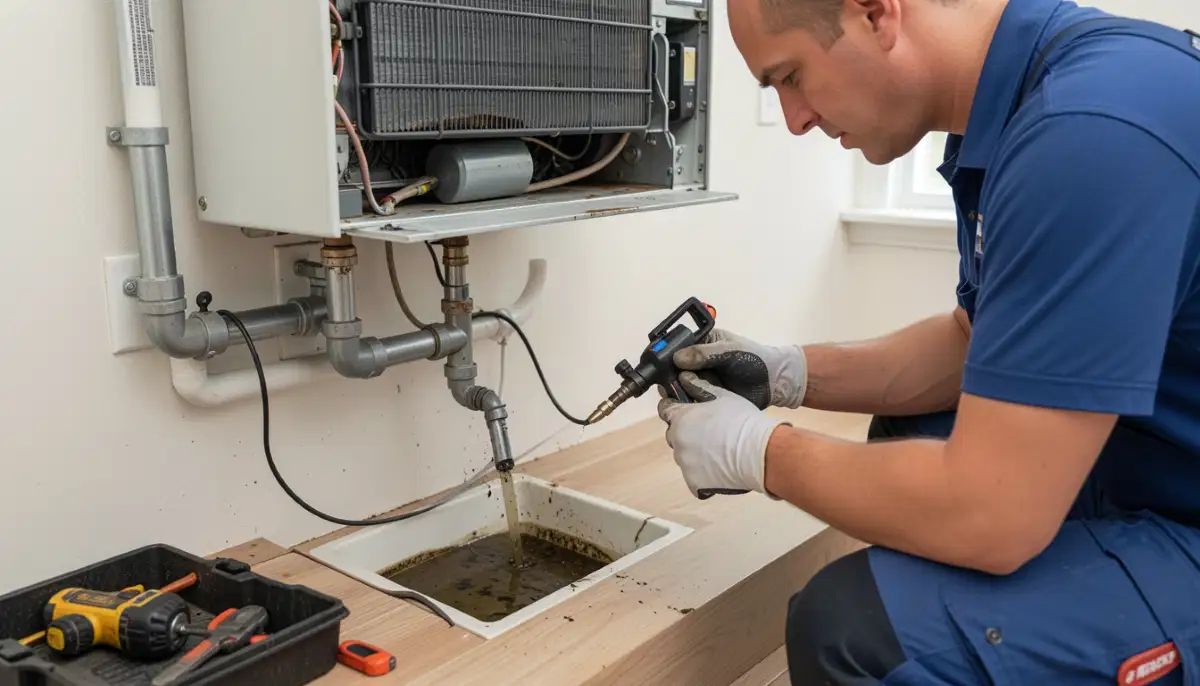
🚩 Signs Your Drain Line Is Blocked
Catch a blockage early before it causes water damage. Look for these warning signs:
- Water dripping from indoor unit: The most obvious sign. Water may drip from the bottom or side of the unit.
- Water stains on ceiling below the unit: The leak has been happening for a while.
- Musty or mouldy smell when the aircon runs: Stagnant water in the drain pan is growing mould.
- No water dripping from outside drain pipe: The pipe outside your home should drip when the aircon runs. If it’s dry, the line is blocked.
- Gurgling sound from the indoor unit: Air bubbles in the blocked drain line.
- Ice on the indoor unit: A blocked drain can cause ice if water backs up and freezes.
Quick test: On a humid day, run your aircon in Cool mode for 30 minutes. Go outside and look at the drain pipe exit. Is water dripping? If not, your drain line is likely blocked.
🛠️ What You’ll Need (Simple Tools)
For ac drain line cleaning, you don’t need expensive tools. Most items are already in your home.
Essential items:
- Wet/dry vacuum (shop vac): Most effective method. If you don’t have one, borrow or use alternative methods below.
- White vinegar: For killing algae and mould (R20-R40). Do NOT use bleach—it damages pipes and is harmful to the environment.
- Watering can or funnel: For pouring vinegar/water into the drain line.
- Bucket: To catch water and debris.
- Rubber gloves: For handling dirty water and vinegar.
- Old towel or rag: For cleanup.
- Flashlight: To see the drain pipe exit and check for blockages.
Optional items (for stubborn clogs):
- Compressed air canister: For blowing out stubborn clogs.
- Flexible drain cleaning brush: A long, thin brush designed for AC drain lines (R100-R200 at hardware stores).
- Wet/dry vacuum adapter: To create a tight seal on the drain pipe.
⚠️ What NOT to Use:
Never use bleach, drain cleaner (Drano, Mr Muscle), or chemical unblockers. These chemicals corrode plastic pipes, damage the drain pan, and are harmful to the environment. White vinegar is safe and effective.
Drain Line Still Blocked After Trying These Methods?
Stubborn clogs may need professional attention. Get free quotes from verified local technicians.
Get Free Quotes From Local Technicians
Same-day service available for urgent leaks.
📝 Step-by-Step Drain Line Cleaning Guide
Follow these steps in order. Most blockages clear with Method 1 (wet vacuum).
Before you start – Safety first:
- Turn off the aircon at the remote AND at the isolator switch (near outdoor unit).
- Turn off the circuit breaker for the aircon at your electrical distribution board.
- Wait 5 minutes for the unit to power down completely.
🔧 Method 1: Wet/Dry Vacuum (Most Effective – 10 minutes)
This is the fastest and most effective method for aircon drain cleaning.
Step-by-step:
- Locate the drain pipe exit outside your home. It’s a small white or clear plastic pipe, usually near the outdoor compressor unit, about 20-30mm in diameter.
- Place a bucket under the pipe to catch water and debris.
- If possible, create a seal around the pipe with a wet/dry vacuum attachment or a rag.
- Turn on the vacuum and let it run for 30-60 seconds. You’ll hear the blockage being sucked out.
- Check the bucket—you should see water, slime, algae, and debris.
- Repeat 2-3 times until water flows freely.
- Pour 1 cup of white vinegar down the pipe to kill remaining algae and bacteria.
- Flush with 2 cups of clean water to rinse.
✅ Pro Tip:
If you can’t get a good seal with the vacuum, use a wet rag around the nozzle. The suction doesn’t need to be perfect—just enough to pull the blockage through.
🧪 Method 2: Vinegar and Water Flush (Preventive – 5 minutes)
This method is best for PREVENTION, not for clearing existing blockages. Use it every 3 months to stop blockages from forming.
Step-by-step:
- Mix 1 part white vinegar with 2 parts water (e.g., 1 cup vinegar + 2 cups water).
- Pour the mixture slowly down the drain pipe from the outside end.
- Wait 30 minutes for the vinegar to kill algae and mould.
- Flush with 2 cups of clean water.
- Repeat every 3 months.
For access from inside (if your unit has a drain pan access point):
- Open the front panel of the indoor unit.
- Locate the drain pan (under the coils).
- Pour the vinegar/water mixture directly into the drain pan.
- It will flow through the drain line, cleaning as it goes.
💨 Method 3: Compressed Air (For Stubborn Clogs – 10 minutes)
For blockages that won’t clear with a vacuum, compressed air can blow them out.
Step-by-step:
- Use a canister of compressed air (for cleaning computers) or an air compressor with low pressure (under 50 PSI).
- Insert the nozzle into the drain pipe exit.
- Give short bursts of air (not continuous—you don’t want to blow the pipe off the fitting).
- You should hear the blockage dislodge. Have a bucket ready to catch debris.
- Flush with water and vinegar afterward.
⚠️ Caution:
Do NOT use high-pressure air (over 50 PSI). It can blow the drain pipe off its fitting inside the unit, causing a major leak. If you’re not sure, use the vacuum method instead.

🛡️ Prevention: Keep Your Drain Line Clear
Preventing blockages is easier than clearing them. Follow this simple schedule:
| Frequency | Task | Time | Why It Works |
|---|---|---|---|
| Every 3 months | Pour vinegar/water mixture down drain line | 5 minutes | Vinegar kills algae and mould before they build up |
| Every 6 months | Check drain pan for standing water | 2 minutes | Standing water indicates slow drainage—clean before it blocks completely |
| Annually | Professional service includes drain line inspection | 1 hour (technician) | Catches deep blockages you can’t reach |
| As needed | Check outside drain pipe drip during humid weather | 30 seconds | Early warning of developing blockage |
Bonus prevention tip: Install a drain line tablet. These small tablets (R50-R100) are dropped into the drain pan and slowly dissolve, releasing algae-killing agents. Replace every 3-6 months.
Read our maintenance checklist and service frequency guide.
🚨 Emergency: What to Do During an Active Leak
If water is actively dripping from your indoor unit RIGHT NOW, follow these steps:
- Turn off the aircon immediately (remote AND isolator switch).
- Place buckets or towels under the leak to catch water.
- Move furniture and electronics away from the leak area.
- If water is coming from the ceiling (not directly from the unit), poke a small hole in the ceiling with a screwdriver to let water drain into a bucket. This prevents ceiling collapse from pooled water weight.
- Clear the drain line using Method 1 (wet vacuum) above.
- If you can’t clear it yourself, call a professional immediately.
⚠️ Ceiling Collapse Warning:
Water pooling on top of a ceiling board is extremely heavy. A 1m² area of water 50mm deep weighs 50kg. This can cause the ceiling to collapse suddenly and without warning. If you see a sagging ceiling or water stains spreading, call a professional immediately.
Read our emergency aircon leak guide.
📞 When to Call a Professional
While most drain line blockages are DIY-friendly, call a professional if:
- The drain line is blocked deep inside the wall: You can’t access the blockage with DIY methods.
- The drain pan is cracked: You see water leaking from the bottom of the indoor unit even after clearing the drain line.
- The drain line is disconnected: Water is pouring out from behind the unit, not from the normal drain exit.
- The blockage returns within days of cleaning: There may be a deeper problem (insects nesting, pipe sagging, or severe algae growth).
- You’ve tried all methods and water still leaks: The problem may be more than a blocked drain (low refrigerant, dirty coils, cracked pan).
- The leak is causing ceiling damage: Professional assessment of ceiling damage is needed.
Professional drain line cleaning cost: R300-R800 depending on access difficulty and severity of blockage.
Read our leak detection services guide.
❓ Frequently Asked Questions About Aircon Drain Lines
How do I know if my aircon drain line is blocked?
Signs of a blocked condensate drain include: water dripping from the indoor unit, water stains on the ceiling below, musty smell when the aircon runs, no water dripping from the outside drain pipe, and gurgling sounds from the unit. The quick test: run the aircon for 30 minutes on a humid day—if no water comes out of the outside pipe, it’s blocked.
How do I unblock my aircon drain pipe?
The most effective method for how to clean aircon drain pipe blockages is using a wet/dry vacuum. Locate the drain pipe exit outside, seal the vacuum around the pipe, and suck for 30-60 seconds. The blockage (algae, slime, debris) will be pulled out. Follow with a vinegar/water flush to kill remaining algae. See the step-by-step guide above for details.
Can I use bleach to clean my aircon drain line?
NO. Never use bleach in your aircon drain line. Bleach corrodes plastic pipes, damages the drain pan, releases harmful fumes, and is environmentally damaging. Use white vinegar instead—it’s safe, effective at killing algae, and non-toxic. Mix 1 part vinegar with 2 parts water and pour down the drain line every 3 months.
How often should I clean my aircon drain line?
For aircon drain cleaning, pour a vinegar/water mixture down the drain line every 3 months as preventive maintenance. If you live in a humid area (Durban, coastal KZN) or have had blockages before, increase to every 2 months. Annual professional service also includes drain line inspection and cleaning.
Why is my aircon leaking water even after cleaning the drain line?
If water still leaks after ac drain line cleaning, possible causes: the drain pan is cracked (replace, R800-R1,500), the drain line is disconnected behind the unit, the unit is not level (water pools instead of draining), or the problem is low refrigerant causing ice that melts and floods the pan. Call a professional for diagnosis.
Where is the aircon drain line located?
The drain line exit is outside your home, usually near the outdoor compressor unit. Look for a small white or clear plastic pipe (20-30mm diameter) sticking out of the wall, often with water dripping from it when the aircon runs. Inside, the drain line connects from the indoor unit’s drain pan through the wall to outside.
Can a blocked drain line cause my aircon to stop working?
A blocked drain line won’t stop the aircon from running, but it will cause water to leak into your home. Most units have a float switch that shuts off the unit if the drain pan overflows (to prevent ceiling damage). If your unit turns on but shuts off after a few minutes, the float switch may be triggered. Clear the drain line to reset.
What causes algae in aircon drain lines?
Algae thrive in dark, damp, warm environments—exactly what your aircon drain line provides. Condensation water is nutrient-rich, and the pipe never sees sunlight. Algae build-up over months eventually blocks the pipe. Regular vinegar flushes (every 3 months) kill algae before they cause blockages.
How much does professional drain line cleaning cost?
Professional drain line cleaning costs R300-R800 depending on access difficulty and severity of the blockage. This is usually included in an annual service (R500-R800 total). If you’re already paying for a service, drain line cleaning is included. For a standalone call-out, expect R300-R500. Read our service cost guide.
Can I prevent drain line blockages?
Yes! Pour 1 cup of white vinegar mixed with 2 cups of water down the drain line every 3 months. This kills algae and mould before they build up. Also, keep your aircon filters clean (dirty filters let dust reach the drain pan). Install drain line tablets (R50-R100) that slowly dissolve and release algae-killing agents. Read our maintenance checklist.
✅ Final Thoughts: 15 Minutes Prevents Thousands in Damage
A blocked drain line is the #1 cause of aircon water leaks. The fix is simple, fast, and cheap. Ignoring it leads to ceiling collapse, mould, and expensive repairs.
Key takeaways for drain line cleaning:
- Clear your drain line every 3 months: Pour vinegar/water mixture down the pipe. Takes 5 minutes, costs R0-R50.
- Use a wet/dry vacuum for existing blockages: Most effective method. Clear in 10 minutes.
- Never use bleach or chemical drain cleaners: They corrode pipes and damage the unit. White vinegar only.
- Check for water dripping outside: On humid days, the drain pipe should drip. If dry, the line is blocked.
- Act immediately if water leaks inside: Turn off the unit, place buckets, clear the drain line.
- Ceiling leaks are emergencies: Poke a small hole to drain water safely and prevent collapse.
- Professional help is worth it: If DIY doesn’t work or the drain pan is cracked, call a technician.
Your action plan: First, check your outside drain pipe today—is water dripping? If not, clear it. Second, set a quarterly calendar reminder for “Pour vinegar down aircon drain.” Third, if you have an active leak, follow the emergency steps above. Fourth, request quotes from local technicians if DIY doesn’t work or you suspect a cracked drain pan.
Aircon Still Leaking After Cleaning the Drain Line?
The problem may be a cracked drain pan or disconnected pipe. Get free quotes from verified local technicians.
📞 Call us: 073 138 4726 for immediate help finding aircon leak specialists near you.
📚 Official resources & standards referenced:
- SABS – Condensate drainage standards and installation requirements
- CIDB – Installation best practices for air conditioning drainage systems
- ECASA – Electrical safety standards for air conditioning installations
Information provided for general guidance based on South African market conditions and common air conditioning systems. Always consult your unit’s manual for model-specific instructions.
Written by: Innocent T Hanyani
Construction & Home Services Industry Specialist | 21+ Years Experience
Innocent T Hanyani has over two decades of experience working across South Africa’s construction, maintenance, and home services sectors. Throughout his career, he has worked closely with contractors, service providers, and property owners, gaining practical insight into how projects are quoted, managed, and completed. His work focuses on helping homeowners understand how to find reliable contractors, compare quotes, and avoid common industry pitfalls when hiring service professionals. His insights are based on practical industry experience as well as ongoing research into contractor platforms, service marketplaces, and hiring trends across South Africa.