
Aircon Leaking Water? Stop the Damage Now
Get free quotes from verified local technicians for emergency leak repair.
Find Emergency Leak Specialists Near Me
Servicing Johannesburg, Pretoria, Cape Town, Durban, and across South Africa
Aircon Leaking Water? Emergency Fix to Stop Ceiling Damage NOW
💧🚨 Water dripping from your aircon or ceiling? Take these steps immediately to prevent disaster
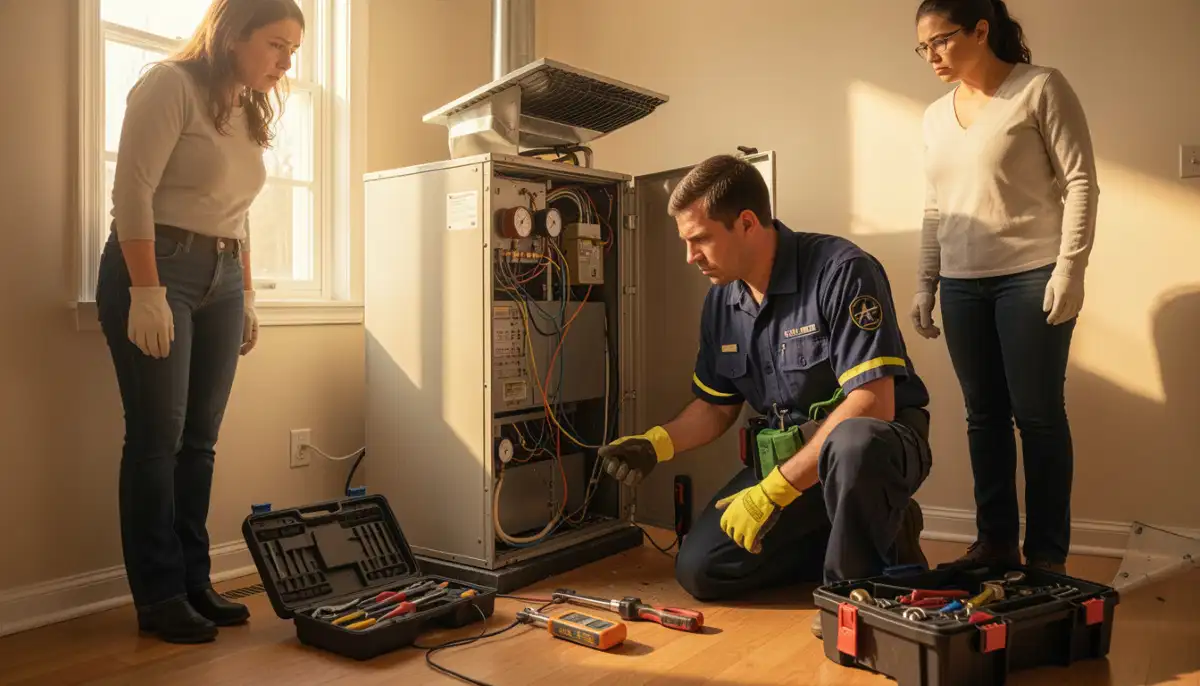
You notice a wet patch on your ceiling. Or worse—water is actually dripping from your indoor aircon unit onto your floor. You grab a bucket, place it underneath, and panic sets in.
“How long has this been happening? Is my ceiling going to collapse? How much is this going to cost?”
I’ve seen this scenario hundreds of times. A small drip ignored for days becomes a ceiling collapse costing R5,000-R15,000. Mould grows in the damp ceiling, creating health risks. Furniture and electronics get ruined.
But here’s the good news: most aircon leaking emergency situations can be stopped quickly with a few simple steps. And the underlying cause (a blocked drain line) is usually a cheap fix.
In this guide, I’ll give you emergency steps to take RIGHT NOW to stop water damage, show you how to clear a blocked drain line yourself, and tell you when to call a professional.
For more guidance, check water leak causes guide and drain line cleaning guide. Ready to stop that leak? Let’s go.
📋 Table of Contents
🚨 Emergency Steps: Stop Damage Immediately
If water is actively leaking from your aircon or ceiling, take these steps RIGHT NOW:
Step 1: Turn off the aircon. Use the remote AND turn off the isolator switch (near the outdoor unit). This stops more condensation from being produced.
Step 2: Place buckets or towels. Put buckets under the leak to catch water. Use towels to soak up water on the floor. Move furniture and electronics away from the leak area.
Step 3: If water is coming from the ceiling, poke a hole. Use a screwdriver to poke a small hole in the sagging area of the ceiling. Let the water drain into a bucket. This prevents the ceiling from collapsing under the weight of pooled water.
Step 4: Clear the drain line (see Section 3). A blocked drain line is the #1 cause of water leaks. Clearing it often stops the leak immediately.
Step 5: Call a professional if DIY doesn’t work. If clearing the drain line doesn’t stop the leak, or if water is coming from the ceiling, call a technician.
🚨 CEILING COLLAPSE WARNING:
If your ceiling is sagging or bulging, poke a small hole IMMEDIATELY to drain the water. A sagging ceiling can collapse without warning. One square meter of water 50mm deep weighs 50kg—that’s a lot of weight on your ceiling board.
Read our emergency repair guide.
⚠️ Ceiling Collapse Warning (Critical!)
This is the most important section in this guide. Water pooling on top of your ceiling is extremely dangerous.
Why ceilings collapse: Ceiling boards (gypsum, plasterboard) are not designed to hold water. They can support 5-10kg per square meter normally. Water is heavy—10 litres of water weighs 10kg. A 1m² area with 50mm of water weighs 50kg. The ceiling will sag, then suddenly collapse without warning.
Signs your ceiling is at risk: Visible sagging or bulging. Water stains spreading. A musty smell. The ceiling feels soft or spongy when touched. Cracks appearing around the leak.
What to do (immediately): Place a ladder under the sagging area. Use a screwdriver to poke a small hole in the lowest point of the sag. Stand to the side (not directly under) in case the ceiling gives way. Let the water drain into a bucket. The ceiling will be damaged, but it won’t collapse catastrophically.
What NOT to do: Don’t ignore a sagging ceiling—it will collapse. Don’t put heavy objects above the sagging area. Don’t sleep or spend time directly under a sagging ceiling.
⚠️ The Math of Ceiling Collapse:
A 1m x 1m area of ceiling with 5cm of water = 50 litres = 50kg of weight. Most ceilings are designed to hold 10-15kg. That’s 3-5x the safe limit. Poke the hole. Drain the water. Prevent collapse.
Read our leak detection guide.
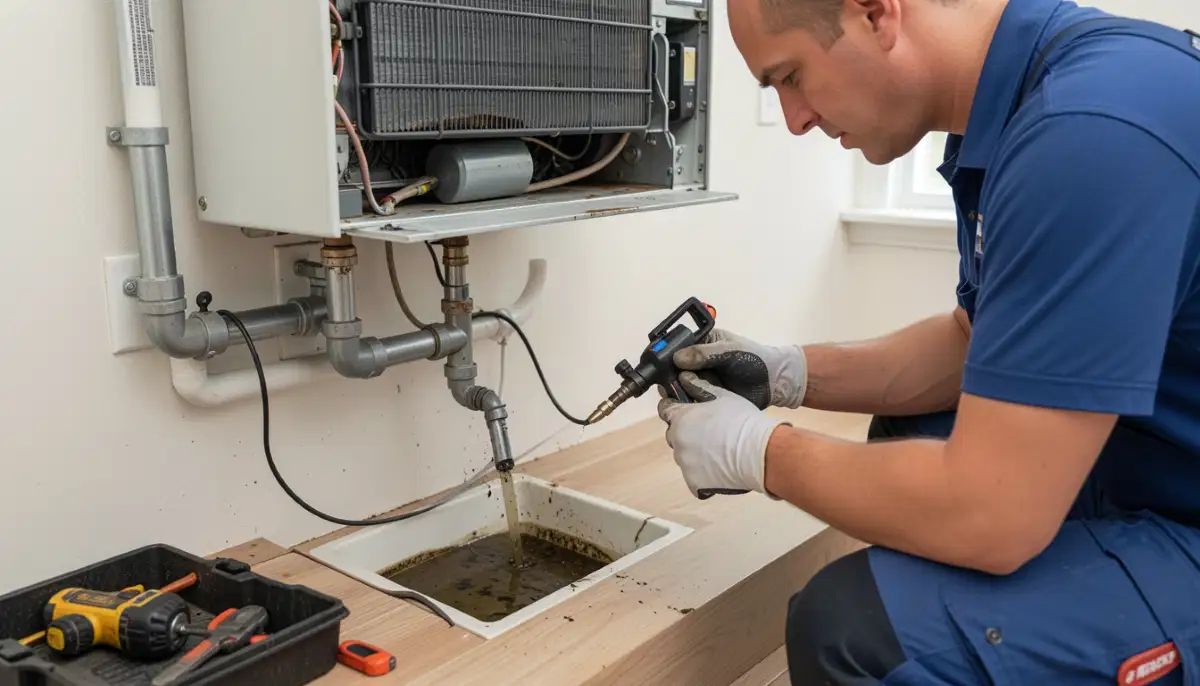
🔧 How to Clear a Blocked Drain Line (DIY Fix)
A blocked drain line is the #1 cause of emergency air conditioner leak situations. Clearing it often stops the leak immediately.
What you’ll need: Wet/dry vacuum (best method). White vinegar (for prevention). Bucket. Rubber gloves.
Method 1: Wet/Dry Vacuum (Most effective – 10 minutes)
- Turn off the aircon at the isolator switch.
- Locate the drain pipe exit outside your home (small white or clear plastic pipe near the outdoor unit).
- Place a bucket under the pipe.
- Seal the vacuum hose around the pipe (use a rag to create a seal if needed).
- Turn on the vacuum and let it run for 30-60 seconds.
- You should see water, slime, and debris being sucked out.
- Repeat 2-3 times until water flows freely.
- Pour 1 cup of white vinegar down the pipe to kill remaining algae.
- Flush with 2 cups of clean water.
- Restart the aircon and check if the leak has stopped.
Method 2: Vinegar Flush (For minor blockages – 5 minutes)
- Mix 1 part white vinegar with 2 parts water.
- Pour the mixture down the drain pipe from the outside end.
- Wait 30 minutes for the vinegar to dissolve algae and slime.
- Flush with clean water.
- This method works for prevention, not for active blockages. Use the vacuum for active leaks.
✅ Pro Tip:
If you don’t have a wet vacuum, you can use a small hand pump or even blow into the pipe (if you’re brave). But a wet vacuum is the most effective. Hardware stores rent them for R100-R200 per day.
Read our complete drain line cleaning guide.

Still Leaking After Clearing the Drain Line?
Get free quotes from verified local technicians for emergency leak repair.
Get Free Quotes From Local Technicians
Same-day emergency service available.
🛠️ Temporary Fixes Until the Technician Arrives
If you’ve cleared the drain line but water is still leaking, or you’re waiting for a technician, use these temporary measures:
For water dripping from the indoor unit: Place a bucket or container directly under the drip. Use a towel to create a “wick” from the unit to the bucket (helps channel water). Empty the bucket regularly. Do not run the aircon until the leak is fixed.
For water coming from the ceiling: Keep the drainage hole open (don’t patch it). Place a bucket under the hole. If the ceiling is still wet, use fans to circulate air and speed drying. Remove any soaked insulation above the ceiling (if accessible).
To prevent mould growth: Dry the area as much as possible. Use a dehumidifier if available. Run fans to circulate air. If the ceiling remains damp for more than 24 hours, mould will start growing.
What NOT to do temporarily: Don’t use duct tape or sealant to stop the leak—it will just force water somewhere else (inside your wall). Don’t ignore the leak thinking it will stop on its own—it won’t.
📞 When to Call a Professional
Call a professional immediately if:
- Water is coming from the ceiling (not the unit). This indicates the drain pan has been overflowing for some time. The ceiling may be damaged and needs inspection.
- The leak continues after clearing the drain line. You may have a cracked drain pan, disconnected pipe, or blocked internal drain.
- Water is leaking from the electrical area of the unit. This is a shock hazard. Turn off the aircon at the breaker immediately.
- You can’t access the drain pipe. Some installations have drain pipes inside walls or ceilings. A professional has tools to access them.
- The unit is making unusual noises along with the leak. Could indicate a failed pump or other internal damage.
- The ceiling is sagging or has collapsed. You need a ceiling repair specialist as well as an aircon technician.
What a professional will do: Diagnose the exact cause of the leak (blocked drain, cracked pan, disconnected pipe, or low refrigerant causing ice). Clear deep blockages you can’t reach. Replace cracked drain pan (R800-R2,000). Repair or replace damaged pipes. Check for mould and advise on remediation.
Read our same-day repair guide.
💰 Cost Guide: Leak Repair vs Ceiling Damage
Here’s what condensate overflow and related repairs cost in South Africa:
Drain line cleaning (DIY): R0 (using vacuum you already have) or R100-R200 (rent vacuum). This solves 80% of leaks.
Professional drain line cleaning: R300-R600. Technician clears the blockage with professional tools.
Cracked drain pan replacement: R800-R2,000 for part + R500-R1,000 labour = R1,300-R3,000 total.
Disconnected drain pipe repair: R500-R1,500 depending on access difficulty.
Ceiling repair (small patch): R1,500-R3,000. Includes cutting out damaged section, replacing plasterboard, painting.
Ceiling replacement (large area): R5,000-R15,000. If water damage is extensive or ceiling collapsed.
Mould remediation: R3,000-R10,000. If mould has spread. Health risk.
The bottom line: A R0-R600 drain line cleaning can prevent R5,000-R15,000 in ceiling damage. Don’t ignore a small drip.
Read our service cost guide.
🛡️ How to Prevent Future Water Leaks
Preventing drain blockage is the best way to avoid emergency leaks:
Flush drain line with vinegar every 3 months. Pour 1 cup white vinegar mixed with 2 cups water down the drain pipe. This kills algae and mould before they cause blockages. Takes 5 minutes. Costs pennies.
Clean filters monthly. A dirty filter causes ice build-up, which melts and floods the drain pan. Clean your filter every 2-4 weeks.
Check for water dripping outside. On a humid day, run your aircon for 30 minutes. Go outside and check the drain pipe—water should be dripping. If not, the line may be partially blocked.
Annual professional service. A technician will check the drain line, drain pan, and coils. They can spot potential problems before they cause leaks.
Install a float switch (optional). This device shuts off the aircon if the drain pan overflows, preventing ceiling damage. Cost: R300-R600 plus installation.
Read our maintenance checklist and service frequency guide.
Read CIDB water damage prevention guidelines.
❓ Frequently Asked Questions
What should I do immediately if my aircon is leaking water?
For an aircon leaking emergency, turn off the unit immediately, place buckets under the leak, move furniture away, and clear the drain line using a wet vacuum. If water is coming from the ceiling, poke a small hole to drain it and prevent collapse. Call a technician if DIY doesn’t work.
Can a blocked drain line cause ceiling damage?
Yes. A blocked condensate drain causes water to back up into the drain pan and overflow. If this happens repeatedly, water will soak into your ceiling, causing stains, sagging, and eventually collapse. Clear your drain line every 3 months to prevent this.
How do I unblock my aircon drain pipe myself?
Use a wet/dry vacuum: locate the drain pipe exit outside, seal the vacuum around the pipe, and suck for 30-60 seconds. You’ll see water, slime, and debris being pulled out. Then flush with a vinegar/water mixture. This clears 80% of blockages. Read our drain line cleaning guide.
Why is water dripping from my ceiling below the aircon?
This means the drain pan has been overflowing for some time. Water has pooled on top of your ceiling board, soaked through, and is now dripping down. This is an emergency—the ceiling may collapse. Poke a small hole to drain the water and call a technician immediately.
Can a dirty filter cause my aircon to leak water?
Yes indirectly. A dirty filter restricts airflow, causing the evaporator coils to freeze. When the ice melts (when the unit cycles off), a large volume of water floods the drain pan at once, causing an overflow leak. Clean your filter monthly to prevent this.
How much does it cost to fix an aircon water leak?
DIY drain line cleaning: R0-R200. Professional drain cleaning: R300-R600. Cracked drain pan replacement: R1,300-R3,000. Compare to ceiling repair: R1,500-R15,000. Fix small leaks immediately—they’re much cheaper than ceiling repairs.
Is an aircon water leak an emergency?
Water dripping from the unit itself is NOT an emergency (place a bucket, clear the drain line). Water dripping from the CEILING IS an emergency—the ceiling could collapse. Also, water leaking from the electrical area is an emergency (shock hazard). Turn off the unit and call a professional.
How do I know if my drain pan is cracked?
Signs of a cracked drain pan: water continues leaking even after you’ve cleared the drain line. Water drips from the bottom of the indoor unit (not the drain pipe). You see visible cracks when you open the front panel (requires professional inspection). If you suspect a cracked pan, call a technician.
Can low refrigerant cause water leaks?
Yes. Low refrigerant causes the evaporator coils to become too cold (below freezing), leading to ice build-up. When the ice melts (during defrost cycles or when you turn the unit off), the water volume overwhelms the drain pan, causing an overflow leak. Read our refrigerant leak guide.
How can I prevent my aircon from leaking water in the future?
Flush the drain line with vinegar every 3 months, clean filters monthly, schedule annual professional service, and check that the outdoor drain pipe is dripping on humid days. Prevention is cheap—repairs are expensive. Read our maintenance checklist.
✅ Final Thoughts: Act Fast, Save Thousands
An aircon leaking emergency can be scary, but most leaks are caused by a simple blocked drain line—a fix that takes 10 minutes and costs nothing if you have a wet vacuum. The real cost comes from ignoring the leak until it damages your ceiling.
Key takeaways for water leak emergencies:
- Turn off the aircon immediately – stops more water from being produced.
- If water is on the ceiling, poke a hole – prevents collapse. This is critical.
- Clear the drain line with a wet vacuum – solves 80% of leaks.
- Flush with vinegar every 3 months – prevents future blockages.
- Clean filters monthly – prevents ice-related leaks.
- Ceiling leaks are emergencies – call a professional immediately.
- A R0-R600 fix prevents R5,000-R15,000 damage – don’t ignore small drips.
Your action plan: First, turn off the aircon and place buckets. Second, if water is on the ceiling, poke a small hole to drain it. Third, clear the drain line using a wet vacuum. Fourth, if the leak stops, flush with vinegar and schedule a professional service. Fifth, if the leak continues or water is on the ceiling, request quotes from local technicians for emergency repair.
Aircon Still Leaking? Don’t Risk Ceiling Collapse
Get free quotes from verified local technicians for emergency leak repair.
📞 Call us: 073 138 4726 for immediate help finding aircon leak specialists near you.
📚 Official resources & standards referenced:
- CIDB – Water damage prevention guidelines for residential properties
- SABS – Drainage standards and condensate disposal requirements
- ECASA – Electrical safety during water leaks
Information provided for general guidance based on South African market conditions. If water is leaking near electrical components, turn off power at the breaker immediately and call a professional.
Written by: Innocent T Hanyani
Construction & Home Services Industry Specialist | 21+ Years Experience
Innocent T Hanyani has over two decades of experience working across South Africa’s construction, maintenance, and home services sectors. Throughout his career, he has worked closely with contractors, service providers, and property owners, gaining practical insight into how projects are quoted, managed, and completed. His work focuses on helping homeowners understand how to find reliable contractors, compare quotes, and avoid common industry pitfalls when hiring service professionals. His insights are based on practical industry experience as well as ongoing research into contractor platforms, service marketplaces, and hiring trends across South Africa.