
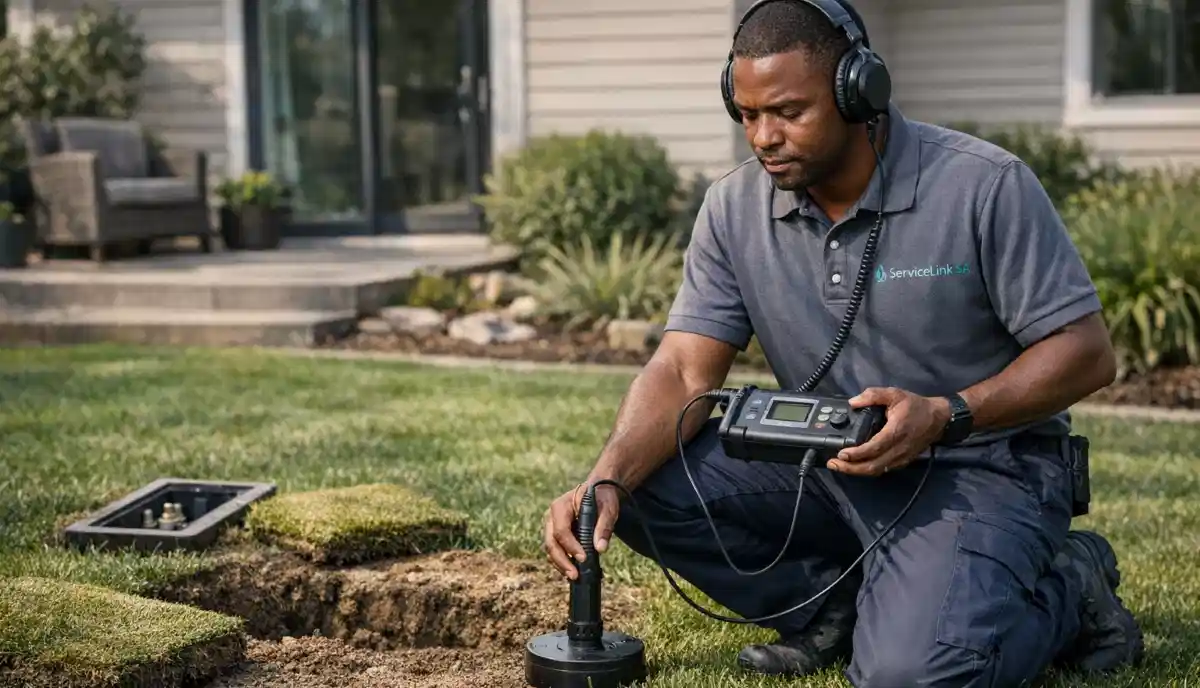
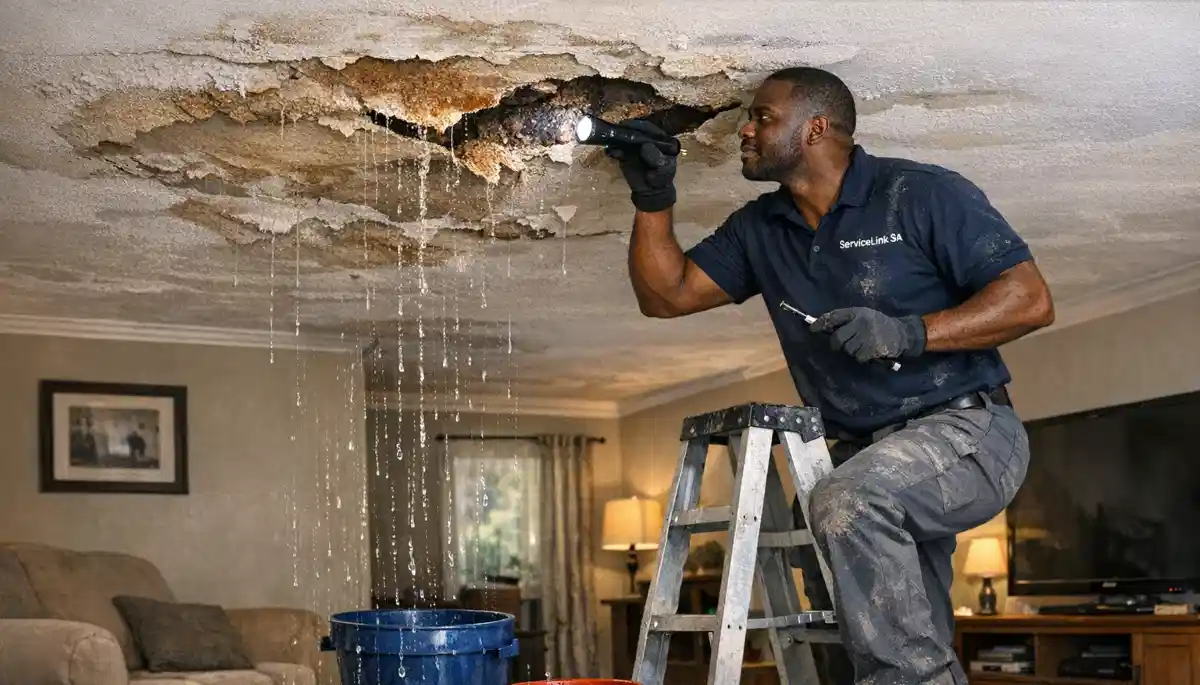
💧 Hidden Water Leak?
Stop wasting water and money. Get professional leak detection from verified specialists using non-destructive technology.
Get Leak Detection Quotes Near You
Servicing Gauteng, Western Cape, KwaZulu-Natal, and across South Africa
Leak Detection Services South Africa: Find Hidden Water Leaks Before They Cost You
💧 From silent slab leaks to underground pipe bursts—everything South African homeowners need to know about professional leak locating
Every month, you pay your water bill. It’s a little higher than last year, but you shrug it off. Maybe rates went up. Then a neighbour mentions their bill doubled. You check yours again. It’s up 40%. No visible leaks. No dripping taps. No wet patches on ceilings. Where is the water going?
I’ve investigated hundreds of these mysteries across South Africa. In Cape Town, a homeowner had been paying R800 extra every month for two years—over R19,000 down the drain—because of a pinhole leak under their slab foundation. In Johannesburg, a property owner’s high water bill turned out to be a cracked main line underground, eroding the soil beneath their driveway. By the time it was found, the driveway had collapsed.
These are not rare stories. Hidden water leak detection is one of the most challenging and misunderstood areas of plumbing. But modern technology has transformed what’s possible. Today, professional leak detection services can find leaks behind walls, under concrete slabs, and deep underground without breaking a single tile or digging a single hole.
This comprehensive guide will teach you everything about hidden leak detection, including how to detect a water leak underground, the technologies professionals use, what you should expect to pay, and when to call in the experts. Whether you need plumbing services in Gauteng, leak detection in Cape Town, or underground pipe leak repair in Durban, this leak locating guide has you covered.
For related information, read our water leak repair services guide, how to fix a leaking pipe, and burst pipe emergency guide. Let’s find that hidden leak.
📋 Table of Contents – Leak Detection Services Guide
🔍 7 Signs You Have a Hidden Water Leak
Hidden leaks don’t announce themselves with visible water. Instead, they leave subtle clues. Here are the most common water leak detection indicators:
📈 1. Unexplained High Water Bills
Your water bill has increased by 20-50% or more, but your family’s water usage hasn’t changed. This is often the first and only clue of a hidden leak.
💧 2. Water Meter Moves When No Water Is Used
Turn off all water-using fixtures. Check your meter. If it’s still moving, water is escaping somewhere—often underground or behind walls.
🌊 3. Wet or Soggy Patches in the Garden
Areas of your lawn that are consistently wetter than surrounding ground, especially if you haven’t watered recently, indicate an underground pipe leak.
🏠 4. Cracks in Walls or Foundation
Water leaking under your slab can erode soil, causing foundation settlement and cracking. New or widening cracks are serious red flags.
🔊 5. Running Water Sounds When Everything Is Off
At night when your home is quiet, listen carefully. A hissing or running water sound inside walls, floors, or the garden suggests a leak.
🟢 6. Unusually Lush or Green Patches
A leaking underground pipe fertilizes the soil above it. If one area of your lawn is dramatically greener than the rest, investigate.
🦠 7. Musty Odours or Mold Growth
Persistent musty smells, especially in basements or ground floors, indicate moisture from a hidden leak creating mold-friendly conditions.
⚠️ Critical Warning:
If you notice a sudden drop in water pressure combined with a dramatic increase in your water bill, you likely have a significant hidden leak. Don’t wait—water could be undermining your foundation or eroding soil beneath your home. Call for professional leak detection services immediately.
🤫 Why Hidden Leaks Go Undetected for Months (or Years)
Understanding why hidden leak detection is so challenging helps explain why professional leak detection services are worth the investment:
- Leaks behind walls: Water runs down inside wall cavities, absorbed by insulation and plaster. You may never see moisture until the damage is severe.
- Leaks under concrete slabs: Water flows through soil beneath your foundation. The slab itself hides all evidence until erosion causes settlement cracks.
- Underground pipe leaks: Water seeps directly into soil. Above ground, you might only notice slightly greener grass or a slightly damp patch—easily mistaken for normal garden conditions.
- Tiny pinhole leaks: A 1mm pinhole leak wastes approximately 2,500 litres per day—enough to fill 25 bathtubs weekly—but produces minimal sound or surface evidence.
📊 The Silent Cost of Hidden Leaks:
A small hidden leak wasting 500 litres per day costs approximately R1,500-R3,000 extra on your annual water bill. The same leak can cause R50,000-R150,000 in structural damage over two years. Early water leak detection isn’t an expense—it’s an investment in your property’s future.
🛠️ Professional Leak Detection Methods Explained
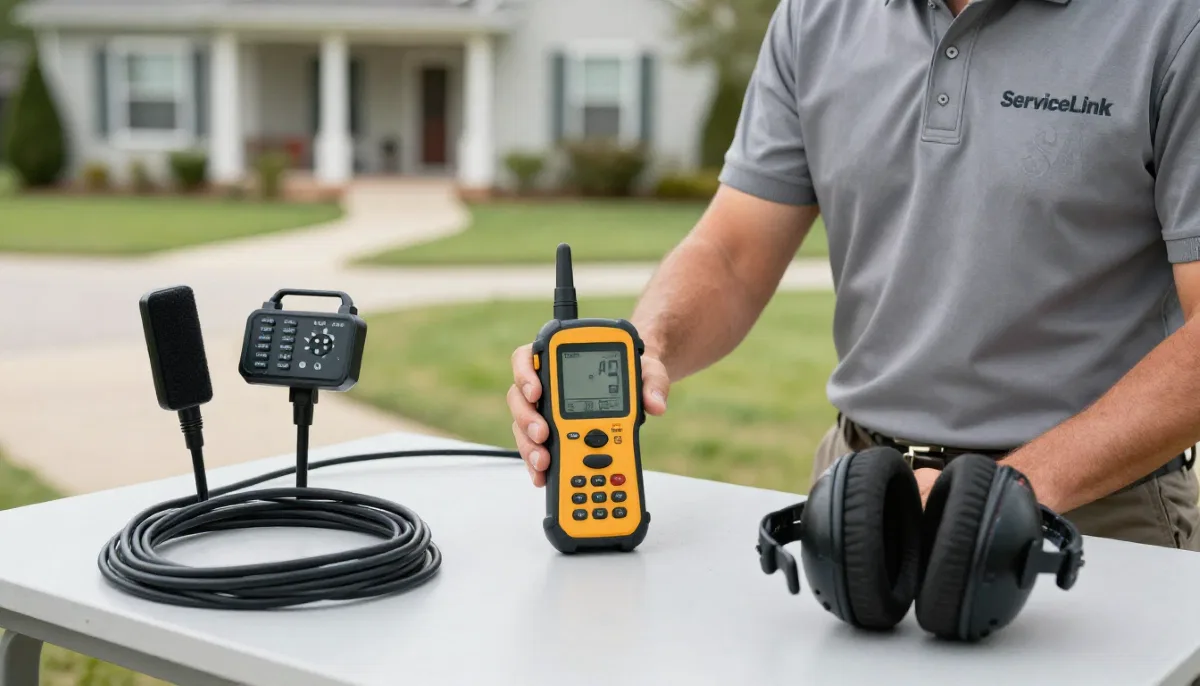
Modern leak detection services use multiple non-destructive technologies. Here’s how professionals find hidden leaks:
🎧 1. Acoustic Leak Detection
How it works: Highly sensitive ground microphones and listening discs amplify the sound of water escaping from pipes. Different materials (copper, PVC, concrete) produce distinct acoustic signatures.
Best for: Pressurised water pipes in any location—underground, behind walls, under slabs. Most common and cost-effective method.
🌡️ 2. Thermal Imaging (Infrared)
How it works: Infrared cameras detect temperature differences. Water leaking from pipes is typically cooler or warmer than surrounding materials, creating visible thermal patterns.
Best for: Leaks behind walls, under flooring, and in ceilings. Excellent for visualising the affected area’s extent.
💨 3. Tracer Gas Detection
How it works: A harmless gas (hydrogen or helium) is pumped into the pipe system. The gas escapes through any leak, and a sensitive sniffer device detects its location above ground.
Best for: Complex leak scenarios, plastic pipes (which don’t transmit sound well), and situations where acoustic methods are inconclusive.
📹 4. CCTV Pipe Inspection
How it works: A waterproof camera on a flexible rod travels through your pipes, transmitting real-time video. Identifies cracks, joint failures, and root intrusion.
Best for: Drainage and sewer lines, identifying the condition of pipes, and confirming the exact location of leaks or damage.
💧 5. Moisture Meters
How it works: Handheld devices measure moisture content in building materials (drywall, wood, concrete) without damaging surfaces.
Best for: Confirming the presence and extent of moisture damage after a leak is suspected, and monitoring drying progress after repairs.
Most professional leak detection services use a combination of these methods for accurate, non-destructive locating. For underground applications specifically, read our section on how to detect a water leak underground below.
📊 Leak Detection Technology Comparison
Not all detection methods are equal. Here’s how the technologies compare for different leak locating scenarios:
| Method | Accuracy | Non-Destructive | Best Application | Relative Cost |
|---|---|---|---|---|
| Acoustic Detection | ⭐⭐⭐⭐⭐ | ✅ Yes | Pressurised water pipes, all materials | Low-Moderate |
| Thermal Imaging | ⭐⭐⭐⭐ | ✅ Yes | Behind walls, under floors | Moderate |
| Tracer Gas | ⭐⭐⭐⭐⭐ | ✅ Yes | Plastic pipes, complex scenarios | Moderate-High |
| CCTV Inspection | ⭐⭐⭐⭐⭐ | ✅ Yes | Drains, sewers, visible pipes | Moderate |
| Moisture Meters | ⭐⭐⭐ | ⚠️ Pinless only | Confirming moisture presence | Low |
Professional water leak detection specialists will select the appropriate method(s) based on your specific situation. Never accept a quote that involves destructive testing (breaking walls or digging) without first attempting non-destructive electronic detection.
💧 Suspect a Hidden Leak?
Don’t let a small leak become a big disaster. ServiceLink SA connects you with verified leak detection specialists using advanced non-destructive technology.
Get Leak Detection Quotes Near You
Free quotes • Non-destructive detection • Verified specialists
💰 Leak Detection Cost Guide for South Africa (2025)
Leak detection services costs vary by method, location, and complexity. Here’s what to expect:
| Service Type | Cost Range (ZAR) | What’s Included | Time Required |
|---|---|---|---|
| Basic Leak Detection (Acoustic) | R850 – R2,000 | Listening devices, locate general area | 1-2 hours |
| Comprehensive Detection (Multiple Methods) | R1,500 – R3,500 | Acoustic + thermal + moisture mapping | 2-4 hours |
| Tracer Gas Detection | R2,500 – R5,000 | Gas injection, sniffer detection, pinpoint location | 2-4 hours |
| CCTV Drain Inspection | R1,500 – R3,500 | Camera inspection, video recording, damage assessment | 1-3 hours |
| Underground Pipe Leak Detection | R2,000 – R6,000 | Acoustic + tracer gas + line tracing | 2-5 hours |
| Emergency/After-Hours Detection | +R500 – R1,500 | Same-day or after-hours service | Varies |
Real-world example: A homeowner in Cape Town suspects a slab leak (water bill up 60% with no visible leaks). Professional leak detection services using acoustic + thermal methods costs R2,200. They locate a pinhole leak in a copper pipe under the kitchen slab. Repair cost: R8,500 (cut slab, replace pipe section, patch concrete). Total R10,700. Without detection, the leak would have wasted R15,000+ in water annually and potentially caused foundation damage costing R80,000+.
For repair costs after detection, read our underground pipe leak repair guide and water leak repair services.
📍 Types of Hidden Leaks by Location
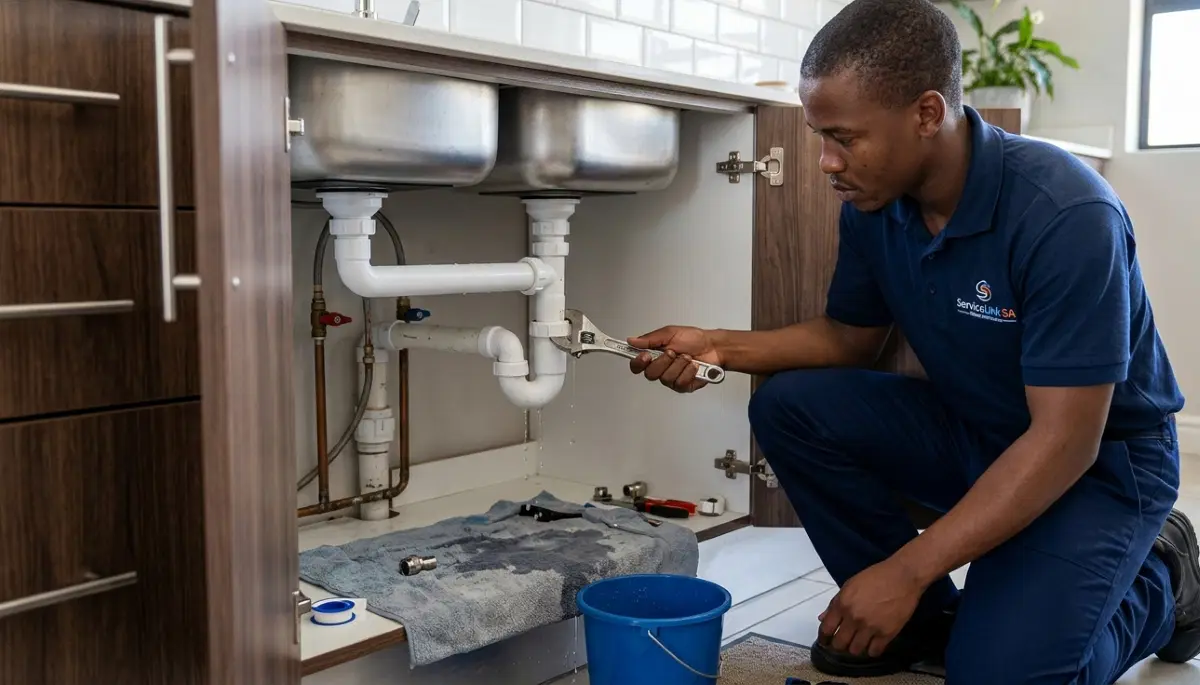
Different leak locations require different leak locating approaches:
🏠 Behind Walls
Common causes: Corroded copper pipes, loose fittings, nail/screw punctures.
Detection method: Thermal imaging (sees temperature differences), acoustic (listens for hissing).
🏗️ Under Concrete Slabs (Slab Leaks)
Common causes: Copper pipe corrosion (most common), abrasion against concrete, poor installation.
Detection method: Acoustic (sound travels through concrete), tracer gas (for plastic pipes), line tracing.
🌳 Underground (Between Meter and House)
Common causes: Tree root intrusion, ground movement, pipe age, external damage.
Detection method: Acoustic ground microphones, tracer gas, correlators.
🏊 Pool Plumbing Leaks
Common causes: Cracks in return lines, loose fittings at skimmer/pump.
Detection method: Pressure testing, dye testing, acoustic detection.
For specific guidance on underground leaks, see the next section on how to detect a water leak underground.
🌍 How to Detect a Water Leak Underground: Professional Methods
How to detect a water leak underground is one of the most common questions homeowners ask. Here’s the professional approach:
Step 1: Initial Assessment – The specialist checks your water meter for movement when no water is being used. They also note any soggy patches, unusually lush grass, or sections of pavement that are sinking or cracking.
Step 2: Line Tracing – Using electronic line tracers, they map the exact path of your underground pipes. This creates a “treasure map” of where to focus detection efforts.
Step 3: Acoustic Detection – Ground microphones are placed along the pipe path at intervals. The technician listens for the characteristic hissing or rushing sound of escaping water. Modern digital correlators can pinpoint the leak’s location within centimetres.
Step 4: Confirmation (if needed) – For plastic pipes or inconclusive acoustic results, tracer gas is introduced. The gas escapes at the leak point, and a sensitive sniffer above ground confirms the exact location.
Step 5: Marking and Excavation Planning – The leak point is marked on the surface. The specialist can then advise on the most efficient excavation or repair method, minimising digging and property disruption.
💡 Key Takeaway:
Professional underground leak detection should NEVER involve random digging. If a plumber suggests digging exploratory trenches without first using electronic detection methods, find another professional. Modern technology pinpoints leaks within centimetres, not metres.
For repair options after detection, read our underground pipe leak repair guide.
🛠️ DIY vs Professional Leak Detection: When to Call the Experts
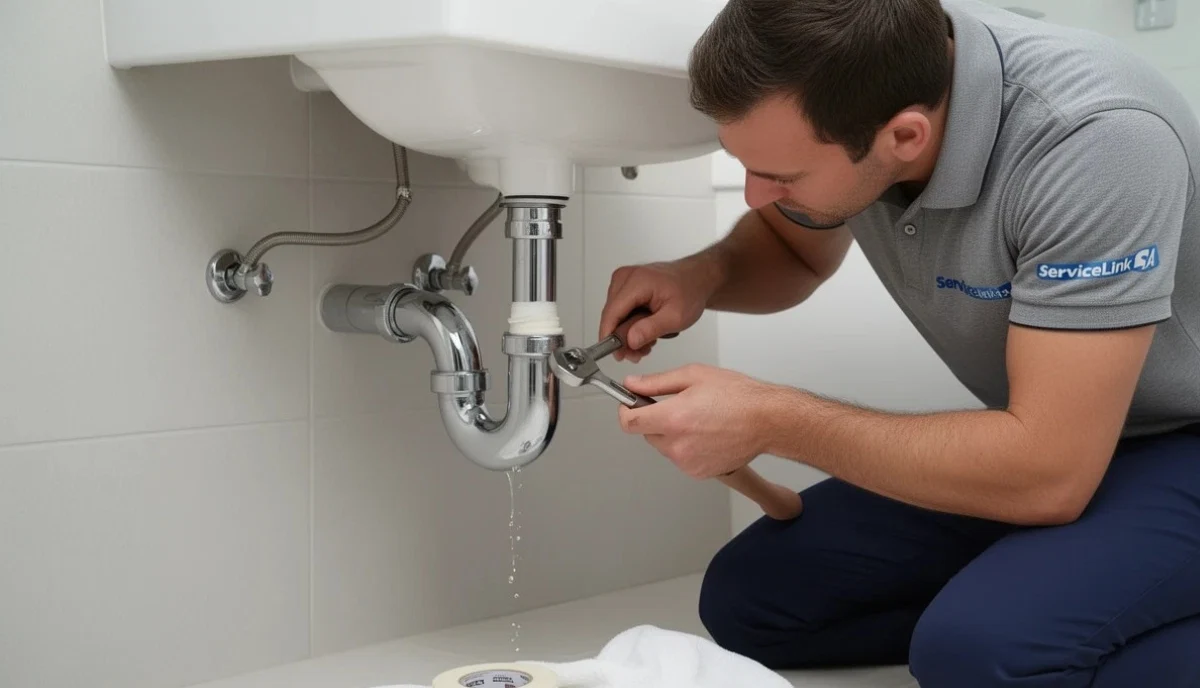
Some leak detection steps you can do yourself. Others require professional leak detection services:
| Task | DIY Possible? | Professional Required? | Notes |
|---|---|---|---|
| Check water meter for movement | ✅ Yes | ❌ No | First step—turn off all water, check meter for 30-60 minutes |
| Visual inspection of exposed pipes | ✅ Yes | ❌ No | Check under sinks, around geyser, in ceiling |
| Food colouring in toilet tank | ✅ Yes | ❌ No | Tests for silent toilet leaks |
| Locating leak behind walls | ❌ No | ✅ Yes | Requires thermal imaging or acoustic equipment |
| Underground leak detection | ❌ No | ✅ Yes | Requires ground microphones, correlators, or tracer gas |
| Slab leak detection | ❌ No | ✅ Yes | Sound travels through concrete—needs professional acoustic tools |
| CCTV drain inspection | ❌ No | ✅ Yes | Requires specialised camera equipment |
💡 The 30-Minute Rule:
If your DIY water meter test shows movement but you cannot find the leak within 30 minutes of searching, call professional leak detection services. The cost of professional detection is far less than the cost of ignoring the leak for another month.
🏠 Leak Detection and Insurance Claims
Many homeowners don’t realise that leak detection services are often covered by home insurance—or that failing to detect a known leak can void coverage. Here’s what you need to know:
✅ Typically Covered:
- Cost of locating the leak (detection services)
- Emergency repairs to stop active leaking
- Water damage restoration (drying, cleaning)
- Repair or replacement of damaged building materials
❌ Often Excluded:
- Gradual leaks you ignored for months
- Wear and tear or pipe corrosion
- Leaks from lack of maintenance
- Mold remediation (if not addressed promptly)
Critical steps for insurance claims:
- Document everything – Photos, videos, water meter readings, and the professional leak detection report.
- Don’t delay repairs – Insurance policies require you to mitigate further damage. Waiting makes claims harder to approve.
- Keep all receipts – Detection costs, repair costs, restoration costs, temporary accommodation if needed.
- Use registered professionals – Insurance companies may deny claims if work was done by unlicensed plumbers.
Read our plumbing insurance claim guide for detailed information on filing claims.
🛡️ Preventing Future Hidden Leaks
Once you’ve invested in water leak detection and repair, take these steps to prevent future hidden leaks:
📊 Monitor Your Water Meter Monthly
Write down your meter reading on the same day each month. Track usage patterns. A sudden unexplained increase is your earliest warning system.
🎛️ Install Pressure Reducing Valve
If your water pressure exceeds 500kPa, install a PRV. High pressure stresses pipes and accelerates leak-causing corrosion.
🔧 Schedule Annual Plumbing Inspection
Professional inspections catch developing issues before they become hidden leaks. Use our free inspection service.
🌳 Know Your Pipe Locations
Map where your underground pipes run. Avoid planting trees near these areas. Remove trees whose roots may have already invaded pipes.
💧 Consider Smart Leak Detectors
Wi-Fi connected water sensors can be placed near geysers, washing machines, and under sinks. They alert your phone at the first sign of moisture.
🏚️ Replace Old Galvanised Steel Pipes
If your home still has galvanised steel pipes (common in pre-1990 homes), budget for replacement. These pipes corrode from the inside and WILL develop hidden leaks.
For a complete maintenance schedule, download our Home Plumbing Maintenance Checklist.
❌ 5 Costly Mistakes Homeowners Make With Hidden Leaks
Mistake #1: Ignoring Unexplained High Water Bills
“It’s just a rate increase” is the most expensive assumption. Check your actual consumption (kilolitres used), not just the Rand amount. If consumption is up but your habits haven’t changed, you have a leak—even if you can’t see it.
Mistake #2: Calling a General Plumber for Detection
Many plumbers lack specialised leak detection equipment. They may suggest destructive methods (cutting walls, breaking slabs) because they don’t have acoustic or thermal tools. Always ask if they offer non-destructive electronic detection.
Mistake #3: Delaying Detection “To See If It Gets Worse”
Hidden leaks never improve. Every day of delay increases water waste (R20-R100 per day), structural damage, and repair complexity. A pinhole leak today is a slab collapse in 12 months.
Mistake #4: Accepting Destructive Testing Without a Second Opinion
If a plumber says “we need to break concrete to find the leak,” get a second opinion from a specialist leak detection service. Modern technology can pinpoint leaks under slabs without breaking anything.
Mistake #5: Not Using Insurance for Detection Costs
Many policies cover leak detection services as part of a claim. Call your insurer before scheduling detection. They may have preferred providers or specific documentation requirements.
📋 Real-World Case Studies: Hidden Leaks in South African Homes
These real examples show the value of professional water leak detection:
🏠 Case 1: The R19,000 Mystery Bill
Location: Cape Town | Homeowner: Michelle
Problem: Water bill doubled over 6 months to R3,200/month. No visible leaks. Garden looked normal.
Solution: Professional leak detection services used acoustic equipment and found a pinhole leak in a copper pipe under the kitchen slab. The leak was wasting 800 litres daily.
Outcome: Slab leak repaired (R9,500). Monthly bill returned to R1,400. Savings: R1,800/month. Detection paid for itself in 2 months.
Lesson: High bills without visible leaks almost always mean a hidden leak. Don’t assume rate increases.
🌳 Case 2: The Sinking Driveway
Location: Johannesburg | Homeowner: Thabo
Problem: Driveway developed a noticeable dip. Cracks appeared in the garage floor. No water visible.
Solution: Tracer gas detection revealed a cracked main water line 1.5m underground. Water was eroding soil beneath the driveway and garage slab.
Outcome: Pipe repair cost R12,000. Driveway and garage floor repair R45,000. Without detection, the entire driveway would have collapsed (R120,000+ replacement).
Lesson: Foundation cracks and sinking surfaces can indicate underground leaks. Investigate immediately.
❓ Frequently Asked Questions About Leak Detection
How much do leak detection services cost in South Africa?
Leak detection services typically cost R850-R2,000 for basic acoustic detection, R1,500-R3,500 for comprehensive multi-method detection, and R2,500-R5,000 for tracer gas detection. CCTV drain inspection costs R1,500-R3,500. Most homeowners pay between R1,500-R2,500 for professional hidden leak detection. This is far less than the cost of ignoring a leak (R5,000-R50,000+ in water waste and damage).
How to detect a water leak underground without digging?
How to detect a water leak underground without digging involves: 1) Acoustic ground microphones that listen for escaping water sounds, 2) Electronic correlators that calculate leak position by comparing sound arrival times at two points, 3) Tracer gas detection where harmless gas is pumped into pipes and detected above ground at the leak point, and 4) Thermal imaging that shows temperature differences from leaking water. Professional leak detection services use these non-destructive methods exclusively.
Can a water leak under the foundation cause structural damage?
Yes—this is one of the most serious consequences of ignoring water leak detection. Water under your slab erodes soil, causing voids. Your foundation settles into these voids, leading to cracked walls, uneven floors, sticking doors/windows, and in severe cases, structural failure. Repair costs for foundation damage from undetected leaks typically range from R50,000-R200,000. Early detection is critical.
How do I know if I have a hidden leak?
The most common water leak detection indicators are: unexplained high water bills (20-50%+ increase), water meter moving when no water is being used, soggy or unusually lush patches in your garden, musty odours indoors, new or widening foundation cracks, and the sound of running water when everything is off. If you notice any of these, schedule professional leak detection services immediately.
Will my home insurance cover leak detection costs?
Many comprehensive home insurance policies cover the cost of leak detection services as part of a valid claim, especially if the leak is sudden and accidental (not gradual wear and tear). However, coverage varies by insurer and policy. Always call your insurer before scheduling detection—they may have preferred providers or specific documentation requirements. Read our plumbing insurance claim guide for more details.
What’s the difference between acoustic and tracer gas leak detection?
Acoustic leak locating uses sensitive microphones to listen for the sound of water escaping from pressurised pipes. It works best for metal pipes (copper, galvanised steel) and costs less (R850-R2,000). Tracer gas detection pumps harmless hydrogen or helium into pipes; the gas escapes at the leak point and is detected above ground by a sniffer. It’s more expensive (R2,500-R5,000) but essential for plastic pipes (which don’t transmit sound well) and complex scenarios where acoustic methods are inconclusive.
How long does professional leak detection take?
Professional leak detection services typically take 1-4 hours depending on complexity. A simple acoustic check of a suspected wall leak might take 60-90 minutes. Comprehensive underground hidden leak detection involving line tracing, acoustic correlation, and tracer gas confirmation can take 3-5 hours. Emergency after-hours detection is available but costs more (add R500-R1,500).
Can I detect a hidden leak myself without special equipment?
You can perform initial checks: monitor your water meter (turn off all water, check for movement over 30-60 minutes), visually inspect exposed pipes, check for wet spots in the garden, listen for running water sounds at night, and test toilets with food colouring. However, if these steps suggest a leak but you can’t find it, you need professional leak detection services. Modern electronic detection equipment is not available to DIY homeowners.
✅ Final Thoughts: Don’t Let Hidden Leaks Drain Your Wallet
A hidden water leak is like a thief in your home—silently stealing money through your water bill while gradually destroying your property’s structure. But unlike a thief, you can catch this one with the right knowledge and professional help.
Key takeaways for South African homeowners:
- Monitor your water meter monthly—unexplained increases are your earliest warning
- Don’t ignore the signs—soggy patches, foundation cracks, musty odours, and high bills all demand investigation
- Professional leak detection services cost R850-R3,500—far less than ignoring a leak
- Modern detection is non-destructive—no random digging or wall-breaking required
- Different leak locations need different technologies—acoustic for metal pipes, tracer gas for plastic, thermal for walls
- Insurance may cover detection costs—call your insurer before scheduling
- Prevention is cheaper than repair—annual inspections, pressure regulation, and pipe upgrades prevent most hidden leaks
Your action plan: Check your water meter today. Compare last month’s reading to this month. If consumption is up without explanation, don’t wait. Use ServiceLink SA to find verified leak detection services specialists in your area. The cost of detection is small compared to the cost of ignoring the problem.
💧 Suspect a Hidden Leak?
Don’t let a small leak become a big disaster. ServiceLink SA connects you with verified leak detection specialists using advanced non-destructive technology.
📞 Call us: 073 138 4726 for immediate help finding a leak detection specialist near you.
Underground leak repair •
Water leak repair •
How to choose a specialist •
Beat Your Quote guarantee
📚 Official resources & standards referenced:
- Department of Water and Sanitation – Water conservation guidelines and leak detection standards.
- SANS 10400 – South African National Standard for leak detection and plumbing compliance.
- Plumbing Industry Registration Board (PIRB) – Find registered leak detection specialists.
Information provided for general guidance based on industry research and DWS/SANS standards. For suspected hidden leaks, professional leak detection services should be engaged promptly to prevent structural damage.
Written by: ServiceLink SA Research Team
Leak Detection & Water Conservation Specialists
The ServiceLink SA Research Team comprises leak detection experts, water conservation specialists, and plumbing industry professionals with decades of combined experience locating hidden leaks across South Africa. Our team works directly with acoustic detection specialists, thermal imaging technicians, and PIRB-registered plumbers to bring you accurate, actionable information about leak detection services, non-destructive locating methods, and water conservation strategies. We continuously update our guides to reflect current detection technologies, SANS standards, and real-world pricing across all South African provinces.
For more information about leak detection and water conservation, explore our related resources:
underground pipe leak repair,
water leak repair services,
how to fix a leaking pipe,
burst pipe emergency guide,
and low water pressure diagnosis.
Our how ServiceLink SA works and
contractor verification process pages explain how we connect you with trusted professionals.
See our service areas page for leak detection coverage in your region.