
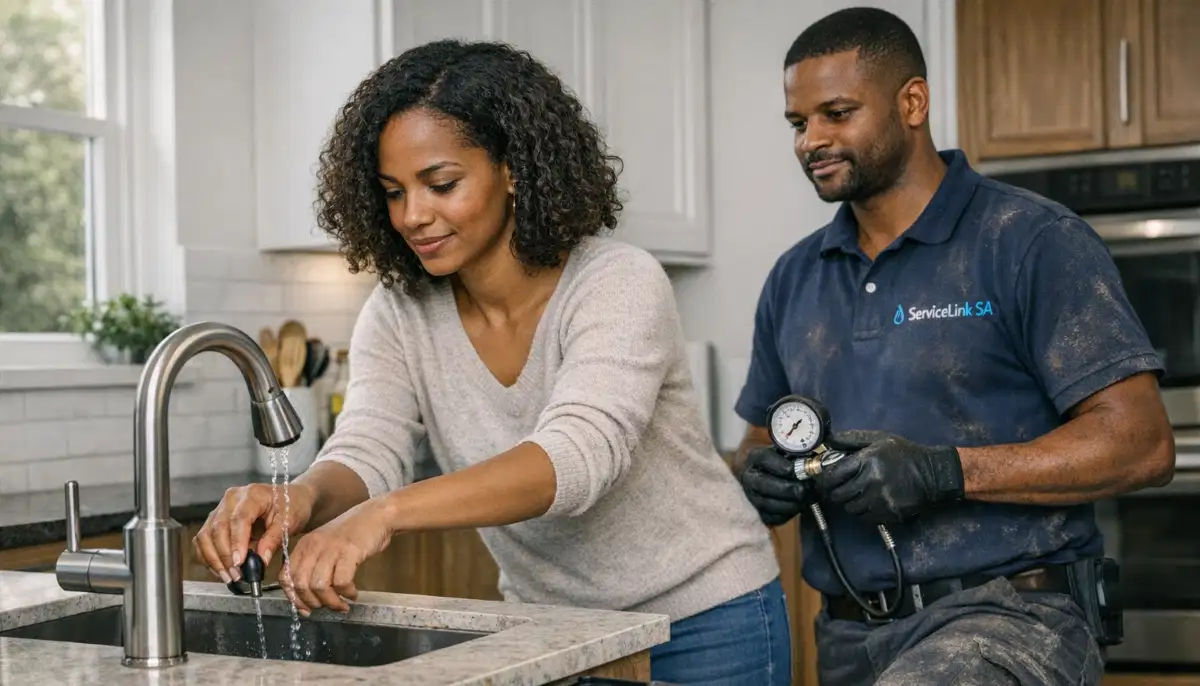
💧 Struggling with Low Water Pressure?
Get professional diagnosis from verified plumbers. From simple fixes to pump installation—we’ll connect you with the right specialist.
Get Low Water Pressure Quotes Near You
Servicing Gauteng, Johannesburg, Pretoria, Sandton, Centurion, Midrand, and across South Africa
Low Water Pressure Problems: 7 Common Causes & How to Fix Them
🚰 From frustrating trickles to powerful flows—complete guide to diagnosing and fixing low water pressure in your South African home
You step into the shower after a long day. You turn the tap. What should be a relaxing, powerful spray is instead a weak, pathetic trickle. Washing your hair takes three times as long. Your dishwasher runs for hours. Your garden irrigation system barely covers half the lawn.
I’ve lived with low water pressure myself—and I’ve helped hundreds of homeowners across Gauteng solve this frustrating problem. The truth is, low water pressure problems can range from a 5-minute DIY fix to a significant plumbing issue requiring professional intervention. But without proper diagnosis, you could waste money on solutions that don’t address the root cause.
This comprehensive guide will teach you how to diagnose low water pressure causes, determine whether the issue is localized or whole-house, and choose the right solution to fix water pressure problems permanently. Whether you need plumbing services in Gauteng, leak detection in Johannesburg, or water pressure pump installation in Pretoria, this water flow guide has you covered.
For related information, read our how to increase water pressure guide, booster pump vs pressure tank comparison, and municipal water pressure problems guide. Let’s get your water flowing again.
📋 Table of Contents – Low Water Pressure Diagnosis & Fixes
🔍 Localized vs Whole-House: The First Diagnostic Step
Before you can fix water pressure issues, you need to know whether the problem affects one fixture or your entire home. This single distinction dramatically changes the diagnosis:
🚰 LOCALIZED LOW PRESSURE
Only one tap, shower, or fixture has low pressure. Others work fine.
Likely causes: Clogged aerator, faulty fixture, partially closed isolation valve, blocked pipe section, or failing cartridge/valve.
🏠 WHOLE-HOUSE LOW PRESSURE
All fixtures (taps, showers, toilets) have low pressure simultaneously.
Likely causes: Main water line issue, pressure reducing valve failure, hidden leak, municipal supply problem, or pipe corrosion throughout the house.
Quick test: Run the kitchen tap, bathroom tap, and outdoor tap simultaneously. If all have similarly weak water flow, you likely have a whole-house problem. If only one is weak while others are fine, the issue is localized to that fixture or its branch pipe.
💡 Pro Tip:
Test your water pressure during different times of day. If pressure is fine in the morning but terrible in the evening, the issue may be municipal (peak demand periods) rather than your home’s plumbing. This is common in high-density areas like Sandton and Midrand.
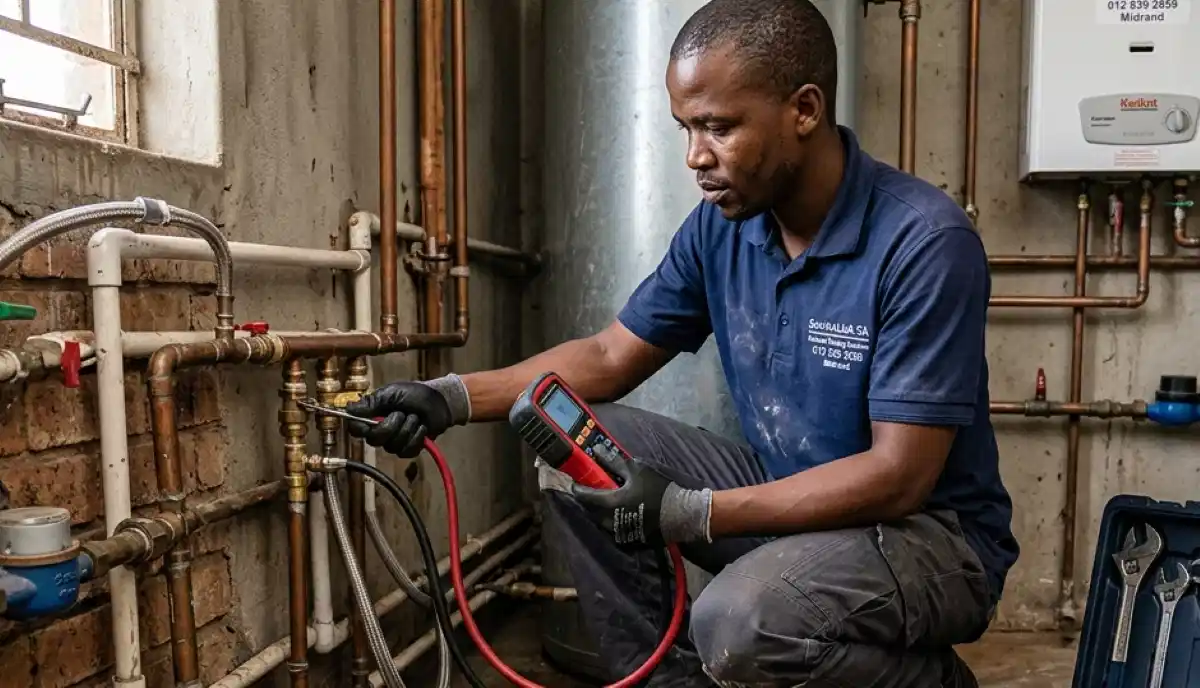
🔧 7 Common Causes of Low Water Pressure
Here are the most frequent low water pressure causes in South African homes, ranked from simplest to most complex:
1. 🚿 Clogged Aerator (Most Common & Easiest Fix)
The aerator is the small screen at the tip of your tap. Over time, sediment and mineral buildup (especially in areas with hard water) clog the screen, restricting water flow. This affects only the specific tap. Fix: Unscrew, clean, reinstall. Takes 5 minutes, costs nothing.
2. 🚪 Partially Closed Isolation Valve
Each fixture has an isolation valve (stop cock) under the sink or behind the toilet. If partially closed, water flow reduces. This can happen accidentally during cleaning or maintenance. Fix: Locate the valve (small silver or plastic knob/lever) and turn fully counter-clockwise/open.
3. 📉 Pressure Reducing Valve (PRV) Failure
Many homes have a PRV to reduce high municipal pressure (often 600-800kPa) to safe levels (400-500kPa). When PRVs fail, they often fail in the “closed” position, dramatically reducing pressure throughout the house. Fix: Professional replacement (R1,500-R3,500).
4. 💧 Hidden Water Leak
A leak in your main water line or under your slab reduces pressure throughout the house. The water escaping before reaching your fixtures means less available pressure. Fix: Professional leak detection services (R850-R3,500) plus repair (R2,000-R15,000+).
5. 🏚️ Corroded or Blocked Pipes
Galvanised steel pipes (common in homes built before 1990) corrode from the inside. The internal diameter shrinks, dramatically reducing water flow over time. Fix: Pipe replacement or re-piping (R15,000-R60,000).
6. 🏙️ Municipal Supply Issues
Sometimes the problem isn’t your home—it’s the municipal supply. Low pressure from the street, main line breaks, or peak demand periods (5-7pm in high-density areas) reduce pressure for entire neighbourhoods. Fix: Check with neighbours. If they have same issue, contact municipality.
7. 🔧 Faulty Fixture or Cartridge
Modern mixer taps use ceramic cartridges. When these fail, they can restrict water flow to that specific tap. Fix: Replace cartridge (R200-R800) or entire tap (R800-R3,000).
For a detailed guide on each cause, read our how to increase water pressure guide.
📋 DIY Diagnostic Tests You Can Run
Before calling a professional, run these diagnostic tests to identify low water pressure causes:
📏 The Bucket Test (Measure Flow Rate)
Place a 10-litre bucket under a tap. Turn the tap fully open. Time how many seconds to fill. Divide 10 by seconds, multiply by 60 = litres per minute. Normal flow: 15-25 L/min. Below 10 L/min indicates a problem.
🔍 Aerator Check
Unscrew the aerator from the affected tap. If it’s full of sediment or debris, that’s likely your problem. Clean it and test pressure again before investigating further.
📊 Pressure Gauge Test
Buy a pressure gauge (R150-R300 from hardware stores). Attach to an outside tap or washing machine connection. Turn on tap fully. Normal pressure: 400-600 kPa. Below 300 kPa indicates a problem.
💧 Meter Movement Test
Turn off all water in your home. Check your water meter. If it’s still moving after 30 minutes, you have a hidden leak causing pressure loss. Read our leak detection guide.
For professional pressure testing, read our water pressure pump installation guide.
💧 Low Water Pressure Driving You Crazy?
Get professional diagnosis from verified plumbers. From simple fixes to pump installation—we’ll connect you with the right specialist.
Free quotes • Verified plumbers • Beat Your Quote guarantee
🛠️ Simple DIY Fixes (5-30 Minutes)
For many low water pressure problems, the solution is quick and free:
| Problem | DIY Fix | Time | Cost |
|---|---|---|---|
| Clogged aerator | Unscrew, clean with vinegar, reinstall | 5 minutes | Free |
| Partially closed isolation valve | Locate valve under sink, turn fully open | 2 minutes | Free |
| Clogged showerhead | Soak in vinegar overnight, scrub with brush | 15 minutes + soaking | Free (vinegar R20) |
| Sediment in flexible hoses | Disconnect, rinse, reconnect (ensure rubber washers in place) | 15 minutes | Free |
💡 Before Calling a Plumber:
Always check aerators and isolation valves first. I’ve personally responded to “emergency” calls that were simply a closed valve or dirty aerator—saving the homeowner a R850 call-out fee. These 5-minute checks can save you hundreds of Rands.
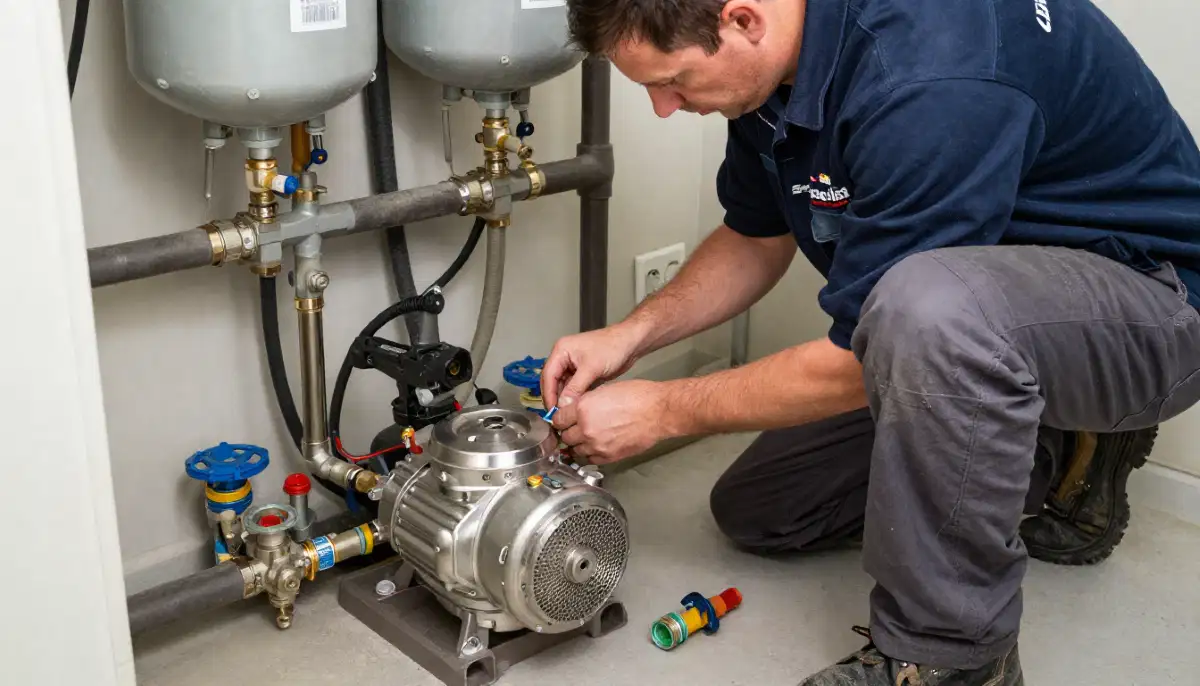
👨🔧 Professional Solutions for Complex Low Water Pressure Issues
When DIY fixes don’t work, these professional solutions address the root low water pressure causes:
🔧 Pressure Reducing Valve (PRV) Replacement
If your PRV has failed in the closed position, replacement is the only solution. A licensed plumber can test your pressure at the main line to diagnose PRV failure. Cost: R1,500-R3,500 including parts and labour. Most PRVs last 10-15 years.
💧 Hidden Leak Repair
If your meter moves when all water is off, you have a leak. Professional leak detection services locate the leak non-destructively (R850-R3,500). Repair costs vary: R2,000-R8,000 for wall leaks, R7,000-R35,000+ for under-slab or underground repairs.
🏚️ Pipe Replacement or Re-piping
For homes with corroded galvanised steel pipes, partial or complete re-piping is the only permanent fix water pressure solution. Partial re-piping (problem areas only): R8,000-R25,000. Complete re-piping (whole house): R25,000-R65,000+ depending on home size and access.
⚡ Pressure Booster Pump Installation
For homes with persistently low municipal pressure, a booster pump is the solution. Pumps increase pressure from the main line before water enters your home. Cost: R4,000-R12,000 including pump and installation. See our water pressure pump installation guide.
For help choosing between a booster pump and pressure tank, read our booster pump vs pressure tank comparison.
⚡ Pressure Boosting Systems: Pumps & Tanks Explained
When municipal supply is the root of your low water pressure problems, boosting systems provide the solution:
| System Type | How It Works | Best For | Cost (Installed) | Pros/Cons |
|---|---|---|---|---|
| Single Booster Pump | Pump activates when water flows, boosting pressure | Constant low pressure, good flow rate | R4,000-R8,000 | ✅ Affordable, effective ❌ Can be noisy, needs maintenance |
| Pressure Tank System | Stores pressurised water; pump cycles less frequently | Low flow rate, pump cycling issues | R6,000-R12,000 | ✅ Longer pump life, steady pressure ❌ More expensive, takes space |
| Variable Speed Drive Pump | Adjusts speed based on demand; maintains constant pressure | Varying demand, high-end homes | R10,000-R20,000 | ✅ Energy efficient, quiet, constant pressure ❌ Most expensive |
Real-world example: A home in Sandton with municipal pressure of only 250kPa (well below the recommended 400-600kPa). Installing a single booster pump (R6,500) restored pressure to 550kPa. The homeowner can now run two showers simultaneously without pressure drop. Payback: Improved quality of life and properly functioning appliances.
For detailed comparison, read our booster pump vs pressure tank guide.
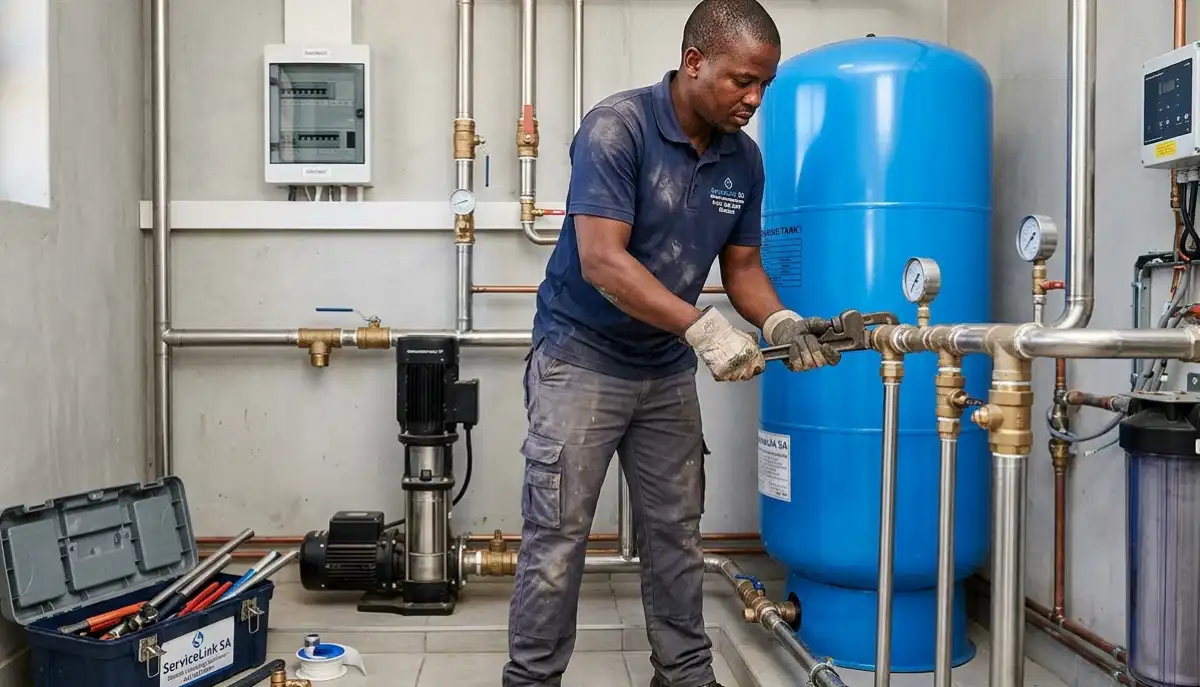
🏙️ Municipal Water Pressure Problems: When the Problem Isn’t Your Home
Sometimes low water pressure problems originate with the municipality, not your plumbing. Here’s how to tell:
✅ Signs of Municipal Issues:
- All neighbours have same low pressure
- Pressure is fine early morning, terrible in evening (peak demand)
- Sudden drop after municipal maintenance work
- Noticeable pressure fluctuations throughout the day
📞 What You Can Do:
- Contact your municipality to report the issue
- Ask neighbours to report as well (more reports = faster action)
- Install a pressure booster pump (solution for your home only)
- Install a pressure tank to store water during good pressure periods
For a detailed guide on municipal issues, read our municipal water pressure problems guide.
💰 Low Water Pressure Fix Cost Guide (2025)
Costs to fix water pressure problems vary widely based on the root cause:
| Solution | Cost Range (ZAR) | Time Required | DIY or Professional |
|---|---|---|---|
| Clean aerator/showerhead | Free – R50 | 5-15 minutes | DIY |
| Open isolation valve | Free | 2 minutes | DIY |
| Replace tap cartridge | R200-R800 | 30-60 minutes | DIY or Professional |
| Pressure gauge test | R150-R300 | 10 minutes | DIY |
| Professional diagnosis | R450-R1,000 | 1-2 hours | Professional |
| PRV replacement | R1,500-R3,500 | 2-3 hours | Professional |
| Leak detection | R850-R3,500 | 1-4 hours | Professional |
| Leak repair (wall) | R2,000-R8,000 | 3-8 hours | Professional |
| Leak repair (slab/underground) | R7,000-R35,000+ | 1-3 days | Professional |
| Booster pump installation | R4,000-R12,000 | 4-8 hours | Professional |
| Partial re-piping | R8,000-R25,000 | 2-5 days | Professional |
| Complete re-piping | R25,000-R65,000+ | 3-10 days | Professional |
For complete pricing context on all plumbing services, see our plumbing prices guide.
🌍 Regional Considerations: Gauteng & Beyond
Low water pressure problems vary by region in South Africa. Here’s what’s common in different areas:
| Region | Common Pressure Issues | Recommended Solutions |
|---|---|---|
| Johannesburg/Sandton | Variable municipal pressure, peak demand drops, older homes with corroded pipes | Pressure test first. Booster pump for municipal issues. Re-piping for older homes. |
| Pretoria/Centurion | Generally good pressure, but some areas have high pressure requiring PRVs (which can fail closed) | Check PRV function. Install pressure gauge to monitor. Standard booster if needed. |
| Midrand | Rapid development area—new and old infrastructure mix, variable pressure | Check if neighbours affected (infrastructure issues). Booster pump often best solution. |
| Coastal areas (Durban, Cape Town) | Lower municipal pressure typical, saltwater corrosion affects pipes faster | Booster pumps common. Pipe material matters (copper and PVC better than galvanised). |
For location-specific services, explore our plumbing services Gauteng, Johannesburg, Pretoria, Sandton, Centurion, and Midrand pages.
🛡️ Preventing Future Low Water Pressure Problems
Once you’ve fixed your low water pressure problems, take these steps to prevent recurrence:
📊 Annual Pressure Testing
Test your water pressure annually using a gauge. Track readings over time. A gradual decline indicates developing pipe corrosion or sediment buildup.
🔧 Maintain Your PRV
Pressure reducing valves should be checked every 2-3 years. Most PRVs last 10-15 years but can fail earlier in areas with poor water quality.
🏚️ Plan for Pipe Replacement
If your home has galvanised steel pipes and is over 30 years old, start budgeting for re-piping. Don’t wait for complete failure.
💧 Address Hard Water
If you have hard water (common in many Gauteng areas), consider a water softener. Hard water accelerates pipe corrosion and clogs aerators.
For a complete maintenance schedule, download our Home Plumbing Maintenance Checklist.
❌ 5 Mistakes to Avoid When Dealing With Low Water Pressure
Mistake #1: Installing a Booster Pump Without Proper Diagnosis
A booster pump won’t fix a hidden leak or corroded pipes—it may even make those problems worse by increasing pressure on already weak pipes. Always diagnose the root low water pressure causes before buying equipment.
Mistake #2: Ignoring Localized Pressure Issues
“Only the kitchen tap has low pressure, but the rest is fine—I’ll live with it.” A single low-pressure fixture often indicates a failing valve, blocked pipe, or developing leak that WILL spread.
Mistake #3: Not Checking with Neighbours First
Before spending thousands on a plumber, ask neighbours if they have similar low water pressure problems. If yes, the issue is likely municipal—and your plumber can’t fix the street supply.
Mistake #4: Using Chemical Descalers in Old Pipes
Chemical descalers can eat through already-thin corroded pipes, creating leaks instead of fixing pressure. For old galvanised pipes, replacement is the only safe solution.
Mistake #5: Assuming High Pressure Is Always Good
Pressure above 600kPa damages pipes, geysers, and fixtures. If you have high pressure, you need a PRV—not a booster. High pressure causes leaks and bursts, not solves them.
📋 Real-World Case Studies: Fixing Low Water Pressure
🚿 Case 1: The 5-Minute Free Fix
Location: Johannesburg | Homeowner: Michael
Problem: Kitchen tap pressure suddenly dropped to a trickle. Other taps worked fine.
Diagnosis: Clogged aerator—full of sediment and debris.
Solution: Unscrewed aerator, rinsed clean, reinstalled. Pressure restored to normal.
Cost: Free. Time: 5 minutes. Lesson: Always check aerators first.
🏚️ Case 2: The Corroded Pipe Nightmare
Location: Pretoria | Homeowner: Susan
Problem: Whole-house pressure gradually declined over 3 years. Now showers are useless.
Diagnosis: Pressure test showed 200kPa at main (should be 400+). CCTV inspection revealed severely corroded galvanised steel pipes throughout home.
Solution: Complete re-piping with PEX (R45,000). Pressure restored to 550kPa.
Lesson: Old pipes don’t heal—they only get worse. Plan for replacement.
❓ Frequently Asked Questions About Low Water Pressure
Why is my water pressure suddenly low in only one tap?
Why is my water pressure suddenly low in only one fixture? The most common causes are a clogged aerator (unscrew and clean—5 minutes, free), a partially closed isolation valve under the sink, a failing tap cartridge, or debris in the flexible hose. If cleaning the aerator doesn’t help and the valve is fully open, you may need a professional to check the cartridge or pipe branch.
How do I test my home’s water pressure?
To test your water pressure, buy a pressure gauge (R150-R300 from hardware stores). Attach it to an outside tap or washing machine connection. Turn the tap fully open. Normal pressure reads 400-600 kPa. Below 300 kPa indicates a problem. Above 700 kPa is too high and requires a pressure reducing valve. For a simple flow test, time how many seconds to fill a 10-litre bucket—under 30 seconds is normal (20+ litres/minute).
Can a hidden leak cause low water pressure?
Yes—a hidden leak is one of the most common low water pressure causes for whole-house pressure drops. Water escaping before reaching your fixtures reduces available pressure throughout the home. If your water meter moves when all fixtures are off, you have a leak. Professional leak detection services (R850-R3,500) can locate it non-destructively before you invest in other solutions.
What is normal water pressure in South Africa?
According to SANS standards, normal residential water pressure is 400-600 kPa. Most municipalities supply at 600-800 kPa at the street level, which is reduced by a Pressure Reducing Valve (PRV) before entering your home. Pressure below 300 kPa is considered low and will affect appliance performance. Pressure above 700 kPa without a functioning PRV will damage pipes, geysers, and fixtures.
Will a booster pump fix all low water pressure problems?
No. A booster pump only helps when the issue is insufficient incoming pressure from the municipality. It will NOT fix low pressure caused by hidden leaks, corroded pipes, or failed PRVs. In fact, a booster pump can make leak problems worse by increasing pressure on already-compromised pipes. Always diagnose the root low water pressure causes before installing a pump. Read our booster pump guide for more.
How much does it cost to fix low water pressure?
Costs to fix water pressure range from free (cleaning aerators) to R65,000+ (complete re-piping). Most homeowners pay between R850-R3,500 for professional diagnosis and simple repairs (PRV replacement, leak detection). Booster pump installation costs R4,000-R12,000. The key is proper diagnosis—the cheapest fix that addresses the root cause is always the best value. Get multiple quotes before committing to expensive solutions.
Why does my water pressure drop when I run two taps at once?
Some pressure drop is normal when multiple fixtures run simultaneously—your water flow is being split between outlets. However, a dramatic drop (e.g., shower becomes a trickle when someone flushes) indicates either insufficient incoming pressure, undersized pipes, or a restriction somewhere in your system. Professional pressure testing can determine if the drop is normal or indicates a problem needing correction.
Can old pipes cause low water pressure?
Absolutely. Galvanised steel pipes (common in homes built before 1990) corrode from the inside over time. This corrosion reduces the internal diameter of the pipe, dramatically restricting water flow even if pressure at the main is normal. This typically causes gradual pressure decline over years. The only permanent solution is pipe replacement. Read our pipe replacement guide for more.
✅ Final Thoughts: Restore Your Water Flow Today
Low water pressure problems are frustrating, but they’re almost always solvable. The key is proper diagnosis before throwing money at solutions. Start with the simple checks—aerators, isolation valves, neighbour comparisons. Then escalate to professional diagnosis if needed.
Key takeaways for South African homeowners:
- Distinguish localized vs whole-house—this guides your entire diagnostic process
- Clean aerators first—5 minutes solves most single-fixture issues for free
- Test your pressure—a R150 gauge provides objective data
- Check with neighbours—municipal issues need municipal solutions
- Hidden leaks and corroded pipes are common in older homes
- Booster pumps help with municipal pressure—but won’t fix other issues
- Professional diagnosis is worth the cost—the right fix saves money long-term
Your action plan: Run the bucket test today. If flow is below 15 L/min, start the diagnostic process. Check aerators, valves, and neighbours. If you need professional help, use ServiceLink SA to find verified plumbers who specialise in low water pressure problems. Don’t live with frustrating trickles—restore your water flow today.
💧 Still Struggling with Low Water Pressure?
Get professional diagnosis from verified plumbers. From simple fixes to pump installation—we’ll connect you with the right specialist.
📞 Call us: 073 138 4726 for immediate help finding a pressure specialist near you.
Increase water pressure guide •
Pump installation •
Pump vs tank comparison •
Beat Your Quote guarantee
📚 Official resources & standards referenced:
- Department of Water and Sanitation – Water pressure regulations and guidelines.
- SANS 10400 – South African National Standard for plumbing pressure requirements.
- Plumbing Industry Registration Board (PIRB) – Find registered pressure specialists.
Information provided for general guidance based on industry research and DWS/SANS standards. For persistent low water pressure problems, professional diagnosis is recommended.
Written by: Innocent T Hanyani
Construction & Home Services Industry Specialist | 21+ Years Experience
Innocent T Hanyani has over two decades of experience working across South Africa’s plumbing,
construction, and property maintenance sectors. Throughout his career, he has worked closely
with plumbers, contractors, and homeowners, gaining practical insight into how plumbing
systems are installed, repaired, and maintained. His expertise helps homeowners understand
common plumbing problems, choose the right repair solutions, and find reliable service
professionals for everything from leak detection to full plumbing installations.
For more information about water pressure and plumbing systems, explore our related resources:
how to increase water pressure,
water pressure pump installation,
booster pump vs pressure tank,
municipal water pressure problems,
and low water pressure diagnosis guide.
Our how ServiceLink SA works and
what makes a reliable contractor pages explain our verification process.
See our service areas page for coverage in your region.