
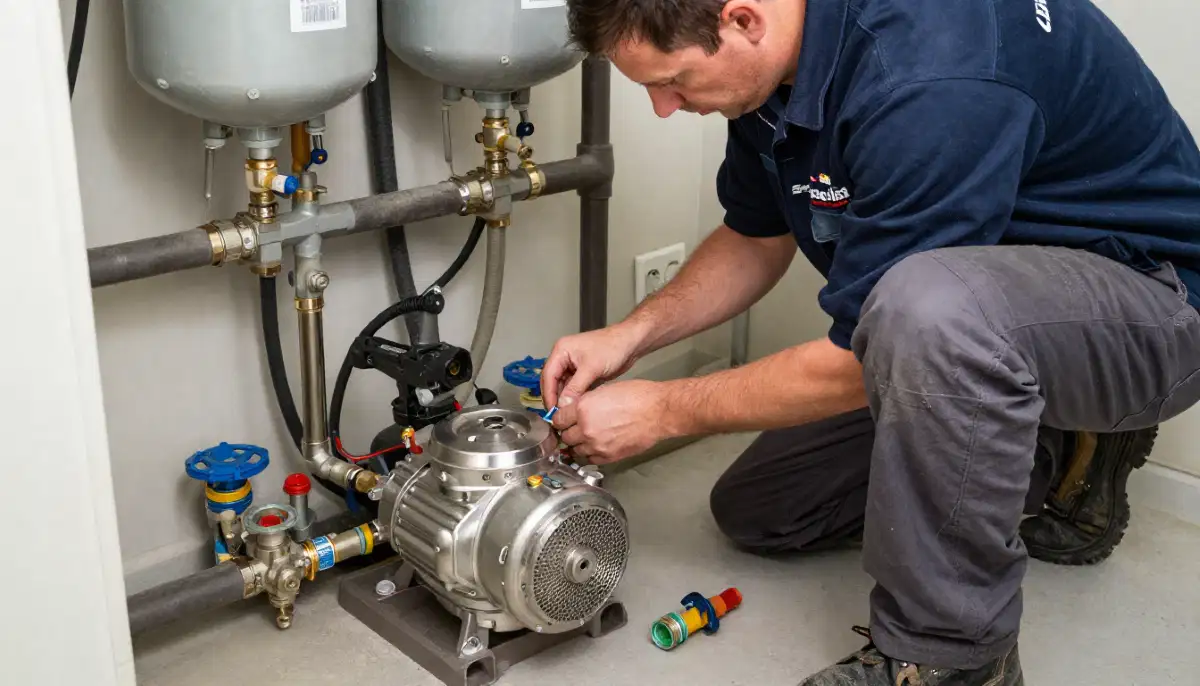
💧 Low Water Pressure?
Get quotes from verified plumbers for pressure pump installation. Free inspections available. Same-day service.
Get Pressure Pump Quotes Near You
Servicing Gauteng, Johannesburg, Pretoria, Sandton, Centurion, Midrand, and across South Africa
Water Pressure Pump Installation Guide: Boost Your Home’s Water Pressure
💧 From weak trickles to powerful flows—complete guide to pressure pump installation, costs, and whether you need one
You turn on the shower. Nothing but a weak trickle. Your neighbour’s sprinklers are running, and your pressure drops even lower. The dishwasher takes forever. You’ve tried cleaning aerators, checking valves, and even calling the municipality. Nothing helps.
If your home suffers from persistently low water pressure—especially during peak usage times—a pressure booster pump might be the solution. But before you rush out to buy one, you need to understand what’s involved in water pressure pump installation, whether you can DIY it, and what it will cost.
I’ve helped hundreds of homeowners across Gauteng install pressure pumps. The difference between a successful installation and a costly mistake comes down to proper diagnosis, correct sizing, and professional installation. This guide will walk you through everything you need to know about booster pump installation.
For related information, read our how to increase water pressure guide, low water pressure diagnosis guide, booster pump vs pressure tank guide, and municipal water pressure guide. Let’s boost your pressure.
📋 Table of Contents – Water Pressure Pump Installation Guide
🤔 Do You Really Need a Pressure Pump?
Before investing in install pressure pump services, confirm that a pump is the right solution:
✅ A PUMP MAY HELP IF:
- Pressure is consistently below 300 kPa at your main line
- Neighbours have the same low pressure (municipal supply issue)
- Pressure drops significantly during peak usage times
- You’ve ruled out leaks, corroded pipes, and PRV issues
- Your home is at a higher elevation than the main supply
❌ A PUMP WON’T HELP IF:
- You have a hidden leak (fix the leak first)
- Your pipes are corroded (replace pipes first)
- Your PRV has failed closed (replace PRV first)
- Only one fixture has low pressure (localized issue)
- You have high pressure (above 600 kPa) – you need a PRV, not a pump
The Golden Rule of Pump Installation: A pressure booster pump increases the pressure of the water entering your home. It cannot fix problems inside your home—leaks, corroded pipes, or faulty fixtures. Diagnose thoroughly before buying a pump.
Read our low water pressure diagnosis guide for proper diagnostic steps.
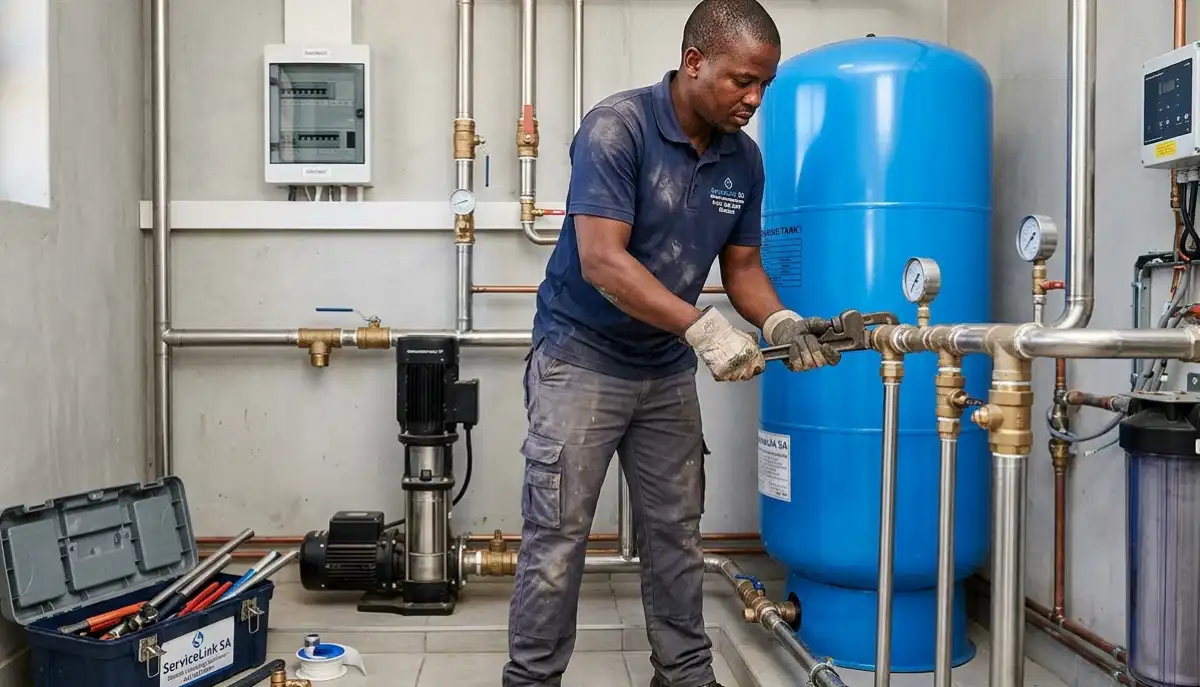
🔧 Types of Water Pressure Pumps
Several types of pumps are available for water pressure pump installation:
| Pump Type | How It Works | Best For | Cost Range | Pros/Cons |
|---|---|---|---|---|
| Single Booster Pump | Activates when water flows, boosts pressure | Constant low pressure, good flow rate | R2,000-R5,000 (unit) | ✅ Affordable, effective ❌ Can be noisy, needs maintenance |
| Constant Pressure Pump (Variable Speed) | Adjusts speed based on demand; maintains constant pressure | Varying demand, high-end homes | R5,000-R12,000 (unit) | ✅ Energy efficient, quiet, constant pressure ❌ Most expensive |
| Multi-Stage Booster Pump | Multiple impellers for higher pressure | High-rise buildings, very low inlet pressure | R4,000-R10,000 (unit) | ✅ High pressure output ❌ More complex, higher maintenance |
Recommendation: For most South African homes, a single booster pump (0.5-1.0 HP) is sufficient. For larger homes or inconsistent demand, a constant pressure pump is worth the extra cost.
Read our booster pump vs pressure tank guide for help choosing.
📏 Pump Sizing Guide
Choosing the right size for install pressure pump is critical for performance:
Key sizing factors:
- Flow rate (litres per minute): A typical home needs 30-50 L/min. Calculate by counting fixtures: shower (15 L/min), tap (10 L/min), toilet (5 L/min).
- Required pressure increase: If your incoming pressure is 200 kPa and you want 500 kPa, you need 300 kPa boost.
- Pipe size: Standard residential pipe is ¾” or 1″. Ensure pump matches.
General sizing recommendations:
- Small home (1-2 bathrooms, 2-3 people): 0.5 HP pump, 30-40 L/min flow
- Medium home (2-3 bathrooms, 3-5 people): 0.75-1.0 HP pump, 40-60 L/min flow
- Large home (4+ bathrooms, 5+ people): 1.0-1.5 HP pump, 60-80+ L/min flow
💡 Pro Tip:
Oversizing a pump is as bad as undersizing. A pump that’s too large will short-cycle (turn on and off frequently), wasting energy and wearing out faster. Have a professional size your pump based on actual flow measurements.
💧 Low Water Pressure?
Get quotes from verified plumbers for pressure pump installation. Free inspections available. Same-day service.
Free quotes • Same-day service • Verified specialists
📋 Installation Requirements
Before scheduling booster pump installation, ensure you have:
- Electrical outlet nearby: Pump needs 220-240V power (GFCI protected). Distance from pump to outlet should be minimal.
- Space for the pump: Pumps require clearance for airflow and maintenance (minimum 300mm on all sides).
- Access to main water line: Pump installs on the main line where it enters your home (after the meter).
- Isolation valves: Valves before and after the pump allow for maintenance without shutting off whole-house water.
- Pressure gauge: To monitor performance and diagnose issues.
- Check valve (non-return valve): Prevents backflow when pump is off.
If your home doesn’t have these, they can be installed as part of the pressure booster system.
For electrical work, use our electrical services network.
🔧 Step-by-Step Installation Process
Professional water pressure pump installation follows these steps:
- Site assessment (30-60 minutes) – Plumber measures incoming pressure, flow rate, and inspects pipe condition.
- Pump sizing (included) – Based on measurements, selects appropriate pump size.
- Shut off water – Close main water valve before the meter.
- Cut main line – Cut the main water line at the chosen installation point.
- Install isolation valves – Install valves on both sides of the pump location.
- Install check valve – Prevents backflow when pump is off.
- Mount the pump – Secure pump to wall or floor (vibration-dampening mounts recommended).
- Connect plumbing – Connect inlet and outlet pipes to the pump (use flexible hoses to reduce vibration transfer).
- Connect electrical – Wire pump to power supply (GFCI protected). Install pressure switch if not pre-installed.
- Install pressure tank (if used) – Connect tank to outlet side of pump.
- Turn water on – Slowly open valves, check for leaks.
- Prime the pump – Ensure pump is full of water before starting (running dry destroys the pump).
- Start pump and test – Adjust pressure switch settings as needed.
- Check pressure at fixtures – Test multiple taps, showers, and outdoor connections.
Time: 4-8 hours for a standard installation. Complex installations may take longer.
⚠️ Critical Warning:
Never run a pressure pump dry. Running without water destroys the pump seal and impeller within seconds. Always prime the pump (fill with water) before turning on power.
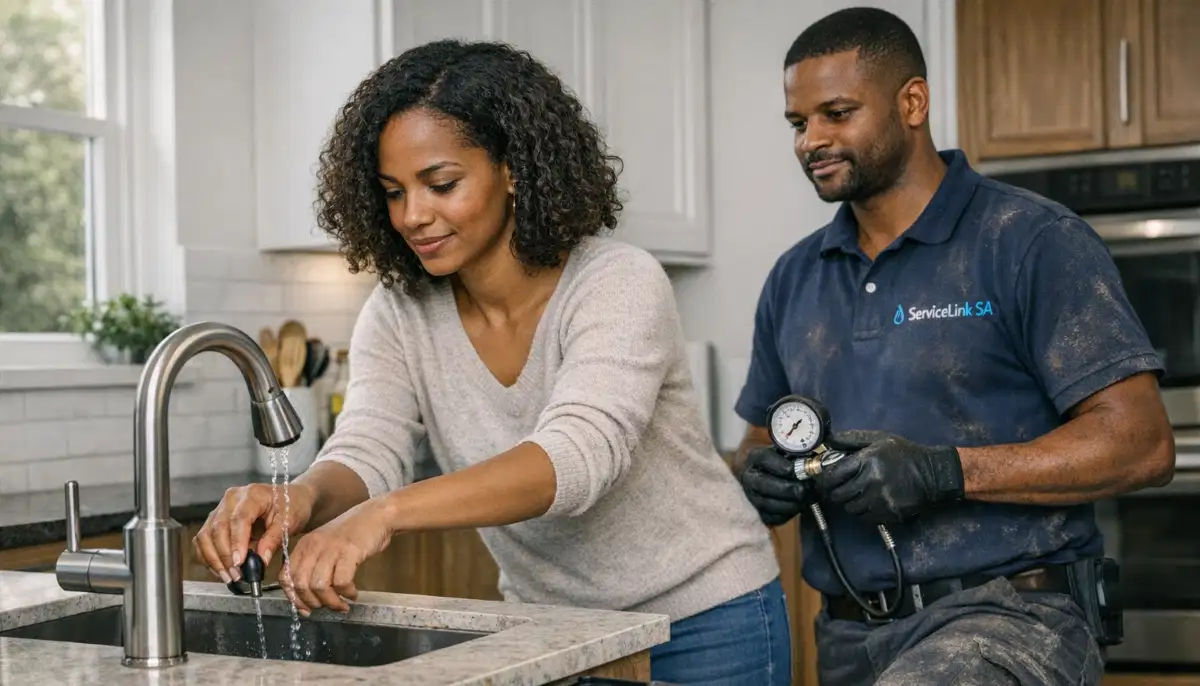
⚡ Electrical Requirements
Pressure pumps require proper electrical installation:
- Voltage: 220-240V AC
- Current: 5-15 amps depending on pump size (0.5 HP ~5A, 1.0 HP ~10A, 1.5 HP ~15A)
- Protection: GFCI/earth leakage protection required
- Dedicated circuit recommended: Prevents tripping when other appliances run
- Pressure switch: Automatically turns pump on/off based on pressure
If no existing electrical connection: An electrician will need to run a new circuit (R1,500-R3,000).
For electrical work, use our electrical services network.
🛠️ DIY vs Professional Pump Installation
How to install a water pressure pump is NOT a typical DIY project. Here’s why:
❌ DIY IS DISCOURAGED BECAUSE:
- Electrical work requires certified electrician
- Improper sizing leads to poor performance or damage
- Plumbing mistakes cause leaks and water damage
- Running pump dry destroys it instantly
- Voided warranty (most require professional installation)
- Pressure switch adjustment requires experience
✅ PROFESSIONAL INSTALLATION INCLUDES:
- Proper sizing and selection
- Correct plumbing and electrical connections
- Pressure switch calibration
- Leak testing and performance verification
- Warranty on workmanship
- COC for electrical and plumbing work
Verdict: Booster pump installation is not a DIY project for most homeowners. The combination of plumbing, electrical, and calibration makes it a job for qualified professionals.
Read our how to choose a contractor guide for finding the right professional.
💰 Water Pressure Pump Installation Cost Guide
Here’s what to budget for water pressure pump installation:
| Item | Cost Range (ZAR) | Notes |
|---|---|---|
| Pressure Pump (0.5 HP) | R2,000 – R3,500 | Basic model for small homes |
| Pressure Pump (0.75 HP) | R3,000 – R5,000 | Most common size |
| Pressure Pump (1.0 HP) | R4,500 – R7,000 | For larger homes |
| Constant Pressure Pump | R5,000 – R12,000 | Variable speed, premium option |
| Pressure Tank (24L-50L) | R800 – R2,000 | Optional but recommended |
| Installation Labour | R2,500 – R5,000 | Plumbing + electrical |
| Materials (valves, fittings, pipe) | R500 – R1,500 | Isolation valves, check valve, etc. |
| Electrician (if no existing outlet) | R1,500 – R3,000 | New circuit and GFCI |
| Total Installed (basic) | R7,000 – R12,000 | 0.75 HP pump + labour |
| Total Installed (premium) | R12,000 – R22,000+ | Constant pressure + tank + labour |
For complete pricing context, see our plumbing prices guide.
🛢️ Pressure Tanks: Do You Need One?
A pressure tank stores pressurised water and reduces pump cycling. Here’s why you might want one:
Benefits of adding a pressure tank:
- Reduces pump start/stop cycles (extends pump life)
- Provides steady pressure during demand changes
- Allows small water draws without starting the pump
- Reduces noise (pump runs less frequently)
When you need a tank:
- If your pump doesn’t have built-in pressure control
- If you have frequent small water draws (hand washing, toilet refill)
- If pump cycling is annoying or causing pressure fluctuations
Sizing: A 24L tank is sufficient for most homes. Larger homes (4+ bathrooms) may need 50L.
Read our booster pump vs pressure tank guide for detailed comparison.
🔧 Maintenance Requirements
After install pressure pump, follow these maintenance tips:
- Check for leaks monthly – Inspect all connections, valves, and the pump body.
- Listen for unusual noises – Grinding or rattling indicates bearing or impeller issues.
- Check pressure gauge – Ensure pressure is within expected range.
- Clean inlet strainer annually – Debris can restrict flow and damage the pump.
- Check air pressure in pressure tank (if fitted) – Should be 2-3 psi below pump cut-in pressure.
- Professional inspection every 2-3 years – Extends pump life.
Expected lifespan: 8-12 years with proper maintenance.
Read our home plumbing maintenance checklist for a complete schedule.
❌ 5 Costly Mistakes to Avoid
Mistake #1: Installing a Pump Before Diagnosing the Real Problem
A pump won’t fix hidden leaks or corroded pipes. Diagnose first—check for leaks, test pressure, inspect pipes. Wasting money on a pump when you need pipe replacement is common and costly.
Mistake #2: Undersizing or Oversizing the Pump
Too small = no improvement. Too large = short-cycling, energy waste, premature failure. Professional sizing based on flow measurements is essential.
Mistake #3: Running the Pump Dry
Running without water destroys the pump seal and impeller within seconds. Always prime the pump (fill with water) before first start and after any maintenance.
Mistake #4: DIY Electrical Installation
Pumps draw significant current (5-15 amps). Incorrect wiring can cause fires or electrocution. Always use a qualified electrician for pump electrical connections.
Mistake #5: No Isolation Valves
Without valves before and after the pump, servicing or replacing the pump requires shutting off water to the whole house. Always install isolation valves.
📋 Real-World Pump Installation Case Studies
💧 Case 1: Municipal Low Pressure in Centurion
Location: Centurion | Homeowner: The Nkosi Family
Problem: Pressure measured at 180 kPa. Neighbours had same issue. No leaks, pipes in good condition.
Solution: 0.75 HP booster pump installation (R8,500 total). Pressure increased to 550 kPa.
Outcome: Showers now have excellent pressure. Dishwasher and washing machine performance improved significantly.
Lesson: Municipal low pressure is the ideal scenario for a booster pump.
🏠 Case 2: The Failed Diagnosis in Johannesburg
Location: Johannesburg | Homeowner: The Van Wyk Family
Problem: Homeowner installed a pump themselves (R5,000). Pressure still low.
Diagnosis: Professional inspection found corroded galvanised pipes throughout the home—the pump couldn’t overcome the restriction.
Solution: Full re-piping with PEX (R45,000). The existing pump now works perfectly.
Lesson: Diagnose before buying a pump. The pump wasn’t the problem—corroded pipes were.
❓ Frequently Asked Questions About Water Pressure Pump Installation
How to install a water pressure pump?
How to install a water pressure pump involves: 1) Turn off main water, 2) Cut main line and install isolation valves, 3) Install check valve, 4) Mount pump, 5) Connect plumbing, 6) Connect electrical (by electrician), 7) Prime pump with water, 8) Turn on and test. Professional installation is strongly recommended due to electrical and calibration requirements.
How much does water pressure pump installation cost in South Africa?
Water pressure pump installation costs R7,000-R12,000 for a basic system (0.75 HP pump + installation). Premium systems with constant pressure pumps and pressure tanks cost R12,000-R22,000+. In Sandton or Midrand, rates may be higher.
Can I install a pressure pump myself?
No—install pressure pump is not a DIY project for most homeowners. It requires electrical work (certified electrician), proper sizing, plumbing modifications, and pressure switch calibration. Incorrect installation can damage the pump, cause leaks, or create electrical hazards. Professional installation is strongly recommended.
What size pressure pump do I need for my home?
Sizing depends on flow rate and pressure boost needed. Small home (1-2 bathrooms): 0.5 HP. Medium home (2-3 bathrooms): 0.75 HP (most common). Large home (4+ bathrooms): 1.0-1.5 HP. A professional should measure your flow rate and incoming pressure before recommending a size.
Do I need a pressure tank with my booster pump?
A pressure tank is optional but recommended. Benefits: reduces pump cycling (extends pump life), provides steady pressure, and allows small water draws without starting the pump. For most homes, a 24L tank is sufficient. Without a tank, the pump will start every time you open a tap, leading to shorter pump life.
Why is my pressure pump running constantly?
A pump that runs constantly may indicate: a leak in the system, a failed check valve (water flowing backward), a pressure switch problem, or a pump that’s undersized for the demand. If your pressure booster runs continuously without shutting off, call a plumber to diagnose.
How long do water pressure pumps last?
A quality booster pump installation typically lasts 8-12 years with proper maintenance. Factors affecting lifespan: water quality, frequency of use, proper sizing, and maintenance. Annual inspection and cleaning of inlet strainers extend life significantly.
How do I find a reliable plumber for pump installation?
To find a reliable plumber for water pressure pump installation: 1) Verify PIRB registration, 2) Ask for pump installation experience, 3) Get detailed quotes, 4) Check reviews. ServiceLink SA connects you with verified plumbers in Gauteng, Pretoria, and Sandton.
✅ Final Thoughts: Boost Your Pressure the Right Way
A pressure pump can transform your home’s water pressure from frustrating to fantastic. But water pressure pump installation is not a decision to take lightly. Proper diagnosis, correct sizing, and professional installation are essential for success.
Key takeaways for South African homeowners:
- Diagnose first – Ensure low pressure isn’t caused by leaks or corroded pipes
- Professional installation is strongly recommended – Electrical and calibration work require expertise
- Cost: R7,000-R12,000 for basic system – R12,000-R22,000 for premium with tank
- 0.75 HP pump is most common – For 3-4 bedroom homes
- Pressure tank recommended – Extends pump life and provides steady pressure
- Never run the pump dry – Prime with water before first start
- Annual maintenance extends life – Check leaks, clean strainers, inspect connections
Your action plan: Have a professional test your water pressure and flow rate. Get quotes from 3 verified plumbers through ServiceLink SA. Compare sizing recommendations, pump types, and pricing. Choose a professional who offers a warranty on both parts and labour.
💧 Low Water Pressure?
Get quotes from verified plumbers for pressure pump installation. Free inspections available. Same-day service.
📞 Call us: 073 138 4726 for immediate help finding a pressure pump specialist near you.
Increase water pressure •
Low pressure diagnosis •
Pump vs tank •
Municipal issues •
Beat Your Quote guarantee
📚 Official resources & standards referenced:
- SANS 10400 – Pump installation standards and plumbing requirements.
- South African Bureau of Standards (SABS) – Electrical safety standards for pumps.
- Plumbing Industry Registration Board (PIRB) – Find registered pump installers.
Information provided for general guidance based on industry research and SANS/SABS standards. For water pressure pump installation, professional assistance is strongly recommended.
Written by: ServiceLink SA Research Team
Water Pressure & Pump Installation Specialists
The ServiceLink SA Research Team comprises water pressure experts, pump installation specialists, and plumbing industry professionals with decades of experience in water pressure pump installation across South Africa. Our team works directly with PIRB-registered plumbers, pump manufacturers, and electrical safety authorities to bring you accurate, actionable information about how to install a water pressure pump, sizing, and cost considerations. We continuously update this guide to reflect current best practices, SANS standards, and real-world solutions for booster pump installation.
For more information about water pressure and pump installation, explore our related resources:
increase water pressure guide,
low water pressure diagnosis guide,
booster pump vs pressure tank guide,
municipal water pressure guide,
and water pressure pump installation guide.
Our what is ServiceLink SA and
contractor verification process pages explain how we connect you with trusted professionals.
See our service areas page for pump installation coverage in your region.