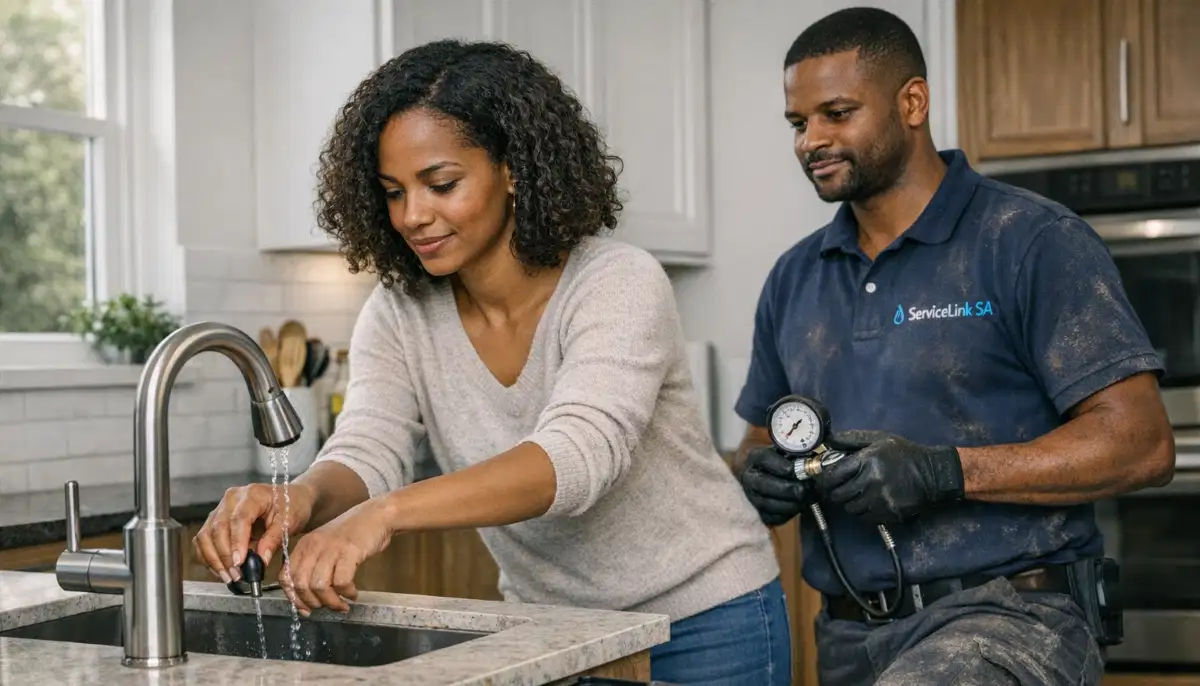
💧 Low Pressure? Could Be Municipal
Get quotes from verified plumbers to diagnose whether your low pressure is municipal or internal. Free inspections available.
Get Pressure Diagnosis Quotes Near You
Servicing Gauteng, Johannesburg, Pretoria, Sandton, Centurion, Midrand, and across South Africa
Municipal Water Pressure Problems: Why Your Water Pressure Drops & How to Fix It
💧 From peak-hour drops to aging infrastructure—complete guide to understanding and solving municipal water pressure issues
You turn on the shower at 6pm. Nothing but a weak trickle. The same shower at 10am? Perfect pressure. You’ve checked your pipes, tested for leaks, and even cleaned every aerator. Nothing helps. The problem isn’t in your home—it’s in the street.
Municipal water pressure problems are frustrating because they’re outside your control. But understanding them helps you decide whether to wait, complain, or invest in a solution for your home.
I’ve helped hundreds of homeowners across Gauteng diagnose pressure problems. In many cases, the issue isn’t their plumbing—it’s the city water pressure supplied by the municipality. Aging infrastructure, peak demand, distance from pumping stations, and elevation all play roles.
This comprehensive guide will teach you how to identify low municipal pressure, understand the causes, and choose the right solution—whether that’s reporting to the municipality or installing a booster pump in your home.
For related information, read our how to increase water pressure guide, low water pressure diagnosis guide, water pressure pump installation guide, and booster pump vs pressure tank guide. Let’s solve your pressure mystery.
📋 Table of Contents – Municipal Water Pressure Guide
🔍 Is It Municipal or Your Home? (The Neighbour Test)
Before you spend money on solutions, determine if the problem is low municipal pressure or internal to your home:
🏘️ SIGNS IT’S MUNICIPAL
- Neighbours have the same low pressure
- Pressure is fine at 10am, terrible at 6pm (peak demand)
- Sudden drop after municipal maintenance work
- Pressure fluctuates throughout the day
- You live at a higher elevation or far from pumping station
- Area has known aging infrastructure issues
🏠 SIGNS IT’S YOUR HOME
- Only your home has low pressure (neighbours fine)
- Only one fixture is affected (others fine)
- Pressure is consistently low all the time
- You have old galvanised pipes (pre-1990)
- You have a hidden leak (water meter moves when off)
- Your PRV has failed (if you have one)
The definitive test: Ask 2-3 neighbours (on the same street, same side) if they have low pressure. If yes, it’s almost certainly a municipal water pressure issue.
Read our low water pressure diagnosis guide for detailed home diagnostic steps.
📏 What Is Normal Municipal Water Pressure?
Understanding standards helps you know what to expect from your city water pressure:
- SANS standard at the property boundary: Minimum 300 kPa (many municipalities target 400-600 kPa)
- Below 300 kPa: Considered low—affects appliance performance
- Below 200 kPa: Very low—may not fill geysers or run appliances properly
- Below 100 kPa: Emergency level—contact municipality immediately
What municipalities typically deliver:
- City of Johannesburg: 400-600 kPa at pumping stations (drops with distance)
- City of Tshwane (Pretoria): 400-600 kPa typical
- Ekurhuleni: 350-550 kPa typical
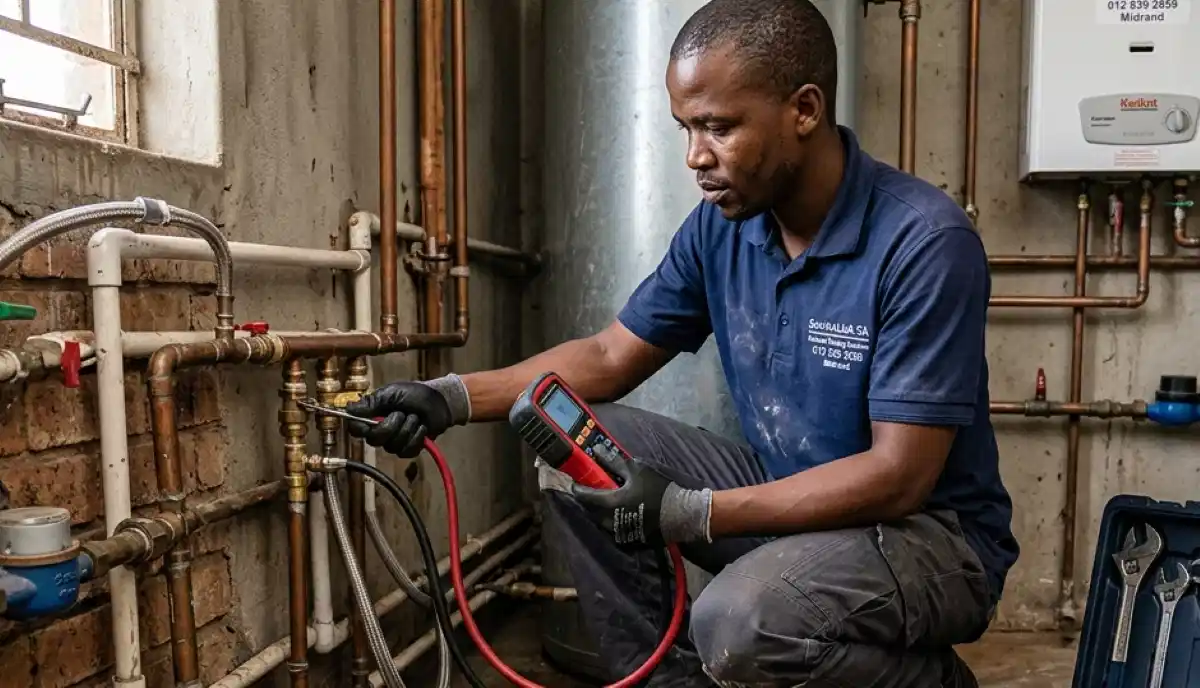
How to test your pressure: Buy a pressure gauge (R150-R300). Attach to an outside tap or washing machine connection. Test at different times of day (10am, 6pm, 10pm).
Read our how to increase water pressure guide for testing instructions.
🔍 6 Common Causes of Low Municipal Pressure
Why is municipal water pressure low in your area? Here are the most common causes:
⏰ 1. Peak Demand Periods
Morning (6-9am) and evening (5-8pm) see highest water usage. Showers, dishwashers, irrigation—everyone using water simultaneously causes pressure drops across the network.
🏔️ 2. Distance from Pumping Station
Water pressure drops as it travels through pipes. Homes far from pumping stations receive lower pressure. This is especially noticeable in outer suburbs.
⛰️ 3. Elevation Differences
Homes on hills or higher elevations than the pumping station receive lower pressure. Every 10 metres of elevation reduces pressure by approximately 100 kPa.
🏚️ 4. Aging Infrastructure
Old pipes have internal corrosion, reducing flow capacity. Leaks in the municipal main also reduce pressure for downstream homes.
🔧 5. Maintenance or Repairs
When municipalities repair main breaks or flush lines, pressure may be temporarily reduced. Usually returns to normal within days.
📈 6. Area Growth Exceeding Capacity
New developments add more homes to the same infrastructure. Supply can’t keep up with demand, causing chronic low pressure.
Read our municipal water pressure problems guide for more detailed information.
⏰ Peak Demand: Why Evenings Are Worse
If your pressure is fine at 10am but terrible at 6pm, you’re experiencing peak demand issues—a classic low municipal pressure pattern.
Why peak demand causes low pressure:
- Multiple homes drawing water simultaneously reduces available pressure
- Morning peak: showers, toilets, washing machines
- Evening peak: cooking, dishwashers, showers, garden irrigation
- Summer peak: increased garden watering
What you can do about peak demand:
- Shift water usage to off-peak times (run dishwasher at 9pm instead of 6pm)
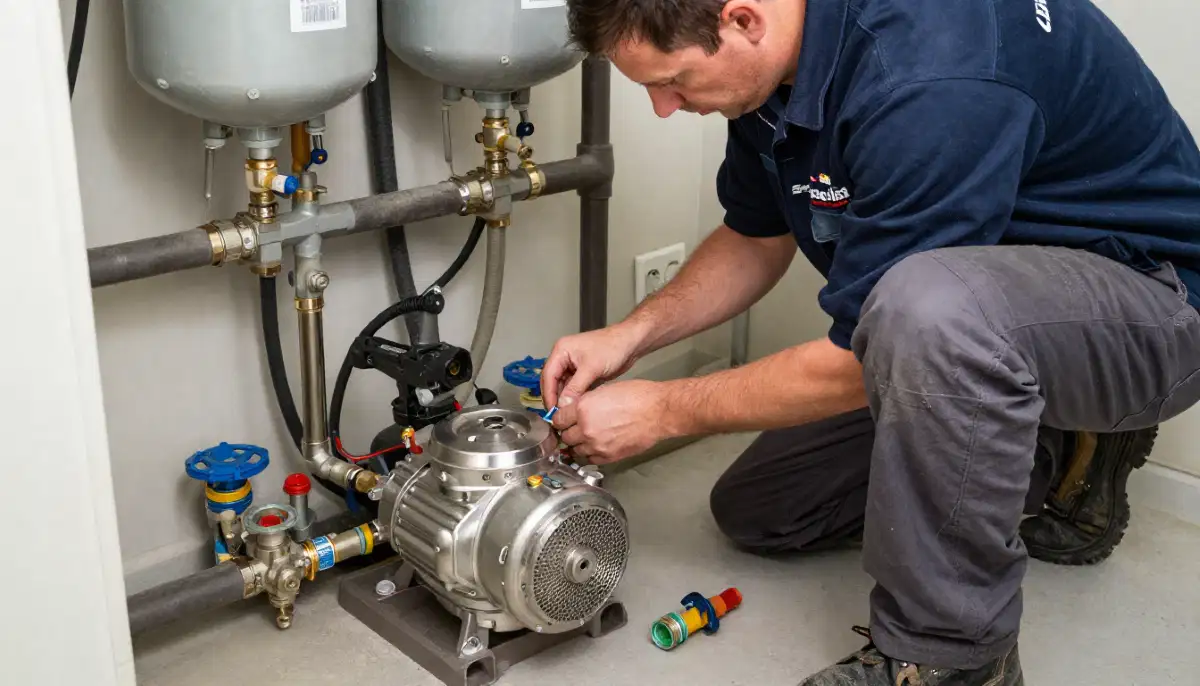
- Install a pressure booster pump (solves the problem for your home only)
- Install a pressure tank with pump (stores pressurised water for peak times)
- Report persistent issues to municipality—enough reports may trigger upgrades
Read our water pressure pump installation guide for pump solutions.
💧 Low Pressure? Could Be Municipal
Get quotes from verified plumbers to diagnose whether your low pressure is municipal or internal. Free inspections available.
Free quotes • Expert diagnosis • Verified specialists
🏔️ Distance & Elevation from Pumping Stations
Your physical location relative to municipal infrastructure significantly affects your supply pressure.
Distance effect: Water pressure drops as it travels through pipes due to friction. Homes 5-10 km from a pumping station may see 20-40% lower pressure than homes nearby.
Elevation effect: Every 10 metres of elevation gain reduces pressure by approximately 100 kPa. A home 20 metres uphill from the pumping station loses about 200 kPa before water even enters the property.
Areas commonly affected in Gauteng:
- Homes in the north of Johannesburg (Fourways, Bryanston, Broadacres) are often far from pumping stations
- Homes on hills in Pretoria East (Garsfontein, Faerie Glen) experience elevation-related pressure drops
- Outer suburbs of Centurion (Rooihuiskraal, The Reeds) often have distance-related low pressure
If you live in a high-elevation or far-from-station area, you may need a booster pump regardless of municipal efforts.
For location-specific services, explore our plumbing services Gauteng, Johannesburg, Pretoria, Sandton, Centurion, and Midrand pages.
🏚️ Aging Infrastructure & Main Breaks
South Africa’s municipal water infrastructure is aging, and many areas suffer from chronic city water pressure problems as a result.
How aging infrastructure affects pressure:
- Old pipes have internal corrosion, reducing flow capacity
- Cast iron and asbestos cement pipes (common in older suburbs) are prone to leaks
- Each leak in the municipal main reduces pressure for all downstream homes
- Frequent main breaks cause repeated pressure drops
Areas with known infrastructure issues:
- Older Johannesburg suburbs (Parktown, Houghton, Melville) have century-old pipes
- Pretoria’s older areas (Brooklyn, Sunnyside) have aging infrastructure
- Many townships and older developments nationwide
What you can do: Report persistent low pressure to your municipality. The more reports they receive, the higher priority infrastructure upgrades become. For immediate relief, install a booster pump.
📞 How to Report Municipal Pressure Issues
If you’ve confirmed it’s a municipal water pressure problem (neighbours affected too), report it:
City of Johannesburg:
- Call 0860 562 874
- Use the City of Johannesburg mobile app
- Email customerservice@joburg.org.za
City of Tshwane (Pretoria):
- Call 012 358 9999
- Use the Tshwane Connect mobile app
- Email customer.care@tshwane.gov.za
Ekurhuleni:
- Call 0860 543 000
- Use the MyEkurhuleni mobile app
Tips for effective reporting:
- Get neighbours to report as well (more reports = higher priority)
- Provide specific times when pressure is low
- Share your pressure gauge readings (objective data)
- Get a reference number and follow up
Read our emergency services guide for urgent water issues.
🛠️ Solutions for Your Home (When Municipality Won’t Fix It)
When the municipality can’t or won’t fix low municipal pressure, here are your options:
| Solution | Cost Range | Effectiveness | Pros | Cons |
|---|---|---|---|---|
| Pressure Booster Pump Only | R4,500-R17,000 | ⭐⭐⭐⭐ | Effective, solves most cases | Uses electricity, some noise |
| Pump + Pressure Tank | R5,800-R21,000 | ⭐⭐⭐⭐⭐ | Best solution, extends pump life, steady pressure | Higher upfront cost |
| Constant Pressure Pump | R10,000-R22,000+ | ⭐⭐⭐⭐⭐ | Energy efficient, quiet, constant pressure | Most expensive |
| Pressure Tank Only | R1,800-R5,500 | ⭐ | Cheap | Does NOT increase pressure—waste of money for low municipal pressure |
Recommendation: For chronic low municipal pressure, install a booster pump with a pressure tank. This combination provides excellent pressure, steady flow, and extended equipment life.
Read our booster pump vs pressure tank guide for detailed comparison.
💰 Cost Comparison: Solutions for Municipal Low Pressure
Here’s what to budget for solving why is municipal water pressure low in your home:
| Solution | Unit Cost | Installation | Total | Annual Operating Cost |
|---|---|---|---|---|
| 0.5 HP Booster Pump | R2,000-R3,500 | R2,500-R4,000 | R4,500-R7,500 | R200-R400/year |
| 0.75 HP Booster Pump | R3,000-R5,000 | R2,500-R5,000 | R5,500-R10,000 | R300-R500/year |
| 1.0 HP Booster Pump | R4,500-R7,000 | R3,000-R5,500 | R7,500-R12,500 | R400-R600/year |
| Add Pressure Tank (24-50L) | R800-R2,000 | R1,000-R2,000 | R1,800-R4,000 | R0 |
For complete pricing context, see our plumbing prices guide.
🌍 Regional Issues: Gauteng & Beyond
Different areas of Gauteng have different municipal water pressure profiles:
Johannesburg:
- Northern suburbs (Sandton, Fourways, Bryanston): Often lower pressure due to distance from pumping stations
- Southern suburbs: Generally better pressure, closer to infrastructure
- Inner city: Variable pressure depending on building age and infrastructure
Pretoria:
- Pretoria East (Garsfontein, Faerie Glen): Elevation-related pressure drops common
- Centurion: Mixed pressure depending on proximity to main lines
- Western areas: Generally better pressure
Ekurhuleni:
- Variable across the metro; some areas have aging infrastructure
If you live in a challenging area, a booster pump is often the most practical solution.
For location-specific services, explore our plumbing services Gauteng page.
❌ 5 Costly Mistakes to Avoid
Mistake #1: Assuming It’s Your Home Without Checking with Neighbours
Many homeowners spend thousands on plumbers, pipe replacement, or pumps before realising the problem is municipal. Always check with neighbours first—it’s free and takes 5 minutes.
Mistake #2: Buying a Pressure Tank to Increase Pressure
A pressure tank does NOT increase pressure. It only stores pressurised water. For low municipal pressure, you need a BOOSTER PUMP. A tank alone is a waste of money.
Mistake #3: Not Reporting to Municipality
Municipalities prioritise issues based on the number of reports. If no one reports low pressure, they may not know it exists. Report it—and get neighbours to report too.
Mistake #4: Oversizing the Booster Pump
A pump that’s too large for your home will short-cycle, waste energy, and wear out faster. Get professional sizing based on your home’s flow requirements.
Mistake #5: DIY Installation Without Electrical Knowledge
Booster pumps require proper electrical connection (220-240V, GFCI). Incorrect wiring causes fires or electrocution. Use a qualified electrician.
📋 Real-World Municipal Pressure Case Studies
🏘️ Case 1: Peak Demand in Fourways
Location: Fourways | Homeowner: The Nkosi Family
Problem: Pressure fine at 10am (450 kPa), terrible at 6pm (180 kPa). Neighbours had same issue.
Diagnosis: Peak demand municipal water pressure issue. Area growth exceeded infrastructure capacity.
Solution: 0.75 HP booster pump + 24L pressure tank installed (R9,500).
Outcome: Consistent 500 kPa at all times. Municipality informed but no timeline for upgrades.
Lesson: When municipality can’t fix peak demand, a booster pump solves the problem for your home.
🏔️ Case 2: Elevation Issue in Pretoria East
Location: Pretoria East | Homeowner: The Van Wyk Family
Problem: Consistently low pressure (200-250 kPa). Home on hill, 25m above pumping station.
Diagnosis: Elevation-related pressure loss. Municipal supply at property boundary was only 280 kPa (lost 250 kPa due to elevation).
Solution: 1.0 HP booster pump installed (R8,500). Pressure increased to 550 kPa.
Outcome: Excellent pressure throughout home. Municipality cannot fix elevation issues—pump was the only solution.
Lesson: Homes on hills often need booster pumps regardless of municipal infrastructure quality.
❓ Frequently Asked Questions About Municipal Water Pressure
Why is municipal water pressure low in my area?
Why is municipal water pressure low? Common causes: peak demand periods (mornings/evenings), distance from pumping stations, elevation differences, aging infrastructure with leaks, or area growth exceeding supply capacity. Check with neighbours—if they have the same issue, it’s likely municipal.
How do I know if low pressure is municipal or my home?
Ask 2-3 neighbours on the same street. If they have the same low pressure, it’s likely a municipal water pressure problem. If only your home is affected, the issue is likely in your plumbing (leaks, corroded pipes, failed PRV, or partially closed valves).
What can I do about low municipal pressure?
1) Report to your municipality (get neighbours to report too), 2) Shift water usage to off-peak times (run appliances after 8pm), 3) Install a pressure booster pump for your home (R4,500-R17,000). For chronic city water pressure issues, a booster pump is the most effective solution.
Will a pressure tank fix low municipal pressure?
No—a pressure tank does NOT increase pressure. It only stores pressurised water. For low municipal pressure, you need a BOOSTER PUMP. A pressure tank can be added to the pump system to reduce cycling and extend pump life, but a tank alone is useless for low pressure.
How much does a booster pump cost to fix municipal low pressure?
A booster pump to solve municipal water pressure problems costs R4,500-R17,000 installed (0.5-1.0 HP). Adding a pressure tank adds R1,800-R4,000. In Sandton or Centurion, rates may be higher. The investment typically pays for itself in improved quality of life and appliance performance.
Can the municipality fix low water pressure?
Sometimes. If the issue is a main break or temporary maintenance, yes. If the issue is chronic (aging infrastructure, peak demand, distance/elevation), municipalities often cannot fix it quickly or at all due to budget constraints. In these cases, a booster pump is your best supply pressure solution.
How do I report low water pressure to my municipality?
Call your municipality’s customer service line: City of Johannesburg 0860 562 874, City of Tshwane 012 358 9999, Ekurhuleni 0860 543 000. Use their mobile apps if available. Get neighbours to report too—more reports increase priority. Get a reference number and follow up.
How do I find a reliable plumber for pressure diagnosis?
To find a reliable plumber for municipal water pressure diagnosis: 1) Verify PIRB registration, 2) Ask for pressure diagnosis experience, 3) Get detailed quotes, 4) Check reviews. ServiceLink SA connects you with verified plumbers in Gauteng, Johannesburg, Pretoria, and Sandton.
✅ Final Thoughts: Know the Source, Choose the Solution
Municipal water pressure problems are frustrating because they’re outside your control. But understanding whether the issue is municipal or internal saves you time and money. The neighbour test is your most powerful diagnostic tool.
Key takeaways for South African homeowners:
- Check with neighbours first – If they have same problem, it’s municipal
- Peak demand, distance, and elevation are common causes of low municipal pressure
- Report issues to municipality – more reports = higher priority
- A pressure tank alone does NOT increase pressure – common and costly mistake
- Booster pump cost: R4,500-R17,000 – most effective solution for your home
- Pump + pressure tank is the ideal system – extends pump life, steady pressure
- Professional installation recommended – pumps require electrical work
Your action plan: Ask neighbours about their pressure. Test your pressure at different times of day. If neighbours have same issue, report to municipality. If municipality can’t or won’t fix it, get quotes for a booster pump from 3 verified plumbers through ServiceLink SA.
💧 Low Pressure? Could Be Municipal
Get quotes from verified plumbers to diagnose whether your low pressure is municipal or internal. Free inspections available.
📞 Call us: 073 138 4726 for immediate help finding a pressure specialist near you.
Increase water pressure •
Low pressure diagnosis •
Pump installation •
Pump vs tank •
Our guarantees
📚 Official resources & standards referenced:
- Department of Water and Sanitation – Municipal water standards and pressure regulations.
- SANS 10400 – Supply regulations and plumbing standards.
- Plumbing Industry Registration Board (PIRB) – Find registered pressure specialists.
Information provided for general guidance based on industry research and DWS/SANS standards. For specific municipal water pressure problems, consult your local municipality and verified plumbers.
Written by: ServiceLink SA Research Team
Water Pressure & Municipal Supply Specialists
The ServiceLink SA Research Team comprises water pressure experts, municipal supply specialists, and plumbing industry professionals with decades of experience diagnosing municipal water pressure problems across South Africa. Our team works directly with PIRB-registered plumbers, municipal authorities, and water supply experts to bring you accurate, actionable information about why is municipal water pressure low and how to solve it. We continuously update this guide to reflect current infrastructure challenges, SANS standards, and real-world solutions for city water pressure issues.
For more information about water pressure and municipal supply, explore our related resources:
increase water pressure guide,
low water pressure diagnosis guide,
water pressure pump installation guide,
booster pump vs pressure tank guide,
and municipal water pressure guide.
Our how ServiceLink SA works and
how we protect homeowners pages explain our verification process.
See our service areas page for pressure diagnosis coverage in your region.