
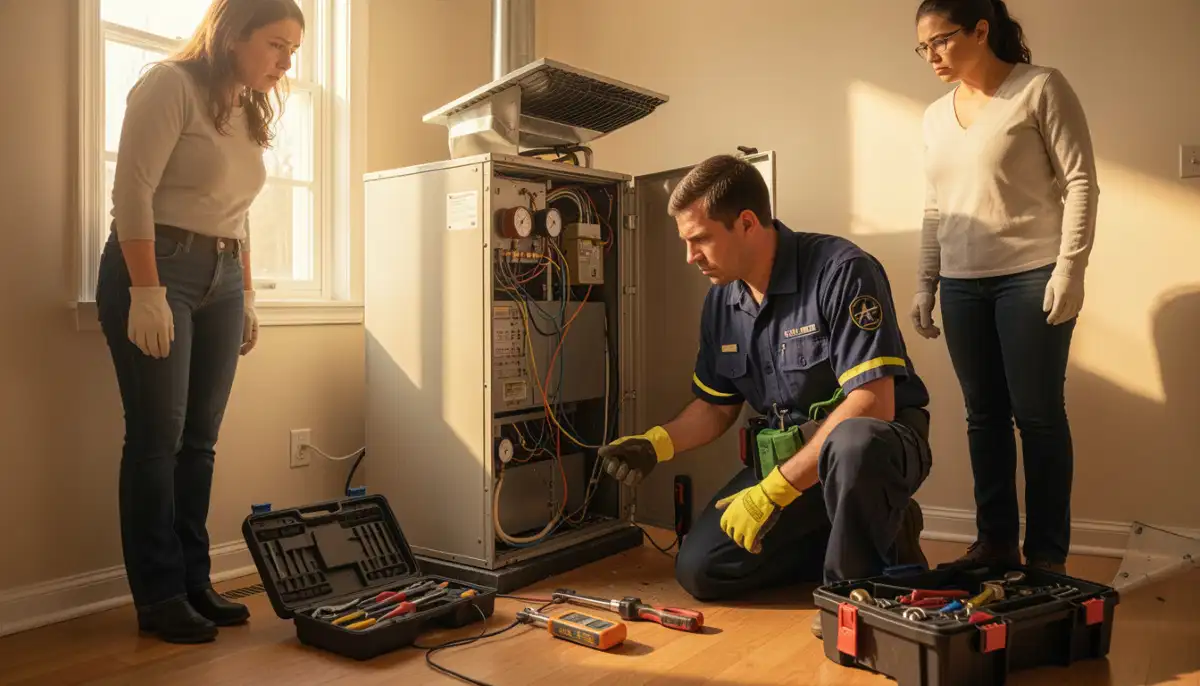
Aircon Suddenly Stopped? Let’s Diagnose
Get free quotes from verified local technicians if these DIY checks don’t solve the problem.
Find Aircon Repair Technicians Near Me
Servicing Johannesburg, Pretoria, Cape Town, Durban, and across South Africa
What to Do When Your Aircon Stopped Working Suddenly
🔌❄️ Your aircon was fine yesterday. Today it’s dead. Here’s what to check before calling a technician.
You come home from work. It’s a hot day. You reach for the remote, press the power button, and… nothing. No beep. No display. No fan. No cold air. Your aircon is completely dead.
Your heart sinks. “It was working fine yesterday! What happened? How much is this going to cost?”
I’ve seen this panic hundreds of times. But here’s the truth: when an aircon stops working suddenly, the cause is often simple and cheap to fix. A tripped breaker. A turned-off isolator switch. Dead remote batteries. A timer you forgot about.
These are things you can check yourself in 5 minutes—for free.
In this guide, I’ll walk you through 5 checks to perform when your aircon stopped working suddenly. Most of these cost nothing and take seconds. Only after trying these should you call a professional.
For more urgent help, check our emergency services page and aircon not turning on guide. Ready to diagnose? Let’s go.
📋 Table of Contents
⚡ Check #1: Circuit Breaker and Isolator Switch
This is the most common reason for air conditioner suddenly stopped complaints. And it’s the easiest fix.
What to check: Go to your electrical distribution board (fuse box). Look for a breaker labeled “Aircon,” “HVAC,” “Outdoor Unit,” or similar. Is it in the “off” position or halfway between on and off? (that’s tripped). Go outside to the outdoor compressor unit. Find the isolator switch (safety switch near the unit). Is it in the “off” position?
Why this happens: Power surges from lightning or load-shedding. Overload (compressor drawing too much current). Someone accidentally flipped the switch (gardeners, children, maintenance).
How to fix (1 minute): Flip the breaker fully to “off,” wait 10 seconds, then flip back to “on.” Flip the isolator switch to the “on” position (usually up). Restore power, wait 2-3 minutes, then try the remote.
⚠️ Warning:
If the breaker trips again immediately after resetting, DO NOT keep resetting it. This indicates a serious electrical problem (short circuit, faulty compressor, or overloaded circuit). Call a professional immediately—this is a fire risk.
Read our circuit breaker guide.
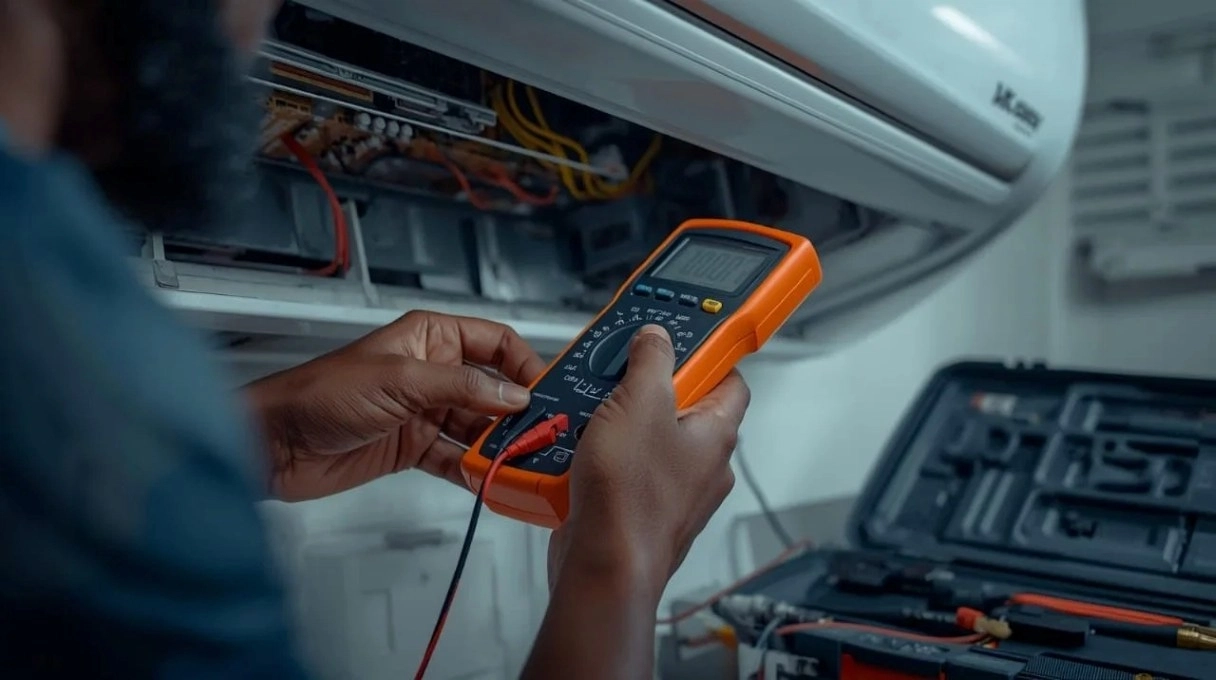
📱 Check #2: Remote Control (Batteries and Mode)
Sometimes the aircon is fine—the remote is the problem.
What to check: Does the remote display show anything? If blank, batteries are dead. Is the remote in Cool mode (snowflake icon) or another mode? Is the temperature set below the current room temperature? Does the remote pass the smartphone camera test (point at camera, press button—see flashing light)?
Why this happens: Batteries die over time (6-12 months). Someone changed the mode accidentally. The remote’s infrared LED is dirty or failed.
How to fix (2 minutes): Replace remote batteries with fresh alkaline batteries. Clean the infrared LED (small dark bulb at front) with a soft cloth. Press the “Mode” button until the snowflake icon appears. Set temperature to 22-23°C.
Pro tip: If the remote works but the aircon still doesn’t respond, try the manual buttons on the indoor unit itself (usually behind the front panel). If the manual buttons work, the remote is the problem. If neither works, proceed to other checks.
Read our remote not working guide.
⏰ Check #3: Timer or Sleep Mode Settings
You might have set a timer and forgotten about it. This happens more often than you’d think.
What to check: Look at the remote display for timer icons (clock symbol, “TIMER ON/OFF,” or “SLEEP”). Does the aircon have a scheduled off time? Is sleep mode active (gradually turns temperature up, eventually turns off)?
Why this happens: You set a timer last night and forgot. Someone else in the household set a timer. Sleep mode turned the unit off after a set number of hours.
How to fix (30 seconds): Press the “Timer” or “Cancel” button repeatedly until all timer icons disappear. Press and hold the “Cancel” or “Clear” button for 3-5 seconds. Remove batteries from the remote for 30 seconds to clear memory. Try turning the aircon on again.
Read our sleep settings guide.
Tried These 5 Checks and Still Not Working?
Get free quotes from verified local technicians for professional diagnosis and repair.
Get Free Quotes From Local Technicians
Same-day service available.
🌡️ Check #4: Thermal Overload Protection
The compressor has a built-in safety switch that shuts it off if it gets too hot. This can prevent the unit from starting.
What to check: Was the aircon running for many hours before it stopped? Is the outdoor unit in direct sunlight? Is the outdoor unit hot to the touch? Was there a recent heatwave?
Why this happens: The compressor overheated and tripped its thermal overload switch. Common causes: dirty condenser coils (restricted airflow), low refrigerant (compressor runs hotter), failing fan motor, or extremely high outdoor temperatures.
How to fix (30-60 minutes of waiting): Turn off the aircon at the breaker. Wait 30-60 minutes for the compressor to cool completely. Clean any debris from around the outdoor unit. Ensure at least 300mm clearance on all sides. Restore power and try again.
If it works: The thermal overload has reset. But investigate why it tripped (dirty coils, low refrigerant, failing fan). Schedule a service to prevent recurrence.
If it doesn’t work: Proceed to other checks or call a professional.
⚠️ Check #5: Error Codes and Display Lights
Your aircon might be trying to tell you what’s wrong through error codes.
What to check: Does the indoor unit have any lights on? Is there a flashing pattern (e.g., 2 flashes, pause, 3 flashes)? Is there an error code number on the display (e.g., E1, F4, H6)?
What the codes mean: Check your aircon’s manual for error code definitions. Common codes: E1 or F1 = communication error between indoor and outdoor units. Sensor-related codes = faulty temperature sensor. Compressor error = compressor problem. Fan error = fan motor problem.
What to do: Write down the error code or flashing pattern. Take a photo or video. This information is invaluable for a technician. Try resetting the unit (turn off breaker for 5 minutes). If the code returns, call a professional and tell them the code.
Read our PCB board problems guide.
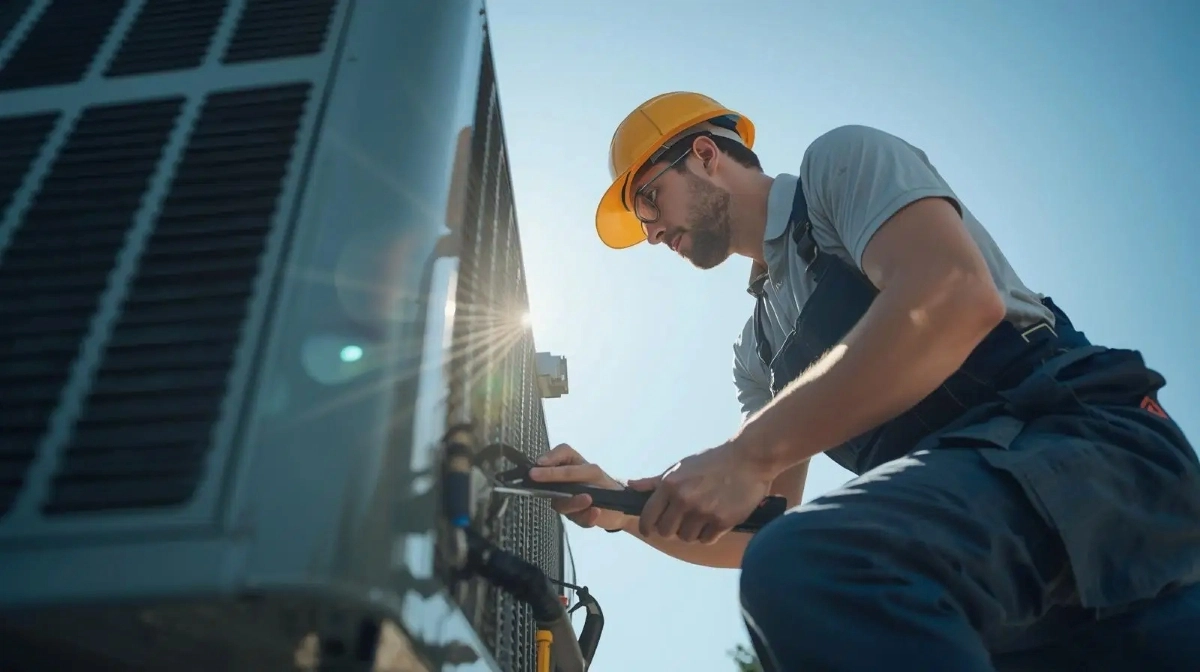
📞 Still Not Working? When to Call a Professional
If you’ve completed all 5 checks and your air conditioner suddenly stopped working, it’s time to call a professional. Here’s what to tell them:
Information to have ready: Brand and model of your aircon (look for label on the side). Age of the unit (approximately). What happened before it stopped (was it running normally? making noises? smoking?). Any error codes or flashing lights you saw. What you’ve already tried (breaker, remote, timer, etc.).
What a technician will check: Power supply (voltage at the unit). Capacitors (start and run). Control board (PCB). Compressor (winding resistance, current draw). Fan motors. Sensors (thermistors). Refrigerant pressure.
Typical costs for sudden failure diagnosis: Call-out fee: R300-R600 regular, R800-R1,500 emergency. Common repairs: Capacitor R500-R1,000. Control board R1,500-R4,000. Fan motor R1,500-R3,500. Compressor R5,000-R12,000.
How to find a reliable technician: Use our contractor selection guide. Request quotes from local technicians and compare prices. Read customer reviews.
Read our same-day repair guide and emergency repair guide.
🔍 Common Causes of Sudden Aircon Failure
Here’s what typically causes an electrical fault or system failure that stops an aircon suddenly:
Tripped breaker or blown fuse (most common – 40%): Caused by power surges, overloads, or electrical faults. Easy fix (reset breaker). If it trips again, call a professional.
Failed capacitor (25%): The capacitor provides the “kick” to start the compressor and fans. When it fails, the unit may hum but not start, or do nothing at all. Common on hot days.
Thermal overload trip (15%): Compressor overheated and shut down. Often caused by dirty coils, low refrigerant, or failing fan motor. Resets after cooling.
Failed control board (PCB) (10%): The electronic brain of the aircon. When it fails, the unit may be completely dead or behave strangely. More common after power surges.
Failed compressor (5%): The heart of the aircon. When it fails, the unit won’t cool (or may trip breakers). Expensive repair.
Loose wiring (5%): Vibration can loosen electrical connections over time. The unit may work intermittently then fail completely.
Read our capacitor failure guide and compressor problems guide.
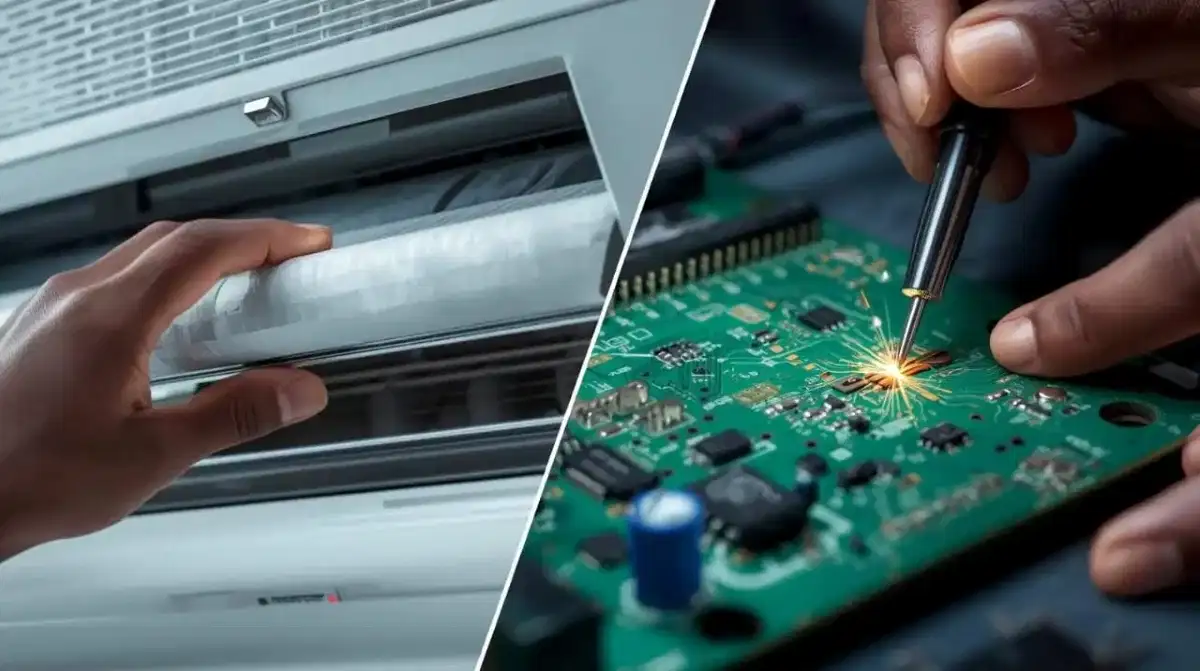
🔦 Special Case: After Load-Shedding or Power Outage
Load-shedding is a common cause of why did my air conditioner suddenly stop working in South Africa.
What happens during load-shedding: Power is cut to your home. When power returns, there’s often a voltage surge (spike). The surge can trip breakers, blow fuses, or damage sensitive electronics (PCB, capacitors).
What to check after load-shedding: Reset the breaker (even if it looks on, flip it off and on). Check the outdoor isolator switch (some switches trip during surges). Turn off the aircon at the breaker for 5 minutes, then turn back on (resets control board). Check remote batteries (some remotes lose memory after power loss).
If it still doesn’t work: The power surge may have damaged the control board, capacitor, or transformer. Call a professional for diagnosis.
Prevention: Install a surge protector (R500-R1,500) for your aircon. This is the best protection against load-shedding damage.
Read our load-shedding guide and power outage protection guide.
🛡️ How to Prevent Sudden Failure
Preventing sudden system failure is cheaper than fixing it:
Annual professional service (R500-R800): Catches problems before they cause sudden failure. Includes electrical inspection, capacitor testing, and refrigerant check. The best investment.
Install a surge protector (R500-R1,500): Protects against load-shedding and lightning damage—the #1 cause of sudden electronic failure.
Clean filters monthly: A dirty filter strains the system and can cause overheating. Takes 5 minutes. Free.
Keep outdoor unit clean: Remove debris monthly. Ensure 300mm clearance. Prevents overheating and compressor failure.
Don’t ignore warning signs: Unusual noises, weak cooling, or higher electricity bills are early warnings. Address them before sudden failure.
Know your unit’s age: Aircons last 10-15 years. If yours is older, start planning for replacement before it fails suddenly during a heatwave.
Read our maintenance checklist and service frequency guide.
❓ Frequently Asked Questions
Why did my air conditioner suddenly stop working?
Why did my air conditioner suddenly stop working is most often caused by: tripped breaker (40%), dead remote batteries or wrong mode, forgotten timer settings, thermal overload (compressor overheated), or failed capacitor (25%). Start with the 5 checks in this guide before calling a technician.
My aircon stopped working but the fan is running—what’s wrong?
If the indoor fan runs but no cold air, the outdoor unit may have lost power (tripped breaker) or the compressor may have failed. Check your breaker and outdoor isolator switch first. If they’re on, the compressor or capacitor may be faulty. Call a technician for diagnosis.
Can a power surge cause my aircon to stop working?
Yes. Power surges from lightning or load-shedding can trip breakers, blow fuses, or damage the control board (PCB), capacitor, or compressor. If your aircon stopped working after a storm or power outage, a surge is likely. Install a surge protector to prevent future damage.
My aircon stopped working after load-shedding—what should I do?
After load-shedding, reset the breaker (flip off then on), check the outdoor isolator switch, and turn off the breaker for 5 minutes to reset the control board. If the unit still doesn’t work, the power surge may have damaged the PCB or capacitor. Read our load-shedding guide.
How do I reset my aircon if it stopped working?
To reset your aircon: turn off the circuit breaker for your aircon, wait 5 minutes, then turn it back on. This resets the control board and clears electronic glitches. Also check the remote (replace batteries, ensure Cool mode) and check for timer settings.
My aircon has power but won’t turn on—what’s wrong?
If the display has lights but the unit won’t respond, possible causes: timer is active (check remote), remote is faulty (test with smartphone camera), control board (PCB) issue, or internal communication error between indoor and outdoor units. Try resetting the unit (breaker off for 5 minutes).
Can a dirty filter cause an aircon to stop working?
A dirty filter won’t cause complete failure, but it can cause poor cooling, ice build-up, and eventually compressor overheating (which can trip thermal overload and stop the unit). Clean your filter monthly to prevent this.
How much does it cost to fix an aircon that stopped working?
Cost depends on the cause: tripped breaker (R0), dead remote batteries (R20-R40), timer settings (R0), thermal overload (R0 if it resets), capacitor (R500-R1,000), control board (R1,500-R4,000), fan motor (R1,500-R3,500), compressor (R5,000-R12,000). Most sudden failures are cheap fixes.
Should I call an emergency technician if my aircon stopped working at night?
Only if you have vulnerable occupants (elderly, infants, medical conditions) AND the temperature is extreme. Otherwise, wait until morning. Emergency call-outs cost 2-3x more (R800-R1,500 vs R300-R600). Use temporary cooling (fans, open windows) instead.
My aircon stopped working but there’s no error code—what now?
No error code doesn’t mean nothing is wrong. Some failures (tripped breaker, dead remote, timer, thermal overload) don’t generate error codes. Go through the 5 checks in this guide. If none work, call a technician—they have diagnostic tools to find the problem even without error codes.
✅ Final Thoughts: Don’t Panic—Diagnose First
When your aircon stopped working suddenly, it’s easy to panic. But most causes are simple and cheap to fix. A tripped breaker, dead remote batteries, or a forgotten timer can be resolved in minutes for free.
Key takeaways for sudden failure:
- Check the breaker and isolator switch first – #1 cause of sudden failure. Free fix.
- Check remote batteries and mode – dead batteries or wrong mode are common. Free fix.
- Check for timer settings – you might have set it and forgotten. Free fix.
- Thermal overload needs cooling time – wait 30-60 minutes before trying again.
- Write down any error codes – they help technicians diagnose faster.
- After load-shedding, reset the breaker – power surges often trip breakers.
- If the breaker trips repeatedly, call a professional – don’t keep resetting, it’s a fire risk.
Your action plan: First, check the breaker and isolator switch. Second, check the remote (batteries, mode, timer). Third, if the unit was running hard before stopping, wait 30-60 minutes for thermal overload to reset. Fourth, write down any error codes. Fifth, if nothing works, request quotes from local technicians for professional diagnosis.
Aircon Still Not Working After These Checks?
Get free quotes from verified local technicians for professional diagnosis and repair.
📞 Call us: 073 138 4726 for immediate help finding aircon repair technicians near you.
📚 Official resources & standards referenced:
- Eskom – Load-shedding impact on household appliances and surge protection
- ECASA – Electrical fault diagnosis and safety standards
- SABS – Electrical safety standards for air conditioning
Information provided for general guidance based on South African market conditions. Always consult a certified professional for electrical diagnosis and repair.
Written by: Innocent T Hanyani
Construction & Home Services Industry Specialist | 21+ Years Experience
Innocent T Hanyani has over two decades of experience working across South Africa’s construction, maintenance, and home services sectors. Throughout his career, he has worked closely with contractors, service providers, and property owners, gaining practical insight into how projects are quoted, managed, and completed. His work focuses on helping homeowners understand how to find reliable contractors, compare quotes, and avoid common industry pitfalls when hiring service professionals. His insights are based on practical industry experience as well as ongoing research into contractor platforms, service marketplaces, and hiring trends across South Africa.