
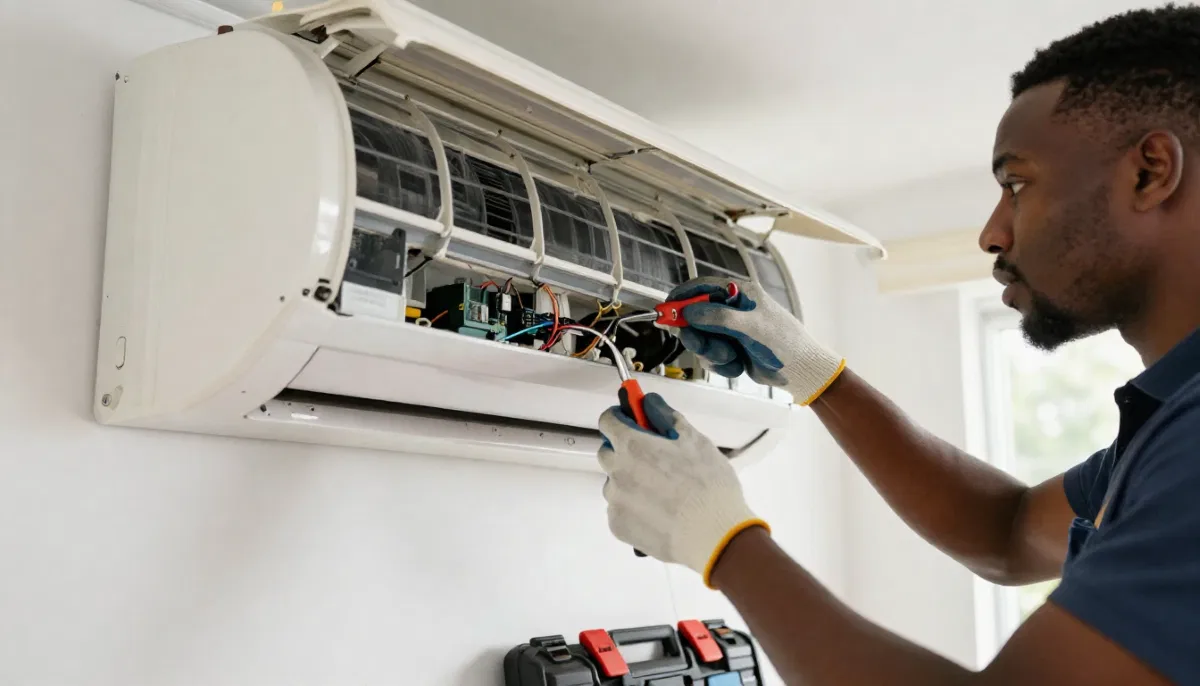
Suspicious Your Compressor Is Failing?
Get free quotes from verified local technicians for compressor diagnosis and repair.
Find Aircon Repair Technicians Near Me
Servicing Johannesburg, Pretoria, Cape Town, Durban, and across South Africa
Aircon Compressor Problems: 5 Signs Your AC’s Heart Is Failing
🔧💔 From strange noises to warm air—recognise the warning signs before your compressor dies completely
Your aircon turns on. The fan runs. But the air coming out is warm. You go outside and hear a loud humming sound followed by a click. Then silence. A few minutes later, the cycle repeats.
This is your compressor trying to start and failing. And it’s one of the most expensive problems your aircon can have.
The compressor is the heart of your air conditioner. It pumps refrigerant through the system, moving heat from inside your home to outside. When the compressor fails, your aircon stops cooling completely. Replacement costs R5,000-R12,000—often more than a new unit for older systems.
I’ve seen too many homeowners ignore early warning signs, hoping the problem would go away. It never does. Compressor failure is progressive. The sooner you recognise the signs, the more options you have.
In this guide, I’ll explain 5 common aircon compressor problems, how to tell if your compressor is failing versus a simple fix (like a capacitor), and whether you should repair or replace your unit.
For more troubleshooting, check aircon not cooling guide and same-day repair services. Ready to diagnose your compressor? Let’s go.
📋 Table of Contents
🔧 What Is the Compressor and Why Does It Matter?
The compressor is the most expensive component in your air conditioner. Understanding what it does helps you recognise when it’s failing.
What the compressor does: It’s a pump that circulates refrigerant through your aircon. It takes low-pressure refrigerant gas from the indoor unit, compresses it into high-pressure hot gas, and sends it to the outdoor unit where heat is released. Without a functioning compressor, your aircon cannot cool at all.
Where it’s located: Inside the outdoor unit. It’s a sealed metal cylinder (looks like a small keg or propane tank) with copper pipes connected to it.
Why it’s expensive: Compressor replacement costs R5,000-R12,000. The part itself is R3,000-R8,000, plus R2,000-R4,000 for labour, refrigerant recovery and recharge, and disposal of the old compressor.
Lifespan: A well-maintained compressor lasts 10-15 years. Poor maintenance (dirty coils, low refrigerant, short cycling) can kill it in 3-5 years.
⚠️ The Cost of Ignoring Compressor Warning Signs:
A failing compressor rarely fixes itself. Early signs (humming, clicking, warm air) often indicate a repairable issue like a capacitor (R500-R1,000). Ignoring these signs leads to compressor failure (R5,000-R12,000). Don’t wait. Diagnose early.
Read our same-day repair guide.
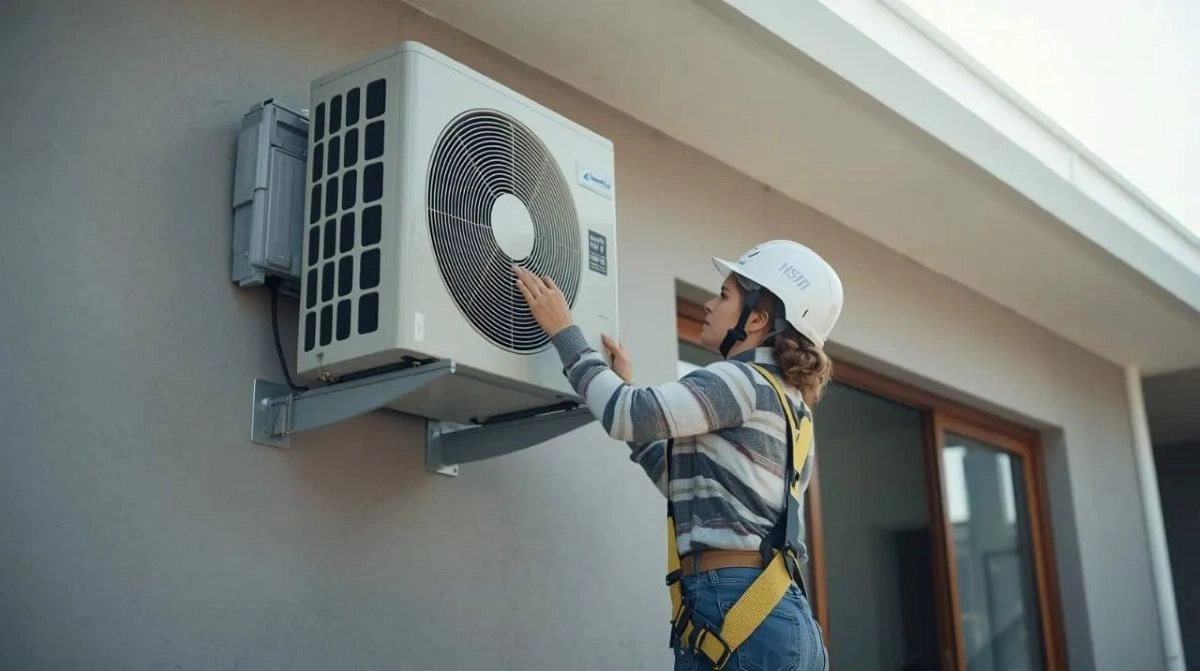
🌡️ Sign #1: Aircon Blows Warm Air (Compressor Not Running)
This is the most obvious sign of air conditioner compressor issues. The indoor fan runs, but the air isn’t cold.
What you’ll notice: You turn on the aircon in Cool mode. The indoor fan runs normally. But the air coming out is room temperature or slightly warm. The outdoor unit’s fan may be running, but the compressor is silent.
What’s happening: The compressor isn’t running. Without compression, refrigerant doesn’t circulate. No cooling happens. The indoor fan just recirculates room air.
Possible causes (not all are compressor failure): Failed start capacitor (most common, R500-R1,000 fix). Tripped breaker or blown fuse. Faulty contactor (relay that sends power to compressor). Failed compressor (worst case).
What to do: First, check your breaker and outdoor isolator switch. Second, call a technician to diagnose. Don’t assume the worst—many “warm air” problems are simple capacitor failures.
Read our not cooling guide.
🔊 Sign #2: Humming Followed by Clicking (Compressor Trying to Start)
This is the classic “compressor trying to start” sound pattern. It’s often mistaken for compressor failure when it’s actually a capacitor issue.
What you’ll hear: A loud humming or buzzing sound from the outdoor unit for 2-5 seconds. Then a distinct “click.” Silence for 30-60 seconds. Then the humming returns. The cycle repeats.
What’s happening: The compressor is receiving power but can’t start. The humming is the compressor motor trying to run. The click is the thermal overload switch shutting it down to prevent damage. After cooling, it tries again.
Likely cause (80% of cases): Failed start capacitor. The capacitor provides the electrical “kick” needed to start the compressor. Without it, the compressor hums but can’t spin.
Other possible causes: Low voltage from Eskom (brownout). Seized compressor (rare, but terminal). Faulty start relay.
What to do: Call a technician. If it’s a capacitor (most likely), repair costs R500-R1,000. If the compressor is seized, replacement costs R5,000-R12,000. Don’t keep letting it cycle—this damages the compressor further.
Read our capacitor failure guide.
Hearing Humming and Clicking? Don’t Wait
Get free quotes from verified local technicians for compressor diagnosis before it’s too late.
Get Free Quotes From Local Technicians
Same-day service available for urgent compressor issues.
🔊 Sign #3: Loud Grinding or Banging Noises
Unusual noises from the outdoor unit are never good. Grinding or banging sounds often mean internal compressor damage.
What you’ll hear: Grinding (metal-on-metal sound). Banging or clunking (something hitting something inside). Screeching (bearings failing). These sounds are distinct from normal compressor hum.
What’s happening: Internal components are breaking. In a scroll compressor, the scrolls may be grinding against each other. In a piston compressor, valves or pistons may be failing. In any case, the compressor is destroying itself.
Is this repairable? No. Once a compressor is making grinding or banging noises, it’s already failed. Replacement is the only option.
What to do: Turn off the aircon IMMEDIATELY at the breaker. Call a technician. Be prepared for bad news—compressor replacement or complete unit replacement.
Read our loud noise guide.
⚡ Sign #4: Circuit Breaker Trips Repeatedly
A compressor with internal electrical failure can trip your circuit breaker every time it tries to start.
What you’ll notice: You reset the breaker. The aircon runs for a few seconds or minutes. The breaker trips again. This repeats every time you reset.
What’s happening: The compressor’s internal windings have shorted (burned out). This creates a direct path for electricity (short circuit), drawing massive current and tripping the breaker.
Other possible causes: Short circuit in wiring (not the compressor). Faulty breaker (rare but possible). Overloaded circuit (other appliances on same circuit).
What to do: Turn off the breaker and leave it off. Call a technician immediately. Do not keep resetting the breaker—this is a fire risk. A technician can test whether the compressor is shorted or the problem is elsewhere.
Read our circuit breaker guide.
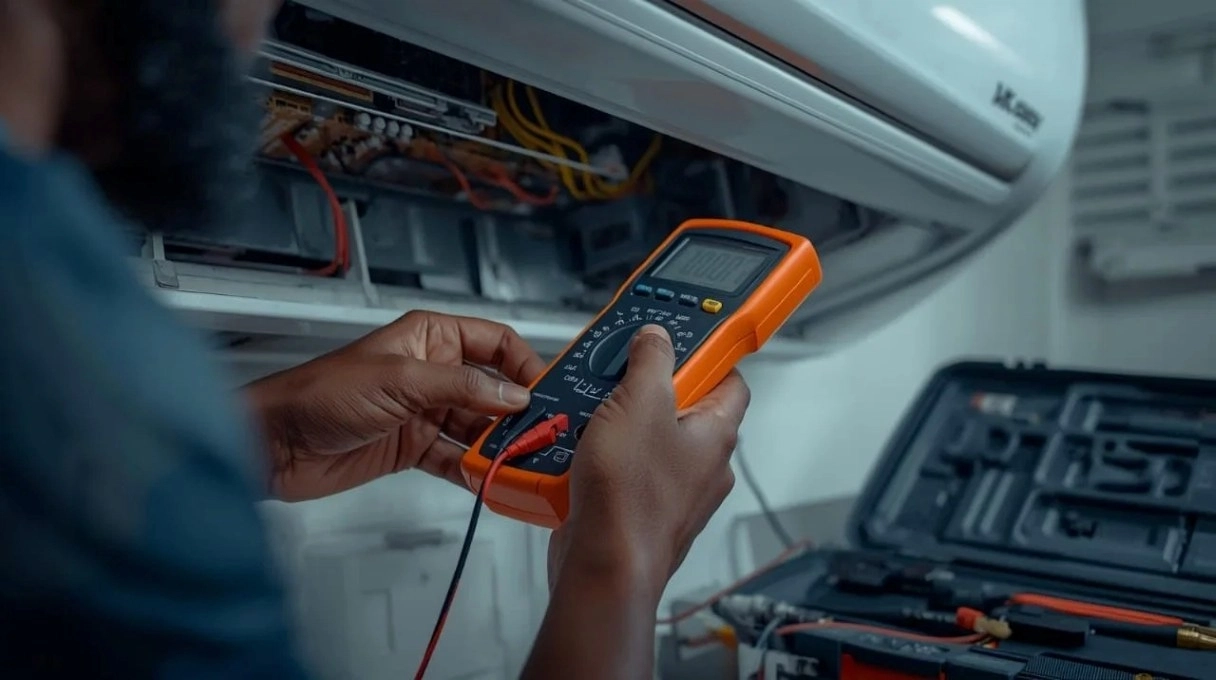
📈 Sign #5: Suddenly Higher Electricity Bills
A failing compressor often draws more current as it struggles to run. This shows up as a sudden spike in your electricity bill.
What you’ll notice: Your electricity bill is 30-50% higher than the same month last year. You haven’t changed your usage habits. The aircon runs longer but doesn’t cool as well.
What’s happening: The compressor is failing internally. It’s working harder to pump refrigerant, drawing more current. It may also be running longer because cooling capacity has dropped.
Other possible causes: Dirty coils (more common and cheaper to fix). Low refrigerant (also increases energy use). Dirty filter (increases energy use).
What to do: Have a technician check your compressor’s current draw (amp draw). Compare to specifications. High amp draw indicates internal wear. Also check coils and refrigerant—these are cheaper fixes.
Read our energy-saving guide.
⚡ Capacitor vs Compressor: The R500 vs R8,000 Difference
This is the most important distinction for homeowners. Many compressor-like symptoms are actually capacitor problems—a much cheaper fix.
Capacitor failure symptoms (R500-R1,000 fix): Humming sound followed by clicking. Compressor tries to start but can’t. Outdoor fan may or may not run. Unit may work intermittently. Often happens on hot days (capacitors lose capacity in heat).
Compressor failure symptoms (R5,000-R12,000 fix): Loud grinding or banging noises. Breaker trips repeatedly. Compressor won’t start even with new capacitor. Visible damage (burn marks, oil leaks). Unit is old (10+ years).
The diagnostic test: A technician can test the capacitor with a multimeter. If the capacitor is within 5-10% of its rated microfarads, it’s good. If not, replace it. If the compressor still doesn’t start with a new capacitor, the compressor is likely failed.
Never assume the worst: Many homeowners hear humming and clicking and assume their compressor is dead. In 80% of cases, it’s just a capacitor. Always get a proper diagnosis before replacing the compressor.
Read our capacitor failure guide.
🔍 What Causes Compressor Failure?
Understanding the causes helps you prevent premature failure:
Low refrigerant (gas leak) – #1 cause: Low refrigerant causes the compressor to run hotter than designed. The oil that lubricates the compressor breaks down. Internal components wear out faster. Always repair leaks, don’t just top up gas.
Dirty condenser coils – #2 cause: Dirty outdoor coils prevent heat from escaping. The compressor works harder and runs hotter. Compressor lifespan drops from 15 years to 5-8 years. Clean coils annually.
Short cycling (oversized unit): An oversized aircon turns on and off frequently (short cycles). Each start causes mechanical wear. Over years, this adds up. Size your aircon correctly using our BTU calculator.
Power surges and voltage fluctuations: Lightning strikes and load-shedding can damage compressor windings. Install a surge protector for your aircon.
Liquid slugging: Liquid refrigerant returning to the compressor (instead of gas) can destroy internal valves. Caused by low airflow (dirty filter) or low refrigerant.
Age: Compressors naturally wear out after 10-15 years. At this age, replacement is often better than repair.
Read our refrigerant leak guide and coil cleaning guide.
💰 Repair vs Replace: The 50% Rule
When your compressor fails, you face a decision: replace the compressor or replace the entire aircon. Use the 50% Rule.
The 50% Rule: If the repair cost exceeds 50% of a new unit’s price, replace the entire aircon. For a 12,000 BTU unit, a new aircon costs R8,000-R12,000 installed. Compressor replacement costs R5,000-R12,000. Often, replacement is cheaper or only slightly more expensive—and you get a new unit with a warranty.
Replace the compressor if: The unit is relatively new (under 5-7 years old). The rest of the system is in good condition. You have a high-end brand worth preserving. The repair cost is significantly less than a new unit.
Replace the entire aircon if: The unit is over 8-10 years old. The compressor failed due to neglect (dirty coils, low refrigerant). Other components (fan motor, coils) are also aging. The repair cost is close to or more than a new unit. You want a more efficient inverter model.
The warranty factor: Many compressors have 5-10 year warranties. Check your paperwork. If the compressor is under warranty, you only pay labour (R2,000-R4,000). That changes the math significantly.
Read our repair vs replacement guide.
🛡️ How to Prevent Compressor Failure
The best way to avoid expensive aircon compressor problems is prevention:
Annual professional service (R500-R800): Includes refrigerant pressure check (detects leaks early). Electrical component testing (capacitors, contactor). Coil cleaning (prevents overheating). Compressor performance test.
Clean filters monthly: Dirty filters reduce airflow, causing coils to ice up and liquid refrigerant to return to the compressor (liquid slugging). Clean your filter every 2-4 weeks.
Keep outdoor unit clean: Dirty coils force the compressor to work harder. Clean coils annually. Keep at least 300mm clearance around the unit.
Install a surge protector: Protects against lightning strikes and load-shedding surges. Cost: R500-R1,500. Cheaper than a new compressor.
Don’t ignore refrigerant leaks: If your aircon needs gas every year, you have a leak. Fix the leak. Don’t just top up.
Size your aircon correctly: An oversized unit short cycles, wearing out the compressor prematurely. Use our BTU calculator.
Read our maintenance checklist and service frequency guide.
❓ Frequently Asked Questions
How do I know if my aircon compressor is bad?
Signs of aircon compressor failure include: aircon blows warm air (compressor not running), humming followed by clicking (compressor trying to start), loud grinding or banging noises, circuit breaker trips repeatedly, or suddenly higher electricity bills. If you notice any of these, call a technician immediately.
Can an aircon compressor be repaired?
In most cases, no. Compressors are sealed units and cannot be repaired internally. If the compressor has failed (burned windings, seized pistons, broken scroll), the only option is replacement. However, what seems like ac compressor failure is often a failed capacitor (R500-R1,000 fix), not the compressor itself. Always get a proper diagnosis.
How much does it cost to replace an aircon compressor in South Africa?
Compressor replacement costs R5,000-R12,000 depending on unit size and brand. The compressor part costs R3,000-R8,000. Labour, refrigerant recovery and recharge add R2,000-R4,000. For older units (8-10+ years), complete unit replacement (R8,000-R15,000) is often more cost-effective.
What causes an aircon compressor to fail?
Common causes: low refrigerant (gas leak) – #1 cause, dirty condenser coils (#2 cause), short cycling (oversized unit), power surges/load-shedding, liquid slugging (refrigerant liquid returning to compressor), and age (10-15 years). Regular maintenance prevents most of these.
How long should an aircon compressor last?
A well-maintained compressor lasts 10-15 years. Poor maintenance (dirty coils, low refrigerant, short cycling) reduces lifespan to 3-5 years. Annual professional service and monthly filter cleaning dramatically extend compressor life.
Why is my aircon compressor humming but not starting?
This is almost always a failed start capacitor (80% of cases). The capacitor provides the electrical “kick” to start the compressor motor. Without it, the motor hums but can’t spin. Capacitor replacement costs R500-R1,000. Other causes: low voltage or seized compressor (less common).
Should I replace my aircon or just the compressor?
Use the 50% Rule. If the unit is under 5-7 years old and repair cost is less than 50% of a new unit, replace the compressor. If the unit is over 8-10 years old, or repair cost exceeds 50% of a new unit, replace the entire aircon. Read our repair vs replacement guide.
Can a power surge damage my compressor?
Yes. Power surges from lightning or load-shedding can damage compressor windings, capacitors, and control boards. Install a surge protector (R500-R1,500) to protect your aircon. Read our load-shedding guide.
Why does my compressor keep tripping the breaker?
A compressor that trips the breaker repeatedly likely has shorted internal windings (burned out). This creates a direct short circuit, drawing massive current. Turn off the breaker and call a technician immediately. Do not keep resetting—this is a fire risk.
Is it worth replacing a compressor on an old aircon?
Usually not. If your aircon is over 8-10 years old, compressor replacement often costs nearly as much as a new, more efficient unit. A new inverter aircon will save you R500-R1,500/year on electricity, making replacement the better financial decision. Read our inverter guide.
✅ Final Thoughts: Don’t Ignore Your Compressor
The compressor is the heart of your air conditioner. When it fails, the whole system stops. But many “compressor problems” are actually simple capacitor issues—a R500-R1,000 fix versus R5,000-R12,000 replacement.
Key takeaways for compressor problems:
- Humming and clicking usually means capacitor failure – not a dead compressor. Get it diagnosed before panicking.
- Grinding, banging, or tripping breakers means compressor failure – turn off the unit and call a technician immediately.
- Low refrigerant is the #1 cause of compressor failure – fix leaks, don’t just top up gas.
- Annual maintenance prevents most compressor failures – R500-R800/year vs R5,000-R12,000 replacement.
- For old units (8-10+ years), replacement is often better than repair – use the 50% Rule.
- Clean filters monthly, clean coils annually – this alone doubles compressor lifespan.
- Install a surge protector – protects against load-shedding and lightning damage.
Your action plan: First, if your aircon is blowing warm air or making strange noises, turn it off at the breaker. Second, call a technician for diagnosis—don’t assume the worst. Third, if the compressor has failed, use the 50% Rule to decide repair vs replacement. Fourth, request quotes from local technicians for compressor diagnosis and repair.
Suspicious Your Compressor Is Failing?
Get free quotes from verified local technicians for compressor diagnosis and repair.
📞 Call us: 073 138 4726 for immediate help finding aircon repair technicians near you.
📚 Official resources & standards referenced:
- SABS – Compressor safety standards and electrical safety requirements
- Department of Environment – Compressor refrigerant regulations and F-Gas compliance
- ECASA – Electrical contractor standards for compressor installations
Information provided for general guidance based on South African market conditions and common air conditioning systems. Always consult a certified professional for compressor diagnosis and repair.
Written by: Innocent T Hanyani
Construction & Home Services Industry Specialist | 21+ Years Experience
Innocent T Hanyani has over two decades of experience working across South Africa’s construction, maintenance, and home services sectors. Throughout his career, he has worked closely with contractors, service providers, and property owners, gaining practical insight into how projects are quoted, managed, and completed. His work focuses on helping homeowners understand how to find reliable contractors, compare quotes, and avoid common industry pitfalls when hiring service professionals. His insights are based on practical industry experience as well as ongoing research into contractor platforms, service marketplaces, and hiring trends across South Africa.